Epoxy Floors in Essendon: Which Coating Suits Your Garage?

Epoxy Floors in Essendon: Which Coating Suits Your Garage?

The right epoxy floor coating for your Essendon garage depends on how you use the space, the condition of your existing concrete, and the finish you want to live with. Decorative flake systems suit most residential garages, metallic coatings work well for showroom-style results, and solid colour epoxy is the practical budget pick. Each has a clear use case.

What makes epoxy floors in Essendon a popular choice for garages?

Epoxy floors are popular in Essendon garages because they seal porous concrete against oil, water and grime, survive daily tyre traffic, and look dramatically better than bare slab. A properly applied system bonds directly to the concrete and can last well over a decade with minimal maintenance, making the upfront cost easy to justify.

Essendon is a suburb with a solid mix of older brick homes and newer builds. That means garages range from rough 1970s slabs with plenty of surface variation to fresh pours that are almost ready to coat straight away. Whatever you are working with, the concrete condition shapes which coating makes sense, and it is the first thing a good installer will assess before quoting anything.

A standard garage slab in a suburb like Essendon is somewhere between 40 and 100 square metres. That is a meaningful surface area. Done properly with the right system, it transforms a dark, dusty box into a space you actually want to be in, whether that means a clean workshop, a home gym overflow, or simply somewhere to park without tracking concrete dust into the house.

What are the main epoxy coating systems available for a garage?

The main epoxy coating systems for a residential garage are decorative flake (also called chip or broadcast), metallic epoxy, and solid colour epoxy. Each uses a two-part resin base but varies in how it looks, how it performs underfoot, and what preparation the slab needs before application. Choosing between them is mostly about your priorities: aesthetics, slip resistance, budget, or all three.

Decorative Flake Systems

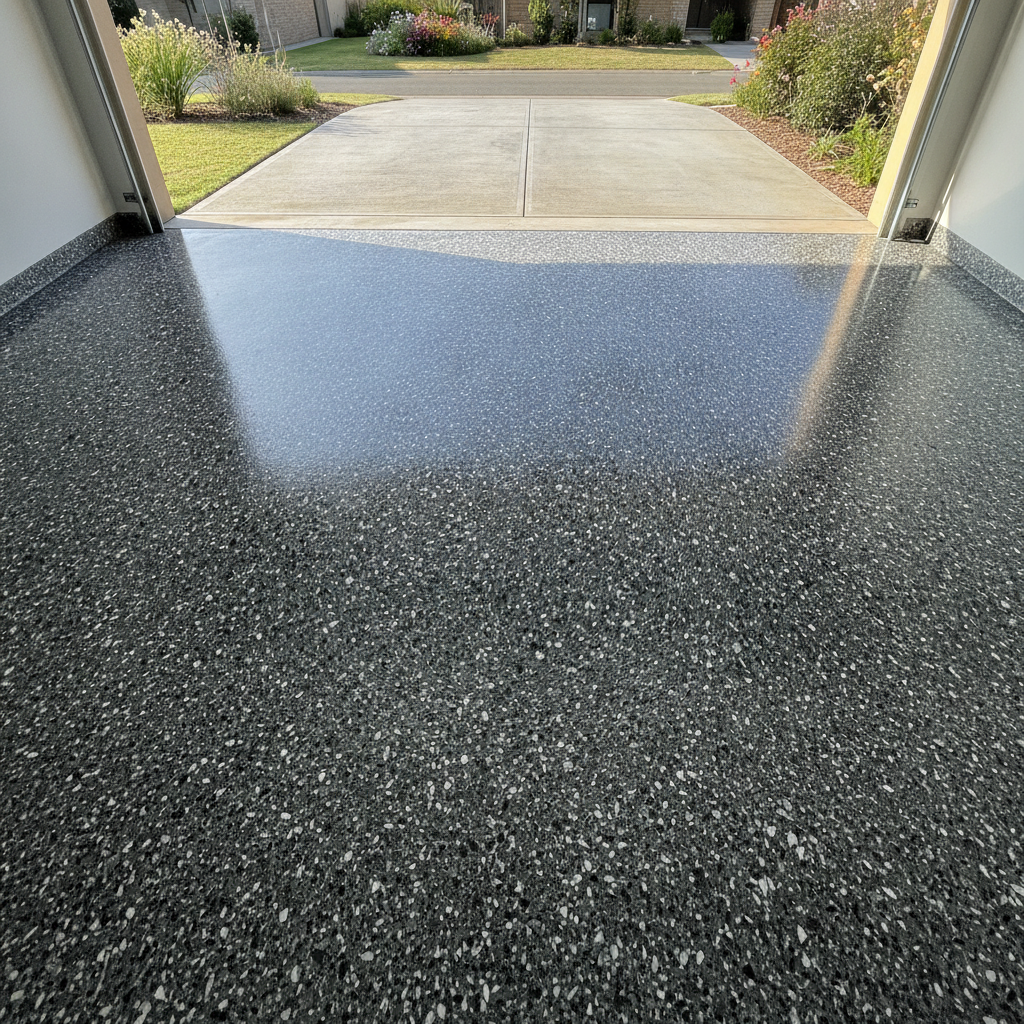
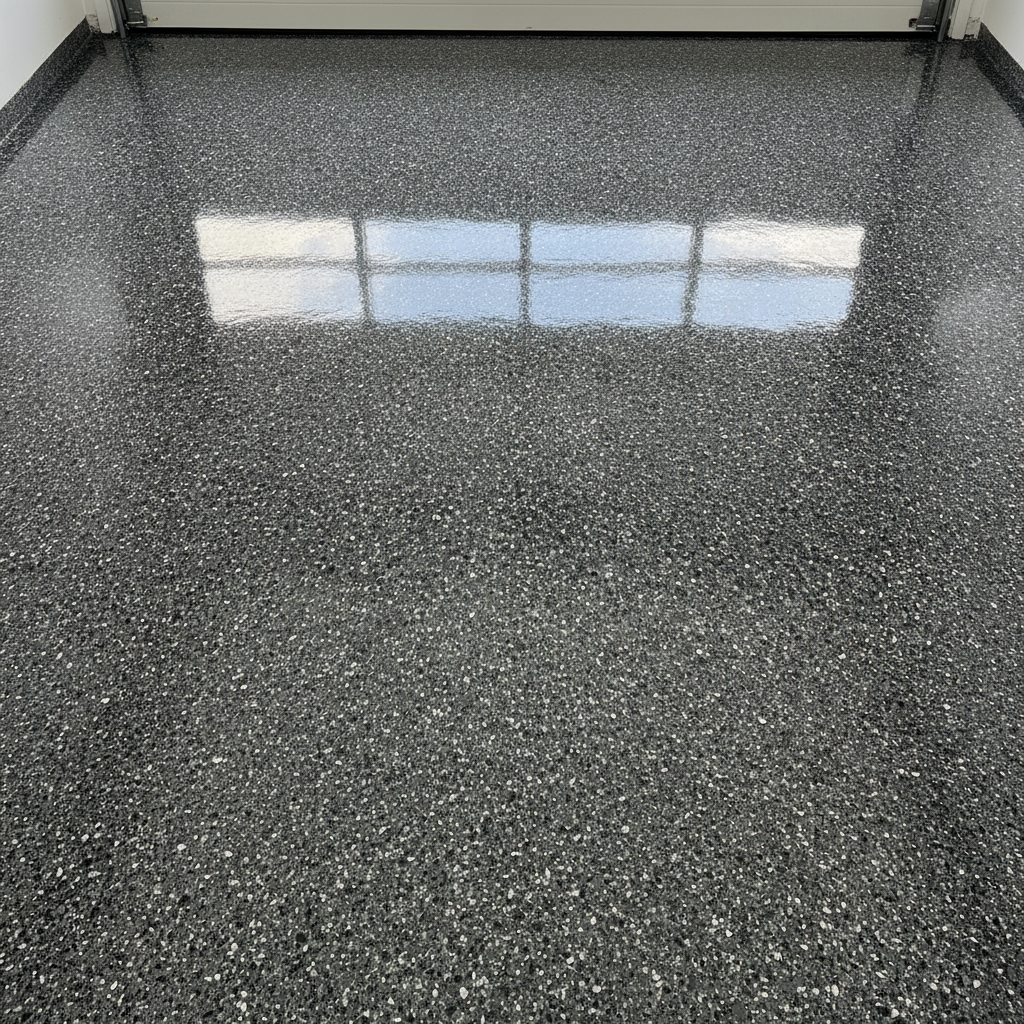
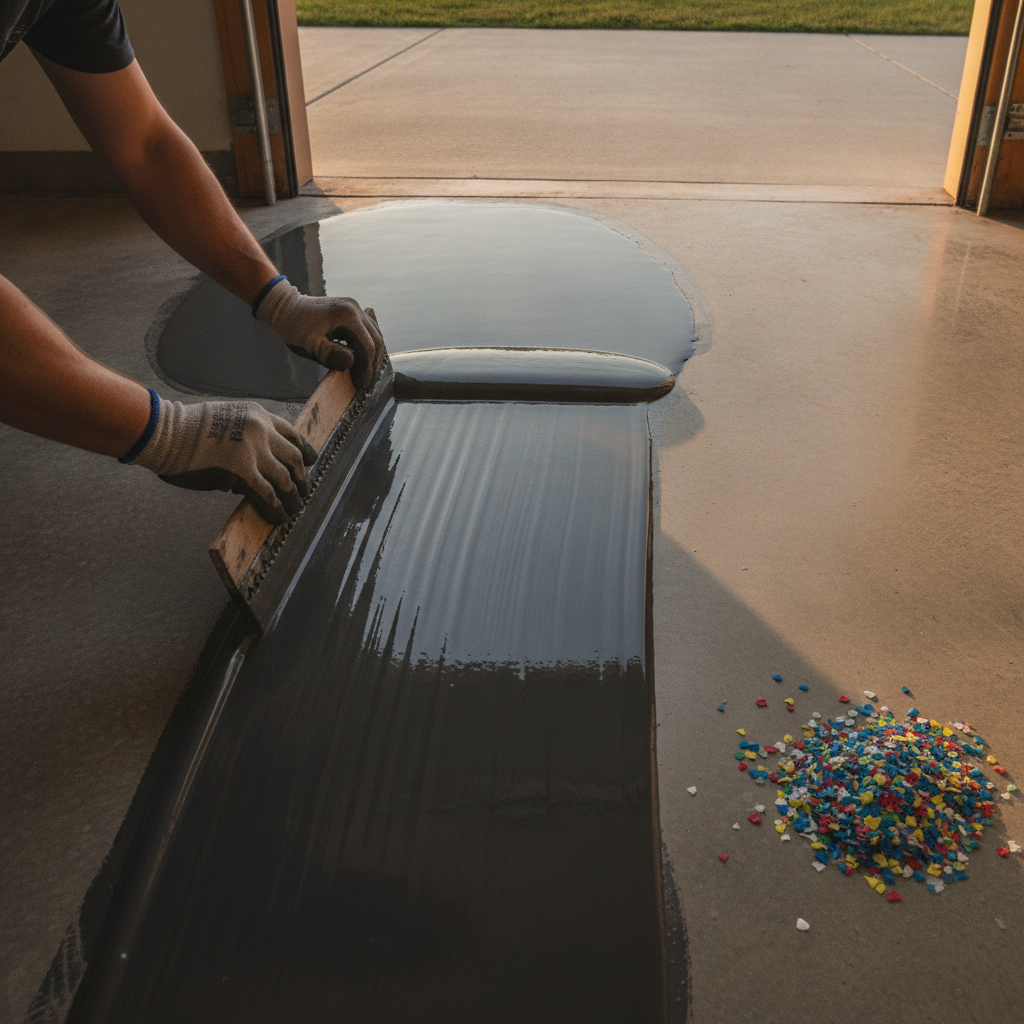
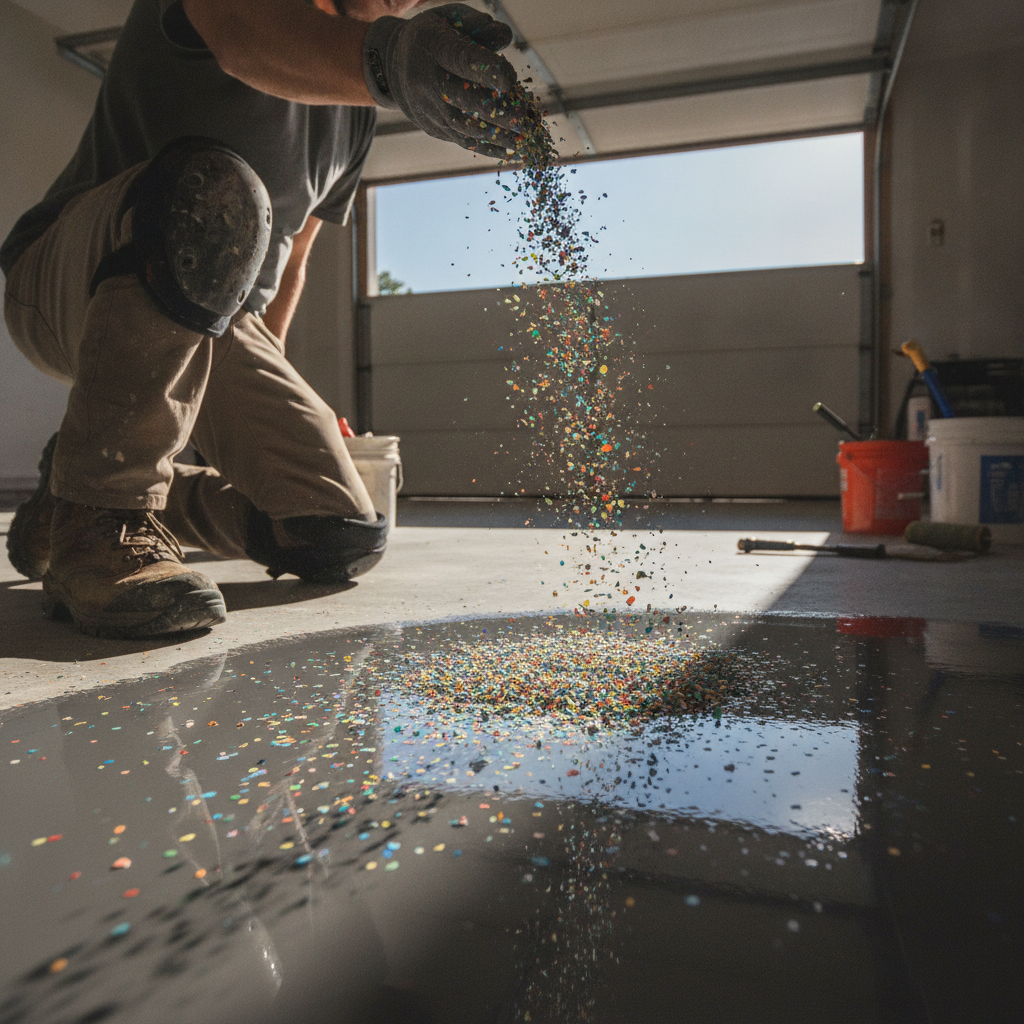
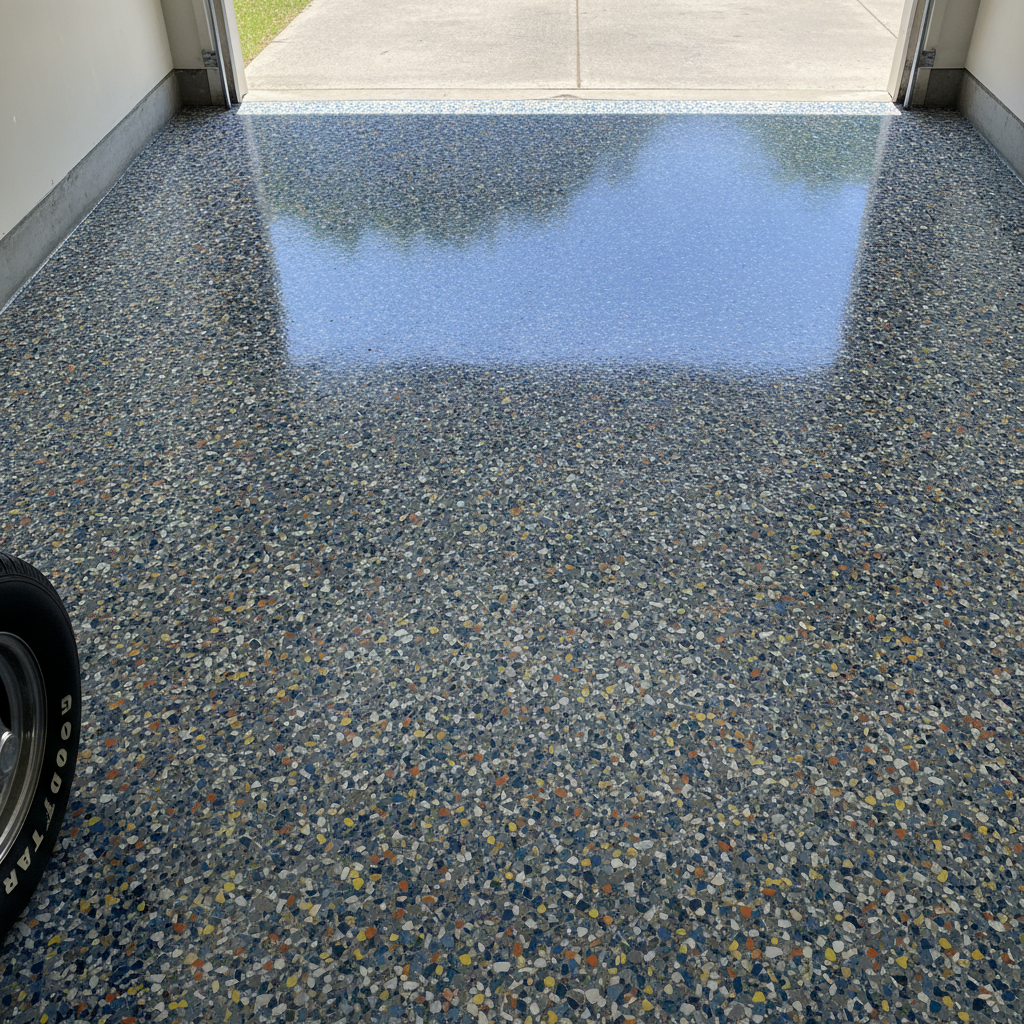
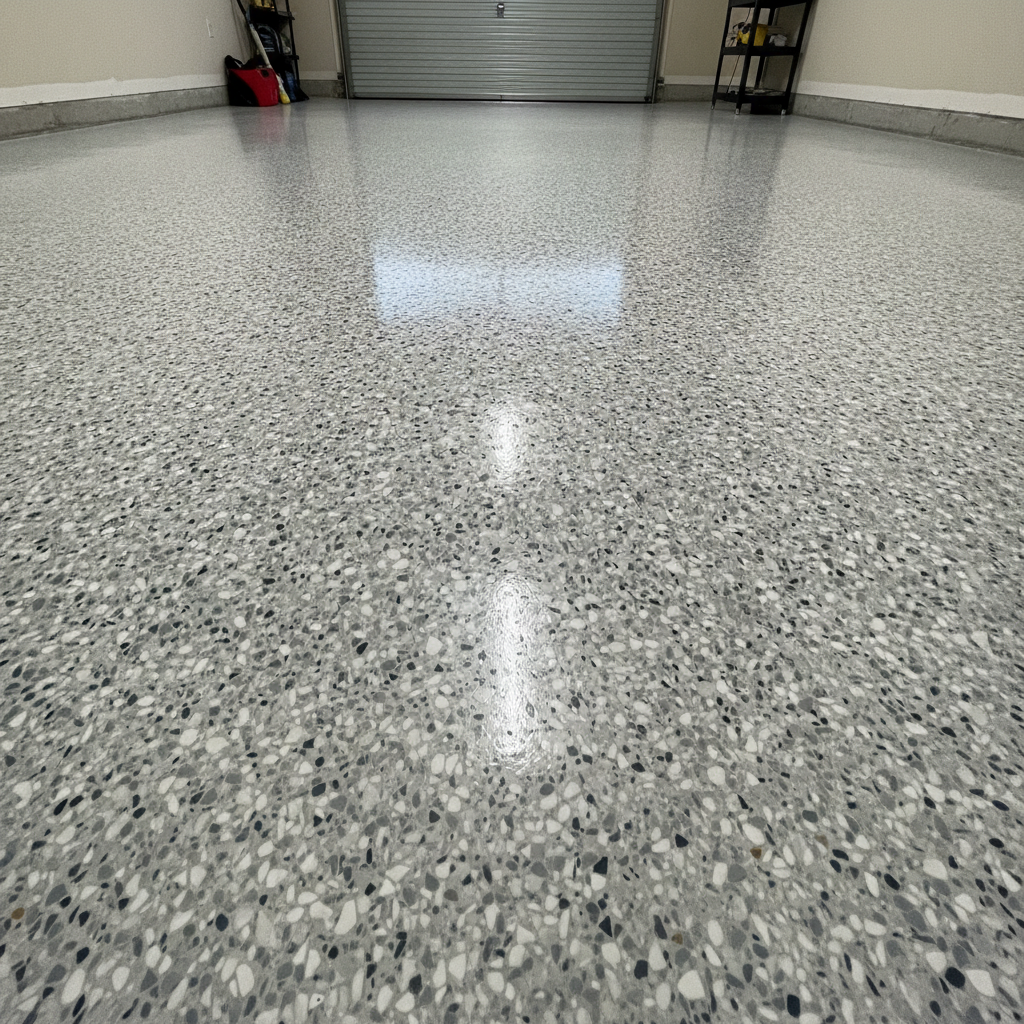
Flake or chip systems are the most popular choice for garages across Melbourne’s north-west, and for good reason. Coloured vinyl flakes are broadcast over a base coat while it is still wet, then locked in with a clear topcoat. The result is a texture that hides minor surface imperfections, provides natural slip resistance, and holds up well under cars, trolleys and foot traffic.

You can dial in the density of the flake broadcast. A full broadcast (where flakes cover the entire surface edge to edge) gives a more uniform, professional look. A medium broadcast shows more of the base colour underneath and softens the overall effect. The topcoat can be matte or gloss depending on the look you are after. For most Essendon homeowners using the garage as a mixed-purpose space, this system hits the sweet spot between durability and appearance.

Metallic Epoxy

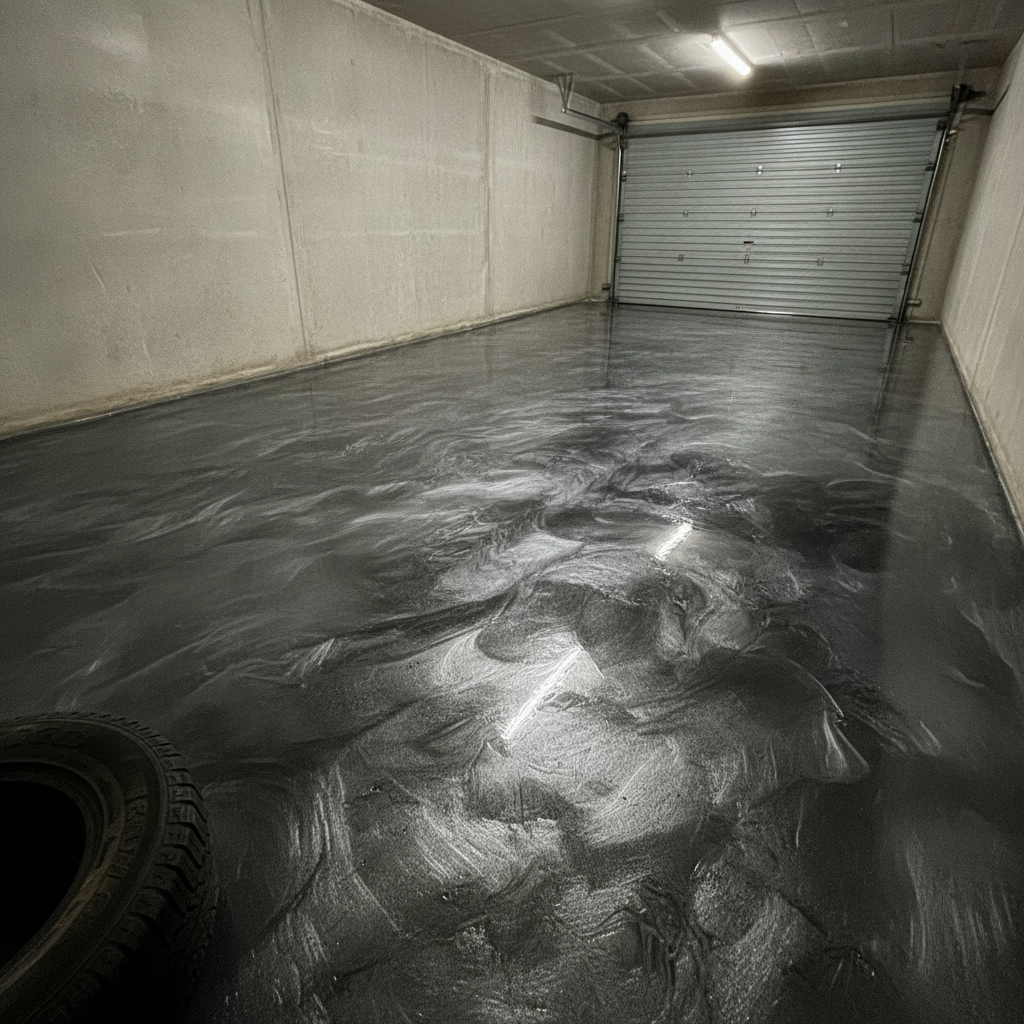
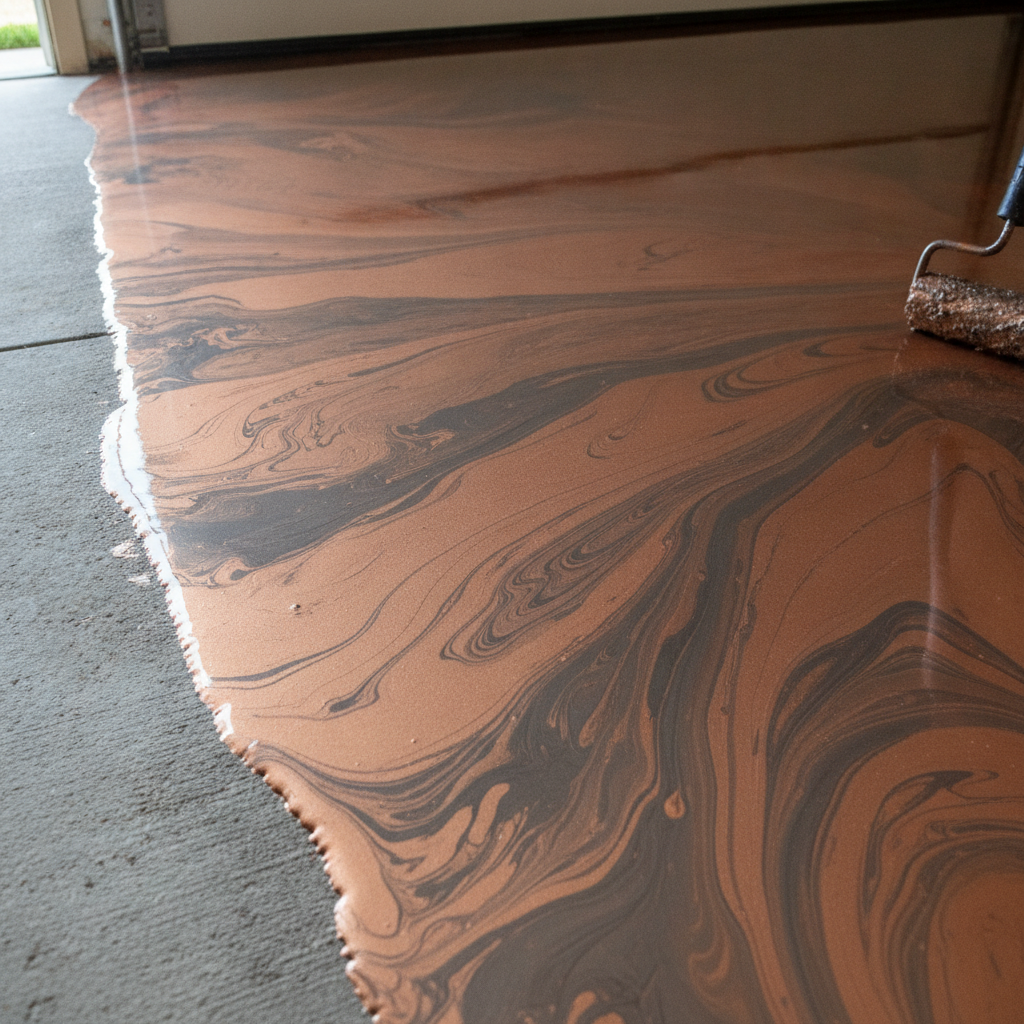
Metallic epoxy uses pigment powders blended into the resin to create a flowing, three-dimensional effect that looks like polished stone or liquid metal frozen in place. No two floors come out exactly the same, which is part of the appeal. The finish is high-gloss and visually striking, making it a strong choice if the garage doubles as a showroom, workshop display space, or home studio.

One thing to know: metallic systems are less forgiving of slab imperfections. Significant cracking, moisture issues or heavy pitting will show through if the concrete is not properly prepared first. They also tend to sit at a higher price point than flake systems, and the application demands more skill to get the colour movement right. When the execution is dialled in, though, the result is genuinely impressive.

Solid Colour Epoxy

Solid colour epoxy is exactly what it sounds like. A single pigmented coat applied over a primed slab, finished with a clear sealer. It is clean, functional and the most straightforward system to maintain. This is the practical option for anyone who wants the core benefits of epoxy (sealed concrete, easy cleaning, improved durability) without a decorative element in the mix.

It is also worth noting that solid systems can show scuffs and tyre marks more obviously than flake, so high-traffic garages may need more frequent cleaning. Still, for a low-fuss, cost-effective result it gets the job done reliably.

Does the condition of your Essendon garage slab affect which coating you should choose?

Yes, the condition of your slab is one of the biggest factors in which coating will actually work well. Moisture coming up through the concrete, surface cracks, old paint or previous sealers all need to be dealt with before any epoxy goes down. Skipping proper preparation is the main reason DIY and budget epoxy jobs fail within a year or two.

The preparation stage typically involves diamond grinding the surface to open up the concrete’s pores so the epoxy can bond properly. In Melbourne’s older suburbs, including Essendon, garages often have slab-on-ground construction with limited membrane underneath. That can mean moisture vapour transmission (MVT) is a consideration, particularly in winter. A good installer will test for this before specifying a system, because applying a standard epoxy over a damp slab leads to bubbling and delamination.

Cracks are another common issue in older slabs. Hairline cracks can usually be filled and coated over without drama. Structural movement cracks are a different story. They need proper treatment, and in some cases they will continue to move under the coating regardless. An honest installer will point this out upfront rather than just coat over it and hope for the best.

How long does an epoxy floor coating last in a typical Essendon garage?

A professionally applied epoxy floor coating in a residential garage typically lasts between 10 and 20 years when the surface is properly prepared and the right system is matched to the use case. The topcoat takes most of the wear, so choosing a quality polyurethane or polyaspartic clear finish extends the life of the decorative layer underneath significantly.

Day-to-day care is minimal. Sweeping out grit regularly matters more than most people expect, because fine particles act like sandpaper underfoot and wear the topcoat down faster than tyre traffic does. Cleaning up oil spills promptly keeps any potential staining from soaking into micro-scratches in the sealer. Beyond that, a professionally installed system in Essendon’s climate is low maintenance by design.

UV stability is worth mentioning here too. Garages with roller doors that let in direct sunlight need a UV-stable topcoat, otherwise the colour will amber or chalk over time. Most reputable installers will specify this automatically, but it pays to ask the question.

What should you ask before booking an epoxy coating job in Essendon?

Before booking any epoxy job for your Essendon garage, ask whether diamond grinding is included in the prep (it should be), whether the installer will test for moisture, and what topcoat they are using. Ask for examples of completed jobs in a similar residential setting and get clarity on the warranty. A professional who answers these questions without hesitation is worth their price. One who deflects or rushes past them is a red flag.

Also worth asking: how long before you can park cars back on the floor. A polyaspartic topcoat can cure to vehicle traffic in as little as 24 hours. Standard epoxy topcoats typically need closer to 72 hours for full cure. Knowing this upfront lets you plan the job around your week rather than being caught out.

Finally, get the quote in writing with the product system specified. “Epoxy” covers a huge range of products and systems, and a quote that just says “epoxy floor” tells you almost nothing about what you are actually getting. Proper documentation protects you both.

Book an epoxy floor coating in Essendon with Metal and Flake
Epoxy Floors in Brunswick: Coating Options for Inner-North Garages

Epoxy Floors in Brunswick: Coating Options for Inner-North Garages

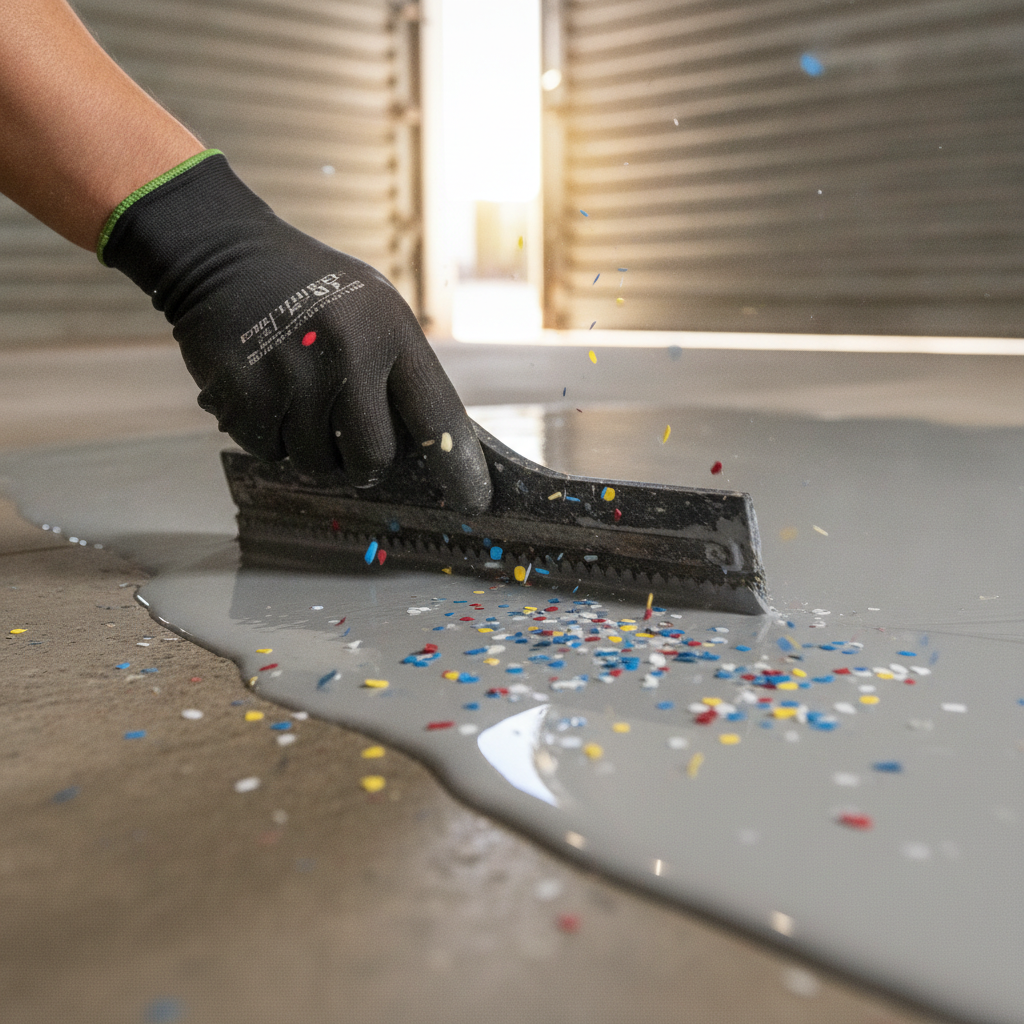
Epoxy floors in Brunswick are a practical upgrade for the suburb’s mix of heritage semis, double-brick workers’ cottages and converted warehouse spaces. A two-part epoxy coating bonds directly to bare concrete, gives you a hard-wearing, easy-clean surface, and comes in enough finishes to suit a backyard workshop or a polished entertainer’s garage. Most residential jobs are done and cured within two to three days.

Why are epoxy floors such a good fit for Brunswick garages?

Brunswick garages tend to be older, smaller and busier than those in newer suburbs. The concrete slabs are often porous, oil-stained and rough from decades of use. Epoxy bonds to that aged concrete, seals in stains that would keep bleeding through paint, and creates a surface tough enough for daily car traffic, bikes, a chest freezer and a workbench. That combination is hard to beat for a tight inner-north block.

The suburb itself sits about five kilometres north of the Melbourne CBD, which means older building stock and narrower laneways. Most garages were built for one car and used for everything else. Epoxy makes that space work harder. The gloss bounces light around a dark single-car garage, oil drips wipe up in seconds, and the surface resists the grit that blows in off Sydney Road on a windy afternoon.

Concrete floors in homes built before the 1980s often have no damp-proof membrane underneath. That matters for epoxy, because moisture migrating up through the slab can cause coating failure over time. A competent installer will do a simple plastic-sheet moisture test before they quote. If readings are too high, a moisture-tolerant primer or a polyurethane topcoat is used instead of a standard epoxy system. Skipping that test is the most common reason DIY epoxy jobs fail within twelve months.

What coating options are available for epoxy floors in Brunswick?

The main coating types for Brunswick garages are solid-colour epoxy, metallic epoxy (sometimes called flake-style), and broadcast flake systems. Each suits a different look and use case. Solid colour is the most affordable and the most discreet. Metallic coatings give a swirling, reflective finish popular in converted warehouse spaces. Broadcast vinyl chip or flake systems hide surface imperfections well and add grip underfoot.

Here is a plain-English rundown of the main options:

  • Solid-colour epoxy: A base coat and a clear topcoat in one colour. Grey and charcoal are the most popular choices because they hide tyre marks and dust. Low cost, clean result, suits working garages.
  • Broadcast flake (vinyl chip): Coloured vinyl flakes are broadcast into the wet base coat, then sealed with a clear polyurethane or epoxy topcoat. The flake hides hairline cracks and uneven concrete better than any other system, and the textured finish gives you natural slip resistance. This is the workhorse option for family garages.
  • Metallic epoxy: Pigment and metallic powder are worked into the wet coat to create organic swirl patterns. No two floors look identical. Popular for showrooms, entertainer spaces and anyone who wants the garage to look like a feature rather than an afterthought. Brunswick’s converted warehouses and design-conscious terrace renovations suit this finish well.
  • Clear sealer over existing concrete: Not a full epoxy system, but worth mentioning. A penetrating sealer or a thin clear coat protects the slab without hiding its raw texture. Suits owners going for an industrial look on an already-decent slab.

Topcoat choice also matters. A polyurethane topcoat is UV stable, meaning it will not amber or yellow near a door that gets afternoon sun. Standard epoxy clears will yellow noticeably within a year if they receive direct sunlight. For a north-facing Brunswick garage door that catches the afternoon, always ask for a polyurethane or polyaspartic topcoat.

How does surface preparation affect the final result?

Surface preparation is where the job is won or lost. On older Brunswick slabs, that typically means diamond grinding the concrete to open up the surface, remove previous coatings or sealers, and knock back any high spots. Shot blasting is an alternative on larger or flatter areas. Both processes leave the surface with a profile similar to fine sandpaper, which is what the epoxy needs to grip.

Any cracks or expansion joints need to be addressed before coating. Hairline cracks in concrete slabs are normal and can be filled with a semi-rigid epoxy filler. Structural cracks, the kind that move with temperature or load, need to be routed out and filled with a flexible polyurethane product so they can keep moving without popping through the finished coat.

Oil contamination is common in working garages and it is the biggest enemy of adhesion. Old oil does not just sit on top of the concrete. It penetrates several millimetres into the slab. Grinding removes the surface layer but a contaminated slab often needs a chemical degreaser treatment and sometimes a second grind. An honest installer will test adhesion after prep by pouring water on the surface. If it beads, the slab is not ready.

Allow roughly half a day for prep on a standard single-car garage (around 20 to 25 square metres), then the base coat goes down, flake is broadcast if it is that system, and the topcoat follows once the base coat has cured. Most residential jobs are ready for foot traffic in 24 hours and light vehicle traffic within 72 hours, depending on temperature and the specific products used.

What should Brunswick homeowners know about cost and timing?

Epoxy floor pricing in Melbourne’s inner north is driven by three things: floor size, surface condition and coating type. A single-car garage in reasonable condition with a broadcast flake system typically costs more per square metre than a large open slab that is quick to grind and coat. Smaller jobs take more mobilisation cost per square metre, which is just the reality of the trades.

A few things that push the price up: heavily contaminated concrete needing multiple prep passes, low-clearance garages that make machine grinding awkward, and premium finishes like full metallic systems that require more labour time to work the coat. A few things that keep it manageable: booking during quieter winter months, having the garage cleared and accessible before the crew arrives, and being upfront about any known issues like previous DIY sealers or tyre-mark treatments.

Timing matters in Brunswick’s climate too. Epoxy cures best between about 10 and 30 degrees Celsius. Melbourne’s shoulder seasons, March to May and September to November, are ideal. Midsummer can push concrete surface temperatures above 35 degrees on a north-facing slab, which speeds the pot life of the mixed product and can cause problems if the installer is not experienced with hot-weather application. A good local crew will know this and plan the pour time accordingly.

If you are renovating a Brunswick terrace and the garage is the last thing on the list, try to schedule the epoxy after all the dusty trades have finished. Plaster dust and timber-cutting sawdust settling into a fresh coat will show in the finished surface. The floor should ideally be the second-to-last job, with only a final clean happening after it.

Get an epoxy floor quote in Brunswick from Metal and Flake.

Epoxy Floors in Epping: Garage Coating Options for Local Homeowners

Epoxy Floors in Epping: Garage Coating Options for Local Homeowners

Epoxy floors in Epping are a practical, long-lasting upgrade for homeowners who want a garage that handles daily punishment without looking like a forgotten storage shed. A quality epoxy coating bonds directly to concrete, resists oil, tyre marks and moisture, and can be finished in a range of styles from solid colour to metallic flake. Most residential garage floors are completed within one to two days.

Why are epoxy floors worth considering for Epping garages?

Epoxy floors are worth considering for Epping garages because the northern Melbourne climate, with its dry summers and cold winters, puts concrete through regular thermal expansion and contraction that causes surface dusting and cracking over time. A properly applied epoxy system seals the slab, stops that dusting, and gives you a surface that is genuinely easy to clean with a hose or mop.

Most uncoated garage slabs in suburban homes are broom-finished concrete that absorbs everything: motor oil, brake fluid, fertiliser from the ride-on, muddy boot prints after a rainy weekend. Once those stains soak in, they are nearly impossible to remove. Epoxy creates a non-porous barrier, so spills sit on the surface until you wipe them up.

There is also a practical safety angle. Broadcast flake systems, where coloured vinyl chips are scattered into the wet epoxy before a clear topcoat is applied, add a textured, slip-resistant finish. That matters in a garage where puddles from wet cars or condensation on a cold morning are common. A high-gloss solid-colour floor looks sharp, but if slip resistance is a priority, a flake system is the smarter choice for a working garage.

What epoxy garage coating options are available in Epping?

The main epoxy garage coating options available to Epping homeowners are solid-colour epoxy, decorative flake (also called chip or broadcast flake), and metallic epoxy. Each suits a different budget, aesthetic and level of foot and vehicle traffic. Solid colour is the most affordable entry point; metallic is the premium option for a showroom-style finish.

Here is a plain-English breakdown of each system.

Solid colour epoxy. This is the workhorse of garage coatings. A pigmented base coat is applied over a prepared slab, then sealed with a clear polyurethane or epoxy topcoat. Colours like battleship grey, charcoal and slate are popular in Epping because they hide tyre marks between cleans. The finish is smooth and high-gloss, which bounces light around nicely in a garage that does not get a lot of natural light.

Decorative flake (metal and flake style). This is the most popular system for residential garages in Melbourne’s suburbs right now. Coloured vinyl flakes are broadcast into a wet base coat at either a partial broadcast (speckled look) or a full broadcast (fully covered, seamless look). A clear topcoat locks everything in. The result is textured, slip-resistant, and hides minor surface imperfections better than a solid colour coat. It is also extremely durable under vehicle traffic because the chip layer adds thickness to the system.

Metallic epoxy. Metallic pigment powders are mixed into a clear or tinted epoxy base to create a swirling, three-dimensional effect. No two floors look the same, which is the point. This system suits homeowners who want the garage to feel like an extension of the house rather than just a utility space. It is the most labour-intensive option to apply correctly, so it sits at the higher end of the price range.

How does surface preparation affect the quality of epoxy floors in Epping?

Surface preparation is the single biggest factor in how well epoxy floors in Epping perform over time. If the concrete slab is not properly mechanically ground or shot-blasted before coating, the epoxy will not bond correctly and will peel within months. No amount of premium product fixes a poor prep job.

Concrete in older Epping homes, particularly those built through the 1980s and 1990s, often has a cured surface that is dense and smooth. That smooth skin needs to be opened up so the epoxy can penetrate and grip. Diamond grinding or shot blasting removes the top layer of the slab, exposing a slightly rough, porous profile. This is called a concrete surface profile (CSP), and for most residential epoxy systems a CSP of 2 to 3 is the target range.

Any cracks, spalling or holes in the slab need to be filled and levelled before coating. A reputable installer will assess moisture vapour transmission as well. Slabs that sit over unventilated subfloor spaces or in low-lying areas can emit enough moisture vapour to push the coating up from below. Moisture testing before application is standard practice on a quality job.

This prep work is where a lot of DIY epoxy kits fall short. The rollers-and-bucket systems sold at hardware stores are single-component water-based products that work on already-perfect slabs. The moment there is any surface contamination, moisture or profile issue, those coatings fail. A professional installation uses two-part epoxy systems with proper hardener ratios and applies them over a mechanically prepared slab, which is a fundamentally different process.

How long does an epoxy floor installation take in a residential garage?

A standard residential garage epoxy floor installation takes one to two days on-site, plus a cure period of around 24 to 72 hours before you can walk on it and five to seven days before you should drive a vehicle onto it. The exact timeline depends on the system chosen, the ambient temperature and the humidity on the day of application.

For a typical double garage of around 36 to 40 square metres, the first day covers grinding, patching and the base coat application. The second day handles the topcoat. Single-car garages are often completed in a single day when conditions are right. Metallic systems can add a day because of the additional complexity in the application technique.

Cooler Melbourne weather, particularly in autumn and winter, slows cure times. Most professional installers schedule jobs to avoid application in temperatures below about 10 degrees Celsius, because cold slabs cause the epoxy to skin over slowly and can trap air bubbles. If you are planning a garage floor project in Epping, late spring through to early autumn tends to give the best conditions.

What should Epping homeowners look for when choosing an installer?

Epping homeowners should look for an installer who uses mechanical preparation (grinding, not just acid etching), offers a two-part epoxy system rather than a single-component product, and can show examples of completed residential garage floors. Ask about the thickness of the system they apply, the brand of products used, and whether they carry public liability insurance.

The thickness of the finished system matters a lot for durability under vehicle traffic. A typical residential flake system should measure at least 1.5 to 2 millimetres in total thickness across base coat, flake layer and topcoat. Thinner applications wear faster, particularly around the garage door threshold where daily foot and tyre traffic concentrates.

References from local jobs are worth asking for. A company that has done work in the northern suburbs knows the typical slab conditions in the area and has applied floors in local weather patterns. That local experience counts when it comes to getting the product ratios and application timing right.

Book an epoxy floor installation in Epping with Metal and Flake

Commercial Epoxy Floor Coating: Options for Melbourne Businesses

Commercial Epoxy Floor Coating: Options for Melbourne Businesses

A commercial epoxy floor coating is a multi-layer resin system applied directly to concrete to create a hard, seamless surface that handles heavy foot traffic, forklifts, chemical spills and daily punishment. For Melbourne businesses, the right system depends on your industry, floor condition and the finish you want. Most commercial installs cure within 24 to 72 hours and last a decade or more with basic maintenance.

What types of commercial epoxy floor coating systems are available?

The four main commercial epoxy floor coating systems are solid-colour epoxy, metallic epoxy, flake (broadcast) epoxy and self-levelling epoxy. Solid-colour is the most cost-effective for large warehouse floors. Metallic and flake systems add visual depth and texture. Self-levelling suits food-grade or pharmaceutical environments where hygiene and smooth drainage matter most.

Each system starts with the same basic principle: a two-part epoxy resin bonds chemically to prepared concrete, forming a coating that is far tougher than paint. What changes is the build thickness, the decorative layer in the middle, and the topcoat applied over it.

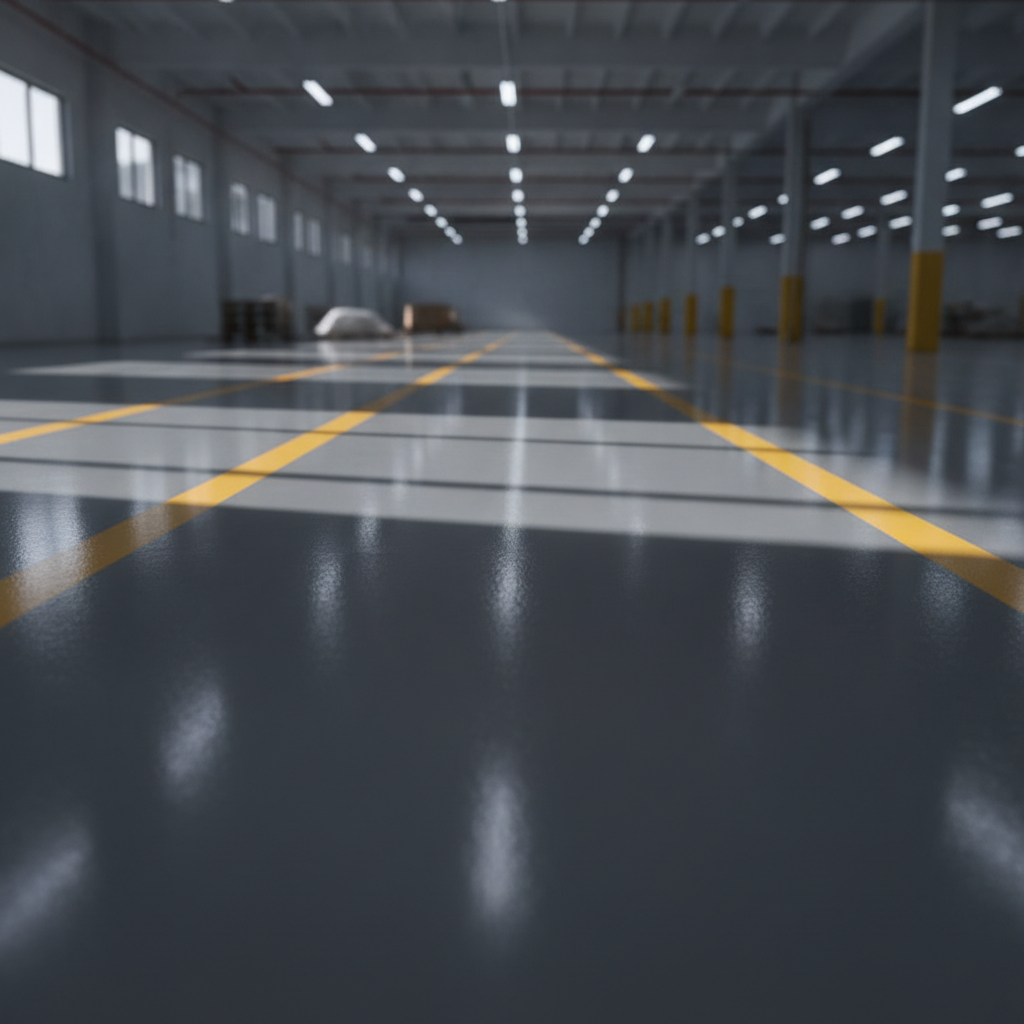
Solid-colour epoxy is the workhorse. You see it in workshops, warehouses and distribution centres across Melbourne’s western and northern industrial corridors. It goes down fast, comes in dozens of colours for line marking and safety zoning, and takes a serious beating.

Flake epoxy (sometimes called broadcast or chip epoxy) adds vinyl flakes into a wet base coat. The flakes create a slightly textured, slip-resistant surface, which is a real advantage in areas that see water, oils or cleaning chemicals. Because the flakes cover the base colour, they also mask minor imperfections in the concrete underneath. A clear polyurethane or epoxy topcoat locks everything in. This system is popular in car dealerships, gyms, retail showrooms and commercial kitchens.

Metallic epoxy uses metallic pigments suspended in the resin to produce a flowing, three-dimensional look. It reads almost like polished stone. You tend to see this one in reception areas, restaurants, hotels and high-end retail spaces where the floor is part of the brand experience. The coating itself is just as tough as any other epoxy, but the finish demands a skilled applicator to get the movement right.

Self-levelling epoxy is poured at a higher volume and flows out to a consistent depth, typically around 2 mm to 3 mm. It creates a completely flat, joint-free surface that is easy to mop down and resists bacterial harbouring. Commercial kitchens, breweries, food processing plants and medical facilities are the natural fit here.

How does epoxy floor coating handle the demands of a commercial environment?

Commercial epoxy floor coating handles industrial demands by bonding directly to concrete at a molecular level, producing a surface with compressive strength ratings often exceeding 70 MPa. That means it withstands constant forklift and pallet jack traffic, resists petrol, hydraulic fluid and cleaning chemicals, and does not chip or peel under normal commercial use the way painted floors do.

One thing worth knowing: concrete preparation is where a professional installation lives or dies. Shot blasting or diamond grinding opens the concrete’s surface profile so the epoxy has something real to grip. Skip that step and even the best product will delaminate within months. A reputable installer will always grind first and do a moisture test before anything else goes down.

Slip resistance is another practical consideration. A glossy solid-colour epoxy on a floor that sees water or oil needs an anti-slip additive (aluminium oxide or fine quartz is common) in the topcoat. Flake systems give you built-in texture at no extra cost. For workplaces subject to Safe Work Australia guidelines, getting this right is not optional.

Temperature also matters for Melbourne businesses. Epoxy is applied between roughly 10 and 30 degrees Celsius. In winter, a cold concrete slab can slow the cure cycle and affect adhesion. A good installer accounts for ambient temperature and slab temperature separately, not just the reading on the thermometer.

Which commercial epoxy floor coating is right for your Melbourne business?

The right commercial epoxy floor coating depends on three things: the type and weight of traffic your floor sees, whether hygiene or aesthetics are a priority, and your concrete’s current condition. Warehouses and workshops typically suit solid-colour or flake systems. Showrooms and hospitality venues tend to favour metallic or decorative flake. Food and medical facilities almost always need a self-levelling system with a chemical-resistant topcoat.

Here is a practical way to think through it:

  • Warehouse or light industrial: Solid-colour epoxy with a polyurethane topcoat. Add line marking in a contrasting colour for safety zones and forklift lanes. Budget-friendly and fast to install over large areas.
  • Car dealership or gym: Full broadcast flake system. The texture adds grip, the flake pattern hides tyre marks and scuffs, and it looks sharp for years with minimal upkeep.
  • Showroom, cafĂ© or retail: Metallic epoxy for something genuinely distinctive, or a decorative flake in a tighter scatter for a cleaner look. Both work well under display lighting.
  • Commercial kitchen or food production: Self-levelling epoxy with a chemical-resistant, anti-bacterial topcoat. Make sure the installer knows your drainage layout before they start.
  • Mixed-use office and workshop: You can run two systems side by side, one in the office zone and one in the workshop, with a clear transition strip between them. Installers do this regularly.

Concrete condition shapes the budget more than most business owners expect. A slab with significant cracking, oil contamination or moisture issues takes more prep time. Getting a site inspection before committing to a quote means there are no nasty surprises once work starts.

How long does a commercial epoxy floor coating last and what maintenance does it need?

A properly installed commercial epoxy floor coating typically lasts between 10 and 20 years in a standard commercial environment. Heavy industrial use with constant forklift traffic sits toward the lower end of that range. Showrooms and offices with lighter traffic can push well past 15 years before a full recoat is needed.

Maintenance is straightforward. Sweep regularly to stop grit acting like sandpaper under trolley wheels. Mop with a pH-neutral cleaner. Avoid harsh acids or bleach on standard epoxy topcoats unless your system was specified to handle them. Clean up chemical spills quickly rather than letting them sit.

Most systems can be recoated rather than fully stripped when they eventually show wear. A professional installer will assess the existing coating, do spot repairs if needed, lightly abrade the surface, and apply a fresh topcoat. This costs a fraction of a full install and puts another five-plus years on the floor.

The single biggest factor in longevity is installation quality on day one. A floor that was properly ground, primed and coated at the correct film thickness will outlast a cheaply-done job by years. Ask for product data sheets and check that the installer is applying at the manufacturer’s specified spread rate, not stretching the product thin to save on materials.

Metal and Flake works with Melbourne businesses across the commercial and industrial spectrum, bringing the same attention to prep and finish to every job. Get a commercial epoxy floor coating quote from Metal and Flake.

Epoxy Floors in Craigieburn: Options for New and Established Homes

Epoxy Floors in Craigieburn: Options for New and Established Homes

Epoxy floors in Craigieburn suit both brand-new slabs and older concrete that needs a refresh. A metallic, flake or solid-colour system bonds directly to your slab, giving you a tough, low-maintenance surface that handles Melbourne’s temperature swings, heavy foot traffic and the chaos of a busy family garage or workshop. Most residential jobs are complete within two days.

Why are epoxy floors so popular in Craigieburn right now?

Epoxy floors have taken off in Craigieburn because the suburb is a mix of brand-new estates and established homes from the early 2000s, and epoxy works well across both. New slabs are smooth and ready to coat with minimal prep. Older slabs often just need a diamond grind to open the surface. Either way, the result is a seamless, easy-clean floor that holds up to daily punishment far better than bare concrete or vinyl tiles.

Craigieburn sits in Melbourne’s northern growth corridor, where a huge number of homes come with double or triple garages. Those garages cop a lot: oil drips, tyre scuff, garden equipment, kids’ bikes and the occasional spilled paint tin. Bare concrete soaks all of that up. Epoxy doesn’t. A quality two-coat system seals the slab completely, so spills wipe up with a mop and the floor still looks sharp years down the track.

There’s also the aesthetic angle. Metallic epoxy and full-broadcast vinyl flake systems have moved well beyond the plain grey garage floor. Homeowners in newer estates are matching their floor finish to their interior colour palette, choosing pearl whites, charcoal blends or copper-toned metallics to carry the look from the garage through to the alfresco or laundry.

What epoxy floor systems work best for a new Craigieburn build?

For a new Craigieburn build, a full-broadcast vinyl flake system or a metallic epoxy are the two standout choices. Both bond strongly to a fresh slab, deliver a high-gloss finish that complements modern interiors, and hold up under daily residential use. A flake system also hides minor surface texture and is slightly more slip-resistant underfoot, which matters in a garage that gets wet.

New slabs in northern Melbourne estates are typically poured and left to cure for at least 28 days before any coating goes down. Once the slab has reached the right moisture level, a diamond grind opens the surface pores so the epoxy primer soaks in properly rather than sitting on top. This mechanical bond is what separates a floor that lasts a decade from one that peels after a couple of summers.

For a standard double garage (around 36 to 40 square metres, which is common in Craigieburn), a full-flake system involves a base coat, a broadcast of colour flakes to rejection, and a clear polyurethane topcoat for UV and abrasion resistance. The whole process typically takes two days: grind and prime on day one, topcoats on day two, with a light-traffic cure time of around 24 hours after the final coat.

Metallic epoxy is the premium option for homeowners who want a floor that looks closer to polished concrete but with more depth and movement. Pigment is mixed into the epoxy resin and manipulated with a squeegee and blower to create organic, swirling patterns. No two floors look the same, which suits homeowners who want something a bit different in their garage or internal workshop.

What about epoxy floors for older established homes in Craigieburn?

Older slabs in established Craigieburn homes are perfectly suitable for epoxy, but they usually need more preparation work than a new pour. Surface contamination from years of oil, paint or sealers, plus minor cracking or spalling, has to be dealt with before the epoxy goes down. A thorough diamond grind and crack repair means the finished floor is just as durable as one laid on a fresh slab.

Homes built in the early 2000s and mid-2000s in suburbs like Craigieburn often have garage slabs that are sound structurally but look rough: staining, tyre marks, pitting from water and general wear. Epoxy covers all of that. Hairline cracks get filled with a flexible polyurethane filler or an epoxy crack filler before the base coat goes down, so the finished surface is smooth and sealed.

One thing worth knowing about older slabs is moisture. Slabs that sit directly on the ground without an adequate vapour barrier can hold higher moisture content than newer pours with modern DPM (damp-proof membrane) systems. A professional will test moisture levels with a calcium chloride test or a moisture meter before committing to a system. If moisture is elevated, a moisture-tolerant epoxy primer handles the issue at the base rather than risking delamination later.

The finish options for an established home are exactly the same as for a new build. Full flake, metallic, solid colour or a combination. Many owners of older Craigieburn homes go for a mid-tone flake blend in greys and silvers: it hides dust well, photographs well for a future sale, and is a safe resale choice in a suburb where buyers expect a tidy garage presentation.

How does epoxy floor cost in Craigieburn compare to other options?

Epoxy floor cost in Craigieburn typically runs between $50 and $100 per square metre for a residential garage, depending on the system chosen and the condition of the slab. That puts a standard double garage in the $2,000 to $4,000 range. Compared to timber, tiles or polished concrete, epoxy is mid-range on installation cost but low on long-term maintenance cost, which is where it earns its value over time.

Polished concrete is often cited as a direct competitor, and it does deliver a similar seamless look. However, polished concrete involves multiple grinding passes and densifier applications, and it’s generally more expensive per square metre than a flake or metallic epoxy system. It also tends to show oil stains more readily in a garage environment unless a topical sealer is regularly reapplied.

Tiles are another common garage option, and interlocking rubber or PVC tiles are cheap upfront. But they lift at the edges over time, dirt and moisture get underneath, and they don’t add the same polished finish that lifts the look of the whole space. For a Craigieburn home where the garage is a prominent part of the street frontage or connects to a living area, epoxy simply presents better.

The cost will also shift based on prep work needed. A heavily contaminated or cracked slab takes longer to prepare, and that labour is reflected in the quote. Getting a firm quote based on a physical inspection of the slab is always the right move rather than trying to price it off a photo.

What should Craigieburn homeowners know before booking an epoxy floor job?

Before booking an epoxy floor job in Craigieburn, clear the space completely, check whether any moisture barrier concerns apply to your slab, and have a rough idea of your preferred finish. Give your installer access to the concrete surface well before the job so they can assess the prep required. Choosing a colour sample in person, in your actual space, beats picking from a screen every time.

A few practical points worth covering before the installer arrives:

  • Move all vehicles, shelving, tools and stored items out of the garage at least the day before. The grinder and vacuum setup needs full access to the slab edge to edge.
  • If you have a hotwater system, gym equipment or storage rack bolted to the floor, let the installer know. Anchor points can be worked around, but they need to be factored into the prep plan.
  • Plan for 48 to 72 hours off the floor before returning vehicles. Foot traffic is fine after about 24 hours, but tyre load needs a longer cure window, especially in warm weather where the epoxy cures faster but can remain slightly soft in the early stages.
  • In Craigieburn, summer temperatures can push above 38 degrees. Very hot weather affects pot life (the working time of mixed epoxy), so scheduling a garage floor job in milder months or in the morning during summer gives the installer more control over the application.

Picking a local contractor who has worked on slabs in the area is a genuine advantage. They know the soil conditions, the slab ages common to the suburb’s housing stock, and the temperature and humidity patterns that affect cure times in this part of Melbourne’s north.

Get an epoxy floor quote in Craigieburn from Metal and Flake

Concrete Floor Epoxy Coating: Which System Suits Your Space?

Concrete Floor Epoxy Coating: Which System Suits Your Space?

A concrete floor epoxy coating is a two-part resin system applied directly to prepared concrete to create a tough, seamless surface. The right system depends on your traffic load, moisture conditions and aesthetic goals. Garage floors, commercial warehouses, showrooms and domestic living areas all have different demands, and choosing the wrong product leads to peeling, bubbling or premature failure.

What are the main types of concrete floor epoxy coating?

There are four main types of concrete floor epoxy coating: water-based epoxy (entry-level, low odour, best for light foot traffic), solvent-based epoxy (harder film, stronger adhesion, suits garages and workshops), 100% solids epoxy (no solvents, maximum thickness and durability for heavy industrial loads) and epoxy mortar systems (aggregate-filled, used where serious impact or chemical resistance is needed). Each system has a different film build, cure time and price point.

Water-based epoxy is the easiest to apply and the safest to work with indoors. It sits at around 30 to 50% solids content, meaning a lot of the product evaporates as it cures. That thinner dry film is fine for a laundry or home gym, but it will not hold up under a car doing burnouts or a forklift running daily routes. It is also the most affordable option, which makes it popular for DIY weekend projects.

Solvent-based systems carry a stronger smell and need good ventilation during application, but the trade-off is a denser, harder film that bites into concrete better. Most residential garage floors and workshops sit comfortably in this category. If you have an old concrete slab with some porosity, a solvent-based product tends to penetrate and anchor more effectively than a water-based one.

100% solids epoxy lays down at full thickness with virtually zero shrinkage during cure. You get exactly what you put on. This is the product of choice for showroom floors, commercial kitchens and anywhere that needs a thick, mirror-flat finish. It is also the system most commonly used as a base coat under decorative flake or metallic finishes. The catch is that it has a short pot life, usually 20 to 30 minutes once mixed, so applicators need to work fast and methodically.

Epoxy mortar systems mix a standard epoxy resin with graded aggregate, producing a surface that can be 6 to 12 millimetres thick. These are used in breweries, food processing facilities and loading docks where thermal shock, heavy impacts and constant cleaning with harsh chemicals are everyday realities. They are not something most homeowners will ever need, but it is worth knowing they exist if you are fit-ting out a serious commercial space.

How does surface preparation affect the performance of your epoxy coating?

Surface preparation is the single biggest factor in how long a concrete floor epoxy coating lasts. The industry benchmark is to achieve a concrete surface profile (CSP) of 3 to 4, which means the surface has enough texture to grip the resin. Diamond grinding or shot blasting are the two standard methods used to reach that profile. Skipping prep, or using acid etching alone on a dense slab, is the most common reason epoxy floors fail within 12 months.

Moisture is the other major risk factor. Concrete holds water, and if that moisture vapour pushes up through the slab while the epoxy is curing, it breaks the bond and creates bubbles or whitish blush marks across the surface. A simple test is to tape a sheet of plastic film to the bare slab for 24 hours. If condensation forms underneath, you have a moisture issue that needs a moisture-tolerant primer or a moisture vapour barrier coat before any topcoat goes on.

Cracks, control joints and damaged areas need attention before coating too. Hairline cracks can be filled with a low-viscosity epoxy crack filler. Larger structural cracks are a different problem and may need a professional assessment before any coating work begins. Skimming over a crack with a topcoat just means the crack telegraph through the finished surface within weeks.

Oil contamination is another prep headache, particularly in garages and workshops that have seen years of vehicle use. Oil soaks into porous concrete and creates a barrier that prevents epoxy from bonding. Degreasers help, but in badly affected spots, grinding back to fresh concrete is the only reliable fix. This is one of the reasons a professional diamond grind makes such a big difference over a DIY acid etch.

Which epoxy coating system works best for a residential garage?

For a standard residential garage, the best concrete floor epoxy coating system is a 100% solids broadcast flake system: a pigmented base coat of 100% solids epoxy, followed by a broadcast of decorative vinyl flakes, then a polyaspartic or polyurethane clear topcoat. This combination gives you a thick, durable base, excellent slip resistance from the flakes and a UV-stable clear that resists tyre marks, oil drips and hot-tyre pickup.

The flake layer does more than look good. It creates a textured surface that hides minor imperfections, adds grip underfoot, and makes it much harder to see everyday wear. Full-broadcast flake systems, where the flakes are thrown wall-to-wall until the base coat is fully covered, produce a seamless, terrazzo-like result that holds up well for 10 or more years with basic maintenance.

A polyaspartic clear topcoat is worth the extra investment over a standard epoxy topcoat for one simple reason: UV resistance. Standard epoxy yellows when exposed to sunlight. A garage with a roller door that opens to the sun will show yellowing on a standard epoxy topcoat within a year or two. Polyaspartic does not yellow, and it cures faster, meaning the floor can often be walked on within 24 hours and driven on within 48.

What about decorative systems for showrooms and living spaces?

Metallic epoxy and full-flake broadcast systems are the two most popular decorative options for spaces where appearance matters as much as durability. Metallic epoxy uses pigmented metallic powders suspended in a 100% solids base coat to create flowing, three-dimensional colour effects that look different from every angle. No two metallic floors are identical, which makes them a strong design choice for showrooms, cafes and high-end residential interiors.

The trick with metallic epoxy is in the application technique. Applicators move the resin with squeegees, rollers and sometimes a heat gun to push the metallic pigment into different patterns. Experience and product knowledge make a real difference to the final result. A rushed or poorly mixed metallic pour looks flat and muddy rather than the liquid-metal effect most people are after.

For domestic living areas, the main concern after appearance is comfort underfoot and the ability to clean easily. A well-applied epoxy or polyaspartic system on a fully prepped slab ticks both boxes. It is seamless, so there are no grout lines or joins to trap dust and bacteria, and it wipes clean with a damp mop. Compared to tiles or timber, a sealed concrete floor in a living area is genuinely low maintenance once it is properly installed.

How do you maintain a concrete floor epoxy coating once it is down?

Maintaining a concrete floor epoxy coating is straightforward: sweep or vacuum regularly to remove grit (which acts like sandpaper underfoot), mop with a pH-neutral cleaner, and avoid dragging heavy objects with sharp metal edges across the surface. Placing felt pads under furniture legs helps too. A well-maintained system in a residential garage or living area can realistically last 10 to 15 years before any remediation is needed.

One thing to watch is UV exposure. Even with a polyaspartic topcoat, prolonged direct sunlight through glass can affect the surface over many years. Where large windows face west or north, some owners add a UV window film to reduce heat and light intensity on the floor. It is a minor step that extends the life of the coating noticeably.

If the surface eventually dulls or shows light scratches, a maintenance coat (a single thin layer of clear topcoat applied over the existing system) can refresh the floor without the cost or disruption of a full strip and recoat. This is a much cheaper option than starting from scratch, and it is only viable because the underlying system was properly prepared and installed in the first place. Cut corners on the original install and a maintenance coat will not save you.

Getting the system choice and the prep right from day one is the whole game. Whether you are fitting out a double garage in the eastern suburbs, a commercial showroom in the CBD or a polished living area in a new build, the fundamentals are the same: correct profile, moisture control, the right product for the load, and a topcoat matched to the environment.

Book concrete floor sealing and preparation with Metal and Flake

Epoxy Floors in Sunbury: Garage and Residential Options Explained

Epoxy Floors in Sunbury: Garage and Residential Options Explained

Epoxy floors in Sunbury are a practical, long-lasting upgrade for garages, workshops, laundries and living areas. A quality epoxy system bonds directly to concrete, resists oil, water and heavy foot traffic, and can last well over a decade with minimal upkeep. Options range from solid colours to decorative metallic and flake finishes, covering most budgets and styles.

Why are epoxy floors so popular in Sunbury homes and garages?

Epoxy floors suit Sunbury properties because the area’s mix of new estates and established homes means lots of plain concrete slabs just waiting for a proper finish. Epoxy seals the concrete against moisture rising from the ground, resists the grime that comes with rural and semi-rural living, and cleans up with a mop. That combination of toughness and low maintenance is hard to beat for the price.

Sunbury sits on Melbourne’s north-western fringe, which means properties often have larger garages, sheds and outdoor-adjacent spaces than you’d find closer to the CBD. Those big concrete slabs are exposed to temperature swings, tyre rubber, oil drips and garden mud on a daily basis. A bare concrete slab absorbs all of that. An epoxy coating keeps it on the surface where you can wipe it away.

There’s also the look. A freshly coated floor with a metallic or flake finish genuinely changes the feel of a garage or workshop. Plenty of homeowners who come in asking about a practical solution end up just as excited about the result aesthetically. Both outcomes are worth chasing.

What epoxy floor finishes are available for Sunbury garages?

For garage floors in Sunbury, the main finish options are solid colour epoxy, decorative flake (also called chip or flake broadcast) and metallic epoxy. Solid colour is the most affordable entry point, flake is the most popular for garages because it hides imperfections and adds grip, and metallic epoxy gives a high-end marbled look suited to showroom-style spaces or premium home interiors.

Here is a quick breakdown of how each system works in a real garage setting:

Solid colour epoxy. A base coat and topcoat in a single colour, usually grey, charcoal or white. Clean, easy to spec, and the most budget-friendly option. Works well in workshops where looks take a back seat to function.

Flake broadcast epoxy. Coloured vinyl flakes are scattered across a wet base coat, then sealed under a clear topcoat. The flakes add texture that improves grip underfoot and under tyres. They also break up the visual field so small cracks or surface variations in the concrete are much less obvious. This is by far the most common system installed in residential garages around Melbourne’s north-west.

Metallic epoxy. A pigmented metallic base coat manipulated while wet to create swirls, waves and depth. The result looks closer to polished concrete or marble than a painted floor. Popular for internal living areas, home gyms and high-end double garages. Requires a more skilled application because the effect is created by hand during the pour.

All three systems can be finished with either a gloss or satin topcoat. Gloss is the most common in garages because it reflects light and makes the space feel larger. Satin suits living areas where a subtler sheen is more appropriate.

How does epoxy floor installation work for a Sunbury residential slab?

The installation process for a residential epoxy floor in Sunbury follows the same core steps regardless of the finish chosen. Surface preparation comes first and is non-negotiable. Skipping or rushing prep is the single biggest reason epoxy floors fail early, with delamination (the coating peeling away from the concrete) being the most common outcome of poor prep work.

A proper prep job involves diamond grinding the concrete surface to open the pores and give the epoxy something to bond to. Any cracks, spalls or expansion joints are filled and levelled before coating begins. On a standard double garage (around 36 to 40 square metres), prep alone can take three to four hours.

After prep, the base coat goes down. Depending on the system, flakes are broadcast or the metallic pigment is worked across the surface. The floor then needs cure time before the topcoat is applied. Full cure time varies by product and conditions, but most residential epoxy floors are walk-ready within 24 hours and ready for vehicles within 48 to 72 hours.

A few things to sort out before the installer arrives: clear everything off the floor, arrange for the space to be at a reasonable temperature (extremely cold concrete in winter can slow curing), and check whether any moisture testing is required. Slabs with high moisture vapour emission can cause adhesion issues and a good installer will test before committing to a system.

What does epoxy flooring cost in Sunbury?

Epoxy floor pricing in Sunbury varies based on the system chosen, the size of the area, and the condition of the concrete. As a general guide, a basic solid colour system in a single garage (around 18 to 20 square metres) will come in lower than a full metallic system in the same space, largely because the metallic finish requires more skilled labour and higher-cost materials.

Per square metre rates across Melbourne’s north-west typically range from around $50 to $120 per square metre all-inclusive, with flake systems sitting in the mid-range and metallic at the upper end. Larger areas often attract a better rate per square metre because setup time is spread across more floor. A 60 square metre garage floor will usually cost less per square metre than a 20 square metre laundry for that reason.

Be cautious of very low quotes. Installers cutting corners on surface prep or using thin, single-coat systems can deliver a floor that starts peeling within a year. A quality epoxy system applied correctly should last ten to fifteen years with normal residential use before needing any significant maintenance.

How do you maintain an epoxy floor in a Sunbury home?

Maintaining an epoxy floor is genuinely straightforward, which is one of the reasons homeowners keep choosing it. Regular sweeping or blowing out dust and grit is the main task. Grit acts like sandpaper underfoot and under tyres, so keeping it off the floor extends the life of the topcoat. Beyond that, a damp mop with a mild detergent is all that is needed for a proper clean.

Avoid harsh chemical cleaners, particularly anything with a strong acid or solvent base. Most household cleaners are fine. Oil spills in garages should be wiped up promptly rather than left to sit, though a quality topcoat will resist penetration for a reasonable amount of time if you get to it within a day or so.

Anti-fatigue mats near workbenches and wheel chocks under car tyres are worthwhile in a workshop or garage setting. Hot tyre pickup (where a warm tyre bonds slightly to the topcoat and then pulls at it when the car moves) is a known issue with lower-quality coatings. A proper polyaspartic or high-build polyurethane topcoat significantly reduces this risk compared to a thin DIY kit.

Every few years it is worth inspecting the floor for any small chips or scratches in the topcoat and addressing them before moisture or chemicals can reach the base coat beneath. Catch it early and a spot repair is straightforward. Leave it and you can end up with a larger problem.

Book an epoxy floor installation in Sunbury with Metal and Flake

Metallic Epoxy Floors: How They Work and What They Cost

Metallic Epoxy Floors: How They Work and What They Cost

A metallic epoxy floor is a resin coating system that uses metallic pigment powders suspended in a clear or tinted epoxy base to create a deep, three-dimensional finish. The pigments shift and swirl during application, producing a unique marbled or molten-metal effect. Costs in Melbourne typically range from $80 to $150 per square metre depending on floor condition, system thickness and finish complexity.

What exactly is a metallic epoxy floor and how does it work?

A metallic epoxy floor combines a two-part epoxy resin with finely milled metallic pigments, usually mica or aluminium-based powders, that are broadcast or blended into a base coat. Once applied, the installer uses air movement, rollers or brushes to push the pigment into swirls, waves or lobe patterns. The top clear coat locks everything in place, giving the floor its high-gloss depth.

The science behind the look is pretty straightforward. The metallic particles have different densities, so they settle and travel at slightly different rates as the epoxy levels out. That natural movement is what creates the flowing, almost liquid appearance that you can never quite replicate twice. Every pour is genuinely one-of-a-kind, which is one of the reasons homeowners and commercial fit-out clients alike chase this finish.

The system typically goes down in three layers: a penetrating primer that bonds to the concrete substrate, the pigmented metallic base coat, and a UV-stable polyurethane or clear epoxy topcoat. The topcoat is what protects the visual layer from foot traffic, chemicals and abrasion. Without it, the metallic pigment would dull and scratch within months.

Where are metallic epoxy floors most commonly installed?

Metallic epoxy floors are most commonly installed in residential garages, living areas, commercial showrooms, gyms and retail spaces where the owner wants a striking visual finish alongside practical durability. The system suits any slab that is structurally sound and has been properly prepared, making it versatile across both new builds and renovations.

In Melbourne, the most popular applications tend to be residential garage floors and open-plan living areas. A polished garage floor with a gunmetal or copper metallic finish has become a real selling point in newer homes across the outer suburbs. On the commercial side, boutique gyms, car dealerships and food-grade production areas use metallic systems because the seamless surface resists moisture and is easy to clean.

It is worth knowing that metallic epoxy is not the right call for every situation. Very damp slabs, outdoor areas exposed to direct UV without a UV-stable topcoat, or floors with significant movement cracks all need careful assessment before you commit to the system. A reputable installer will test the concrete for moisture vapour transmission before quoting, because an improperly prepped slab is the single biggest cause of delamination failures in the industry.

What does a metallic epoxy floor cost in Melbourne?

In Melbourne, a professionally installed metallic epoxy floor generally costs between $80 and $150 per square metre for a standard residential job, with commercial and industrial projects sometimes exceeding that range depending on substrate work, coating thickness and finish specification. A typical double garage of around 36 square metres would therefore sit somewhere between $2,900 and $5,400 fully installed.

Several factors move the price up or down. Concrete grinding and preparation is usually the biggest variable. If your slab has paint, old adhesive, surface contamination or minor cracking, expect to spend more on prep work before a single drop of epoxy goes down. Cutting corners on preparation is how floors fail, so this is not an area where a decent installer will compromise.

The number of coats and the topcoat specification also affect cost. A basic two-coat system with a standard epoxy clear is cheaper than a three-coat system finished with a 100-micron aliphatic polyurethane that resists yellowing and tyre marks. For a garage, the premium topcoat is usually worth the extra spend because hot rubber from tyres can permanently mark a softer clear coat over time.

Anti-slip additives, flake blending (mixing decorative vinyl flakes into the metallic system for a different texture), and custom colour matching all add to the bill. But given that a well-applied metallic floor will last 10 to 20 years with basic maintenance, the per-year cost often works out cheaper than tiles or polished concrete when you factor in ongoing upkeep.

How long does a metallic epoxy floor installation take?

Most metallic epoxy floor installations take two to three days from start to finish: one day for surface preparation and priming, one day for the metallic base coat, and a final visit for the topcoat once the base has cured. Light foot traffic is usually safe after 24 hours, with full vehicle traffic possible after five to seven days depending on ambient temperature.

Melbourne’s weather matters here. Epoxy cures through a chemical reaction that slows down significantly in cold conditions. In winter, especially in Melbourne’s west and outer east where overnight temperatures can drop below 10 degrees Celsius, installers may need to add catalyst adjustments or allow extended cure windows. A good installer will schedule around temperature forecasts and never apply epoxy to a cold slab first thing on a frosty morning.

The preparation phase is always the most time-consuming part. Diamond grinding or shot blasting the concrete to an open, profiled surface is not quick work, but it is what makes the bond permanent. Homeowners who have had a previous epoxy job fail are often surprised to learn the installer spent less than an hour on prep. That is almost always the cause.

How do you maintain a metallic epoxy floor once it is installed?

Maintaining a metallic epoxy floor is straightforward: sweep or vacuum regularly to remove grit that can scratch the topcoat, mop with a pH-neutral cleaner when needed, and avoid dragging sharp metal objects across the surface. With basic care, a quality system should retain its gloss and visual depth for well over a decade without needing to be recoated.

For garage floors, placing rubber matting under a vehicle’s turning point reduces the risk of hot-tyre marking. In commercial spaces, felt pads under furniture legs and regular mopping with a diluted neutral cleaner are about all the maintenance that is needed. Avoid harsh solvents and bleach-based cleaners, as these can dull or micro-etch the topcoat over time.

If the topcoat does eventually show wear, it can usually be cut back lightly and a fresh coat applied without stripping the entire system. That is a significant advantage over painted floors or tiles, where localised repairs tend to look patchy. The metallic base coat itself stays intact beneath, so a topcoat refresh brings the whole floor back to life at a fraction of the original installation cost.

Request a metallic epoxy floor installation quote from Metal and Flake.

Epoxy Floors with Flakes: Styles, Benefits and What to Expect

Epoxy Floors with Flakes: Styles, Benefits and What to Expect

Epoxy floors with flakes are a coating system where decorative vinyl flake chips are broadcast across a wet epoxy base coat, then sealed under a clear topcoat. The result is a floor that hides surface imperfections, resists heavy wear, and looks sharp in garages, warehouses, showrooms and homes. Most jobs take one to two days from prep to seal.

What styles are available with epoxy flake flooring?

Epoxy flake flooring comes in a wide range of colour blends, chip sizes and broadcast densities. Common sizes run from 1 mm fine chips through to 6 mm or larger statement flakes. You can choose a light, scattered coverage of around 30 to 50 percent of the surface, a medium blend at around 75 percent, or a full broadcast where chips completely hide the base coat. Each option gives a very different final look.

The colour options are genuinely broad. Neutral blends like grey, charcoal and white work well in garages and commercial spaces because they read as clean and professional under any lighting. Warmer tones, earthy browns and even bold custom blends suit showrooms or residential areas where the floor is part of the interior design. Chip size plays a big role in the finished texture too. Finer chips produce a smooth, almost terrazzo-like surface. Larger chips give more visual depth and a slightly more tactile grip underfoot, which is useful in wet areas or workshops.

A full broadcast is the most popular choice in residential garages across Melbourne because the flakes completely mask minor cracks, old staining or uneven colouring in the existing concrete. You get a consistent, polished appearance without grinding the slab back to perfection first.

What are the real benefits of epoxy floors with flakes compared to plain epoxy?

Epoxy floors with flakes outperform plain solid-colour epoxy in several practical ways. The flake layer breaks up light reflection, which means scuffs, tyre marks and light surface scratches are far less visible day to day. The chips also create a mild anti-slip texture under the clear topcoat, which plain epoxy cannot achieve without adding a separate grit additive.

Beyond appearance, the flake system builds a thicker overall coating than a single-colour solid epoxy. The base coat, the embedded chip layer and the topcoat together form a more robust surface that handles foot traffic, vehicle loads and dropped tools better than thinner alternatives. For context, a properly applied flake system typically lands between 3 mm and 5 mm in total thickness across all layers.

Maintenance is straightforward. Sweeping and a quick mop with a pH-neutral cleaner handles day-to-day dirt. Because the topcoat is non-porous, oil spills, chemical splashes and water bead on the surface rather than soaking into the concrete below. That matters in a home garage or workshop where spills are a regular part of life.

The other practical benefit is that the flake system suits a wider range of concrete conditions than polished concrete or plain coatings. Where the slab has patchy staining, previous paint remnants or moderate surface variation, the flake broadcast covers all of that cleanly. It works with the existing slab rather than demanding a pristine starting point.

What does the epoxy flake floor installation process actually look like?

The installation process for epoxy floors with flakes follows a clear sequence and typically runs across two days, sometimes one long day for smaller areas. Understanding each step helps you plan around it and know what to expect on the day.

Day one begins with surface preparation. This is the most important part of the job. Diamond grinding or shot blasting opens up the concrete surface so the epoxy bonds mechanically rather than just sitting on top. Any cracks or low spots are filled with a fast-cure filler compound at this stage. Skipping proper prep is the primary reason flake floors fail early, so any installer worth hiring treats this step seriously.

Once the surface is clean and profiled, the base coat epoxy goes down. This is the adhesion layer and it typically dries to a tacky state within the first few hours. While it is still tacky, the vinyl flake chips are broadcast by hand across the surface. Depending on the coverage style you have chosen, this can be a light scatter or a full throw where the entire wet base coat is covered. The chips embed into the epoxy as it cures.

After the base coat and chips have cured fully, usually overnight, the installers return to scrape back any raised or loose chips and lightly sand the surface flat. This step removes the rough texture and prepares the surface for the topcoat. The clear topcoat, often a polyurethane or polyaspartic product, is then rolled across the entire floor. This is the layer that provides UV resistance, chemical resistance and the final sheen. Polyaspartic topcoats are worth knowing about specifically because they cure quickly enough to allow foot traffic within a few hours, which is convenient for residential jobs where access to a garage matters.

The floor needs at least 24 hours before light foot traffic and around 72 hours before you drive vehicles onto it. Rushing this cure window is the other common reason floors develop adhesion issues, so patience at the end of the job is just as important as prep at the start.

How long do epoxy flake floors last and what affects their lifespan?

A well-installed epoxy flake floor in a residential garage or light commercial space can last 10 to 20 years before needing attention, provided it was prepped and sealed correctly at the start. The topcoat is the layer that wears first, and in high-traffic areas it may need recoating after 7 to 10 years while the base and flake layer underneath remain perfectly sound.

Three things shorten the lifespan faster than anything else. The first is poor surface preparation at installation, which allows moisture trapped in the slab to push the coating up from below. The second is using a thin or low-quality topcoat that breaks down under UV exposure or chemical contact. Topcoats without UV stabilisers will yellow and chalk within a few years, especially near doors or windows where sunlight hits the floor. The third factor is sustained point loads, like heavy metal shelving feet or vehicle jack stands sitting in the same spot for months, which can cause localised delamination over time.

Keeping the floor clean and free of abrasive grit is the simplest maintenance step that extends life. Fine sand and dirt particles act like sandpaper under foot traffic. A regular sweep followed by a damp mop keeps the topcoat in good condition between professional maintenance visits.

If you are weighing up epoxy floors with flakes for a Melbourne garage, showroom or commercial space, the combination of practical durability, easy maintenance and genuine visual appeal makes it one of the most cost-effective flooring choices available for concrete slabs. Book an epoxy flake floor installation with Metal and Flake.

Epoxy Floors for Your Garage: A Complete Melbourne Guide

Epoxy Floors for Your Garage: A Complete Melbourne Guide

Epoxy floors for your garage transform a dull, dusty concrete slab into a hard-wearing, good-looking surface that resists oil, tyre marks and Melbourne’s seasonal moisture. A properly applied epoxy coating bonds directly to the concrete and, when done right, can last well over a decade with minimal maintenance. Here is everything you need to know before you commit.

Why do so many Melbourne homeowners choose epoxy floors for their garage?

Melbourne homeowners choose garage epoxy floors because bare concrete is porous and punishing. It soaks up oil, stains easily, produces fine dust and looks unfinished. A quality epoxy coating seals all of that away, creates a surface that is easy to hose down, and adds a sharp finish that lifts the whole space. It also makes the garage feel like an actual room rather than a storage afterthought.

Beyond the look, there are practical reasons that make a lot of sense for the average Melbourne home. The temperature swings here, from a humid 38-degree summer scorcher to a wet winter day, put concrete under constant stress. Bare slabs develop surface dusting and hairline cracks over time. A multi-layer epoxy system acts as a protective shell, slowing that deterioration considerably.

Garages also pull double duty for most households. One half parks the car, the other half stores tools, bikes, gym gear or workshop equipment. An epoxy floor handles the rolling loads and dropped weights far better than raw concrete. Add a metallic or flake finish and the space starts looking like something from a car showroom or a professional workshop, not a suburban shed.

What types of garage floor coatings are available in Melbourne?

The main options for garage floor coatings are standard solid-colour epoxy, decorative flake (also called chip) systems, metallic epoxy and polyaspartic topcoats. Each suits a different budget, look and use case. Flake systems are by far the most popular for residential garages because they hide minor surface imperfections, provide grip and are available in a wide range of colour blends. Metallic systems give a high-gloss, marbled effect that suits showroom-style garages.

Here is a quick breakdown of the most common systems:

  • Solid-colour epoxy: Simple, cost-effective and tough. Works well in workshops where looks matter less than durability.
  • Flake or chip system: A coloured base coat is broadcast with vinyl flake, then sealed with a clear topcoat. The texture adds slip resistance and hides dirt between cleans. This is the most common choice for residential garages.
  • Metallic epoxy: Pigments swirl through a clear or tinted base to create a three-dimensional, liquid-metal look. Every floor is unique. Popular for car enthusiasts and home gyms.
  • Polyaspartic topcoat: Often used as a final clear layer over epoxy. Polyaspartic cures faster than standard epoxy and offers excellent UV stability, which matters in garages that get afternoon sun through an open door or side window.

The system Metal and Flake applies uses a combination of these layers tailored to the individual slab and the customer’s priorities, whether that is durability, aesthetics or a quick return-to-use turnaround.

How important is concrete preparation before applying a garage epoxy coating?

Concrete preparation is the single most important step in any garage epoxy job. If the surface is not properly profiled and cleaned, even the best epoxy product will peel, bubble or delaminate within months. Professional preparation typically involves diamond grinding or shot blasting the slab to open up the pores, followed by patching any cracks or spalls, so the epoxy can bond at a molecular level rather than just sitting on top.

This is where a lot of DIY kits fall short. The big-box store kits often rely on acid etching alone, which is far less effective than mechanical grinding on a sealed or contaminated slab. Melbourne garages in particular can have silicone, oil or tyre rubber ground into the surface over years of use. Acid alone will not shift that contamination deeply enough to guarantee a lasting bond.

A professional applicator will also check the moisture vapour transmission rate of the slab before coating. Australian concrete slabs, especially older ones poured without a proper damp-proof membrane, can push moisture upward. Applying epoxy over a slab with high vapour emissions without using a moisture-tolerant primer is a recipe for lifting and blistering down the track.

How long does a garage epoxy floor take to install and when can you use it?

Most residential garage epoxy floors take one to two days to apply, depending on the system and the size of the slab. The preparation work happens on day one, the base coat and flake broadcast on day two, with the clear topcoat following once the base has cured to the correct stage. Light foot traffic is usually possible within 24 hours of the final coat. You should wait at least 72 hours before parking a car back on the surface, and around seven days for full chemical cure.

Polyaspartic systems can speed this up considerably. Some polyaspartic topcoats reach vehicle-ready hardness in as little as 24 hours, which is a practical advantage if you cannot be without your garage for multiple days. The trade-off is that polyaspartic products cure fast at every stage, including the application stage, so they demand experienced hands to get right.

Weather plays a role too. Epoxy should not be applied when the concrete surface temperature is below 10 degrees Celsius or above 30 degrees, as both extremes affect how the product flows and cures. Melbourne’s shoulder seasons, autumn and spring, tend to be ideal. A good installer will check conditions before committing to a start date.

How much do epoxy garage floors cost in Melbourne?

For a standard single-car garage of around 18 to 20 square metres, expect to pay somewhere in the range of $1,500 to $2,500 for a professionally applied flake system, depending on the condition of the concrete and the complexity of the finish. Double garages of 36 to 40 square metres typically come in between $2,800 and $4,500. Metallic systems sit at the upper end of the price range because of the extra skill and material cost involved.

These figures cover professional preparation, materials and labour. Compare that to the cost of resurfacing damaged concrete later or replacing a failing DIY coat that has started to peel. When you factor in a realistic lifespan of ten to fifteen years for a well-applied professional system, the per-year cost is quite reasonable.

Variables that push the price up include severe concrete damage requiring extensive patching, multiple floor drains or control joints that need sealing, and premium decorative finishes. Getting a site-specific quote is the only way to get an accurate number for your garage.

How do you maintain an epoxy garage floor to keep it looking good?

Maintaining an epoxy garage floor is straightforward. Sweep or blow out loose dirt and grit regularly, because fine particles act like sandpaper underfoot and under tyres over time. For general cleaning, a mop with warm water and a pH-neutral cleaner is all you need. Avoid bleach-based or citrus-based cleaners, as these can dull the topcoat over repeated use.

Oil spills should be wiped up promptly rather than left to sit, not because epoxy will absorb them the way bare concrete does, but because oil makes the surface slippery and can degrade the topcoat over extended exposure. A quality flake system has enough texture to provide grip even in a wet garage, but keeping oil off the floor is good practice regardless.

Place felt pads under any heavy shelving or workshop equipment that sits permanently in one spot. Point loads from metal feet can eventually leave impressions in any resin-based coating. Beyond that, a professionally installed epoxy garage floor largely looks after itself. Many customers report that their garage floor still looks sharp after a decade with nothing more than a weekly sweep and an occasional mop.

If the topcoat does eventually show wear in high-traffic zones, a professional can apply a fresh clear coat over the existing floor without a full strip-and-recoat, extending the life of the system further.

Ready to stop looking at that grey slab every time you pull into the garage? Get a free quote on garage floor coating from Metal and Flake.