Epoxy Floors in Brunswick: Coating Options for Inner-North Garages
Epoxy floors in Brunswick are a practical upgrade for the suburb’s mix of heritage semis, double-brick workers’ cottages and converted warehouse spaces. A two-part epoxy coating bonds directly to bare concrete, gives you a hard-wearing, easy-clean surface, and comes in enough finishes to suit a backyard workshop or a polished entertainer’s garage. Most residential jobs are done and cured within two to three days.
Why are epoxy floors such a good fit for Brunswick garages?
Brunswick garages tend to be older, smaller and busier than those in newer suburbs. The concrete slabs are often porous, oil-stained and rough from decades of use. Epoxy bonds to that aged concrete, seals in stains that would keep bleeding through paint, and creates a surface tough enough for daily car traffic, bikes, a chest freezer and a workbench. That combination is hard to beat for a tight inner-north block.
The suburb itself sits about five kilometres north of the Melbourne CBD, which means older building stock and narrower laneways. Most garages were built for one car and used for everything else. Epoxy makes that space work harder. The gloss bounces light around a dark single-car garage, oil drips wipe up in seconds, and the surface resists the grit that blows in off Sydney Road on a windy afternoon.
Concrete floors in homes built before the 1980s often have no damp-proof membrane underneath. That matters for epoxy, because moisture migrating up through the slab can cause coating failure over time. A competent installer will do a simple plastic-sheet moisture test before they quote. If readings are too high, a moisture-tolerant primer or a polyurethane topcoat is used instead of a standard epoxy system. Skipping that test is the most common reason DIY epoxy jobs fail within twelve months.
What coating options are available for epoxy floors in Brunswick?
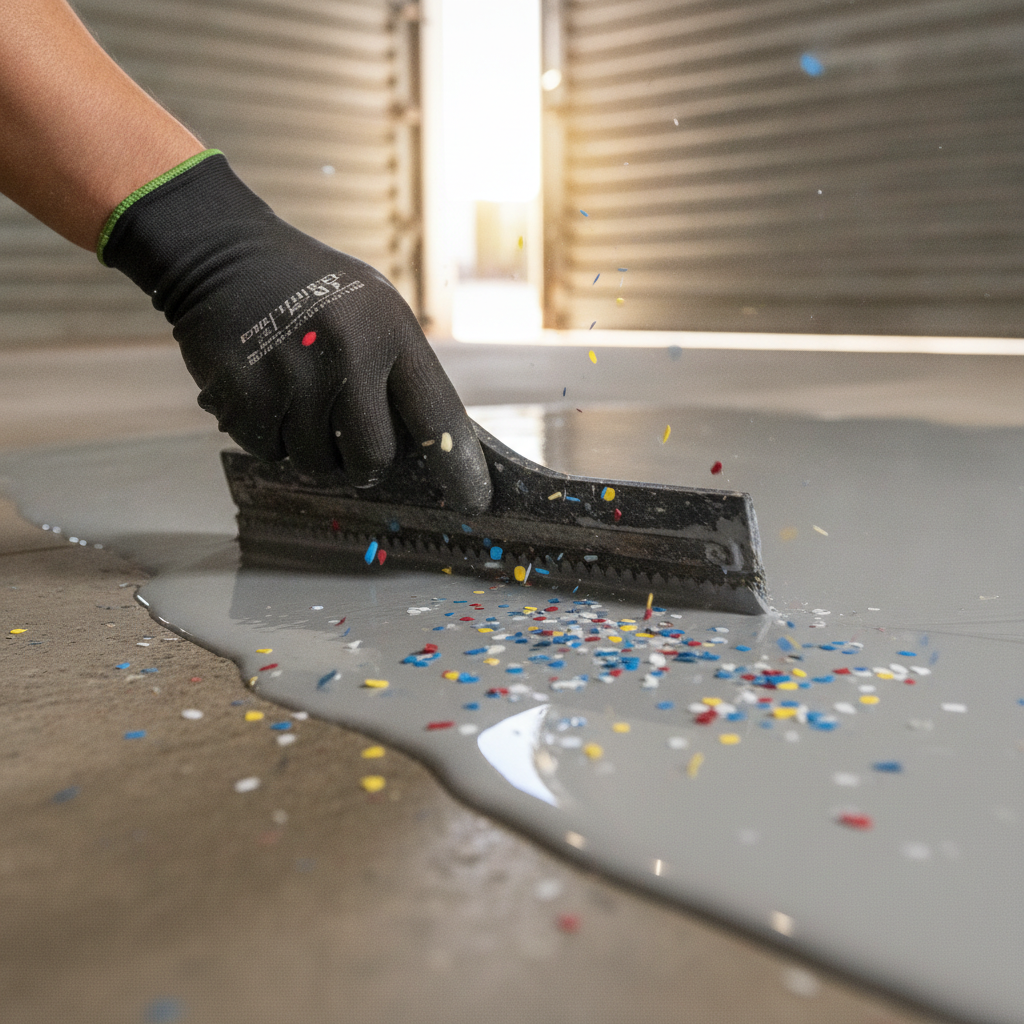
The main coating types for Brunswick garages are solid-colour epoxy, metallic epoxy (sometimes called flake-style), and broadcast flake systems. Each suits a different look and use case. Solid colour is the most affordable and the most discreet. Metallic coatings give a swirling, reflective finish popular in converted warehouse spaces. Broadcast vinyl chip or flake systems hide surface imperfections well and add grip underfoot.
Here is a plain-English rundown of the main options:
- Solid-colour epoxy: A base coat and a clear topcoat in one colour. Grey and charcoal are the most popular choices because they hide tyre marks and dust. Low cost, clean result, suits working garages.
- Broadcast flake (vinyl chip): Coloured vinyl flakes are broadcast into the wet base coat, then sealed with a clear polyurethane or epoxy topcoat. The flake hides hairline cracks and uneven concrete better than any other system, and the textured finish gives you natural slip resistance. This is the workhorse option for family garages.
- Metallic epoxy: Pigment and metallic powder are worked into the wet coat to create organic swirl patterns. No two floors look identical. Popular for showrooms, entertainer spaces and anyone who wants the garage to look like a feature rather than an afterthought. Brunswick’s converted warehouses and design-conscious terrace renovations suit this finish well.
- Clear sealer over existing concrete: Not a full epoxy system, but worth mentioning. A penetrating sealer or a thin clear coat protects the slab without hiding its raw texture. Suits owners going for an industrial look on an already-decent slab.
Topcoat choice also matters. A polyurethane topcoat is UV stable, meaning it will not amber or yellow near a door that gets afternoon sun. Standard epoxy clears will yellow noticeably within a year if they receive direct sunlight. For a north-facing Brunswick garage door that catches the afternoon, always ask for a polyurethane or polyaspartic topcoat.
How does surface preparation affect the final result?
Surface preparation is where the job is won or lost. On older Brunswick slabs, that typically means diamond grinding the concrete to open up the surface, remove previous coatings or sealers, and knock back any high spots. Shot blasting is an alternative on larger or flatter areas. Both processes leave the surface with a profile similar to fine sandpaper, which is what the epoxy needs to grip.
Any cracks or expansion joints need to be addressed before coating. Hairline cracks in concrete slabs are normal and can be filled with a semi-rigid epoxy filler. Structural cracks, the kind that move with temperature or load, need to be routed out and filled with a flexible polyurethane product so they can keep moving without popping through the finished coat.
Oil contamination is common in working garages and it is the biggest enemy of adhesion. Old oil does not just sit on top of the concrete. It penetrates several millimetres into the slab. Grinding removes the surface layer but a contaminated slab often needs a chemical degreaser treatment and sometimes a second grind. An honest installer will test adhesion after prep by pouring water on the surface. If it beads, the slab is not ready.
Allow roughly half a day for prep on a standard single-car garage (around 20 to 25 square metres), then the base coat goes down, flake is broadcast if it is that system, and the topcoat follows once the base coat has cured. Most residential jobs are ready for foot traffic in 24 hours and light vehicle traffic within 72 hours, depending on temperature and the specific products used.
What should Brunswick homeowners know about cost and timing?
Epoxy floor pricing in Melbourne’s inner north is driven by three things: floor size, surface condition and coating type. A single-car garage in reasonable condition with a broadcast flake system typically costs more per square metre than a large open slab that is quick to grind and coat. Smaller jobs take more mobilisation cost per square metre, which is just the reality of the trades.
A few things that push the price up: heavily contaminated concrete needing multiple prep passes, low-clearance garages that make machine grinding awkward, and premium finishes like full metallic systems that require more labour time to work the coat. A few things that keep it manageable: booking during quieter winter months, having the garage cleared and accessible before the crew arrives, and being upfront about any known issues like previous DIY sealers or tyre-mark treatments.
Timing matters in Brunswick’s climate too. Epoxy cures best between about 10 and 30 degrees Celsius. Melbourne’s shoulder seasons, March to May and September to November, are ideal. Midsummer can push concrete surface temperatures above 35 degrees on a north-facing slab, which speeds the pot life of the mixed product and can cause problems if the installer is not experienced with hot-weather application. A good local crew will know this and plan the pour time accordingly.
If you are renovating a Brunswick terrace and the garage is the last thing on the list, try to schedule the epoxy after all the dusty trades have finished. Plaster dust and timber-cutting sawdust settling into a fresh coat will show in the finished surface. The floor should ideally be the second-to-last job, with only a final clean happening after it.
Get an epoxy floor quote in Brunswick from Metal and Flake.