Epoxy Flake Floors Melbourne: Commercial & Residential Applications

Epoxy Flake Floors Melbourne: Commercial & Residential Applications

An epoxy flake floor is a multi-layer resin system broadcast with decorative vinyl flakes, then sealed with a clear topcoat. In Melbourne homes and businesses it delivers a seamless, slip-resistant surface that handles heavy traffic, moisture and UV exposure. Installation typically takes one to two days, and the finished floor can last well over a decade with basic maintenance.

What exactly is an epoxy flake floor and how is it installed?

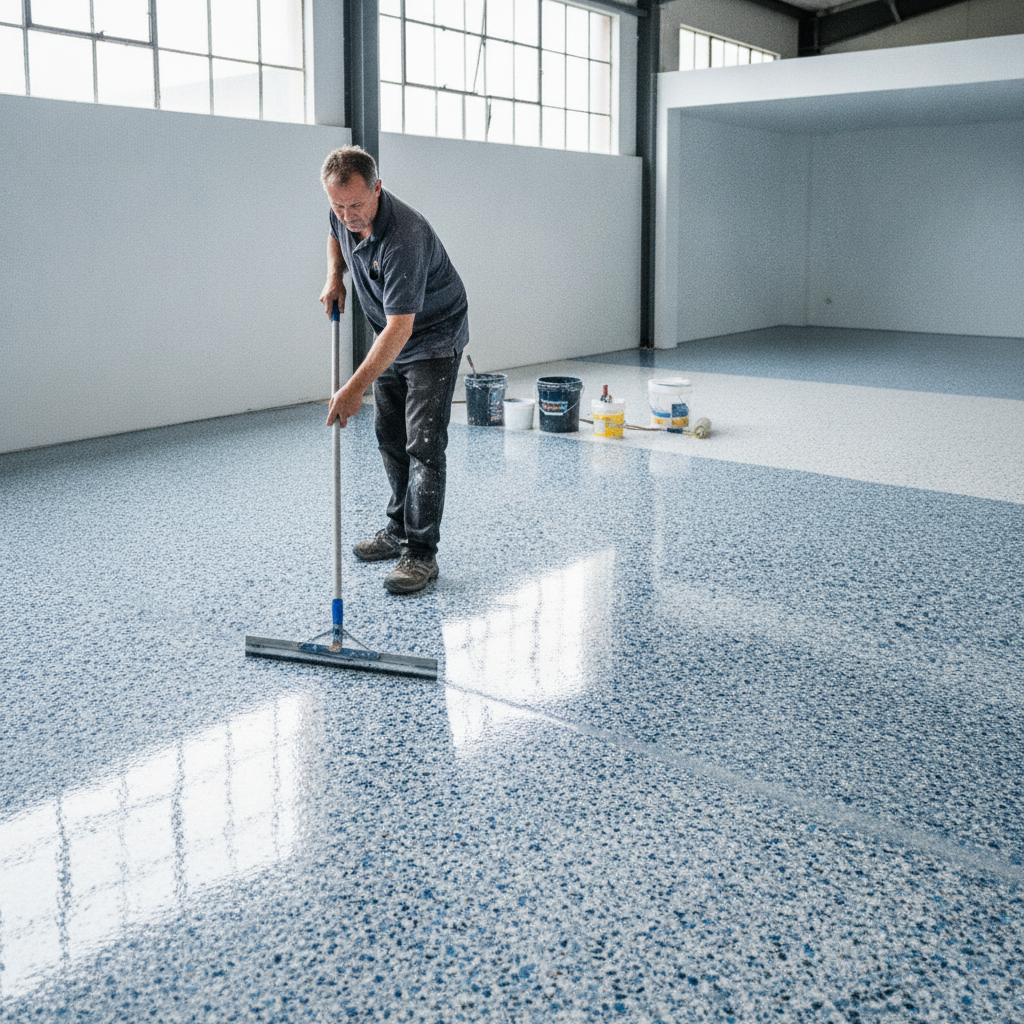
An epoxy flake floor starts with a base coat of pigmented epoxy applied directly to prepared concrete. Decorative vinyl flake chips are then broadcast across the wet coat at a chosen density, allowed to cure, scraped flat and sealed with one or more layers of a polyaspartic or polyurethane topcoat. The result is a thick, monolithic surface with built-in texture and colour.

The process matters as much as the product. Concrete preparation is the step that most separates a long-lasting result from one that peels within a year. Moisture testing, crack repair and diamond grinding or shot-blasting all happen before a single drop of resin touches the slab. Skipping any of those steps is the most common reason epoxy floors fail prematurely, regardless of the brand of coating used.

Flake density is another variable worth understanding. A full broadcast covers virtually every square centimetre of the base coat, producing a bold, highly textured look popular in commercial settings. A partial broadcast leaves patches of the base colour showing through, giving a more speckled, refined appearance that suits residential spaces and boutique retail fitouts. Both approaches result in the same underlying durability.

Where in Melbourne are epoxy flake floors most commonly used?

Epoxy flake floors are most commonly installed in Melbourne garages, warehouses, commercial kitchens, gyms, medical facilities, retail showrooms and residential living areas. Each setting benefits from the surface’s resistance to chemicals, abrasion and heavy point loads, while the decorative flake layer makes it visually appealing enough for customer-facing and family spaces alike.

Residential garages are the single most popular application across Melbourne’s suburbs. A bare concrete slab is porous, stains from oil and tyre rubber almost immediately, and generates fine dust that works its way into the rest of the house. An epoxy flake system seals that porosity, makes spills easy to wipe away and transforms what is often a drab utility space into something genuinely presentable. Many homeowners extend the coating into adjacent laundries or workshops for continuity.

On the commercial side, gyms and fitness studios represent a fast-growing category. A full-broadcast flake floor with a slip-resistant topcoat meets the safety expectations of a training environment while standing up to dropped weights, rubber mats and constant foot traffic. Warehouses and light manufacturing facilities choose epoxy flake for similar reasons, with the added benefit that clearly defined floor zones can be incorporated during installation using contrasting flake colours or inlaid line markings.

Medical clinics, dental practices and veterinary facilities also turn to epoxy flake regularly. The seamless, non-porous surface is straightforward to sanitise, and there are no grout lines or joins where bacteria or moisture can accumulate. That same quality makes it practical in commercial kitchens, where health inspectors expect surfaces that can be properly cleaned and do not harbour contaminants.

How does an epoxy flake floor compare to polished concrete or tiles?

Compared to polished concrete, an epoxy flake floor offers more colour choice, better slip resistance through its textured topcoat and a lower installation cost on slabs that are not in good enough condition to polish. Compared to tiles, it eliminates grout lines, creates a fully seamless surface and can be installed with less labour time. The trade-off is that epoxy is harder to patch invisibly if a section is ever damaged.

Polished concrete is a beautiful finish, but it demands a high-quality, relatively flat slab to begin with. Cracks, pitting and surface variation that would simply be buried under epoxy become visual features in polished concrete, and not always in a desirable way. For Melbourne homes built on older or more variable slabs, epoxy flake is often the more practical path to a premium-looking floor.

Tiles remain popular in wet areas, and with good reason, but the grout issue is real. In busy households or commercial kitchens, grout discolours, harbours mould and eventually cracks. An epoxy flake system sealed with a quality polyaspartic topcoat has no grout at all, and the topcoat itself is formulated to resist moisture penetration. For spaces where hygiene or ease of cleaning is a priority, that difference is meaningful.

How long does an epoxy flake floor last in Melbourne’s climate?

A properly installed epoxy flake floor in Melbourne typically lasts 10 to 20 years before requiring significant attention, depending on traffic levels and topcoat quality. Melbourne’s temperature swings between seasons can stress coatings on slabs with high moisture vapour transmission, which is why moisture testing before installation is non-negotiable. A UV-stable polyaspartic topcoat also prevents the amber yellowing that older epoxy formulations were known for.

The polyaspartic topcoat is worth understanding separately from the epoxy base. While the base coat provides bonding strength and build, polyaspartic is harder, cures faster and offers better UV resistance than standard epoxy topcoats. For Melbourne spaces that receive direct sunlight through garage doors or large windows, that UV stability is the difference between a floor that stays crisp-looking for a decade and one that yellows within a couple of years.

Maintenance is straightforward: regular sweeping and occasional mopping with a pH-neutral cleaner is all that is typically required. Avoid harsh solvents and abrasive scrubbing pads, both of which can dull the topcoat over time. With that basic care routine, the floor holds its finish well and the vinyl flakes remain vivid and intact throughout its service life.

What colours and flake sizes are available for Melbourne properties?

Epoxy flake floors are available in dozens of colour blends, and most suppliers offer flake sizes ranging from roughly 1mm up to 12mm or larger. Small flakes create a finer, more uniform texture, while larger flakes produce a bolder, more dramatic visual. Base coat colour, flake blend and broadcast density all work together, so the best approach is to review physical samples against the space’s lighting and existing finishes before committing.

Neutral blends, think greys, charcoals and warm whites, are the most consistent sellers across Melbourne residential projects because they sit quietly against most interior palettes and do not date quickly. Commercial clients often choose blends that align with their brand colours, or that contrast strongly with yellow safety markings on warehouse floors. The flexibility of the system is one of its genuine strengths: no two blends look quite the same once broadcast and sealed, giving each floor its own character.

It is worth remembering that the topcoat sheen level also shapes the final appearance. A high-gloss finish amplifies depth and colour vibrancy, which works beautifully in showrooms and residential garages. A satin or matte topcoat reduces glare and hides fine surface marks more readily, making it a practical choice for gyms, clinics and any space under fluorescent or industrial lighting.

Choosing well from the start means fewer regrets once the job is done. A reputable installer will walk you through sample boards, ask about the use of the space, the lighting conditions and your expectations for slip resistance, and recommend a specification that fits all of those factors rather than just defaulting to whatever is easiest to apply.

Book Metal and Flake for epoxy flake floor installation in Melbourne

Concrete Floor Sealing Melbourne: Benefits, Costs and What to Expect

Concrete Floor Sealing Melbourne: Benefits, Costs and What to Expect

Concrete floor sealing in Melbourne protects bare or polished slabs from moisture, staining, abrasion and long-term surface degradation. A quality sealer extends the life of a concrete floor by years, reduces ongoing maintenance and gives the surface a finished, intentional look. Whether you are sealing a garage, warehouse or interior living space, the process follows a predictable sequence that any informed owner can plan for.

What are the main benefits of concrete floor sealing?

Concrete floor sealing creates a protective barrier that blocks moisture ingress, resists oil and chemical stains, reduces dusting from the slab surface, and makes routine cleaning significantly easier. Sealed concrete is also harder to scratch and chip than raw concrete, and the right sealer can dramatically enhance colour depth and sheen, turning a dull grey slab into something genuinely striking.

Raw concrete is deceptively porous. Water, cooking oils, tyre marks and cleaning chemicals all find their way into an unsealed slab and begin breaking it down from inside. Over time that leads to spalling, surface pitting and staining that no amount of mopping can fix. Sealing addresses all of that at the source.

The practical upside is just as compelling as the protective one. A sealed floor wipes clean. Spills sit on the surface rather than soaking in, which matters enormously in garages, workshops and commercial kitchens where petrochemicals and food acids are a daily reality. For residential spaces such as polished concrete living rooms or alfresco areas, a sealer also amplifies the natural tone of the aggregate and gives the floor a visual richness that raw concrete simply cannot offer.

There is also a safety dimension worth knowing. Penetrating sealers and certain topical products can be formulated with anti-slip additives, which is particularly relevant for outdoor slabs, pool surrounds and commercial entries that see foot traffic in wet conditions.

How much does concrete floor sealing cost in Melbourne?

Concrete floor sealing costs in Melbourne generally range from around $8 to $25 per square metre for a standard residential or light commercial project, depending on the sealer type chosen, the condition of the existing slab, and any preparation work required. Heavily contaminated or damaged slabs that need grinding and cleaning before sealing will sit at the higher end of that range.

To put that in concrete terms: sealing a standard double garage (roughly 36 to 40 square metres) typically falls somewhere between $350 and $900 all in. A warehouse floor requiring industrial-grade penetrating sealer across 500 square metres is a different calculation entirely, but the per-square-metre rate tends to come down as the project size increases.

The type of sealer is the biggest variable in pricing. Acrylic sealers are the most affordable option and are commonly used on decorative exterior concrete. Polyurethane and epoxy-based sealers cost more but offer a harder, more durable finish suited to high-traffic areas. Penetrating silane or siloxane sealers sit in the mid-range and are favoured where a completely invisible, matte result is needed, particularly on driveways and exposed aggregate paths.

Surface preparation is where many DIY attempts come unstuck. If the slab has oil contamination, efflorescence or previous coating residue, those issues need resolving before any sealer is applied. Skipping prep means the sealer will not bond correctly and will peel, bubble or discolour within months. Professional applicators factor this in from the start, which is why the job holds up long-term.

What does the concrete floor sealing process actually involve?

Professional concrete floor sealing involves four core stages: surface assessment and cleaning, mechanical preparation such as grinding or shot-blasting where needed, application of the chosen sealer in one or more coats, and a curing period before the floor is returned to use. The full process for a residential slab typically takes one to two days from start to walkable finish.

The assessment stage is more important than most people expect. A professional will check moisture vapour transmission from the slab (using a simple calcium chloride or relative humidity test), identify any existing coatings or curing compounds that could interfere with adhesion, and look for cracks or damaged sections that need addressing first. Getting this right means the sealer performs as specified rather than failing prematurely.

Mechanical preparation, usually diamond grinding or scarifying, opens the concrete surface at a microscopic level so the sealer can penetrate or bond properly. For penetrating sealers this step ensures the product gets below the surface rather than just sitting on top. For film-forming products like epoxy or polyurethane topcoats, it provides the mechanical key that stops delamination under load.

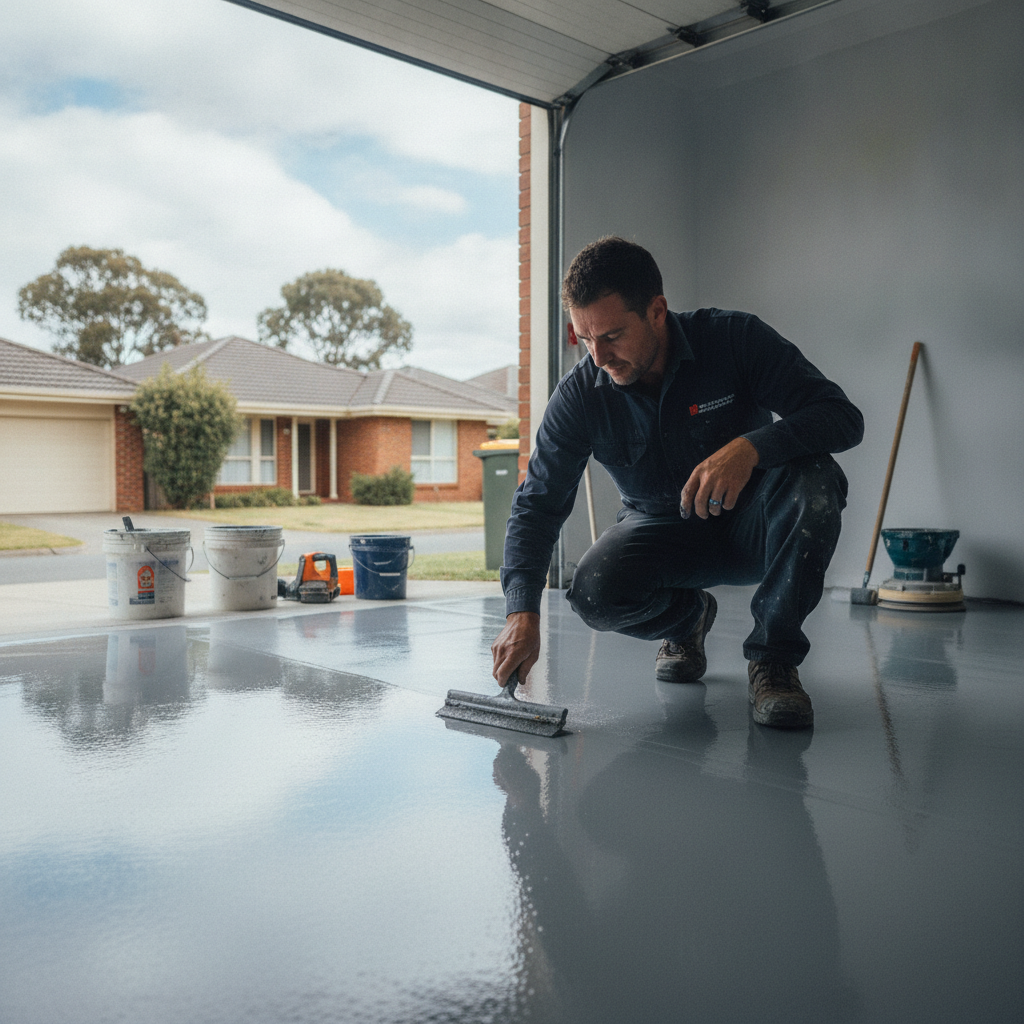
Application itself is typically done by roller, squeegee or low-pressure sprayer depending on the product. Most quality sealers require two coats, with the second applied once the first has reached the specified tack-free time, usually two to four hours. Rushing that window is a common cause of finish problems. After the final coat, foot traffic is usually safe within 24 hours and vehicle traffic within 48 to 72 hours, though full cure to maximum hardness can take up to seven days.

How long does a sealed concrete floor last in Melbourne’s climate?

A professionally applied concrete floor sealer in Melbourne typically lasts between three and ten years before recoating is needed, depending on the sealer type and the level of traffic or UV exposure the floor receives. Topical film-forming sealers on outdoor driveways exposed to Melbourne’s UV and temperature swings tend to need attention every three to five years, while interior penetrating sealers can last a decade or more with minimal maintenance.

Melbourne’s climate adds a few specific considerations. The city’s notorious four-seasons-in-one-day pattern means outdoor concrete slabs go through significant thermal cycling, expanding and contracting repeatedly. A sealer that lacks flexibility will crack at the surface before the concrete beneath does. Quality polyurethane products are formulated with enough elasticity to handle this, which is one reason professionals tend to favour them over cheaper acrylic options for exposed applications.

UV degradation is the other local factor. Cheaper solvent-based acrylics can yellow and chalk on north-facing slabs that receive full sun for most of the day. Water-based polyurethane and penetrating silane products hold their clarity and colour far better under sustained UV exposure, making them a smarter long-term choice for Melbourne driveways, entertaining areas and pool surrounds even if the upfront cost is slightly higher.

Maintenance between recoats is straightforward: sweep regularly, clean spills promptly, and avoid harsh alkaline degreasers that can break down the sealer film over time. A pH-neutral cleaner is all most sealed floors need on a day-to-day basis.

Is professional sealing worth it compared to a DIY approach?

Professional concrete floor sealing is worth the investment over DIY in most cases because surface preparation, product selection and application technique account for the majority of a sealer’s lifespan and performance. Errors at any of those stages, particularly inadequate prep or applying sealer over trapped moisture, lead to peeling and early failure that costs more to fix than the original professional job would have.

DIY sealing kits available from hardware chains are generally entry-level acrylic products applied over minimal preparation. They can work adequately on clean, dry, previously unsealed slabs in low-traffic situations. But for garage floors that see vehicle traffic, commercial spaces, or any slab with a history of moisture issues, the gap between a DIY outcome and a professional one is significant and visible within the first year.

The product access gap is real, too. Trade-grade penetrating sealers and two-part polyurethane topcoats are not typically available at retail. Professionals carry access to products with substantially better abrasion resistance, UV stability and moisture tolerance than what a homeowner can buy off the shelf, which is a large part of why the results look and last differently.

Concrete floor sealing is genuinely one of those areas where the finish quality is obvious from the moment you walk in the door, and so is a job done without proper prep. Getting it right the first time saves money, time and the frustration of stripping a failed coating off a slab before starting again.

Book Metal and Flake for professional concrete floor sealing in Melbourne

Metallic Epoxy Floors Melbourne: Commercial & Residential Guide

Metallic Epoxy Floors Melbourne: Commercial & Residential Guide

A metallic epoxy floor in Melbourne transforms any concrete slab into a seamless, high-gloss surface with flowing three-dimensional colour. It combines a pigmented metallic base coat with a clear epoxy topcoat to create depth, movement and genuine durability. Suitable for garages, showrooms, kitchens and retail spaces, it outperforms paint and standard coatings on almost every measure.

What exactly is a metallic epoxy floor and how is it made?

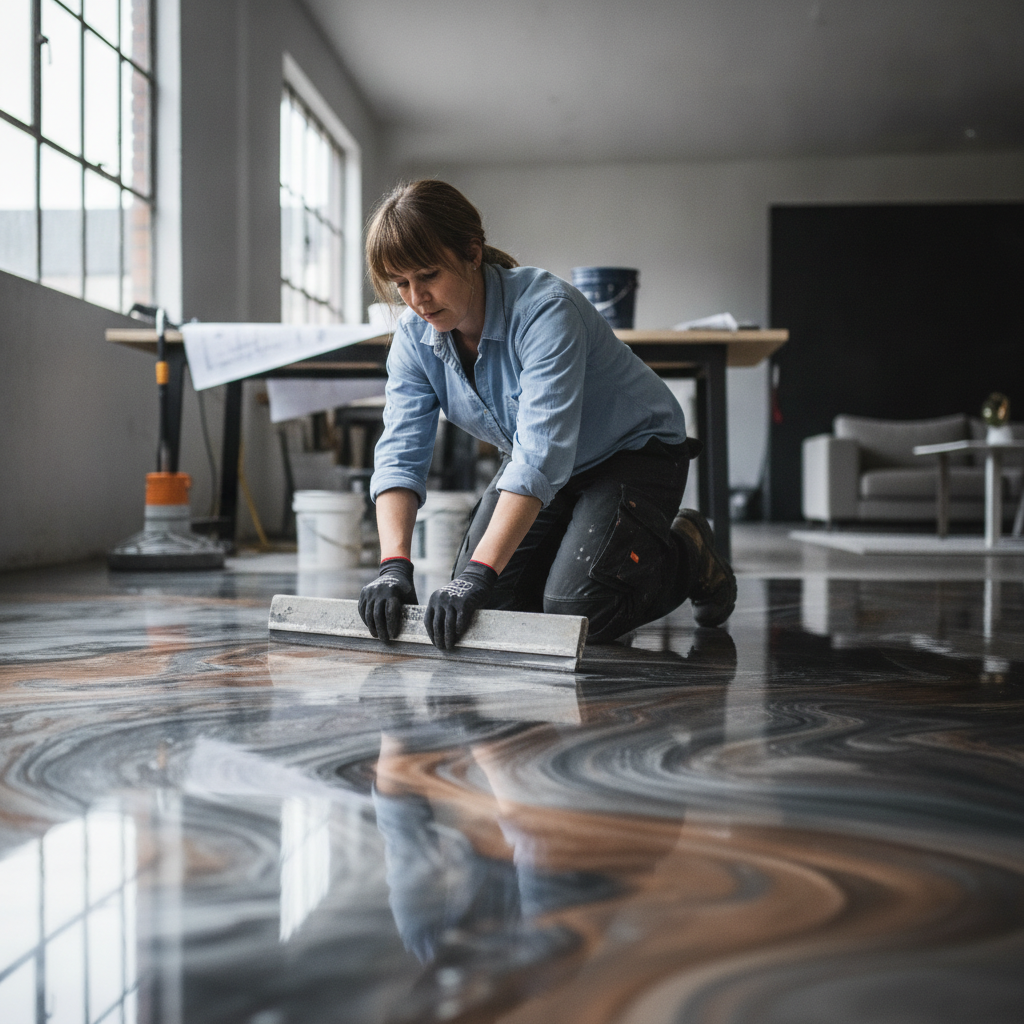
A metallic epoxy floor is a resin-based coating system where fine metallic or pearlescent pigments are suspended in a two-part epoxy binder. The pigments shift and swirl as the coating is worked across the substrate, producing a unique, lava-like or ocean-ripple effect. No two finished floors look identical, which is part of the appeal for designers and homeowners who want something genuinely one-of-a-kind.

The system typically involves three stages. First, the concrete is mechanically prepared, usually by diamond grinding, to open the surface and remove any contaminants. Second, a pigmented metallic base coat is applied and manipulated with tools, solvents or air to create the desired visual movement. Third, one or more clear topcoats, often a polyurethane or polyaspartic sealer, are rolled over the cured base to lock in the pattern and provide a hard, chemical-resistant shell.

The thickness of a finished metallic epoxy system generally sits between two and five millimetres depending on the number of coats and the level of build required. That thin profile means it can be installed over existing slabs without raising door thresholds significantly, which matters in renovation projects where clearances are already tight.

Why are metallic epoxy floors so popular in Melbourne homes and businesses?

Metallic epoxy floors have grown popular in Melbourne because they deliver a high-end aesthetic at a fraction of the cost of polished concrete or stone, while lasting just as long when properly installed. The seamless surface is easy to clean, resistant to common chemicals and moisture, and holds up well under Melbourne’s variable climate, where temperature swings between seasons can stress lesser coatings.

Residential clients tend to choose metallic epoxy for garages, laundries, home gyms and open-plan living areas where they want a surface that reads as a design feature rather than just a floor covering. Commercial clients, including automotive showrooms, cafes, retail boutiques and medical suites, are drawn to the hygienic, joint-free surface and the way the reflective finish makes spaces feel larger and brighter under artificial lighting.

There is also a practical durability argument. A well-installed metallic epoxy floor can realistically last fifteen to twenty years in a residential setting with normal care. In commercial environments with higher foot traffic, a quality system with a polyaspartic topcoat still performs reliably for a decade or more before any remediation is needed. That longevity makes the upfront investment easier to justify when you compare it to replacing carpet, tiles or vinyl every five to seven years.

What colours and finishes are available for metallic epoxy floors in Melbourne?

Metallic epoxy floors are available in a wide spectrum of colours and finish styles, from deep charcoals and midnight blues through to champagne golds, copper bronzes, pearl whites and multi-tone combinations. The final appearance depends on the pigment colour, the application technique and whether additional effects like veining, flake or solid-colour borders are incorporated.

Popular finish categories include the ocean or lava effect, where contrasting pigments blend into organic swirling patterns; the single-colour metallic wash, which gives a cleaner, more restrained look suited to contemporary interiors; and the mixed-flake metallic, where coloured vinyl chips are broadcast into the base coat before sealing to add texture and grip. Each style can be customised by adjusting pigment ratios and the speed of manipulation during application.

Sheen level is another variable. Most metallic epoxy systems are finished to a high gloss because the reflective surface amplifies the depth of the metallic pigments, but a satin or matte topcoat is possible for clients who prefer a more understated look or need to reduce glare in a bright commercial space. Adding an anti-slip aggregate to the topcoat is also straightforward and recommended for any area that may get wet.

How does surface preparation affect the outcome of a metallic epoxy floor?

Surface preparation is the single most critical factor in how long a metallic epoxy floor lasts and how well it bonds. Without proper mechanical profiling of the concrete, even premium epoxy products can delaminate, bubble or peel within months of installation. A concrete surface should be profiled to at least a CSP 2 or CSP 3 (Concrete Surface Profile) rating before any coating is applied.

Moisture is a major concern in Melbourne, particularly in older homes and buildings with no damp-proof membrane beneath the slab. Moisture vapour migrating through concrete can cause epoxy coatings to blister or lose adhesion over time. A professional installer will conduct a moisture vapour emission rate test before selecting a primer, and will apply a moisture-tolerant epoxy primer in higher-risk situations.

Cracks, control joints and spalls also need to be assessed and, where necessary, filled with appropriate repair mortars or flexible fillers before the metallic system goes down. Rushing this stage to save time or money is the most common reason metallic epoxy floors fail prematurely, which is why choosing an experienced, thorough installer matters far more than shopping purely on price.

What should Melbourne property owners budget for a metallic epoxy floor?

Metallic epoxy floor installation in Melbourne typically costs more than standard solid-colour epoxy because the pigments, application technique and finishing time are more involved. As a general guide, residential metallic epoxy installations often range from around $80 to $140 per square metre fully installed, depending on the complexity of the design, the condition of the substrate and the number of coats in the specified system.

Larger commercial projects can benefit from economies of scale in labour and materials, but commercial spaces also tend to require more rigorous surface preparation and faster-cure topcoat systems (such as polyaspartic) that carry a higher material cost. Anti-slip additives, coved skirting details and decorative borders all add to the final price but are worth pricing into the scope from the outset rather than treating as afterthoughts.

It is worth remembering that the cost of doing it twice, after a failed cheap installation, almost always exceeds the cost of doing it right the first time. Grinding back a failed coating, disposing of the material and reapplying from scratch is labour-intensive and can cost as much as the original job. Asking a prospective installer about their surface preparation process, the specific products they use and how they handle moisture testing will tell you a great deal about whether their quote is genuinely comparable to another.

How do you maintain a metallic epoxy floor once it is installed?

Metallic epoxy floors are straightforward to maintain. Routine cleaning involves sweeping or dust-mopping to remove grit, followed by damp mopping with a pH-neutral cleaner. Harsh acids, bleach-based products and abrasive scrubbing pads should be avoided because they can dull the topcoat over time, reducing the gloss that makes the metallic finish so striking.

High-traffic commercial floors benefit from a periodic light buff with a suitable floor pad to restore gloss between major cleans. In residential settings, placing felt pads under furniture legs prevents point-load scratches, and using a good quality doormat at entries reduces the amount of grit tracked onto the surface in the first place. These small habits extend the life of the coating considerably.

If the topcoat does wear in a heavily used area after many years, a recoat of the clear sealer layer is possible without having to redo the entire metallic base. This is far less disruptive and costly than a full reinstallation, and it restores the surface to a like-new condition. A good installer will advise on the right maintenance schedule and recoat intervals when they hand over the completed project.

Ready to see what a metallic epoxy floor could look like in your home or commercial space? Book Metal and Flake for metallic epoxy floor installation in Melbourne.

Garage Floor Coating Melbourne: Which System Is Right for You?

Garage Floor Coating Melbourne: Which System Is Right for You?

Choosing the right garage floor coating in Melbourne comes down to three things: how you use the space, the condition of your existing concrete, and the finish you want to live with long-term. Epoxy, decorative flake and metallic systems each solve different problems. Understanding the difference saves you money and gets you a floor that actually performs.

What makes garage floor coatings different from regular paint?

Garage floor coatings are polymer-based systems that bond chemically to concrete, rather than sitting on top of it the way a standard paint does. This chemical bond means they resist hot tyre pick-up, oil, brake fluid and moisture far better than any painted surface. A well-prepared concrete floor coated with a proper two-part epoxy system can last fifteen years or more with routine cleaning.

Standard floor paint is water-based and sits on the surface. Within a year or two it typically peels, flakes and looks tired, especially in a Melbourne garage where summer heat pushes tyre rubber to temperatures that lift ordinary paint clean off. A coating system, by contrast, flexes slightly with the slab and keeps its grip. That distinction is the starting point for every decision that follows.

Which garage floor coating system suits Melbourne conditions?

Melbourne’s climate swings between cold, damp winters and dry, scorching summers, which means your coating needs to handle thermal expansion, occasional surface moisture and UV exposure from an open roller door. Flake systems (also called chip or broadcast systems) are the most popular choice for residential garages here because the decorative vinyl flakes hide surface imperfections, add grip underfoot and are sealed with a UV-stable polyurethane topcoat that holds its colour outdoors.

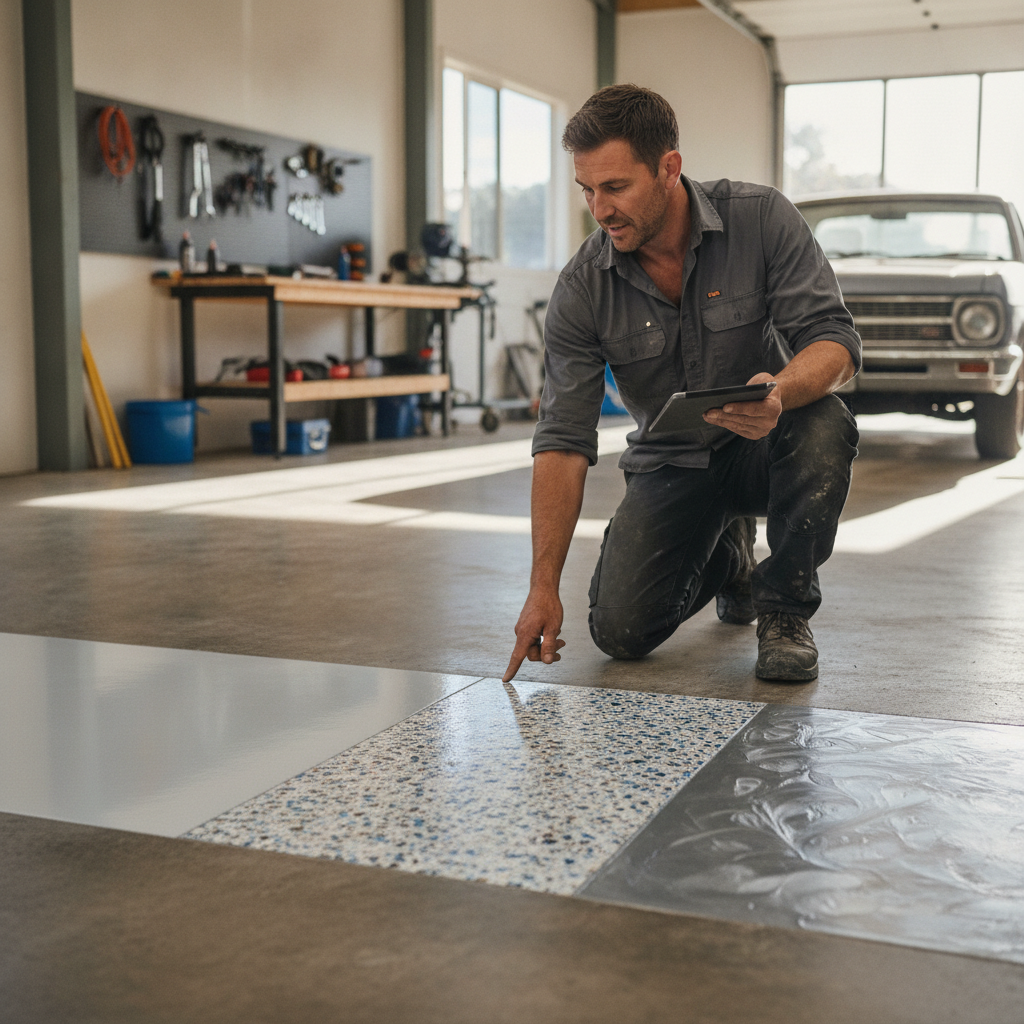
Here is a plain breakdown of the three main systems used for garage floor coating in Melbourne:

  • Solid epoxy base coat with colour flake broadcast. A pigmented epoxy primer goes down first, then colour flake chips are scattered across the wet coat and a clear polyurethane or polyaspartic topcoat locks everything in. The result is a seamless, low-maintenance floor with excellent slip resistance. This is the most common system for family garages.
  • Metallic epoxy. A single-colour or blended metallic pigment is mixed into the epoxy base and manipulated with rollers and blowers to create a fluid, three-dimensional appearance. Metallic floors suit showrooms, man caves or anyone who wants a genuinely striking visual statement. The surface is gloss-smooth, so a non-slip additive is worth discussing if the area gets wet.
  • Solid colour epoxy. A straightforward two-coat epoxy system in a single tone, often grey or charcoal. It is the most economical option and suits workshops or utility garages where appearance is secondary to durability. Properly applied, it is a serious upgrade over bare concrete or paint.

How important is concrete preparation before applying a garage floor coating?

Concrete preparation is the single biggest factor in how long any garage floor coating lasts. Without proper prep, even the highest-quality product will delaminate. Professional installers use diamond grinding or shot blasting to open the concrete’s pores, which lets the epoxy primer penetrate and form a mechanical bond rather than simply adhering to the surface.

A floor that looks smooth to the eye can still be sealed by old curing compounds, oil contamination or previous paint. Diamond grinding removes all of that and leaves a surface with a texture similar to 80-grit sandpaper. Cracks and spalls are filled before coating begins. Moisture testing matters too: Australian standards recommend concrete moisture content be below a certain threshold before coating, and Melbourne’s clay soils mean rising damp is a genuine risk in older homes. Skipping any of these steps is the reason most DIY epoxy kits from hardware stores fail within twelve to eighteen months.

How long does a garage floor coating take to install and cure in Melbourne?

Most residential garage floor coatings in Melbourne are completed over one to two days. Day one covers surface preparation, crack repair and the base coat. Day two involves the topcoat or second seal layer. The floor is typically walk-on ready within 24 hours and ready for vehicle traffic within 48 to 72 hours, depending on the product used and ambient temperature.

Polyaspartic topcoats cure significantly faster than standard polyurethane, which makes them well-suited to Melbourne’s warmer months when you need the garage back in service quickly. In cooler winter conditions, cure times extend slightly, so a good installer will account for the overnight temperature forecast before scheduling your job. Most quality installations come with a warranty of five years or more, which tells you a great deal about how confident a contractor is in their prep and product selection.

What should you ask a garage floor coating installer before signing anything?

The right questions separate a professional result from an expensive disappointment. Before committing to any contractor for a garage floor coating in Melbourne, ask these things directly:

  1. What preparation method do you use? Diamond grinding is the professional standard. If the answer is acid etching alone, that is worth probing further.
  2. What products are you applying? Ask for the brand and product name so you can check the technical data sheet. Reputable installers are transparent about this.
  3. Do you carry public liability insurance? Any tradesperson working in your home should have this in place.
  4. What does the warranty cover and for how long? A warranty that covers delamination and peeling gives you real protection. Read the exclusions.
  5. Can I see examples of completed jobs? Before-and-after photos and, ideally, a reference from a past customer in Melbourne are both reasonable to request.

The answers tell you whether you are dealing with someone who takes pride in the craft or someone who is simply moving on to the next quote. At Metal and Flake, every job starts with a site assessment precisely because the same coating system does not work identically on every slab.

Is a garage floor coating worth the investment for Melbourne homeowners?

A coated garage floor adds genuine value to a Melbourne home, both in daily use and at the point of sale. A polished, seamless floor makes the garage feel like a true extension of the house rather than an afterthought. Real estate agents consistently note that presentation of the garage matters to buyers, particularly in Melbourne’s competitive market where buyers inspect every detail carefully.

On the practical side, a sealed floor is dramatically easier to clean. Oil drips wipe up. Dust does not settle into porous concrete. Pests have fewer places to hide. For households using the garage as a workshop, home gym or secondary living space, those qualities are worth real money every single week. The upfront cost of a quality installation, typically starting from a few hundred dollars for a single car bay and scaling with size and system choice, is returned in reduced maintenance and extended floor life many times over.

The key is choosing the right system for your specific situation rather than defaulting to whatever is cheapest or most heavily advertised. A flake floor that suits a suburban family garage in Frankston may not be the right call for a polished showroom finish in South Yarra. The conversation with a knowledgeable installer should start with how you use the space and work backwards from there.

Get a free quote from Metal and Flake for garage floor coating in Melbourne

Epoxy Garage Floor Melbourne: Suburb-by-Suburb Local Guide

Epoxy Garage Floor Melbourne: Suburb-by-Suburb Local Guide

An epoxy garage floor in Melbourne transforms a plain concrete slab into a durable, easy-clean surface that resists oil, tyre marks and surface abrasion. Installation typically takes one to two days, costs vary by suburb based on access and slab condition, and the finished floor can last well over a decade with minimal maintenance. Here is everything you need to know before booking.

Why are Melbourne homeowners choosing epoxy garage floors right now?

Melbourne homeowners are choosing epoxy garage floors because the product delivers a hard-wearing, seamless finish at a fraction of the cost of replacing a concrete slab. Renovating rather than replacing also appeals to the city’s strong renovation culture, where garages are increasingly used as workshops, home gyms and extra living space rather than purely for parking.

The shift is visible across Melbourne’s diverse housing stock. In older inner-ring suburbs like Richmond and Fitzroy, garages often sit beneath period homes with tight access lanes. In growth corridors like Craigieburn and Officer, brand-new slabs sometimes show early surface dusting that benefits from a protective coating before the concrete is even a year old. Both scenarios suit epoxy well.

Epoxy is also a practical match for Melbourne’s climate. The city’s notorious four-seasons-in-one-day weather means garage slabs experience genuine thermal cycling, and a correctly installed epoxy system flexes with the concrete rather than cracking away from it. A proper diamond-ground surface preparation, which removes the top layer of laitance, is the step that makes this adhesion possible. Skip it and the coating lifts within months.

How does the epoxy garage floor installation process work in Melbourne?

Epoxy garage floor installation in Melbourne follows a consistent process: grind the concrete to a concrete surface profile (CSP) of at least 3, repair any cracks or spalls, apply a penetrating primer coat, then broadcast decorative flake or apply a metallic pigment blend, and finish with a clear topcoat. The full system typically cures to light foot traffic within 24 hours and full vehicle traffic within 72 hours.

The grinding stage is worth dwelling on because it is the one homeowners most often underestimate. A single-pass grind with a planetary diamond grinder opens the concrete’s pores and creates mechanical adhesion. Without it, you are essentially sticking a coating to dust. In Melbourne’s outer south-east, where many slabs were poured on reactive clay and show minor surface movement, this step also reveals any cracks that need to be chased out and filled with a semi-flexible filler before coating.

Once the primer is down, decorative choices open up. Vinyl flake systems (sometimes called chip or broadcast systems) remain the most popular choice for garages because they hide minor imperfections beautifully and the multi-tone chip pattern does not show tyre marks between cleans. Metallic epoxy, with its flowing, lava-like finish, is increasingly requested in garage spaces that double as showrooms or entertainment areas. Both systems get a polyaspartic or clear epoxy topcoat that adds UV stability and chemical resistance.

Which Melbourne suburbs tend to need the most preparation work?

Melbourne suburbs built on reactive clay soils, particularly those in the western and northern growth corridors including Tarneit, Wyndham Vale, Craigieburn and Roxburgh Park, tend to require the most concrete preparation because seasonal soil movement creates hairline cracking in slabs. Inner-east suburbs like Camberwell and Hawthorn, where garages are older and may have been sealed previously, also need careful assessment to strip old coatings before a new system is applied.

That does not mean these areas are harder to service or more expensive by default. It simply means a good installer will spend more time during the inspection and quotation stage, walking the slab, tapping for delamination and checking moisture readings with a concrete moisture meter. A calcium chloride test, left in place for 72 hours, gives a reliable indication of whether moisture vapour transmission is above the manufacturer’s threshold of typically 3 kg per square metre per 24 hours. Exceeding that threshold without a vapour barrier primer is one of the most common causes of epoxy failure.

In contrast, slabs in Melbourne’s bayside suburbs like Brighton, Sandringham and Mentone tend to be well-compacted and relatively stable, though coastal salt air can accelerate surface oxidisation on older concrete. A thorough grind resolves this cleanly.

What does an epoxy garage floor cost in Melbourne?

Epoxy garage floor installation in Melbourne generally ranges from around $30 to $70 per square metre for a standard flake system, depending on the number of coats, the decorative system chosen, and the condition of the existing slab. A standard double garage of approximately 36 square metres therefore sits in the $1,080 to $2,520 range before any crack repair or moisture-barrier work is factored in.

Several real variables shift that number. A single-car garage in a tight inner-city terrace that requires equipment to be carried through the house costs more to set up than a wide-access double garage in a new estate. A slab that previously had a peel-and-stick floor tile needs significantly more grinding time to remove adhesive residue. And a metallic epoxy system with multiple pigment pours and a high-build topcoat carries a higher material cost than a straightforward flake broadcast.

The most reliable way to get an accurate number for your specific garage in your specific suburb is to have someone walk the slab in person. Quotes given over the phone without a site inspection are almost always revised once the installer sees the actual condition of the concrete, so a walkthrough quote from the outset saves everyone time.

How do you maintain an epoxy garage floor in Melbourne’s conditions?

Maintaining an epoxy garage floor in Melbourne’s climate is straightforward: sweep or blow debris weekly, mop with a pH-neutral cleaner and warm water monthly, and avoid dragging heavy metal objects directly across the surface. Reapply a maintenance coat of topcoat every five to ten years depending on traffic load to keep the floor looking its best long-term.

Melbourne’s summer UV, while less intense than Queensland’s, will dull an outdoor-grade epoxy over time if the garage door is frequently left open. Specifying a polyaspartic topcoat rather than a standard epoxy clear coat from the beginning addresses this, as polyaspartic resins are inherently UV stable and will not amber or chalk under sunlight. If your garage faces north or west and gets direct afternoon sun, raise this with your installer during the quotation conversation.

Hot-tyre pickup is another Melbourne-specific consideration for anyone parking a car that has been driven hard on a warm day. Standard epoxy topcoats can soften slightly under concentrated heat from a hot tyre sitting stationary. A polyaspartic or urethane topcoat handles this better, and it is a worthwhile upgrade in a working garage rather than a display space.

Is an epoxy garage floor suitable for all Melbourne property types?

Epoxy garage floors suit almost all Melbourne property types, from 1970s brick veneer homes in the east with original single-car garages, to contemporary townhouses in the inner north, to large shed-garages on acreage properties in the Yarra Ranges. The key requirement is a structurally sound concrete slab. Timber or compressed sheet floors, and slabs with major structural cracking, need to be assessed individually before a coating system is recommended.

Rental properties and strata-titled townhouses with shared garages are also worth mentioning. A professionally coated floor is far easier for a tenant to keep clean and presents well at the end of a lease. For owners’ corporations, a common-area garage floor coating can protect concrete from oil staining and reduce the long-term cost of concrete remediation.

Whatever the property type or suburb, the fundamentals remain the same: proper surface preparation, a correctly specified coating system and a topcoat suited to the actual use of the space. Get those three things right and an epoxy garage floor in Melbourne will repay the investment for many years.

Get a free quote from Metal and Flake for epoxy garage floor installation in Melbourne