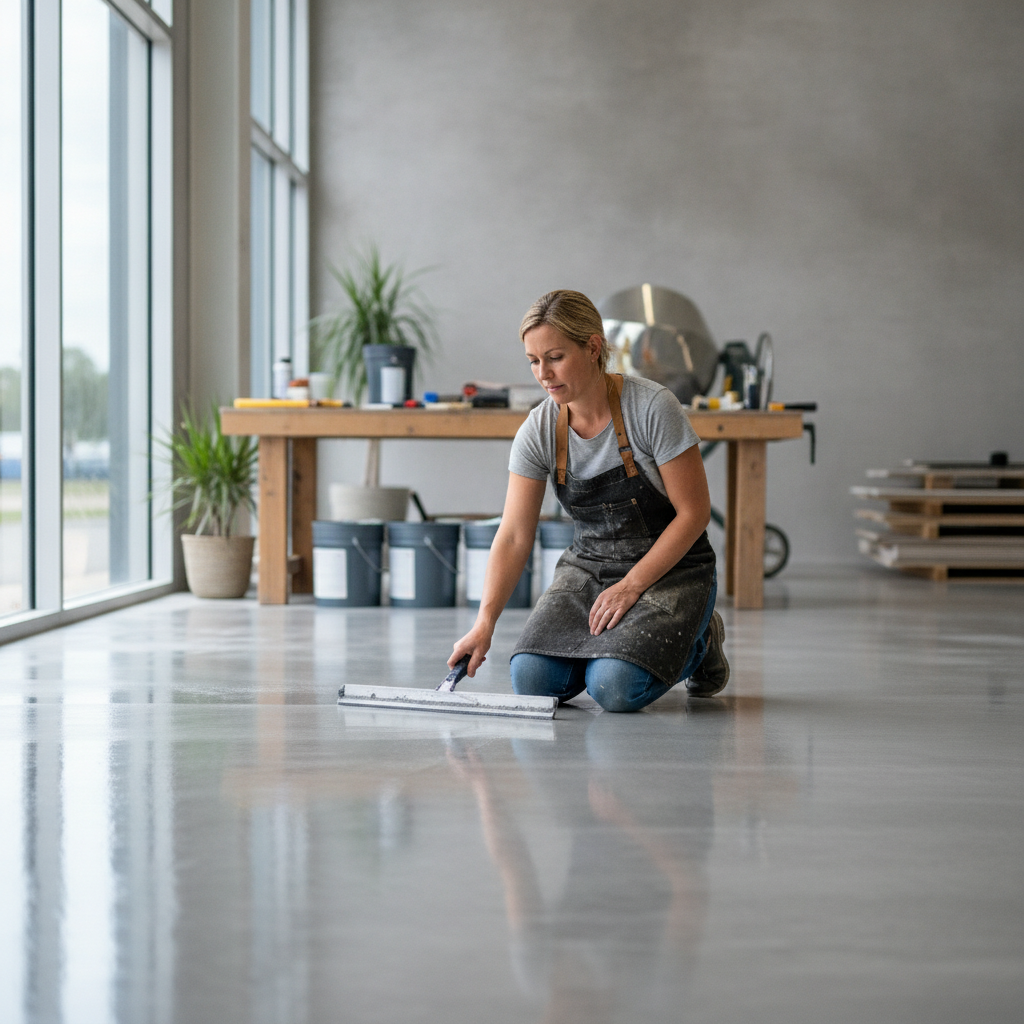
Concrete Floor Sealing Melbourne: Benefits, Costs and What to Expect
Concrete floor sealing in Melbourne protects bare or polished slabs from moisture, staining, abrasion and long-term surface degradation. A quality sealer extends the life of a concrete floor by years, reduces ongoing maintenance and gives the surface a finished, intentional look. Whether you are sealing a garage, warehouse or interior living space, the process follows a predictable sequence that any informed owner can plan for.
What are the main benefits of concrete floor sealing?
Concrete floor sealing creates a protective barrier that blocks moisture ingress, resists oil and chemical stains, reduces dusting from the slab surface, and makes routine cleaning significantly easier. Sealed concrete is also harder to scratch and chip than raw concrete, and the right sealer can dramatically enhance colour depth and sheen, turning a dull grey slab into something genuinely striking.
Raw concrete is deceptively porous. Water, cooking oils, tyre marks and cleaning chemicals all find their way into an unsealed slab and begin breaking it down from inside. Over time that leads to spalling, surface pitting and staining that no amount of mopping can fix. Sealing addresses all of that at the source.
The practical upside is just as compelling as the protective one. A sealed floor wipes clean. Spills sit on the surface rather than soaking in, which matters enormously in garages, workshops and commercial kitchens where petrochemicals and food acids are a daily reality. For residential spaces such as polished concrete living rooms or alfresco areas, a sealer also amplifies the natural tone of the aggregate and gives the floor a visual richness that raw concrete simply cannot offer.
There is also a safety dimension worth knowing. Penetrating sealers and certain topical products can be formulated with anti-slip additives, which is particularly relevant for outdoor slabs, pool surrounds and commercial entries that see foot traffic in wet conditions.
How much does concrete floor sealing cost in Melbourne?
Concrete floor sealing costs in Melbourne generally range from around $8 to $25 per square metre for a standard residential or light commercial project, depending on the sealer type chosen, the condition of the existing slab, and any preparation work required. Heavily contaminated or damaged slabs that need grinding and cleaning before sealing will sit at the higher end of that range.
To put that in concrete terms: sealing a standard double garage (roughly 36 to 40 square metres) typically falls somewhere between $350 and $900 all in. A warehouse floor requiring industrial-grade penetrating sealer across 500 square metres is a different calculation entirely, but the per-square-metre rate tends to come down as the project size increases.
The type of sealer is the biggest variable in pricing. Acrylic sealers are the most affordable option and are commonly used on decorative exterior concrete. Polyurethane and epoxy-based sealers cost more but offer a harder, more durable finish suited to high-traffic areas. Penetrating silane or siloxane sealers sit in the mid-range and are favoured where a completely invisible, matte result is needed, particularly on driveways and exposed aggregate paths.
Surface preparation is where many DIY attempts come unstuck. If the slab has oil contamination, efflorescence or previous coating residue, those issues need resolving before any sealer is applied. Skipping prep means the sealer will not bond correctly and will peel, bubble or discolour within months. Professional applicators factor this in from the start, which is why the job holds up long-term.
What does the concrete floor sealing process actually involve?
Professional concrete floor sealing involves four core stages: surface assessment and cleaning, mechanical preparation such as grinding or shot-blasting where needed, application of the chosen sealer in one or more coats, and a curing period before the floor is returned to use. The full process for a residential slab typically takes one to two days from start to walkable finish.
The assessment stage is more important than most people expect. A professional will check moisture vapour transmission from the slab (using a simple calcium chloride or relative humidity test), identify any existing coatings or curing compounds that could interfere with adhesion, and look for cracks or damaged sections that need addressing first. Getting this right means the sealer performs as specified rather than failing prematurely.
Mechanical preparation, usually diamond grinding or scarifying, opens the concrete surface at a microscopic level so the sealer can penetrate or bond properly. For penetrating sealers this step ensures the product gets below the surface rather than just sitting on top. For film-forming products like epoxy or polyurethane topcoats, it provides the mechanical key that stops delamination under load.
Application itself is typically done by roller, squeegee or low-pressure sprayer depending on the product. Most quality sealers require two coats, with the second applied once the first has reached the specified tack-free time, usually two to four hours. Rushing that window is a common cause of finish problems. After the final coat, foot traffic is usually safe within 24 hours and vehicle traffic within 48 to 72 hours, though full cure to maximum hardness can take up to seven days.
How long does a sealed concrete floor last in Melbourne’s climate?
A professionally applied concrete floor sealer in Melbourne typically lasts between three and ten years before recoating is needed, depending on the sealer type and the level of traffic or UV exposure the floor receives. Topical film-forming sealers on outdoor driveways exposed to Melbourne’s UV and temperature swings tend to need attention every three to five years, while interior penetrating sealers can last a decade or more with minimal maintenance.
Melbourne’s climate adds a few specific considerations. The city’s notorious four-seasons-in-one-day pattern means outdoor concrete slabs go through significant thermal cycling, expanding and contracting repeatedly. A sealer that lacks flexibility will crack at the surface before the concrete beneath does. Quality polyurethane products are formulated with enough elasticity to handle this, which is one reason professionals tend to favour them over cheaper acrylic options for exposed applications.
UV degradation is the other local factor. Cheaper solvent-based acrylics can yellow and chalk on north-facing slabs that receive full sun for most of the day. Water-based polyurethane and penetrating silane products hold their clarity and colour far better under sustained UV exposure, making them a smarter long-term choice for Melbourne driveways, entertaining areas and pool surrounds even if the upfront cost is slightly higher.
Maintenance between recoats is straightforward: sweep regularly, clean spills promptly, and avoid harsh alkaline degreasers that can break down the sealer film over time. A pH-neutral cleaner is all most sealed floors need on a day-to-day basis.
Is professional sealing worth it compared to a DIY approach?
Professional concrete floor sealing is worth the investment over DIY in most cases because surface preparation, product selection and application technique account for the majority of a sealer’s lifespan and performance. Errors at any of those stages, particularly inadequate prep or applying sealer over trapped moisture, lead to peeling and early failure that costs more to fix than the original professional job would have.
DIY sealing kits available from hardware chains are generally entry-level acrylic products applied over minimal preparation. They can work adequately on clean, dry, previously unsealed slabs in low-traffic situations. But for garage floors that see vehicle traffic, commercial spaces, or any slab with a history of moisture issues, the gap between a DIY outcome and a professional one is significant and visible within the first year.
The product access gap is real, too. Trade-grade penetrating sealers and two-part polyurethane topcoats are not typically available at retail. Professionals carry access to products with substantially better abrasion resistance, UV stability and moisture tolerance than what a homeowner can buy off the shelf, which is a large part of why the results look and last differently.
Concrete floor sealing is genuinely one of those areas where the finish quality is obvious from the moment you walk in the door, and so is a job done without proper prep. Getting it right the first time saves money, time and the frustration of stripping a failed coating off a slab before starting again.
Book Metal and Flake for professional concrete floor sealing in Melbourne