Metallic Epoxy Floors Melbourne: Commercial & Residential Guide
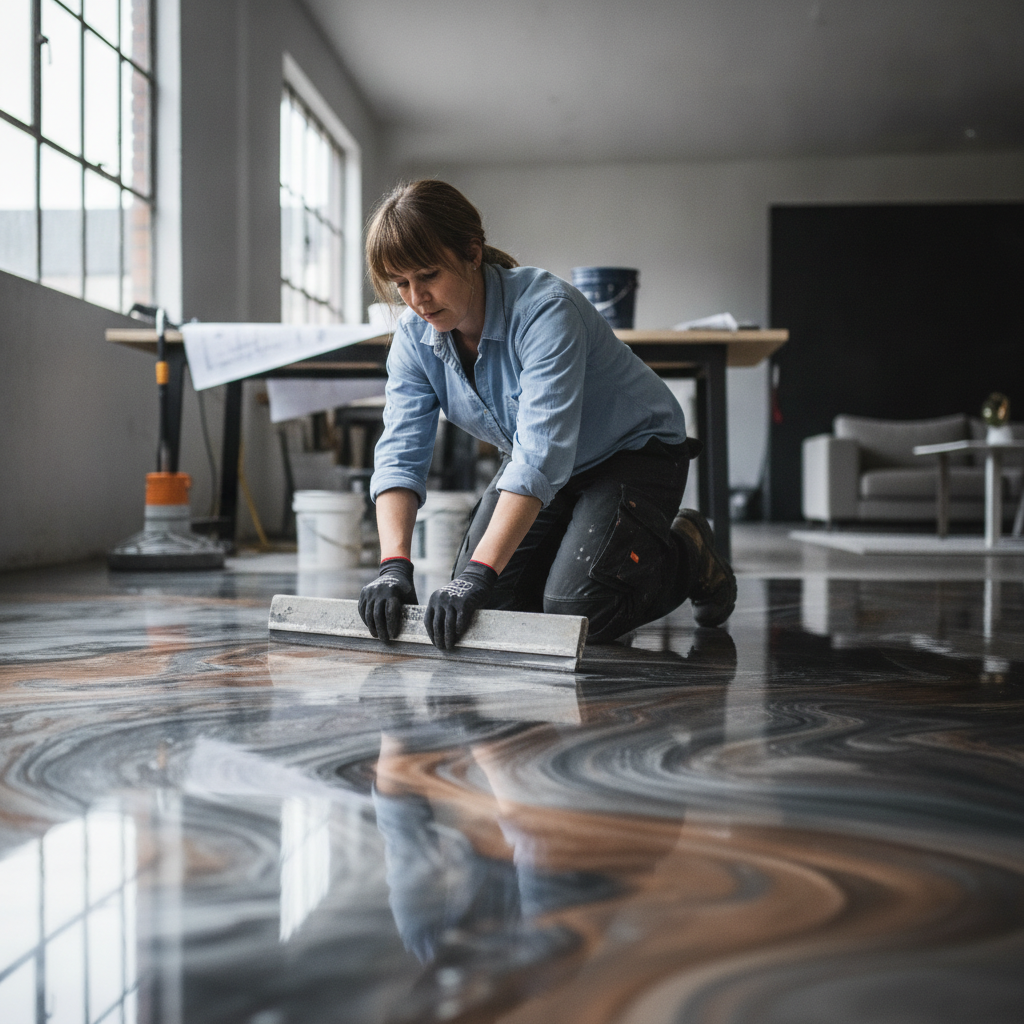
A metallic epoxy floor in Melbourne transforms any concrete slab into a seamless, high-gloss surface with flowing three-dimensional colour. It combines a pigmented metallic base coat with a clear epoxy topcoat to create depth, movement and genuine durability. Suitable for garages, showrooms, kitchens and retail spaces, it outperforms paint and standard coatings on almost every measure.
What exactly is a metallic epoxy floor and how is it made?
A metallic epoxy floor is a resin-based coating system where fine metallic or pearlescent pigments are suspended in a two-part epoxy binder. The pigments shift and swirl as the coating is worked across the substrate, producing a unique, lava-like or ocean-ripple effect. No two finished floors look identical, which is part of the appeal for designers and homeowners who want something genuinely one-of-a-kind.
The system typically involves three stages. First, the concrete is mechanically prepared, usually by diamond grinding, to open the surface and remove any contaminants. Second, a pigmented metallic base coat is applied and manipulated with tools, solvents or air to create the desired visual movement. Third, one or more clear topcoats, often a polyurethane or polyaspartic sealer, are rolled over the cured base to lock in the pattern and provide a hard, chemical-resistant shell.
The thickness of a finished metallic epoxy system generally sits between two and five millimetres depending on the number of coats and the level of build required. That thin profile means it can be installed over existing slabs without raising door thresholds significantly, which matters in renovation projects where clearances are already tight.
Why are metallic epoxy floors so popular in Melbourne homes and businesses?
Metallic epoxy floors have grown popular in Melbourne because they deliver a high-end aesthetic at a fraction of the cost of polished concrete or stone, while lasting just as long when properly installed. The seamless surface is easy to clean, resistant to common chemicals and moisture, and holds up well under Melbourne’s variable climate, where temperature swings between seasons can stress lesser coatings.
Residential clients tend to choose metallic epoxy for garages, laundries, home gyms and open-plan living areas where they want a surface that reads as a design feature rather than just a floor covering. Commercial clients, including automotive showrooms, cafes, retail boutiques and medical suites, are drawn to the hygienic, joint-free surface and the way the reflective finish makes spaces feel larger and brighter under artificial lighting.
There is also a practical durability argument. A well-installed metallic epoxy floor can realistically last fifteen to twenty years in a residential setting with normal care. In commercial environments with higher foot traffic, a quality system with a polyaspartic topcoat still performs reliably for a decade or more before any remediation is needed. That longevity makes the upfront investment easier to justify when you compare it to replacing carpet, tiles or vinyl every five to seven years.
What colours and finishes are available for metallic epoxy floors in Melbourne?
Metallic epoxy floors are available in a wide spectrum of colours and finish styles, from deep charcoals and midnight blues through to champagne golds, copper bronzes, pearl whites and multi-tone combinations. The final appearance depends on the pigment colour, the application technique and whether additional effects like veining, flake or solid-colour borders are incorporated.
Popular finish categories include the ocean or lava effect, where contrasting pigments blend into organic swirling patterns; the single-colour metallic wash, which gives a cleaner, more restrained look suited to contemporary interiors; and the mixed-flake metallic, where coloured vinyl chips are broadcast into the base coat before sealing to add texture and grip. Each style can be customised by adjusting pigment ratios and the speed of manipulation during application.
Sheen level is another variable. Most metallic epoxy systems are finished to a high gloss because the reflective surface amplifies the depth of the metallic pigments, but a satin or matte topcoat is possible for clients who prefer a more understated look or need to reduce glare in a bright commercial space. Adding an anti-slip aggregate to the topcoat is also straightforward and recommended for any area that may get wet.
How does surface preparation affect the outcome of a metallic epoxy floor?
Surface preparation is the single most critical factor in how long a metallic epoxy floor lasts and how well it bonds. Without proper mechanical profiling of the concrete, even premium epoxy products can delaminate, bubble or peel within months of installation. A concrete surface should be profiled to at least a CSP 2 or CSP 3 (Concrete Surface Profile) rating before any coating is applied.
Moisture is a major concern in Melbourne, particularly in older homes and buildings with no damp-proof membrane beneath the slab. Moisture vapour migrating through concrete can cause epoxy coatings to blister or lose adhesion over time. A professional installer will conduct a moisture vapour emission rate test before selecting a primer, and will apply a moisture-tolerant epoxy primer in higher-risk situations.
Cracks, control joints and spalls also need to be assessed and, where necessary, filled with appropriate repair mortars or flexible fillers before the metallic system goes down. Rushing this stage to save time or money is the most common reason metallic epoxy floors fail prematurely, which is why choosing an experienced, thorough installer matters far more than shopping purely on price.
What should Melbourne property owners budget for a metallic epoxy floor?
Metallic epoxy floor installation in Melbourne typically costs more than standard solid-colour epoxy because the pigments, application technique and finishing time are more involved. As a general guide, residential metallic epoxy installations often range from around $80 to $140 per square metre fully installed, depending on the complexity of the design, the condition of the substrate and the number of coats in the specified system.
Larger commercial projects can benefit from economies of scale in labour and materials, but commercial spaces also tend to require more rigorous surface preparation and faster-cure topcoat systems (such as polyaspartic) that carry a higher material cost. Anti-slip additives, coved skirting details and decorative borders all add to the final price but are worth pricing into the scope from the outset rather than treating as afterthoughts.
It is worth remembering that the cost of doing it twice, after a failed cheap installation, almost always exceeds the cost of doing it right the first time. Grinding back a failed coating, disposing of the material and reapplying from scratch is labour-intensive and can cost as much as the original job. Asking a prospective installer about their surface preparation process, the specific products they use and how they handle moisture testing will tell you a great deal about whether their quote is genuinely comparable to another.
How do you maintain a metallic epoxy floor once it is installed?
Metallic epoxy floors are straightforward to maintain. Routine cleaning involves sweeping or dust-mopping to remove grit, followed by damp mopping with a pH-neutral cleaner. Harsh acids, bleach-based products and abrasive scrubbing pads should be avoided because they can dull the topcoat over time, reducing the gloss that makes the metallic finish so striking.
High-traffic commercial floors benefit from a periodic light buff with a suitable floor pad to restore gloss between major cleans. In residential settings, placing felt pads under furniture legs prevents point-load scratches, and using a good quality doormat at entries reduces the amount of grit tracked onto the surface in the first place. These small habits extend the life of the coating considerably.
If the topcoat does wear in a heavily used area after many years, a recoat of the clear sealer layer is possible without having to redo the entire metallic base. This is far less disruptive and costly than a full reinstallation, and it restores the surface to a like-new condition. A good installer will advise on the right maintenance schedule and recoat intervals when they hand over the completed project.
Ready to see what a metallic epoxy floor could look like in your home or commercial space? Book Metal and Flake for metallic epoxy floor installation in Melbourne.