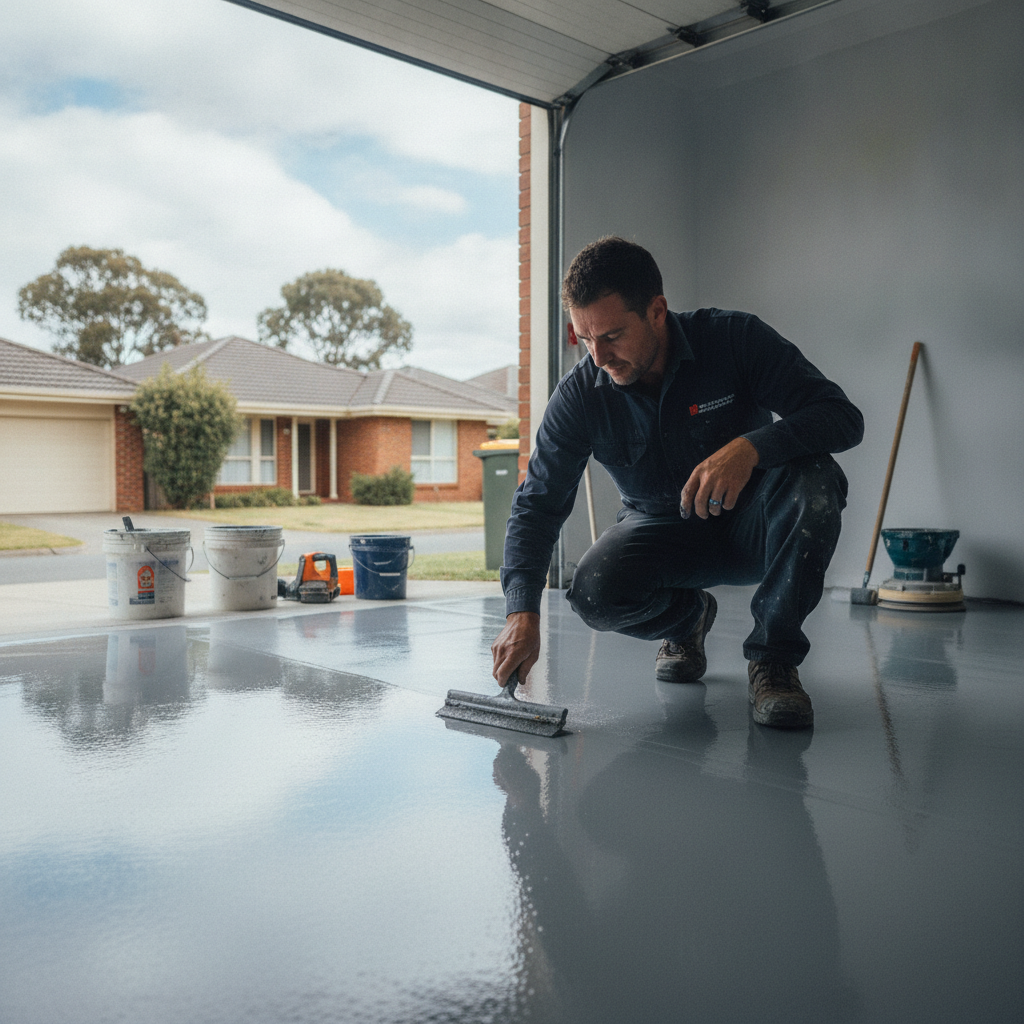
Epoxy Garage Floor Melbourne: Suburb-by-Suburb Local Guide
An epoxy garage floor in Melbourne transforms a plain concrete slab into a durable, easy-clean surface that resists oil, tyre marks and surface abrasion. Installation typically takes one to two days, costs vary by suburb based on access and slab condition, and the finished floor can last well over a decade with minimal maintenance. Here is everything you need to know before booking.
Why are Melbourne homeowners choosing epoxy garage floors right now?
Melbourne homeowners are choosing epoxy garage floors because the product delivers a hard-wearing, seamless finish at a fraction of the cost of replacing a concrete slab. Renovating rather than replacing also appeals to the city’s strong renovation culture, where garages are increasingly used as workshops, home gyms and extra living space rather than purely for parking.
The shift is visible across Melbourne’s diverse housing stock. In older inner-ring suburbs like Richmond and Fitzroy, garages often sit beneath period homes with tight access lanes. In growth corridors like Craigieburn and Officer, brand-new slabs sometimes show early surface dusting that benefits from a protective coating before the concrete is even a year old. Both scenarios suit epoxy well.
Epoxy is also a practical match for Melbourne’s climate. The city’s notorious four-seasons-in-one-day weather means garage slabs experience genuine thermal cycling, and a correctly installed epoxy system flexes with the concrete rather than cracking away from it. A proper diamond-ground surface preparation, which removes the top layer of laitance, is the step that makes this adhesion possible. Skip it and the coating lifts within months.
How does the epoxy garage floor installation process work in Melbourne?
Epoxy garage floor installation in Melbourne follows a consistent process: grind the concrete to a concrete surface profile (CSP) of at least 3, repair any cracks or spalls, apply a penetrating primer coat, then broadcast decorative flake or apply a metallic pigment blend, and finish with a clear topcoat. The full system typically cures to light foot traffic within 24 hours and full vehicle traffic within 72 hours.
The grinding stage is worth dwelling on because it is the one homeowners most often underestimate. A single-pass grind with a planetary diamond grinder opens the concrete’s pores and creates mechanical adhesion. Without it, you are essentially sticking a coating to dust. In Melbourne’s outer south-east, where many slabs were poured on reactive clay and show minor surface movement, this step also reveals any cracks that need to be chased out and filled with a semi-flexible filler before coating.
Once the primer is down, decorative choices open up. Vinyl flake systems (sometimes called chip or broadcast systems) remain the most popular choice for garages because they hide minor imperfections beautifully and the multi-tone chip pattern does not show tyre marks between cleans. Metallic epoxy, with its flowing, lava-like finish, is increasingly requested in garage spaces that double as showrooms or entertainment areas. Both systems get a polyaspartic or clear epoxy topcoat that adds UV stability and chemical resistance.
Which Melbourne suburbs tend to need the most preparation work?
Melbourne suburbs built on reactive clay soils, particularly those in the western and northern growth corridors including Tarneit, Wyndham Vale, Craigieburn and Roxburgh Park, tend to require the most concrete preparation because seasonal soil movement creates hairline cracking in slabs. Inner-east suburbs like Camberwell and Hawthorn, where garages are older and may have been sealed previously, also need careful assessment to strip old coatings before a new system is applied.
That does not mean these areas are harder to service or more expensive by default. It simply means a good installer will spend more time during the inspection and quotation stage, walking the slab, tapping for delamination and checking moisture readings with a concrete moisture meter. A calcium chloride test, left in place for 72 hours, gives a reliable indication of whether moisture vapour transmission is above the manufacturer’s threshold of typically 3 kg per square metre per 24 hours. Exceeding that threshold without a vapour barrier primer is one of the most common causes of epoxy failure.
In contrast, slabs in Melbourne’s bayside suburbs like Brighton, Sandringham and Mentone tend to be well-compacted and relatively stable, though coastal salt air can accelerate surface oxidisation on older concrete. A thorough grind resolves this cleanly.
What does an epoxy garage floor cost in Melbourne?
Epoxy garage floor installation in Melbourne generally ranges from around $30 to $70 per square metre for a standard flake system, depending on the number of coats, the decorative system chosen, and the condition of the existing slab. A standard double garage of approximately 36 square metres therefore sits in the $1,080 to $2,520 range before any crack repair or moisture-barrier work is factored in.
Several real variables shift that number. A single-car garage in a tight inner-city terrace that requires equipment to be carried through the house costs more to set up than a wide-access double garage in a new estate. A slab that previously had a peel-and-stick floor tile needs significantly more grinding time to remove adhesive residue. And a metallic epoxy system with multiple pigment pours and a high-build topcoat carries a higher material cost than a straightforward flake broadcast.
The most reliable way to get an accurate number for your specific garage in your specific suburb is to have someone walk the slab in person. Quotes given over the phone without a site inspection are almost always revised once the installer sees the actual condition of the concrete, so a walkthrough quote from the outset saves everyone time.
How do you maintain an epoxy garage floor in Melbourne’s conditions?
Maintaining an epoxy garage floor in Melbourne’s climate is straightforward: sweep or blow debris weekly, mop with a pH-neutral cleaner and warm water monthly, and avoid dragging heavy metal objects directly across the surface. Reapply a maintenance coat of topcoat every five to ten years depending on traffic load to keep the floor looking its best long-term.
Melbourne’s summer UV, while less intense than Queensland’s, will dull an outdoor-grade epoxy over time if the garage door is frequently left open. Specifying a polyaspartic topcoat rather than a standard epoxy clear coat from the beginning addresses this, as polyaspartic resins are inherently UV stable and will not amber or chalk under sunlight. If your garage faces north or west and gets direct afternoon sun, raise this with your installer during the quotation conversation.
Hot-tyre pickup is another Melbourne-specific consideration for anyone parking a car that has been driven hard on a warm day. Standard epoxy topcoats can soften slightly under concentrated heat from a hot tyre sitting stationary. A polyaspartic or urethane topcoat handles this better, and it is a worthwhile upgrade in a working garage rather than a display space.
Is an epoxy garage floor suitable for all Melbourne property types?
Epoxy garage floors suit almost all Melbourne property types, from 1970s brick veneer homes in the east with original single-car garages, to contemporary townhouses in the inner north, to large shed-garages on acreage properties in the Yarra Ranges. The key requirement is a structurally sound concrete slab. Timber or compressed sheet floors, and slabs with major structural cracking, need to be assessed individually before a coating system is recommended.
Rental properties and strata-titled townhouses with shared garages are also worth mentioning. A professionally coated floor is far easier for a tenant to keep clean and presents well at the end of a lease. For owners’ corporations, a common-area garage floor coating can protect concrete from oil staining and reduce the long-term cost of concrete remediation.
Whatever the property type or suburb, the fundamentals remain the same: proper surface preparation, a correctly specified coating system and a topcoat suited to the actual use of the space. Get those three things right and an epoxy garage floor in Melbourne will repay the investment for many years.
Get a free quote from Metal and Flake for epoxy garage floor installation in Melbourne