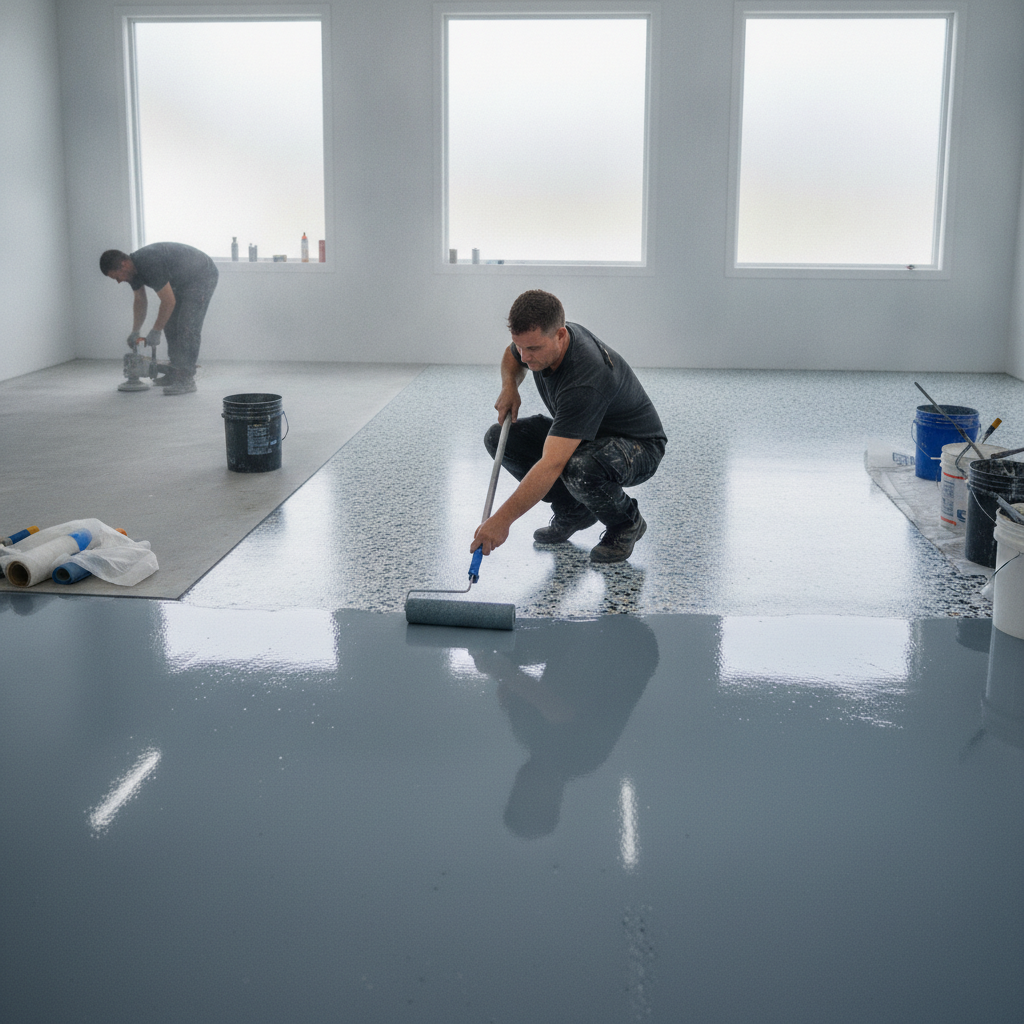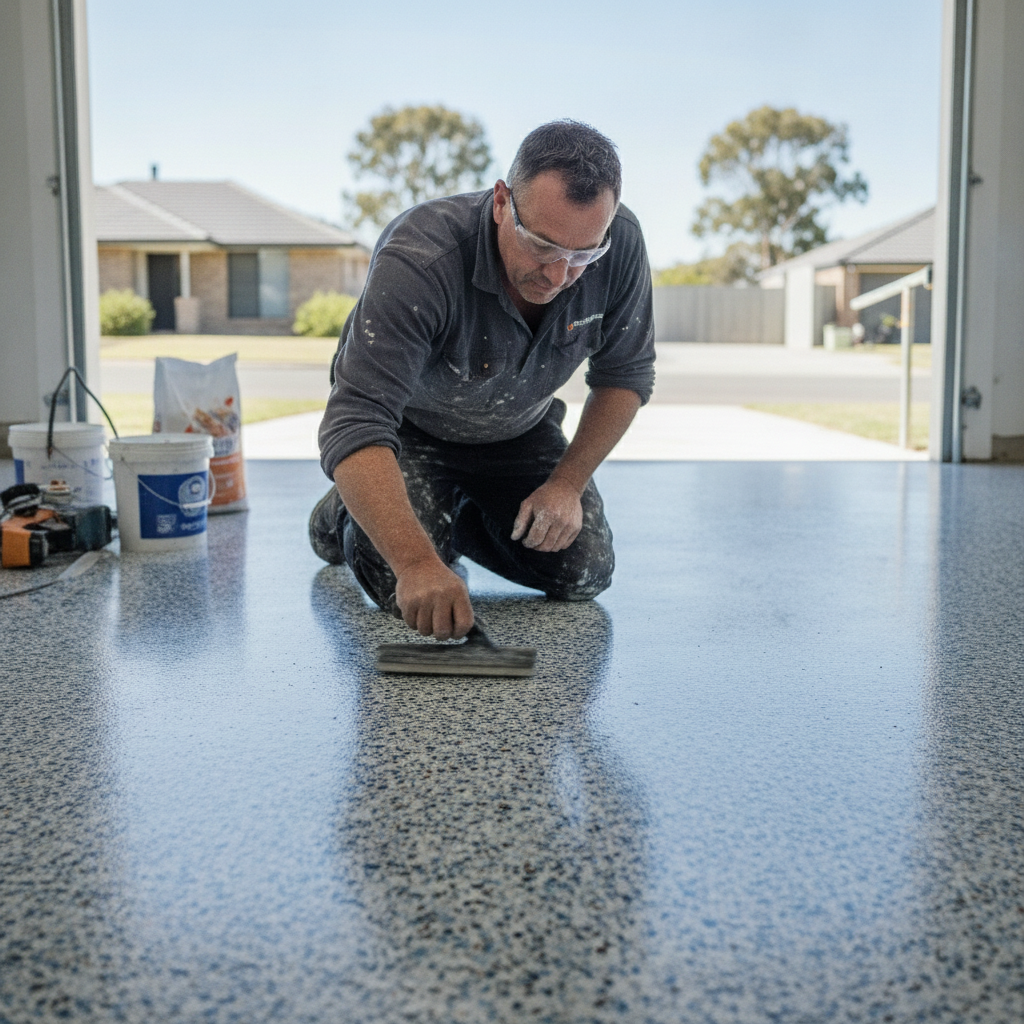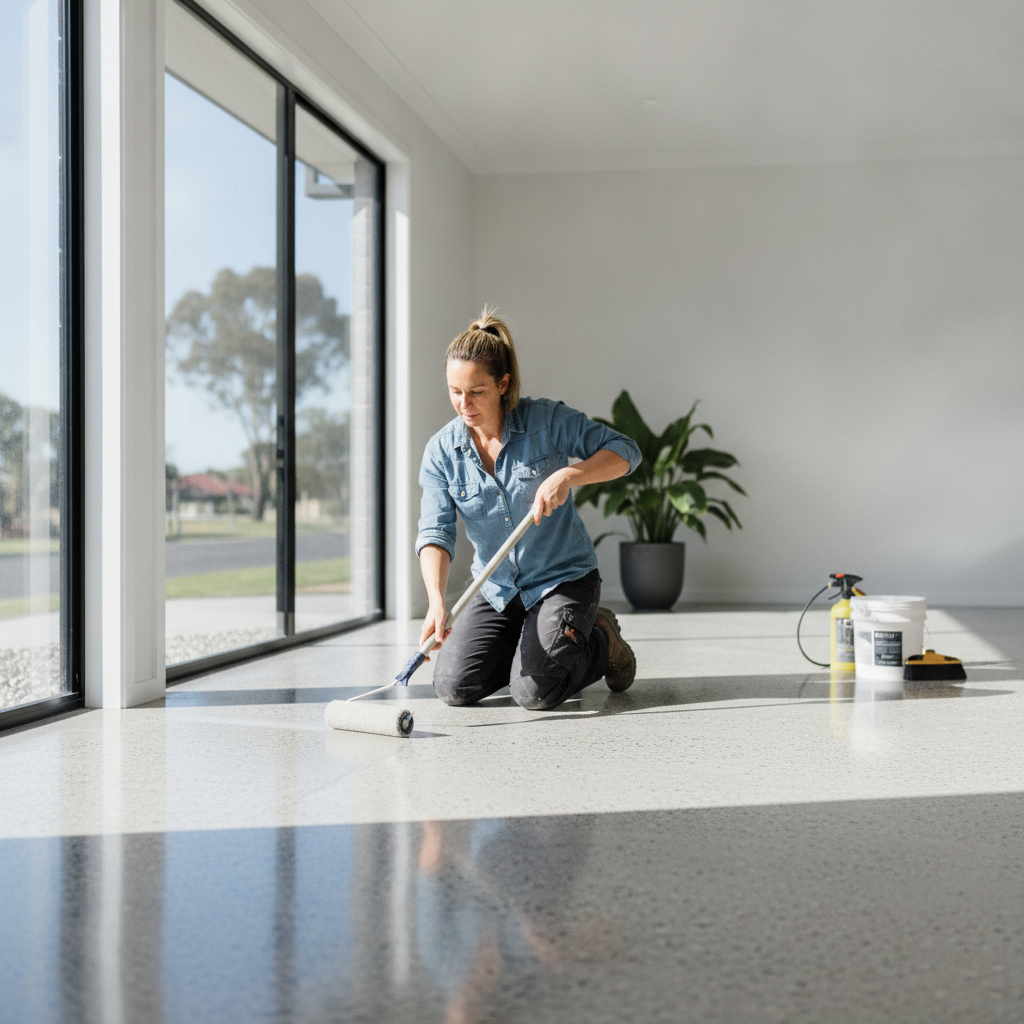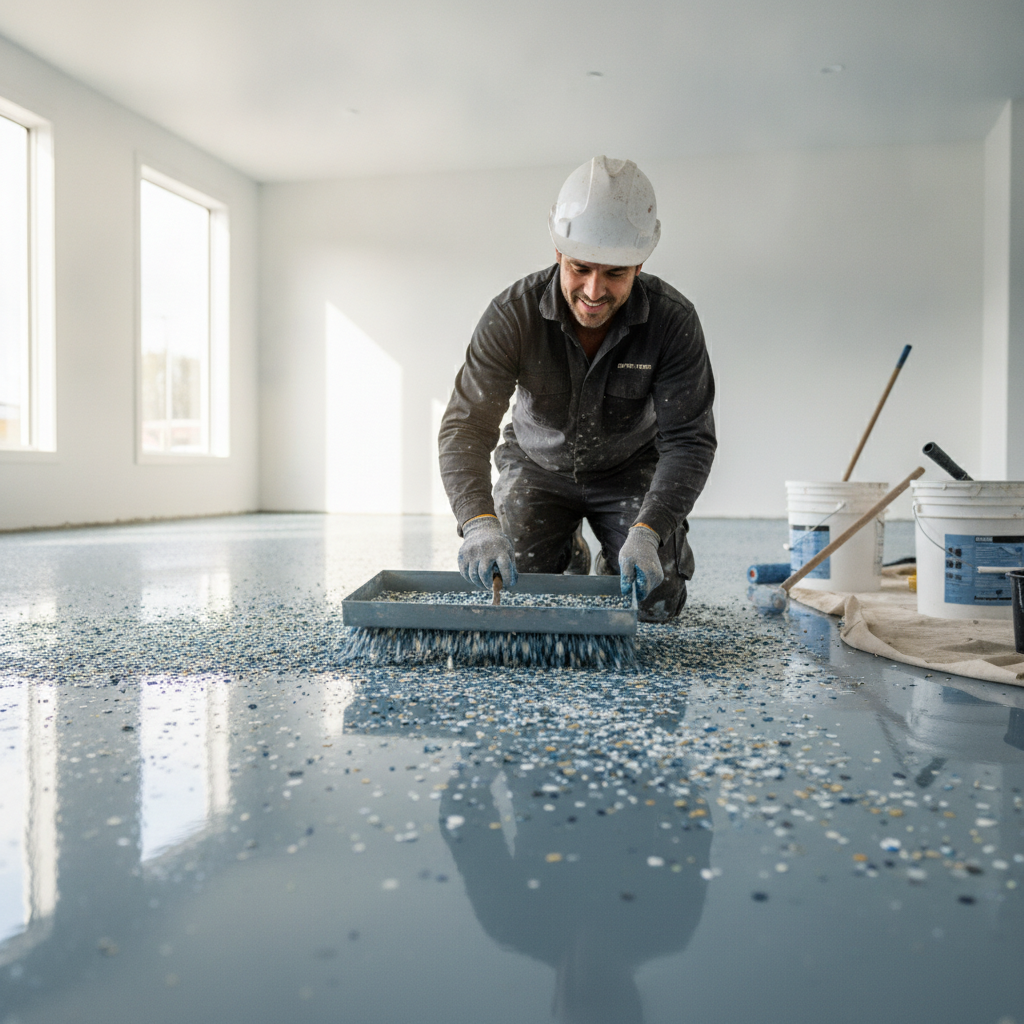
Garage Floor Ideas for Sunbury Homes: Which Coating Suits You?

Garage Floor Ideas for Sunbury Homes: Which Coating Suits You?

The best garage floor ideas for Sunbury homes balance durability, appearance and budget. Bare concrete cracks, stains and gets dusty over time. A quality floor coating, such as an epoxy or flake system, seals the surface, handles vehicle traffic and chemical spills, and lifts the whole look of the space. The right choice depends on how you use the garage and what finish you want.

Why does a bare concrete garage floor cause so many headaches?

Bare concrete is porous, which means it absorbs oil, brake fluid and tyre marks almost immediately. Over time it dusts, cracks and becomes impossible to clean properly. For Sunbury homeowners, whose garages often double as workshops, storage areas or even home gyms, that porous surface becomes a constant frustration that no amount of mopping fixes.

Concrete is also weaker at the surface than it looks. Seasonal temperature swings around the Macedon Ranges area put real stress on untreated slabs. You end up with hairline cracks, spalling edges and a floor that looks tired long before the rest of the home does.

A good coating bonds directly to the concrete, creating a sealed, hard-wearing layer that resists moisture penetration and is easy to wipe down after a weekend project. It also reflects light, which makes a garage feel noticeably larger and brighter without touching the walls or ceiling.

What are the most popular garage floor ideas in Sunbury right now?

The most popular garage floor ideas in Sunbury right now are solid-colour epoxy coatings, decorative flake (chip) systems and metallic epoxy finishes. Solid epoxy suits homeowners who want a clean, functional look. Flake systems add texture and hide minor imperfections. Metallic finishes deliver a high-end, showroom appearance that suits people who treat the garage as an extension of the home.

Here is a plain rundown of each option:

Solid epoxy coatings. A two-part epoxy is mixed and applied directly to prepared concrete. The result is a smooth, gloss or satin surface in your chosen colour. It is chemical-resistant and stands up to jack stands, trolley jacks and dropped tools without chipping. It is one of the most cost-effective ways to protect and transform a garage slab.

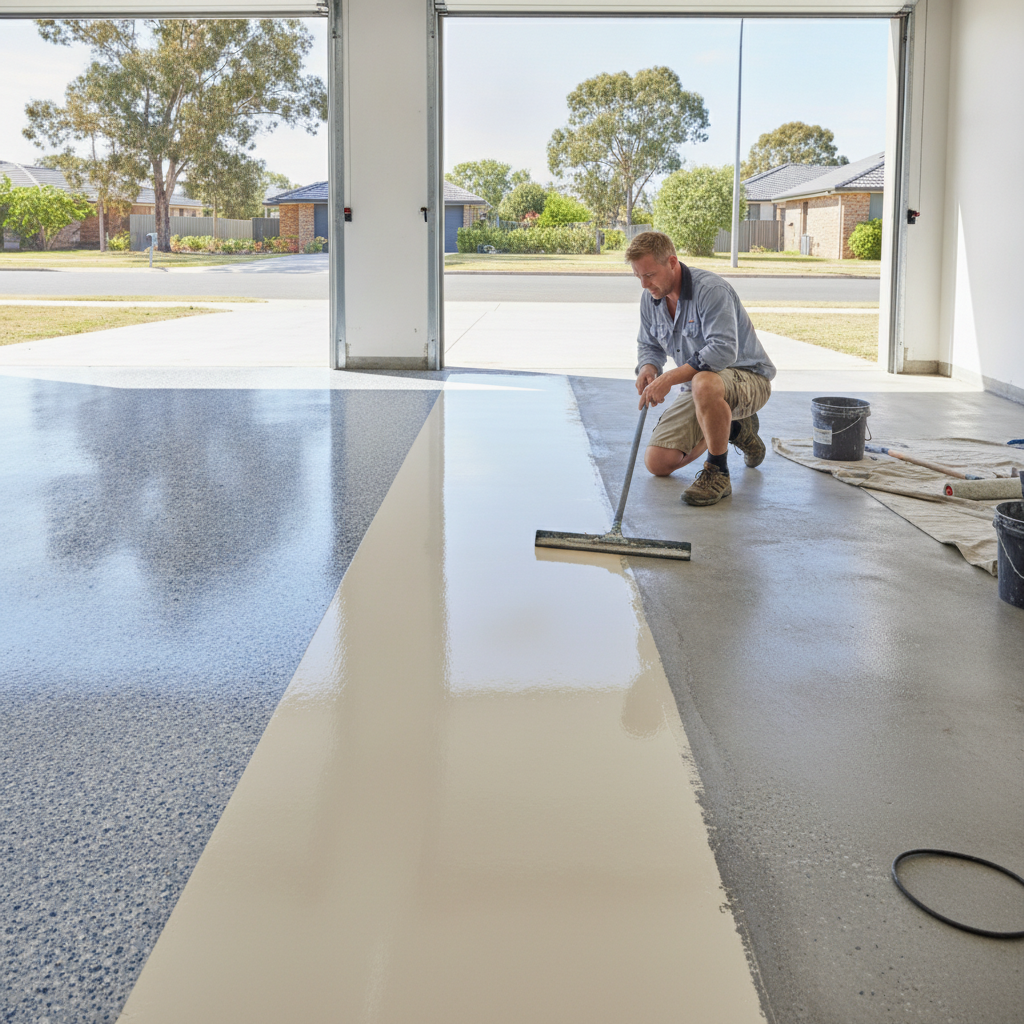
Flake or chip systems. Coloured vinyl flakes are broadcast into a wet epoxy base coat, then sealed with a clear top coat. The flakes create a speckled, stone-like appearance and add a non-slip texture underfoot. This is a practical choice for a working garage because the pattern disguises dirt between cleans. Metal and Flake in Sunbury specialises in exactly this finish, offering a range of flake blends that suit everything from a suburban double garage to a large workshop.

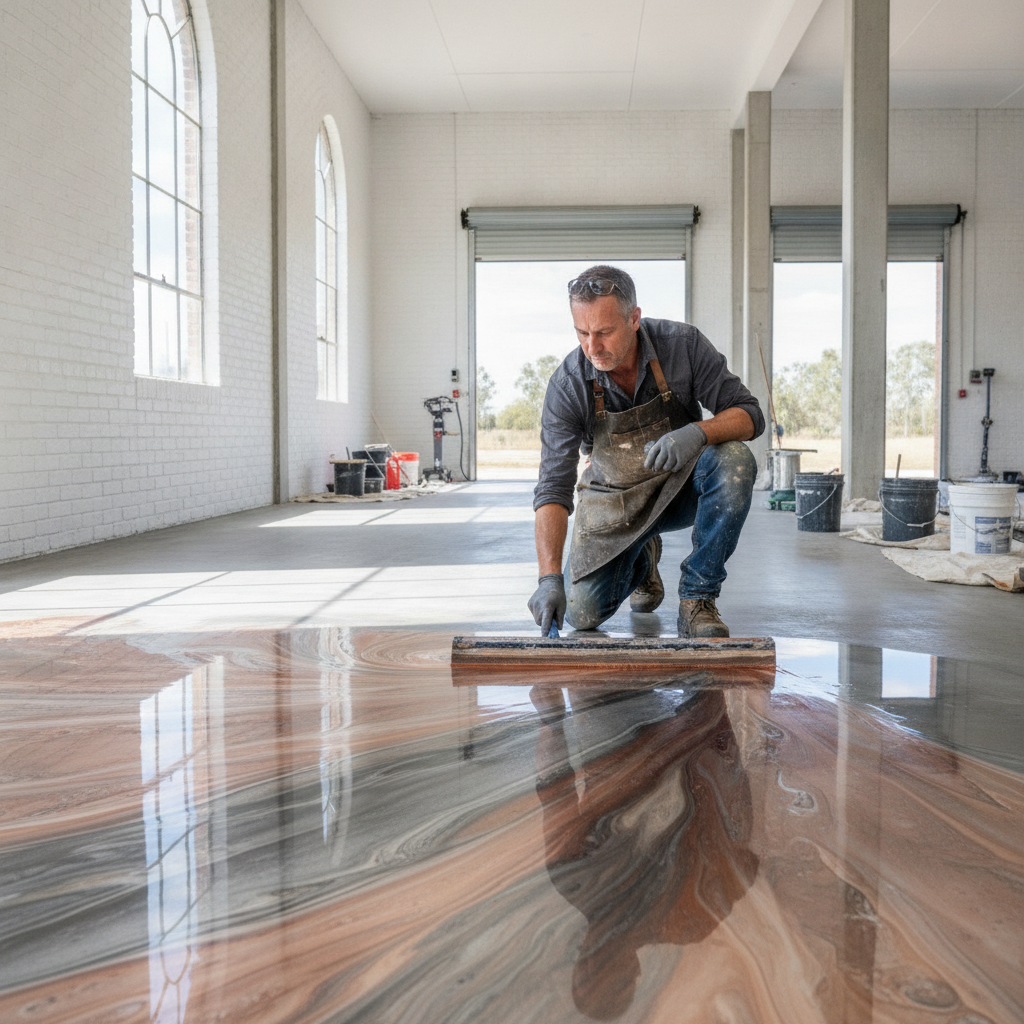
Metallic epoxy. Metallic pigments are mixed into the epoxy to create a flowing, three-dimensional look similar to polished stone or poured metal. No two floors are identical. This finish tends to suit show garages, home studios or man-cave setups where appearance is front of mind.

Polyaspartic coatings. A polyaspartic top coat can be applied over epoxy or on its own. It cures faster than standard epoxy (often within a few hours), handles UV exposure without yellowing and is highly scratch-resistant. It is often used as a clear coat over a flake system for a finish that lasts longer between maintenance.

How do you choose the right garage floor coating for your situation?

Choosing the right garage floor coating comes down to three questions: How do you use the space? How much preparation does your existing slab need? And what is your budget? A heavily used workshop benefits most from a flake system with a polyaspartic top coat for durability and easy cleaning. A garage used mostly for parking and storage does well with a solid epoxy. A prestige home gym or showroom garage is a natural fit for metallic epoxy.

Slab condition matters a lot. Concrete that has never been coated needs to be properly diamond-ground or acid-etched before any product goes down. Skipping surface prep is the single biggest reason coatings peel within a year or two. A professional applicator will assess moisture levels in the slab, check for previous sealers and determine the right primer before committing to a system.

Budget is real too. A basic solid epoxy on a standard double garage in the Sunbury area will cost less than a full metallic system with multiple coats. But consider the long game: a properly installed flake and polyaspartic system on a 40-square-metre slab is expected to last well over a decade with minimal maintenance, which works out far cheaper than repainting bare concrete every few years.

What preparation does a Sunbury garage slab typically need before coating?

Most Sunbury garage slabs need at least mechanical grinding with a diamond grinder to open the surface pores and create a profile the epoxy can grip. Older slabs may also need crack repair, concrete patching for spalled areas and a moisture barrier primer if water is wicking up from below. Without these steps, even premium coatings will fail early.

This is where the difference between a DIY kit and a professional application becomes obvious. Hardware store kits rely on acid etching rather than grinding, and they use a much thinner coating. Professional-grade products applied after proper mechanical prep are significantly thicker and more durable. The Epoxy Industry Association of Australia notes that surface profile, not coating brand, is the leading factor in how long a floor coating lasts. That is worth keeping in mind when comparing quotes.

Also worth checking: if your garage slab is less than 28 days old, or if it has been previously sealed with a penetrating sealer, some coatings will not bond correctly. A professional will test with a water drop before quoting. If the water beads, the slab needs more prep work before any coating goes down.

How do you keep an epoxy garage floor looking good long-term?

Keeping an epoxy or flake garage floor in good shape is straightforward. Sweep or blow out dust and grit regularly, since fine particles act like sandpaper underfoot over time. Mop with a pH-neutral cleaner when needed. Avoid dragging heavy metal objects directly across the surface, and use rubber-backed mats under car ramps or heavy workshop equipment.

If you have a polyaspartic top coat, the surface is more scratch-resistant and handles UV without fading or yellowing, which is particularly useful for a garage that gets direct afternoon sun. Garages in Sunbury’s western corridor can cop some serious heat in summer, and standard epoxy without a UV-stable top coat will chalk or dull over time when exposed to direct sunlight through open garage doors.

Most professionally installed systems need little more than a light clean every week or two and a closer inspection every couple of years to catch any areas where the top coat might benefit from a touch-up. Compare that to bare concrete, which needs regular sweeping, still stains, and cannot really be restored without a full coating anyway.

Whether you are after a clean, practical finish for a working garage or a head-turning metallic floor for a showroom setup, the starting point is the same: proper prep and the right product for your slab. Get a free epoxy floor coating quote from Metal and Flake in Sunbury.
Garage Makeover Ideas for Sunbury Homes: Flooring, Storage and More

Garage Makeover Ideas for Sunbury Homes: Flooring, Storage and More

A garage makeover in Sunbury typically involves upgrading the floor, adding wall storage, improving lighting and tidying the layout so the space actually works for your household. The single biggest transformation comes from the floor. A quality epoxy coating covers stained concrete, resists oil and tyre marks, and makes the whole garage look sharp from the moment you pull up.

Why is the floor the first thing to sort in a garage makeover?

The floor is the foundation of any garage makeover because every other upgrade sits on top of it. A cracked, dusty or oil-stained concrete slab makes even new shelving and fresh paint look half-done. Fix the floor first and everything else, the cabinetry, the lighting, the wall panels, reads as deliberate and finished rather than thrown together.

Bare concrete is genuinely porous. Petrol, brake fluid and motor oil soak straight in and create stains that no mop will touch. Once you seal the slab with an epoxy coating, spills bead on the surface and wipe up in seconds. That is a practical win for anyone who actually uses the garage as a workshop or a car park rather than just storing boxes.

Sunbury sits on Melbourne’s north-western fringe, and the area gets some sharp temperature swings between summer and winter. Concrete expands and contracts with those changes. A well-prepared, professionally applied epoxy system bonds to the slab, flexes with it and doesn’t peel or bubble the way cheaper DIY kits often do after a season or two.

What are the best storage ideas for a Sunbury garage makeover?

The best storage ideas for a Sunbury garage makeover use vertical wall space with slatwall panels or steel shelving, keep the floor as clear as possible, and group zones by activity (tools, sport, garden, car care) so you can find things without pulling the whole garage apart. Overhead ceiling racks work well for seasonal or bulky items you rarely touch.

Most double garages in Sunbury’s newer estates run around 36 to 40 square metres. That is a solid amount of floor, but people eat through it fast with freestanding shelves, bikes leaning against walls and boxes stacked wherever there’s a gap. Moving storage to the walls returns that floor space to you.

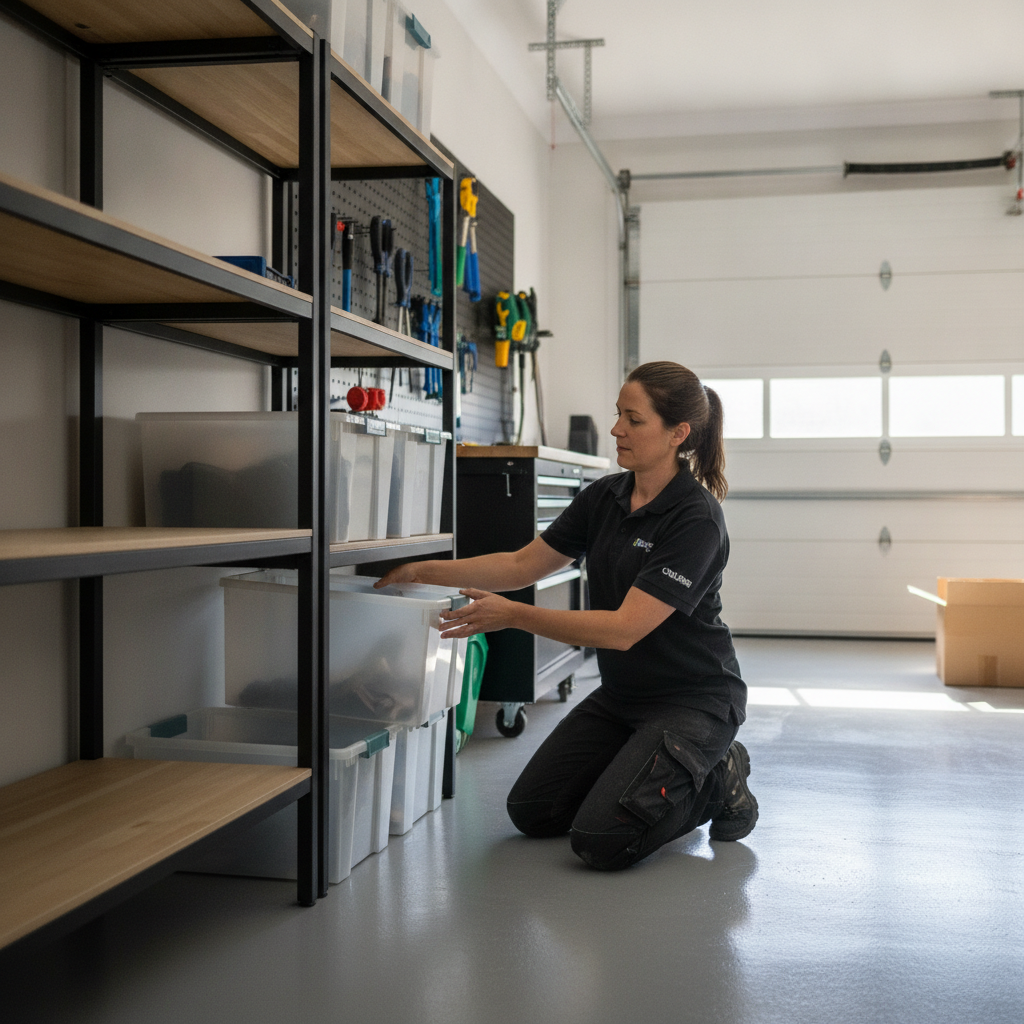
A simple approach that works in most homes: run a slatwall system along the back and one side wall, hang hooks and baskets for hand tools and sporting gear, then add a workbench along the remaining wall at a comfortable standing height. Below the bench, a set of lockable drawers keeps small parts and power tool accessories tidy. Keep the floor completely clear except for the cars, and the garage feels twice as big.

How do you plan the layout of a garage makeover?

Plan a garage layout by measuring the space accurately, marking out where each car parks, then working out how much clear walkway you need around them. Everything else, the workbench, shelving, bike hooks, fridge, fits around those non-negotiables. Sketch it on paper before you buy a single shelf bracket so you don’t end up with gear that doesn’t fit.

A common mistake is buying storage systems before measuring door swings, the path of the roller door when it opens and the width of the car doors when they’re open. A car door needs roughly 700 to 800 millimetres of clearance on each side to open comfortably. Mark that out with tape on the floor before you finalise where shelving goes.

Lighting is worth planning at this stage too. A single fluorescent tube in the centre of the ceiling leaves the corners and the workbench in shadow. LED strip lights under wall cabinets and a couple of extra downlights over the work area make a garage genuinely functional, not just bright enough to avoid tripping over something.

What epoxy floor options work best for a Sunbury garage?

For a Sunbury garage, a broadcast flake epoxy system is the most popular choice because it hides minor surface imperfections, offers excellent slip resistance when a non-slip topcoat is added, and comes in a wide range of colour combinations. Metallic epoxy is a strong second choice for homeowners who want a high-end, polished finish with real visual depth.

Flake systems work by broadcasting coloured vinyl flakes into a wet epoxy base coat, then sealing the whole surface with a clear polyurethane or epoxy topcoat. The texture the flakes create gives grip underfoot even when the floor is wet, which matters in a garage where you’re hosing things down or coming in from a rainy driveway.

Metallic epoxy uses pigmented metallic powders suspended in the coating to create a flowing, almost three-dimensional effect. No two metallic floors look exactly the same, which is part of the appeal. If you want a garage that looks like something out of a prestige car showroom, a metallic system delivers that. Both options are far more durable than paint and, applied by a professional, will outlast a DIY roller coat by many years.

Surface preparation is where most jobs go wrong. Any professional worth hiring will grind or shot-blast the concrete before laying the coating. That mechanical preparation opens up the pores of the slab so the epoxy bonds chemically rather than just sitting on top. Without it, even a good product will eventually lift at the edges or peel in patches.

How long does a garage makeover take from start to finish?

A typical garage makeover in Sunbury takes one to three days for the epoxy floor (including cure time before you drive on it), then a further weekend or two if you’re fitting shelving and a workbench yourself. Having a clear plan and all materials on hand before you start is what keeps it from dragging on for months.

Epoxy floors need time to cure properly. Most systems are safe to walk on after 24 hours, but you should wait at least 72 hours before parking a car on the surface. Some high-performance polyaspartic topcoats cut that window down significantly and can handle light foot traffic within a few hours of application.

Schedule the floor first, then work on storage once the coating is fully cured. That way you’re not dragging shelving and workbench frames across a fresh surface and you’re not storing gear on uncured epoxy. Doing it in the right order is the difference between a clean finish and one you’ll notice every time you walk in.

Sunbury homeowners planning a garage makeover have a real opportunity to add usable space and genuine value to their property without a full renovation. Sort the floor, the storage and the lighting in that order and the project is straightforward. Book Metal and Flake for an epoxy garage floor as part of your Sunbury garage makeover.

Concrete Floor Sealing in Epping: Protect Your Garage Floor

Concrete Floor Sealing in Epping: Protect Your Garage Floor

Concrete floor sealing in Epping protects your garage slab from oil stains, rising moisture, surface dusting and everyday wear. A quality sealer bonds to the concrete, creating a hard surface layer that resists chemicals and is far easier to clean. Done properly, a sealed garage floor in Epping can last a decade or more before needing any attention.

Why does concrete floor sealing matter for Epping garages?

Bare concrete is porous by nature. Without sealing, an Epping garage floor soaks up motor oil, brake fluid and water within seconds, leaving permanent stains and weakening the slab over time. A penetrating or coating-style sealer closes those pores, so spills sit on the surface long enough to be wiped up before any damage is done.

Epping sits in Melbourne’s northern suburbs, where properties range from established family homes with single garages to newer builds on tighter blocks. A lot of those garages get hard use: cars, trailers, workshop tools, the occasional motorbike. Bare concrete in that environment dusts constantly, leaving fine grey powder on everything stored inside. Sealing stops that dusting at the source by binding the surface particles together.

There is also the moisture angle. Slabs in the northern suburbs can draw ground moisture upward through capillary action, especially during cooler months. That moisture breaks the bond between concrete and any coating applied later if the slab is not properly sealed first. Getting the sealing step right protects whatever finish sits on top of it.

What types of concrete sealers are used on garage floors?

The two main categories for garage floors are penetrating sealers and topical coating sealers. Penetrating sealers (silane, siloxane or silicate-based) soak into the slab and chemically react with it, adding water and stain resistance without changing the look. Topical sealers sit on top of the concrete and add a visible sheen, ranging from a flat matte to a high gloss.

For a working garage, topical sealers tend to be the more practical choice. They create a film that is easy to mop, resists oil and chemicals, and can be tinted or combined with decorative elements like metallic pigments or vinyl flake. Epoxy and polyurethane-based topical sealers are the most durable options in this category, typically lasting five to ten years under normal residential use before any recoating is needed.

Acrylic sealers are cheaper upfront but need reapplying every one to three years, which adds up quickly in both cost and disruption. For a garage that sees regular traffic, the extra investment in an epoxy or polyurethane system almost always works out better over the life of the floor.

How is concrete floor sealing in Epping actually done?

Surface preparation is the step that separates a long-lasting result from one that peels inside twelve months. The concrete must be clean, dry and open-grained before any sealer goes down. That usually means a mechanical grind using a diamond grinder to remove any existing coatings, laitance (the weak surface layer that forms when concrete cures) and contamination. Any cracks or low spots are filled at this stage.

Moisture testing follows. A simple plastic sheet test, where a sheet is taped flat to the slab for 24 hours, will show whether ground moisture is a problem. Professional applicators often use a calcium chloride or relative humidity probe for a more precise reading. If moisture readings are too high, the job stops until the cause is addressed. Applying a sealer over a wet slab is one of the most common reasons garage floor coatings fail.

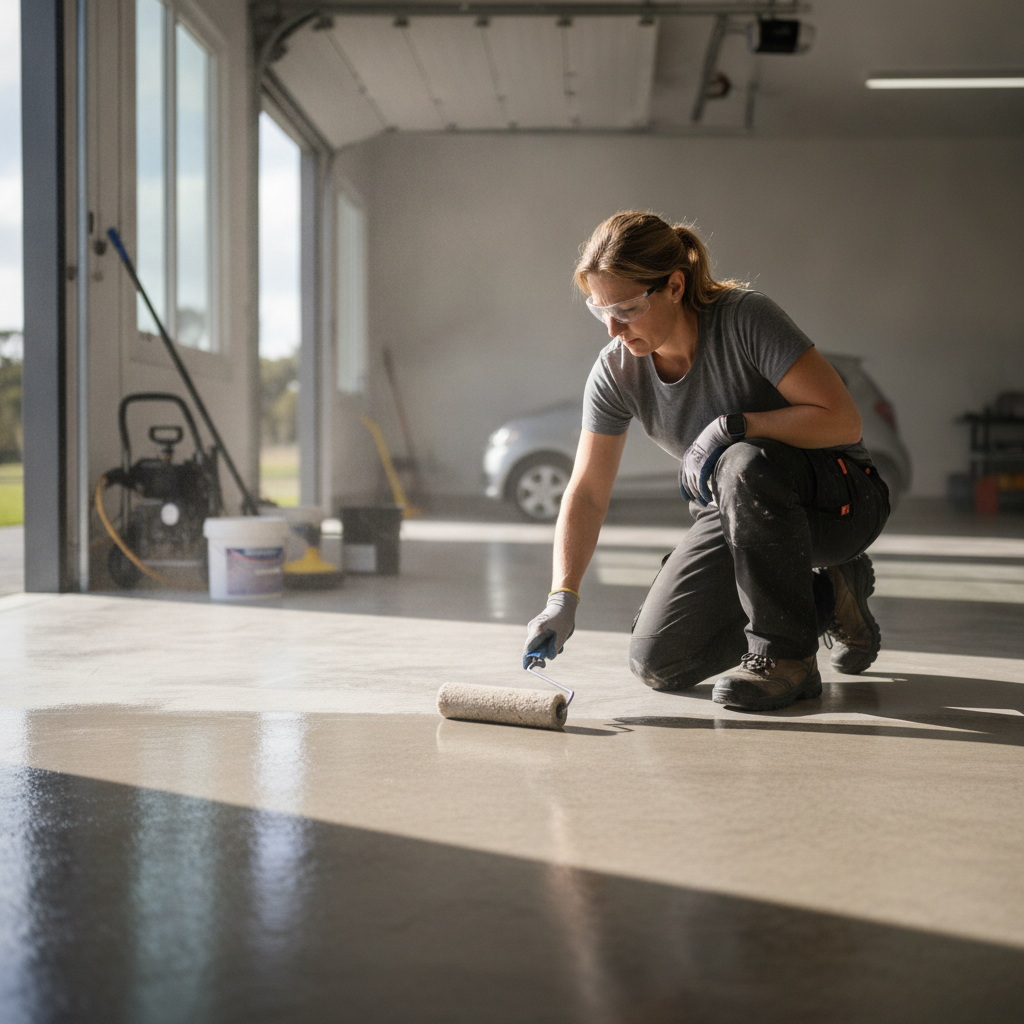
Once the surface is ready, the sealer or base coat goes down by roller in thin, even passes. For a two-part epoxy system, the resin and hardener are mixed together and applied within the product’s pot life, usually around 30 to 45 minutes depending on temperature. A second coat follows after the first has cured, and a topcoat of polyurethane is often added as a final wear layer. The whole system typically needs 24 hours before light foot traffic and 72 hours before driving a car on it.

What should Epping homeowners look for in a concrete sealing contractor?

The biggest thing to look for is surface preparation. Any contractor who quotes a sealed garage floor without mentioning grinding or shot blasting as part of the process is cutting a corner that will cost you later. Ask directly: how do you prepare the surface, and what equipment do you use?

Ask about the products too. There is a wide range of epoxy and polyurethane systems on the market, from trade-grade two-part products applied by professionals to consumer-grade kits sold at hardware stores. The trade systems are significantly thicker and more chemically resistant. A professional applicator should be able to name the specific product line they use and explain why they chose it for your situation.

References from local jobs are worth asking for. Seeing a floor that is two or three years old tells you far more than a freshly laid showroom floor. Look for adhesion at the edges, no bubbling or peeling in high-traffic zones, and whether the sheen has held up. A contractor confident in their work will have no hesitation pointing you toward past clients in the Epping area.

How much does concrete floor sealing cost in Epping?

Cost for concrete floor sealing in Epping depends on the size of the floor, its current condition and the system used. For a standard single garage of around 18 to 20 square metres, a basic penetrating sealer applied by a professional typically starts from a few hundred dollars. A full two-coat epoxy system with a polyurethane topcoat on the same floor sits higher, often in the range of $1,500 to $2,500 depending on condition and finish chosen.

Decorative finishes, such as metallic epoxy with a high-gloss clear topcoat or a flake broadcast system, add to that cost but also transform the space. Many homeowners find the gap between a basic seal and a quality decorative epoxy system is narrower than expected once they factor in the durability difference and the visual result.

Concrete that has heavy oil contamination, old paint or significant cracking will cost more to prepare. Skipping proper prep to save money at the quote stage is the single biggest cause of callbacks and failed floors, so a slightly higher quote that includes thorough preparation is generally the better value.

Is epoxy the best option for sealing a garage floor in Epping?

For most Epping garages, a water-based or solvent-based epoxy coating is the best all-round option for sealing and protecting the floor. Epoxy bonds tenaciously to properly prepared concrete, resists motor oil and most household chemicals, and handles the compressive load of a parked vehicle without issue. Paired with a polyurethane or polyaspartic topcoat, it also handles UV exposure from garage door openings better than plain epoxy alone.

Metallic epoxy systems add depth and movement to the floor, with pigments that shift colour depending on the angle of light. Vinyl flake systems, where coloured chips are broadcast into the wet epoxy, create a textured finish that hides minor imperfections and adds grip. Both are practical choices for a garage, not just showroom or commercial floors.

The key is matching the system to how the floor is actually used. A floor that sees heavy mechanical work with dropped tools and chemical spills needs a thicker, more abrasion-resistant build than a floor that mainly parks the family car. Getting that recommendation right is part of what a good flooring contractor does before quoting.

Metal and Flake works across Melbourne’s northern suburbs, including Epping, laying epoxy and decorative floor systems on residential and commercial slabs. If your garage floor is dusty, stained or just overdue for a proper surface, get in touch and talk through your options. Book Metal and Flake for concrete floor sealing in Epping.

Garage Floor Ideas for Melbourne Homes: Epoxy, Flake and Beyond

Garage Floor Ideas for Melbourne Homes: Epoxy, Flake and Beyond

The best garage floor ideas for Melbourne homes balance durability, looks and budget. Epoxy coatings, including flake and metallic systems, sit at the top of the list because they resist oil, tyre marks, abrasion and Melbourne’s variable humidity far better than bare concrete or paint. Expect a properly installed epoxy system to last 10 to 20 years with basic maintenance.

Why do Melbourne homeowners keep choosing epoxy for their garage floors?

Melbourne homeowners choose epoxy garage floors because the coating bonds directly to concrete, seals the slab against moisture and oil, and is far easier to clean than raw concrete. The city’s mix of humid summers and cold winters causes concrete to flex slightly, and a quality epoxy system is flexible enough to handle that movement without peeling or cracking under normal residential use.

Bare concrete is porous. Spill engine oil or brake fluid on it and you end up with a stain that is nearly impossible to remove. Epoxy creates a hard, non-porous surface that wipes clean in minutes. It also reflects light, which makes a single-car or double-car garage feel noticeably brighter without adding a single globe to the ceiling.

From a resale perspective, a freshly coated garage floor signals that a home has been cared for. Real estate agents in Melbourne’s competitive market consistently point to garages and storage areas as spaces buyers scrutinise. A clean, well-finished floor makes a difference at inspection time.

What are the main garage floor coating options to compare?

The main garage floor coating options are epoxy flake systems, metallic epoxy, solid-colour epoxy, polyaspartic coatings and concrete paint. Each suits different budgets and performance needs, but epoxy-based systems consistently outperform paint and basic sealers for residential garages that see daily vehicle use, foot traffic and the occasional chemical spill.

Here is a straight rundown of the most common choices:

  • Epoxy flake (broadcast flake): Colour flakes are broadcast into a wet epoxy base coat, then sealed with a clear topcoat. The result is a textured, slip-resistant finish that hides dirt between cleans. This is one of the most popular systems in Melbourne garages because it looks sharp, costs less than metallic, and suits families with kids and pets.
  • Metallic epoxy: Metallic pigments are mixed through the epoxy to create a flowing, three-dimensional effect that looks almost like polished stone or poured liquid. Every floor is unique. It is the premium residential option and works beautifully in showroom-style garages or home workshops where appearance matters as much as performance.
  • Solid-colour epoxy: A clean, industrial look in one consistent colour. Great for workshops and commercial garages. Less visually dynamic than flake or metallic but still highly durable.
  • Polyaspartic coatings: These are related to epoxy but cure faster, sometimes in a single day. They handle UV exposure better, so they are worth considering if your garage gets direct sunlight through open doors or windows. They are generally priced higher than standard epoxy systems.
  • Concrete paint and floor sealers: The budget option, and it shows in performance. Concrete paint typically starts peeling or bubbling within two to three years under vehicle traffic. For a garage floor that will actually hold up, paint is a false economy.

How does an epoxy flake floor hold up in a Melbourne garage day to day?

An epoxy flake floor in a Melbourne garage handles daily wear extremely well. The flake layer adds texture that improves grip when the floor is wet, and the clear topcoat is rated to withstand the tyre scuffing, point loads from jacks and stands, and the chemical splashes that are part of normal garage life. Routine care is as simple as a mop and a pH-neutral cleaner.

One thing worth knowing: the preparation stage is what separates a long-lasting floor from one that peels in twelve months. Concrete must be mechanically ground or diamond-ground before any epoxy goes down. This opens up the surface profile so the epoxy bonds at a chemical level rather than just sitting on top. Any installer worth their quote will grind the slab, not just acid-etch it, and will test for moisture before they start.

Flake systems are also forgiving to live with. The multi-colour flake pattern does a good job of disguising minor scuffs, dust and the grime that finds its way into any working garage. You are not wiping down a pristine white surface every week. A quick sweep and an occasional mop is genuinely all most homeowners do.

Is metallic epoxy a practical choice or just a showroom look?

Metallic epoxy is both practical and visually striking. It carries the same core durability as any quality epoxy system, meaning it resists oil, chemicals and abrasion effectively. The difference is purely aesthetic: the metallic pigments create a flowing, pearlescent effect that is genuinely one-of-a-kind. If your garage doubles as a home gym, a workshop or a display space for a car you are proud of, metallic epoxy earns its premium price.

The finish is smooth rather than textured, so it is worth discussing a non-slip additive with your installer if the garage opens directly to the outside and gets wet. That is a simple addition to the topcoat and does not significantly alter the appearance.

Application skill matters more with metallic epoxy than with flake systems. The installer needs to work the pigments correctly while the epoxy is in its working window to get those signature flowing patterns. This is not a product to cut corners on with the cheapest quote you can find online.

What should Melbourne homeowners think about before getting a quote?

Before calling for a quote on a garage floor coating, Melbourne homeowners should think about three things: the condition of their slab, how they use the garage, and their long-term plans for the space. A slab with significant cracking or rising damp needs attention before any coating goes down, and a good installer will flag this honestly rather than coat over a problem.

Consider how the garage is actually used. A weekend hobby space with light foot traffic is a different brief from a working garage where a car goes in and out twice a day, or a home gym where heavy equipment sits in place for months. Each use case points to a slightly different product spec, particularly around topcoat hardness and texture.

Also think about colour. Flake systems come in dozens of colour combinations, from neutral greys and beiges that suit most homes to bolder mixes that make the garage feel like a feature room. Metallic epoxy colour choices range from silver and charcoal through to warm golds and deep ocean tones. Getting a sample board under your actual garage lighting before committing is always a good idea.

Finally, ask any prospective installer about their surface prep process, the specific products they use, and what warranty they offer. A reputable Melbourne epoxy flooring company will answer those questions without hesitation.

Explore epoxy flake and metallic epoxy options with Metal and Flake in Melbourne.

Epoxy Flake Floors in Epping: What Does It Cost and How Long Does It Last?

Epoxy Flake Floors in Epping: What Does It Cost and How Long Does It Last?

An epoxy flake floor in Epping typically costs between $50 and $100 per square metre, depending on the size of the space, concrete condition and the number of coats applied. When installed correctly, a quality epoxy flake system lasts 10 to 20 years in a residential garage or commercial space before it needs significant attention.

What goes into the cost of an epoxy flake floor in Epping?

The cost of an epoxy flake floor in Epping comes down to four main factors: the size of the area, how much prep work the concrete needs, the thickness of the coating system and the colour or flake blend you choose. Larger jobs cost less per square metre because set-up time is spread across more floor. Smaller areas, like a single-car garage bay of around 18 to 20 square metres, carry a higher rate per square metre for the same reason.

Concrete prep is where a lot of people get caught short. If the slab has old paint, oil stains, cracks or a previous coating that’s peeling, all of that needs to be dealt with before a single drop of epoxy goes down. Diamond grinding is the standard approach on residential slabs because it opens up the concrete surface so the epoxy bonds properly rather than sitting on top like a skin waiting to peel.

The coating system itself usually involves a base coat of epoxy, a broadcast layer of vinyl flakes, then one or two clear topcoats for protection. A two-coat topcoat system adds cost but it also adds meaningful wear resistance, which is worth it in a busy garage or a commercial area with foot traffic.

Flake blends come in dozens of colour combinations. Standard blends sitting in a supplier’s stock cost less than custom or metallic-look options. If you want a specific colour to match a showroom or a home renovation, that’s absolutely achievable. Just expect a small premium on materials.

How long does an epoxy flake floor actually last?

A properly installed epoxy flake floor lasts 10 to 20 years in most residential and light commercial settings. The key word is “properly.” The lifespan depends almost entirely on surface preparation, the quality of the products used and how the floor is maintained afterwards. Floors that skip proper grinding or use low-solid epoxy products tend to fail within two to three years, usually through peeling or delamination.

In a residential garage used for everyday parking, storing bikes and the occasional weekend project, an epoxy flake system with a quality polyurethane topcoat will handle the load comfortably for well over a decade. Tyre marks wipe off. Chemical spills from the car don’t soak in. The floor stays looking sharp with nothing more than a regular sweep and an occasional mop.

Commercial spaces with heavy foot traffic or forklift use are a harder test. Here the topcoat choice matters a lot. A polyaspartic topcoat, for example, is harder and more UV stable than a standard polyurethane, making it the preferred option in workshops, warehouses and showrooms where the floor takes a real beating day after day.

One concrete detail worth knowing: epoxy coatings are typically 3 to 5 millimetres thick across a full system. That might not sound like much but at that thickness, a quality product distributes impact and load effectively across the slab underneath, protecting rather than just decorating your concrete.

Is an epoxy flake floor the right choice for garages and commercial spaces in Epping?

For most garages, workshops and commercial spaces in Epping, an epoxy flake floor is one of the most practical flooring choices available. It handles moisture, resists oil and chemicals, cleans up easily and looks professional. Compared to bare concrete it is night and day. Compared to tiles, it has no grout lines to trap dirt and no risk of individual pieces cracking or lifting.

Epping sits in Melbourne’s northern suburbs, an area with a strong mix of residential properties, light industrial units and commercial precincts. Many of the garages in newer estates are uncoated slabs. Many of the older commercial buildings have worn or painted floors that are overdue for an upgrade. Epoxy flake suits both situations well because it bonds to concrete that’s been properly prepared, regardless of the slab’s age.

The flake finish also has a practical advantage that solid colour epoxy doesn’t: the multi-tone flake pattern hides everyday scuffs and light marks between cleans. That’s a real benefit in a busy environment where you can’t be mopping every other day.

One thing to keep in mind is that epoxy floors are not a DIY-friendly product if you want them to last. The surface preparation alone, done properly with industrial diamond grinding equipment, is beyond what a hire-shop grinder can replicate in most cases. Getting the mixing ratios and pot life of the epoxy right on a warm Melbourne day takes experience. Cutting corners here is the number one reason DIY epoxy jobs fail within a year or two.

What should you ask a flooring contractor before you book?

Before you commit to any epoxy flake floor installation in Epping, there are a few straight questions worth asking your contractor. First: how do you prepare the surface? Diamond grinding is the right answer for bare or previously painted concrete. Acid etching alone is not sufficient for a long-lasting bond. Second: what products are you using and what is their solid content? Higher solids content means a thicker, more durable dried film. Third: how many coats are in your system and is the topcoat UV stable?

Ask for photos of previous jobs too. A good installer will have plenty of them. And ask about cure times before you book. Epoxy needs time to cure properly before you park on it, usually 24 to 72 hours for light foot traffic and up to seven days before driving a vehicle onto it. Knowing that in advance means you can plan around it rather than being caught off guard.

Warranties are another thing to check. A contractor confident in their work will back it. Be cautious of very cheap quotes that come with no warranty at all. The materials alone for a proper multi-coat epoxy flake system are not cheap, so a rock-bottom price almost always means something in the process has been cut.

Metal and Flake services Epping and the broader northern Melbourne area, bringing a professional epoxy flake coating system to residential garages and commercial spaces. If you’re ready to stop looking at a bare or tired concrete slab and want a floor that earns its keep for the next decade or more, the next step is simple.

Get a quote from Metal and Flake for epoxy flake floor installation in Epping

Concrete Floor Sealing in Sunbury: What Melbourne Homeowners Ask

Concrete Floor Sealing in Sunbury: What Melbourne Homeowners Ask

Concrete floor sealing in Sunbury protects bare or polished slabs from moisture, oil, stains and surface wear. A quality sealer penetrates or coats the concrete to stop water ingress, reduce dusting and make the surface far easier to clean. Depending on the product used, a sealed floor can last anywhere from two to ten years before it needs attention again.

Why does concrete floor sealing in Sunbury matter more than people think?

Unsealed concrete is more porous than it looks. Moisture from Sunbury’s clay-heavy soils can wick upward through a slab, leaving efflorescence stains, softening the surface and, over time, weakening the concrete itself. A sealer closes those pores, stops the moisture cycle and keeps the floor looking sharp without constant scrubbing.

Beyond moisture, unsealed garage and workshop floors dust constantly. That fine grey powder settles on cars, tools and shelving. It is not just annoying; it is actually concrete particles wearing away under foot and tyre traffic. Sealing the floor stops that process dead and adds measurable surface hardness at the same time.

Sunbury sits on the fringe of Melbourne’s north-west growth corridor. A lot of the homes out here were built in the last fifteen to twenty years on reactive clay sites, which means slabs that moved even slightly during curing can develop hairline cracks. A good penetrating sealer will fill microcracks up to about 0.2 mm wide, slowing any further deterioration before it becomes a structural problem.

What types of concrete sealer are available, and which one suits your floor?

There are four main categories: penetrating sealers (silane or siloxane-based), acrylic sealers, polyurethane sealers and epoxy coatings. Penetrating sealers soak into the slab and offer invisible protection with no change to appearance. Acrylics add a low sheen and are budget-friendly but wear faster. Polyurethanes are tougher and more chemical-resistant. Epoxy coatings are the most durable option and essentially become a new wear surface bonded directly to the concrete.

For a residential garage or workshop that takes regular foot traffic, vehicle traffic and the odd chemical spill, polyurethane or epoxy is genuinely the better investment. Acrylics suit covered alfresco areas or internal laundry floors where traffic is light. If you are sealing an exposed driveway, a penetrating silane-siloxane product handles UV and rain without peeling the way topical coatings can.

The other variable is sheen level. Matte finishes hide minor surface imperfections and are popular in Sunbury workshops. Satin and gloss finishes look sharp in garages and showrooms but show every tyre mark until you clean them. Neither is wrong; it just depends on how much maintenance you are happy to do.

How does surface preparation affect the final result?

Surface preparation is the single biggest factor in how long any concrete sealer lasts. A sealer applied over a dirty, oily or contaminated slab will peel within months. Proper prep involves cleaning the concrete thoroughly, removing any existing coatings, grinding or shot-blasting the surface to open the pores, and letting the slab reach the right moisture content before product goes down.

Moisture content is particularly important in Sunbury. Many slabs here sit close to the water table during winter, and if a topical sealer is applied over concrete with more than about four percent moisture by weight, the sealer can blister or delaminate. A professional will use a moisture meter and, if needed, recommend a moisture-tolerant primer before the main coating.

Oil stains in garages are their own challenge. Old motor oil penetrates deep into concrete and can prevent adhesion even after grinding. Degreasers help, but heavily contaminated spots sometimes need diamond grinding followed by an epoxy primer formulated specifically to lock in residual contamination. Skipping that step is the most common reason DIY sealing jobs fail within a year.

What does concrete floor sealing cost in the Sunbury area?

For a standard single-car garage slab of around 18 to 20 square metres, a professional concrete sealing job in the Sunbury and greater Melbourne region typically runs from roughly $600 to $1,500 depending on product choice, surface condition and whether grinding is required. Larger double garages or workshop floors of 40 to 60 square metres can range from $1,500 upward once full preparation and a quality topcoat are included.

DIY acrylic sealers from the hardware store cost far less upfront, around $80 to $200 for a single-car garage, but the trade-off is lifespan. A hardware-grade acrylic in a busy garage might last 12 to 18 months before it starts peeling. A professionally applied polyurethane or epoxy system, done with correct prep, can hold up for five to ten years. Spread the cost over that period and the professional job usually wins on value.

The other cost factor is what happens if sealing is not enough. Heavily damaged or pitted slabs sometimes need patching or grinding levelling before any product goes on. Getting a proper on-site quote is the only reliable way to know what your specific floor needs.

When should you consider epoxy flooring instead of just sealing the concrete?

If your concrete is in reasonable structural condition but you want a hard-wearing, good-looking floor that handles heavy use, epoxy flooring is worth considering as a step up from basic sealing. Epoxy systems bond directly to the prepared slab and build a rigid, chemical-resistant surface layer that a standard sealer simply cannot match in durability or appearance.

Metallic epoxy and decorative flake systems are popular in Sunbury garages and home workshops because they combine serious performance with a finish that looks far better than bare grey concrete. The flake systems in particular hide minor surface variation well, which suits older slabs that have seen a bit of life.

Metal and Flake specialises in epoxy flooring across Melbourne’s north-west, including Sunbury and surrounding suburbs. If you are weighing up whether a sealer will do the job or whether an epoxy system makes more sense for your floor, the team can assess the slab, talk through the options honestly and give you a clear picture of what each approach will cost and last.

Get a quote from Metal and Flake for concrete floor sealing in Sunbury

Epoxy Flake Floors in Sunbury: Styles, Costs and Local Installer

Epoxy Flake Floors in Sunbury: Styles, Costs and Local Installer

An epoxy flake floor in Sunbury gives garage, alfresco and commercial spaces a hard-wearing, slip-resistant finish that is far more attractive than bare concrete. Decorative vinyl flakes are broadcast into a wet epoxy base coat, then locked in with a clear topcoat. The result is a seamless, easy-clean surface that typically lasts a decade or more with minimal maintenance.

What styles of epoxy flake floor suit Sunbury homes?

Sunbury homeowners most often choose neutral and earthy flake blends that complement the region’s natural palette of sandy tones and bushland greens. Popular choices include full-broadcast blends in charcoal, sandstone and white, which hide dust and tyre marks well. Partial broadcasts, where flakes cover roughly 30 to 50 percent of the surface, give a more terrazzo-like look and work beautifully in alfresco zones or home workshops where a lighter feel is wanted.

Beyond colour, flake size matters. Standard 1 mm flakes produce a fine, consistent texture that suits garages and laundries. Larger 3 mm to 6 mm flakes create a bolder statement and extra grip underfoot, making them a smart pick for pool surrounds or any area that gets wet regularly. Many Sunbury residents are also leaning toward custom blends, mixing two or three flake colours to create a palette that is unique to their home rather than off-the-shelf.

The topcoat finish is the final style decision. A high-gloss polyurethane coat bounces light around a dark garage and makes the space feel twice as large. A satin or matte topcoat keeps things grounded and practical, showing far fewer scuff marks over time. If slip resistance is a priority, a non-slip aggregate can be added to the topcoat without changing the colour palette at all.

How much does an epoxy flake floor cost in Sunbury?

For a standard residential garage in the Sunbury area, epoxy flake floor installation typically ranges from around $40 to $80 per square metre, depending on floor preparation requirements, the flake system chosen and the number of coats applied. A single-car garage of roughly 18 square metres might cost between $700 and $1,500 fully installed, while a double garage of 36 square metres generally falls in the $1,500 to $2,800 range.

Floor preparation is the single biggest variable in any quote. Sunbury has a mix of older slab homes and newer estate builds, and older slabs frequently carry oil staining, paint residue or surface laitance that must be ground back before epoxy can bond properly. Diamond grinding, which opens the concrete pores mechanically, is the industry-standard prep method and is non-negotiable for a coating that will last. A job quoted without mechanical prep should raise questions, because skipping this step is the leading cause of peeling and delamination down the track.

Crack repairs, moisture testing and the use of a premium two-component topcoat rather than a single-pack sealer all add to the final figure, but they also directly add years to the life of the floor. Getting three itemised quotes that spell out exactly what prep work is included gives you a reliable apples-to-apples comparison.

What does the epoxy flake installation process actually involve?

A professional epoxy flake installation follows a consistent sequence: surface preparation, primer or base coat, flake broadcast, topcoat application and a cure period before the floor returns to full use. Each stage is time-sensitive, because epoxy chemistry is temperature and humidity dependent. On a typical Sunbury day, a two-coat system can be laid over two consecutive days, with the floor ready for foot traffic in 24 hours and vehicle traffic in 72 hours.

Day one begins with diamond grinding the concrete to a clean, open surface profile. Any cracks or divots are filled with a flexible filler and allowed to set. The primer or base coat is then rolled on and the vinyl flakes are broadcast by hand while the coat is still wet, ensuring even coverage. Excess loose flakes are swept or vacuumed away once the coat cures.

Day two is topcoat day. The surface is lightly abraded to ensure adhesion, then one or two coats of polyurethane or polyaspartic topcoat are applied. Polyaspartic topcoats cure faster than standard polyurethane, which matters in Sunbury’s warmer months when garage temperatures can climb quickly in the afternoon. A fast-cure topcoat means less downtime and less risk of dust contamination while the floor is open and wet.

After the final coat, the floor is left to cure fully before vehicles, motorbikes or heavy equipment are brought back in. Rushing this stage is one of the most common homeowner mistakes, and tyre marks caused by moving a car too early can be very difficult to remove from a fresh topcoat.

How do you choose the right epoxy flake floor installer in Sunbury?

Choosing the right installer for an epoxy flake floor in Sunbury comes down to three things: evidence of local experience, transparency about the preparation process and a willingness to discuss the specific products being used. Ask to see photos of completed local jobs, request a written quote that itemises prep, materials and coats, and check whether the installer is using commercial-grade two-part epoxy or a cheaper water-based product.

Local knowledge is genuinely useful here. Sunbury sits in Melbourne’s north-west fringe and experiences a wide temperature range across the year. A local installer understands how early morning cool and afternoon heat affect pot life and working time, and will schedule jobs accordingly rather than simply following a generic application guide. They will also know the common slab types in the area, from the thin waffle-pod slabs common in newer estates to the older 100 mm poured slabs in established streets, and will adjust their prep approach accordingly.

References from other Sunbury or outer-northwest Melbourne clients are the most reliable shortcut. A confident installer will have no hesitation providing them. Equally, a thorough pre-installation site visit, where the installer checks moisture levels and examines the slab condition before committing to a price, signals that they are serious about getting the result right rather than just winning the job.

Metal and Flake covers Sunbury as part of its Melbourne-wide service area, bringing the same meticulous preparation standards and premium flake systems to homes across the north-west corridor. Whether you are planning a single-car garage makeover or a full alfresco transformation, the team brings the experience and the products to make it last.

Book Metal and Flake for epoxy flake floor installation in Sunbury

Metallic Epoxy Floors in Craigieburn: Luxury Look for New Homes

Metallic Epoxy Floors in Craigieburn: Luxury Look for New Homes

A metallic epoxy floor in Craigieburn gives new-build homeowners a showroom-quality finish that combines durability with genuine visual drama. The system uses pigmented epoxy blended with metallic powders to produce swirling, three-dimensional depth that concrete alone can never replicate. It is seamless, easy to clean and built to last for decades with minimal upkeep.

Why are metallic epoxy floors so popular in Craigieburn new builds?

Metallic epoxy floors suit Craigieburn new builds because the suburb is expanding fast, and buyers want interiors that feel premium without blowing the fit-out budget on marble or polished porcelain. A metallic epoxy system costs a fraction of natural stone yet delivers a comparable visual impact, making it a practical choice for families who want their brand-new home to look genuinely luxurious from day one.

Craigieburn has grown from a quiet fringe suburb into one of Melbourne’s most active residential corridors over the past decade. Estates like Aston, Harpley and Atherstone have introduced thousands of new homes, and their open-plan ground floors are perfectly suited to seamless epoxy systems. Wide, connected living areas benefit enormously from a single continuous floor surface that ties the kitchen, dining and lounge together without grout lines or transitions breaking the eye line.

There is also a practical angle. Craigieburn sits in a part of Melbourne that experiences genuine seasonal temperature swings, from hot summer days above 38 degrees through to cold winter mornings. A quality metallic epoxy system is thermally stable, non-porous and resistant to the kind of cracking that can plague cheaper floor coverings when a concrete slab moves slightly with the season.

What does a metallic epoxy floor actually look like?

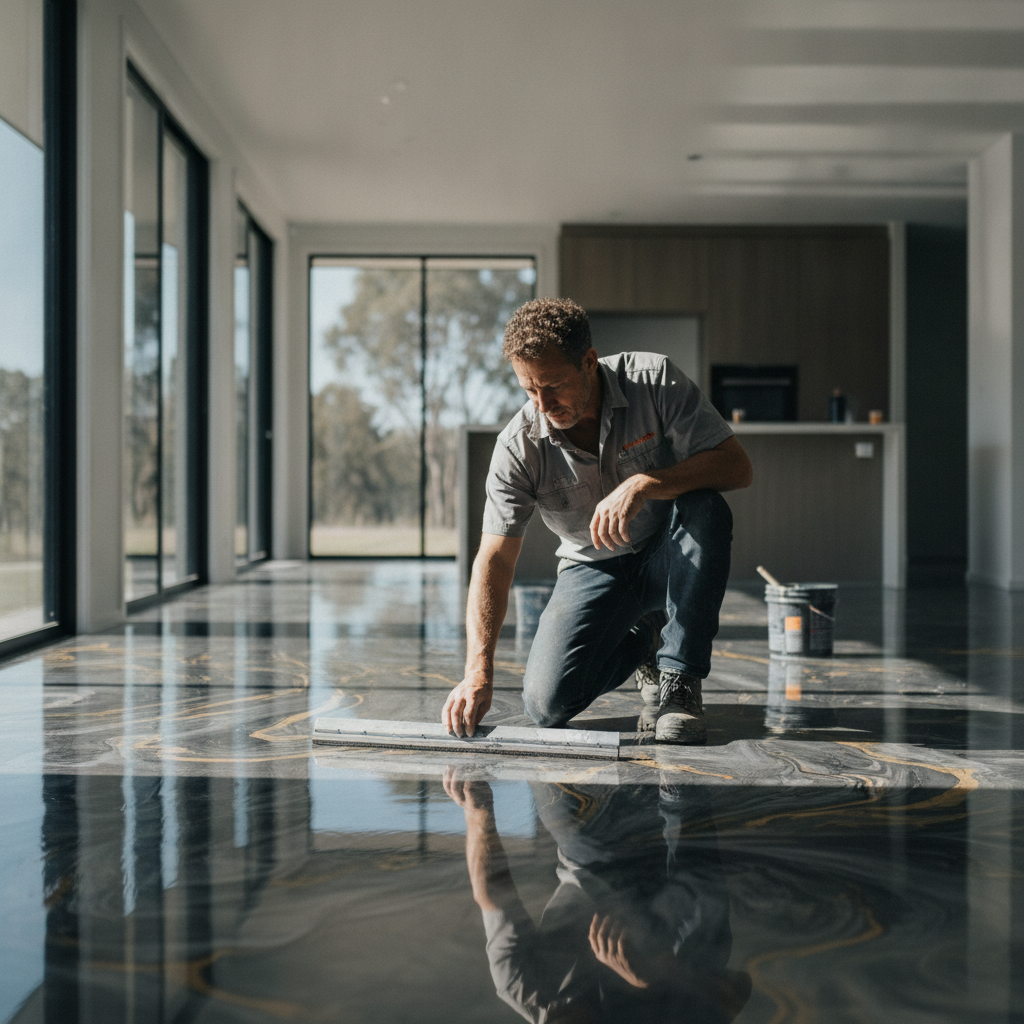
A metallic epoxy floor features a high-gloss surface with layered colour movement that shifts as the light changes throughout the day. The finish can read as molten silver, burnished copper, deep oceanic blue or any number of custom blends depending on the pigments used. Because the metallic powders are manipulated by hand during application, no two floors are identical, giving each home a genuinely one-of-a-kind surface.

The effect is created by combining a base coat, a pigmented metallic layer and a clear topcoat, usually a polyaspartic or urethane sealer. The installer uses tools, air movement and sometimes a second pigment to create the characteristic swirl and flow. The result sits somewhere between abstract art and architectural material, which is exactly why it photographs so well and tends to stop visitors in their tracks the moment they walk through the front door.

Colour choices for Craigieburn homes tend to lean toward neutral palettes. Warm champagne and graphite tones work particularly well with the light grey and white builder-grade cabinetry common in newer estates. That said, bolder choices like deep teal or antique bronze are increasingly popular in feature areas such as master ensuites, home theatres and alfresco entertaining zones.

How long does a metallic epoxy floor installation take in Craigieburn?

A standard metallic epoxy floor installation across an open-plan ground floor of 80 to 120 square metres typically takes two to three days from surface preparation through to final topcoat. The concrete must be mechanically ground and profiled on day one, the base and metallic layers go down on day two, and the clear sealer is applied on day three. The floor is usually walk-ready within 24 hours of the final coat curing.

Surface preparation is the step that separates a floor that lasts from one that peels. Diamond grinding opens the concrete’s pores so the epoxy bonds at a mechanical level rather than just sitting on top. Any cracks or voids are filled before coating begins. For a new slab, the concrete generally needs to have cured for at least 28 days before epoxy goes down, so coordinating the floor install with the broader construction schedule is worth planning early.

Once cured, the floor is ready for furniture placement and normal foot traffic. Heavy appliances and furniture on rubber feet can typically be moved back in within 48 to 72 hours. Full chemical resistance, the kind that matters if you spill red wine or cleaning products, develops over about seven days as the epoxy reaches complete hardness.

How does a metallic epoxy floor hold up to everyday family life?

Metallic epoxy floors handle everyday family life well because the surface is non-porous, scratch-resistant and simple to clean with a damp mop. There are no grout lines to trap dirt, no fibres to absorb spills and no coatings that need annual re-sealing the way timber floors do. A well-installed system from a reputable installer carries a surface that is genuinely built for the way Australian families actually use their homes.

Abrasion resistance is one of the floor’s standout practical qualities. Independent testing of commercial-grade epoxy topcoats consistently shows wear rates that outperform vinyl plank and laminate, both of which are common choices in new Craigieburn estates. The clear polyaspartic topcoat used in quality installations also resists UV yellowing, which matters in north-facing living areas where afternoon sun pours across the floor for hours each day.

Pet owners tend to appreciate the surface too. Claws do not gouge epoxy the way they mark softwood timber, and any pet-related mess wipes away cleanly without penetrating the surface. The one consideration is that a high-gloss finish will show fine surface scratches over time in very high-traffic areas, which is why some homeowners opt for a satin or matte topcoat in hallways while keeping the full gloss in the main living zone.

What should Craigieburn homeowners look for when choosing an epoxy floor installer?

Craigieburn homeowners should look for an epoxy floor installer who uses mechanical diamond grinding for preparation, specifies the exact products and thicknesses in writing, and can show a portfolio of completed residential projects in Melbourne’s northern growth corridor. An installer who skips proper surface prep or uses thin single-coat systems will deliver a floor that lifts, peels or discolours within a few years, which costs far more to fix than the savings made upfront.

Ask to see examples of metallic work specifically, not just solid-colour epoxy. Metallic application is a distinct skill. The swirl and flow patterns require confident, deliberate manipulation during a tight working window before the epoxy begins to set. Installers who do it regularly will have clear photographic evidence of past jobs and will be able to talk you through their specific technique and the product brands they use.

A quality written quote should outline the number of coats, the build thickness in millimetres, the topcoat type and the warranty terms. Most reputable installers in the Melbourne market offer a workmanship warranty of at least two years on residential installations, with the product manufacturer’s own warranty covering the material separately. If a quote is vague about any of these details, that is worth following up before signing anything.

Metal and Flake operates across Melbourne’s northern suburbs, including Craigieburn, and specialises in metallic and decorative epoxy floor systems for new homes and renovations. The team brings the kind of hands-on experience that shows up in the finished result, not just in the sales conversation.

Get a quote from Metal and Flake for metallic epoxy floor installation in Craigieburn

Garage Floor Coating in Craigieburn: Epoxy Options for New Homes

Garage Floor Coating in Craigieburn: Epoxy Options for New Homes

Garage floor coating in Craigieburn is one of the smartest finishing decisions new homeowners can make. A quality epoxy or decorative flake system seals porous concrete, resists oil and tyre scuffs, and transforms a bare slab into a polished, low-maintenance surface that lasts for years. The right coating depends on your slab condition, usage and the look you want.

Why is garage floor coating so popular in Craigieburn’s new estates?

Craigieburn’s rapid residential growth means thousands of homes are sitting on fresh concrete slabs that are porous, unfinished and vulnerable. A professional garage floor coating applied to new concrete protects the surface from day one, prevents moisture penetration, and gives the space a finished look that matches the quality of the home itself. Most homeowners act within the first twelve months, before daily wear etches the surface permanently.

Suburbs like Craigieburn, Mickleham and Kalkallo are among Melbourne’s fastest-growing corridors, with estates like Harpley and Somerfield delivering hundreds of turnkey homes every year. The garages in these builds almost always arrive with raw, grey concrete. It is perfectly functional, but it stains instantly, scuffs under car tyres and feels unfinished next to a brand-new home interior.

The good news is that new concrete is ideal for coating. There are no old sealers to grind back, no deep oil contamination to treat, and the surface profile is consistent. With the right preparation and the right system, a new-build garage slab in Craigieburn can be coated in a single day and walked on within 24 hours.

What garage floor coating options work best for a new home slab?

The three most popular systems for new home garages are solid-colour epoxy base coats with a clear top coat, decorative vinyl flake systems, and metallic epoxy. Each has a different price point, aesthetic and maintenance profile. Flake systems are the most practical for family garages, hiding minor imperfections and providing excellent slip resistance, while metallic systems deliver a high-end, showroom appearance best suited to feature garages or workshops with lighter foot traffic.

Here is how each system breaks down in practice:

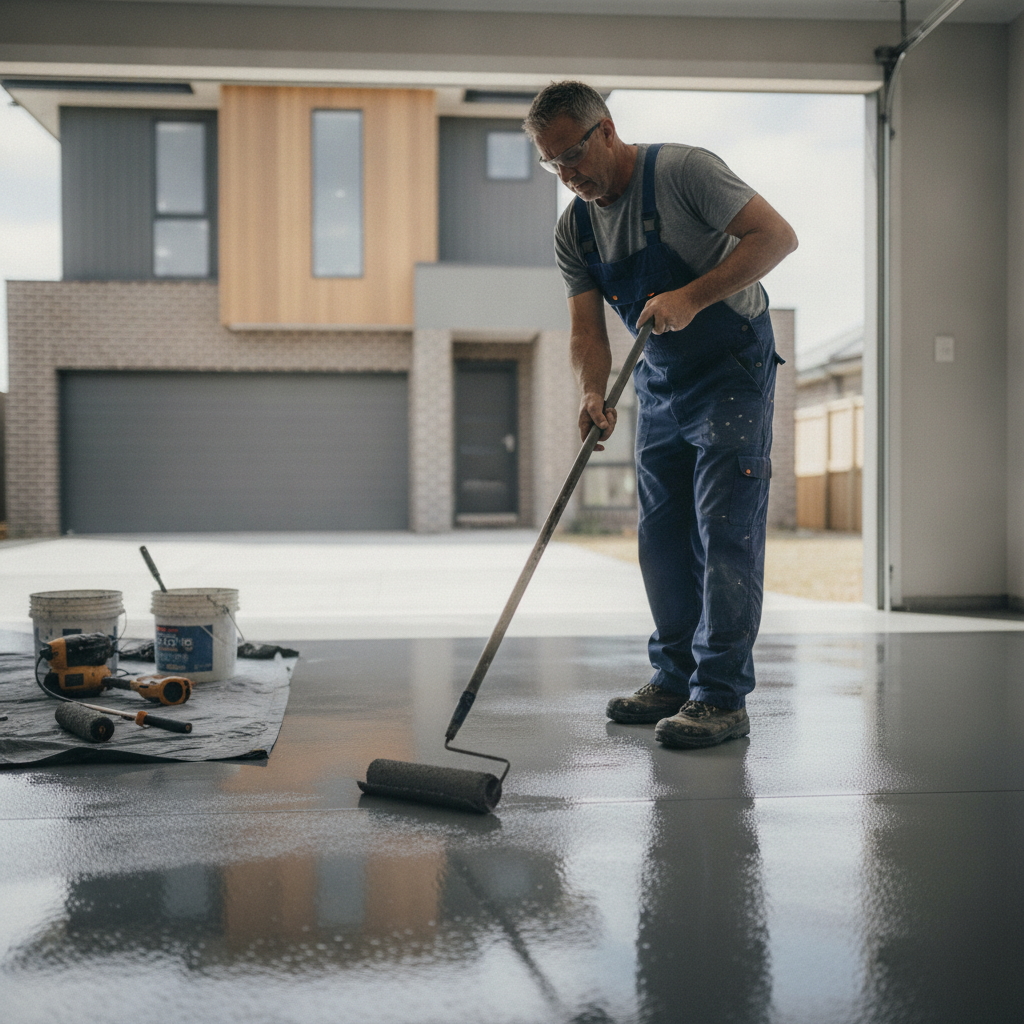
Epoxy base coat with clear urethane top coat. This is the entry-level professional system and a step far above anything you will get from a hardware-store roller kit. A two-part epoxy is applied directly to mechanically prepared concrete, then a UV-stable polyurethane or polyaspartic clear coat is applied over the top. The result is a seamless, glossy floor that cleans with a mop. It is a solid choice for tidy single-car garages.

Vinyl flake (chip) system. This is the most requested system for family garages in Melbourne’s northern suburbs. Coloured vinyl flakes are broadcast into a wet epoxy base, then locked in under a clear top coat. The texture gives genuine grip underfoot, the pattern disguises tyre marks and fine scratches, and there are dozens of colour blends available. A full-flake broadcast creates a terrazzo-like finish that holds up extremely well to Australian conditions. Chip systems also excel at hiding the minor surface imperfections common in builder-grade slabs.

Metallic epoxy. Metallic pigments suspended in a clear or tinted epoxy base create flowing, three-dimensional effects that look like polished stone or liquid metal. No two floors look identical. Because the finish is continuous and perfectly smooth, it shows every mark more readily than a chip floor, so it tends to suit garages used more for display or storage than for heavy mechanical work. The visual impact is hard to beat.

How should new concrete in Craigieburn be prepared before coating?

New concrete must be fully cured, typically at least 28 days old, and mechanically profiled before any coating is applied. Proper preparation means diamond grinding or shot blasting to open the surface, followed by crack and joint treatment. Skipping or cutting short the preparation phase is the single biggest cause of coating failure, regardless of which product is used.

Builder-grade slabs in Craigieburn estates are frequently finished with a trowelled or power-float surface that looks smooth but is actually too dense for a coating to grip without mechanical opening. Acid etching alone is not sufficient on these slabs. Diamond grinding physically creates the profile the coating needs to bond. It also removes any curing compound sprayed on by the concreters during the pour, which acts as a release agent if left in place.

Once the grinding is done, the floor is vacuumed thoroughly, any cracks are filled with a semi-flexible filler, and expansion joints are masked or treated to prevent them telegraphing through the coating. Only then is the first coat of epoxy applied. Rushing this sequence because the garage looks clean to the eye is a mistake that shows up as peeling or bubbling within the first year.

How long does a garage floor coating last in Melbourne’s climate?

A professionally installed epoxy floor coating in a residential garage typically lasts between 10 and 20 years with routine cleaning and the occasional maintenance top coat. Melbourne’s temperature swings, from cold winters in the high single digits to summers that push past 40 degrees, mean that the top coat formulation matters. Polyaspartic and aliphatic urethane finishes handle UV exposure and thermal cycling significantly better than standard epoxy clears, which can yellow and chalk over time when exposed to sunlight through garage doors or windows.

The most common causes of premature failure are moisture transmission from below the slab (especially relevant on slabs without a proper moisture barrier), inadequate surface preparation and the use of water-based DIY kits not designed for vehicular traffic. A coating installed by an experienced team using commercial-grade two-part materials and proper prep will outlast most of the appliances in the same home.

In terms of day-to-day maintenance, epoxy floors are genuinely low-effort. A soft broom for dust and a mop with a pH-neutral cleaner handle most cleaning. Oil drips can be wiped up without staining. Tyre marks from hot tyres are reduced significantly by the clear top coat, and where they do occur they lift easily with a degreaser spray.

Is a decorative garage floor coating worth the investment for a new Craigieburn home?

For most Craigieburn homeowners, the answer is yes, both practically and financially. A coated garage floor protects a concrete asset that would otherwise degrade steadily under cars, moisture and foot traffic. It also adds to the perceived quality of the home, something buyers and valuers notice. Compared to the cost of resurfacing a badly deteriorated slab later, coating early is genuinely cost-effective.

Beyond resale, there is the daily-use argument. Craigieburn families use their garages hard. They are gym spaces, workshop areas, storage rooms and the main entry point into the home. A durable, attractive floor makes all of those uses more comfortable and easier to keep clean. A bare concrete slab generates dust, absorbs every drop of fluid that touches it, and looks rough within a few years of daily use.

The investment in a quality chip or metallic system sits comfortably within reach for most new-home budgets, particularly when planned as part of the post-build finishing phase before furniture and shelving go in. At that stage, the garage is empty, access is easy, and the installation is as straightforward as it ever will be.

Metal and Flake works across Melbourne’s northern growth corridor, bringing the same high-spec systems and careful preparation to every garage floor we coat. If you have just picked up the keys to a new home in Craigieburn and the garage slab is staring back at you, we can walk you through the right system for your space, your usage and your budget.

Book Metal and Flake for garage floor coating in Craigieburn

Metallic Epoxy Floors in Sunbury: Design Ideas and Installer Tips

Metallic Epoxy Floors in Sunbury: Design Ideas and Installer Tips

A metallic epoxy floor in Sunbury gives homeowners and business owners a high-gloss, three-dimensional finish that is both durable and genuinely striking. Metallic pigments suspended in a clear epoxy resin create flowing, lava-like movement across the surface. Properly installed, the floor resists staining, handles heavy foot traffic and can last well over a decade without needing replacement.

What makes a metallic epoxy floor different from standard epoxy?

A metallic epoxy floor differs from standard epoxy because ultra-fine metallic pigments are blended into the topcoat, then manipulated with air or a notched squeegee to create depth, swirl and movement that a flat solid-colour epoxy simply cannot replicate. The result looks more like polished stone or liquid metal than a painted concrete slab, and no two floors come out exactly the same.

Standard solid-colour epoxy is a workhorse. It seals concrete, resists chemicals and is easy to clean. Metallic epoxy does all of that and adds a decorative dimension that makes garage floors, retail spaces and residential living areas look genuinely considered. In Sunbury, where new estates sit alongside older brick homes and industrial sheds, that versatility is a real advantage. The same product that looks at home in a converted warehouse also works beautifully in a double garage on a fresh estate build.

The pigments themselves are typically mica-based. When light hits them at different angles, the floor shifts between deep charcoal, warm copper or shimmering pearl depending on where you stand. That optical effect is what draws most Sunbury clients toward metallic epoxy in the first place.

Which metallic epoxy floor colours work best for Sunbury homes?

The metallic epoxy floor colours that work best for Sunbury homes tend to be those that complement the area’s mix of contemporary estate builds and established brick veneer homes. Warm pearl and champagne tones lift darker interiors, cool silvers and charcoals suit modern open-plan spaces, and earthy bronzes tie in beautifully with the natural tones common in Sunbury’s older properties.

Here are a few combinations worth considering:

  • Pewter and pearl: A cool grey base with white pearl pigment gives a polished concrete look but with far more visual depth. This suits contemporary builds around Sunbury’s newer estates and reads as clean and modern under LED downlights.
  • Copper and chocolate bronze: Warmer tones that pick up the earthy palette of established homes in the Sunbury township area. This combination ages beautifully and hides minor surface scuffs between maintenance coats.
  • Midnight black with gold: A bold choice for garages, man caves or commercial spaces. The contrast is dramatic and the gold veining catches light in a way that keeps the floor from feeling heavy.
  • Ocean blue and silver: Popular for pool surrounds and alfresco areas where the colour connects the floor to water and sky. A UV-stable topcoat is essential here given Sunbury’s exposure to harsh summer sun.

Colour choice also interacts with the application technique. A tight, controlled swirl produces a marble-like effect. Wider, more fluid manipulation creates something closer to ocean water or flowing lava. Your installer should be willing to do a small test panel so you can see the movement in your specific lighting conditions before committing to the full floor.

What surface preparation does a metallic epoxy floor in Sunbury actually require?

Surface preparation for a metallic epoxy floor in Sunbury requires diamond grinding or shot blasting to open the concrete pores, followed by thorough crack repair and moisture testing. Skipping or rushing this stage is the single most common reason metallic epoxy floors delaminate or bubble. On Melbourne’s northwest fringe, including Sunbury, many slabs are laid over reactive clay subsoils, which makes moisture testing especially important before any coating goes down.

The concrete surface profile (CSP) needs to reach at least CSP 3, which means the surface feels like 40-grit sandpaper to the touch. That profile gives the primer coat enough mechanical adhesion to hold. An installer who quotes you a metallic epoxy job without mentioning surface preparation in detail is worth questioning.

After grinding, any cracks wider than a hairline are filled with a semi-rigid epoxy filler and allowed to cure fully. If moisture vapour transmission is an issue (common on older slabs or slabs without adequate damp-proof membranes), a moisture-tolerant epoxy primer is used as the first coat. Cutting corners here costs far more in remediation than it saves up front.

The full system typically runs to three or four layers: primer, metallic base coat, clear broadcast coat and a polyaspartic or urethane topcoat. Each layer has its own cure window. Pushing through before a layer is ready introduces adhesion failures that may not appear until months later.

How long does a metallic epoxy floor installation take in Sunbury?

A typical metallic epoxy floor installation in Sunbury takes two to three days for a standard garage or residential space, from surface preparation through to the final topcoat. Larger commercial floors or spaces requiring extensive crack repair may need an additional day. The floor is usually ready for light foot traffic within 24 hours of the final coat, but heavy use and vehicle traffic should wait at least 72 hours, and full chemical resistance develops over seven days.

Day one is almost entirely preparation: grinding, crack filling and priming. Day two is where the visual magic happens, with the metallic layer applied and manipulated before a clear broadcast coat locks in the design. Day three applies the protective topcoat and any slip-resistant additives if required.

Weather matters on Melbourne’s northwest fringe. Sunbury can experience significant temperature swings, and both heat and cold affect cure times. Experienced installers schedule around extreme heat and avoid coating when slab temperatures are below around 10 degrees Celsius, because low temperatures slow curing and can cause surface defects in the metallic layer.

What should Sunbury homeowners look for in a metallic epoxy floor installer?

Sunbury homeowners should look for a metallic epoxy floor installer who demonstrates clear knowledge of surface preparation, uses a full multi-coat system with a named topcoat product, provides a written scope of work and can show a portfolio of completed metallic floors rather than generic stock images. Local knowledge of Sunbury’s concrete conditions, including clay subsoil movement and moisture issues, is a genuine advantage.

A few practical checkpoints before signing anything:

  • Ask specifically how they test for moisture vapour. A good installer uses a calcium chloride test or a relative humidity probe, not just a visual inspection.
  • Ask what topcoat product they use and whether it carries a UV-stable formulation. Metallic pigments can dull under direct sunlight without UV protection.
  • Ask to see examples of completed metallic floors in similar spaces, not just renders or mood boards.
  • Confirm that surface grinding is included in the quote, not listed as an optional extra. Grinding is not optional for a floor that will hold.

It is also worth checking that the installer carries public liability insurance and can provide a written warranty on both labour and materials. Reputable epoxy installers stand behind their work and will return to address any adhesion issues within the warranty period.

Can a metallic epoxy floor be installed in commercial spaces in Sunbury?

Yes, metallic epoxy floors are well suited to commercial spaces in Sunbury, including retail showrooms, cafes, gyms, reception areas and industrial offices. Commercial installations typically require a harder-wearing topcoat, a slip-resistant surface profile in wet or high-traffic zones, and a faster-curing product formulation to minimise downtime. Anti-static additives are available for workshops and warehouses with electronic equipment.

Sunbury’s commercial strip along O’Shanassy Street and the growing industrial precincts off Gap Road represent exactly the kinds of spaces where a metallic epoxy floor delivers both function and brand impact. A showroom floor that looks considered and polished says something about the business running on top of it. The durability advantage over polished concrete or vinyl tile is significant too: a well-maintained metallic epoxy system resists fork traffic, dropped tools, cleaning chemicals and heavy foot traffic without the grout lines and trip hazards that come with tiled alternatives.

Metal and Flake installs metallic epoxy floors across Melbourne’s northwest, bringing the same attention to preparation and finish detail whether the project is a single-car garage in a new estate or a 500-square-metre commercial fit-out. Every job starts with the slab, not the colour chart, because the best-looking floor in Sunbury is one that is still performing five years from now.

Book Metal and Flake for metallic epoxy floor installation in Sunbury