Commercial Epoxy Floor Coating: What Melbourne Businesses Should Know

Commercial Epoxy Floor Coating: What Melbourne Businesses Should Know

A commercial epoxy floor coating is a multi-layer resin system applied directly to concrete that creates a hard, seamless, chemical-resistant surface built to handle heavy foot traffic, forklifts and constant cleaning. For Melbourne businesses, it is one of the most cost-effective ways to protect a concrete slab, improve safety and lift the look of a workspace, all at the same time.

Why do Melbourne businesses choose commercial epoxy floor coating over other options?

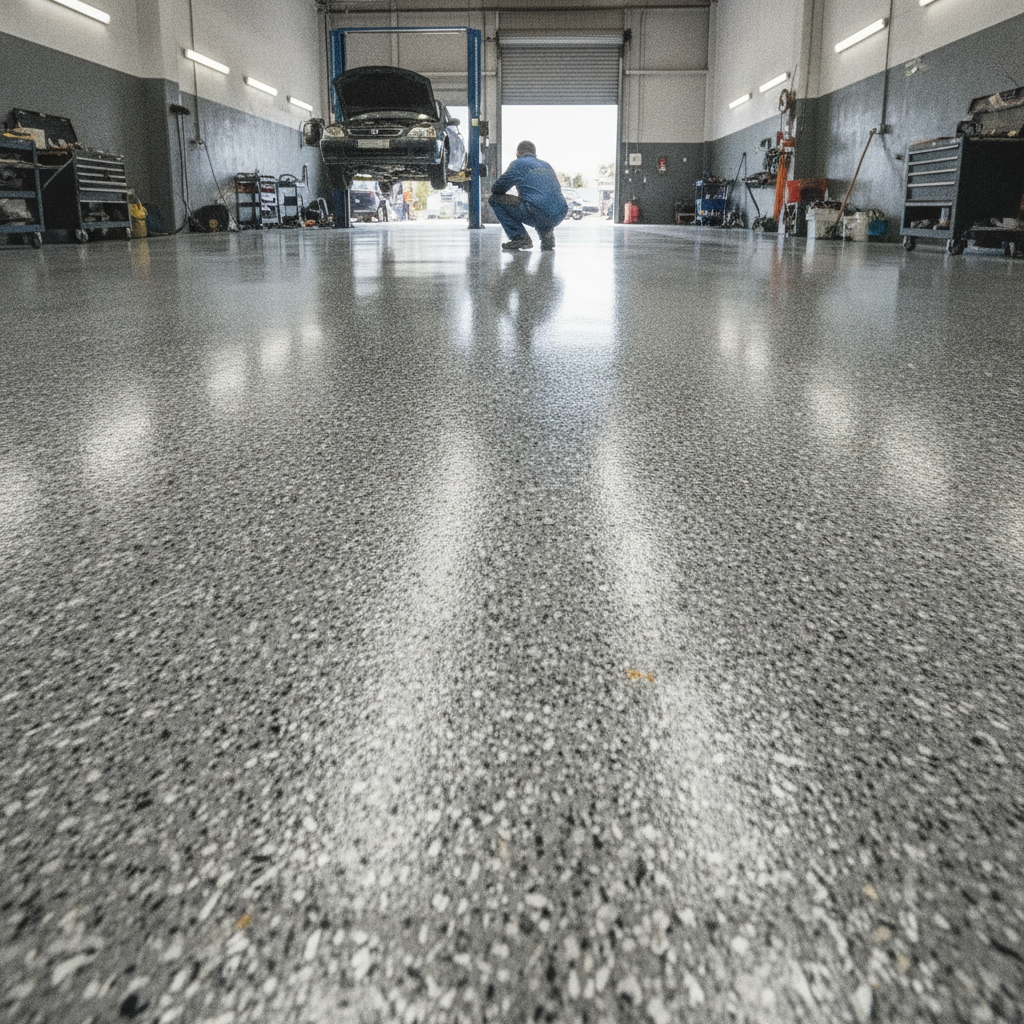
Commercial epoxy floor coating bonds directly to the concrete rather than sitting on top of it, which means it will not peel, bubble or shift under load the way vinyl or tile can. It is seamless, so there are no grout lines to trap bacteria or grime. A properly installed system in a warehouse, factory or retail space can handle forklift traffic, hot tyre marks and spills from oils, acids and cleaning chemicals without breaking down.

Polished concrete is a popular alternative, but it offers very little chemical resistance on its own. Vinyl tiles look tidy but the joins open up over time in high-traffic zones. Epoxy closes those gaps completely. The surface is also highly reflective, which bounces natural and artificial light around the space and can reduce your lighting costs without a single bulb swap.

For food manufacturing facilities, commercial kitchens and pharmaceutical warehouses, regulators often expect a non-porous, cleanable floor. A correctly specified epoxy system ticks that box straight away.

What types of commercial epoxy floor coating are available?

The main types used in commercial settings are self-levelling epoxy, mortar epoxy, anti-slip epoxy and decorative flake or metallic finishes. Each one suits a different environment and budget, so picking the right system before the job starts saves a lot of headaches later.

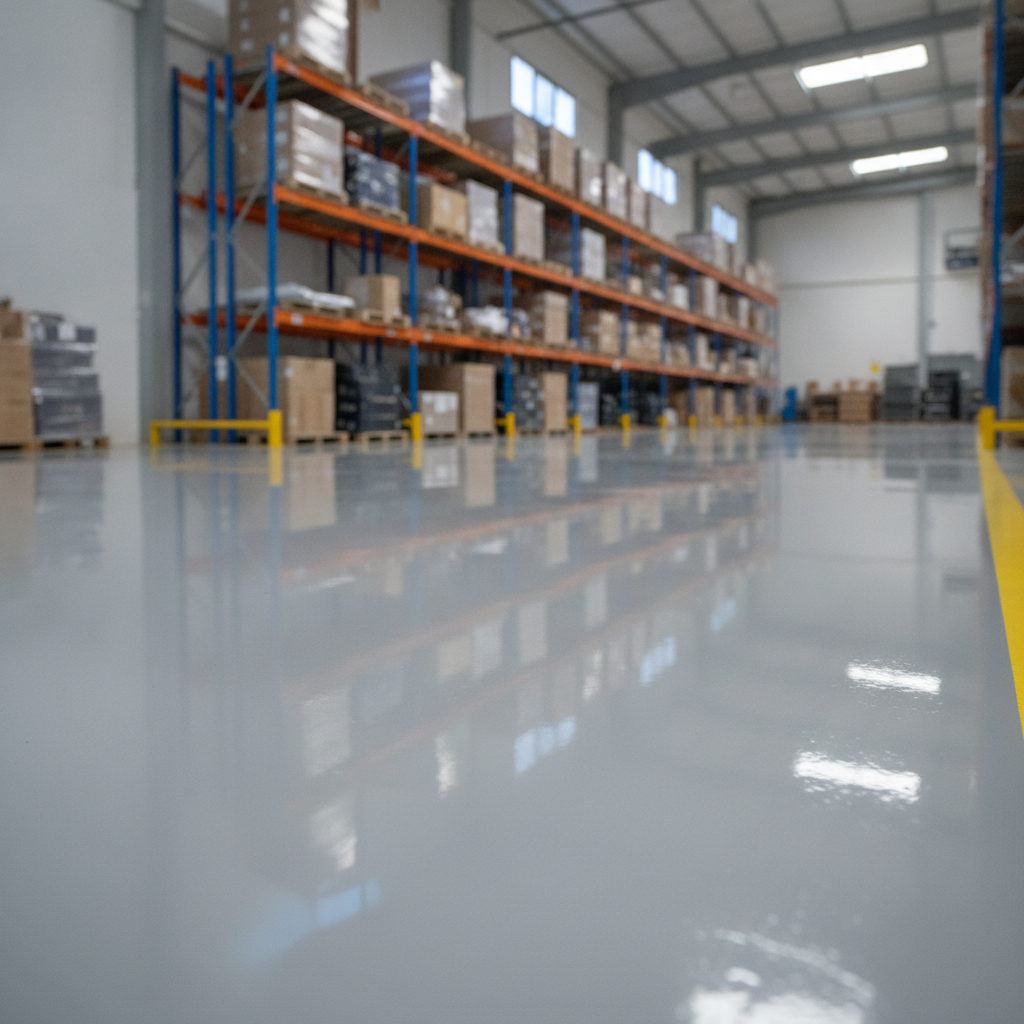
Self-levelling epoxy is the go-to for warehouses, distribution centres and light manufacturing. It is typically applied at two to three millimetres thick, creates a smooth surface and can be colour-matched to suit corporate branding or safety zoning. It is strong, easy to clean and works well under racking systems and moving equipment.

Mortar epoxy uses a blend of epoxy resin and graded sand or aggregate. At up to six millimetres thick, it is the toughest system available and is commonly specified for heavy industrial floors, loading docks and areas where hard steel wheels run constantly. It handles impact and abrasion that would crack a thinner coating.

Anti-slip variants add a broadcast aggregate, usually aluminium oxide or a polymer grit, to any of the above systems. Wet processing areas, cool rooms, commercial kitchens and entry lobbies almost always need this to meet Workplace Health and Safety requirements. Australian Standard AS 4586 is the relevant reference for slip resistance classification, and many insurers and site managers ask for it by name.

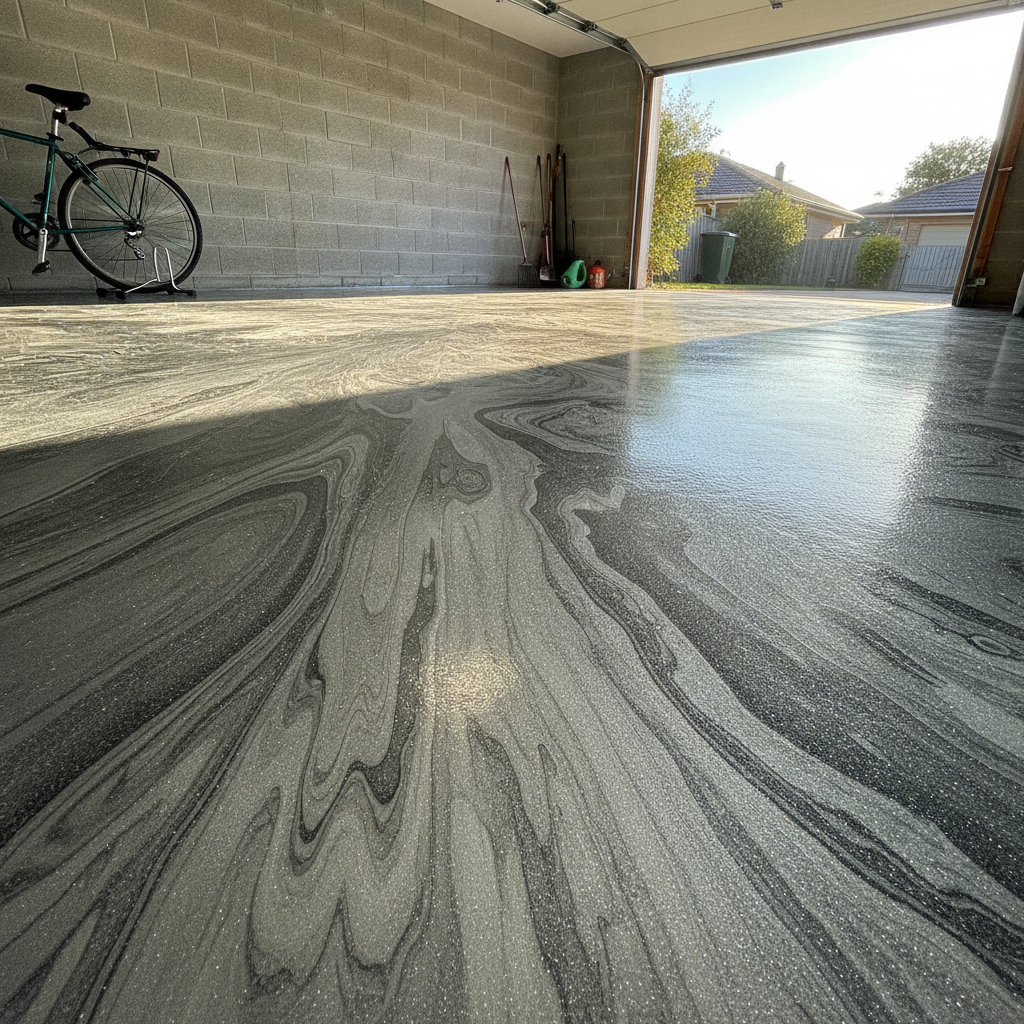
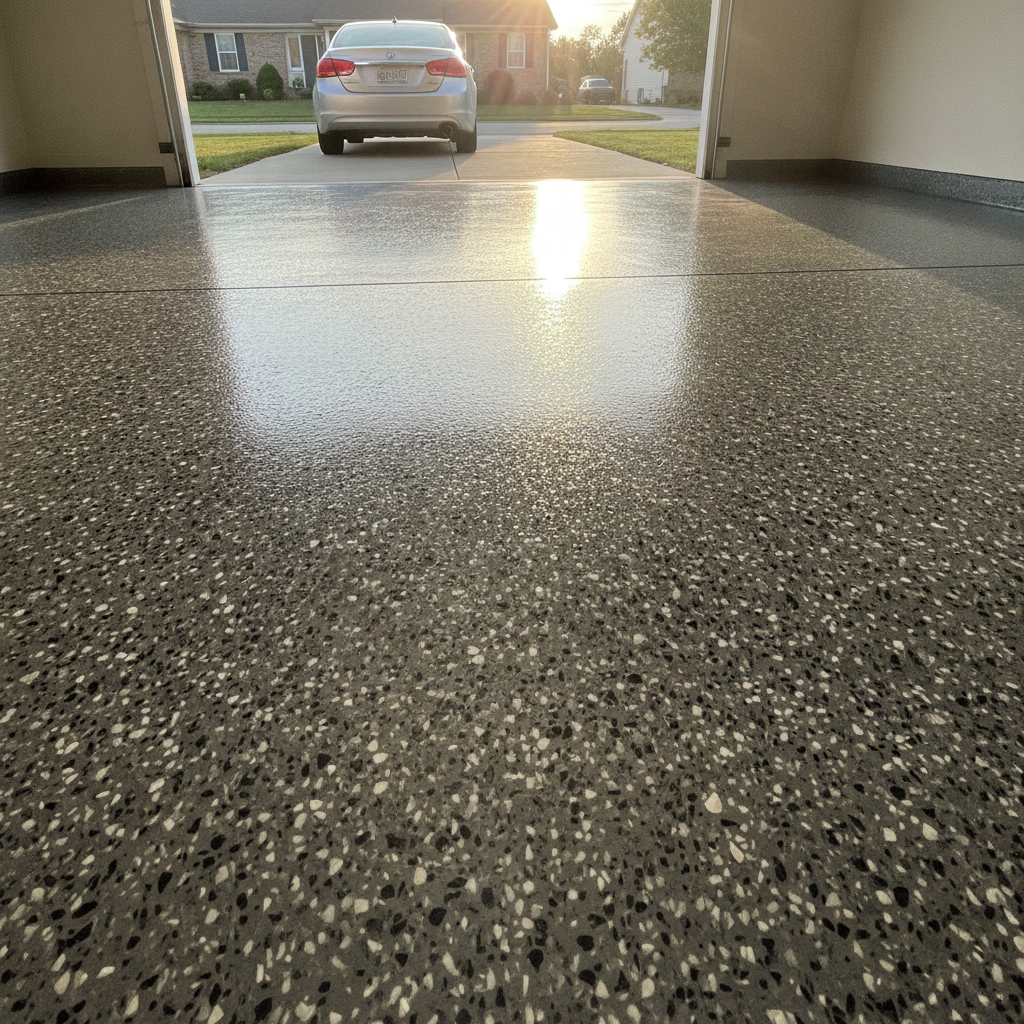
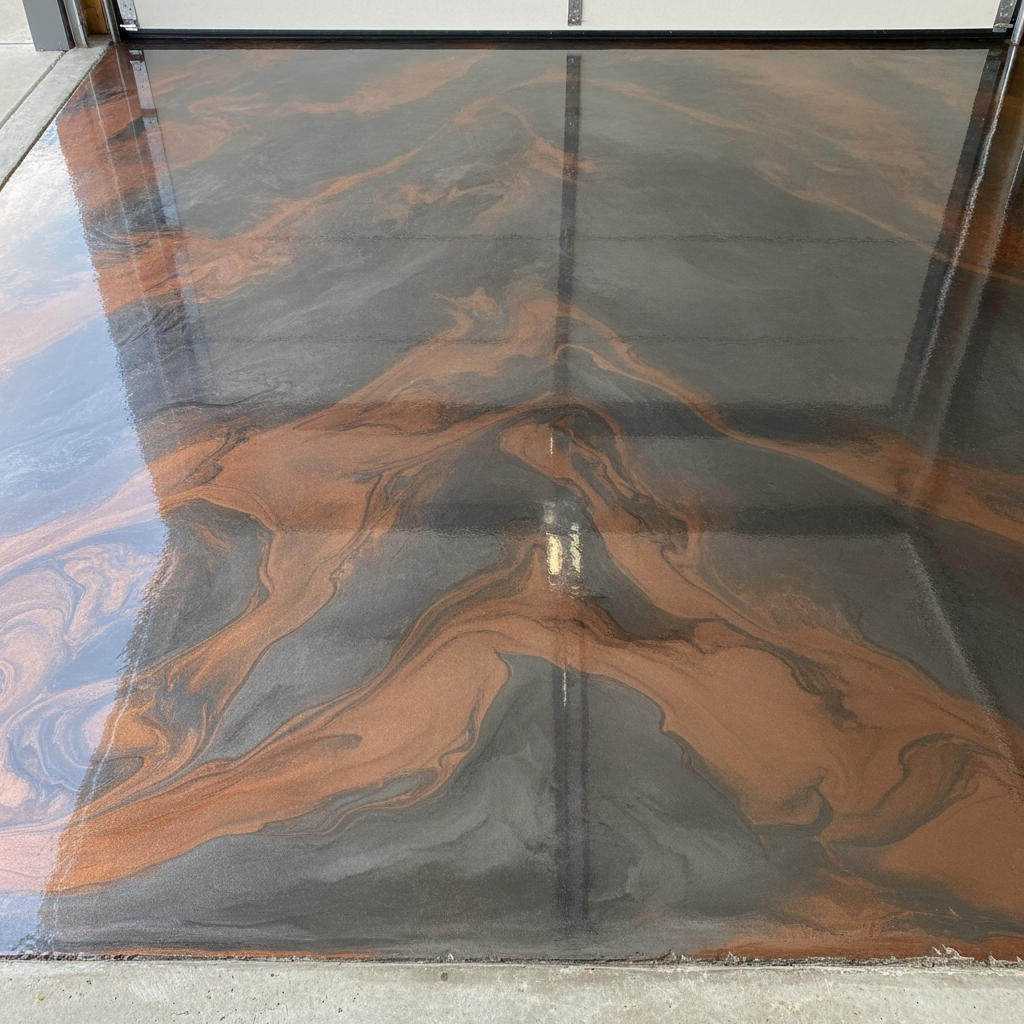
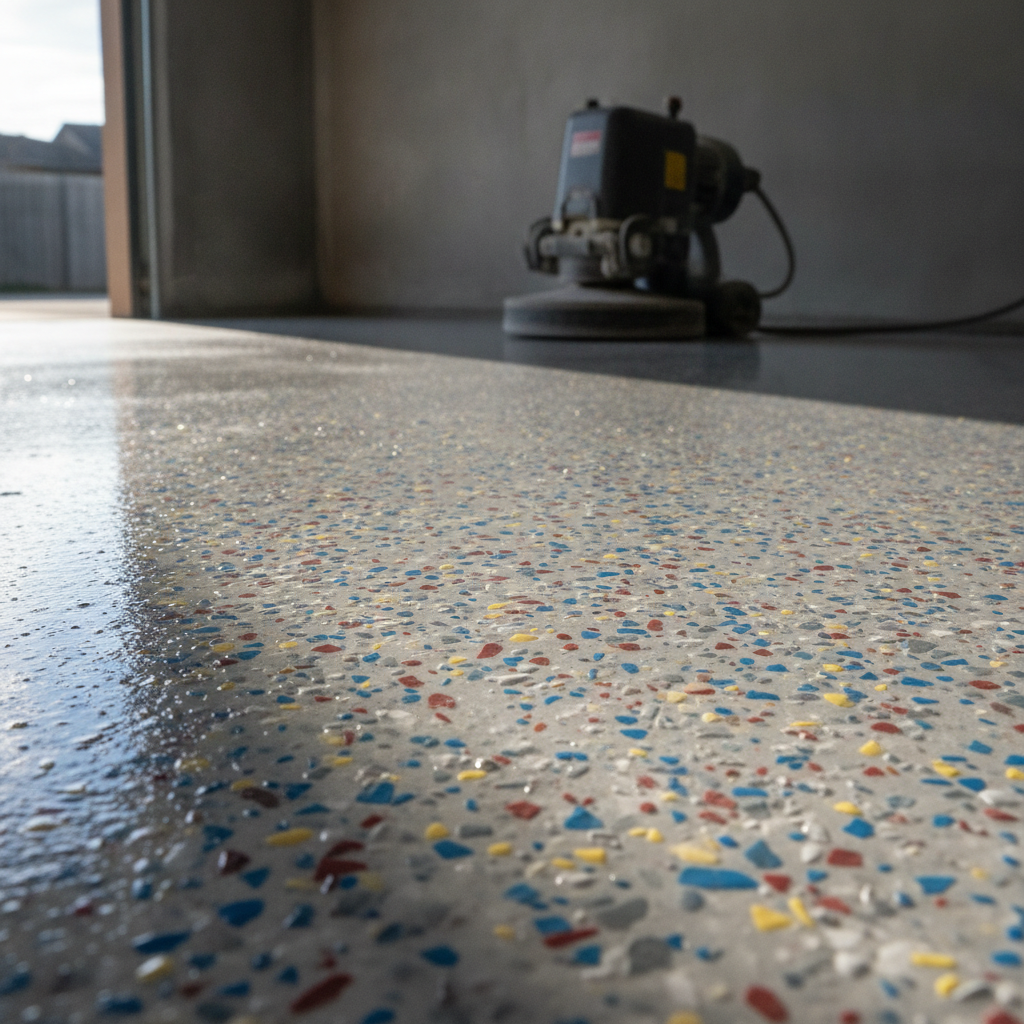
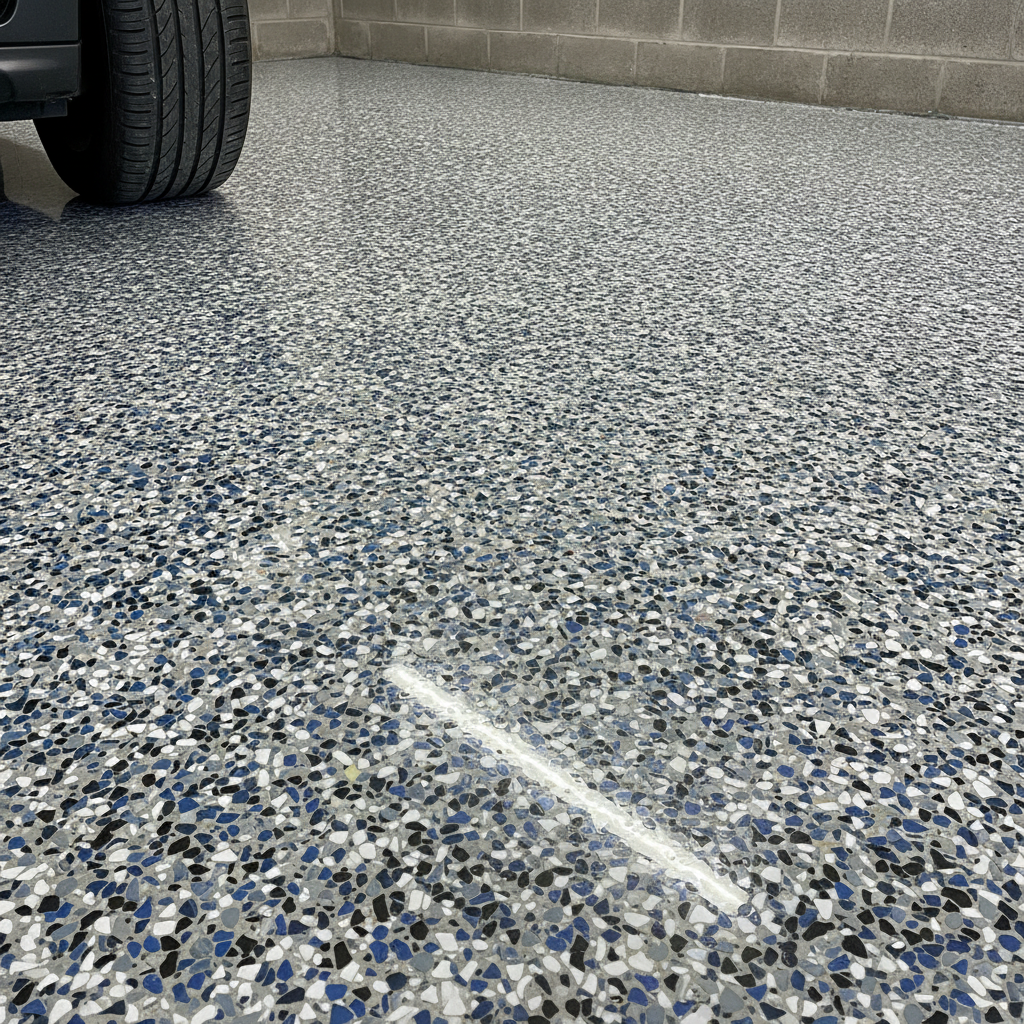
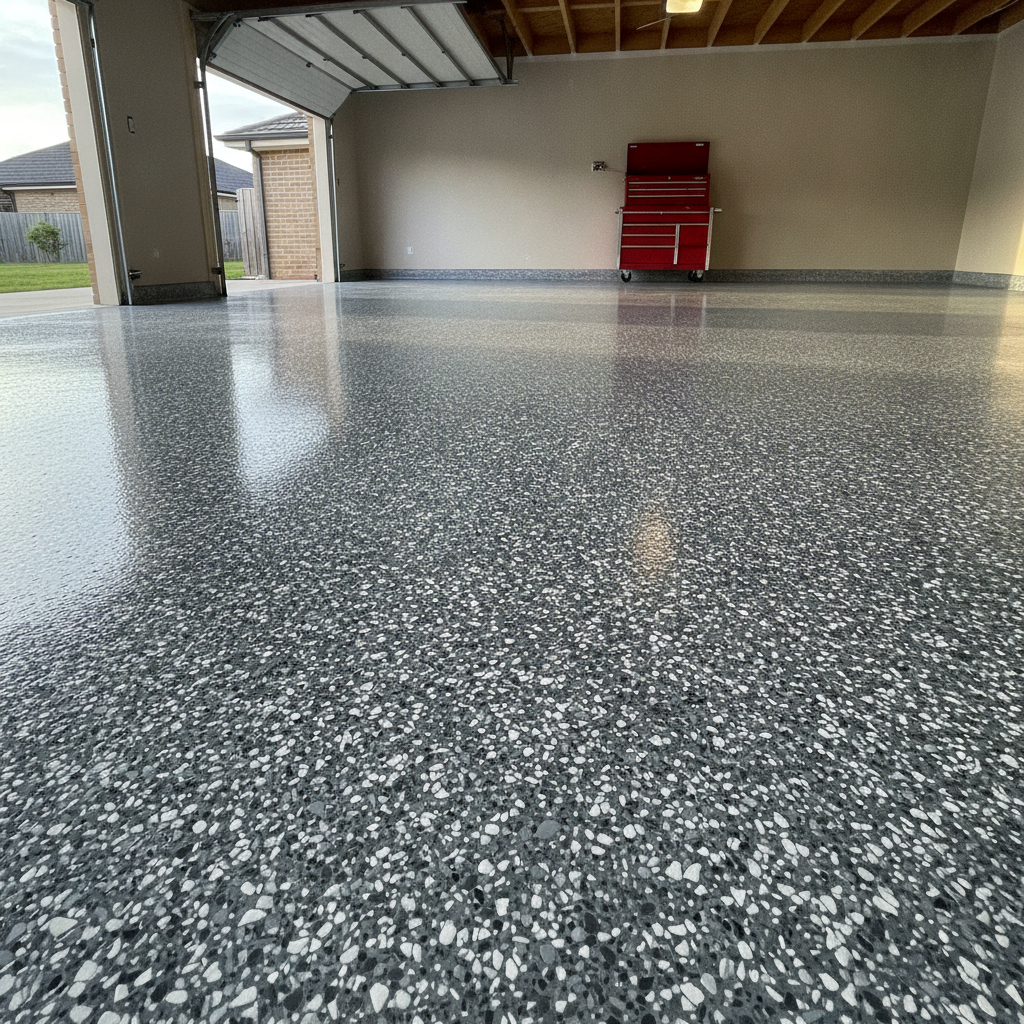
Decorative flake and metallic finishes are increasingly common in retail showrooms, gyms, cafes and office spaces where the floor needs to look the part as much as perform. A vinyl flake broadcast gives a terrazzo-like appearance and adds a practical texture at the same time. Metallic pigment systems create a flowing, marble-effect surface that photographs well and holds up to daily foot traffic.

How important is surface preparation for a commercial epoxy floor coating?

Surface preparation is the single biggest factor in whether a commercial epoxy floor coating lasts ten or more years or starts peeling within twelve months. Diamond grinding or shot blasting the concrete opens up the surface profile so the epoxy can mechanically bond to the slab. Without it, even the best product on the market will fail.

Concrete needs to be dry, structurally sound and free of oil, paint, adhesive and curing compounds before a single drop of epoxy goes down. Moisture is particularly critical. Concrete releases moisture vapour from below, and if the relative humidity reading inside the slab is too high, the epoxy will not cure properly and delamination follows. A competent applicator will always check this with a calcium chloride test or an in-situ probe before committing.

Cracks and spalls need to be repaired with an appropriate filler before coating. Skipping this step means the coating telegraphs every blemish back through to the surface once the gloss goes on. A good prep stage often takes longer than the coating stage itself, and that is completely normal on a quality commercial job.

How long does a commercial epoxy floor coating take to complete, and when can the floor go back into service?

A commercial epoxy floor coating job typically takes two to four days for a standard warehouse or factory floor, depending on size, the number of coats in the system and ambient temperature. Cooler Melbourne winters slow cure times slightly, while dry summer conditions can speed them up. Planning around your production or trading schedule early makes the process much smoother.

Most systems allow light foot traffic within 24 hours of the final coat. Full chemical and mechanical resistance is reached at the seven-day mark in most cases, though some heavy-duty systems take a full 28 days to reach maximum hardness. Your applicator should give you a clear return-to-service schedule before the job starts so you can plan around it.

For businesses that cannot afford a full shutdown, it is worth discussing a staged approach where sections of the floor are done in sequence. It takes a bit more coordination but it keeps the operation running throughout the project.

What does a commercial epoxy floor coating cost in Melbourne?

Pricing for a commercial epoxy floor coating in Melbourne generally ranges from around $30 to $80 per square metre, depending on the system specified, the condition of the existing concrete, the size of the area and access constraints. A basic self-levelling two-coat system on a clean, flat warehouse slab sits toward the lower end. A full mortar base coat with a decorative flake broadcast and anti-slip finish on a heavily damaged floor sits toward the upper end.

The size of the job matters a lot. Larger areas benefit from economies of scale in both materials and labour, so a 2,000-square-metre warehouse floor will almost always cost less per square metre than a 200-square-metre showroom. Getting a proper on-site measure and assessment is the only reliable way to get an accurate number, because photos and floor plans miss things like low doorways, drain positions, existing coatings and moisture issues that all affect the quote.

Looking purely at the cheapest price is a short-term play. A coating that fails in two years and needs to be stripped and redone costs significantly more than one that lasts a decade. Asking for references from completed commercial jobs and checking that the applicator is using a reputable product system from a supplier like Parchem, Flowcrete or similar is a reasonable way to separate genuine quality from a low-ball quote.

How do you maintain a commercial epoxy floor coating once it is down?

Day-to-day maintenance is straightforward. Sweep or vacuum regularly to remove abrasive grit that can dull the surface over time. Mop with a neutral pH cleaner and warm water. Avoid bleach-based or highly alkaline cleaners unless the product specification specifically permits them, because harsh chemicals can break down the topcoat and cause it to cloud or yellow.

Putting felt pads under racking feet and using rubber-tyred trolleys instead of hard steel castors helps protect the surface in warehouse environments. Spills from fuel, oils or solvents should be wiped up promptly rather than left to sit. None of this is difficult, it is just consistent.

A light maintenance coat every five to seven years on a heavily trafficked floor can extend the life of the overall system significantly and costs a fraction of a full strip and recoat. Getting this scheduled before the floor actually shows wear keeps the job smaller and cheaper every time.

Book a commercial epoxy floor coating quote with Metal and Flake
Epoxy Floors in Williamstown: Coastal Suburb Guide for Homeowners

Epoxy Floors in Williamstown: Coastal Suburb Guide for Homeowners

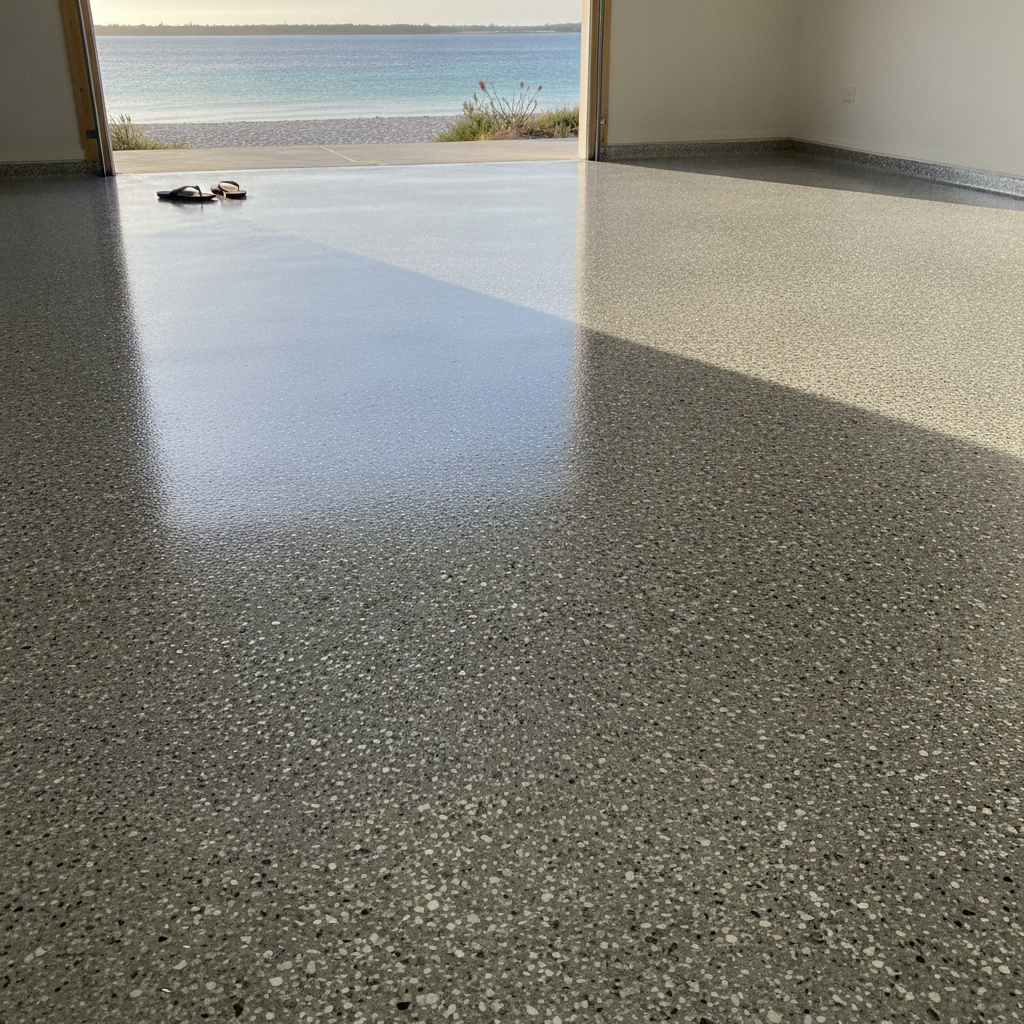
Epoxy floors in Williamstown suit the suburb well. The coastal air, older concrete slabs and a mix of heritage homes and modern renovations all point toward a floor coating that handles moisture, salt air and heavy foot traffic without peeling or yellowing. A professionally installed epoxy system typically lasts 10 to 20 years with basic maintenance.

Why does Williamstown’s coastal location affect your epoxy floor choice?

Williamstown sits right on Port Phillip Bay, so the air carries more salt and humidity than you get further inland. Salt-laden moisture accelerates corrosion on bare concrete, works under poorly bonded coatings and causes bubbling or delamination within a few years. Choosing a moisture-tolerant epoxy system and getting the surface preparation right from the start is the difference between a floor that holds for 15 years and one that lifts at the edges inside 18 months.

The suburb also has a high concentration of Victorian and Edwardian homes, many of which were built on older suspended timber floors or thinner concrete slabs added during later renovations. Those slabs can have higher moisture vapour transmission rates than freshly poured modern concrete. A reputable installer will test moisture levels before committing to any product. A reading above 75 percent relative humidity inside the slab typically calls for a moisture-tolerant primer or a dedicated vapour barrier coat before the epoxy goes down.

On top of that, Williamstown homeowners tend to do a lot of indoor-outdoor living. Garages, alfresco areas and workshop spaces all see sand, salt and grit tracked in from the bay foreshore. A floor with a broadcast chip or flake finish hides that fine grit far better than a plain gloss surface and gives you better slip resistance when wet feet come through the door.

What epoxy floor finishes work best for Williamstown homes?

The most popular finishes for Williamstown residential jobs are full-broadcast metallic flake systems, solid-colour mid-gloss floors and matte or satin garage coatings. Each has a different look and a different practical use case. Full-broadcast flake floors hide surface imperfections in older slabs, give strong grip underfoot and are easy to clean with a mop. Solid-colour finishes suit people after a cleaner, more contemporary look. Matte finishes are forgiving in high-traffic areas where scuff marks would show up on a high-gloss surface.

For coastal homes specifically, a UV-stable topcoat is worth the extra spend. Standard epoxy resins yellow when exposed to UV light, which is a real problem on alfresco slabs or any area that gets direct afternoon sun through a glass door. A polyaspartic or polyurethane topcoat sits over the epoxy base and blocks UV degradation. These topcoats also cure faster than standard epoxy, which means you can walk on the floor in around 24 hours rather than waiting the full 72 hours a standard system needs.

Colour-wise, lighter tones like off-white, warm grey and silver flake blends have been consistently popular in the area. They reflect natural light well, which makes smaller garages and laundries feel larger, and they complement the white weatherboard and rendered brick exteriors common throughout the suburb.

How does concrete preparation work in an older Williamstown property?

Concrete prep is the part of the job that most homeowners never see, but it is the single biggest factor in how long your floor lasts. On older Williamstown slabs, preparation almost always involves diamond grinding rather than acid etching. Grinding cuts an open profile into the surface, giving the epoxy something solid to bond to. Acid etching, which was common practice 20 years ago, does not open the surface consistently enough and leaves residue that can interfere with adhesion.

After grinding, any cracks, control joint damage or spalling get filled with a semi-rigid epoxy filler. Semi-rigid is the key word here. A filler that is too hard will crack again as the slab moves seasonally. A good filler flexes slightly with the concrete rather than fighting against it.

Then the primer goes down. On a Williamstown slab that tests high for moisture, the primer is often a two-component moisture-tolerant formulation that seals from below while still bonding to the topcoat above. Skipping this step on a damp slab is the most common reason DIY epoxy jobs fail. The moisture pushes up through the slab, gets trapped under the coating and creates the classic bubble or blister pattern that means a full strip and redo.

What should Williamstown homeowners expect on installation day?

A standard residential garage or laundry in Williamstown, typically between 30 and 60 square metres, takes one full day to grind, prime and coat. The space needs to be completely clear before the crew arrives. That means everything off the floor including shelving units, tool chests and the car. Any wall-mounted items near the floor should be checked too, because grinding throws fine dust that settles on everything within a metre or two of the work area.

Temperature and humidity on the day matter more than most people expect. Epoxy should not be applied below 10 degrees Celsius or above 35 degrees, and relative humidity in the space needs to stay under about 85 percent during application and cure. In Williamstown, cool southerly changes in late autumn and early spring can bring the temperature down fast in the evening. A good installer will check the forecast before booking and may use temporary heating on cooler days to keep the cure environment stable.

After the final coat goes down, you are looking at 24 hours before foot traffic and 72 hours before you can drive a car back in. The full chemical cure takes around seven days, so heavy point loads like a car jack stand should wait until after that window. The installer should walk you through all of this before they leave the site.

How do you maintain an epoxy floor in a coastal environment?

Maintenance in Williamstown is straightforward but worth doing consistently. The biggest enemy of an epoxy floor near the bay is fine silica sand. It acts like sandpaper underfoot and will scratch even a hard polyurethane topcoat over time if it is left to accumulate. A weekly sweep or blower keeps it under control. Mopping with a pH-neutral cleaner and warm water is all the wet cleaning the floor needs. Avoid ammonia-based cleaners and bleach, both of which degrade the topcoat over time.

For outdoor epoxy surfaces or alfresco areas, rinse down after storm events to clear salt residue. If you notice any small chips from furniture legs or dropped tools, touch-up kits are available and the repair is straightforward on a standard flake system because the texture hides the patch naturally.

A floor that is properly installed and maintained this way will still look presentable after a decade of daily use. That kind of longevity is why epoxy has largely replaced painted concrete and vinyl tiles in the Williamstown renovation market over the past several years.

Ready to get moving on your own slab? Book epoxy floor installation in Williamstown with Metal and Flake.

Epoxy Floors in Coburg: What Inner-North Homeowners Are Choosing

Epoxy Floors in Coburg: What Inner-North Homeowners Are Choosing

Epoxy floors in Coburg are a practical, long-lasting upgrade that suits the area’s mix of brick-veneer homes, period weatherboards and converted garages. Homeowners are choosing metallic and flake finishes for garages, laundries and open-plan living areas because epoxy handles Melbourne’s clay-soil movement better than tiles, costs less than polished concrete and is far easier to clean than bare slab.

Why are epoxy floors so popular in Coburg right now?

Coburg’s housing stock is dense with 1950s and 1960s homes that have concrete slabs already poured under the house. These slabs are usually sound but visually tired, and many owners are renovating rather than selling in the current market. Epoxy is a cost-effective way to transform a dull grey slab into a feature floor without a full rebuild, which makes it an obvious choice for the inner north.

The suburb has also seen a steady stream of garage conversions into hobby rooms, home gyms and workshop spaces. An epoxy coating handles the wear from car tyres, tool drops and foot traffic without cracking or chipping the way paint does. Because Coburg sits close to both the Ring Road and Sydney Road retail strip, tradies and tradespeople working from home need floors that can genuinely take a beating.

Beyond the practical side, the look matters. Metallic epoxy finishes, particularly pewter and charcoal tones, complement the dark palette many inner-north owners are chasing. Flake systems in grey and white blends are turning up in Coburg garages where the owners want something that reads clean rather than industrial.

What epoxy floor finishes are Coburg homeowners actually picking?

Coburg homeowners tend to choose either a decorative flake system or a solid metallic finish, depending on the room. Flake systems are the most popular for garages and workshops because the texture hides dust, is slip-resistant when wet and disguises the minor imperfections every older slab carries. Metallic finishes are more common in laundries, mudrooms and internal alfresco connections where the homeowner wants a visual statement.

Flake systems work by broadcasting vinyl flake chips over a base coat, then sealing with a clear polyurethane or epoxy top coat. The finish is tough enough to handle a trolley jack and grippy enough to walk on in wet boots. A standard residential flake floor over a two-car garage (roughly 36 square metres) typically involves one day of prep and one day of coating, with a 24-hour cure before light foot traffic.

Metallic epoxy is a different beast. Pigment is mixed through the epoxy resin so the installer can manipulate the wet coat to create depth and movement. No two metallic floors look identical, which suits Coburg’s inner-north homeowners who are often renovating character homes and want something that feels bespoke rather than off-the-shelf.

Solid colour epoxy, usually a mid-grey or slate tone, is a third option that suits utilitarian spaces. It costs less than flake or metallic and still produces a result that is miles ahead of bare concrete or worn floor paint.

How does epoxy hold up in a Coburg home over time?

A properly installed epoxy floor in a residential setting will typically last 10 to 20 years before it needs attention, provided the surface preparation was done correctly. Surface prep is everything. If the concrete is not mechanically ground and any laitance removed before coating, the epoxy will eventually delaminate, no matter how good the product is. A diamond grinder and vacuum system are standard tools for any reputable installer.

Coburg’s clay-heavy subsoils can cause minor slab movement with seasonal moisture changes. This is worth knowing upfront. A flexible epoxy system handles hairline movement better than a rigid one, and a good installer will assess the slab condition, check for moisture vapour transmission with a simple calcium chloride test, and recommend the right primer before any coating goes down. Skipping the moisture test is one of the most common causes of epoxy failure in Melbourne’s inner suburbs.

Day-to-day maintenance is simple. A regular sweep and an occasional mop with warm water and a pH-neutral cleaner keeps an epoxy floor looking sharp. Avoid bleach-based products, which can dull the top coat over time. For garage floors, a quick rinse after driving in on wet days is all that is needed. The sealed surface means oil drips and brake dust wipe off without staining.

What should Coburg homeowners ask before getting an epoxy quote?

Before you commit to any installer, there are a few practical questions worth asking. First, will they grind the concrete or just acid etch it? Mechanical grinding gives epoxy far better adhesion than acid etching alone, especially on older slabs. Second, how many coats are in the system? A single-coat job looks fine on day one but will show wear sooner than a two or three-coat system with a dedicated primer, body coat and top seal. Third, what is the top coat product and what is its abrasion rating? A quality polyurethane or polyaspartic top coat rated for vehicle traffic will outlast a basic epoxy clear by years.

It is also worth asking about cure times before you book. A full cure for vehicle traffic is usually 72 hours after the final coat. Light foot traffic is often fine at 24 hours. If an installer tells you the car can go back in the same day, that is worth pressing them on.

Finally, get the warranty in writing. Reputable installers will back their work for at least two years against delamination. If delamination occurs within a reasonable timeframe on a properly prepped slab, that is an installer problem, not a product problem.

Is epoxy the right choice for every Coburg space?

Epoxy works brilliantly in garages, workshops, laundries, alfresco areas and internal living spaces over concrete slabs. It is not a good fit over timber subfloors, which flex too much for a rigid coating system. If you have a raised timber floor in your Coburg period home, polished boards or a floating floor product will serve you better.

Wet areas like bathrooms are also generally better served by tiles. Epoxy can be used in commercial wet environments with the right slip-resistant aggregate, but for a domestic bathroom the grout lines of tile give better drainage and grip in a smaller, busier space.

For the spaces where epoxy does fit, the value proposition is hard to argue with. You are turning a plain slab into a sealed, attractive, easy-clean surface for a fraction of what a tile job or polished concrete grind would cost, and with a faster install time. In Coburg, where tradies are booked out and homeowners want minimal disruption, that turnaround matters.

Get an epoxy floor quote in Coburg from Metal and Flake.

Epoxy Floors in Preston: Garage Coating Options for Local Homeowners

Epoxy Floors in Preston: Garage Coating Options for Local Homeowners

Epoxy floors in Preston are a practical, long-lasting upgrade for homeowners who want a garage that handles daily punishment without looking like a car park. A properly installed epoxy coating bonds directly to the concrete slab, resists oil, tyre marks and chemical spills, and can last well over a decade with basic maintenance. Here is a plain-English breakdown of the main coating options available and what to expect from the process.

Why are epoxy floors popular with Preston homeowners right now?

Preston homeowners are choosing epoxy floors because the suburb’s mix of period homes and newer builds means most garages are sitting on raw, ageing concrete that stains easily and looks tired fast. Epoxy seals that surface completely, stops dust lifting off the slab, and turns what is usually a neglected space into somewhere you actually want to spend time, whether that is a home workshop, a gym or just a clean spot to park the car.

The northern suburbs of Melbourne also deal with some reasonably hot summers. Bare concrete absorbs heat and radiates it back, while a coated floor with a light colour or metallic finish reflects light and keeps the space noticeably more comfortable. On top of that, a clean, sealed garage floor photographs well, and plenty of Preston owners have noticed it adds perceived value when they come to sell.

The bottom line is simple: a raw concrete floor is a liability. It stains, it dusts, and it is impossible to clean properly. An epoxy coating solves all three problems in one hit.

What epoxy floor coating options are available for a Preston garage?

The main coating systems available for garage floors break down into four broad categories, each suited to a different look, budget and level of use. Knowing the difference before you get a quote means you can have a proper conversation with your installer rather than just picking a colour from a brochure.

Solid colour epoxy. This is the entry-level option and still the most common. A primer coat goes down first, then one or two broadcast coats of pigmented epoxy, finished with a clear polyurethane topcoat for extra hardness. Solid colours like battleship grey or off-white are easy to clean and make the space feel bigger. For a single-car garage of around 20 to 25 square metres, this system is generally the most affordable route to a sealed, professional finish.

Flake or chip systems. Coloured vinyl flakes are broadcast into the wet epoxy base coat, creating a speckled finish that hides minor surface imperfections and day-to-day dirt far better than a solid colour. The flake size, density and colour blend are all customisable. A full broadcast (where flakes cover 100 percent of the surface) gives a consistent, almost terrazzo-like look. Partial broadcast leaves more of the base colour showing for a subtler effect. This is one of the most popular systems in residential garages because it performs well and looks sharp without feeling over the top.

Metallic epoxy. Metallic pigments are mixed into the epoxy resin, then manipulated while wet using rollers, blowers or squeegees to create swirling, three-dimensional patterns that catch the light differently depending on the angle. No two floors come out identical. This system suits homeowners who want a showroom-quality result in a home gym, workshop or display space. The process requires more skill and time on site, so it sits at the premium end of the pricing scale.

Anti-slip and heavy-duty coatings. For garages that double as workshops, aggregate such as aluminium oxide or fine quartz sand is added to the topcoat to create texture underfoot. This is worth discussing if you are regularly working around wet equipment, motorbikes or anything mechanical where a slippery surface creates a genuine safety risk.

How does surface preparation affect the quality of epoxy floors in Preston?

Surface preparation is the part most DIY epoxy kits gloss over, and it is the single biggest reason budget floor paint fails within a year or two. Epoxy cannot bond properly to a smooth, sealed or contaminated surface. It needs an open, porous concrete profile to grab on to.

The professional standard is diamond grinding. A commercial grinder fitted with diamond-segment heads removes the top layer of the slab, opens up the concrete pores and levels out minor high spots. The result is a surface with a consistent texture, sometimes described as feeling like 80-grit sandpaper. Acid etching, which is the method most hardware-store kits recommend, is a rougher, less predictable process and leaves residue that needs thorough rinsing and drying time.

Any cracks, spalling or surface voids also need to be filled with an epoxy filler or polyurea before the base coat goes down. Skipping this step means those imperfections telegraph through the finished coating. In older Preston homes where the garage slab has seen 40 or 50 years of use, this repair stage can take as long as the grinding itself.

Moisture is the other major factor. If moisture is coming up through the slab (common in older properties without a proper vapour barrier), the epoxy can blister and delaminate within months. A reputable installer will do a simple plastic sheet test before quoting, taping a square of plastic to the floor overnight and checking for condensation underneath in the morning. If there is a moisture issue, a moisture-tolerant primer or a different coating system is needed.

What should Preston homeowners expect from the installation timeline?

A standard residential garage epoxy job in Preston typically runs across two days, sometimes three depending on the system chosen. Day one is all preparation: grinding, crack repairs and vacuuming. The primer coat goes down and is left to cure overnight. Day two covers the base coat and flake or metallic layer. The topcoat follows, and the floor is left to cure before foot traffic is allowed, usually 24 hours for walking and around 72 hours before you drive a car back in.

Temperature matters here. Epoxy cures best between about 10 and 30 degrees Celsius. In the middle of a Preston summer, a poorly ventilated garage can push past that upper limit and cause the resin to cure too fast, leading to surface issues. A good installer will schedule around the forecast and start early in the day to avoid peak afternoon heat.

Plan to have the garage completely cleared before the crew arrives. That means everything off the floor: shelving, toolboxes, bikes, the lot. Moving belongings mid-job adds time and increases the risk of contaminating a freshly primed surface.

How do you keep an epoxy garage floor looking good long term?

One of the genuine advantages of epoxy over bare concrete is how easy it is to maintain. For routine cleaning, a dust mop or leaf blower handles loose debris, and a damp mop with a pH-neutral cleaner takes care of the rest. Avoid harsh solvents or bleach-based cleaners on a regular basis; they will not destroy the coating overnight, but they will dull the topcoat over time.

Oil spills are best wiped up promptly. While cured epoxy is oil-resistant, letting a large spill sit for an extended period can cause staining, particularly on lighter-coloured finishes. A flake system is more forgiving here because the pattern breaks up any discolouration.

Sharp, concentrated point loads (think the metal feet of a heavy workshop jack or a bike stand) can indent or scratch the surface if dragged. Rubber or felt pads under heavy equipment protect the topcoat without any fuss. With that basic level of care, a quality epoxy floor in a residential garage should hold up comfortably for ten to fifteen years before it needs any attention.

Book epoxy floor installation in Preston with Metal and Flake

Epoxy Floors in Reservoir: Local Options for Garages and Driveways

Epoxy Floors in Reservoir: Local Options for Garages and Driveways

Epoxy floors in Reservoir are a practical, long-lasting upgrade for garages and driveways. A quality epoxy coating bonds directly to concrete, seals out oil and moisture, and handles the heavy foot and vehicle traffic that bare slabs simply can’t take. Most residential jobs are completed within two to three days, leaving you with a surface that cleans up in minutes and looks sharp for years.

Why are epoxy floors becoming so popular in Reservoir garages?

Reservoir homeowners are choosing epoxy garage floors because the suburb’s older housing stock means a lot of untreated concrete slabs that stain, crack and pit over time. Epoxy seals those pores, stops oil and grease from soaking in, and gives the whole space a cleaner, brighter feel. It also holds up under the weight of a vehicle far better than paint or basic sealers.

If you’ve ever tried to get a grease stain off bare concrete, you’ll understand why epoxy is a better starting point than a mop and bucket. The coating creates a non-porous surface, so spills sit on top instead of soaking straight in. A quick wipe and the floor looks like new again.

There’s also the visual angle. Reservoir has seen a wave of renovations over the past decade, and people are treating garages as usable rooms rather than storage dumps. A metallic epoxy or a flake-broadcast finish turns a gloomy slab into something that looks intentional. It’s a simple way to add perceived value without knocking down walls.

What epoxy floor systems work best for driveways in Reservoir?

For driveways in Reservoir, the best epoxy systems are UV-stable polyaspartic or polyurethane topcoat finishes applied over a solid epoxy base. Standard epoxy alone can yellow and chalk under direct sunlight, so a UV-resistant topcoat is essential for any outdoor concrete that faces north or west. A broadcast flake system is also a smart choice for driveways because the texture adds slip resistance when the surface is wet.

Driveways take a different kind of punishment compared to garage floors. They cop direct UV all day, thermal expansion and contraction through Melbourne’s hot summers and cold winters, and the full weight of vehicles stopping and starting in roughly the same spot every day. That repeated load stress means the concrete prep work is even more important outdoors than inside.

A proper diamond-grind before coating opens up the concrete profile so the epoxy actually bonds to the slab rather than sitting on top of it. Without that step, peeling is almost inevitable, usually within the first twelve months. Any reputable installer will grind, not just acid-wash, before they lay the first coat.

For colour, earthy tones and mid-grey flake blends are popular in Reservoir right now because they don’t show dust between cleans and they complement the brick veneer and weatherboard houses common in the area. A full-broadcast flake in a charcoal blend is a low-maintenance choice that photographs well and holds its look through years of traffic.

How long does an epoxy floor installation take in Reservoir?

A standard garage epoxy floor installation in Reservoir typically takes two to three days from start to finish: one day for surface preparation and priming, one day for the base coat and flake broadcast, and a final session for the topcoat. The floor needs to cure for at least 24 hours before foot traffic and around 72 hours before driving a vehicle onto it.

The prep day is the one most people underestimate. Grinding a standard double garage takes several hours of solid work. Any cracks or spalling need to be filled with a flexible polyurethane filler and allowed to cure before coating goes on. Rushing that stage is how jobs end up looking average six months later.

Weather matters too. Epoxy doesn’t cure well below about 10 degrees Celsius or above 30 degrees, and high humidity can cause blushing on the surface. A good installer will check the forecast and schedule accordingly. In Reservoir, the shoulder seasons of spring and autumn tend to produce the most reliable results.

What should Reservoir homeowners budget for epoxy floors?

Reservoir homeowners can generally expect to pay between $50 and $100 per square metre for a quality garage epoxy floor, depending on the system chosen, the condition of the existing slab and the level of surface preparation required. A single-car garage of around 18 square metres might come in at $900 to $1,800 fully installed. A driveway will sit toward the higher end because of the outdoor-grade topcoat requirement.

The biggest variable in any quote is slab condition. A clean, flat slab with no cracks or moisture issues is straightforward to coat. A garage that’s been used as a workshop for twenty years, with oil contamination and a few patched cracks, will take more prep time and that shows up in the price. Some contractors skip the prep to win a cheaper job, and you end up with a floor that peels within a year. It’s worth paying a bit more upfront for a proper grind and prime.

Metallic epoxy systems, which create a swirling, almost liquid-marble effect, typically cost more than standard flake systems because of the specialist application technique and the additional clear topcoat. They’re a great choice for a showroom-style garage but probably overkill for a working driveway that’ll have a trailer backed over it every weekend.

How do you maintain an epoxy floor once it’s installed?

Maintaining an epoxy floor is straightforward: sweep or blow off loose grit regularly, mop with a mild pH-neutral cleaner when needed, and avoid dragging sharp metal objects across the surface. Hot-tyre pick-up can be a concern with lower-quality epoxy systems, but a polyurethane or polyaspartic topcoat handles the heat from a recently driven vehicle without lifting.

The main thing to avoid is using abrasive cleaners or steel wool, which will scratch the topcoat and dull the finish over time. For a driveway, a garden hose and a soft broom is usually all you need between seasons. For a garage floor, a flat microfibre mop and a bucket of diluted neutral cleaner once a month keeps the surface looking its best.

If a section gets damaged, a localised repair is possible, though matching the flake blend and the original finish perfectly can be tricky. That’s another reason to keep a record of the product and colour used during installation. A reliable installer will note this in the job paperwork.

Reservoir is a busy, lived-in suburb and the floors here need to work hard. Whether it’s a single-car garage you’re converting into a home gym, a double garage that handles a tradies ute, or a long concrete driveway that’s been looking tired since the nineties, epoxy is a proven way to get more out of your existing slab without replacing it.

Book epoxy floor installation in Reservoir with Metal and Flake

Metallic Epoxy Floors: Design Ideas and What to Expect in Melbourne

Metallic Epoxy Floors: Design Ideas and What to Expect in Melbourne

Metallic epoxy is a resin flooring system that blends pigmented metallic powders into a clear epoxy coat to create a flowing, three-dimensional effect. It works in garages, living areas, showrooms and commercial spaces. Installations are typically completed in two to three days and produce a hard-wearing, seamless surface that looks nothing like standard painted concrete.

What makes metallic epoxy different from standard epoxy coatings?

Standard epoxy coatings use a solid or flake-broadcast colour to cover a slab. Metallic epoxy works differently: fine metallic pigments are suspended in the resin and manipulated while wet, using rollers, brushes and air tools, to create depth and movement in the finish. The result is a one-of-a-kind surface because no two pours behave the same way.

That unpredictability is actually the point. The installer uses technique to guide the pattern, but the pigments settle and swirl in ways that make every floor genuinely unique. A garage in Doncaster will never look exactly like one in Werribee, even if the same colour palette is used.

The topcoat is usually a polyaspartic or polyurethane clear coat, applied over the metallic layer once it has cured. That clear coat is what gives the floor its gloss and its durability. On a properly prepared slab, a metallic epoxy system can handle the traffic of a busy workshop or a high-end retail space without peeling or dulling.

What metallic epoxy design ideas work best for Melbourne spaces?

The most popular metallic epoxy designs combine two or three pigment colours that blend at their edges. Neutral palettes like warm greys, silvers and whites suit Melbourne’s coastal and industrial-inspired interiors. Darker bases with gold or copper highlights work well in showrooms and entertainment spaces where drama is the goal.

Here are a few approaches that consistently produce strong results:

  • Single-colour pearl finish. One metallic pigment, usually silver, white pearl or champagne, is spread and manipulated to create subtle waves. It reads almost like polished concrete but with noticeably more depth. Great for open-plan living areas where the floor needs to feel calm rather than loud.
  • Two-tone lava or ocean effect. Two contrasting pigments, for example charcoal and copper or midnight blue and silver, are applied together and blended with a brush or leaf blower while wet. The collision point creates a lava or tide-line effect. This is one of the most requested looks for residential garages and man caves.
  • Dark base with veining. A near-black base coat is laid first, then a contrasting metallic pigment is pulled through it in thin veins that mimic stone. The result looks like a high-end marble or granite without the cost or the cold feel underfoot.
  • Full-colour statement floor. Bolder pigments, reds, blues, bronzes, are used in commercial or hospitality settings where the floor itself is a branding element. A gym, car dealership or cafe can build an entire visual identity around a floor colour.

The size of the space matters too. In a smaller area like a bathroom or laundry, a single soft pearl colour avoids visual overload. In a wide-open garage or warehouse floor, bolder contrasts read better because there is enough space for the pattern to develop fully.

How does the metallic epoxy installation process actually work?

The installation process follows a clear sequence, and understanding it helps you plan around the downtime. Skipping or rushing any stage is where problems start, so a professional crew will not cut corners here.

First, the concrete slab is diamond-ground or shot-blasted to open up the surface profile. Epoxy bonds to concrete mechanically, not just chemically, so the surface needs to be clean, dry and rough at a microscopic level. Any cracks, spalling or moisture issues are addressed at this stage. Skipping prep is the number one cause of peeling floors, full stop.

Next, a primer or base coat is applied to seal the slab and give the metallic layer something to grip. Once that cures, the metallic epoxy itself is poured and spread. This is the creative stage. The installer works quickly while the product is still wet, using rollers, notched squeegees, chip brushes and sometimes a heat gun or leaf blower to push the pigments into the desired pattern. Pot life (the working window before the epoxy begins to set) is typically 20 to 40 minutes depending on temperature and product formulation, so the pace is deliberate and methodical.

After the metallic layer cures, usually overnight, the clear topcoat goes down in one or two passes. This seals the pigments, adds the gloss and provides the abrasion resistance. Full cure to foot traffic is generally 24 hours. Full cure to vehicle traffic is 48 to 72 hours.

Melbourne’s climate is worth mentioning here. Humidity above 85 percent or concrete temperatures below 10 degrees Celsius can cause adhesion problems and surface cloudiness. Reputable installers carry moisture meters and will reschedule if conditions are not right rather than push ahead and risk a failed job.

What should you budget for metallic epoxy flooring in Melbourne?

Pricing for metallic epoxy in Melbourne typically sits higher than standard solid-colour epoxy because the materials cost more and the installation requires more skill and time. As a rough guide, residential metallic epoxy installations generally range from around $80 to $150 per square metre depending on the complexity of the design, the condition of the existing slab and the number of coats involved.

A standard double garage of roughly 36 square metres might land somewhere between $2,900 and $5,400 all up, but that figure shifts based on how much prep work the slab needs. A slab with significant cracking or contamination from oil spills will cost more to prepare than a clean, freshly poured one. Always get a quote that breaks out the prep cost separately so you know what you are actually comparing between installers.

Cheaper quotes sometimes exclude the topcoat, which is where most of the floor’s durability comes from. A metallic layer without a proper clear coat will scratch and dull within months under foot or vehicle traffic. Confirm that any quote includes at least one full-coverage polyaspartic or polyurethane clear coat as a minimum.

How do you maintain a metallic epoxy floor once it is installed?

Metallic epoxy floors are genuinely low-maintenance, which is one of the reasons homeowners and business owners keep choosing them. Day-to-day cleaning is a dust mop or a damp mop with a pH-neutral cleaner. Avoid vinegar-based or citrus-based cleaners because the acid can break down the topcoat over time.

For garages, put felt pads under the legs of tool cabinets and workbenches. Point-load pressure from sharp metal feet can chip a cured epoxy surface, especially at the edges of the topcoat. A drip mat under vehicles that have a known oil leak also helps keep the surface looking sharp longer.

Most residential metallic epoxy floors will hold their gloss for five to ten years with normal care before any maintenance coat is needed. Commercial floors with heavier traffic might need a maintenance coat every three to five years. Either way, a recoat is straightforward and far cheaper than a full reinstallation.

If you are ready to see what a metallic epoxy floor could look like in your garage, showroom or living space, get a metallic epoxy floor installation quote from Metal and Flake.

Epoxy Flooring Cost: What Affects the Price in Melbourne?

Epoxy Flooring Cost: What Affects the Price in Melbourne?

Epoxy flooring cost in Melbourne typically ranges from around $50 to $150 per square metre, depending on the system chosen, the condition of the concrete underneath, and the size of the job. Decorative finishes like metallic or flake systems sit at the higher end, while a basic single-coat seal sits at the lower end. Knowing what drives the price helps you budget without surprises.

What is the typical price range for epoxy flooring cost per square metre?

For most residential and light commercial jobs in Melbourne, epoxy flooring cost lands between $50 and $150 per square metre, fully installed. A plain solid-colour epoxy on a well-prepared slab comes in toward the bottom of that range. A full decorative system, such as a metallic epoxy or a vinyl flake floor with a polyurethane topcoat, sits closer to the top. Multi-coat industrial systems can push beyond that range on large warehouses or chemically exposed floors.

These figures cover labour, materials and a standard diamond-grind preparation. They do not cover crack repairs, moisture mitigation or major slab remediation, which are priced separately because the scope varies so much from job to job.

To put real numbers against it: a standard double garage (around 36 square metres) in a vinyl flake finish with a topcoat might come to somewhere between $2,000 and $3,500 all up. A large open-plan living area of 80 square metres in a metallic system could land between $6,000 and $10,000. These are ballpark figures. The only way to pin down your number is a site visit and a proper measure-up.

How does concrete condition affect the epoxy flooring cost?

Concrete condition is one of the biggest variables in any epoxy flooring cost estimate. A flat, dry, structurally sound slab needs a single diamond-grind pass and minimal prep time. A slab with surface contamination, old paint, moisture issues or significant cracking requires extra labour, extra materials and sometimes specialist remediation products before a single drop of epoxy goes down.

Common preparation costs that get added to a base quote include crack injection and grinding out of surface cracks, removal of old coatings or tile adhesive residue, application of a moisture-barrier primer on slabs that read high on a moisture meter, and patching of spalled or pitted concrete with a levelling compound. Each of these adds time on site, and time is what drives labour cost up.

Here is a practical rule of thumb: the older the slab and the harder it has been worked, the more prep it needs. A freshly poured residential slab is often in near-perfect condition. A 30-year-old workshop slab soaked with oil and pitted from forklift traffic can take a full day of prep before the first coat even opens. That prep work is not optional. Skip it and the epoxy fails, usually within 12 to 18 months through peeling or bubbling.

Does the type of epoxy system change the price?

Yes, the type of epoxy system is a major driver of epoxy flooring cost because different systems use different products, require different application steps and take different amounts of time to install. A basic two-coat epoxy seal is fast to apply. A decorative metallic or full vinyl flake broadcast system involves multiple coats, a broadcast layer, a colour coat and at minimum one polyurethane or polyaspartic topcoat, which adds both material cost and labour time.

Here is a rough breakdown of common system types from lower to higher cost:

  • Single or double-coat solid epoxy: Functional, durable, lower cost. Common in utility areas and warehouses where looks are secondary to performance.
  • Vinyl flake (chip) systems: The most popular choice for garages and showrooms. The flake layer adds texture, hides minor imperfections and improves slip resistance. Mid-range price point.
  • Metallic epoxy systems: A pigmented metallic base coat is manipulated to create flowing, marbled or three-dimensional effects. More product, more skill required and more time to execute. Higher cost.
  • Polyaspartic coatings: Fast-curing, UV-stable top coats often layered over flake or metallic bases. They cure faster than standard polyurethane, which can shorten the job timeline but the product itself costs more per litre.

How much does job size affect the overall epoxy flooring cost?

Job size has a direct impact on epoxy flooring cost because most of the expenses in a small job, setup, travel, equipment hire, and minimum material quantities, are fixed regardless of how many square metres you are coating. That means a 20 square metre laundry or small garage pays a higher effective rate per square metre than a 200 square metre open-plan floor or workshop.

On large jobs, material is bought in bulk, the equipment is already on site and the labour flows efficiently without constantly stopping to move around furniture or obstacles. The per-square-metre rate drops as the area grows. If you have a small space, it is worth asking whether any adjoining areas could be done at the same time to push the total area up and bring the per-square-metre figure down.

Shape matters too. A straightforward rectangle with no columns, floor drains, steps or machinery bolts to work around is faster to coat than an irregular space full of obstacles. Cutting in around every column or drain takes time, and time shows up in the quote.

Are there other costs that often get overlooked in an epoxy flooring quote?

A few cost items catch people off guard when they compare quotes. The first is surface repairs. Not every contractor includes crack repairs or patching in their base rate. Some price these separately once they assess the slab on the day. Always ask whether the quote covers repairs or whether they are a separate line item.

The second is topcoat selection. Some cheaper quotes use a basic single polyurethane seal over the colour coat. A higher-build or polyaspartic topcoat costs more but gives you a thicker, more scratch-resistant wearing surface. If longevity matters to you, it is worth paying for the better topcoat rather than redoing the floor in five years.

The third is furniture removal and floor clearing. Most installers expect the floor to be cleared before they arrive. If they have to move equipment, shelving or vehicles, expect an additional charge or a longer time allowance in the quote.

Finally, curing time has indirect costs. Standard epoxy systems need at least 24 hours before foot traffic and up to 72 hours before vehicles. If you are coating a commercial kitchen or a workshop floor and that downtime costs you revenue, factor it in. Polyaspartic systems can return to service in as little as a few hours, which may justify their higher material cost if downtime is the real constraint.

How can you make sure you are comparing epoxy flooring quotes fairly?

Comparing epoxy flooring cost quotes is straightforward once you know what to look for. Ask each contractor to itemise their quote so you can see what is and is not included. Confirm the number of coats, the specific products being used, whether a primer coat is included, what topcoat is specified and what the prep method is. Diamond grinding is the industry standard for proper mechanical adhesion. Acid etching alone is generally considered insufficient for a long-lasting bond.

Check that the quote covers the full scope: prep, primer, colour coat, decorative layer (if applicable), and topcoat. A quote that looks cheap because it skips the primer or only includes one topcoat is not a fair comparison with a fully specified quote. You want to be comparing the same floor, not just the same number of square metres.

Also ask about warranty. A reputable installer will back their work. Typical warranties on residential jobs run from one to five years covering delamination. Understand what voids the warranty, usually excessive moisture in the slab or mechanical damage, so you know exactly what you are covered for.

Get a tailored epoxy flooring cost estimate from Metal and Flake.

Epoxy Flake Flooring: The Complete Installation Guide for Melbourne Garages

Epoxy Flake Flooring: The Complete Installation Guide for Melbourne Garages

Epoxy flake flooring is a multi-layer system where vinyl flakes are broadcast into a wet epoxy base coat, then locked in with a clear polyurethane or epoxy topcoat. The result is a hard, slip-resistant surface that hides tyre marks, resists oil and looks sharp for ten or more years when installed correctly on a properly prepared concrete slab.

What makes epoxy flake flooring a good choice for a garage?

Epoxy flake flooring suits garages because the broadcast flakes add texture underfoot, which improves grip on a surface that regularly gets wet from rain, car wash runoff and morning dew. The flakes also break up the visual footprint of dirt and minor scuffs between cleans, making the floor look presentable with very little effort day to day.

Compared to plain grey concrete, a flake floor does several practical jobs at once. It seals the slab so oil spills sit on the surface instead of soaking in. It reflects light, which is noticeable in a single-car garage that has only one or two ceiling fixtures. And the colour variety, from subtle granite blends to bold metallic mixes, means you can match the floor to the rest of the space rather than just accepting whatever the builder poured.

Melbourne’s climate adds a specific reason to consider this system. Concrete slabs here go through genuine temperature swings between summer and winter. A quality epoxy flake system uses products formulated to flex with the slab rather than delaminate when the mercury swings from 5°C in July to 40°C in February.

What surface preparation does epoxy flake flooring actually need?

Surface preparation is the single biggest factor in whether an epoxy flake floor lasts. The concrete must be mechanically ground or diamond-ground to open the surface profile so the epoxy base coat can bond properly. Any existing coatings, sealers or contamination need to come off first. Cracks and spalls are filled with an appropriate repair mortar before coating begins.

A common mistake with DIY kits is skipping real mechanical prep and using acid etching instead. Acid etching cleans the surface but does not open the concrete profile the way grinding does. On a sealed or previously painted slab, an acid etch will leave the coating sitting on a weak surface layer and the floor will peel within months, often in sheets.

Moisture testing matters too. Concrete that holds moisture above the acceptable threshold will cause the epoxy to bubble or blister. A professional installer will check moisture vapour emission before any product goes down, which is especially relevant for slabs that sit on the ground without a proper vapour barrier underneath.

Once the slab is ground, repaired and confirmed dry, a priming coat goes down. The primer penetrates deeper into the concrete than the base coat can on its own, giving the whole system a stronger anchor from the bottom up.

How does the epoxy flake flooring installation process work, step by step?

The installation follows a clear sequence: grind, repair, prime, base coat with flake broadcast, scrape back excess flakes, apply grout coat or mid coat, then finish with the topcoat. Each layer needs to cure before the next one goes down, so the full process typically runs across two days on a standard double garage.

Here is how each stage plays out in practice.

Diamond grinding. The grinder removes any surface laitance and opens the concrete to a profile roughly equivalent to 60 to 80 grit sandpaper. This is a dusty job and a good installer will use a machine with vacuum extraction to keep the garage and your home liveable.

Crack and spall repair. Hairline cracks in a domestic slab are common and most can be filled with a flexible polyurea or epoxy repair compound. Structural movement cracks need a different approach, so the installer should flag these before quoting.

Primer coat. A low-viscosity epoxy primer is rolled on and left to penetrate. This is usually done on day one and allowed to cure overnight.

Base coat and flake broadcast. On day two, the coloured epoxy base coat goes down. While it is still wet, vinyl flakes are broadcast by hand across the entire surface in a full-reject throw, meaning flakes are thrown until the base coat is completely hidden. This gives a uniform, tightly packed chip pattern with no holidays or bare patches.

Scrape and vacuum. Once the base coat cures, any loose or standing flakes are scraped flat and vacuumed up. This step levels the surface and removes excess flake so the topcoat can lay flat without creating a lumpy or uneven finish.

Grout or mid coat (optional). Some systems include a clear epoxy grout coat that fills the voids between flakes before the topcoat. This is more common on commercial jobs but adds durability on high-traffic domestic floors.

Topcoat. A polyurethane or polyaspartic clear topcoat is rolled on in one or two coats. This is the layer that takes the daily punishment and protects the colour beneath. Polyaspartic topcoats cure faster and have better UV stability than standard epoxy clears, which is worth knowing if part of the garage gets direct sunlight.

How long does epoxy flake flooring take to cure before you can use it?

Most epoxy flake floors are light-foot-traffic ready within 24 hours of the final topcoat going down. Driving a car onto the surface typically requires a full 72-hour cure, and placing heavy stationary loads like a workshop shelf unit or tool cabinet is best left until the seven-day full-cure mark has passed. Rushing this is one of the most common causes of early surface damage.

Polyaspartic topcoats can shorten these times significantly. Some polyaspartic finishes reach full hardness in as little as 24 hours, which is why they are popular on jobs where the homeowner needs quick turnaround. The tradeoff is that polyaspartics cure fast even during application, so they require an experienced hand to keep the finish consistent.

Temperature affects cure time. Below about 10°C, standard epoxy products slow down considerably and may not cure properly at all. Melbourne winters can push overnight temperatures in an unheated garage below this threshold, so installation is best scheduled for the warmer months or the installer needs to account for temperature with the product selection.

What does epoxy flake flooring cost for a typical Melbourne garage?

For a standard double garage of roughly 36 to 40 square metres, a professionally installed epoxy flake floor in Melbourne typically runs from around $2,000 to $4,500 depending on the condition of the slab, the flake and topcoat specification, and the thickness of the system. Single garages are cheaper in total cost but cost more per square metre because the setup, grinding and travel time are roughly fixed regardless of size.

Factors that push the price up include: heavily contaminated or previously painted slabs that need extra grinding passes, significant crack repair, premium polyaspartic topcoats, and decorative details like a border colour or metallic base. Factors that bring it down include a clean, uncoated slab in good condition and a straightforward single-colour chip blend.

A detailed quote should always break out the prep work separately from the coating costs. If a quote is suspiciously cheap and the prep line item is vague or missing, that is the most likely area where corners are being cut, and a peeling floor two years later will cost far more to fix than the saving was worth.

How do you maintain epoxy flake flooring to keep it looking good?

Epoxy flake flooring is genuinely low maintenance, which is a big part of its appeal for a busy household. Regular sweeping or a leaf blower to clear dust and grit is the main weekly task. A mop with warm water and a mild pH-neutral cleaner handles the deeper clean. Avoid bleach, ammonia-based cleaners and abrasive scrubbing pads, all of which can dull the topcoat over time.

Oil and fuel spills should be wiped up promptly rather than left to sit, not because they will soak in, but because petroleum products can soften some topcoat formulations if they pool for extended periods. A clean rag or paper towel is all you need.

The topcoat is the sacrificial layer in this system. On a busy domestic garage that sees daily vehicle traffic, a light maintenance coat over the topcoat every five to seven years keeps the floor looking fresh and extends the life of the full system without needing to strip and recoat from scratch.

Book epoxy flake floor installation with Metal and Flake

Residential Epoxy Flooring: Best Options for Melbourne Homes

Residential Epoxy Flooring: Best Options for Melbourne Homes

Residential epoxy flooring is a hard-wearing, seamless coating applied directly to a concrete slab. It bonds chemically to the concrete, producing a surface that resists oil, water, impact and daily foot traffic far better than bare or painted concrete. For Melbourne homes, the most popular options are full flake systems, metallic epoxy and solid-colour coatings, each suited to different spaces and budgets.

What makes residential epoxy flooring different from a commercial job?

Residential epoxy flooring differs from commercial work mainly in scale, foot traffic expectations and finish preference. A home garage or internal floor sees far less heavy vehicle traffic and forklift movement than a warehouse, so the coating system can be tailored for appearance as well as toughness. Homeowners also have a much wider range of colours, flake blends and gloss levels to choose from, making the finish genuinely personal.

That said, the prep work is just as serious. Concrete still needs to be ground back with a diamond-grinding machine to open the surface profile so the epoxy can bond properly. Skip that step and no matter how good the product is, you will get delamination within a year or two. Any cracks or control joints also need to be addressed before the coating goes down, or they will ghost through the finished surface.

The other residential-specific consideration is moisture. Melbourne homes built on reactive clay soils can have slabs that hold more moisture than expected, especially in garages on the south side of the house. A moisture test before quoting is not optional; it is what separates a coating that lasts a decade from one that bubbles up in the first summer.

Which residential epoxy flooring system suits a Melbourne garage?

For a Melbourne residential garage, a full broadcast flake epoxy system is the most practical choice. It combines a pigmented base coat, a generous broadcast of coloured vinyl flakes and a clear polyurethane or epoxy topcoat. The result hides tyre marks, dirt and the occasional oil drip far better than a solid-colour system, and the texture from the flakes provides grip underfoot when the floor is wet.

The flake system is also the most forgiving when it comes to minor imperfections in the slab. Because the flakes are broadcast edge-to-edge, small surface inconsistencies disappear under the density of the chip. Colour options are broad: everything from a subtle grey-and-white blend that reads almost like stone, through to bold charcoal or tan combinations that suit a more styled home.

Metallic epoxy is the other popular pick for garage floors, particularly in homes where the garage doubles as a workshop or showroom space. A metallic system uses fine aluminium or mica pigment suspended in the epoxy, which creates a swirling, three-dimensional look as the coating is worked across the slab. It is a striking finish, but it does show tyre marks and scuffs more readily than a flake system, so it suits lighter-use garages better.

Solid-colour epoxy sits at the more affordable end and works well for utility spaces, but it is worth knowing that it shows every dust particle and tyre mark quite clearly on a gloss finish. A satin or matte topcoat reduces this significantly if you go that route.

How long does a residential epoxy floor coating actually last?

A properly installed residential epoxy floor coating in a Melbourne home garage should last between 10 and 20 years before any major re-coating is needed. The range comes down to how the floor is used, how well the concrete was prepared and what topcoat was specified. A polyurethane topcoat adds UV stability and scratch resistance that a straight epoxy topcoat cannot match, which matters in a garage with natural light exposure.

Day-to-day maintenance is straightforward. A weekly sweep and a mop with a pH-neutral cleaner is all most residential floors need. Avoid dragging heavy metal objects across the surface and use furniture pads under shelving units. If a heavy toolbox drops and chips a corner, small touch-ups are possible without re-coating the whole floor.

One thing that does shorten the life of any epoxy coating is hot tyre pick-up. This happens when a car that has been driven sits on an epoxy surface and the hot tyre essentially bonds to the coating, pulling bits of it away when the car moves. A quality polyurethane topcoat raises the heat-deflection temperature of the surface enough to largely eliminate this issue, which is why specifying the right topcoat matters as much as the base system itself.

What should Melbourne homeowners expect during the installation process?

The installation process for residential epoxy flooring typically runs across two days for a standard double garage of around 36 to 40 square metres. Day one is preparation: the slab is diamond-ground, cracks are filled, expansion joints are addressed and the space is vacuumed clean. This is the most critical part of the job and takes the longest. Day two is the coating application: base coat, flake broadcast or metallic work, and the topcoat.

Light foot traffic is usually possible within 24 hours of the topcoat going down. Full cure, where the floor reaches its maximum hardness and chemical resistance, takes around seven days. Driving a car onto the floor before the 72-hour mark is not recommended, and the installer should give you a clear timeline specific to the product they are using.

Weather plays a role in Melbourne more than in drier cities. High humidity and temperatures below about 10 degrees Celsius slow the cure and can affect the final finish. A good installer will check conditions before committing to a job date, and will not push product onto a slab that has recorded high moisture readings without a moisture mitigation primer.

The space needs to be cleared completely before the crew arrives. That means removing every car, toolbox, shelf, fridge and bin from the garage. If items cannot be moved out, the job cannot be done properly. Plan for that in advance and the whole process is genuinely painless.

How much does residential epoxy flooring cost in Melbourne?

Residential epoxy flooring in Melbourne typically costs between $50 and $120 per square metre installed, depending on the system, the condition of the existing slab and the complexity of the space. A standard full flake system for a double garage sits toward the middle of that range. Metallic systems cost more because of the material and the additional skill involved in working the finish. Solid colour is generally at the lower end.

What drives cost up is preparation work beyond a standard grind. If the slab has significant cracking, previous paint or a contaminated surface from years of oil spills, more time and more product go into getting it ready. Getting a proper on-site quote is the only way to get an accurate number because no two slabs are identical.

It is also worth understanding what you are paying for relative to alternatives. Good quality floor tiles for a garage run $40 to $60 per square metre just for materials, before any labour. Polished concrete is comparable in price to epoxy but requires a slab in excellent condition. Rubber matting is cheaper upfront but it traps moisture underneath and looks tired within a few years. For the combination of durability, finish quality and ease of cleaning, epoxy flooring represents solid value for a residential garage.

Book a residential garage floor coating quote with Metal and Flake
Commercial Epoxy Flooring Melbourne: Options for Every Business

Commercial Epoxy Flooring Melbourne: Options for Every Business

Commercial epoxy flooring is a hard-wearing, resin-based coating applied directly to concrete to create a seamless, chemical-resistant surface. For Melbourne businesses, it covers everything from basic single-coat systems in warehouses to decorative metallic and flake finishes in showrooms. The right system depends on foot traffic, forklift loads, chemical exposure and the look you need.

What types of commercial epoxy flooring systems are available?

Commercial epoxy flooring systems broadly fall into four categories: standard solid-colour epoxy, decorative flake (broadcast) systems, metallic epoxy, and high-build industrial coatings. Each is designed for a different combination of durability, aesthetics and budget, so matching the system to your actual use case is the most important decision you will make.

Here is a plain-English breakdown of what each system actually does.

Solid-colour epoxy is the workhorse of the commercial world. It goes down as a single or two-coat system over prepared concrete, gives you a uniform gloss or satin finish and handles moderate forklift traffic, chemical spills and daily cleaning without complaint. Warehouses, cold-storage rooms and light-manufacturing spaces use it constantly because it is fast to install and easy to maintain.

Broadcast flake systems scatter vinyl colour flakes into a wet epoxy base, then seal them under a clear polyurethane or epoxy topcoat. The texture hides minor scratches, the colour chip patterns mask dirt between cleans, and the topcoat adds slip resistance. That combination makes flake a favourite for automotive workshops, gyms, veterinary clinics and retail back-of-house areas where looks and practicality both matter.

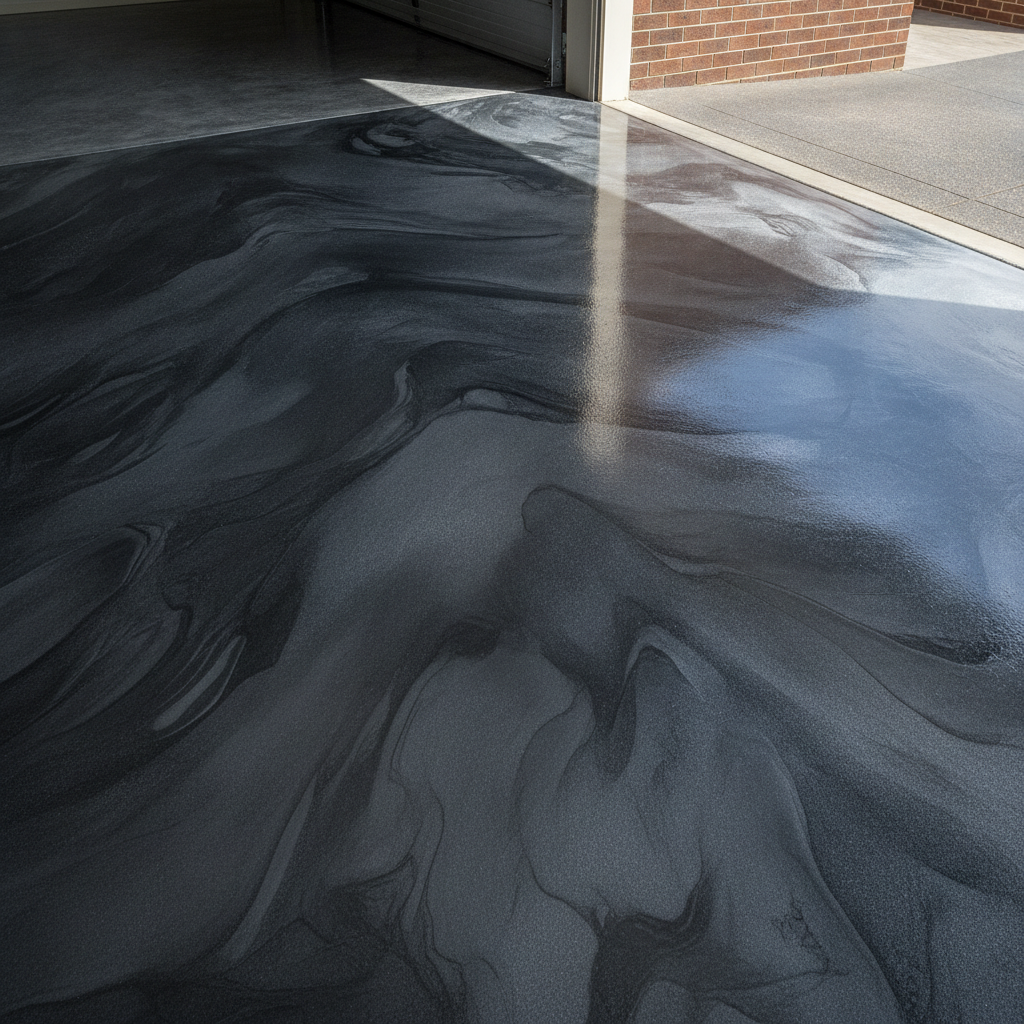
Metallic epoxy uses pigmented metallic powders suspended in a clear epoxy base to create flowing, three-dimensional colour effects that look nothing like a painted floor. It is poured and manipulated while wet, so no two floors are identical. Boutique showrooms, hospitality venues and reception areas use metallic epoxy when they want a floor that functions as a design feature rather than just a surface to walk on.

High-build industrial coatings are thicker systems, often 3 mm to 6 mm, that include broadcast aggregate or quartz sand for maximum impact resistance and chemical protection. Food-manufacturing plants, chemical stores and heavy-engineering workshops rely on these systems because standard coatings simply are not thick enough to cope with the punishment.

How does commercial epoxy flooring hold up under heavy use?

A properly installed commercial epoxy floor, with correct surface preparation and an appropriate topcoat, will typically last 10 to 20 years under normal commercial use before it needs a full recoat. The two factors that shorten that lifespan fastest are inadequate concrete preparation before installation and choosing a system that is under-specified for the actual load and chemical exposure on site.

Concrete preparation is the part most people underestimate. Before any epoxy goes down, the concrete must be diamond-ground or shot-blasted to open the surface profile. Skipping or rushing that step means the coating bonds to surface dust and laitance rather than to the concrete itself, and it will peel. On a commercial site, a peeling floor means downtime, replacement costs and potential safety incidents, so the prep stage is never the place to cut corners.

Chemical resistance varies between systems. A standard solid-colour epoxy will handle oils, mild acids and cleaning agents well. If your site deals with strong solvents, concentrated acids or alkalis, a specialist chemical-resistant formulation or a vinyl ester system is the more appropriate choice. Being specific with your installer about what hits the floor regularly will save you an expensive remediation job down the track.

Slip resistance is another practical consideration for commercial spaces. A gloss topcoat looks great in a showroom but can become slippery when wet in a kitchen or wash bay. Anti-slip aggregate can be broadcast into the topcoat during installation to bring the surface up to Safe Work Australia guidelines without sacrificing much of the visual finish.

What should Melbourne businesses look for when comparing commercial epoxy flooring quotes?

When comparing commercial epoxy flooring quotes, look for three things: the specified film thickness in microns or millimetres, the surface preparation method listed, and whether the topcoat is included. A quote that skips those details is likely cutting costs in areas that will cost you more later. Ask for the product data sheets for the specific coatings being used so you can compare like with like.

Film thickness matters more than most business owners realise. A standard commercial two-coat system might apply 300 to 500 microns of total dry film thickness. An industrial system for a forklift-heavy warehouse might need 2 mm or more. If a quote does not specify thickness, you have no way of knowing whether you are getting a durable coating or a thin skim that will wear through in 18 months.

Surface preparation method tells you a lot about quality intent. Diamond grinding or shot blasting, both of which mechanically open the concrete surface, are the industry-accepted standard for commercial work. Acid etching alone is generally considered insufficient for floors that take vehicle traffic or heavy loads. If a quote lists acid etching as the only prep step for a workshop floor, ask why.

Downtime is a real cost for any operating business. Most commercial epoxy systems can be walked on within 24 hours and returned to vehicle traffic within 48 to 72 hours, depending on the system, the film build and the ambient temperature. Melbourne winters slow cure times, so scheduling installation in the warmer months, or using a faster-cure system, can reduce the time your operation is disrupted.

Finally, consider the total floor area and layout complexity. Open warehouse floors are straightforward and cost-effective per square metre. Floors with lots of drainage grates, saw-cut joints, columns and tight corners take longer to prepare and coat, which will be reflected in the price. A good installer will inspect the site and account for those variables rather than give you a per-square-metre rate over the phone without seeing the space.

Which Melbourne industries benefit most from commercial epoxy flooring?

The industries that get the most value from commercial epoxy flooring are those where the concrete floor takes daily punishment from vehicles, chemicals, water or heavy foot traffic. Warehousing and logistics, automotive workshops, food processing, retail and hospitality, aged care and medical facilities, and commercial gyms are the most common use cases across the Melbourne market.

Warehousing and logistics benefit because forklift tyres mark and erode bare concrete quickly, creating dust that contaminates stock and clogs racking hardware. A sealed epoxy surface stops that dusting, makes line markings far more legible and keeps the floor cleanable with a ride-on scrubber.

Automotive workshops deal with oil, coolant, brake fluid and tyre rubber daily. A flake system with a chemical-resistant topcoat handles all of those without staining, and the light-reflective finish improves workshop lighting without a single extra fitting.

Retail and hospitality spaces, particularly those in Melbourne’s competitive inner-city market, increasingly use decorative metallic or flake finishes as part of the fit-out because a quality epoxy floor costs less per square metre than polished concrete or large-format tiles, installs faster and still delivers a premium result.

Aged care and medical facilities value the seamless, grout-free surface because it gives bacteria nowhere to hide and can be sanitised with hospital-grade cleaners without degrading the coating. Those are compliance requirements, not just preferences, so the coating specification needs to match the relevant Australian standards for the facility type.

Whatever your industry, the principle is the same: choose a system matched to what your floor actually faces, prepare the concrete properly, and use a topcoat suited to your cleaning regime and traffic. Get a quote for commercial epoxy floor coating from Metal and Flake.