Epoxy Flooring Cost: What Affects the Price in Melbourne?
Epoxy flooring cost in Melbourne typically ranges from around $50 to $150 per square metre, depending on the system chosen, the condition of the concrete underneath, and the size of the job. Decorative finishes like metallic or flake systems sit at the higher end, while a basic single-coat seal sits at the lower end. Knowing what drives the price helps you budget without surprises.
What is the typical price range for epoxy flooring cost per square metre?
For most residential and light commercial jobs in Melbourne, epoxy flooring cost lands between $50 and $150 per square metre, fully installed. A plain solid-colour epoxy on a well-prepared slab comes in toward the bottom of that range. A full decorative system, such as a metallic epoxy or a vinyl flake floor with a polyurethane topcoat, sits closer to the top. Multi-coat industrial systems can push beyond that range on large warehouses or chemically exposed floors.
These figures cover labour, materials and a standard diamond-grind preparation. They do not cover crack repairs, moisture mitigation or major slab remediation, which are priced separately because the scope varies so much from job to job.
To put real numbers against it: a standard double garage (around 36 square metres) in a vinyl flake finish with a topcoat might come to somewhere between $2,000 and $3,500 all up. A large open-plan living area of 80 square metres in a metallic system could land between $6,000 and $10,000. These are ballpark figures. The only way to pin down your number is a site visit and a proper measure-up.
How does concrete condition affect the epoxy flooring cost?
Concrete condition is one of the biggest variables in any epoxy flooring cost estimate. A flat, dry, structurally sound slab needs a single diamond-grind pass and minimal prep time. A slab with surface contamination, old paint, moisture issues or significant cracking requires extra labour, extra materials and sometimes specialist remediation products before a single drop of epoxy goes down.
Common preparation costs that get added to a base quote include crack injection and grinding out of surface cracks, removal of old coatings or tile adhesive residue, application of a moisture-barrier primer on slabs that read high on a moisture meter, and patching of spalled or pitted concrete with a levelling compound. Each of these adds time on site, and time is what drives labour cost up.
Here is a practical rule of thumb: the older the slab and the harder it has been worked, the more prep it needs. A freshly poured residential slab is often in near-perfect condition. A 30-year-old workshop slab soaked with oil and pitted from forklift traffic can take a full day of prep before the first coat even opens. That prep work is not optional. Skip it and the epoxy fails, usually within 12 to 18 months through peeling or bubbling.
Does the type of epoxy system change the price?
Yes, the type of epoxy system is a major driver of epoxy flooring cost because different systems use different products, require different application steps and take different amounts of time to install. A basic two-coat epoxy seal is fast to apply. A decorative metallic or full vinyl flake broadcast system involves multiple coats, a broadcast layer, a colour coat and at minimum one polyurethane or polyaspartic topcoat, which adds both material cost and labour time.
Here is a rough breakdown of common system types from lower to higher cost:
- Single or double-coat solid epoxy: Functional, durable, lower cost. Common in utility areas and warehouses where looks are secondary to performance.
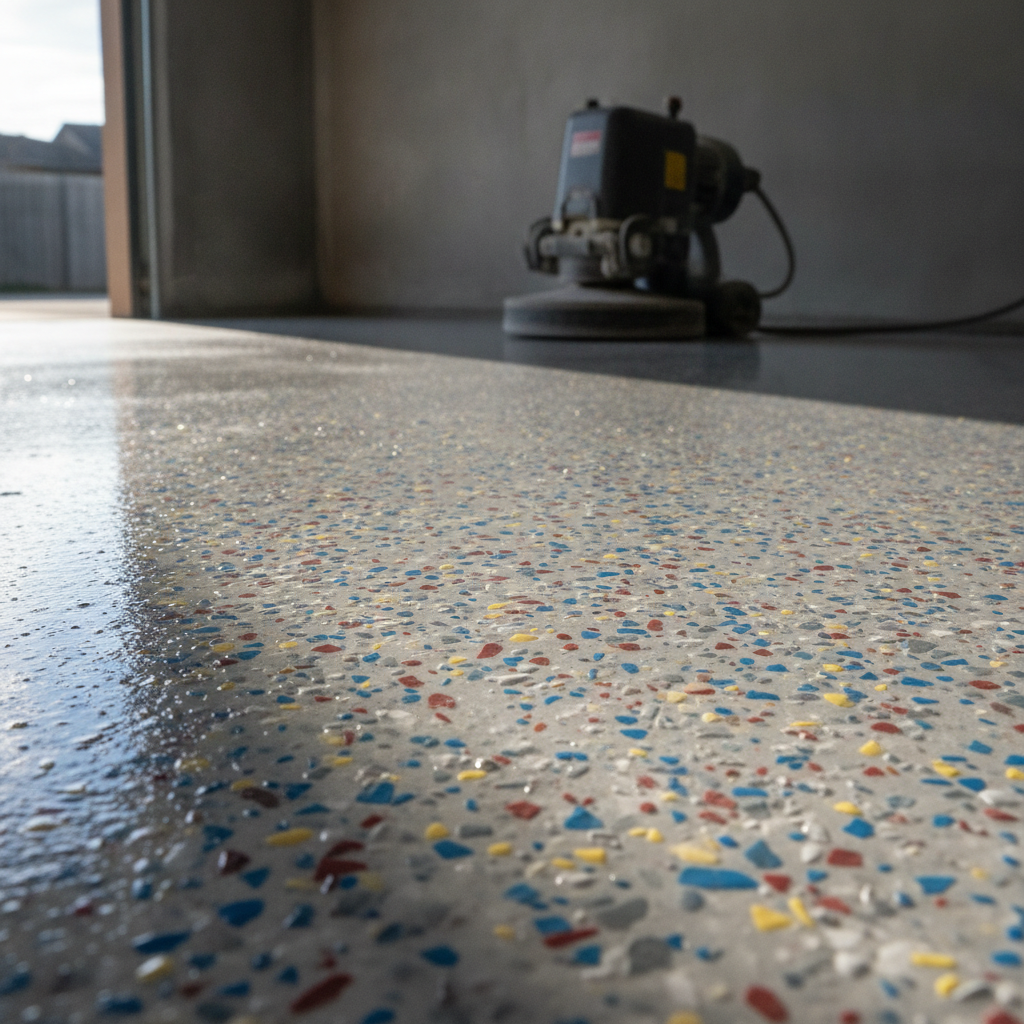
- Vinyl flake (chip) systems: The most popular choice for garages and showrooms. The flake layer adds texture, hides minor imperfections and improves slip resistance. Mid-range price point.
- Metallic epoxy systems: A pigmented metallic base coat is manipulated to create flowing, marbled or three-dimensional effects. More product, more skill required and more time to execute. Higher cost.
- Polyaspartic coatings: Fast-curing, UV-stable top coats often layered over flake or metallic bases. They cure faster than standard polyurethane, which can shorten the job timeline but the product itself costs more per litre.
How much does job size affect the overall epoxy flooring cost?
Job size has a direct impact on epoxy flooring cost because most of the expenses in a small job, setup, travel, equipment hire, and minimum material quantities, are fixed regardless of how many square metres you are coating. That means a 20 square metre laundry or small garage pays a higher effective rate per square metre than a 200 square metre open-plan floor or workshop.
On large jobs, material is bought in bulk, the equipment is already on site and the labour flows efficiently without constantly stopping to move around furniture or obstacles. The per-square-metre rate drops as the area grows. If you have a small space, it is worth asking whether any adjoining areas could be done at the same time to push the total area up and bring the per-square-metre figure down.
Shape matters too. A straightforward rectangle with no columns, floor drains, steps or machinery bolts to work around is faster to coat than an irregular space full of obstacles. Cutting in around every column or drain takes time, and time shows up in the quote.
Are there other costs that often get overlooked in an epoxy flooring quote?
A few cost items catch people off guard when they compare quotes. The first is surface repairs. Not every contractor includes crack repairs or patching in their base rate. Some price these separately once they assess the slab on the day. Always ask whether the quote covers repairs or whether they are a separate line item.
The second is topcoat selection. Some cheaper quotes use a basic single polyurethane seal over the colour coat. A higher-build or polyaspartic topcoat costs more but gives you a thicker, more scratch-resistant wearing surface. If longevity matters to you, it is worth paying for the better topcoat rather than redoing the floor in five years.
The third is furniture removal and floor clearing. Most installers expect the floor to be cleared before they arrive. If they have to move equipment, shelving or vehicles, expect an additional charge or a longer time allowance in the quote.
Finally, curing time has indirect costs. Standard epoxy systems need at least 24 hours before foot traffic and up to 72 hours before vehicles. If you are coating a commercial kitchen or a workshop floor and that downtime costs you revenue, factor it in. Polyaspartic systems can return to service in as little as a few hours, which may justify their higher material cost if downtime is the real constraint.
How can you make sure you are comparing epoxy flooring quotes fairly?
Comparing epoxy flooring cost quotes is straightforward once you know what to look for. Ask each contractor to itemise their quote so you can see what is and is not included. Confirm the number of coats, the specific products being used, whether a primer coat is included, what topcoat is specified and what the prep method is. Diamond grinding is the industry standard for proper mechanical adhesion. Acid etching alone is generally considered insufficient for a long-lasting bond.
Check that the quote covers the full scope: prep, primer, colour coat, decorative layer (if applicable), and topcoat. A quote that looks cheap because it skips the primer or only includes one topcoat is not a fair comparison with a fully specified quote. You want to be comparing the same floor, not just the same number of square metres.
Also ask about warranty. A reputable installer will back their work. Typical warranties on residential jobs run from one to five years covering delamination. Understand what voids the warranty, usually excessive moisture in the slab or mechanical damage, so you know exactly what you are covered for.
Get a tailored epoxy flooring cost estimate from Metal and Flake.