Garage Floor Coating in Reservoir: Which Epoxy System Should You Choose?

Garage Floor Coating in Reservoir: Which Epoxy System Should You Choose?

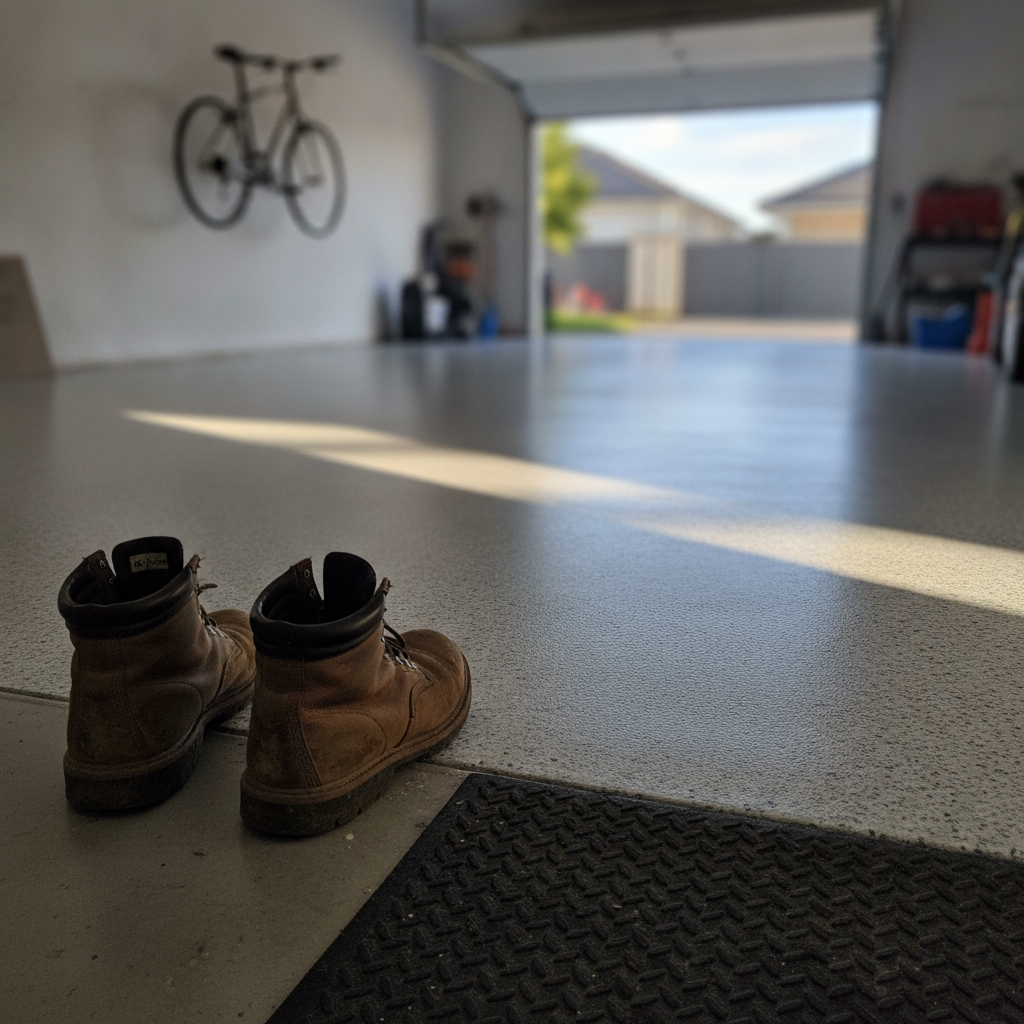
The right garage floor coating in Reservoir depends on how you use the space, the condition of your concrete, and the finish you’re after. A single-broadcast flake system suits most residential garages. A full metallic or double-broadcast build suits workshops and showrooms. Getting the substrate prep right matters more than the coating itself.

Why does garage floor coating in Reservoir need a different approach to other floors?

A garage floor takes a specific kind of punishment. Hot tyre rubber, motor oil, hydraulic fluid, and heavy point loads from jack stands all attack a coating differently than foot traffic does. Reservoir’s residential streets mix older post-war concrete slabs with newer poured slabs, and each one behaves differently under a grinder. Knowing which slab you’re dealing with shapes every decision that follows.

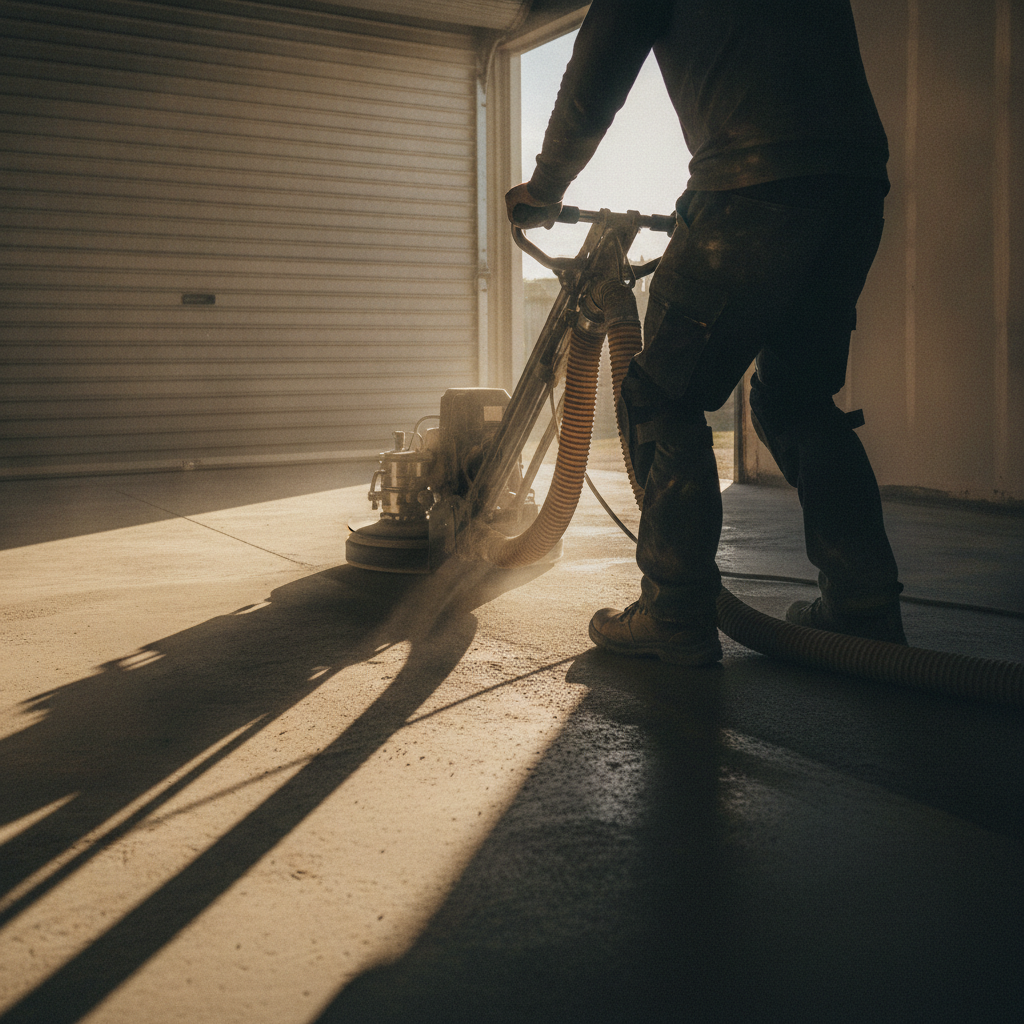
Older slabs common in Reservoir’s established streets are often thinner and may have surface carbonation, a dusty top layer that forms over decades and stops epoxy bonding properly. A diamond grind that removes two to three millimetres of the surface solves this. Newer slabs poured in the last twenty years tend to be denser but can trap moisture if the concrete hasn’t fully cured. A moisture test before coating is not optional. Applying epoxy over a slab reading above four percent moisture content is a reliable way to get delamination within twelve months.

Reservoir also sits in Melbourne’s north, which means hot summer days that push concrete surface temperatures above 30 degrees Celsius. Epoxy applied to a hot slab flashes off too quickly, trapping bubbles. Scheduling the job for an early morning start or a cooler week matters on a practical level, not just for aesthetics.

What epoxy systems are available for a garage floor, and which one suits your situation?

There are three main systems worth knowing: a standard solid-colour epoxy, a flake broadcast system, and a metallic epoxy system. Each has a different cost, look, and practical performance profile. A solid-colour system is the entry point, but it shows every tyre mark and scratch quickly. Most homeowners move past it once they see the alternatives.

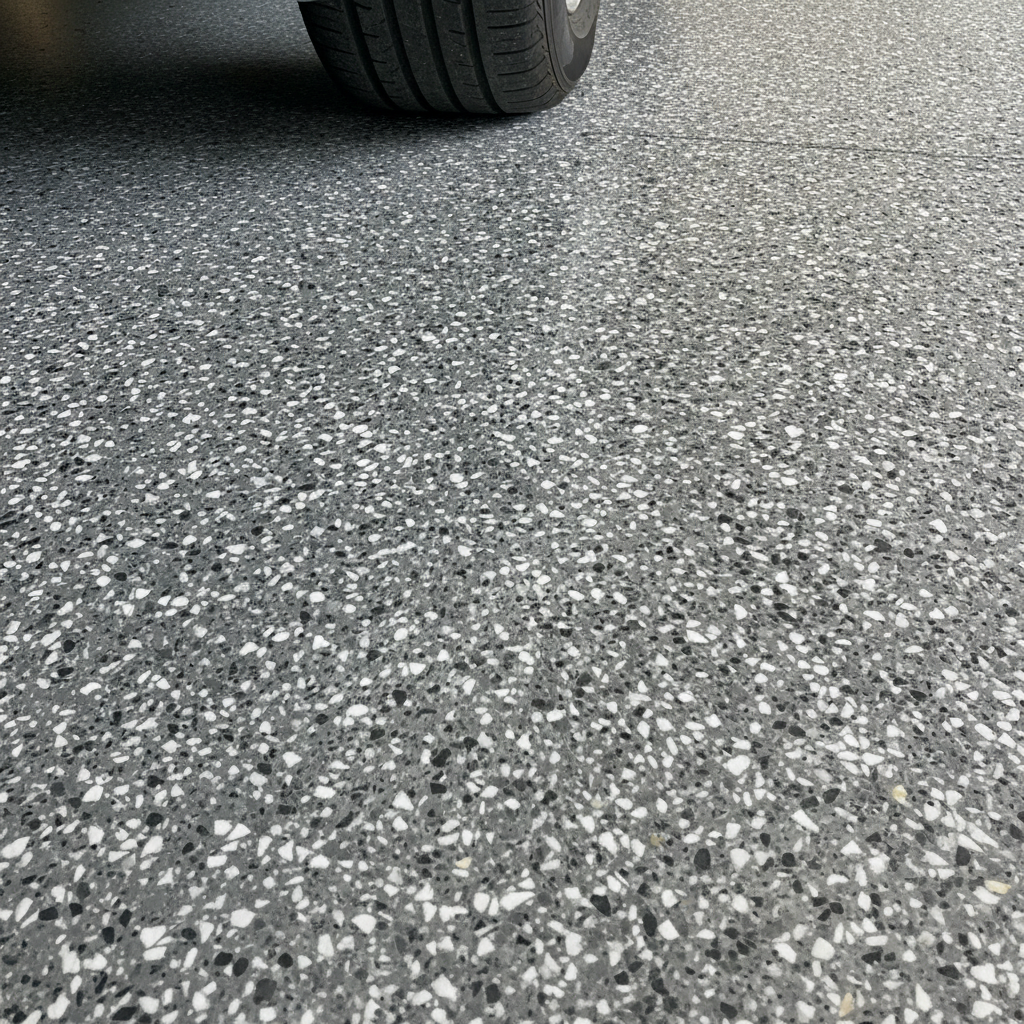
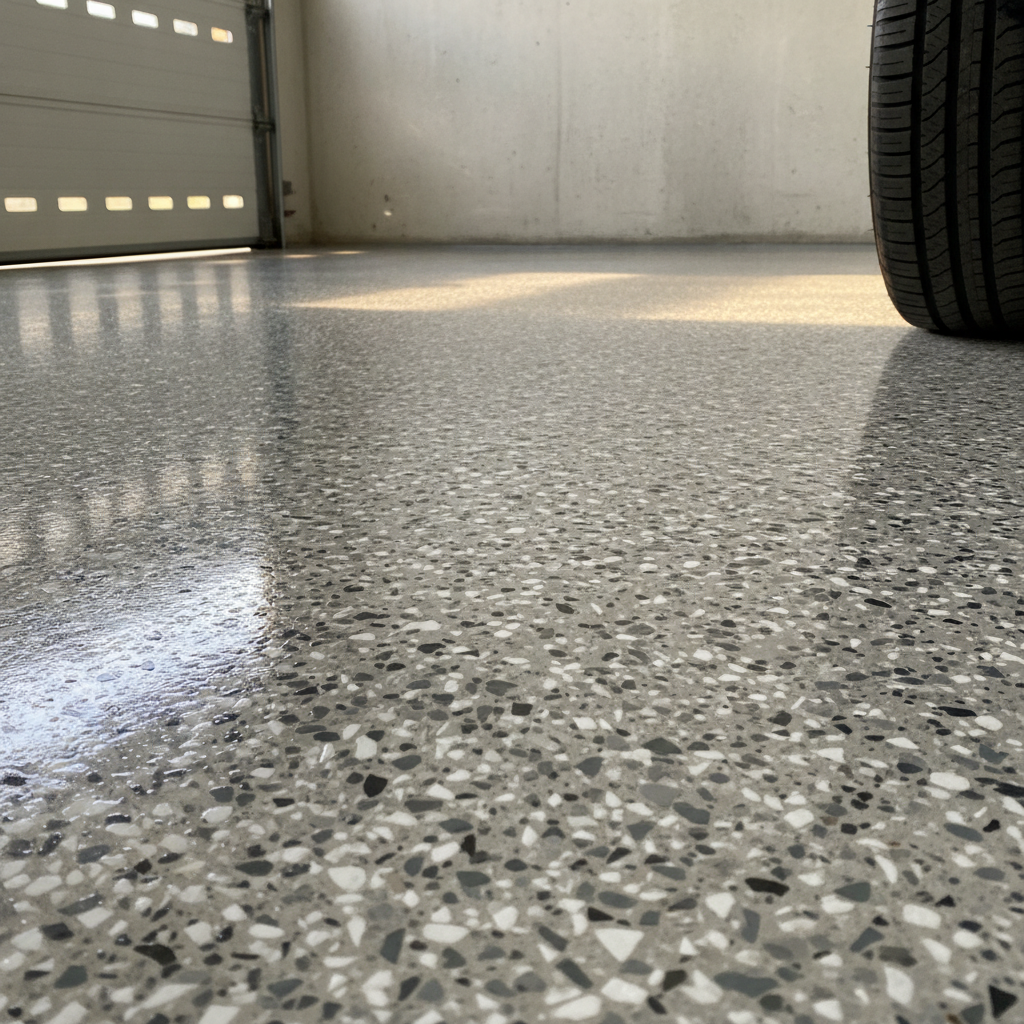
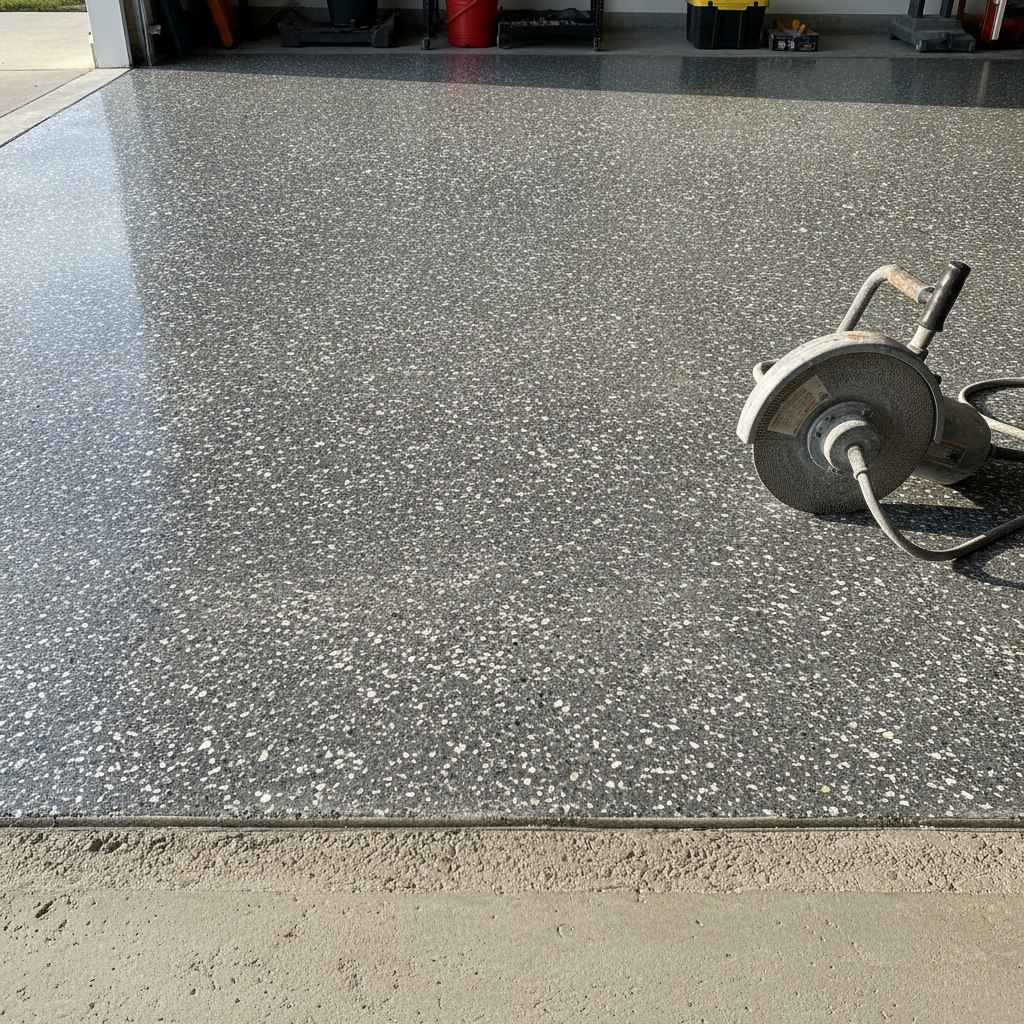
A flake broadcast system is the most popular choice for residential garages in Melbourne’s north. Coloured vinyl flakes are broadcast into a wet epoxy base coat, then locked in with a polyurethane or polyaspartic topcoat. The flakes serve two purposes: they add visual texture that hides dirt and minor surface imperfections, and they break up the glossy surface enough to improve slip resistance when wet. A full-broadcast flake system, where flakes are thrown to rejection (meaning the floor is completely covered), adds a meaningful amount of thickness to the build and makes the finished floor feel solid underfoot.

A metallic epoxy system uses pigmented metallic powders mixed into a clear or tinted epoxy base. The installer manipulates the wet coat with a blower or roller to create a marbled, three-dimensional look. It is a more technical application and takes more time on site. For a Reservoir garage that doubles as a workshop or hobby space, the result is genuinely impressive and holds its look well under fluorescent lights. The polyaspartic topcoat used to seal metallic systems is UV-stable, which matters in a garage that gets afternoon sun through an open roller door.

Polyaspartic coatings are worth mentioning on their own. They cure faster than standard epoxy, meaning a garage can sometimes be walked on within hours of application and driven on within 24 hours. In Melbourne’s variable spring weather, faster cure windows reduce the risk of dust or debris settling into a wet coat. The trade-off is that polyaspartic sets quickly, so application is less forgiving. An experienced installer working in the right conditions gets excellent results. A rushed job on a hot afternoon does not.

How much surface preparation does a Reservoir garage slab actually need?

Surface preparation is the part of the job that determines whether a coating lasts five years or fifteen. For a standard residential garage in Reservoir, preparation typically involves diamond grinding the full slab, vacuuming the surface thoroughly, filling cracks and control joints with a semi-flexible polyurethane filler, and allowing any moisture-mitigation primer to fully cure before the base coat goes down.

Cracks are common in older Reservoir slabs and don’t necessarily indicate a structural problem. A hairline crack filled properly and locked under a full-broadcast flake system is essentially invisible once the job is done. A crack ignored and coated over will reflect through the finished surface within a season as the slab continues its normal thermal movement.

Oil contamination is the other common issue in garages that have seen years of vehicle use. Oil penetrates concrete and has to be mechanically removed, not just degreased. Grinding gets it out. A degreaser alone does not. If there are visible oil stains on your slab right now, factor in extra prep time when budgeting the job.

How long will a garage floor coating last in Reservoir conditions?

A properly prepared and correctly installed epoxy floor coating in a residential Reservoir garage should realistically last ten to fifteen years before it needs any significant attention. The topcoat takes the daily wear, and a quality polyurethane or polyaspartic topcoat handles tyre traffic, chemical spills, and UV exposure far better than epoxy alone. Recoating the topcoat at around the ten-year mark, without stripping the whole floor, is a practical way to extend the system’s life significantly.

The biggest factors that shorten coating life in a garage environment are hot tyre pick-up, which happens when a standard epoxy without a proper topcoat gets soft under a hot tyre and peels when the car moves, and abrasion from grit and sand tracked in on tyres. A doormat at the entry and a quick sweep every couple of weeks makes a real difference to how the floor looks at the five-year mark.

Reservoir gets cold overnight in winter, and concrete will contract slightly. A coating applied at the right thickness and with a semi-flexible primer layer handles this thermal movement without cracking. Thin coatings applied over unprepared concrete do not.

What should you ask a coating installer before booking the job?

Ask whether diamond grinding is included in the quote, or whether the installer uses acid etching instead. Acid etching opens the surface chemically but does not remove carbonation or contamination the way grinding does. Most quality installers in Melbourne use diamond grinders. Ask what topcoat is used and whether it is UV-stable. Ask how long cure time is before vehicle traffic, and whether that timeline accounts for the current season. A genuine answer to those three questions tells you a lot about what kind of job you’re going to get.

Also confirm whether the quote covers crack and joint filling, or whether that’s an extra. On older Reservoir slabs with a few cracks, it’s rarely optional. Getting that detail sorted upfront saves a conversation on the day of installation.

Ready to move forward? Request a garage floor coating quote in Reservoir from Metal and Flake.
Epoxy Floor Cost in Reservoir: 2026 Pricing Guide for Local Homeowners

Epoxy Floor Cost in Reservoir: 2026 Pricing Guide for Local Homeowners

Epoxy floor cost in Reservoir typically runs between $50 and $120 per square metre for a residential garage or internal slab, depending on the system chosen, the condition of the concrete, and the level of preparation required. Most standard double-garage jobs land somewhere in the $1,800 to $4,500 range once labour, materials and prep are factored in.

What does epoxy floor cost in Reservoir actually cover?

Epoxy floor cost in Reservoir covers four main components: surface preparation, the primer coat, the body coat or broadcast layer, and the topcoat sealer. Each one adds to the final figure, and skipping any of them is how you end up with a floor that peels within a year. A proper job is a system, not just a tin of paint rolled onto concrete.

Surface preparation is usually the biggest hidden cost that surprises homeowners. Diamond grinding or shot blasting opens up the concrete profile so the epoxy bonds properly. On a typical Reservoir garage slab of around 36 square metres, grinding alone can take two to three hours with the right equipment. That labour and machine time has to be priced into any honest quote.

The coating system itself varies widely. A basic single-coat epoxy paint is cheap upfront but thin, usually under 100 microns dry film thickness, and it shows wear quickly in a working garage. A two-part, 100 percent solids epoxy broadcast with a polyurethane or polyaspartic topcoat sits in a different price bracket, but it is the kind of floor that holds up to daily vehicle traffic and oil spills for a decade or more.

What factors push the epoxy floor price up or down?

Several concrete factors move the price on any given job. The main ones are slab condition, floor size, the system type, decorative choices like flake or metallic finishes, and how much access the installer has to the space. A clean, structurally sound slab with no cracks or moisture issues will always cost less to prepare than one that needs patching, crack chasing or a moisture barrier before coatings can go down.

Slab condition is the single biggest variable. Reservoir was developed heavily from the 1950s through to the 1980s, and many concrete slabs in the area are showing their age. Hairline cracks are common, and some older garages have moisture coming up through the slab during wet months. Addressing these properly adds cost, but it is the difference between a floor that lasts and one that bubbles and lifts within 12 months.

Decorative finishes also affect price. A plain solid-colour epoxy is the most affordable option. A vinyl flake broadcast, where coloured flakes are thrown into the wet resin to create a terrazzo-style look, adds a layer of material and labour but gives you a slip-resistant texture and a finish that hides tyre marks and dirt well. Full flake coverage on a standard garage typically adds $8 to $15 per square metre over a plain coat. Metallic pigment systems, which create a flowing, marbled effect popular for showrooms and feature floors, sit at the top of the price range and can reach $130 to $160 per square metre on larger residential projects.

Room access matters too. A garage with clear floor space and a wide roller door is quick to work in. A commercial kitchen, a laundry, or a room full of built-in cabinetry that needs to be worked around takes longer and costs more.

How does floor size affect the total epoxy floor cost in Reservoir?

Floor size affects total cost in two ways: the obvious cost-per-square-metre calculation, and the less obvious economies of scale that kick in on larger jobs. A very small area, say under 20 square metres, often has a higher per-square-metre rate because the fixed costs of mobilising, setting up, and cleaning equipment are spread across fewer metres. Larger jobs above 60 to 80 square metres tend to attract a lower rate per square metre for the same reason.

As a rough guide for Reservoir homeowners planning a budget, here is how the numbers tend to stack up in 2026:

  • Single garage (around 18 sqm): $1,100 to $2,200 for a standard two-coat system.
  • Double garage (around 36 sqm): $1,800 to $4,500 depending on system and prep complexity.
  • Workshop or larger slab (60+ sqm): $3,500 to $7,500 for mid-range decorative systems.

These are indicative ranges only. The only way to get a number you can actually build a budget around is to have someone look at your specific slab and give you a written quote based on what is actually there.

Is cheap epoxy floor coating worth it in Reservoir?

Cheap epoxy coating is rarely worth it for a Reservoir homeowner who plans to stay in their property, and here is why. The two main ways installers cut costs are using thin, water-based coatings instead of proper two-part epoxy, and reducing or skipping mechanical surface preparation. Both of those shortcuts produce a floor that looks fine for six to eighteen months and then starts to peel, bubble or chip, especially under vehicle traffic and in Melbourne’s temperature swings between summer and winter.

Pulling up a failed coating and starting again costs more than doing it properly the first time. You are paying for prep twice, plus disposal of the old material. A well-installed 100 percent solids epoxy system with a UV-stable polyurethane or polyaspartic topcoat should realistically last 10 to 15 years in a domestic garage with basic maintenance. That changes the cost-per-year calculation considerably.

It is also worth noting that the DIY kit products available from hardware chains are water-based, typically around 40 to 50 percent solids, and are not the same product a professional installer uses. They have a place for low-traffic applications, but they are not a like-for-like comparison to a professionally installed commercial-grade system.

What questions should you ask before accepting an epoxy floor quote?

Before accepting any epoxy floor quote in Reservoir, ask the installer exactly what preparation method they are using, what the solids content and dry film thickness of the coating is, how many coats are included, and what the warranty covers. A reputable installer will answer all of those questions without hesitation. If the quote is vague about products or skips over the preparation method entirely, that is a signal worth paying attention to.

Also ask whether the price includes moisture testing. Melbourne’s northern suburbs, including Reservoir, have clay-heavy soils that can hold ground moisture, and a slab that reads high on a moisture meter needs a moisture-tolerant primer or barrier coat before standard epoxy goes down. Skipping this step on a marginal slab is a common cause of delamination.

Finally, check whether the topcoat is UV-stable. Standard epoxy resins yellow in sunlight, which matters if any part of your floor gets direct sun through a window or open roller door. A polyurethane or polyaspartic topcoat solves this and also adds scratch and chemical resistance.

Get an accurate epoxy floor cost estimate in Reservoir from Metal and Flake.
Epoxy Flake Flooring Colours: How to Pick the Right Blend for Your Garage

Epoxy Flake Flooring Colours: How to Pick the Right Blend for Your Garage

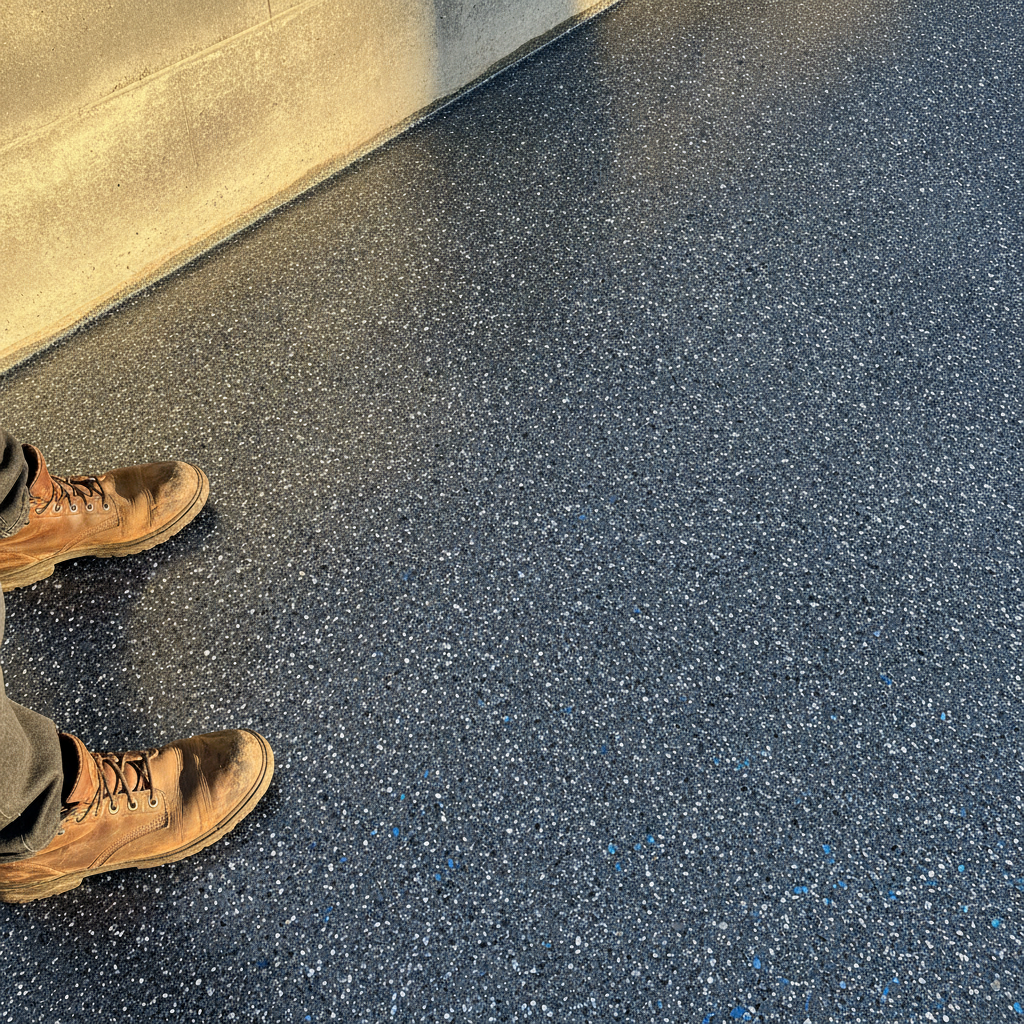
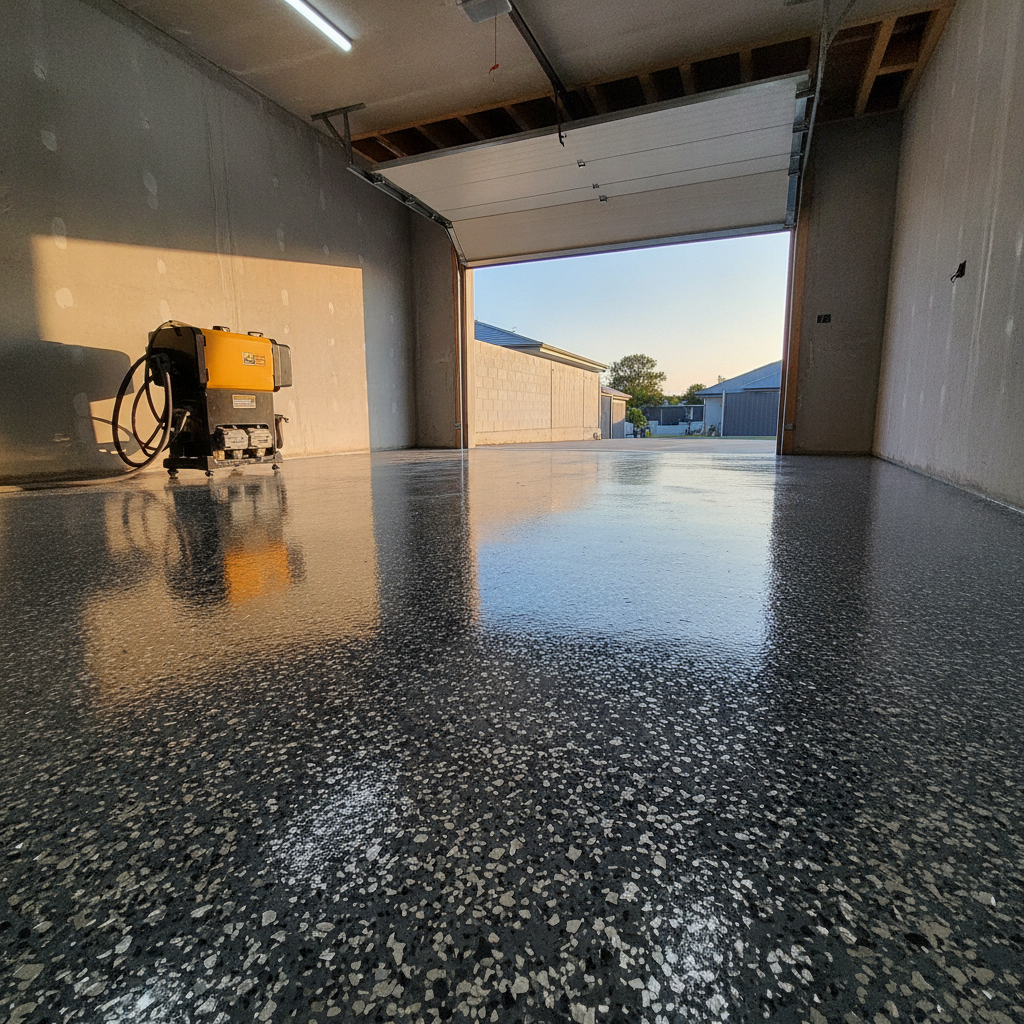
Epoxy flake flooring colours are chosen by combining two to five vinyl flake shades that create a speckled, multi-tone finish once broadcast into a wet epoxy base coat. The right blend hides tyre marks and dust between cleans, suits the garage’s natural light, and ties in with the home’s exterior palette. Most homeowners settle on a colour within one or two physical samples.

Why does the chip blend matter more than a single colour?

Unlike a painted floor, epoxy flake flooring colours work because the final look is a mix of individual vinyl chips sitting at different angles under the topcoat. No single chip colour dominates. A blend of three chips, say charcoal, white and a mid-grey, reads as a cohesive stone-like finish from standing height, even though each chip is a distinct shade. This layered effect is what gives flake floors their depth and why picking a single “colour” misses the point. You are choosing a recipe, not a paint swatch.

The proportion of each chip also matters. A 70/20/10 split across dark, light and accent chips produces a very different result than an even 33/33/34 split. Most professional installers offer a standard broadcast ratio but can adjust on request, so it pays to ask before the job starts.

How does chip size affect the finished look of epoxy flake flooring colours?

Chip size directly changes how busy or calm the finished floor looks. Smaller flakes, typically around 1mm to 4mm, blend together at a distance and give a fine, almost terrazzo-like texture. Larger flakes at 6mm or 12mm stay visually distinct and create a bolder, more industrial look. For a standard double garage the mid-range 4mm chip is the most common choice because it reads as refined without looking fussy.

Garage floors also take a lot of foot and vehicle traffic, and the chip size affects how well the floor hides everyday wear. A finer blend shows scuff marks and dust more easily than a larger broadcast that scatters the eye across a busier pattern. If you park a dark-coloured vehicle on the floor most days, a lighter chip blend with a mid-tone accent tends to show the least tyre dust between cleans.

What colours work best for a residential garage floor?

For a residential garage, the most practical epoxy flake flooring colours sit in the mid-tone grey and beige family because they hide grime, complement almost any brick or cladding exterior, and photograph well if you ever sell the home. Darker blends like charcoal and slate look sharp on completion but can show light-coloured concrete dust and pet hair more readily. Lighter blends in whites and creams brighten a dark garage but demand more regular sweeping.

A useful rule of thumb: look at the dominant colour of your garage door and work one tone lighter for the floor. This avoids the floor and door competing visually. If your garage door is Colorbond Ironstone, for example, a blend of mid-grey, warm beige and white chips softens the space rather than making it feel like a bunker.

Some homeowners also factor in the internal walls. A cream or light-grey wall pairs with almost any chip blend, while a rendered charcoal feature wall looks best anchored by a darker flake floor so the contrast stays intentional rather than accidental.

How do topcoat finishes change how epoxy flake flooring colours look?

The polyurethane or polyaspartic topcoat applied over the chips has a significant effect on the final colour read. A gloss topcoat deepens and saturates all the chip colours, making a mid-grey blend look almost charcoal in strong afternoon light. A satin or matte topcoat keeps colours closer to how they look in the chip sample, with less light bouncing around. Most garage installations use a gloss or semi-gloss topcoat because it is easier to clean and shows the depth of the flake blend at its best.

UV stability is worth thinking about too. Garages with large roller doors that stay open during the day receive significant sun exposure, and some epoxy pigments can amber slightly over time. A quality aliphatic polyurethane topcoat resists UV yellowing far better than a standard epoxy topcoat, keeping those cool grey and white blends looking clean for years rather than months.

Should you request physical samples before committing to epoxy flake flooring colours?

Yes, always request physical samples or a sample board before committing to epoxy flake flooring colours. Colour images on a screen are rendered differently depending on the monitor, and a chip that looks warm grey online can read as quite purple or blue in real life, especially under LED downlights. A physical sample board held against the actual garage floor in the actual lighting conditions of your space is the only reliable way to confirm the choice.

Hold the sample at standing height (roughly 1.5 metres from the ground) rather than close up at eye level. Flake floors are always viewed from above, and the colour proportions look completely different from a distance. Check the sample in morning light and again in the afternoon because garage orientation changes everything. A south-facing garage with flat white walls will make every blend look cooler and slightly darker than the same board held in a north-facing space.

What mistakes do homeowners make when choosing garage flake colours?

The most common mistake is choosing solely based on a photo from a completed job at someone else’s property. Lighting, camera settings, concrete colour and even the age of the floor all shift how colours appear in photos. A close second is picking the most eye-catching, high-contrast blend in the sample range because it looks striking in the showroom, then finding it overwhelming once it covers 36 square metres of garage floor.

A third mistake is ignoring the concrete’s natural tone. Concrete slabs in Melbourne can range from a warm cream to a cool blue-grey depending on the mix and age. A very light flake blend applied over a warm-toned slab will pick up that warmth and read differently than the same blend applied to a fresh, neutral slab. A good installer will assess the base colour before recommending a blend, not just hand over a colour chart and leave you to it.

Finally, people sometimes choose a colour based purely on aesthetics and ignore practicality. If the garage doubles as a workshop, a mid-tone salt-and-pepper blend hides dropped metal filings, oil spots between clean-ups and boot scuffs far better than a pale uniform blend. Matching the colour to how the space is actually used saves a lot of frustration down the track.

Getting epoxy flake flooring colours right is a mix of practical thinking and personal taste. Work through the chip blend, chip size, topcoat sheen and your garage’s real lighting conditions, and you will end up with a floor that looks great on day one and stays that way for years. View epoxy flake floor colour options and book with Metal and Flake.

Epoxy Flake Flooring in Reservoir: Colours, Costs and Local Installer

Epoxy Flake Flooring in Reservoir: Colours, Costs and Local Installer

Epoxy flake flooring in Reservoir is a durable, low-maintenance coating system where decorative vinyl flakes are broadcast into a wet epoxy base coat, then sealed with a clear topcoat. It suits garage floors, workshops, laundries and commercial spaces, costs roughly $40 to $80 per square metre installed, and delivers a finish that lasts well over a decade with basic care.

What exactly is epoxy flake flooring and why is it so popular in Reservoir?

Epoxy flake flooring is a multi-layer system: a primed concrete base, a pigmented epoxy layer, a broadcast of coloured vinyl chips (the “flakes”), and a polyurethane or epoxy clear topcoat that locks everything in. The flakes hide minor concrete imperfections, add texture for grip, and produce a finish that looks sharp in both residential garages and commercial workshops. Reservoir homeowners and small business owners lean toward it because the suburb has a strong mix of older homes with plain grey concrete slabs and light industrial properties, both of which are perfect candidates for a coating upgrade.

The flake system also handles Melbourne’s temperature swings better than solid-colour epoxy alone. The chip layer creates micro-movement tolerance in the topcoat, which reduces the risk of peeling or cracking when concrete expands and contracts through summer and winter.

What colour options are available for epoxy flake flooring in Reservoir?

Epoxy flake flooring comes in dozens of colour blends, from neutral naturals like sandstone, charcoal and slate through to bold combinations like cobalt and white or terracotta and black. Flake size typically ranges from 1 mm up to 12 mm, with larger chips giving a more dramatic, terrazzo-like look and smaller chips producing a finer, more uniform texture.

Most installers stock a core range of 20 to 30 pre-mixed blends and can custom-mix from individual chip colours for larger projects. The base coat colour is also customisable: a dark charcoal base with a black and silver flake blend is one of the most popular combinations for Reservoir garages right now, giving a clean, industrial feel that suits the suburb’s aesthetic. If you are matching a commercial space, it is worth asking for physical sample boards rather than relying on screen colours, since monitors render flake blends very differently to how they look under a workshop fluoro or natural light.

How much does epoxy flake flooring cost in Reservoir?

Epoxy flake flooring in Reservoir typically costs between $40 and $80 per square metre fully installed, depending on floor size, concrete condition and the number of coats specified. A standard double garage of around 36 square metres would generally land between $1,440 and $2,880 all up, with most mid-range jobs sitting closer to the $55 to $65 per square metre mark.

The biggest variable is concrete preparation. Concrete grinding and shot-blasting to achieve the right surface profile (typically an ICRI CSP 3 to 4 profile for a proper mechanical bond) adds cost but is non-negotiable for a long-lasting result. Skipping prep is the single most common reason epoxy floors fail early. Crack repairs, expansion joint filling and moisture testing can also add to the quote, particularly in older Reservoir properties where slabs were poured in the 1960s and 1970s.

Other cost factors include:

  • Flake coverage rate. A full broadcast (100% coverage) uses more material than a partial broadcast but gives a tighter, more even finish and hides concrete colour variations completely.
  • Topcoat choice. A polyurethane topcoat is more UV stable than a standard epoxy clear, which matters for areas with direct sunlight, such as open carports.
  • Access and obstacles. Floors with lots of columns, drains, steps or built-in cabinetry take longer to coat and are priced accordingly.

How long does an epoxy flake floor installation take in Reservoir?

A typical residential epoxy flake floor in Reservoir takes two to three days from prep through to final cure. Day one is concrete grinding and any patching work. Day two is the base coat, flake broadcast and initial cure. Day three is topcoat application. The floor is usually walkable within 24 hours of the topcoat going down, and ready for vehicle traffic after 72 hours, though full chemical cure takes around seven days.

Weather matters a lot in Melbourne. Epoxy should not be applied when the concrete surface temperature is below 10°C or above 30°C, and humidity above 85% can cause adhesion problems. A good installer checks slab moisture with a Tramex or similar moisture meter before committing to a start date, especially after rain. Reservoir’s clay-heavy soil can retain moisture under slabs for days after wet weather, so this step is worth asking about when you get quotes.

What should you look for in a local epoxy flake flooring installer in Reservoir?

A reliable epoxy flake flooring installer in Reservoir should use diamond grinding (not acid etching) for surface prep, provide a written scope of work that specifies the product system and number of coats, and be willing to show you recent local jobs or provide references. Avoid any installer who skips a site inspection or quotes entirely over the phone without asking about the slab condition.

A few other things worth checking before you sign anything:

  • Product specification. Ask for the brand and product code of the epoxy and topcoat being used. Reputable installers use commercial-grade systems from suppliers like Flowcrete, Sika or similar, not DIY hardware-store kits.
  • Warranty. A quality installation should carry a workmanship warranty of at least two years. Be cautious of warranties that exclude adhesion failure, since that is the most common issue.
  • Prep method. Diamond grinding is the industry standard. If an installer mentions acid etching as their primary prep method, that is a red flag for residential slabs with contamination or old coatings.

Metal and Flake operates across Melbourne’s north including Reservoir, bringing the same prep standards and product systems to every job regardless of size. Whether it is a single-car garage or a 200 square metre warehouse floor, the process does not change: proper grinding, quality epoxy, full flake broadcast and a hard-wearing topcoat that is built to last.

Get an epoxy flake floor quote in Reservoir from Metal and Flake

Warehouse Epoxy Flooring: What Melbourne Operators Need to Know

Warehouse Epoxy Flooring: What Melbourne Operators Need to Know

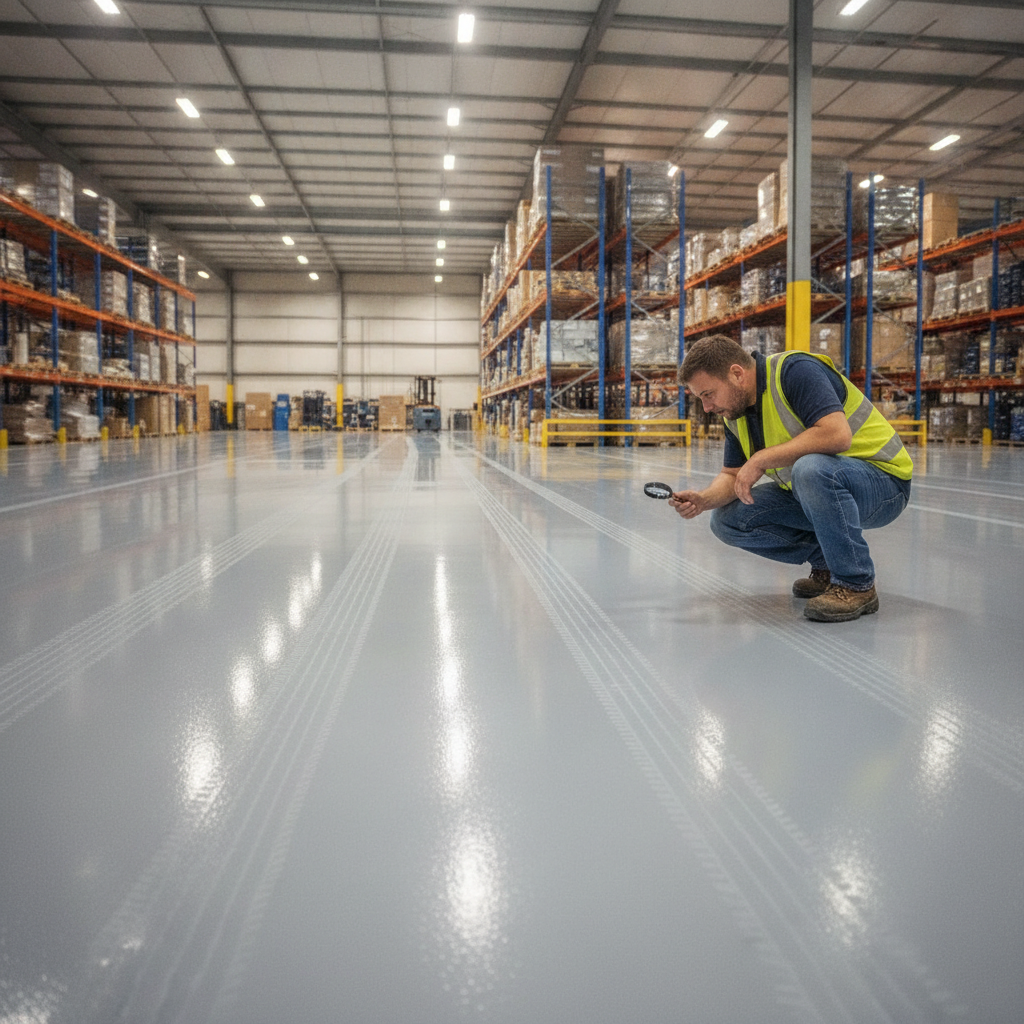
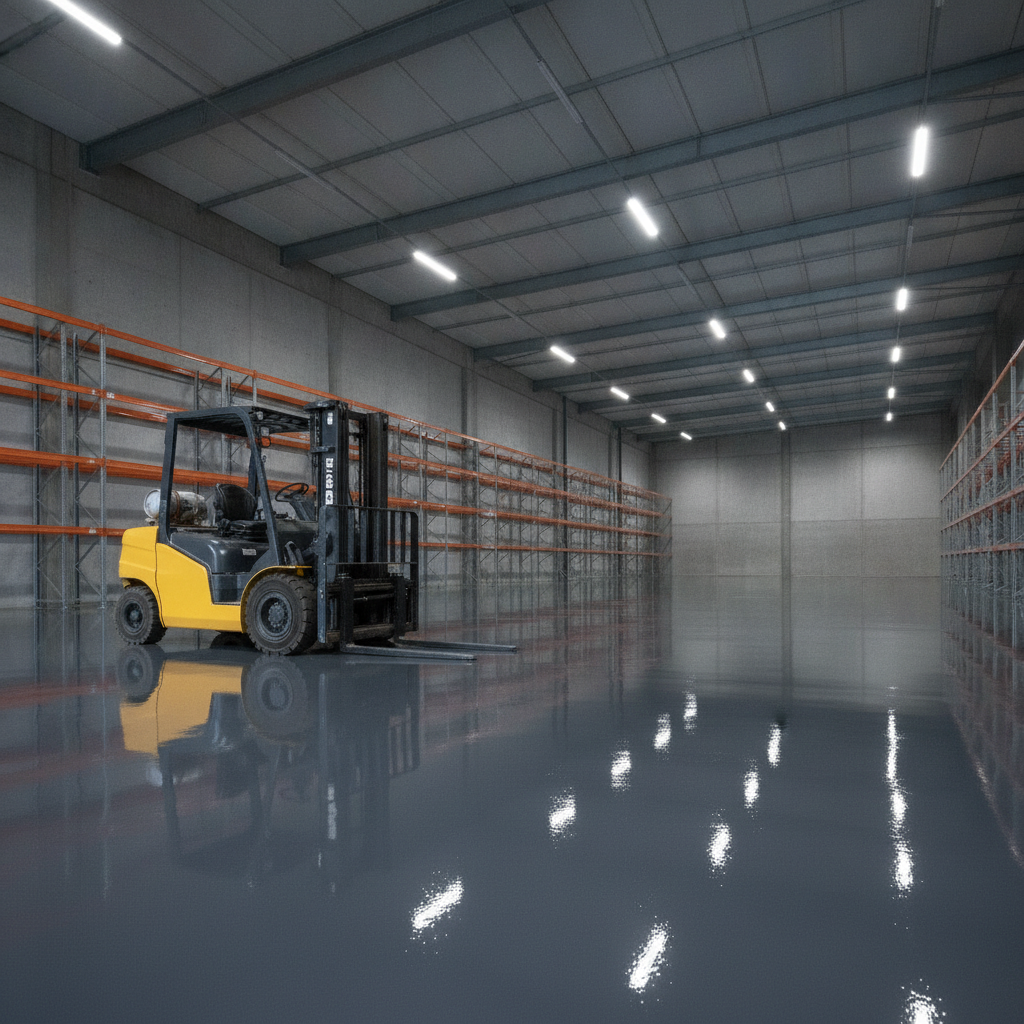
Warehouse epoxy flooring is a two-part resin coating applied directly to a concrete slab to create a hard, seamless, chemical-resistant surface. For Melbourne operators running forklifts, pallet jacks and heavy foot traffic across their floors every day, epoxy is one of the most cost-effective ways to protect a concrete slab and keep a facility looking professional for years.

Why do Melbourne warehouse operators choose epoxy floor coatings over bare concrete?

Bare concrete is porous, prone to dusting and difficult to clean once it absorbs oil or chemical spills. A properly applied epoxy floor coating seals the slab completely, cutting cleaning time, preventing contamination and giving warehouse managers a surface that can handle forklift tyres, point loads from racking feet and constant foot traffic without breaking down.

Beyond the practical side, a sealed floor reflects overhead lighting significantly better than raw concrete, which means warehouses often feel brighter without any extra light fittings. That is not a minor point when you are paying power bills on a large shed.

Concrete dusting is another real pain point. Untreated slabs shed fine particles that settle on machinery, contaminate product and create ongoing cleaning costs. Once an epoxy coat is down, the dust problem simply goes away. For food storage, pharmaceutical or manufacturing warehouses, that alone often justifies the investment.

What thickness and system should a warehouse epoxy floor use?

A warehouse epoxy floor system should be built to a minimum total dry film thickness of around 1,000 microns (1 mm) for light industrial use, with heavier forklift or chemical environments calling for thicker build coats or a polyurethane topcoat. The system typically includes a penetrating primer, one or more body coats and a clear topcoat rated for abrasion and chemical resistance.

The most common systems for Melbourne warehouses are:

  • Standard solvent-based epoxy. Tough, affordable and available in a wide colour range. A solid entry point for general warehousing and storage.
  • Water-based epoxy. Lower VOC emissions, useful in poorly ventilated spaces or when staff need to remain on-site nearby. Slightly less hard-wearing than solvent-based, so best matched to lighter traffic.
  • High-build epoxy with polyurethane topcoat. The go-to for facilities running heavy forklifts or handling chemicals. The polyurethane layer adds UV stability and superior scratch resistance on top of the epoxy body coats.
  • Anti-slip epoxy with broadcast aggregate. For areas near loading docks, wash-down bays or anywhere moisture is present. Broadcast aggregate is pressed into the wet topcoat to create a textured surface that meets slip resistance requirements under AS/NZS 4586.

Choosing the wrong system is where operators tend to lose money. A coating that is too thin for the traffic load will chip and delaminate within a year, costing more to remediate than a correctly specified system would have cost upfront.

How important is surface preparation for a warehouse epoxy floor coating?

Surface preparation is the single most critical step in any warehouse epoxy flooring project. No coating, regardless of quality, will bond properly to a slab that has not been opened up mechanically. The industry standard method is diamond grinding or shot blasting to create a surface profile that gives the epoxy somewhere to grip.

Concrete Surface Profile 3 (CSP 3) is the minimum typically recommended for industrial epoxy coatings according to the International Concrete Repair Institute (ICRI) guidelines. Anything smoother and you are relying on adhesion alone, which will fail under thermal cycling and point loads.

Before grinding even starts, the slab needs to be assessed for:

  • Moisture vapour transmission. High moisture readings in a Melbourne winter can cause adhesion failure and bubbling, so a concrete moisture test is non-negotiable on slabs sitting on or near grade.
  • Previous coatings or sealers that need full removal.
  • Cracks, joint movement and spalling. These need to be addressed with appropriate repair mortars before coating, otherwise they will telegraph straight through the new epoxy.
  • Contamination from oils or chemicals. These have often soaked deep into the slab and may need multiple grinding passes to remove fully.

Cutting corners on prep is the number one reason warehouse epoxy floors fail early. When you are getting quotes, ask specifically how the contractor plans to prepare the slab and what moisture testing they conduct. Vague answers are a warning sign.

What does warehouse epoxy flooring cost in Melbourne?

Warehouse epoxy flooring in Melbourne generally ranges from around $25 to $60 per square metre installed, depending on the system specified, the condition of the existing slab and the size of the job. Larger warehouses benefit from economies of scale on both labour and materials, so the per-square-metre rate tends to drop as the area increases.

Factors that push the cost toward the higher end include:

  • Heavy concrete repairs needed before coating can begin.
  • High-build systems with a polyurethane topcoat rather than a standard two-coat system.
  • Tight scheduling requirements, such as needing to work in sections to keep part of the warehouse operational.
  • Decorative finishes like metallic flakes or colour zoning for traffic lanes and safety markings.

The most reliable way to get an accurate number is to have a professional assess the slab in person. Online ballpark figures are useful for budgeting purposes, but they cannot account for slab condition, access constraints or the specific products needed for your environment.

How long does a warehouse epoxy floor take to apply and cure?

A typical warehouse epoxy floor coating project takes one to three days to apply depending on the system and the floor area, with a full chemical cure taking around seven days. However, light foot traffic is usually possible within 24 hours and forklift traffic within 48 to 72 hours under normal Melbourne conditions, subject to temperature and humidity at the time of application.

Ambient temperature matters more than most operators expect. Epoxy cures more slowly in cold weather, and Melbourne winters can push workshop temperatures low enough to extend cure times noticeably. A good applicator will check conditions and adjust their product selection accordingly, using winter-grade hardeners if needed to keep the project on schedule.

Planning the project during a quiet production period, a long weekend or a scheduled maintenance shutdown minimises disruption. Splitting a large warehouse floor into sections is another option, though it does add some cost and requires careful planning around operational requirements and traffic flow during the works.

What finish options suit a Melbourne warehouse environment?

Most warehouse epoxy floors in Melbourne are finished in a solid industrial colour, with light greys and mid-greys being the most popular because they hide tyre marks while still reflecting light well. Safety yellow and signal red are commonly used for line marking, pedestrian corridors and no-go zones, and these can be incorporated into the floor coating itself rather than applied as paint on top.

Metallic flake finishes, which use decorative vinyl chips broadcast into the wet coating, are increasingly common in showrooms, gym floors and commercial spaces within the same building as a warehouse. They add grip underfoot as well as visual interest, and they hide surface wear and minor scuffs better than a plain solid colour over time.

Whatever the finish, a UV-stable topcoat is worth specifying on any section of the floor that gets natural light. Standard epoxy yellows under UV exposure, while a polyurethane or polyaspartic topcoat holds its colour for much longer.

If you manage a Melbourne warehouse and want a straight-talking assessment of your floor and a clear price, the next step is straightforward. Request a warehouse epoxy floor coating quote from Metal and Flake.

Polyaspartic Floor Coating: How Does It Compare to Epoxy in Melbourne?

Polyaspartic Floor Coating: How Does It Compare to Epoxy in Melbourne?

Polyaspartic floor coating is a fast-curing, UV-stable topcoat that can be walked on within hours of application. Compared to standard epoxy, it handles Melbourne’s temperature swings better, resists yellowing under UV light, and is typically done in a single day. Epoxy offers a thicker, more economical build-up that suits heavy garage use when budget matters most.

What exactly is a polyaspartic floor coating?

A polyaspartic floor coating is a type of aliphatic polyurea that was developed in the 1990s as an evolution of standard urethane chemistry. It cures through a moisture-triggered reaction that is much faster than epoxy’s amine-hardener cure, allowing applicators to complete a full coat, broadcast decorative flake, and apply a topcoat all in one visit. The result is a dense, flexible film that bonds tightly to prepared concrete.

The key word there is “prepared.” Whether you go polyaspartic or epoxy, the concrete underneath has to be mechanically ground and profiled first. No coating, regardless of how good the chemistry is, will bond properly to a dusty, contaminated or sealed slab. That prep step is non-negotiable and is where a lot of DIY attempts fall apart.

Polyaspartic coatings are available in varying solids content. High-build formulas sit above 95% solids, which means very little product is lost to off-gassing, and the final film thickness is close to what went on wet. That density is part of why polyaspartic performs so well in abrasion tests.

How does polyaspartic floor coating compare to epoxy on cure time and workability?

Polyaspartic floor coating cures significantly faster than standard epoxy, often reaching light foot traffic in two to four hours versus 24 hours or more for a water-based epoxy system. That speed is a major practical advantage for homeowners who want their garage back the same day. The trade-off is that fast cure leaves less working time, so it demands an experienced applicator who can move quickly and evenly.

Epoxy, by contrast, has a longer open time, sometimes 20 to 40 minutes depending on formulation and ambient temperature. That extra time makes it more forgiving to apply, and it allows decorative flake to be broadcast evenly before the surface skins over. On a Melbourne summer day where the garage slab can hit 35°C or more, however, epoxy’s open time shrinks fast, and you can end up with lap marks and uneven coverage if the applicator isn’t on the ball.

Polyaspartic is far less sensitive to temperature during application. Most quality formulas can be applied in temperatures ranging from roughly minus 20°C all the way up to 60°C, which in practice means a Melbourne installer can work confidently through summer without fighting the clock the way they would with epoxy.

Which coating is more resistant to UV and yellowing in a Melbourne garage?

Polyaspartic floor coating is significantly more UV-stable than standard epoxy, meaning it will not yellow or amber when exposed to sunlight streaming through garage doors or windows. Standard epoxy uses aromatic chemistry that reacts to UV radiation over time, causing a noticeable colour shift, often within the first year on a sun-facing garage. Polyaspartic’s aliphatic structure is chemically resistant to that reaction.

Melbourne’s northerly sun can be punishing on surfaces that face west or north. A light-coloured epoxy floor in that situation will often show yellowing within 12 to 18 months of installation, even with indirect UV exposure. Polyaspartic coatings used as a topcoat over an epoxy base coat, which is a very common system, give you the best of both worlds: epoxy’s thick, economical build and polyaspartic’s UV and scratch resistance on the wearing surface.

That hybrid approach, an epoxy base with a polyaspartic topcoat, is widely regarded in the industry as the gold standard for residential garage floors. It controls cost without sacrificing surface performance.

Is polyaspartic floor coating more durable than epoxy underfoot?

In head-to-head abrasion testing using the Taber Abraser method, high-solids polyaspartic coatings typically outperform standard epoxy for scratch and mar resistance. This matters on a garage floor where tyres, dropped tools, bike stands and jack stands constantly scuff the surface. Polyaspartic also has a degree of flexibility that standard rigid epoxy lacks, which helps it resist cracking when the concrete substrate moves slightly with seasonal temperature changes.

That said, a well-applied, thick-build epoxy floor is still an excellent surface and will outlast any paint, penetrating sealer or tile alternative by years. The durability gap between a quality epoxy and a quality polyaspartic is noticeable but not enormous in typical residential use. Where polyaspartic pulls ahead clearly is in chemical resistance to hot tyre pick-up, which is the blistering and delamination caused by hot rubber from a car that has been driven hard. Standard epoxy is more vulnerable to this than polyaspartic.

Which option costs more and is it worth paying the difference?

Polyaspartic floor coating systems generally cost more per square metre than standard epoxy systems, partly because the raw materials are more expensive and partly because the speed of application demands a very experienced crew. For a standard double garage of around 36 square metres in Melbourne, the price difference between a quality epoxy and a full polyaspartic system can run into several hundred dollars, depending on the installer and the spec chosen.

Whether that premium is worth it comes down to your priorities. If UV stability matters because your garage gets direct sunlight, if you want the floor back the same day, or if you drive sports or performance cars that generate hotter tyre temperatures, polyaspartic is worth the extra spend. If your garage is well shaded, you are not in a rush, and budget is the main consideration, a properly applied epoxy floor will serve you very well for many years.

The smartest approach for most Melbourne homeowners is to discuss a hybrid system with a floor coating specialist. You get epoxy’s cost-effective thickness in the base and polyaspartic’s UV and abrasion resistance in the topcoat. Neither material is inferior on its own. They each have a job they do best, and a good installer knows how to combine them.

The decorative finish also plays into this conversation. Both coatings work beautifully with vinyl flake broadcast systems, which give that classic speckled garage floor look and also help disguise minor concrete imperfections. The flake is broadcast into the wet base coat then locked in with the topcoat, and both epoxy and polyaspartic systems can carry flake equally well.

Ask Metal and Flake about epoxy and polyaspartic garage floor coating options

What to Look for in Epoxy Garage Floor Installers in Melbourne

What to Look for in Epoxy Garage Floor Installers in Melbourne

The best epoxy garage floor installers in Melbourne will diamond-grind the concrete before they lay a single drop of coating, carry public liability insurance, offer a written warranty on both materials and labour, and show you a portfolio of finished garage jobs. Price matters, but surface preparation and product quality are what separate a floor that lasts from one that peels in two winters.

Why does surface preparation matter so much when choosing epoxy garage floor installers?

Surface preparation is the single biggest factor in how long an epoxy floor holds up. Installers who skip diamond grinding and use acid etching alone leave the concrete too smooth for the epoxy to grip properly. A correctly ground surface opens the concrete profile to roughly 30 to 50 microns, giving the primer something to bite into. Any installer who can’t tell you exactly how they prep the slab is a red flag worth taking seriously.

Here is what proper prep looks like in practice. The crew should arrive with a walk-behind diamond grinder (or a ride-on for larger slabs), vacuum up the dust with an industrial extractor, and patch any cracks or spalls before the primer goes down. If they show up with a mop and a bucket of acid, send them home. Acid etching was the old way. Diamond grinding is the industry standard now, and any professional outfit working in Melbourne should be doing it as a matter of course.

Ask the installer directly: “What grind profile do you aim for and how do you measure it?” A tradesperson who can answer that question without hesitation knows their stuff. One who changes the subject probably doesn’t.

What credentials and insurance should epoxy garage floor installers in Melbourne hold?

Reputable epoxy garage floor installers in Melbourne should carry public liability insurance of at least $5 million, be able to show you a current certificate of currency on request, and ideally hold manufacturer accreditation from the coating brand they use. Without these, any damage to your property or a botched job leaves you with very little recourse beyond a long argument.

Beyond insurance, look for these indicators of a legitimate operation. A proper ABN registered to the business (not a personal number), a fixed street address or at minimum a verifiable Melbourne suburb, and Google or Product Review ratings that include responses to negative feedback. Anyone who handles a one-star review professionally is telling you something useful about how they handle problems on site.

Manufacturer accreditation is worth a specific mention. Coating brands like Flowcrete, Rust-Oleum and local Australian suppliers run applicator programmes that require installers to complete training before they can use the product under warranty. An accredited applicator means the manufacturer will stand behind the job. That is worth asking about before you commit.

How do you compare quotes from epoxy garage floor installers without getting burned?

To compare quotes fairly, make sure every installer is quoting the same scope: the same square meterage, the same number of coats, the same product type (water-based versus solvent-based epoxy, or polyaspartic), and the same prep method. A quote that comes in 40 percent cheaper than the others is almost never cheaper in the long run once you factor in a failing floor and a second installation bill.

A standard residential garage floor in Melbourne, typically 30 to 40 square metres, will usually involve a primer coat, one or two base coats, decorative flake or metallic broadcast if chosen, and a clear topcoat. Each of those layers has a cost. If a quote skips one of them, that is where the installer is cutting corners, and that layer is usually the topcoat, which provides the UV resistance and scratch protection the floor needs to hold its finish year after year.

Ask each installer for a written scope of works, not just a price. It should list the products by brand and code, the number of coats, the dry film thickness where possible, and the cure time before you can drive on it. If they won’t put it in writing, walk away. The ones who know their system are always happy to explain it.

What finish options should good epoxy garage floor installers offer?

A competent installer should be able to offer you at minimum a solid colour epoxy, a decorative flake system (sometimes called chip or broadcast flake), a metallic epoxy, and a clear seal over existing concrete. Each suits a different budget and aesthetic. Flake systems are the most popular garage choice in Melbourne because they hide imperfections, add texture for slip resistance, and hold up well under car tyres and foot traffic.

Metallic epoxies create a marbled, high-gloss look that works well in showrooms and residential garages where appearance is the priority. They take more skill to apply because the metallic pigments move as the resin cures, so the result depends heavily on the applicator’s technique. Ask to see photos of actual completed jobs, not just manufacturer renders. Real-world results can vary a lot, and you want to know what you’re getting before the crew starts pouring.

Colour charts matter too. A good installer will let you choose from a wide range and, where possible, provide a small sample board so you can see the finish under your garage’s actual lighting conditions. Colours that look great in a showroom can shift significantly under fluorescent workshop lighting or the natural light coming through a roller door.

What warranty should you expect from epoxy garage floor installers in Melbourne?

A solid residential epoxy garage floor warranty in Melbourne typically covers two to five years on workmanship and follows the manufacturer’s product warranty for materials, which can extend to ten years or more for premium coating systems. Any installer unwilling to offer at least two years on their labour is not confident in what they’re laying down.

Read the warranty terms carefully. Most will exclude damage from hydrostatic pressure (water pushing up through the slab), which is a real concern in some Melbourne suburbs with high water tables. A reputable installer will test for moisture before they start and tell you honestly if your slab is too wet to coat. Coating over a damp slab is one of the most common reasons epoxy floors delaminate, and no warranty will cover a problem the installer should have flagged before they started.

Finally, get the warranty in writing as part of the contract, not as a verbal promise on the day. Include a contact method and a process for making a claim. That piece of paper is what separates a professional operation from a one-man-band who’ll be unavailable the moment something goes wrong.

Choosing the right installer is most of the battle. The rest is picking a finish you’ll love looking at every time you open the roller door. Book a quote with Metal and Flake, epoxy garage floor installers in Melbourne.

Industrial Epoxy Flooring: Is It Right for Your Melbourne Workspace?

Industrial Epoxy Flooring: Is It Right for Your Melbourne Workspace?

Industrial epoxy flooring is a two-part resin system applied directly over concrete to create a seamless, hard-wearing surface. It handles heavy machinery, forklift traffic, chemical spills and constant foot traffic without cracking or staining. For most Melbourne warehouses, factories and commercial workshops, it is one of the most practical and cost-effective flooring upgrades available.

What makes industrial epoxy flooring different from regular epoxy?

Industrial epoxy flooring uses a higher solids content than residential or light-commercial coatings, typically 100% solids formulations that cure into a film several millimetres thick. That extra build gives it the compressive strength to handle loads that would crack or delaminate thinner coatings. Standard residential epoxy is usually a thinner, water-based product suited to garages, not factory floors.

The practical difference shows up quickly under real working conditions. A light-duty coating might last three to five years in a domestic garage. A properly installed industrial system, with correct surface preparation and the right number of coats, routinely lasts ten to fifteen years in a working warehouse. The higher upfront cost reflects that longevity, not a premium for the label.

There are also performance grades within industrial epoxy itself. A distribution centre running pallet jacks needs a different spec to a food processing plant that hostes down the floor twice a day with caustic cleaners. Getting the spec right from the start is what separates a floor that holds up from one that starts peeling within eighteen months.

Which Melbourne workspaces benefit most from industrial epoxy flooring?

Industrial epoxy flooring suits any workspace where the floor takes sustained mechanical or chemical punishment. Warehouses, manufacturing plants, automotive workshops, cold storage facilities, food production kitchens and large commercial workshops are the most common candidates in Melbourne. If your floor is bare or sealed concrete that chips, dusts or stains regularly, epoxy is worth a serious look.

Warehouses are probably the clearest fit. Forklift tyres, steel racking legs and heavy pallet drops all concentrate enormous force on small areas of concrete. A quality epoxy coating spreads that load, reduces surface cracking and keeps the concrete from dusting, which matters a lot if you store products that cannot be contaminated by concrete particulate.

Automotive workshops benefit from the chemical resistance. Engine oil, brake fluid, transmission fluid and battery acid are all regular visitors to a workshop floor, and bare concrete absorbs every drop. An epoxy surface lets you wipe spills clean rather than watching them soak in and stain permanently. Many workshop owners also add a broadcast of fine anti-slip aggregate to the topcoat, which provides grip even on a wet floor without adding meaningful texture that traps dirt.

Food production and commercial kitchen environments need a slightly different approach. Here the focus shifts to hygiene. A seamless epoxy floor has no grout lines, no cracks and no porous surface for bacteria to colonise. That is a genuine food safety advantage, and it is why so many food manufacturers specify epoxy as a matter of course rather than preference.

What does a commercial epoxy floor installation actually involve?

A commercial epoxy floor installation starts with surface preparation, which is almost always the most important step. Concrete must be mechanically ground or shot-blasted to open the surface profile so the epoxy can bond properly. Skipping or rushing this step is the single biggest cause of delamination failures. On a sound concrete slab, preparation alone can take a full day before a drop of resin touches the floor.

After prep, any cracks, joints or hollow spots are filled and repaired. Then the primer coat goes down, followed by the body coats and finally a topcoat, often polyurethane or polyaspartic, which adds UV stability and extra chemical resistance. Depending on the system specified, the floor may need between two and four coats with cure time between each one.

For most Melbourne commercial jobs, you are looking at a two to four day installation window for a mid-sized floor, plus a cure period before the floor can take traffic again. Light foot traffic is typically possible after 24 hours, but full load bearing and forklift traffic usually requires 72 hours minimum. Planning the shutdown window around that cure time is a basic part of the project conversation.

Humidity and temperature affect cure times, which is worth knowing if your workspace has minimal climate control. Melbourne’s winters can extend cure schedules, particularly in poorly ventilated warehouse spaces. A good installer factors this into the job timeline rather than springing it on you afterwards.

How long does industrial epoxy flooring last, and what affects its lifespan?

Industrial epoxy flooring installed correctly over properly prepared concrete typically lasts ten to twenty years in a demanding workplace before a full recoat is needed. The exact lifespan depends on traffic intensity, the chemical exposure the floor sees, how well the surface was prepared and whether minor damage is patched promptly rather than left to spread.

The biggest lifespan killers are poor surface prep before installation, using an underspec product for the application, and ignoring small areas of damage once the floor is in service. A chip or crack left unrepaired lets moisture and contaminants work under the coating, and what starts as a small spot can eventually lift a large panel of epoxy off the slab.

Routine maintenance is straightforward. A daily sweep and a weekly scrub with a neutral pH cleaner is all most industrial epoxy floors need. Avoid acidic cleaners unless the topcoat is specifically rated for them, and avoid dragging steel edges directly across the surface. With that basic care, the floor will look presentable and perform well for a long time.

What should you ask before getting a commercial epoxy floor quote?

Before you call anyone out for a quote, think through a few basics: the total area in square metres, what the floor is currently used for, what machinery or vehicles run on it, whether there are existing coatings or sealers on the concrete, and whether there are any known moisture issues in the slab. Having that information ready speeds the quoting process and reduces the chance of surprises mid-job.

On the quote itself, ask specifically what surface preparation method is included. Diamond grinding and shot-blasting are the industry standards for commercial work. If a quote does not mention preparation at all, that is a red flag. Also check whether the quote includes crack and joint repairs, how many coats are specified and what the topcoat product is. Two quotes that look similar on price can be very different in scope.

References from similar commercial or industrial jobs in Melbourne are worth asking for too. A floor that performs well in a small cafe is a different proposition to one that survives three years of forklift traffic in a logistics facility. Seeing comparable finished work, or speaking to a client in a similar industry, gives you much more confidence than a brochure photo.

Metal and Flake works with commercial and industrial clients across Melbourne, bringing the same attention to surface preparation and product selection to every job. Enquire about commercial epoxy floor coating from Metal and Flake.

Epoxy Flooring for Homes: Which System Suits Your Melbourne Garage?

Epoxy Flooring for Homes: Which System Suits Your Melbourne Garage?

Epoxy flooring for homes comes in several distinct systems, each suited to different budgets, traffic levels and looks. For a Melbourne residential garage, the most popular choices are solid-colour epoxy, metallic epoxy and flake (chip) systems. Picking the right one comes down to how the space gets used, how much prep the slab needs and what finish you actually want to live with long term.

What are the main epoxy flooring systems used in home garages?

The three systems you will encounter most often in a residential garage setting are solid-colour epoxy, decorative flake (also called chip or broadcast) systems, and metallic epoxy. Each uses a two-part resin base, but the decorative layer and topcoat vary. Solid colour suits a clean, industrial look. Flake adds texture and hides everyday grime. Metallic creates a flowing, marbled finish that is genuinely unique to each floor.

Solid-colour epoxy is the workhorse option. You get two to three coats of pigmented resin, usually finished with a clear polyurethane or polyaspartic topcoat. It is the most cost-effective entry point, and it is easy to clean. The downside is that it shows every tyre mark, scuff and speck of dust. On a busy family garage floor, that can mean constant wiping down.

Flake or chip systems broadcast coloured vinyl flakes into a wet epoxy base coat, then seal everything under a clear topcoat. The flakes do several useful things at once: they break up the surface visually so minor scratches and oil drips are far less obvious, they add a slight anti-slip texture underfoot, and they let you choose from hundreds of colour blends to match the rest of the house. This is the system most often installed in Melbourne residential garages, and for good reason. It handles weekend car work, kids’ bikes, stored gear and the occasional spilled fuel without looking wrecked after two years.

Metallic epoxy uses pearl or metallic pigments suspended in the base coat, manipulated with tools and air to create swirling, three-dimensional patterns. No two floors look the same. The result is closer to a showroom or high-end retail floor than a traditional garage, and homeowners who want the garage to double as an entertainment or workshop space often choose this route. It costs more, takes longer to apply correctly and demands a very thorough surface preparation, but the visual payoff is significant.

Does the condition of your concrete slab affect which epoxy system works?

Yes, the condition of your slab is one of the biggest factors in deciding which system is right for your home. Heavily cracked, pitted or contaminated concrete needs more prep work regardless of the coating chosen, but metallic systems are least forgiving of imperfections because the high-gloss finish can actually magnify surface flaws. Flake systems are more tolerant because the broadcast layer helps fill minor surface irregularities.

Before any epoxy goes down, the slab needs mechanical preparation, typically diamond grinding or shot blasting, to open the concrete pores and give the resin something to grip. Skipping or rushing this step is the single most common reason residential epoxy floors fail, often peeling up within months. A properly ground surface shows a profile roughly equivalent to 60-grit sandpaper when you run your hand across it.

Moisture is a particular issue in Melbourne. Garages in older suburbs like Preston, Coburg or Footscray often have slabs that were poured without a proper moisture barrier. Moisture vapour rising through the slab can push beneath an epoxy coating and cause bubbling or delamination. A good installer will carry out a simple plastic sheet moisture test before committing to a system, and may recommend a moisture-tolerant primer coat if readings are elevated. This adds cost, but it is far cheaper than ripping up a failed floor six months later.

Cracks wider than about two millimetres need to be filled and feathered with an appropriate filler before coating. Hairline cracks can usually be ground over and addressed with the base coat, but structural movement cracks (the ones that keep moving with seasonal temperature changes) are a separate conversation entirely. An honest installer will flag these before quoting.

How does the topcoat choice affect durability in a residential garage?

The topcoat matters as much as the base system for long-term durability. Polyurethane and polyaspartic topcoats are the two most common options on residential jobs. Polyurethane is UV-stable and flexible, which makes it a solid choice for garage doors that let in direct sunlight. Polyaspartic cures faster (sometimes within a single day), handles temperature extremes well and resists scratching from dragged furniture or tool boxes.

In a Melbourne context, temperature swings are worth thinking about. Summers can push garage interiors well above 35 degrees, and the concrete slab expands and contracts with it. A rigid, brittle topcoat applied at the wrong temperature or without the right formulation can crack or yellow. Polyaspartic topcoats generally handle this movement better than standard epoxy alone.

Gloss level is another practical decision. A high-gloss finish looks spectacular the day it is done, but it shows footprints, tyre streaks and dust more readily than a satin finish. Many residential clients end up preferring a satin or semi-gloss sheen because it looks cleaner between washes. Flake systems in particular benefit from a satin topcoat because the texture and colour of the chips carry the visual interest without needing mirror-level gloss.

What should Melbourne homeowners ask before hiring an epoxy floor installer?

Before signing anything, ask four things: what surface preparation method they use and whether they diamond grind or just acid etch (grinding is the industry standard for adhesion), whether they carry public liability and workers compensation insurance, how many coats are included in the quote, and what the cure time is before you can drive on the floor. A reputable residential installer will answer all of these without hesitation.

Cure time matters more than most people realise. A standard epoxy system is typically walkable within 24 hours but should not have a car parked on it for at least 72 hours, sometimes longer depending on temperature and humidity at the time of application. Rushing this step can leave permanent tyre marks pressed into the soft coating.

It is also worth asking about the specific products being used. There is a wide range of epoxy and polyaspartic products on the market, from budget hardware-store kits to professional-grade two-part systems. The hardware-store kits are not what professional installers use. Professional systems have significantly higher solids content, which means the dried film is thicker and more durable. A 100-percent solids epoxy base coat at professional grade will outlast a consumer kit many times over under real garage conditions.

Finally, check whether the quote includes moving any stored items or whether you need to empty the garage yourself. Garage floors that have had cars parked on them for years often have oil stains concentrated in specific spots. A good installer will identify these upfront and use a degreaser treatment before grinding, because oil contamination left in the slab will prevent the epoxy from bonding properly in those areas.

Choosing the right epoxy system for your Melbourne home garage does not need to be complicated. Match the system to how you actually use the space, make sure the slab is properly prepared, pick a topcoat that suits your climate and lifestyle, and work with an installer who is upfront about the process. Get a free quote for residential garage floor coating from Metal and Flake.

How to Find a Reliable Epoxy Flooring Installer Near You in Melbourne

How to Find a Reliable Epoxy Flooring Installer Near You in Melbourne

Finding reliable epoxy flooring near you in Melbourne means checking for local experience, a solid portfolio of finished jobs, transparent pricing and proper surface preparation practices. A good installer will visit the site, assess your concrete condition, and give you a written quote before any product touches the floor. Skip anyone who skips that step.

Why does “near me” actually matter for epoxy flooring?

Hiring an epoxy flooring installer close to your Melbourne suburb matters because epoxy is a time-sensitive product. Once mixed, most epoxy systems have a working pot life of around 20 to 30 minutes, depending on temperature. An installer travelling from a distant suburb can arrive rushed, or skip a site visit altogether because the travel time doesn’t pencil out for a small job. Local operators have more skin in the game because their reputation lives in your neighbourhood.

Beyond logistics, a local installer knows Melbourne’s climate. The city’s famously variable weather matters more than people realise. Epoxy cures through a chemical reaction that is sensitive to temperature and humidity. An experienced Melbourne installer knows not to coat a cold slab in the middle of a July cold snap, and they’ll time the job around conditions rather than just a booking calendar.

There’s also the question of concrete substrate. Melbourne’s older suburbs often have post-tension slabs, heritage bluestone subfloors or concrete that has been patched and repaired over decades. A tradie who has worked across the inner north, the bayside suburbs and the outer south-east already knows the common problems and comes prepared for them.

What should you look for when comparing epoxy flooring installers?

When comparing epoxy flooring installers near you, look for a portfolio of real local jobs, evidence of diamond grinding or shot blasting for surface prep, clear information about the coating system they use, and reviews that mention the finished result still looking good a year or two later. Price alone is a poor filter.

Here’s what separates a quality installer from a cheap one who’ll leave you with a peeling floor in 18 months:

Surface preparation. This is the single biggest factor in whether an epoxy floor lasts. A professional installer grinds or shot-blasts the concrete to open the surface profile, allowing the epoxy to bond properly at a mechanical level. Anyone who skips straight to rolling product over bare, unprepared concrete is cutting corners you’ll pay for later. Ask them directly what prep method they use and why.

The coating system. Not all epoxy is equal. There’s a big difference between a thin, water-based epoxy paint sold in hardware stores and a properly formulated, 100% solids epoxy system applied in multiple coats. A reliable installer will tell you the brand and product line they’re using, the total dry film thickness you’ll end up with, and how many coats are going down. If they can’t answer those questions, walk away.

Moisture testing. Concrete slabs in Melbourne, particularly ground-level slabs without a vapite membrane, can carry enough moisture vapour to cause adhesion failure. A good installer will test moisture levels before quoting. It’s a simple step that prevents a very expensive problem.

References and photos. Ask to see finished jobs from the past 12 months. Photos are fine, but an installer confident in their work will give you a reference you can actually call. A floor looks different six months after installation than it does on install day, so recent references tell you more than anything.

How do you get an accurate quote for epoxy flooring near you?

To get an accurate epoxy flooring quote near you in Melbourne, have the installer visit the site in person. Give them the floor area in square metres, describe how the space is used, and point out any cracks, previous coatings or moisture issues. Phone or online quotes without a site visit are rarely reliable enough to compare properly.

A few practical things to have ready before the visit:

Know your floor area. Measure the length and width of the space in metres and multiply them together. Odd-shaped areas can be broken into rectangles. This saves time and gives the installer something concrete to work with when they arrive.

Be honest about the history of the slab. Has it had a previous coating? Has it been subject to oil spills, chemical exposure or heavy vehicle traffic? Was it a wet area? All of this affects prep time and product choice, and it will come out during prep anyway, so there’s no point hiding it.

Ask about the finish options. Epoxy flooring covers a wide range of looks and performance levels. A metallic epoxy system gives a swirling, high-gloss decorative finish. A flake system (also called a chip or broadcast floor) offers excellent slip resistance and hides minor imperfections well. Solid colour epoxy gives a clean, commercial look. Each has different pricing and different maintenance requirements, so understanding the options helps you make a better decision than just going for the cheapest number on the quote.

What red flags should you watch out for?

Red flags when hiring an epoxy flooring installer near you include: no mention of surface preparation, a quote provided without seeing the floor, pressure to pay a large deposit before work begins, no written breakdown of what the job includes, and reviews that are all five stars posted within the same week. Genuine businesses accumulate reviews gradually over time.

One of the most common complaints about budget epoxy jobs is peeling and delamination within the first year. This almost always traces back to poor prep or using an underpowered product. The cost to remove a failed epoxy floor and redo it properly is significantly more than the money saved going cheap in the first place. Diamond grinding alone, done correctly, can account for 30 to 40 percent of the total labour on a professional install. If a quote looks too low, that’s usually the line item that’s been cut.

Also be wary of installers who can’t or won’t tell you the recoat window. Epoxy systems have a critical overcoat window, the period during which subsequent coats must be applied for proper intercoat adhesion. If that window is missed, the coats can separate. A professional knows these windows and schedules their work around them.

How long does epoxy flooring take to install and when can you use the floor?

Most residential and light commercial epoxy flooring jobs in Melbourne take one to two days for installation, depending on the size of the area and the coating system chosen. Light foot traffic is generally possible after 24 hours, but full cure for heavy use or vehicle traffic typically takes five to seven days. Your installer should give you a clear timeline before work starts.

Weather affects cure time. A warm, dry Melbourne summer day speeds things up. A cold, damp week in winter slows the process down. A good installer factors this into the schedule rather than quoting a flat turnaround regardless of conditions.

During cure, keep the floor clear of foot traffic, moisture and debris. Even small amounts of dust or moisture settling onto a partially cured floor can affect the final surface. Most installers will tape off the area and give you clear instructions on when it’s safe to re-enter.

Planning ahead matters. If it’s a garage, move vehicles out a few days early so the floor is dry and clean. If it’s a commercial space, plan the shutdown around the cure window so you’re not scrambling to reopen before the floor is ready.

Contact Metal and Flake for epoxy flooring installation near you.