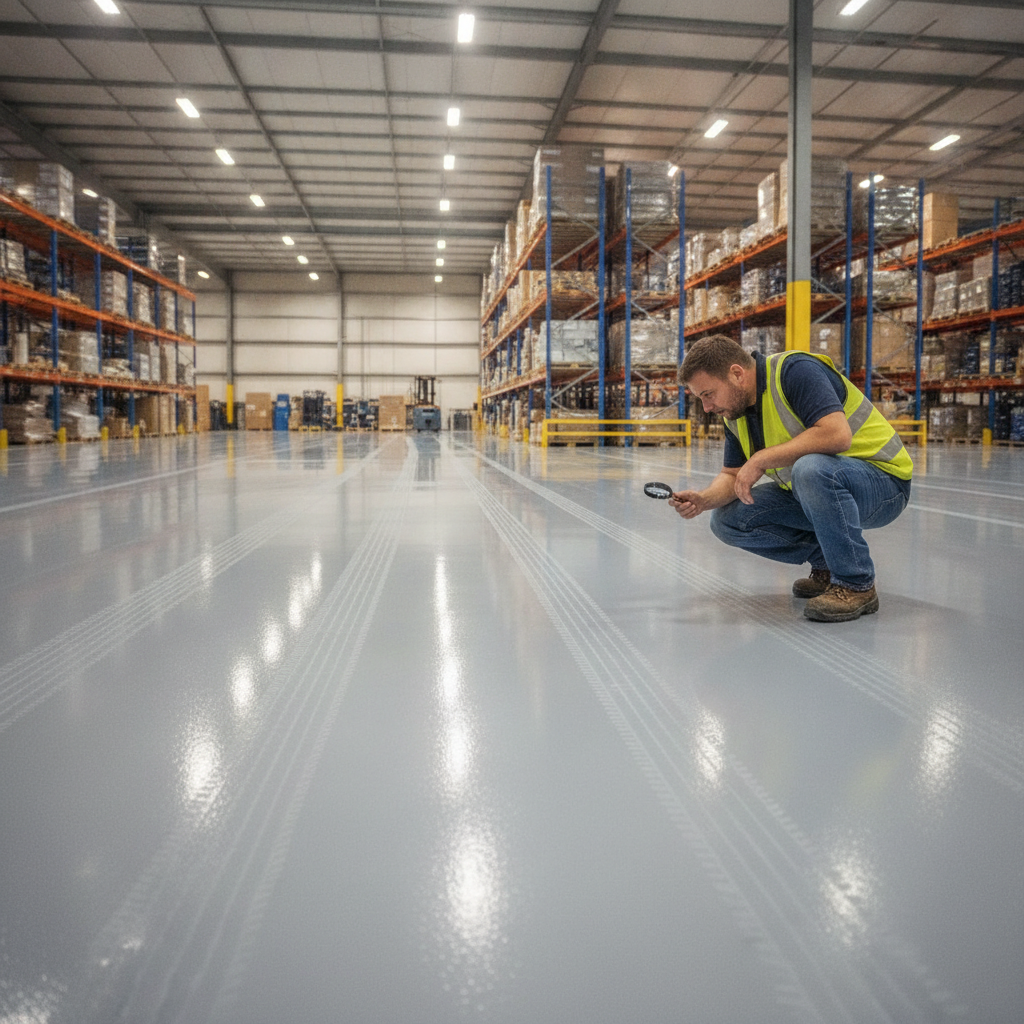
Warehouse Epoxy Flooring: What Melbourne Operators Need to Know
Warehouse epoxy flooring is a two-part resin coating applied directly to a concrete slab to create a hard, seamless, chemical-resistant surface. For Melbourne operators running forklifts, pallet jacks and heavy foot traffic across their floors every day, epoxy is one of the most cost-effective ways to protect a concrete slab and keep a facility looking professional for years.
Why do Melbourne warehouse operators choose epoxy floor coatings over bare concrete?
Bare concrete is porous, prone to dusting and difficult to clean once it absorbs oil or chemical spills. A properly applied epoxy floor coating seals the slab completely, cutting cleaning time, preventing contamination and giving warehouse managers a surface that can handle forklift tyres, point loads from racking feet and constant foot traffic without breaking down.
Beyond the practical side, a sealed floor reflects overhead lighting significantly better than raw concrete, which means warehouses often feel brighter without any extra light fittings. That is not a minor point when you are paying power bills on a large shed.
Concrete dusting is another real pain point. Untreated slabs shed fine particles that settle on machinery, contaminate product and create ongoing cleaning costs. Once an epoxy coat is down, the dust problem simply goes away. For food storage, pharmaceutical or manufacturing warehouses, that alone often justifies the investment.
What thickness and system should a warehouse epoxy floor use?
A warehouse epoxy floor system should be built to a minimum total dry film thickness of around 1,000 microns (1 mm) for light industrial use, with heavier forklift or chemical environments calling for thicker build coats or a polyurethane topcoat. The system typically includes a penetrating primer, one or more body coats and a clear topcoat rated for abrasion and chemical resistance.
The most common systems for Melbourne warehouses are:
- Standard solvent-based epoxy. Tough, affordable and available in a wide colour range. A solid entry point for general warehousing and storage.
- Water-based epoxy. Lower VOC emissions, useful in poorly ventilated spaces or when staff need to remain on-site nearby. Slightly less hard-wearing than solvent-based, so best matched to lighter traffic.
- High-build epoxy with polyurethane topcoat. The go-to for facilities running heavy forklifts or handling chemicals. The polyurethane layer adds UV stability and superior scratch resistance on top of the epoxy body coats.
- Anti-slip epoxy with broadcast aggregate. For areas near loading docks, wash-down bays or anywhere moisture is present. Broadcast aggregate is pressed into the wet topcoat to create a textured surface that meets slip resistance requirements under AS/NZS 4586.
Choosing the wrong system is where operators tend to lose money. A coating that is too thin for the traffic load will chip and delaminate within a year, costing more to remediate than a correctly specified system would have cost upfront.
How important is surface preparation for a warehouse epoxy floor coating?
Surface preparation is the single most critical step in any warehouse epoxy flooring project. No coating, regardless of quality, will bond properly to a slab that has not been opened up mechanically. The industry standard method is diamond grinding or shot blasting to create a surface profile that gives the epoxy somewhere to grip.
Concrete Surface Profile 3 (CSP 3) is the minimum typically recommended for industrial epoxy coatings according to the International Concrete Repair Institute (ICRI) guidelines. Anything smoother and you are relying on adhesion alone, which will fail under thermal cycling and point loads.
Before grinding even starts, the slab needs to be assessed for:
- Moisture vapour transmission. High moisture readings in a Melbourne winter can cause adhesion failure and bubbling, so a concrete moisture test is non-negotiable on slabs sitting on or near grade.
- Previous coatings or sealers that need full removal.
- Cracks, joint movement and spalling. These need to be addressed with appropriate repair mortars before coating, otherwise they will telegraph straight through the new epoxy.
- Contamination from oils or chemicals. These have often soaked deep into the slab and may need multiple grinding passes to remove fully.
Cutting corners on prep is the number one reason warehouse epoxy floors fail early. When you are getting quotes, ask specifically how the contractor plans to prepare the slab and what moisture testing they conduct. Vague answers are a warning sign.
What does warehouse epoxy flooring cost in Melbourne?
Warehouse epoxy flooring in Melbourne generally ranges from around $25 to $60 per square metre installed, depending on the system specified, the condition of the existing slab and the size of the job. Larger warehouses benefit from economies of scale on both labour and materials, so the per-square-metre rate tends to drop as the area increases.
Factors that push the cost toward the higher end include:
- Heavy concrete repairs needed before coating can begin.
- High-build systems with a polyurethane topcoat rather than a standard two-coat system.
- Tight scheduling requirements, such as needing to work in sections to keep part of the warehouse operational.
- Decorative finishes like metallic flakes or colour zoning for traffic lanes and safety markings.
The most reliable way to get an accurate number is to have a professional assess the slab in person. Online ballpark figures are useful for budgeting purposes, but they cannot account for slab condition, access constraints or the specific products needed for your environment.
How long does a warehouse epoxy floor take to apply and cure?
A typical warehouse epoxy floor coating project takes one to three days to apply depending on the system and the floor area, with a full chemical cure taking around seven days. However, light foot traffic is usually possible within 24 hours and forklift traffic within 48 to 72 hours under normal Melbourne conditions, subject to temperature and humidity at the time of application.
Ambient temperature matters more than most operators expect. Epoxy cures more slowly in cold weather, and Melbourne winters can push workshop temperatures low enough to extend cure times noticeably. A good applicator will check conditions and adjust their product selection accordingly, using winter-grade hardeners if needed to keep the project on schedule.
Planning the project during a quiet production period, a long weekend or a scheduled maintenance shutdown minimises disruption. Splitting a large warehouse floor into sections is another option, though it does add some cost and requires careful planning around operational requirements and traffic flow during the works.
What finish options suit a Melbourne warehouse environment?
Most warehouse epoxy floors in Melbourne are finished in a solid industrial colour, with light greys and mid-greys being the most popular because they hide tyre marks while still reflecting light well. Safety yellow and signal red are commonly used for line marking, pedestrian corridors and no-go zones, and these can be incorporated into the floor coating itself rather than applied as paint on top.
Metallic flake finishes, which use decorative vinyl chips broadcast into the wet coating, are increasingly common in showrooms, gym floors and commercial spaces within the same building as a warehouse. They add grip underfoot as well as visual interest, and they hide surface wear and minor scuffs better than a plain solid colour over time.
Whatever the finish, a UV-stable topcoat is worth specifying on any section of the floor that gets natural light. Standard epoxy yellows under UV exposure, while a polyurethane or polyaspartic topcoat holds its colour for much longer.
If you manage a Melbourne warehouse and want a straight-talking assessment of your floor and a clear price, the next step is straightforward. Request a warehouse epoxy floor coating quote from Metal and Flake.