Polyaspartic Floor Coating: How Does It Compare to Epoxy in Melbourne?
Polyaspartic floor coating is a fast-curing, UV-stable topcoat that can be walked on within hours of application. Compared to standard epoxy, it handles Melbourne’s temperature swings better, resists yellowing under UV light, and is typically done in a single day. Epoxy offers a thicker, more economical build-up that suits heavy garage use when budget matters most.
What exactly is a polyaspartic floor coating?
A polyaspartic floor coating is a type of aliphatic polyurea that was developed in the 1990s as an evolution of standard urethane chemistry. It cures through a moisture-triggered reaction that is much faster than epoxy’s amine-hardener cure, allowing applicators to complete a full coat, broadcast decorative flake, and apply a topcoat all in one visit. The result is a dense, flexible film that bonds tightly to prepared concrete.
The key word there is “prepared.” Whether you go polyaspartic or epoxy, the concrete underneath has to be mechanically ground and profiled first. No coating, regardless of how good the chemistry is, will bond properly to a dusty, contaminated or sealed slab. That prep step is non-negotiable and is where a lot of DIY attempts fall apart.
Polyaspartic coatings are available in varying solids content. High-build formulas sit above 95% solids, which means very little product is lost to off-gassing, and the final film thickness is close to what went on wet. That density is part of why polyaspartic performs so well in abrasion tests.
How does polyaspartic floor coating compare to epoxy on cure time and workability?
Polyaspartic floor coating cures significantly faster than standard epoxy, often reaching light foot traffic in two to four hours versus 24 hours or more for a water-based epoxy system. That speed is a major practical advantage for homeowners who want their garage back the same day. The trade-off is that fast cure leaves less working time, so it demands an experienced applicator who can move quickly and evenly.
Epoxy, by contrast, has a longer open time, sometimes 20 to 40 minutes depending on formulation and ambient temperature. That extra time makes it more forgiving to apply, and it allows decorative flake to be broadcast evenly before the surface skins over. On a Melbourne summer day where the garage slab can hit 35°C or more, however, epoxy’s open time shrinks fast, and you can end up with lap marks and uneven coverage if the applicator isn’t on the ball.
Polyaspartic is far less sensitive to temperature during application. Most quality formulas can be applied in temperatures ranging from roughly minus 20°C all the way up to 60°C, which in practice means a Melbourne installer can work confidently through summer without fighting the clock the way they would with epoxy.
Which coating is more resistant to UV and yellowing in a Melbourne garage?
Polyaspartic floor coating is significantly more UV-stable than standard epoxy, meaning it will not yellow or amber when exposed to sunlight streaming through garage doors or windows. Standard epoxy uses aromatic chemistry that reacts to UV radiation over time, causing a noticeable colour shift, often within the first year on a sun-facing garage. Polyaspartic’s aliphatic structure is chemically resistant to that reaction.
Melbourne’s northerly sun can be punishing on surfaces that face west or north. A light-coloured epoxy floor in that situation will often show yellowing within 12 to 18 months of installation, even with indirect UV exposure. Polyaspartic coatings used as a topcoat over an epoxy base coat, which is a very common system, give you the best of both worlds: epoxy’s thick, economical build and polyaspartic’s UV and scratch resistance on the wearing surface.
That hybrid approach, an epoxy base with a polyaspartic topcoat, is widely regarded in the industry as the gold standard for residential garage floors. It controls cost without sacrificing surface performance.
Is polyaspartic floor coating more durable than epoxy underfoot?
In head-to-head abrasion testing using the Taber Abraser method, high-solids polyaspartic coatings typically outperform standard epoxy for scratch and mar resistance. This matters on a garage floor where tyres, dropped tools, bike stands and jack stands constantly scuff the surface. Polyaspartic also has a degree of flexibility that standard rigid epoxy lacks, which helps it resist cracking when the concrete substrate moves slightly with seasonal temperature changes.
That said, a well-applied, thick-build epoxy floor is still an excellent surface and will outlast any paint, penetrating sealer or tile alternative by years. The durability gap between a quality epoxy and a quality polyaspartic is noticeable but not enormous in typical residential use. Where polyaspartic pulls ahead clearly is in chemical resistance to hot tyre pick-up, which is the blistering and delamination caused by hot rubber from a car that has been driven hard. Standard epoxy is more vulnerable to this than polyaspartic.
Which option costs more and is it worth paying the difference?
Polyaspartic floor coating systems generally cost more per square metre than standard epoxy systems, partly because the raw materials are more expensive and partly because the speed of application demands a very experienced crew. For a standard double garage of around 36 square metres in Melbourne, the price difference between a quality epoxy and a full polyaspartic system can run into several hundred dollars, depending on the installer and the spec chosen.
Whether that premium is worth it comes down to your priorities. If UV stability matters because your garage gets direct sunlight, if you want the floor back the same day, or if you drive sports or performance cars that generate hotter tyre temperatures, polyaspartic is worth the extra spend. If your garage is well shaded, you are not in a rush, and budget is the main consideration, a properly applied epoxy floor will serve you very well for many years.
The smartest approach for most Melbourne homeowners is to discuss a hybrid system with a floor coating specialist. You get epoxy’s cost-effective thickness in the base and polyaspartic’s UV and abrasion resistance in the topcoat. Neither material is inferior on its own. They each have a job they do best, and a good installer knows how to combine them.
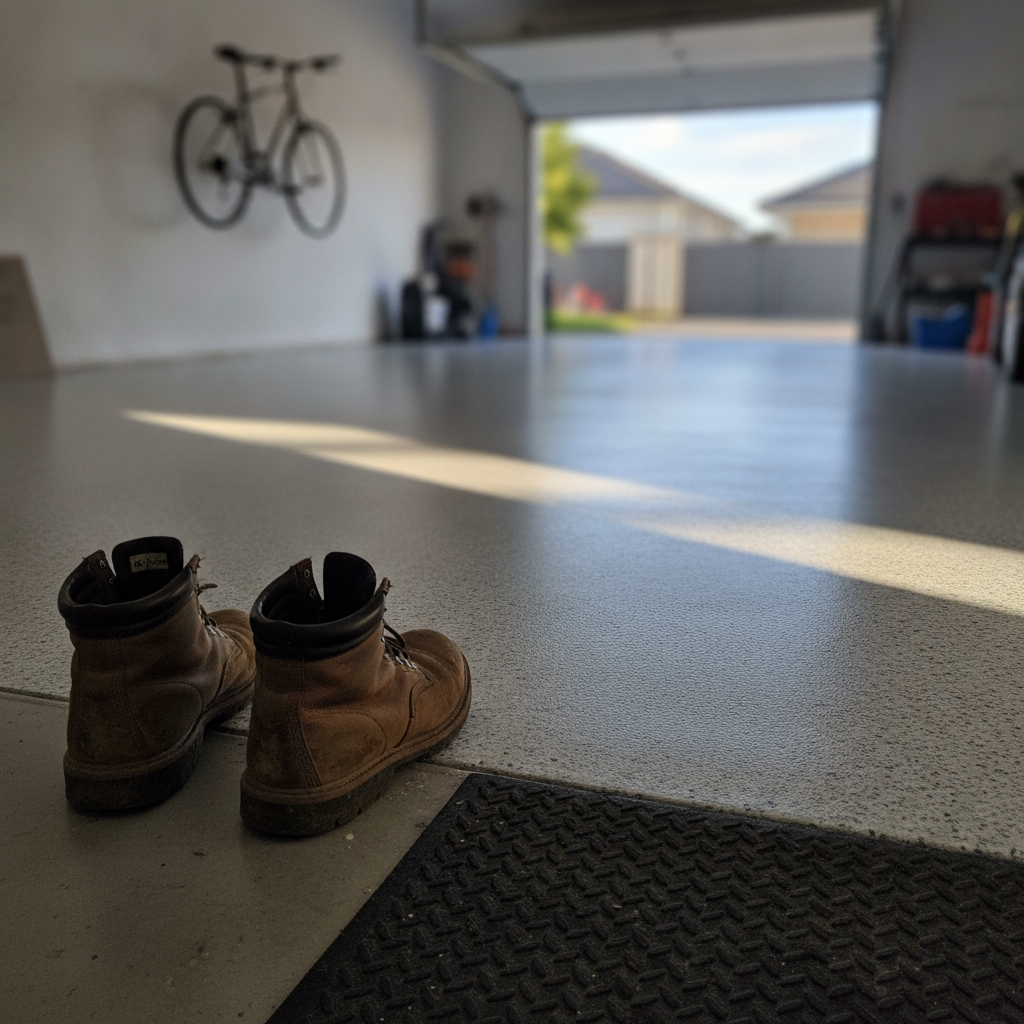
The decorative finish also plays into this conversation. Both coatings work beautifully with vinyl flake broadcast systems, which give that classic speckled garage floor look and also help disguise minor concrete imperfections. The flake is broadcast into the wet base coat then locked in with the topcoat, and both epoxy and polyaspartic systems can carry flake equally well.
Ask Metal and Flake about epoxy and polyaspartic garage floor coating options