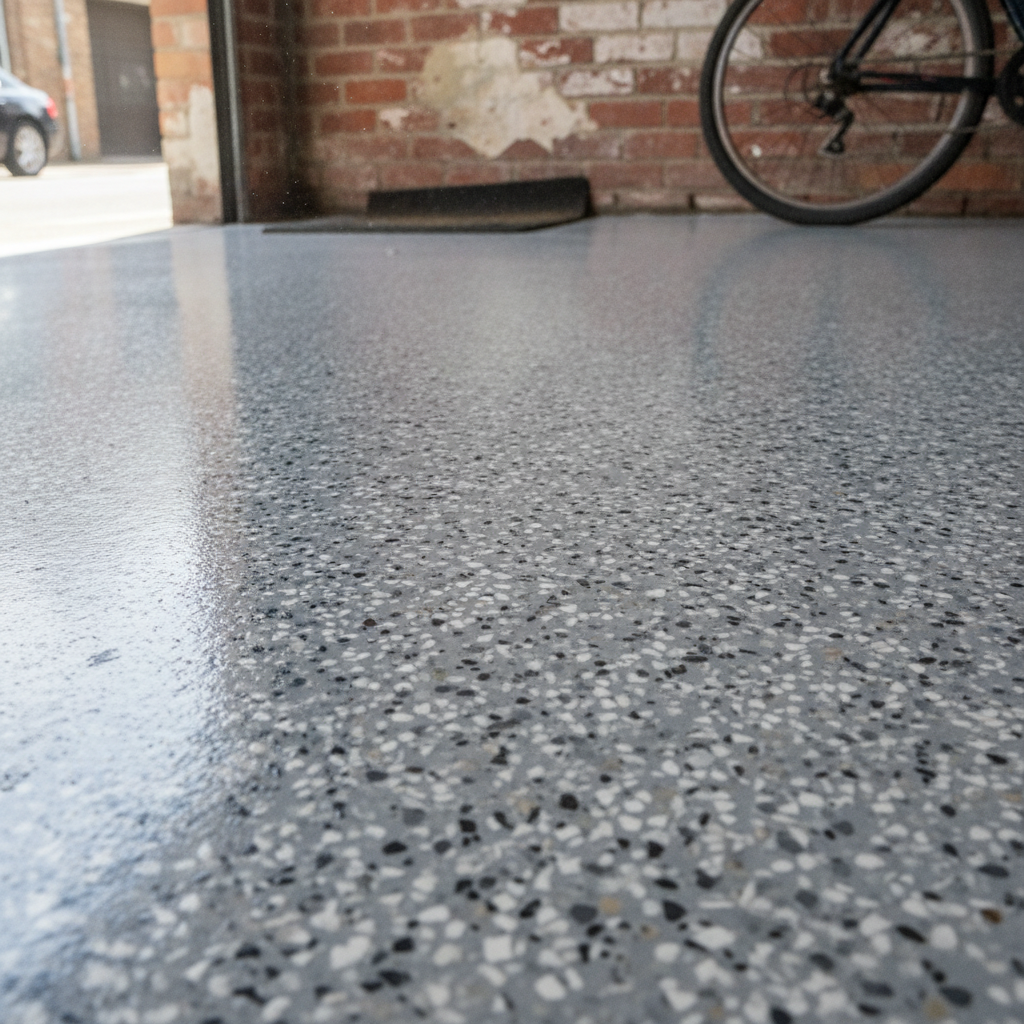
Garage Floor Coating in Brunswick: Epoxy Choices for Inner-North Homes

Garage Floor Coating Brunswick: Epoxy Choices for Inner-North Homes

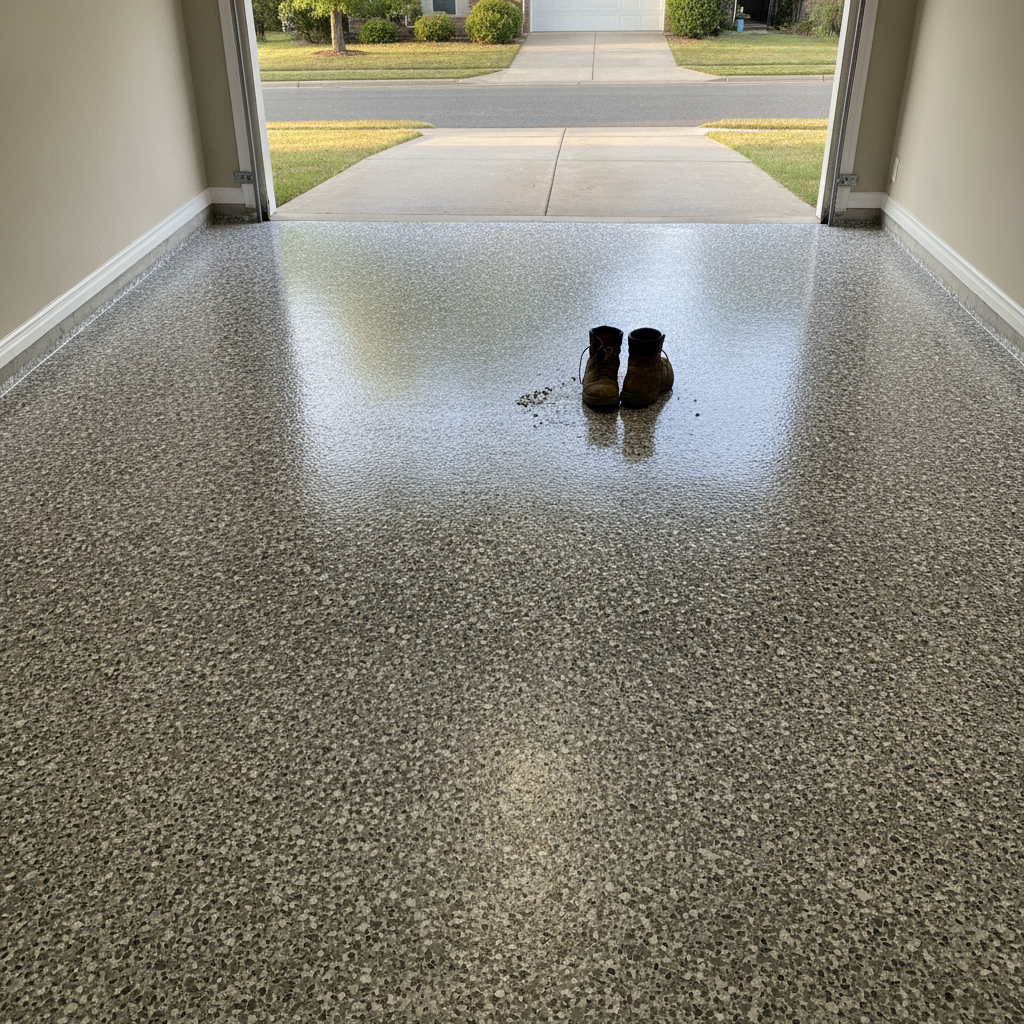
A garage floor coating in Brunswick typically means choosing between a solid colour epoxy, a metallic flake system or a full flake broadcast finish. Each option bonds directly to the concrete, seals out moisture and oil, and lasts well over a decade with normal use. The right choice depends on your slab condition, how you use the garage, and the look you want.

Why do Brunswick homeowners bother coating their garage floors?

Brunswick garages take a beating. The inner-north gets decent rainfall, older terrace and semi-detached homes often sit on slabs poured before modern moisture barriers were standard, and tight street frontages mean garages double as workshops, storage rooms and even home gyms. A bare concrete floor in that environment stains easily, kicks up fine dust every time you walk across it, and can start to pit or spall once moisture cycles through it repeatedly. A properly applied epoxy coating seals the surface, stops the dust, and makes the whole space look deliberate rather than neglected. For homeowners in streets like Victoria, Albert or Dawson, where every square metre of the property is earning its keep, that matters.

There is also a practical maintenance argument. An uncoated slab absorbs oil drips, tyre marks and detergent spills permanently. A coated floor wipes clean with a mop. That single difference changes how usable the space feels day to day.

What garage floor coating options work best for Brunswick properties?

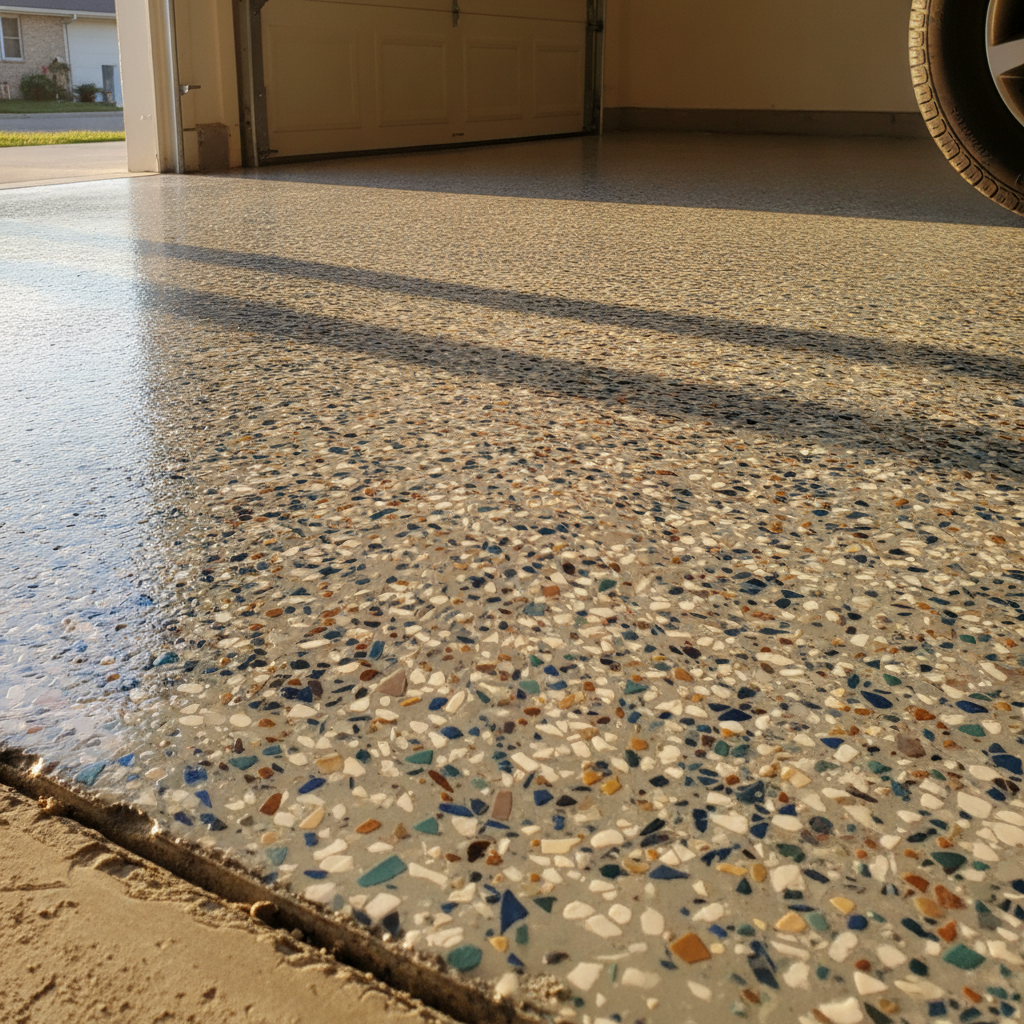
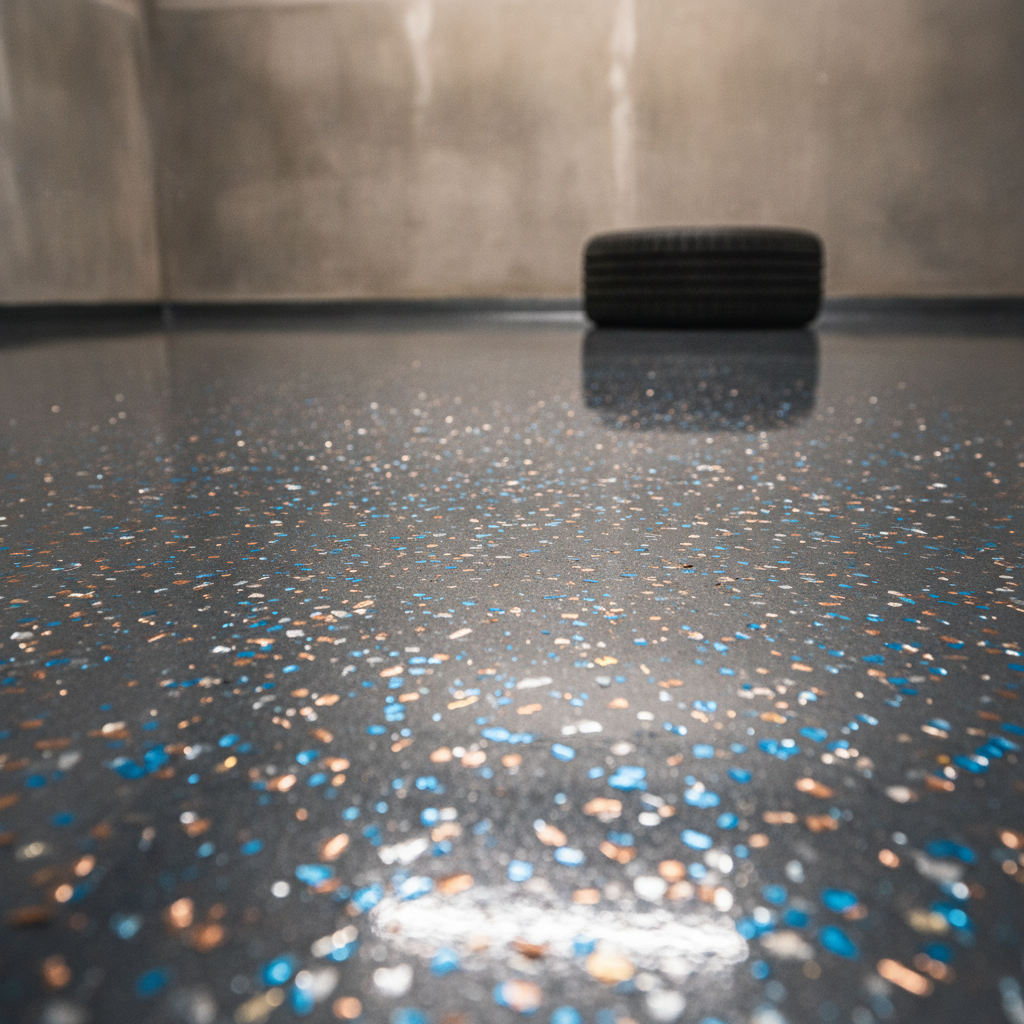
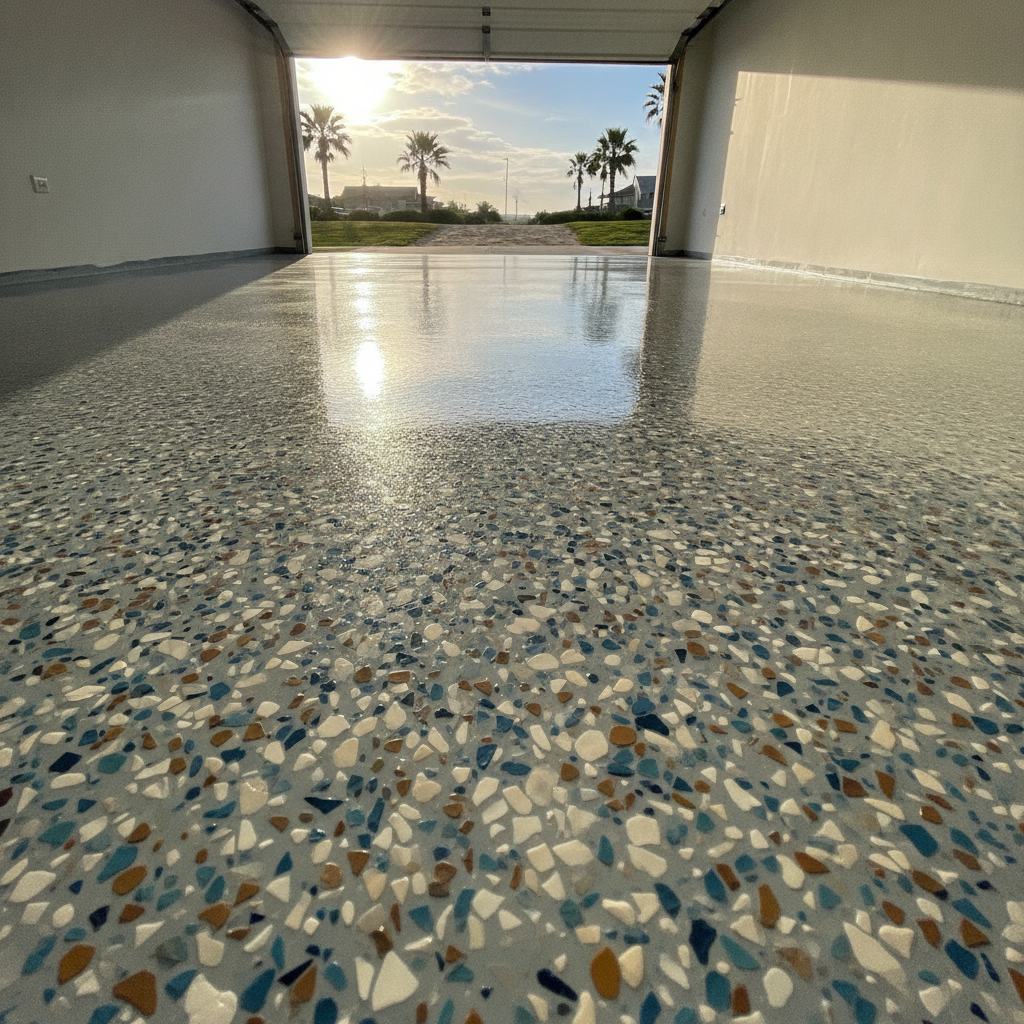
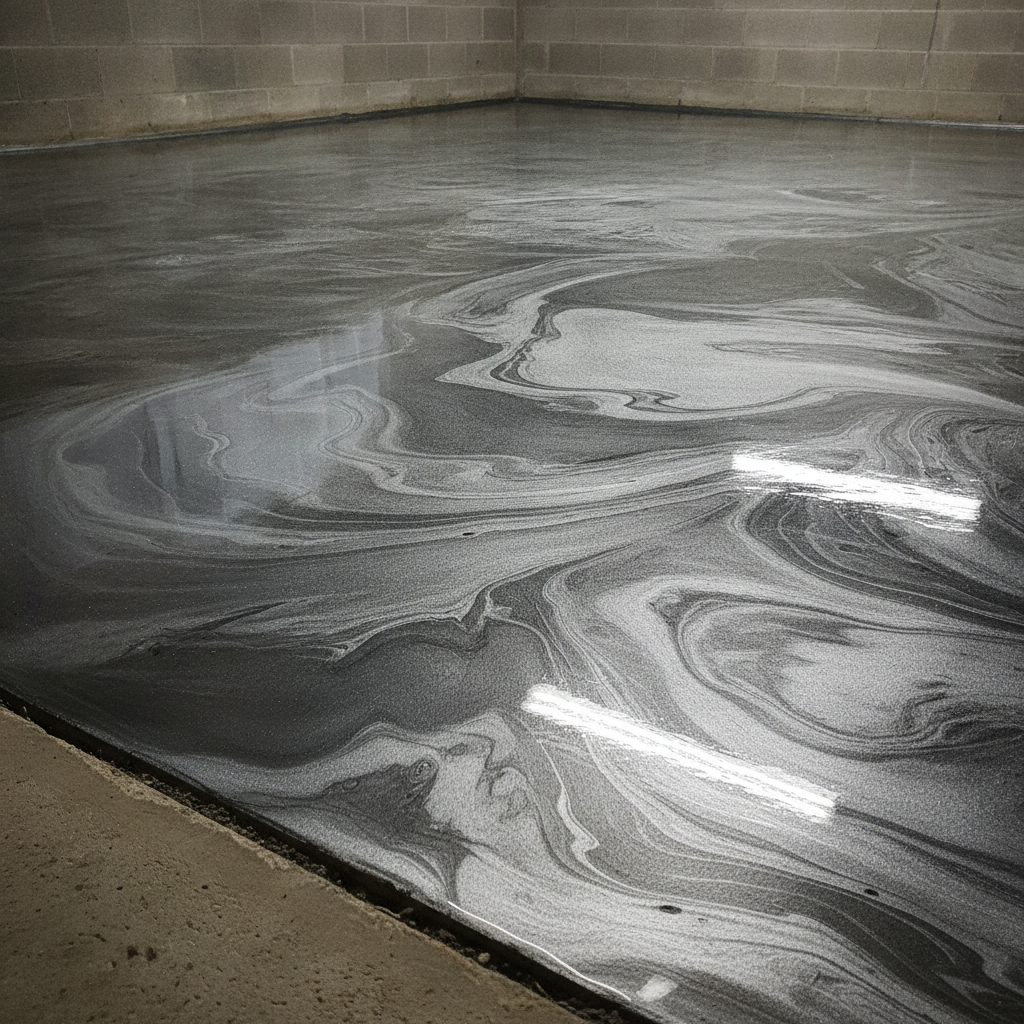
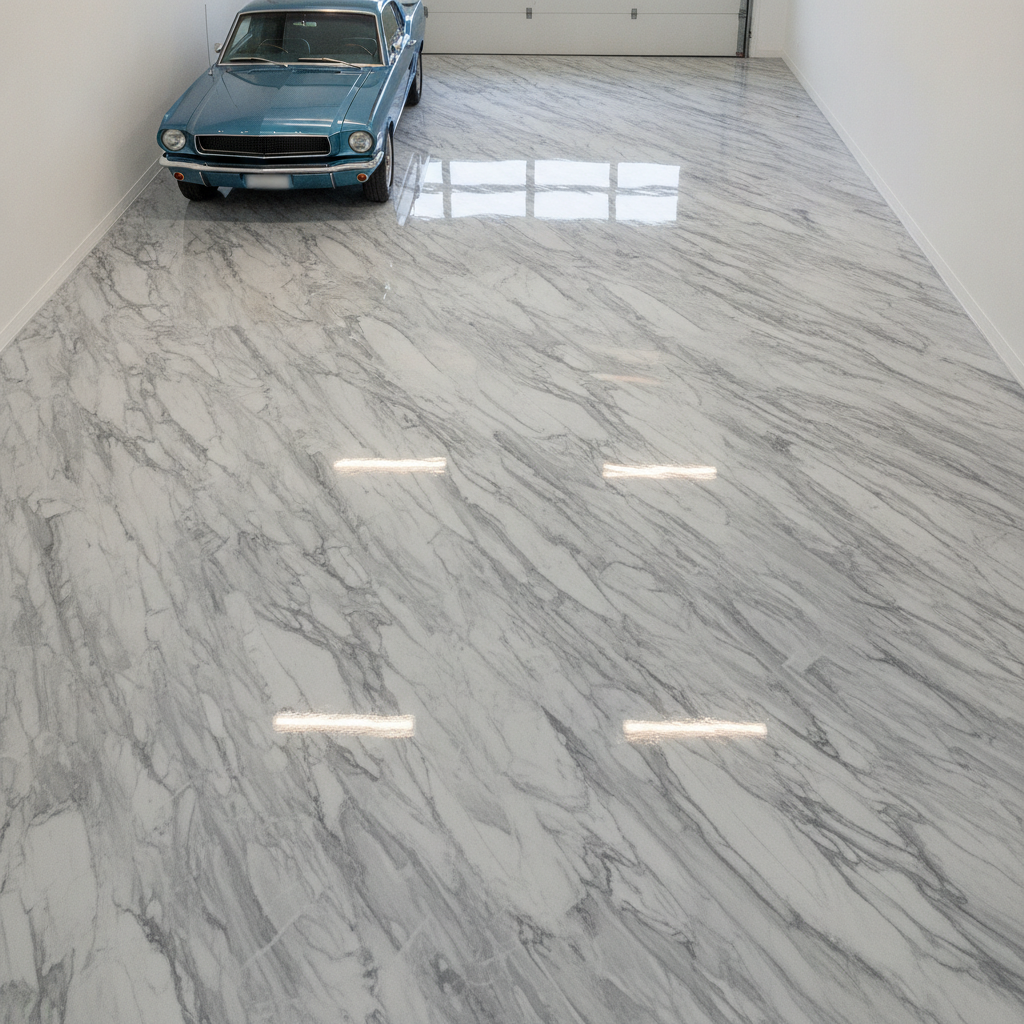
The main systems you will encounter are solid colour epoxy, vinyl flake (also called colour flake or chip) and metallic epoxy. Each has a different look, a different price point and slightly different performance characteristics. Solid colour epoxy gives a clean, single-tone finish, usually in greys or tones that read almost like polished concrete. It is the most budget-friendly option and suits garages used mainly for parking. Vinyl flake systems broadcast coloured chips into a base coat, then seal everything under a clear topcoat. The flakes add texture and grip, hide small surface imperfections well, and come in dozens of colour blends. Metallic systems use pigmented epoxy with a swirled or marbled appearance, which suits workshops and converted spaces where the floor is a design feature rather than just a background.

For Brunswick homes specifically, the vinyl flake finish tends to be the most popular. The texture helps with the slight moisture that can come up through older slabs, the colour range suits both heritage interiors and more contemporary fitouts, and the clear topcoat is durable enough to handle heavy foot traffic, trolleys and the occasional motorbike parked on it. A broadcast flake system with a polyaspartic topcoat, for example, reaches a hardness rating of around 80 Shore D and can be walked on within 24 hours, which matters when your garage is the only way in and out of the house.

How does slab preparation affect a garage floor coating in Brunswick?

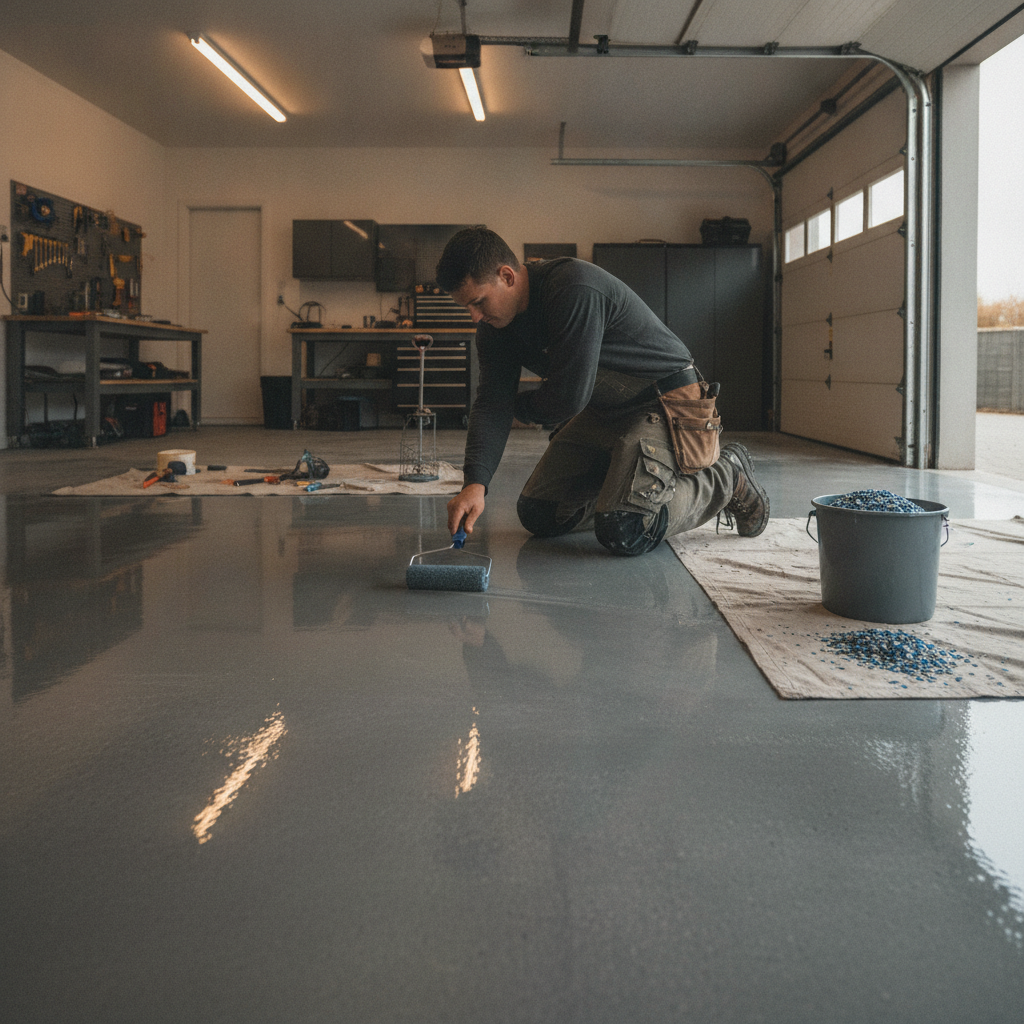
Preparation is where the job is won or lost. No coating sticks permanently to a dusty, contaminated or weakly surfaced slab. The standard professional approach involves diamond grinding the entire floor with a concrete grinder fitted with appropriate-grit tooling. Grinding opens the surface profile, removes any previous sealers or paint, and gives the epoxy something to mechanically bond to. On older Brunswick slabs, you will often find previous bitumen paint, oil contamination near the roller door, or surface laitance from the original pour. All of that needs to come off before a drop of epoxy goes down.

After grinding, any cracks, control joints or spalled areas get filled with a flexible polyurea or epoxy mortar filler. This step is often skipped by inexperienced operators, and it shows within the first year when cracks telegraph back through the coating. A good installer will also check for moisture transmission with a calcium chloride test or a simple plastic sheet test taped overnight. If moisture vapour is pushing up through the slab at a rate above about 3 pounds per 1000 square feet per 24 hours, a moisture-tolerant primer needs to go down first. Brunswick homes near Merri Creek or on lower-lying ground near Sydney Road are more likely to have elevated moisture readings, so it is worth asking your installer whether they test for it.

How long does a garage floor coating last in Melbourne’s inner north?

A professionally applied epoxy or polyaspartic system in a residential garage will realistically last 10 to 20 years before it needs anything more than a light maintenance coat on the topcoat. The range depends on how hard the surface is worked, whether the slab was properly prepped, and which topcoat was used. Polyaspartic topcoats are more UV stable than standard epoxy, which matters for garages with a north or west-facing roller door that lets afternoon sun hit the floor directly. Standard epoxy topcoats can yellow or chalk over time in those conditions, whereas polyaspartic holds its colour.

Day-to-day, the main enemies are sharp point loads like motorcycle side stands, and chemical spills left to sit for extended periods. A rubber pad under any stand solves the first problem. For spills, wiping up within a few hours is generally all that is needed. The coating itself is impervious to motor oil, brake fluid and most household cleaners, so the maintenance routine is genuinely simple compared to timber or tiled garage floors.

What should you ask before getting a garage floor coating quote in Brunswick?

A few questions separate good installers from ones who will cut corners. First, ask whether they diamond grind or just acid etch. Acid etching is faster and cheaper but leaves a less consistent surface profile, and adhesion on older Melbourne slabs is less reliable. Second, ask what topcoat system they use and whether it is UV stable. Third, ask for the product data sheets for the coating they plan to use. Reputable products like Sika, Rust-Oleum or Boral epoxy systems all have published technical data available, and an installer confident in their products will not hesitate to share them. Fourth, ask whether they test for moisture before they start. If the answer to any of these questions is a shrug or a vague assurance, keep looking.

Also clarify what the square metre price includes. Some quotes cover just the materials and basic application. Others include crack filling, a primer coat and a two-coat topcoat as standard. Knowing exactly what is in scope before you sign anything saves awkward conversations on the day.

Get a garage floor coating quote in Brunswick from Metal and Flake
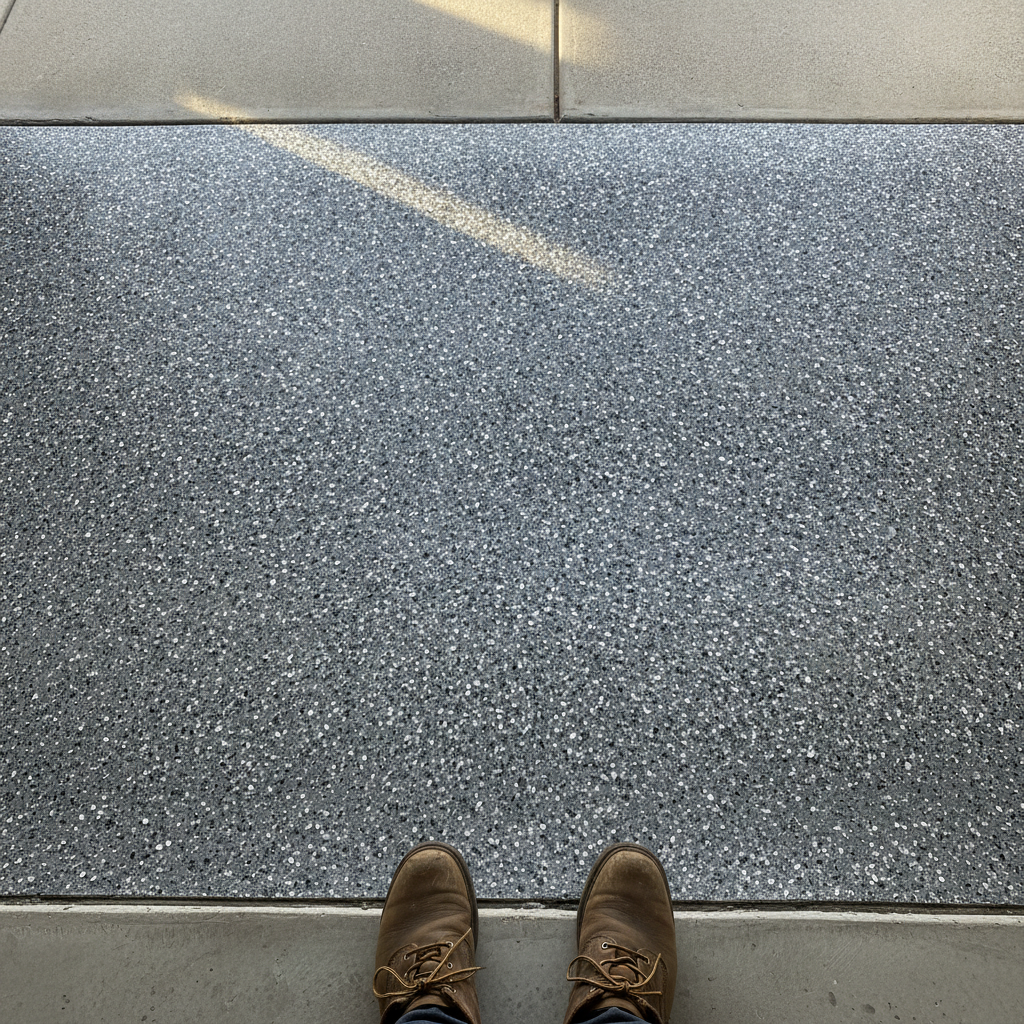
Garage Floor Coating in Essendon: Epoxy Options for Local Homes

Garage Floor Coating in Essendon: Epoxy Options for Local Homes

Garage floor coating in Essendon typically means choosing between a solid epoxy colour, a metallic finish or a decorative flake system. Each option seals bare concrete against oil, moisture and wear while giving the floor a clean, professional look. A quality coating applied to properly prepared concrete will last well over a decade with minimal maintenance.

Why do Essendon homeowners bother with a garage floor coating?

Bare concrete in a residential garage is surprisingly hard to keep clean. It soaks up oil drips, tyre marks and water run-off, and it dusts constantly. A quality epoxy coating seals all of that off, making the floor as easy to clean as a kitchen bench. Most Essendon homeowners also find the finished look a genuine upgrade, especially if the garage doubles as a workshop or home gym.

Essendon’s housing mix runs from 1950s brick homes with original single-car garages to newer double-car setups in the streets closer to the ring road. Both situations suit epoxy coatings well. The older slabs are often rough and porous, which actually gives the epoxy excellent mechanical grip once the surface is prepared properly. Newer slabs need less prep but still benefit from a full diamond-grind before coating to open the pores and let the resin bond.

Beyond looks, the practical gains stack up. A sealed floor reflects light better, which makes the garage feel less like a cave. It resists hot tyre pick-up (a common failure point with cheaper paints). And it handles the kind of spills that come with normal weekend car maintenance without staining permanently.

What garage floor coating options are available for Essendon homes?

The main systems used in residential garages are full-flake epoxy, solid colour epoxy and metallic epoxy. Full-flake systems broadcast decorative vinyl chips into a wet base coat, then seal the top with a clear polyaspartic or urethane topcoat. Solid colour epoxy is a cleaner, more industrial look. Metallic epoxy uses pigment and a manipulation technique to create a marbled, liquid-metal effect.

Full-flake is the most popular choice in Melbourne residential garages right now, and for good reason. The chips add texture, which helps with slip resistance, and they hide minor imperfections in the slab surface. A typical double-car garage of around 40 square metres is usually knocked over in a single day of installation, with a return visit the next day for the topcoat once the base has cured.

Metallic epoxy is a step up in visual drama. The finish is genuinely striking and works well when the garage is used as more than just a car park. It takes a bit more skill to apply consistently, so the result depends heavily on the applicator’s experience with the product. Metal and Flake takes its name from exactly these two flagship systems, so the metallic and flake options are what the team knows inside out.

Solid colour epoxy is the straightforward option. It suits homeowners who want a clean, uniform floor without the visual busyness of flake. It also tends to show scratches more readily than a flake system, so it works best in lighter-use garages.

How does surface preparation affect the garage floor coating result?

Surface preparation is the single biggest factor in how long a garage floor coating lasts. A coating applied to unground or contaminated concrete will peel, often within months. Proper prep means diamond grinding or shot blasting the slab to remove any existing sealer, laitance (the weak surface layer that forms as concrete cures) and contamination like oil or paint.

For garages with oil penetration deeper in the slab, a degreaser soak and then a grind is standard practice. Cracks and spalls are filled with an epoxy mortar or polyurea filler before the base coat goes down. Skipping these steps to save time is the number one reason DIY epoxy coatings fail. The surface literally cannot hold what you put on top of it if the prep is wrong.

Diamond grinding opens the concrete’s pores mechanically, giving the epoxy something to grip. The industry standard for concrete surface profile on a residential garage is typically a CSP 2 to CSP 3, which feels a bit like fine sandpaper underfoot. Achieving that consistently across a full garage floor requires a walk-behind grinder, not a hired angle grinder from the hardware store.

Moisture is another prep consideration for Essendon properties. Older homes with original slabs sometimes have no vapour barrier underneath, and moisture migrating up through the concrete will cause an epoxy coating to blister. A moisture test before any product goes down is worth the ten minutes it takes.

How long does a garage floor coating in Essendon take to complete?

Most residential garages in Essendon are finished within one to two days. The first day covers surface preparation and the base coat application. The second day, once the base coat has cured, the topcoat goes down. For a full-flake system, the chips are broadcast on day one and the topcoat is applied on day two after any excess chips are scraped back. The floor is typically ready for foot traffic within 24 hours of the final coat and for vehicles within 72 hours, though this varies with temperature and humidity on the day.

Melbourne’s autumn and spring weather is ideal for epoxy work. Summer heat speeds up the working time of the resin, which can cause problems with large pours if the applicator is not across the product’s pot life. Winter cold slows curing and can cause issues if temperatures drop below around 10 degrees Celsius overnight before the coating has fully hardened. A professional installer accounts for all of this and plans the job accordingly.

What does a garage floor coating cost in Essendon?

Residential garage floor coating in Melbourne generally runs from around $50 to $100 per square metre for a professionally applied epoxy or polyaspartic system, depending on the finish type and the condition of the slab. A standard single-car garage of roughly 18 to 20 square metres would sit at the lower end of the total investment. A double garage with a metallic finish and significant crack repairs would sit at the upper end.

The cost variables are: slab condition and how much prep is needed, the product system chosen, floor size and the number of coats. Getting a proper on-site measure and quote is the only reliable way to get an accurate number, because no two garage slabs are the same. Quotes done purely over the phone without seeing the floor often end up with extras tacked on once work starts.

Value-wise, a quality epoxy garage floor coating adds to the functional and visual appeal of the home. For Essendon homeowners thinking about resale, a clean, sealed garage floor is a noticeable positive at inspection.

Get a garage floor coating quote in Essendon from Metal and Flake.

Garage Floor Coating in Preston: Epoxy Options for Local Homes

Garage Floor Coating in Preston: Epoxy Options for Local Homes

A garage floor coating in Preston transforms a bare, dusty concrete slab into a hardwearing, easy-clean surface that holds up to cars, tools and Melbourne weather. Epoxy is the most popular choice because it bonds directly to concrete, resists oil and chemicals, and can last well over a decade with basic maintenance. Costs typically start around $30 to $50 per square metre for a standard two-car garage, depending on the system chosen and the condition of the existing slab.

Why do Preston homeowners choose epoxy for their garage floors?

Epoxy is the go-to garage floor coating for Preston homeowners because it combines serious durability with a clean, professional look. The resin bonds chemically to the concrete rather than sitting on top of it, so it resists peeling and bubbling far better than a paint-on product. It also handles the temperature swings Melbourne throws at a garage slab, from cold winter mornings to baking summer afternoons, without cracking or lifting.

There are a few practical reasons the stuff is popular around here. Concrete left bare absorbs oil drips and tyre marks permanently. Mop an epoxy floor and those marks come straight off. It also stops that fine concrete dust from grinding off the slab every time you walk across it, which means less mess tracked into the house. For anyone using the garage as a workshop, the reflective finish bounces light around the space and makes it noticeably easier to see what you are doing.

Preston garages tend to have older slabs, many of them poured in the 1960s and 1970s when homes in the area were built. Those slabs can be porous and marked up, but that is rarely a problem for a properly prepared epoxy install. Good surface prep gets adhesion right regardless of the slab’s age.

What types of garage floor coating are available in Preston?

The main garage floor coating options available in Preston are solid-colour epoxy, metallic epoxy and decorative flake (also called chip or broadcast) systems. Each suits different budgets and aesthetics. Solid-colour epoxy is the most straightforward and the most affordable. Metallic epoxy uses pigmented resins that shift and flow during application to create a marble or molten-metal effect. Flake systems scatter coloured vinyl chips into a wet epoxy base coat, giving a speckled finish that hides dirt between cleans and adds grip underfoot.

Here is a quick breakdown of the three common systems:

  • Solid-colour epoxy: Clean, single-tone finish. Good for workshops and commercial-style garages. Usually the most budget-friendly starting point.
  • Metallic epoxy: Flowing, gloss finish with depth and movement in the colour. Each floor is unique because the installer manipulates the resin while it is wet. Popular where the garage doubles as a showroom or entertaining space.
  • Decorative flake (chip) system: Coloured vinyl flakes broadcast into the wet base coat, then sealed with a clear topcoat. Very practical: the textured surface adds slip resistance and the pattern disguises everyday grime. A full-broadcast flake system gives a near-seamless look.

Most residential garages in Preston are single or double lock-up designs, so floor areas typically sit between 20 and 40 square metres. That size is easy to coat in a single day once prep is done, which means disruption is minimal.

How does surface preparation affect a garage floor coating in Preston?

Surface preparation is the single most important factor in how long a garage floor coating lasts in Preston. Without proper prep, even the best epoxy product will lift within a year or two. The concrete surface needs to be mechanically abraded, most commonly by diamond grinding, to open up the pores and give the epoxy something to grip. Any cracks, holes or spalling get filled before the coating goes on.

A common mistake with DIY epoxy kits is skipping or under-doing the prep. Acid etching alone, which is what most hardware store kits recommend, does not open up a dense or previously sealed slab enough for reliable adhesion. Professional installers use angle grinders or walk-behind grinders with diamond tooling to profile the surface to a consistent level. On an older Preston slab that has been sitting bare for decades, this step can make a dramatic difference to the finished result.

Moisture is the other thing worth knowing about. Concrete that holds moisture can cause epoxy to blister. A simple plastic sheet test, taping a 600mm square of plastic to the slab overnight, will show if moisture is rising from below. A professional installer will check this before they start and use a suitable moisture-tolerant primer if needed.

What should Preston homeowners expect during a professional epoxy install?

During a professional garage floor coating install in Preston, homeowners should expect the job to span two days: one day for prep and priming, and one day for the main coats and topcoat. The garage needs to be cleared of everything before the team arrives, including vehicles, shelving and stored items. Once the work starts, foot traffic on the fresh coating is not possible for at least 24 hours, and driving on it is typically not recommended for 72 hours.

Day one covers grinding, crack filling and the primer coat. Day two involves the colour coat (or base coat in a flake system), the decorative layer if applicable, and the final clear topcoat. The topcoat is usually a polyaspartic or polyurethane product rather than straight epoxy because those materials cure faster and resist UV yellowing better than epoxy alone. That matters in garages with doors that let in sunlight.

The smell during application is real. Epoxy resins give off fumes, so the space needs ventilation, either an open garage door or a fan running. Installers wear appropriate respirators. Most homeowners are comfortable leaving the team to it and coming back that evening. By the next morning the floor is walkable, and by the weekend the car is back inside.

How do you maintain a garage floor coating long-term?

Maintaining a garage floor coating long-term is straightforward. A weekly sweep or blow-out with a leaf blower handles the bulk of dirt and debris. For spills, warm water and a mild detergent on a soft mop is all you need. Avoid harsh solvents and steel wool pads, as these can dull the topcoat over time.

The one thing that will shorten the life of a coated garage floor faster than anything else is dragging heavy or sharp objects across it. Putting felt pads under jack stands, using rubber-wheeled trolleys and laying a rubber mat under any stationary workbench all help. With that kind of basic care, a professionally installed epoxy system in a residential garage typically stays in good shape for ten years or more before it might need a re-coat or a spot repair.

If the topcoat does start to look worn in a high-traffic area, a professional can apply a fresh clear coat over the existing floor without stripping everything back. That is a much smaller job than a full reinstall and keeps costs down over the long run.

Get a garage floor coating quote in Preston from Metal and Flake

Garage Floor Coating in Epping: Best Epoxy Options for Locals

Garage Floor Coating in Epping: Best Epoxy Options for Locals

Garage floor coating in Epping is a practical upgrade that protects bare concrete from oil, moisture and heavy foot traffic while making a garage look sharp. A quality epoxy or flake system bonds directly to the slab, typically lasting a decade or more with minimal maintenance. For Epping homeowners, the local climate and soil conditions make surface prep especially important for a long-lasting result.

Why do Epping garages need a proper floor coating?

Epping garages need a proper floor coating because bare concrete is porous and absorbs oil, chemicals and moisture quickly. Melbourne’s north-eastern suburbs experience wide temperature swings between seasons, which causes uncoated slabs to dust, crack and stain over time. A sealed, coated floor is far easier to clean, resists tyre scuff marks and holds up under the kind of daily punishment a working garage dishes out.

If you have had a look under your car after a wet Melbourne winter, you know how much road grime and moisture gets dragged onto a garage floor. Bare concrete soaks it all in. Once oil penetrates the surface, it is almost impossible to remove completely, and that creates adhesion problems if you try to coat it later without the right preparation. Getting ahead of this with a proper epoxy system saves a lot of grief down the track.

There is also the resale angle. Real estate agents in the northern suburbs consistently note that a clean, finished garage makes a strong impression on buyers. It signals the home has been looked after. A flake epoxy floor does that without a large spend.

What are the best garage floor coating options for Epping homes?

The best garage floor coating options for Epping homes are flake epoxy systems, solid-colour epoxy and polyaspartic topcoats. Flake epoxy is the most popular choice because it hides minor surface imperfections, provides grip through the broadcast flake layer and comes in a wide range of colour combinations. Polyaspartic topcoats cure faster and handle UV exposure better for garages with a lot of natural light.

Here is a quick breakdown of the main systems worth considering:

  • Full flake epoxy system: A base coat of epoxy is rolled onto a prepared slab, coloured vinyl flakes are broadcast across the wet coat until the floor is fully saturated, and a clear polyurethane or polyaspartic topcoat is applied over the top. This is the most durable domestic option and the one that looks the best in a residential garage. It typically consists of three layers applied over two days.
  • Solid-colour epoxy: A simpler two-coat system with a pigmented base and a clear seal coat. It suits homeowners who want a cleaner, more commercial look. Light grey and charcoal are the most popular picks around Melbourne.
  • Polyaspartic single-day systems: These use a faster-curing chemistry that allows the whole job to be done in one day. They are worth considering when downtime matters, though they require an experienced applicator because the working time is short.

For most Epping homeowners doing a standard double garage (around 36 to 40 square metres), a full flake system is the best value. You get a floor that looks great, hides dirt and lasts well over a decade when it is applied correctly.

How does surface preparation affect a garage floor coating in Epping?

Surface preparation is the single biggest factor in how well a garage floor coating performs in Epping. Epoxy will not bond properly to a dusty, contaminated or smooth slab. Diamond grinding or shot blasting opens the pores of the concrete, removes old surface treatments and gives the epoxy something to bite into. Skipping or rushing this step is the most common reason coatings peel within a year or two.

This point cannot be overstated. A lot of people have tried the hardware store roll-on epoxy kits, and most of them are disappointed inside two years. The product is not necessarily the problem. The preparation is. Those kits assume a perfectly clean, lightly etched surface. Real garage floors have years of oil drips, tyre rubber and concrete sealers that block adhesion unless they are mechanically removed.

Professional applicators use diamond grinding equipment, which removes the top layer of the slab and leaves a clean, open concrete profile. This is what a professional garage floor coating job in Epping actually involves: proper mechanical prep, moisture testing before any product goes down, and the right primer coat matched to the concrete’s condition. A moisture reading above about 75 percent relative humidity in the slab requires a moisture-tolerant primer, which is something worth asking any prospective contractor about before they start.

Cracks and expansion joints also need to be addressed before coating. Minor cracks can be filled with a flexible polyurea filler that moves with the slab. Trying to coat over them without filling them just results in the crack telegraphing through to the finished surface within months.

What should Epping locals expect to pay for a garage floor coating?

Epping locals can generally expect to pay between $50 and $90 per square metre for a professionally applied flake epoxy system, depending on the condition of the slab, the number of coats specified and the products used. A standard single garage of around 18 square metres typically costs between $1,000 and $1,500 installed. A double garage runs from around $1,800 to $3,200 depending on prep requirements.

Those numbers assume a concrete slab in reasonable condition. If there is extensive cracking, old paint or significant oil contamination, extra prep time pushes the cost up. It is worth getting a site inspection rather than just a per-square-metre quote over the phone, because the condition of the slab is the variable that changes the price most.

Cheap quotes are usually cheap for a reason. A full flake system done properly involves quality materials, mechanical prep and at least two days on site. If someone is quoting you a double garage for $700, they are cutting corners somewhere, and you will see it in the finished product within 12 to 18 months.

How long does a garage floor coating last in Melbourne’s climate?

A properly applied garage floor coating in Melbourne’s climate lasts between 10 and 20 years with basic maintenance. Polyurethane and polyaspartic topcoats resist the UV exposure and temperature cycling that break down cheaper systems faster. Annual cleaning with a pH-neutral cleaner and prompt removal of chemical spills are the main things that extend the life of any epoxy floor coating.

Melbourne’s climate is reasonably kind to epoxy floors compared to tropical or coastal environments. The main enemies here are UV exposure in garages with roller doors that stay open during the day and abrasion from sand and grit being ground underfoot. A UV-stable topcoat handles the first issue. Putting a brush mat at the entry point of the garage handles the second.

Recoating is also an option when a floor starts to show wear. If the base system is still well bonded, a light scuff and a fresh topcoat can add years to the floor’s life without the cost of a full replacement. A good contractor will tell you honestly whether a full strip-back or a maintenance coat is the right call.

Get a free quote on garage floor coating in Epping from Metal and Flake.

Concrete Floor Coating in Melbourne: Which System Is Right for You?

Concrete Floor Coating in Melbourne: Which System Is Right for You?

The right concrete floor coating in Melbourne depends on three things: what the floor has to put up with, how you want it to look, and how long you want it to last. Epoxy systems suit heavy traffic and garages, polyurethane topcoats add UV and chemical resistance, and decorative flake builds give you durability plus a finish that actually looks good. Matching the system to the job is what separates a coating that lasts a decade from one that peels inside two years.

What is a concrete floor coating and why does it matter?

A concrete floor coating is a liquid-applied system that bonds directly to bare concrete, cures to a hard film, and protects the slab from abrasion, chemicals, moisture and staining. Without a coating, raw concrete is porous: it soaks up oil, salt, grit and water, all of which break down the surface over time. A properly applied system seals those pores, makes the floor easy to clean, and can add significant load-bearing wear resistance compared to bare slab. For Melbourne homes and commercial sites, where temperature swings between summer and winter can stress a floor, the right coating also acts as a flexible buffer against minor slab movement.

What are the main types of concrete floor coating available in Melbourne?

The four systems you will come across most often in Melbourne are solvent-borne epoxy, water-borne epoxy, polyurethane (PU) topcoat, and decorative flake or metallic epoxy. Each has a specific role. Solvent-borne epoxies penetrate the slab deeply and bond extremely well, making them the workhorse for garage floors and warehouses. Water-borne epoxies are lower in VOCs and better suited to enclosed residential spaces where ventilation is limited. A polyurethane topcoat is rarely used on its own but applied over an epoxy base coat it dramatically lifts UV and chemical resistance, which matters in areas exposed to sunlight or harsh cleaning agents. Decorative flake systems layer coloured vinyl chips between epoxy coats, producing a textured, slip-resistant finish that is popular in showrooms, home garages and commercial spaces where appearance counts as much as performance.

How do you choose the right concrete floor coating for your specific space?

Start with traffic type and chemical exposure. A domestic garage that sees two cars, some weekend DIY and the occasional oil drip is a very different environment from a commercial kitchen floor that takes daily caustic cleaning. For the garage, a two-coat broadcast flake epoxy system with a PU clear topcoat gives excellent abrasion resistance and looks sharp. For food-prep or chemical-handling areas, a seamless, non-porous system with a high-build epoxy base and chemical-resistant PU top is the smarter call. UV exposure is the next filter: standard epoxy yellows under direct sunlight, so any floor with a glass roller door or skylight overhead needs either a UV-stable PU topcoat or a polyaspartic finish to keep its colour. Finally, consider the slab condition. A floor with surface laitance, old adhesive or moisture rising from below needs surface preparation, typically diamond grinding, before any coating goes down. Skipping that step is the single most common reason coatings fail prematurely in Melbourne.

What does surface preparation actually involve for concrete floor coating in Melbourne?

Surface preparation is not optional and it accounts for a large portion of a quality job’s labour cost. The industry benchmark is a CSP (Concrete Surface Profile) of between 2 and 4, which looks like a slightly rough, open texture similar to medium-grit sandpaper. Diamond grinding achieves this reliably and removes surface contamination at the same time. Shot blasting is an alternative for larger commercial slabs. Once the profile is achieved, the crew fills cracks and control joints with a flexible polyurethane filler or a rigid epoxy mortar, depending on whether the crack is live (still moving) or dormant. Any moisture vapour emission above about 75% relative humidity (measured with a concrete hygrometer to AS 1884 guidelines) needs to be addressed with a moisture-tolerant primer before the full system goes on. Getting this sequence right is what allows a coating to bond for 10 to 15 years rather than bubble and delaminate inside the first wet Melbourne winter.

How long does a concrete floor coating last and what affects its lifespan?

A professionally applied, fully prepared concrete floor coating in Melbourne can last 10 to 20 years in a residential setting and 5 to 10 years in heavy commercial or industrial use before it needs a topcoat refresh. Three factors cut that lifespan short faster than anything else: inadequate surface preparation (as covered above), using an indoor-formulated epoxy in a UV-exposed area, and point loading from heavy equipment on a film that was specified for lighter traffic. Choosing a system that is rated above your actual requirements by one level is a sensible buffer. A 300-micron two-coat flake system in a domestic garage, for example, is typically over-specified for most home users, and that margin is exactly what gives it its longevity. Maintenance is straightforward: sweep regularly to remove grit (which acts like sandpaper underfoot), mop with a pH-neutral cleaner, and avoid dragging metal edges across the surface.

How much does concrete floor coating cost in Melbourne?

Pricing in Melbourne generally runs from around $30 to $60 per square metre for a basic single-coat epoxy seal on a prepared slab, up to $80 to $120 per square metre for a full decorative flake system with diamond-grind prep and a PU topcoat. Variables include slab condition (a badly contaminated or cracked floor adds prep time and materials), floor area (larger jobs benefit from economies of scale), and the coating system specified. It is worth noting that the cheapest quote is rarely the cheapest outcome. A coating that fails after two years and requires strip-back and re-coating will cost more in total than a quality system done right the first time. When comparing quotes, ask each contractor to specify the coating product name and film build in microns so you are comparing apples with apples rather than just square-metre prices.

What should you look for when hiring a concrete floor coating contractor in Melbourne?

A reliable contractor will do three things before quoting: inspect the slab in person, test for moisture, and provide a written specification that names the coating system and film thickness. Be cautious of anyone who quotes off photos alone or cannot tell you the DFT (dry film thickness) of their system. Ask whether they own their grinding equipment or hire it in, because owned equipment usually means the operator is more experienced with it. Look for a contractor who uses products from established manufacturers and can show you technical data sheets on request. References from similar jobs, whether residential garages, commercial showrooms or industrial floors, are far more useful than generic online reviews. Metal and Flake operates across Melbourne and surrounds, specialising in decorative concrete floor coating systems including metallic epoxy and broadcast flake finishes for residential and commercial clients.

Ready to stop guessing and get a system matched to your actual slab? Book a concrete floor coating consultation with Metal and Flake in Melbourne.

Self-Levelling Epoxy: When Is It the Right Choice for Your Floor?

Self-Levelling Epoxy: When Is It the Right Choice for Your Floor?

Self levelling epoxy is the right choice when you have a structurally sound concrete slab with minor surface imperfections, low to moderate slope variation, and you want a seamless, high-gloss finish that cures hard and flat. It works best in garages, workshops and internal slabs where the substrate has been properly prepared and moisture is under control.

What exactly is self levelling epoxy and how does it work?

Self levelling epoxy is a low-viscosity, two-part resin coating that flows across a prepared concrete surface under its own weight, settling into a flat, even layer before it cures. Mixed correctly, it finds its own level much like water does, filling minor dips and surface texture to leave a smooth, uniform finish typically between 2 mm and 3 mm thick.

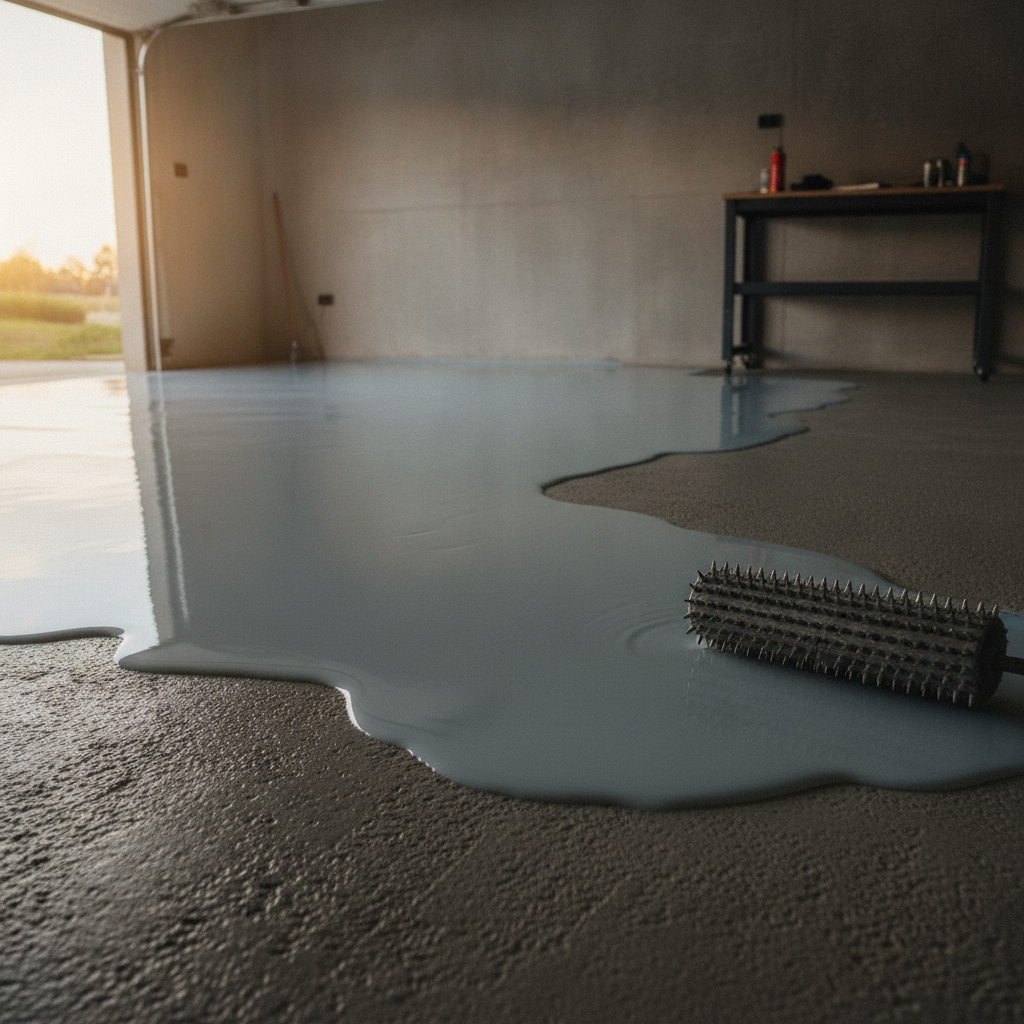
The two parts, a resin and a hardener, are combined in a precise ratio (usually 2:1 or 3:1 by volume depending on the product) and then poured directly onto the floor. A spiked roller is used to break surface tension and release trapped air bubbles before the material begins to set. Working time is tight, usually 20 to 30 minutes at room temperature, so preparation and speed both matter.

Because the product is fluid, it does an excellent job of hiding minor surface irregularities. It won’t, however, fix a slab that is genuinely unlevel or sloping in the wrong direction. A floor that drops more than about 5 mm over a metre is going to pool the product at the low end. That’s when you need to address the substrate first, not just pour more material on top.

Is self levelling epoxy the same as a standard epoxy floor coating?

No. Self levelling epoxy and standard broadcast or roller-applied epoxy coatings are related products but they serve different purposes. A standard epoxy coating is thicker in viscosity and applied by roller in multiple thin coats, relying on the applicator to build an even layer. Self levelling epoxy is poured and flows to its own level, producing a thicker, denser single layer with a glass-smooth surface.

Standard roller-applied systems are more forgiving on textured or slightly rough slabs and are the more common choice for residential garages, especially where a decorative flake or metallic finish is the goal. Self levelling products are more often specified for commercial floors, showrooms, warehouses and internal domestic spaces where a seamless, mirror-flat result is the priority and the slab quality is already good.

The cost difference is real too. Self levelling systems use more material by volume and require faster, more experienced application. Getting it wrong, moving too slowly, mixing the wrong ratio or working on a cold slab, can leave you with fish-eyes, ridges or a floor that never fully cures. That’s not a situation anyone wants to deal with after the fact.

What surface preparation does self levelling epoxy need?

Surface preparation for self levelling epoxy is non-negotiable and probably the most important factor in a successful result. The concrete must be mechanically prepared, meaning diamond grinding or shot blasting to open the surface profile, remove laitance and give the epoxy something to grip. A smooth, trowelled slab finish will cause adhesion failure regardless of how good the product is.

Moisture is the other critical issue. Concrete slabs in Melbourne can hold residual moisture, especially in older homes or slabs without a proper vapour barrier below. Most self levelling epoxy products require a relative humidity reading at the surface below 75 per cent, tested with a calcium chloride or Tramex-style moisture meter. If moisture is present, a moisture-tolerant primer or a separate DPM (damp-proof membrane) coat is needed before the self levelling layer goes down.

Any cracks wider than a hairline need to be chased out and filled with an appropriate epoxy filler or polyurethane joint compound before the self levelling pour. Trying to bridge active cracks with a self levelling product is a short-term fix at best. The crack will telegraph back through the coating, often within a year.

When does self levelling epoxy not make sense for a garage floor?

Self levelling epoxy is not the right call when your garage slab has significant slope for drainage, because the product will simply flow to the lowest point and give you an uneven finished coat. It is also a poor fit for slabs with active moisture, heavy surface contamination from oil or previous coatings, or concrete that is structurally compromised with deep spalling or crumbling edges.

For most residential Melbourne garages, a roller-applied epoxy system with a decorative flake broadcast offers better value. The application process is more controlled, the anti-slip texture built in by the flake layer is genuinely useful underfoot and around vehicles, and the finish holds up well to tyre traffic, petrochemicals and the general punishment a working garage gets. A self levelling floor in a busy two-car garage can show tyre marks and surface wear more readily than a textured flake system.

Temperature also plays a role that catches people out. Self levelling epoxy applied below about 10 degrees Celsius can cure too slowly and leave a tacky or blush-affected surface. Melbourne winters, particularly in outer suburban and regional areas, can push morning slab temperatures well below that threshold. Timing the pour to a mild, dry day with stable temperature for the full cure window, typically 24 to 48 hours, matters more with self levelling products than with almost any other coating type.

How long does self levelling epoxy last and is it hard to maintain?

A correctly installed self levelling epoxy floor in a light to moderate traffic environment can be expected to last 10 to 20 years before recoating becomes necessary. The finish is dense and non-porous, which makes routine cleaning straightforward. A mop with a pH-neutral cleaner is usually all that’s needed. Because there is no open texture, grit and dirt don’t embed themselves the way they can in rougher finishes.

The limitation is scratch and scuff resistance. The high-gloss surface that makes self levelling epoxy so visually impressive is the same surface that shows fine scratches from grit tracked in on tyres or dragged equipment. Adding a polyurethane or polyaspartic topcoat over the self levelling layer significantly extends the surface life and improves chemical resistance. Many commercial installations specify this as standard.

For residential garages that see daily vehicle use, a topcoat is worth the extra outlay. Without it, you may find the finish starts to look dull in the tyre track zones within a few years, even though the structural integrity of the coating is still perfectly fine.

What should you ask a contractor before choosing a self levelling epoxy system?

Before committing to a self levelling epoxy system, ask your contractor these specific things: what moisture testing method they use and what the acceptable threshold is for their chosen product; whether their preparation process includes mechanical grinding or shot blasting (not just acid etching alone); what the mixed-ratio tolerance is for the product they intend to use; and whether a primer coat is included in the quote or priced separately.

Also ask what topcoat, if any, is going over the self levelling layer and what warranty covers both the product and the application. A contractor who gives clear, specific answers to those questions without hesitation is one who knows the work. Vague answers about “industry standard” prep or warranties that only cover the product and not the application should raise a flag.

The product brand matters less than the application quality. Two applicators using the same self levelling epoxy can get very different results depending on surface preparation, mixing accuracy and environmental conditions on the day. Experience with the specific substrate type in Melbourne conditions, which can run from humid coastal air to dry inland heat depending on where you are, is genuinely valuable.

Ask Metal and Flake which epoxy floor coating system suits your garage.

Concrete Floor Finishes: How Do They Compare to Epoxy Coating?

Concrete Floor Finishes: How Do They Compare to Epoxy Coating?

Concrete floor finishes range from basic sealers and floor paint through to polished concrete and epoxy coating. Each option differs in durability, cost, preparation required and final appearance. Epoxy coating consistently sits at the top for residential garages because it bonds directly to the slab, resists oil and chemical stains, and lasts well over a decade with minimal upkeep.

What are the most common concrete floor finishes available to homeowners?

The most common concrete floor finishes for residential use are penetrating sealers, acrylic floor paint, polished concrete, polyurethane topcoats and epoxy coating systems. Each one sits at a different point on the scale of cost, labour and longevity, so the right choice depends on what the floor needs to do and how much traffic and abuse it will cop over the years.

It helps to understand what each option actually involves before you spend a dollar. Here is a plain-language breakdown of how they all stack up.

Penetrating sealers soak into the concrete and harden it slightly. They are cheap and quick to apply, but they do very little for appearance and offer almost no protection against oil, petrol or tyre marks. They are best suited to paths and driveways where you just want to reduce dusting and moisture absorption.

Acrylic floor paint is what a lot of people try first. You can roll it on in an afternoon and it looks decent for a few months. The problem is adhesion. Concrete is alkaline and slightly porous, and acrylic paint sits on top rather than bonding into the surface. Tyre hot-spots, workshop chemicals and even pressure-washing will peel it off faster than most people expect. Industry experience shows that most painted garage floors start flaking within one to two years, especially in a Melbourne climate where summer temperatures swing dramatically.

Polished concrete is a mechanical process where the slab is ground through progressively finer diamond tooling until it reaches a reflective finish. It looks stunning in the right space, particularly open-plan interiors and showrooms. The trade-off is that it requires specialist equipment, takes multiple days and leaves you with a floor that still needs a topcoat or densifier to resist staining. Raw polished concrete will absorb oil quickly if left unprotected.

Polyurethane topcoats are often applied over polished concrete or as a standalone finish. They are UV stable and flexible, which matters for outdoor areas. On their own they can be slippery when wet, and they do not have the same build thickness or impact resistance as a full epoxy system.

How does epoxy coating compare to other concrete floor finishes for a garage?

Epoxy coating outperforms most other concrete floor finishes for a residential garage because it forms a chemical bond with the concrete slab rather than just sitting on top. This makes it far more resistant to peeling, tyre scuffing and chemical spills. A properly prepared and applied epoxy system typically carries a serviceable life of ten to fifteen years, far beyond what paint or a basic sealer can offer.

The key difference comes down to chemistry and preparation. A quality epoxy coating system involves two components, a resin and a hardener, that react together and cure into a rigid, seamless surface. That cured surface is significantly harder and more adhesive than anything you can achieve with a single-component acrylic paint.

Preparation is where most DIY attempts fall apart. The concrete must be mechanically ground or diamond-scarified to open the pores and give the epoxy something to grip. Skipping this step is the number one reason garage floor coatings fail prematurely. Professional installers use industrial grinders that produce a surface profile measured in microns, ensuring the coating keys in properly rather than delaminating under heat and load.

Decorative options are also worth noting. A metallic epoxy or flake broadcast system adds texture and visual depth that polished concrete and paint simply cannot replicate. Coloured vinyl flakes broadcast into the wet epoxy give the floor a slip-resistant, speckled finish that hides minor imperfections in the slab and stays looking good through years of vehicle traffic.

What are the practical trade-offs worth knowing before choosing a concrete floor finish?

The main practical trade-offs between concrete floor finishes are upfront cost, cure time, ongoing maintenance and suitability for the specific environment. Cheaper options cost less on day one but tend to cost more in repeat applications over the life of the floor, while a premium epoxy system involves a higher initial outlay that pays for itself through longevity.

Here is how those trade-offs play out in practice across the most popular options:

Cure time. Acrylic paint can be walked on within a few hours, but you should not drive on it for at least 72 hours and even then it is marginal. A two-part epoxy coating needs 24 hours before foot traffic and typically 72 hours before vehicle access, depending on ambient temperature. Polished concrete requires multiple grinding sessions across several days and still needs a topcoat to cure before use.

Maintenance. Polished concrete requires periodic reapplication of densifier or guard to maintain its stain resistance. Paint needs touch-ups and eventual full recoating every couple of years. Epoxy flooring, by contrast, needs nothing more than a damp mop and an occasional clean with a pH-neutral cleaner. That low-maintenance reality matters a lot for a busy household garage.

Slab condition. No coating makes a bad slab look great for long. Cracks, moisture vapour transmission from below and previous failed coatings all affect how well the new finish will perform. A professional assessment of the slab before any work begins is the single most valuable step you can take, regardless of which finish you end up choosing.

Environment. Melbourne garages face wide temperature swings, sometimes exceeding 40 degrees Celsius in summer. Flexible coatings like polyurethane handle thermal movement better than rigid systems, which is why the best epoxy installers use a topcoat designed to accommodate minor movement without cracking.

Slip resistance. Raw polished concrete and some sealers can be dangerously slippery when wet. Epoxy systems with a flake broadcast or anti-slip additive maintain traction even when the floor is damp, which is particularly important in a garage where oil drips and wet tyres are a fact of life.

Which concrete floor finish gives you the best long-term value?

For a residential garage in Melbourne, epoxy coating gives the best long-term value when you account for the full cost over ten years. A professional epoxy coating applied once to a properly prepared slab will outlast three or four rounds of floor paint and require far less ongoing maintenance than polished concrete. The total cost of ownership is lower even though the day-one price is higher.

That does not mean epoxy is the right call for every space. A high-traffic commercial kitchen might benefit from a specialist anti-bacterial polyurethane system. A heritage home with a decorative exposed aggregate path needs a penetrating sealer rather than a coloured coating. Context matters. But for the typical Melbourne homeowner who wants a garage floor that looks sharp, handles the car, the bikes and the weekend DIY projects, and does not need repainting every two summers, epoxy coating is the clear front-runner among all the concrete floor finishes on the market.

The other thing worth saying plainly: the quality of the installation matters as much as the product. The same epoxy system applied over a poorly prepared slab will fail just as fast as cheap paint. Choosing an experienced local installer who diamond-grinds the slab, checks for moisture and uses commercial-grade materials is what separates a coating that lasts a decade from one that peels in eighteen months.

Book a residential garage floor coating consultation with Metal and Flake.

Garage Floor Coating in Williamstown: Protecting Floors Near the Bay

Garage Floor Coating in Williamstown: Protecting Floors Near the Bay

A garage floor coating in Williamstown is one of the smartest things you can do for a concrete slab that takes a beating from salt air, moisture and daily use. The right epoxy or flake system seals the concrete against corrosion, staining and surface breakdown, giving you a floor that looks sharp and holds up for years in a tough coastal environment.

Why does living near the bay make garage floor coatings so important in Williamstown?

Coastal air carries salt particles that settle on bare concrete and accelerate surface breakdown. In Williamstown, sitting right on Port Phillip Bay, a raw concrete slab in an open or semi-open garage absorbs that salt moisture season after season. A sealed epoxy coating creates a barrier between the concrete and the environment, slowing that process significantly and preventing the kind of surface dusting and spalling that costs a lot more to fix later.

Williamstown is one of Melbourne’s older bayside suburbs, and plenty of the homes here were built with garages in the 1950s through 1980s. Those slabs were often poured without a proper vapour barrier underneath, which means moisture can wick up from below as well as attack from above. Left uncoated, you end up with a surface that dusts constantly, absorbs oil and grime, and starts to degrade at the edges and joints.

Salt-laden air is only part of the story. Williamstown gets the full run of Melbourne’s weather: hot dry summers, cold wet winters, and the kind of rapid temperature swings that cause concrete to expand and contract. A quality garage floor coating bonds to the slab and moves with it rather than cracking away, which is exactly what you want when the seasons swing hard.

What types of garage floor coatings actually work in a bayside environment?

For a bayside garage, you want a coating system with genuine moisture tolerance, strong adhesion and a topcoat that resists UV yellowing. The most proven options are broadcast flake epoxy systems (a base coat, a decorative vinyl flake broadcast, and a polyurethane or polyaspartic topcoat) and solid-colour epoxy with a clear polyaspartic seal. Both deliver a hard, chemical-resistant surface that handles salt air, tyre scuff and the occasional oil spill without complaint.

Here is how the two main options compare for a Williamstown garage:

  • Flake epoxy systems. These are the most popular choice for residential garages. The vinyl flake chips hide minor imperfections in older slabs, the texture of the flake adds slip resistance when the floor gets wet (which matters in a bayside suburb where you walk in off the footpath in damp shoes), and the finished result looks genuinely impressive. Metal and Flake specialises in this system, using a full broadcast approach where the chips are thrown to rejection so there are no bare patches.
  • Solid-colour epoxy with a clear topcoat. A cleaner, more industrial look. Works well in a workshop or a garage that doubles as a home gym. Easier to spot dirt, which is either a benefit or an annoyance depending on your personality.

One thing worth knowing: not all epoxy products are the same thickness. A single thin coat of water-based epoxy from a hardware store is not the same product as a 100-percent solids commercial-grade system applied by a professional. The thickness and the resin quality determine how long the coating lasts and how well it resists the moisture that is always present near the bay.

How is surface preparation different for a garage slab that has been exposed to coastal conditions?

Surface preparation is where most DIY and cheap garage floor jobs fail, and it matters even more when the slab has absorbed years of salt moisture. The concrete has to be mechanically ground or shot-blasted to open the surface profile so the epoxy can penetrate and bond properly. Grinding is the standard approach for residential garages. A proper grind removes the weak laitance layer at the top of the slab and any old sealer, paint or contamination.

On older Williamstown slabs, the prep stage also involves checking moisture levels. A slab reading above about 75 percent relative humidity in a moisture vapour emission test needs either a moisture-tolerant primer or some time to dry before coating. Skipping this step is the single biggest reason epoxy coatings delaminate and bubble up, sometimes within a few months of being laid.

Cracks and joints are also filled or treated at this stage. In a bayside property that has gone through decades of seasonal movement, small cracks are common. A quality installer will chase them out, fill them with a flexible filler and then grind back flush before applying the base coat. This is not just cosmetic; it stops moisture from tracking under the coating through those cracks later.

How long does a garage floor coating last in Williamstown conditions?

A professionally installed flake epoxy system with a polyaspartic or polyurethane topcoat, applied over a properly prepared slab, will realistically last 10 to 15 years in a residential Williamstown garage with normal use. That assumes the slab is ground correctly, the moisture levels are within spec and the topcoat is a genuine UV-stable product. Some systems applied under ideal conditions last considerably longer.

The variables that shorten that lifespan are thin product, inadequate prep, high moisture in the slab at install time, and leaving the garage doors open constantly in a salty bayside environment so the topcoat takes direct UV and weather exposure. Keeping vehicles off the coating for the recommended cure time (usually 24 hours for foot traffic, 72 hours before parking a car) also makes a meaningful difference to long-term performance.

Maintenance is straightforward. Sweep or blow off grit regularly because fine abrasive particles ground underfoot by tyres are what dull the topcoat surface over time. A mop with a pH-neutral cleaner keeps the floor looking new. Avoid harsh solvents and avoid dragging sharp metal objects across the surface.

What should a Williamstown homeowner look for when choosing a garage floor coating installer?

A few things separate a solid installer from someone who will leave you with a peeling floor in 18 months. Look for a crew that uses diamond grinding (not just acid etching) for surface prep, because on coastal slabs with any contamination history, grinding is more reliable. Ask what product system they are using and whether the topcoat is a polyaspartic or polyurethane rather than just a second layer of epoxy, because the topcoat is what determines UV and abrasion resistance.

Ask to see actual photos of completed jobs, not just rendered mock-ups. A good installer will have plenty. Check that they carry public liability insurance and that their quote covers surface prep, crack filling, the base coat, the flake broadcast and the topcoat as a complete system rather than quoting on product alone.

Williamstown is a suburb where people take pride in their homes. A well-finished garage floor coating adds to that, and it protects a concrete asset that is genuinely expensive to replace if it deteriorates to the point where coating is no longer viable and resurfacing or replacement becomes the only option.

Book a garage floor coating in Williamstown with Metal and Flake

Metallic Epoxy Floors in Reservoir: Is It Right for Your Home?

Metallic Epoxy Floors in Reservoir: Is It Right for Your Home?

Metallic epoxy is a decorative floor coating that uses pigmented metallic powder suspended in a clear epoxy resin to create a flowing, three-dimensional finish. It suits garages, living areas and open-plan kitchens in Reservoir homes where owners want something tougher and more distinctive than tiles or polished concrete. Installation takes one to two days and the result lasts for years with basic maintenance.

What exactly is metallic epoxy and how does it look?

Metallic epoxy is a two-part resin system mixed with fine metallic pigment. When a trained applicator spreads it across a prepared concrete slab, the pigment moves and swirls as the product levels out, creating a unique lava-flow or ocean-wave pattern. No two floors come out identical, which is part of the appeal. A clear topcoat goes over the top to protect the colour and add gloss or satin sheen.

The visual depth comes from the way light reflects off suspended particles sitting at different heights within the coat. You get a finish that can look almost three-dimensional under a well-lit room, which is why a lot of Reservoir homeowners are choosing it for open-plan living spaces, home studios and garage conversions. Colour options range from silver and champagne through to copper, charcoal, ocean blue and near-black.

The coating sits at around two to three millimetres thick once all layers are applied. It bonds directly to the concrete below rather than floating on top, so there is no risk of peeling the way a thin paint might do.

Is metallic epoxy a practical choice for Reservoir homes?

Yes, metallic epoxy is a practical choice for most Reservoir homes provided the concrete slab is sound, dry and properly prepared. It is impact-resistant, resistant to most household chemicals, and easy to mop clean. The main limitations are sensitivity to UV exposure on uncovered outdoor slabs, and the need for professional diamond grinding before application to make the coating stick.

Reservoir sits in Melbourne’s northern suburbs and sees a reasonable spread of weather across the year, including warm dry summers that can push slab temperatures up. For covered areas like garages, internal rooms and enclosed patios, that is not a problem. For a fully exposed outdoor area, standard metallic epoxy is not the right product because prolonged UV breaks down the resin and causes yellowing. A UV-stable polyaspartic topcoat can extend the outdoor life considerably, but that is a conversation to have with your installer upfront.

One thing that surprises a lot of people: the preparation work is where most of the time goes. Diamond grinding the slab, patching cracks, filling expansion joints and allowing moisture readings to sit within acceptable limits can take almost as long as the coating application itself. Skipping or rushing that stage is the main reason floors delaminate or bubble later on. A quality job means the prep is done right, full stop.

How much does metallic epoxy cost in Reservoir?

Metallic epoxy flooring in Melbourne’s northern suburbs typically costs between $80 and $130 per square metre for a professionally installed system, depending on the complexity of the finish, the condition of the existing slab and the number of coats required. A standard double garage of around 36 square metres would therefore sit roughly in the $2,900 to $4,700 range all up.

A few things shift that price up or down. Heavy cracking or previous coatings on the slab mean more preparation time and material. Larger floor areas tend to bring the per-square-metre rate down because setup costs are spread across more surface. A single bold colour in a metallic will generally be cheaper than a complex multi-colour blend that requires the applicator to work quickly in sections to blend the pigments before they set.

It is also worth factoring in what you are replacing. Tiles in a kitchen or living area carry supply and labour costs, grout maintenance and the cost of removal if you are pulling out an existing surface. A metallic epoxy floor over a sound existing slab avoids most of those costs and goes down faster. For a house in Reservoir that you plan to hold for ten or more years, the durability argument stacks up well.

What does the metallic epoxy installation process look like?

The metallic epoxy installation process runs in four stages: slab assessment and preparation, primer coat, metallic mid-coat and clear protective topcoat. Most residential jobs in Reservoir are complete within one to two days of coats being laid, with a full cure taking around five to seven days before the floor can handle heavy furniture or vehicle traffic.

Day one usually covers grinding and patching. The applicator runs a diamond grinder across the slab to open the concrete surface, remove any previous sealers and create a profile for the epoxy to grip. Any cracks wider than a hairline get filled with a flexible epoxy filler and allowed to set. Moisture testing happens here too. Concrete that reads above about 75 percent relative humidity can cause adhesion failure, so if a slab has damp issues they need to be addressed before any coating goes down.

The primer goes on next, usually a thin penetrating epoxy that soaks into the opened concrete and seals it. The metallic coat follows. This is the most skill-dependent part of the job. The applicator broadcasts metallic powder into the wet base coat or pre-blends it, then uses a combination of a squeegee, roller and sometimes a heat gun or air blower to move and shape the pigment. The topcoat locks everything in and determines the final sheen level, from a matte 20-percent gloss through to a high-gloss mirror finish.

How do you maintain a metallic epoxy floor long-term?

Metallic epoxy floors are low-maintenance: sweep or vacuum loose grit regularly to prevent fine particles scratching the topcoat, and mop with a pH-neutral cleaner and warm water when needed. Avoid bleach-based products, which can dull the finish over time. With normal residential use, a well-installed floor should hold its gloss for five to ten years before any recoat is considered.

The single biggest thing that dulls a metallic epoxy floor faster than anything else is grit tracked in on shoes and dragged by furniture feet. A mat at the entry and felt pads under chair legs cost almost nothing and genuinely extend the life of the finish. In a Reservoir garage used daily, sweeping out road grit every couple of weeks makes a real difference over a few years.

If you ever do need a refresh, a topcoat reapplication is generally all that is needed rather than a full system replacement. The metallic layer underneath stays intact and the new clear coat brings the gloss back. That is a much cheaper exercise than replacing tiles or relaying polished concrete.

How do you choose the right epoxy flooring contractor in Reservoir?

Choose a metallic epoxy contractor in Reservoir by checking that they do proper concrete preparation using diamond grinding equipment, ask for photos of comparable completed jobs, confirm they use commercial-grade two-part epoxy systems rather than single-part floor paint, and get a written quote that spells out the number of coats and the products being used.

The difference between a floor that lasts a decade and one that starts to peel in two years almost always comes back to the prep and the product quality. Single-part floor paints sold at hardware stores sit on top of the surface rather than bonding to it and typically last two to three years at best before lifting. A professional two-part system, applied over a ground and primed slab, bonds at a chemical level and is a genuinely different product.

Ask specifically whether they use UV-stable topcoats, what their warranty covers, and how they handle moisture issues if they find them during prep. A contractor who can answer those questions clearly and without hesitation is generally someone who knows what they are doing.

Request a metallic epoxy floor quote in Reservoir from Metal and Flake

Marble Epoxy Floors: Can You Get the Look in a Melbourne Garage?

Marble Epoxy Floors: Can You Get the Look in a Melbourne Garage?

A marble epoxy floor uses pigmented epoxy resin applied in overlapping swirls and feathered layers to mimic the veining and depth of natural marble. You get a hard, seamless surface that handles vehicle traffic, oil spills and Melbourne’s seasonal temperature swings far better than actual stone. Yes, you can absolutely get this look in a residential garage.

What exactly is a marble epoxy floor and how does it differ from standard epoxy?

A marble epoxy floor is a decorative epoxy system where the installer manipulates tinted resin while it is still wet, using tools like brushes, squeegees and heat guns to create the flowing veins and cloudy tonal shifts that make marble look so luxurious. Unlike a standard single-colour epoxy coat or a metallic flake floor, the marble effect is hand-crafted each time, meaning no two floors come out identical. The result sits somewhere between fine art and heavy-duty floor coating.

Standard garage epoxy is usually a solid colour or a broadcast flake system. Both are durable and practical. The marble technique adds a high-end visual layer on top of that same structural strength. You still get the chemical resistance, the seamless clean surface and the hardness that epoxy is known for. You just also get something that looks like it belongs in a hotel lobby rather than a suburban double garage in Reservoir.

How is a marble epoxy floor actually installed?

The installation process for a marble epoxy floor follows the same critical foundation as any quality epoxy job: proper surface preparation is non-negotiable. Concrete grinding opens up the pores so the resin bonds mechanically to the slab. Any cracks or spalling get repaired before a single drop of colour goes down. Skip this step and even the most beautiful marble pattern will lift and delaminate within months.

Once the base coat is down and partially cured, the installer works with multiple pigment colours, typically two to four tones chosen to replicate a specific marble palette, whether that is a cool Carrara white-and-grey or a warmer gold-veined emperador look. The pigments are poured, tilted, brushed and blown with a heat gun to create movement. Timing matters enormously here. The window to manipulate the resin before it sets can be as short as 20 to 30 minutes depending on ambient temperature, which is why Melbourne’s summer heat is something a good installer plans around carefully.

A clear topcoat, often a polyurethane or a high-build epoxy clear, goes over the finished design to lock everything in and provide the gloss depth that makes marble epoxy look three-dimensional. That topcoat is also what takes the daily punishment of tyres, foot traffic and dropped tools.

Is a marble epoxy floor tough enough for a working garage?

A properly installed marble epoxy floor is genuinely hard-wearing. Epoxy systems routinely achieve compressive strengths above 70 MPa once cured, which comfortably handles the point load of a parked SUV or a trolley jack. The seamless surface means no grout lines to trap oil or grit, and cleaning is as simple as a mop with warm water and a mild detergent.

The main practical consideration for a garage is UV exposure. If your garage has significant natural light hitting the floor, standard epoxy pigments can amber or yellow over time. A UV-stable topcoat addresses this, and it is worth asking about this specifically when you are getting a quote. Garages that are used for grinding, welding or heavy fabrication work may also want a matte or satin topcoat rather than a high gloss, since scratches show more on a mirror finish.

Temperature cycling is another Melbourne-specific factor. Concrete slabs expand and contract as the seasons swing from a cold Dandenong winter morning to a 40-degree summer scorcher. A quality epoxy system with the right primer coat handles this movement well. A cheap, thin coating does not.

What colours and marble styles work best in a garage setting?

The most popular marble epoxy palettes for Melbourne garages tend to be the cooler, neutral tones: white with soft grey veining, charcoal with silver movement, or a deep black with gold. These read as clean and sophisticated without looking too precious for a space where practical work happens.

Warmer terracotta or cream-based marble styles work beautifully in alfresco areas and showrooms but can feel a little unexpected in a garage. That said, there are no hard rules. A home gym conversion, a man cave or a showcase garage for a classic car collection can pull off almost any palette if the rest of the space supports it.

Lighter colours do show tyre marks more readily than darker ones, though a quality topcoat makes these easy to wipe off. If the garage doubles as a workshop and sees a lot of foot traffic, a mid-tone palette is usually the most forgiving day to day.

How does the marble look compare to metallic epoxy and flake systems?

Metallic epoxy and decorative flake systems are the other two heavy hitters in the decorative garage floor market, and it is worth understanding where marble epoxy sits alongside them.

Metallic epoxy uses fine metallic pigment suspended in the resin to create a reflective, almost lunar surface with natural swirl patterns. It tends to look more industrial-luxe, with a lot of movement and shimmer. Flake systems, where coloured vinyl chips are broadcast into the wet base coat, give a speckled, terrazzo-like finish that hides imperfections brilliantly and is extremely slip-resistant. Both are popular choices for Melbourne garages.

Marble epoxy sits in a different visual category. It aims for elegance over raw texture. The veining effect takes more skill and more time to execute well, which generally means it sits at a higher price point than a standard flake job. If the goal is a floor that genuinely stops visitors in their tracks and makes the garage feel like an extension of the house rather than a utility box, marble epoxy earns its place.

What should you ask before getting a marble epoxy floor installed?

Before you commit, get clear answers on a few things. Ask whether the installer grinds the concrete or just acid-etches it. Grinding produces a far superior bond. Ask about the number of coats, the product brands being used and what the topcoat is. Two thin coats of a budget product will not last as long as a properly built-up system using commercial-grade materials.

Ask to see photos or, better yet, a finished floor in person. Marble epoxy is a hand-applied technique and quality varies significantly between installers. The pattern consistency, the crispness of the veining and the depth of the clear topcoat are all things you can see with your own eyes before you sign anything.

Finally, get the warranty in writing. A solid epoxy floor installation should come with a workmanship warranty that gives you genuine recourse if something goes wrong in the first couple of years.

Ask Metal and Flake about metallic epoxy floor installation for your space.