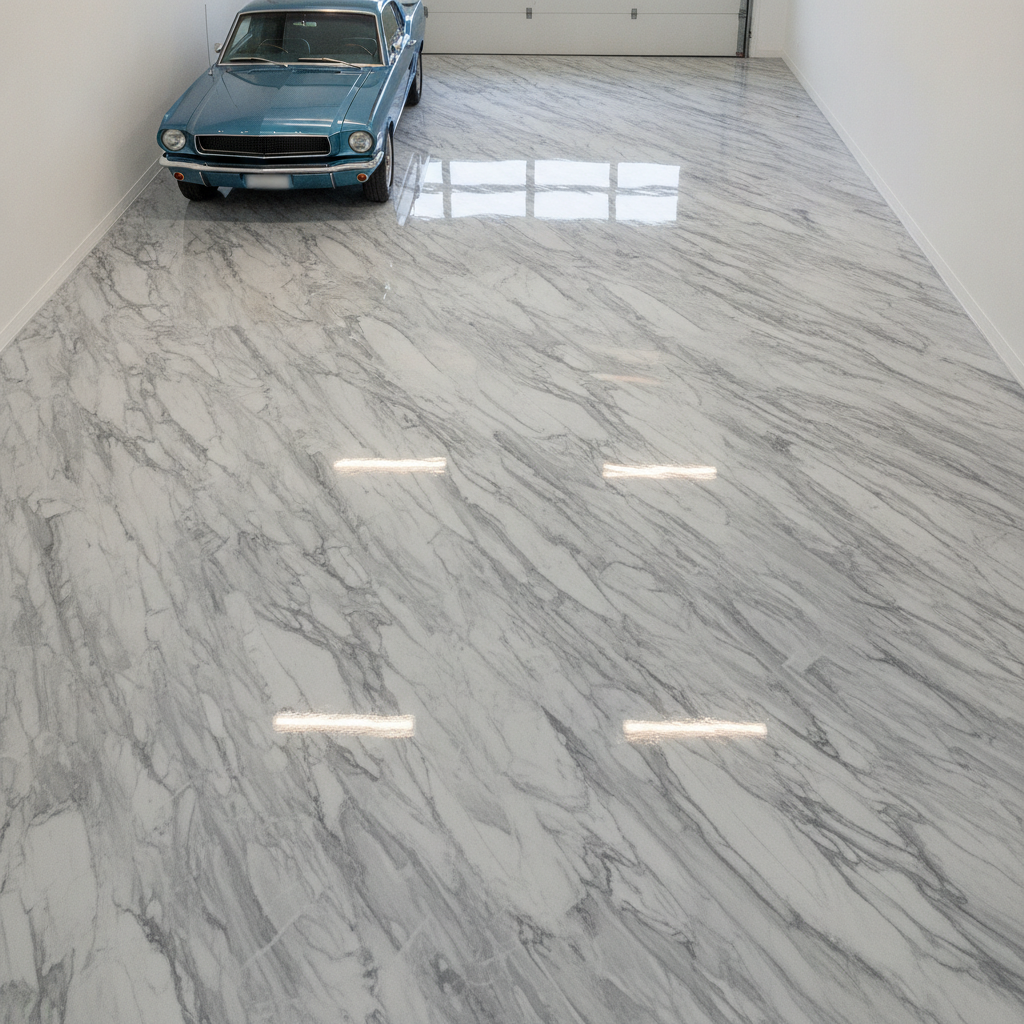
Marble Epoxy Floors: Can You Get the Look in a Melbourne Garage?
A marble epoxy floor uses pigmented epoxy resin applied in overlapping swirls and feathered layers to mimic the veining and depth of natural marble. You get a hard, seamless surface that handles vehicle traffic, oil spills and Melbourne’s seasonal temperature swings far better than actual stone. Yes, you can absolutely get this look in a residential garage.
What exactly is a marble epoxy floor and how does it differ from standard epoxy?
A marble epoxy floor is a decorative epoxy system where the installer manipulates tinted resin while it is still wet, using tools like brushes, squeegees and heat guns to create the flowing veins and cloudy tonal shifts that make marble look so luxurious. Unlike a standard single-colour epoxy coat or a metallic flake floor, the marble effect is hand-crafted each time, meaning no two floors come out identical. The result sits somewhere between fine art and heavy-duty floor coating.
Standard garage epoxy is usually a solid colour or a broadcast flake system. Both are durable and practical. The marble technique adds a high-end visual layer on top of that same structural strength. You still get the chemical resistance, the seamless clean surface and the hardness that epoxy is known for. You just also get something that looks like it belongs in a hotel lobby rather than a suburban double garage in Reservoir.
How is a marble epoxy floor actually installed?
The installation process for a marble epoxy floor follows the same critical foundation as any quality epoxy job: proper surface preparation is non-negotiable. Concrete grinding opens up the pores so the resin bonds mechanically to the slab. Any cracks or spalling get repaired before a single drop of colour goes down. Skip this step and even the most beautiful marble pattern will lift and delaminate within months.
Once the base coat is down and partially cured, the installer works with multiple pigment colours, typically two to four tones chosen to replicate a specific marble palette, whether that is a cool Carrara white-and-grey or a warmer gold-veined emperador look. The pigments are poured, tilted, brushed and blown with a heat gun to create movement. Timing matters enormously here. The window to manipulate the resin before it sets can be as short as 20 to 30 minutes depending on ambient temperature, which is why Melbourne’s summer heat is something a good installer plans around carefully.
A clear topcoat, often a polyurethane or a high-build epoxy clear, goes over the finished design to lock everything in and provide the gloss depth that makes marble epoxy look three-dimensional. That topcoat is also what takes the daily punishment of tyres, foot traffic and dropped tools.
Is a marble epoxy floor tough enough for a working garage?
A properly installed marble epoxy floor is genuinely hard-wearing. Epoxy systems routinely achieve compressive strengths above 70 MPa once cured, which comfortably handles the point load of a parked SUV or a trolley jack. The seamless surface means no grout lines to trap oil or grit, and cleaning is as simple as a mop with warm water and a mild detergent.
The main practical consideration for a garage is UV exposure. If your garage has significant natural light hitting the floor, standard epoxy pigments can amber or yellow over time. A UV-stable topcoat addresses this, and it is worth asking about this specifically when you are getting a quote. Garages that are used for grinding, welding or heavy fabrication work may also want a matte or satin topcoat rather than a high gloss, since scratches show more on a mirror finish.
Temperature cycling is another Melbourne-specific factor. Concrete slabs expand and contract as the seasons swing from a cold Dandenong winter morning to a 40-degree summer scorcher. A quality epoxy system with the right primer coat handles this movement well. A cheap, thin coating does not.
What colours and marble styles work best in a garage setting?
The most popular marble epoxy palettes for Melbourne garages tend to be the cooler, neutral tones: white with soft grey veining, charcoal with silver movement, or a deep black with gold. These read as clean and sophisticated without looking too precious for a space where practical work happens.
Warmer terracotta or cream-based marble styles work beautifully in alfresco areas and showrooms but can feel a little unexpected in a garage. That said, there are no hard rules. A home gym conversion, a man cave or a showcase garage for a classic car collection can pull off almost any palette if the rest of the space supports it.
Lighter colours do show tyre marks more readily than darker ones, though a quality topcoat makes these easy to wipe off. If the garage doubles as a workshop and sees a lot of foot traffic, a mid-tone palette is usually the most forgiving day to day.
How does the marble look compare to metallic epoxy and flake systems?
Metallic epoxy and decorative flake systems are the other two heavy hitters in the decorative garage floor market, and it is worth understanding where marble epoxy sits alongside them.
Metallic epoxy uses fine metallic pigment suspended in the resin to create a reflective, almost lunar surface with natural swirl patterns. It tends to look more industrial-luxe, with a lot of movement and shimmer. Flake systems, where coloured vinyl chips are broadcast into the wet base coat, give a speckled, terrazzo-like finish that hides imperfections brilliantly and is extremely slip-resistant. Both are popular choices for Melbourne garages.
Marble epoxy sits in a different visual category. It aims for elegance over raw texture. The veining effect takes more skill and more time to execute well, which generally means it sits at a higher price point than a standard flake job. If the goal is a floor that genuinely stops visitors in their tracks and makes the garage feel like an extension of the house rather than a utility box, marble epoxy earns its place.
What should you ask before getting a marble epoxy floor installed?
Before you commit, get clear answers on a few things. Ask whether the installer grinds the concrete or just acid-etches it. Grinding produces a far superior bond. Ask about the number of coats, the product brands being used and what the topcoat is. Two thin coats of a budget product will not last as long as a properly built-up system using commercial-grade materials.
Ask to see photos or, better yet, a finished floor in person. Marble epoxy is a hand-applied technique and quality varies significantly between installers. The pattern consistency, the crispness of the veining and the depth of the clear topcoat are all things you can see with your own eyes before you sign anything.
Finally, get the warranty in writing. A solid epoxy floor installation should come with a workmanship warranty that gives you genuine recourse if something goes wrong in the first couple of years.
Ask Metal and Flake about metallic epoxy floor installation for your space.