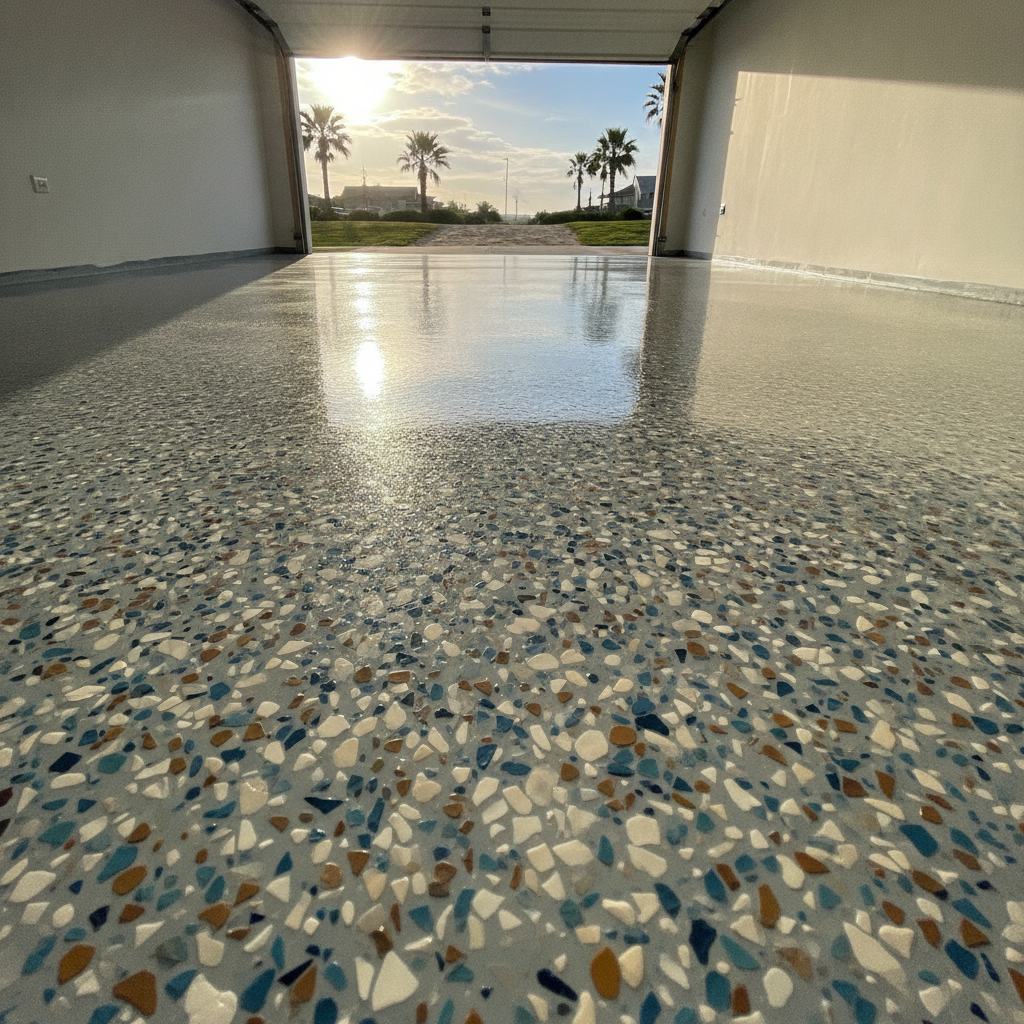
Garage Floor Coating in Williamstown: Protecting Floors Near the Bay
A garage floor coating in Williamstown is one of the smartest things you can do for a concrete slab that takes a beating from salt air, moisture and daily use. The right epoxy or flake system seals the concrete against corrosion, staining and surface breakdown, giving you a floor that looks sharp and holds up for years in a tough coastal environment.
Why does living near the bay make garage floor coatings so important in Williamstown?
Coastal air carries salt particles that settle on bare concrete and accelerate surface breakdown. In Williamstown, sitting right on Port Phillip Bay, a raw concrete slab in an open or semi-open garage absorbs that salt moisture season after season. A sealed epoxy coating creates a barrier between the concrete and the environment, slowing that process significantly and preventing the kind of surface dusting and spalling that costs a lot more to fix later.
Williamstown is one of Melbourne’s older bayside suburbs, and plenty of the homes here were built with garages in the 1950s through 1980s. Those slabs were often poured without a proper vapour barrier underneath, which means moisture can wick up from below as well as attack from above. Left uncoated, you end up with a surface that dusts constantly, absorbs oil and grime, and starts to degrade at the edges and joints.
Salt-laden air is only part of the story. Williamstown gets the full run of Melbourne’s weather: hot dry summers, cold wet winters, and the kind of rapid temperature swings that cause concrete to expand and contract. A quality garage floor coating bonds to the slab and moves with it rather than cracking away, which is exactly what you want when the seasons swing hard.
What types of garage floor coatings actually work in a bayside environment?
For a bayside garage, you want a coating system with genuine moisture tolerance, strong adhesion and a topcoat that resists UV yellowing. The most proven options are broadcast flake epoxy systems (a base coat, a decorative vinyl flake broadcast, and a polyurethane or polyaspartic topcoat) and solid-colour epoxy with a clear polyaspartic seal. Both deliver a hard, chemical-resistant surface that handles salt air, tyre scuff and the occasional oil spill without complaint.
Here is how the two main options compare for a Williamstown garage:
- Flake epoxy systems. These are the most popular choice for residential garages. The vinyl flake chips hide minor imperfections in older slabs, the texture of the flake adds slip resistance when the floor gets wet (which matters in a bayside suburb where you walk in off the footpath in damp shoes), and the finished result looks genuinely impressive. Metal and Flake specialises in this system, using a full broadcast approach where the chips are thrown to rejection so there are no bare patches.
- Solid-colour epoxy with a clear topcoat. A cleaner, more industrial look. Works well in a workshop or a garage that doubles as a home gym. Easier to spot dirt, which is either a benefit or an annoyance depending on your personality.
One thing worth knowing: not all epoxy products are the same thickness. A single thin coat of water-based epoxy from a hardware store is not the same product as a 100-percent solids commercial-grade system applied by a professional. The thickness and the resin quality determine how long the coating lasts and how well it resists the moisture that is always present near the bay.
How is surface preparation different for a garage slab that has been exposed to coastal conditions?
Surface preparation is where most DIY and cheap garage floor jobs fail, and it matters even more when the slab has absorbed years of salt moisture. The concrete has to be mechanically ground or shot-blasted to open the surface profile so the epoxy can penetrate and bond properly. Grinding is the standard approach for residential garages. A proper grind removes the weak laitance layer at the top of the slab and any old sealer, paint or contamination.
On older Williamstown slabs, the prep stage also involves checking moisture levels. A slab reading above about 75 percent relative humidity in a moisture vapour emission test needs either a moisture-tolerant primer or some time to dry before coating. Skipping this step is the single biggest reason epoxy coatings delaminate and bubble up, sometimes within a few months of being laid.
Cracks and joints are also filled or treated at this stage. In a bayside property that has gone through decades of seasonal movement, small cracks are common. A quality installer will chase them out, fill them with a flexible filler and then grind back flush before applying the base coat. This is not just cosmetic; it stops moisture from tracking under the coating through those cracks later.
How long does a garage floor coating last in Williamstown conditions?
A professionally installed flake epoxy system with a polyaspartic or polyurethane topcoat, applied over a properly prepared slab, will realistically last 10 to 15 years in a residential Williamstown garage with normal use. That assumes the slab is ground correctly, the moisture levels are within spec and the topcoat is a genuine UV-stable product. Some systems applied under ideal conditions last considerably longer.
The variables that shorten that lifespan are thin product, inadequate prep, high moisture in the slab at install time, and leaving the garage doors open constantly in a salty bayside environment so the topcoat takes direct UV and weather exposure. Keeping vehicles off the coating for the recommended cure time (usually 24 hours for foot traffic, 72 hours before parking a car) also makes a meaningful difference to long-term performance.
Maintenance is straightforward. Sweep or blow off grit regularly because fine abrasive particles ground underfoot by tyres are what dull the topcoat surface over time. A mop with a pH-neutral cleaner keeps the floor looking new. Avoid harsh solvents and avoid dragging sharp metal objects across the surface.
What should a Williamstown homeowner look for when choosing a garage floor coating installer?
A few things separate a solid installer from someone who will leave you with a peeling floor in 18 months. Look for a crew that uses diamond grinding (not just acid etching) for surface prep, because on coastal slabs with any contamination history, grinding is more reliable. Ask what product system they are using and whether the topcoat is a polyaspartic or polyurethane rather than just a second layer of epoxy, because the topcoat is what determines UV and abrasion resistance.
Ask to see actual photos of completed jobs, not just rendered mock-ups. A good installer will have plenty. Check that they carry public liability insurance and that their quote covers surface prep, crack filling, the base coat, the flake broadcast and the topcoat as a complete system rather than quoting on product alone.
Williamstown is a suburb where people take pride in their homes. A well-finished garage floor coating adds to that, and it protects a concrete asset that is genuinely expensive to replace if it deteriorates to the point where coating is no longer viable and resurfacing or replacement becomes the only option.
Book a garage floor coating in Williamstown with Metal and Flake