Concrete Floor Coating in Melbourne: Which System Is Right for You?
The right concrete floor coating in Melbourne depends on three things: what the floor has to put up with, how you want it to look, and how long you want it to last. Epoxy systems suit heavy traffic and garages, polyurethane topcoats add UV and chemical resistance, and decorative flake builds give you durability plus a finish that actually looks good. Matching the system to the job is what separates a coating that lasts a decade from one that peels inside two years.
What is a concrete floor coating and why does it matter?
A concrete floor coating is a liquid-applied system that bonds directly to bare concrete, cures to a hard film, and protects the slab from abrasion, chemicals, moisture and staining. Without a coating, raw concrete is porous: it soaks up oil, salt, grit and water, all of which break down the surface over time. A properly applied system seals those pores, makes the floor easy to clean, and can add significant load-bearing wear resistance compared to bare slab. For Melbourne homes and commercial sites, where temperature swings between summer and winter can stress a floor, the right coating also acts as a flexible buffer against minor slab movement.
What are the main types of concrete floor coating available in Melbourne?
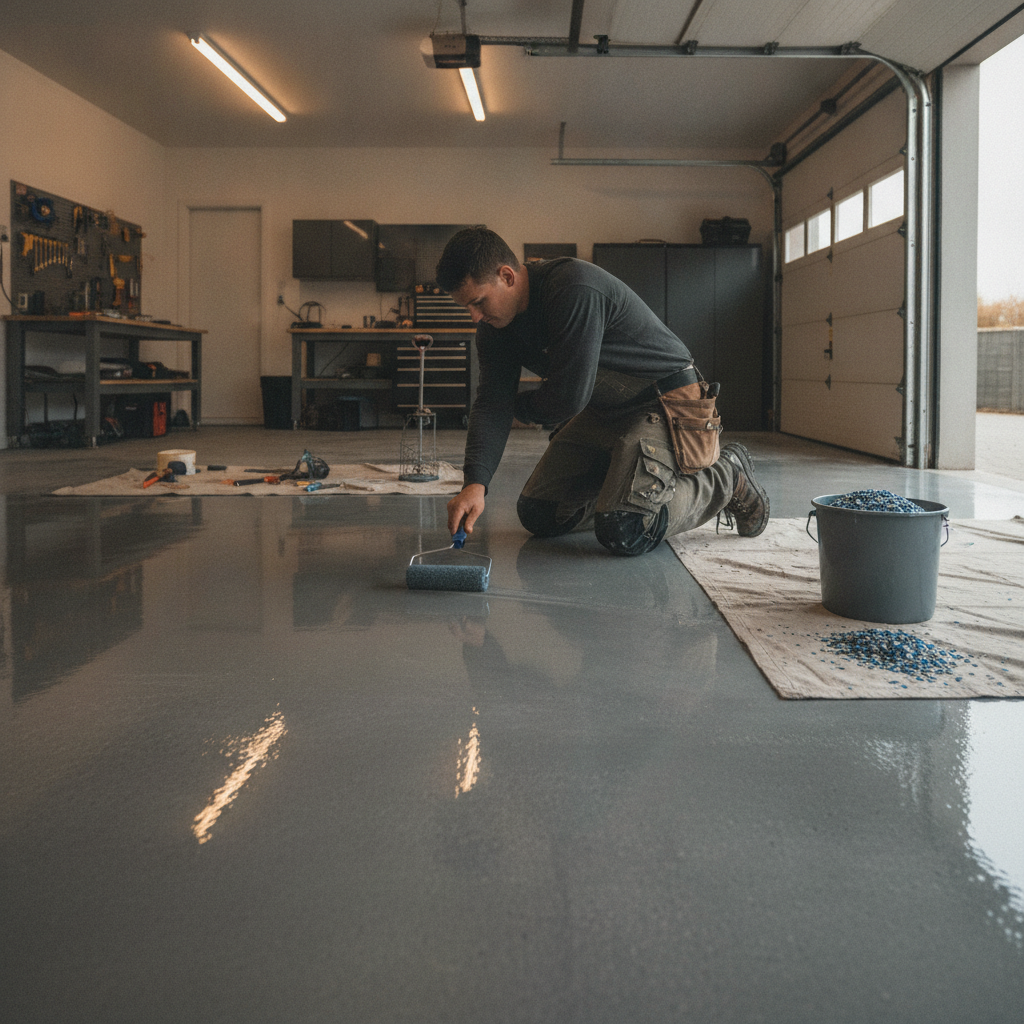
The four systems you will come across most often in Melbourne are solvent-borne epoxy, water-borne epoxy, polyurethane (PU) topcoat, and decorative flake or metallic epoxy. Each has a specific role. Solvent-borne epoxies penetrate the slab deeply and bond extremely well, making them the workhorse for garage floors and warehouses. Water-borne epoxies are lower in VOCs and better suited to enclosed residential spaces where ventilation is limited. A polyurethane topcoat is rarely used on its own but applied over an epoxy base coat it dramatically lifts UV and chemical resistance, which matters in areas exposed to sunlight or harsh cleaning agents. Decorative flake systems layer coloured vinyl chips between epoxy coats, producing a textured, slip-resistant finish that is popular in showrooms, home garages and commercial spaces where appearance counts as much as performance.
How do you choose the right concrete floor coating for your specific space?
Start with traffic type and chemical exposure. A domestic garage that sees two cars, some weekend DIY and the occasional oil drip is a very different environment from a commercial kitchen floor that takes daily caustic cleaning. For the garage, a two-coat broadcast flake epoxy system with a PU clear topcoat gives excellent abrasion resistance and looks sharp. For food-prep or chemical-handling areas, a seamless, non-porous system with a high-build epoxy base and chemical-resistant PU top is the smarter call. UV exposure is the next filter: standard epoxy yellows under direct sunlight, so any floor with a glass roller door or skylight overhead needs either a UV-stable PU topcoat or a polyaspartic finish to keep its colour. Finally, consider the slab condition. A floor with surface laitance, old adhesive or moisture rising from below needs surface preparation, typically diamond grinding, before any coating goes down. Skipping that step is the single most common reason coatings fail prematurely in Melbourne.
What does surface preparation actually involve for concrete floor coating in Melbourne?
Surface preparation is not optional and it accounts for a large portion of a quality job’s labour cost. The industry benchmark is a CSP (Concrete Surface Profile) of between 2 and 4, which looks like a slightly rough, open texture similar to medium-grit sandpaper. Diamond grinding achieves this reliably and removes surface contamination at the same time. Shot blasting is an alternative for larger commercial slabs. Once the profile is achieved, the crew fills cracks and control joints with a flexible polyurethane filler or a rigid epoxy mortar, depending on whether the crack is live (still moving) or dormant. Any moisture vapour emission above about 75% relative humidity (measured with a concrete hygrometer to AS 1884 guidelines) needs to be addressed with a moisture-tolerant primer before the full system goes on. Getting this sequence right is what allows a coating to bond for 10 to 15 years rather than bubble and delaminate inside the first wet Melbourne winter.
How long does a concrete floor coating last and what affects its lifespan?
A professionally applied, fully prepared concrete floor coating in Melbourne can last 10 to 20 years in a residential setting and 5 to 10 years in heavy commercial or industrial use before it needs a topcoat refresh. Three factors cut that lifespan short faster than anything else: inadequate surface preparation (as covered above), using an indoor-formulated epoxy in a UV-exposed area, and point loading from heavy equipment on a film that was specified for lighter traffic. Choosing a system that is rated above your actual requirements by one level is a sensible buffer. A 300-micron two-coat flake system in a domestic garage, for example, is typically over-specified for most home users, and that margin is exactly what gives it its longevity. Maintenance is straightforward: sweep regularly to remove grit (which acts like sandpaper underfoot), mop with a pH-neutral cleaner, and avoid dragging metal edges across the surface.
How much does concrete floor coating cost in Melbourne?
Pricing in Melbourne generally runs from around $30 to $60 per square metre for a basic single-coat epoxy seal on a prepared slab, up to $80 to $120 per square metre for a full decorative flake system with diamond-grind prep and a PU topcoat. Variables include slab condition (a badly contaminated or cracked floor adds prep time and materials), floor area (larger jobs benefit from economies of scale), and the coating system specified. It is worth noting that the cheapest quote is rarely the cheapest outcome. A coating that fails after two years and requires strip-back and re-coating will cost more in total than a quality system done right the first time. When comparing quotes, ask each contractor to specify the coating product name and film build in microns so you are comparing apples with apples rather than just square-metre prices.
What should you look for when hiring a concrete floor coating contractor in Melbourne?
A reliable contractor will do three things before quoting: inspect the slab in person, test for moisture, and provide a written specification that names the coating system and film thickness. Be cautious of anyone who quotes off photos alone or cannot tell you the DFT (dry film thickness) of their system. Ask whether they own their grinding equipment or hire it in, because owned equipment usually means the operator is more experienced with it. Look for a contractor who uses products from established manufacturers and can show you technical data sheets on request. References from similar jobs, whether residential garages, commercial showrooms or industrial floors, are far more useful than generic online reviews. Metal and Flake operates across Melbourne and surrounds, specialising in decorative concrete floor coating systems including metallic epoxy and broadcast flake finishes for residential and commercial clients.
Ready to stop guessing and get a system matched to your actual slab? Book a concrete floor coating consultation with Metal and Flake in Melbourne.