Concrete Floor Coating in Craigieburn: Best Options for New Homes

Concrete Floor Coating in Craigieburn: Best Options for New Homes

The best concrete floor coating options for new homes in Craigieburn are epoxy and polyaspartic coatings. Epoxy delivers a hard-wearing, high-gloss finish ideal for garages and living spaces, while polyaspartic systems cure faster and handle UV exposure better. Both protect raw concrete from oil, moisture and foot traffic for ten or more years when applied correctly.

Why do Craigieburn new builds need a concrete floor coating?

New homes in Craigieburn sit on bare concrete slabs that look fine on handover day but will stain, dust and crack over time without a protective coating. Melbourne’s northern growth corridor is known for its reactive clay soils, which cause slabs to shift slightly with seasonal moisture changes. A quality concrete coating seals the surface, reduces dusting, locks out moisture from below and gives you a floor that actually looks finished rather than like a building site.

Plenty of Craigieburn homeowners move in and leave the garage and alfresco slab raw for the first year or two, thinking they’ll get to it later. The problem is that uncoated concrete absorbs oil from the first car park, picks up dirt tracked in from the estate’s sandy footpaths and starts to pit at the surface. Once contamination gets into the pores, you need a lot more prep work before any coating will bond properly. Getting in early, ideally within the first six to twelve months, keeps the job straightforward and the cost down.

What are the best concrete floor coating options for new homes in Craigieburn?

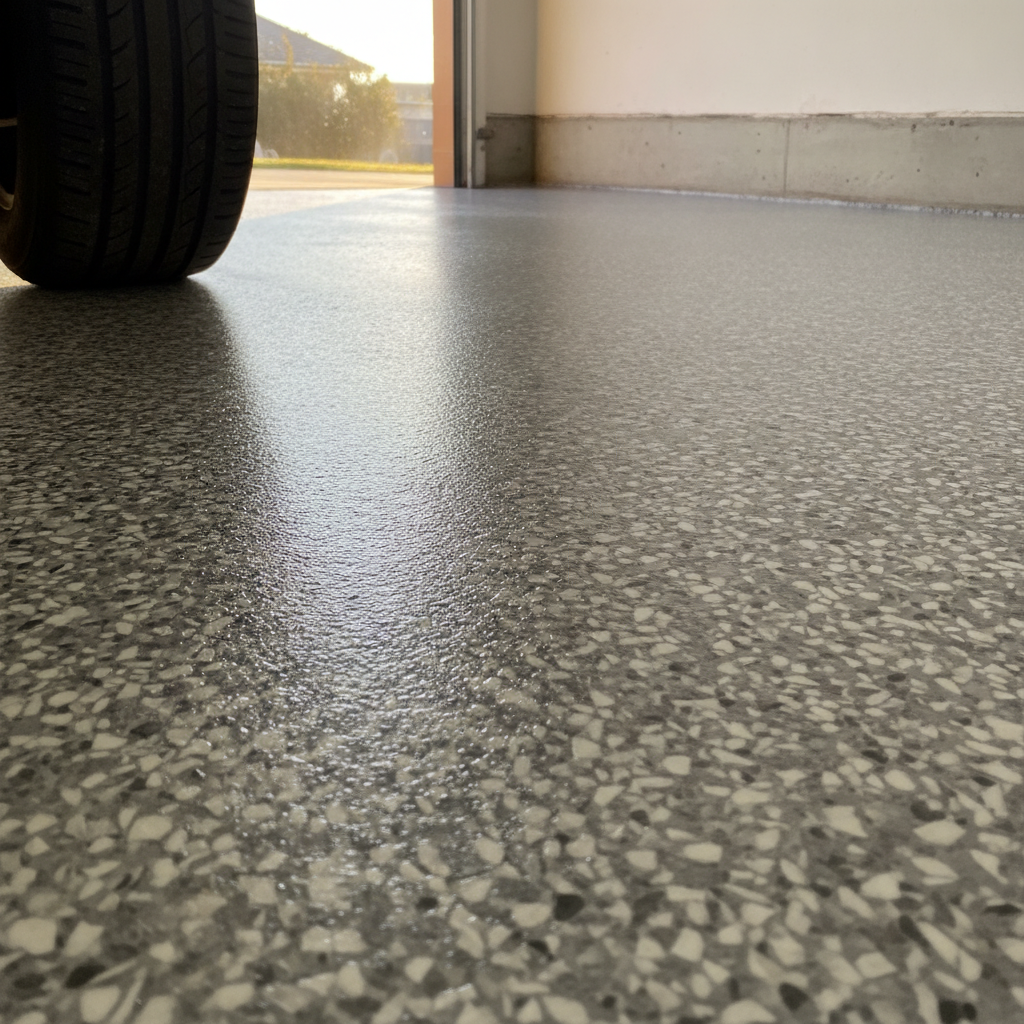
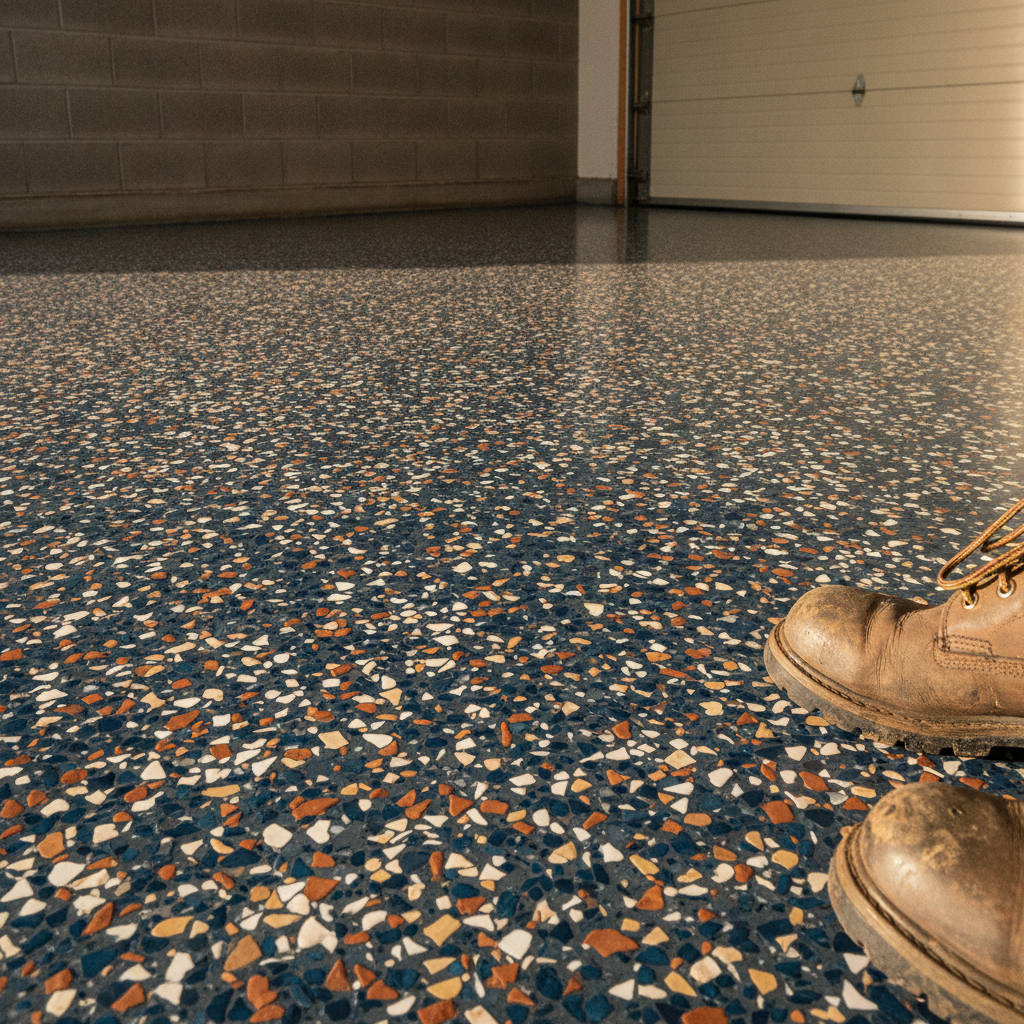
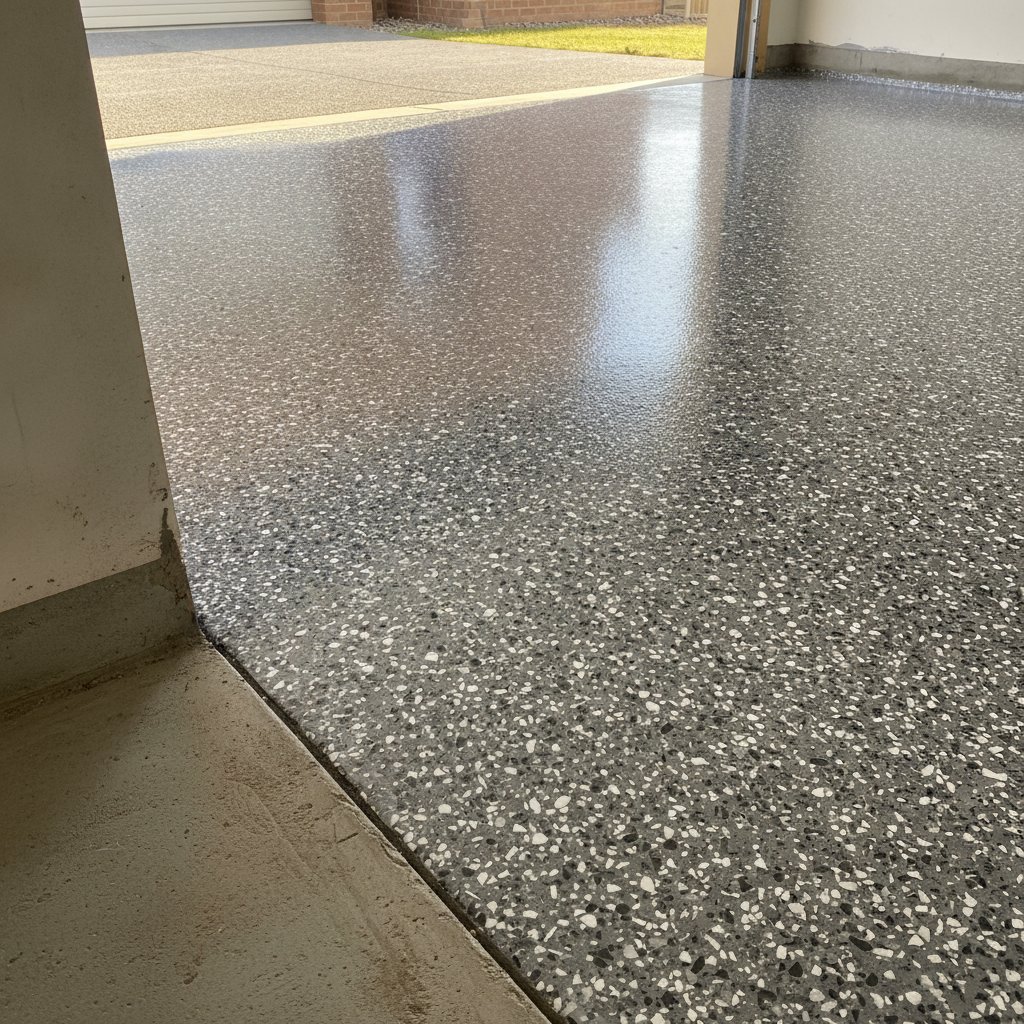
For new homes in Craigieburn, epoxy floor coatings are the most popular choice for garages and internal slabs, while polyaspartic coatings are preferred where faster return to service or strong UV resistance is needed. Decorative flake systems, sometimes called flake broadcast or vinyl flake, add texture and hide imperfections, making them a practical pick for high-traffic areas.

Here is a plain breakdown of the main options:

Epoxy floor coatings

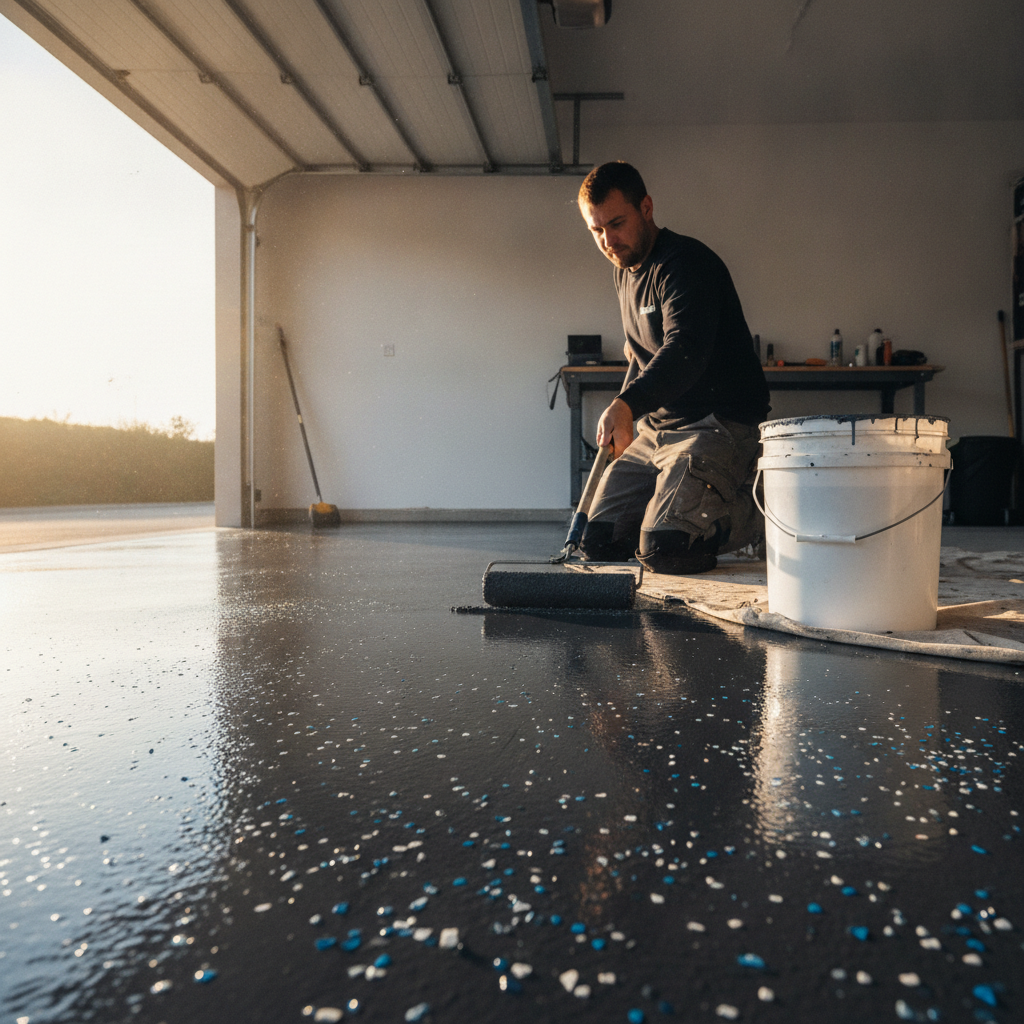
Two-part epoxy is the workhorse of the concrete coating world. You mix a resin with a hardener, apply it to a prepared slab and it cures to a surface harder than the concrete beneath it. A standard two-coat epoxy system typically runs three to five millimetres thick after a primer coat and a broadcast layer. It handles vehicle traffic, heavy workshop loads and the kind of spills you get in a busy family garage without complaint. The main limitation is UV: straight epoxy will amber or yellow if exposed to direct sunlight over time, so it is best used in enclosed garages or covered outdoor areas rather than open alfresco slabs.

Polyaspartic coatings

Polyaspartic is a newer chemistry that cures significantly faster than epoxy, often allowing foot traffic within a few hours and vehicle traffic the same day. It is also UV-stable, so it holds its colour on outdoor slabs or garages with wide openings. For Craigieburn homes where families want the garage back quickly after a weekend job, polyaspartic is hard to beat. It does cost a bit more per square metre than a standard epoxy, but the faster turnaround often makes up for it.

Flake broadcast systems (metal and flake)

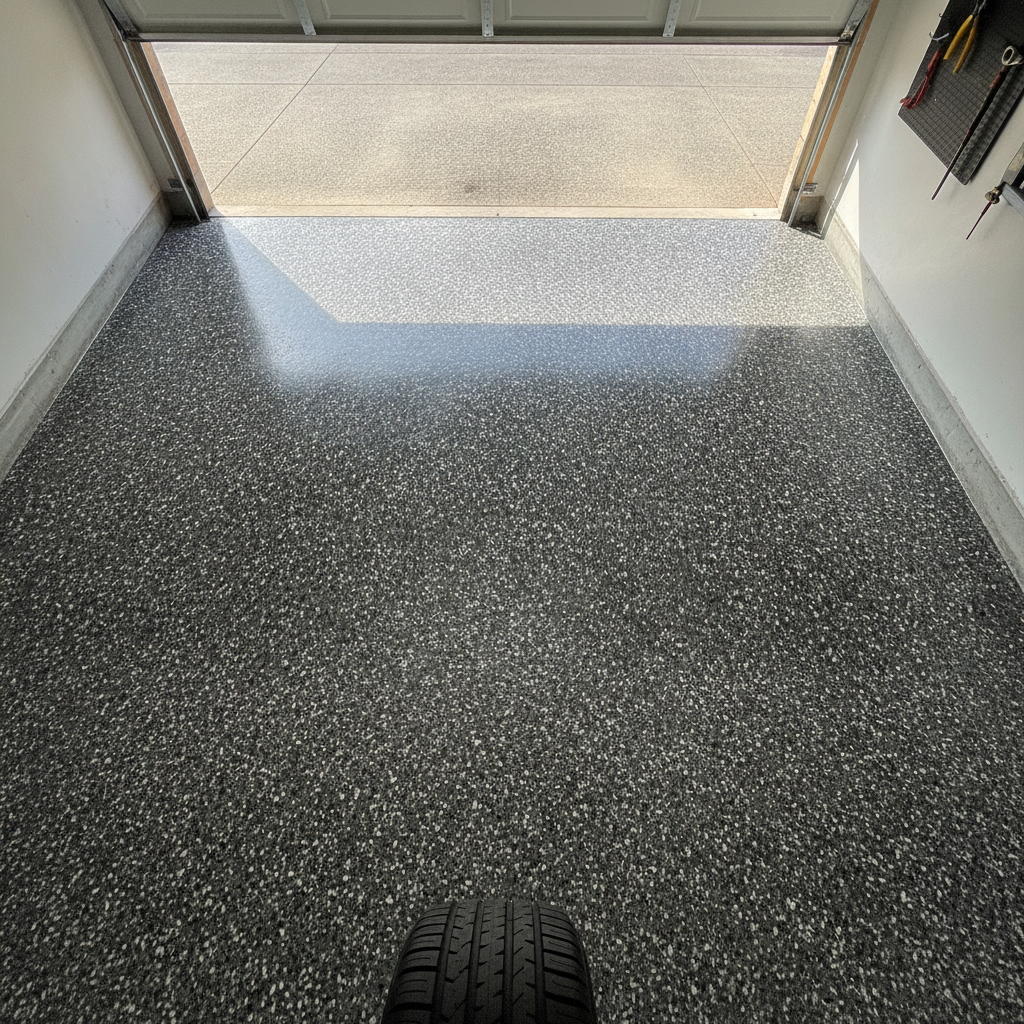
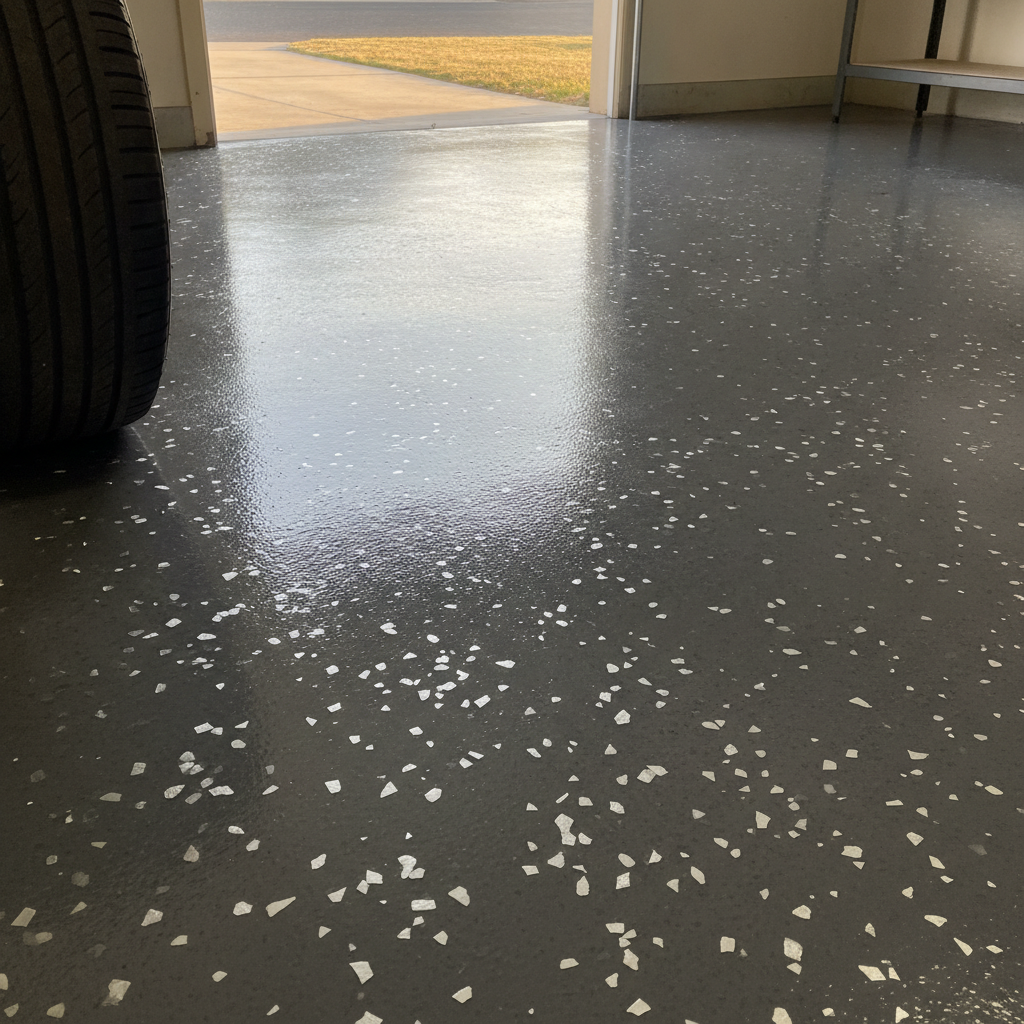
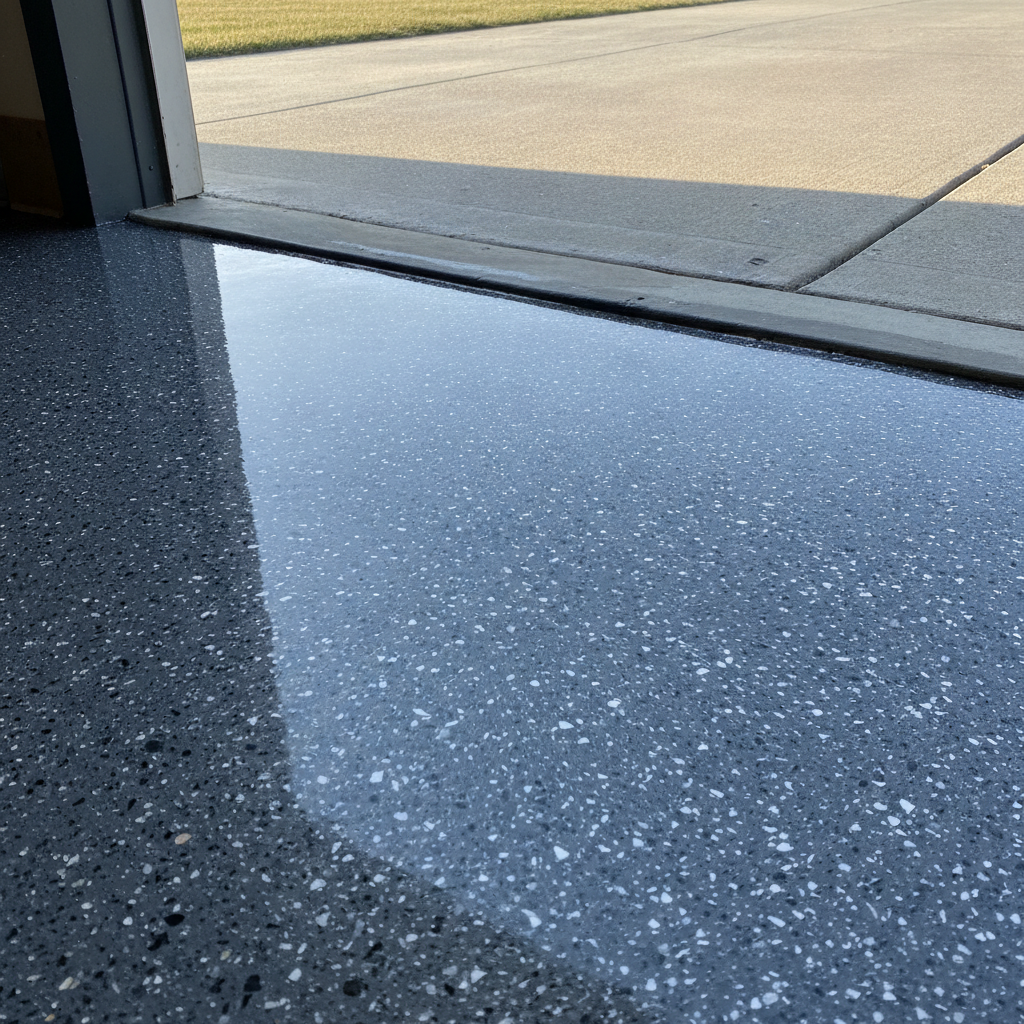
A flake system involves broadcasting coloured vinyl flakes into a wet base coat, then sealing everything under a clear topcoat. The result is a speckled, textured surface that hides small surface blemishes and provides grip underfoot. Flake floors are extremely popular in Craigieburn double garages because the texture disguises dust and light scratches between cleans, and the range of flake colours and sizes means you can match the finish to the home’s interior colour palette. A full flake broadcast system also adds an anti-slip element, which matters on a slab that might see wet footprints from a pool or laundry.

How should you prepare a new slab in Craigieburn before coating?

A new slab in Craigieburn needs to cure for a minimum of 28 days before any coating is applied, then the surface must be mechanically prepared by diamond grinding or shot blasting to open the concrete pores so the coating bonds correctly. Skipping or rushing either step is the single biggest reason floor coatings fail prematurely.

New estate slabs often have a smooth trowelled finish or a curing compound applied by the concretor. Both of these create a barrier that will stop a coating from bonding if they are not removed. Diamond grinding strips the top layer off the slab, exposes fresh aggregate and creates the profile the coating needs to grip. A professional applicator will also check the moisture vapour emission rate of the slab before starting. Craigieburn’s clay subsoils can trap moisture under a slab, and if vapour transmission is too high, bubbles and delamination will appear in the coating within months.

Once the slab is ground and passed for moisture, any cracks or low spots get filled with a compatible filler or epoxy mortar. Then the coating system goes down in sequence: primer, body coat, optional flake broadcast, and finally a clear protective topcoat. Each layer needs the right temperature and humidity window to cure properly. Melbourne’s northern suburbs can get very hot in summer, so most professional applicators prefer to schedule jobs in the cooler part of the day during January and February.

How long does a concrete floor coating last in a Craigieburn home?

A professionally applied epoxy or polyaspartic concrete floor coating in a Craigieburn home will typically last ten to twenty years in a domestic garage or workshop with normal care. Longevity depends on the quality of the prep work, the thickness of the system applied, and how the floor is used day to day.

Thin single-coat systems sold at hardware chains are not the same product as a professionally applied multi-layer system. Consumer-grade coatings are often less than 0.3 millimetres thick and are not designed to handle vehicle hot-tyre pick-up, where hot rubber grips the coating and pulls it away when the car moves. A commercial-grade epoxy base coat followed by a polyaspartic or polyurethane topcoat is what gives you that decade-plus lifespan.

To keep the floor looking good, the main maintenance task is a regular sweep and occasional mop with a pH-neutral cleaner. Dragging heavy steel equipment, leaving chemical spills sitting for days or using harsh solvents on the surface will shorten the coating’s life. A simple routine keeps a coated floor looking sharp for years without recoating.

Is a flake floor coating right for your Craigieburn garage or alfresco?

A flake floor coating is a great fit for a Craigieburn garage or alfresco if you want a decorative finish that also hides everyday wear. The vinyl chip broadcast adds anti-slip texture and disguises minor surface marks between washes, making it a practical and good-looking choice for family homes.

The full flake broadcast look has become the go-to in Melbourne’s northern growth suburbs for good reason. It photographs well for real estate listings, suits both the contemporary facades common in Craigieburn’s newer estates and the more traditional double-brick builds, and it holds up to the gritty sandy soil that gets tracked in from the surrounding greenfield land. Colour choices range from subtle greys and blacks through to warm tones that complement rendered external walls.

For an open alfresco slab that cops direct sun, a polyaspartic topcoat over the flake base is the smarter call than a standard epoxy topcoat. It will not yellow in the harsh northern Melbourne sun, and it handles the thermal expansion and contraction that outdoor slabs go through over summer.

The bottom line for Craigieburn homeowners is straightforward: a concrete floor coating is one of the best value finishing investments you can make on a new build. It protects an asset you have already paid for, it makes cleaning far easier, and it lifts the finished look of any space from a raw grey slab to a floor you are happy to show off. Get a concrete floor coating quote in Craigieburn from Metal and Flake.
Epoxy Flake Flooring in Essendon: Colours, Costs and Local Installer

Epoxy Flake Flooring Essendon: Colours, Costs and Local Installer

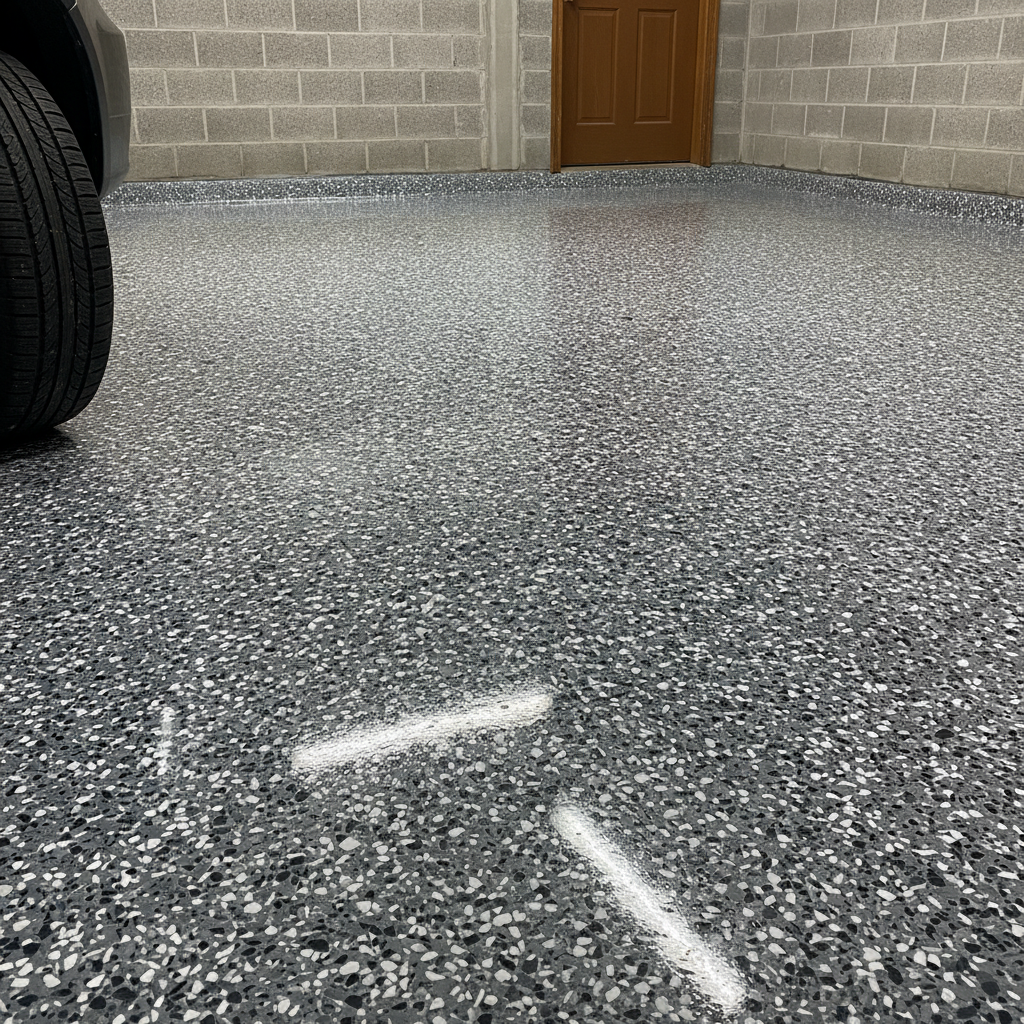
Epoxy flake flooring in Essendon suits garages, workshops and indoor laundries where you want a hard-wearing, easy-clean surface that actually looks good. A broadcast flake system uses coloured vinyl chips scattered into a wet epoxy base coat, then locked in with a clear topcoat. The result hides dirt, masks minor imperfections in the slab and lasts well over a decade with basic maintenance.

What exactly is epoxy flake flooring and why do Essendon homeowners choose it?

Epoxy flake flooring is a multi-layer coating system: a prepared concrete base, a pigmented epoxy layer, decorative vinyl flakes broadcast by hand across the wet surface, and a durable polyaspartic or urethane topcoat to seal everything in. Essendon homeowners choose it because it handles Melbourne’s variable humidity, resists oil and water, and comes in enough colour combinations to match any space.

The flake element does a lot of practical work. The chips create a slight texture that gives grip underfoot, which matters on a garage floor that gets wet when you pull the car in on a rainy afternoon. They also break up the visual field so light scuffs and everyday grime are nowhere near as obvious as they would be on a plain grey slab or a solid-colour epoxy.

For a suburb like Essendon, where a lot of homes are on older blocks with concrete slabs that have seen some years, the flake system is genuinely forgiving. It does not demand a pristine surface the way a high-gloss metallic finish does. A good installer can fill minor surface cracks and pitting during prep, and the flake pattern distracts the eye from anything that remains.

What colour options are available for epoxy flake flooring in Essendon?

Epoxy flake flooring colour options run from neutral blends of grey, white and black chips through to warm earth tones, coastal blues and full-broadcast single-colour chips for a bold look. Most installers offer both partial-broadcast blends, which show the base coat through the chips, and full-broadcast systems where the flakes completely cover the floor.

The most popular choices for Essendon garages tend to be grey-and-white blends. They read as clean and modern, they photograph well if you are selling, and they age without looking dated. Earth-tone blends with beige, tan and brown chips suit homes with warmer interior palettes and have seen a genuine uptick in interest over the last few years.

For commercial spaces, workshops and gyms, full-broadcast systems in a single bold colour make sense. The density of the chip layer adds a bit more cushion underfoot and the heavier topcoat required for that system adds abrasion resistance. If you have a home gym in an Essendon garage, this is worth considering alongside the colour choice.

The chip size also affects the final look. Standard chips sit around 1mm and give a fine, speckled finish. Larger chips, sometimes called “mega flakes” at 4mm to 6mm, produce a terrazzo-like effect that reads as more decorative and less industrial. Both are practical, it just depends on the aesthetic you are after.

How much does epoxy flake flooring cost in Essendon?

Epoxy flake flooring in Essendon typically costs between $50 and $90 per square metre for a residential garage, depending on the system, chip size and surface preparation required. A standard double garage of around 36 square metres usually comes in between $1,800 and $3,200 all up, with most mid-range jobs sitting closer to the $2,200 to $2,600 mark.

The biggest variable in any quote is the condition of the existing slab. Concrete that has never been coated and has no major damage is the cheapest to prepare. A slab that has had a previous coating, even something as simple as a penetrating sealer, needs to be ground back before the epoxy bonds properly. That grinding step adds time and cost but skipping it is the main reason cheap epoxy jobs fail within two years.

Moisture is the other factor that catches people out. Concrete slabs in older Essendon homes can carry more moisture vapour than expected, particularly in lower-lying streets closer to the Moonee Ponds Creek corridor. A moisture test before quoting is standard practice for any reputable installer. If the reading is too high, a moisture-tolerant primer adds to the cost but protects the whole investment.

Polyaspartic topcoats cost a little more than standard urethane but cure faster, meaning the floor is back in use within 24 hours rather than 72. For a household garage that is in constant use, that faster turnaround is often worth the modest price difference.

What preparation does the concrete need before epoxy flake flooring is installed?

Before epoxy flake flooring goes down, the concrete slab must be mechanically prepared, typically by diamond grinding, to open the surface profile so the epoxy can bond at a chemical level. Any oil stains need degreasing, cracks and spalls need filling, and the surface must be clean and dry. Skipping or rushing preparation is the single most common cause of coating failure.

Diamond grinding is now considered the industry standard over acid etching for residential work. It produces a consistent surface profile measured in CSP (Concrete Surface Profile) units, with most epoxy systems requiring a CSP of 2 to 3. Grinding also reveals problem areas, like delaminating patches or old paint that was not visible before, before the coating goes on rather than after.

After grinding, the floor gets a thorough vacuum and inspection. Cracks wider than a hairline are filled with a semi-rigid epoxy filler rather than a rigid compound, because concrete moves slightly with temperature change and a rigid filler cracks again quickly. This is a small detail that separates a tidy long-term job from one that starts showing cracks through the topcoat within a season.

The dwell time for the base coat before broadcasting flakes is precise: too early and the chips sink unevenly, too late and they do not embed properly. This is where experience shows. A crew that has done hundreds of flake floors develops a feel for the working window that you simply cannot get from reading a data sheet.

How long does an epoxy flake floor last in a Melbourne garage?

A properly installed epoxy flake floor in a Melbourne residential garage typically lasts 10 to 20 years before needing a topcoat refresh. The coating itself does not wear through quickly; what usually happens is the topcoat develops a fine surface abrasion over the years that dulls the gloss. A light sand and a fresh topcoat every 8 to 12 years can extend the system’s life almost indefinitely.

Melbourne’s temperature range, from below 5 degrees in winter to over 40 in summer, is a real test for any coating. Quality epoxy systems handle this well because they are formulated for this kind of thermal cycling. Budget coatings from hardware stores use thinner formulations that expand and contract at a different rate to the concrete underneath, which is why they tend to bubble and peel after the first hot summer.

Day-to-day care is straightforward. A weekly sweep and a mop with a pH-neutral cleaner is all the routine maintenance needed. Avoid bleach-based cleaners as they can dull the topcoat over time. If you are parking a vehicle on the floor, let the tyres cool before driving on to a freshly installed floor in the first month, as hot tyre compound can mark any coating during initial cure.

Essendon garages that see motorcycle maintenance, woodworking or other trades activity do well with a commercial-grade topcoat rather than the standard residential option. The additional thickness, usually around 125 microns versus 75 for residential, handles the point-loading from stands, jacks and dropped tools better over the long term.

If you are ready to get a hard-wearing, great-looking floor installed by a crew that knows Melbourne concrete, Book an epoxy flake floor installation in Essendon with Metal and Flake.

Metallic Epoxy Garage Floors: Are They Right for Your Home?

Metallic Epoxy Garage Floors: Are They Right for Your Home?

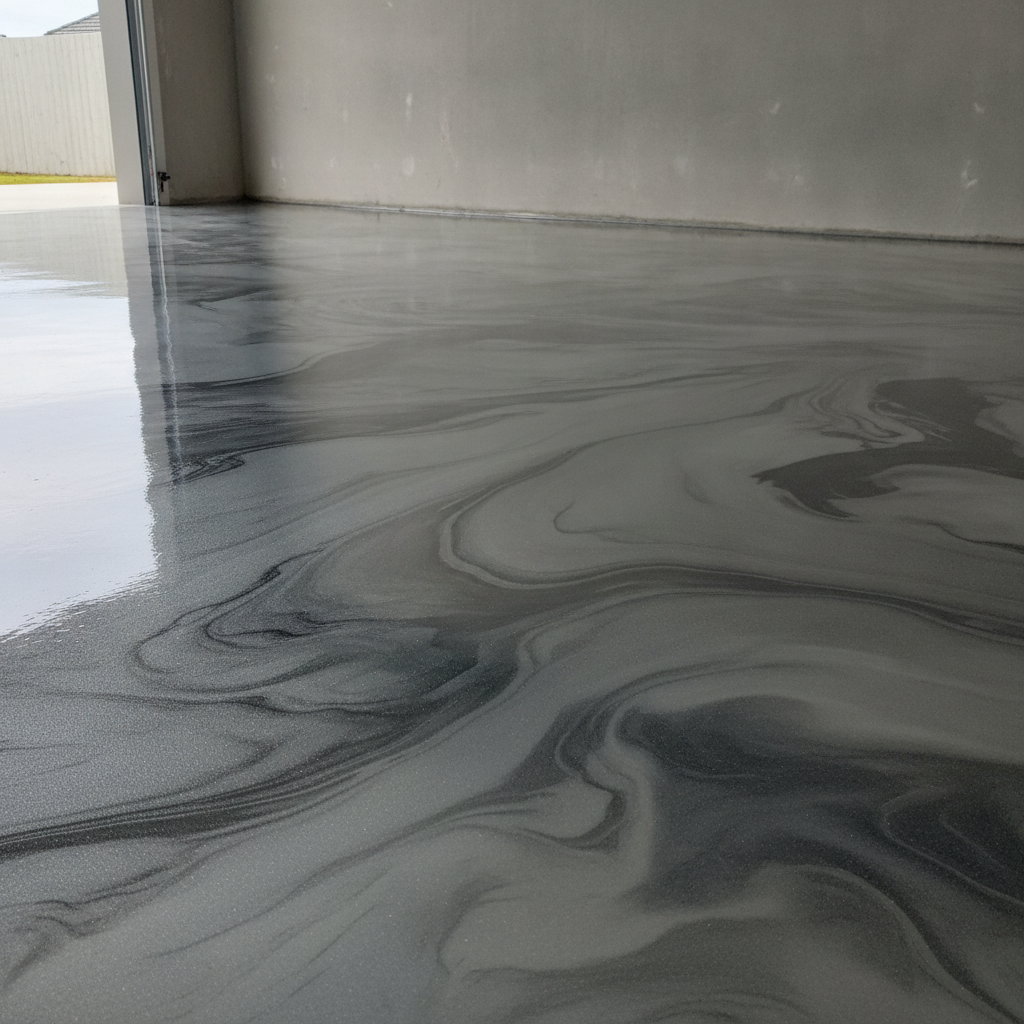
Metallic epoxy garage floors are a high-gloss, resin-based coating that uses metallic pigments to create a flowing, three-dimensional effect on concrete. They are durable, chemical-resistant and look far more impressive than bare concrete. For most Australian homeowners who use their garage as a showroom, workshop or living extension, they are absolutely worth considering.

What actually makes metallic epoxy garage floors different from standard epoxy?

Metallic epoxy garage floors differ from standard epoxy because they use fine metallic or pearlescent pigment particles suspended in a two-part epoxy resin. As the coat is applied and manipulated with rollers and blowers, the pigments shift and swirl, producing a unique, almost three-dimensional finish that you cannot replicate twice. Standard solid-colour epoxy lays flat. Metallic epoxy moves.

That movement is the whole point. When light hits the floor from a garage door opening, the surface catches it differently at every angle. Depending on the pigment colours chosen, you can get anything from a deep ocean-blue shimmer to a molten-silver lava effect. Every square metre ends up genuinely one-of-a-kind.

The base system is still a two-part epoxy, which means you get all the same structural benefits: a hard, seamless surface that bonds chemically to the concrete rather than just sitting on top of it. The metallic layer is typically applied over a pigmented base coat and then sealed with a clear polyurethane or polyaspartic topcoat that adds UV stability and extra abrasion resistance.

How durable are metallic epoxy garage floors for everyday use?

Metallic epoxy garage floors are very durable for everyday residential garage use. A properly installed system with a quality polyaspartic topcoat can handle car tyres, trolley jacks, oil spills and general foot traffic for well over a decade without losing its gloss. The topcoat is the workhorse here: it protects the metallic layer underneath from scratching and UV yellowing.

A few real-world things to keep in mind. First, hot tyre pickup is a known issue with pure epoxy floors. When a car parks on the surface straight after a long drive, the hot rubber can bond lightly to a low-quality epoxy and pull chips away when the car moves again. A polyaspartic or polyurethane topcoat handles heat much better and reduces this risk significantly. Second, bare epoxy without an anti-slip additive can get slippery when wet. Many installers broadcast a fine quartz or aluminium oxide into the topcoat to give it grip without killing the gloss. Worth asking about if you live somewhere that gets rain blowing into the garage.

In terms of chemical resistance, epoxy shreds most garage nasties. Engine oil, brake fluid, petrol and most household cleaners wipe off clean. Prolonged contact with strong acids or caustic solvents will eventually damage any coating, but day-to-day garage chemistry is not a problem.

What does the installation process for metallic epoxy garage floors involve?

The installation process for metallic epoxy garage floors involves concrete preparation, a primer coat, the metallic colour coat, optional design work and a clear protective topcoat. Surface preparation is the most critical stage: grinding or shot-blasting the concrete opens up the pores so the epoxy bonds properly. Skipping this step is the number-one reason DIY epoxy jobs peel within a year.

Here is a typical sequence for a professional installation:

  • Day 1 – Preparation: The slab is ground with a diamond grinder or shot-blasted to achieve a concrete surface profile (CSP) of around 2 to 3. Any cracks, control joints or spalling are repaired with epoxy filler. Moisture readings are taken because concrete with high moisture vapour transmission can cause delamination.
  • Day 1 – Primer: A penetrating epoxy primer is rolled on and left to cure. Some systems use a moisture-tolerant primer to deal with slightly damp slabs.
  • Day 2 – Base and metallic coat: The pigmented base coat goes down, followed immediately by the metallic epoxy layer. The installer uses a notched squeegee, short-nap roller and sometimes a propane torch or leaf blower to manipulate the pigment into the desired swirl pattern. This is where the artistry comes in.
  • Day 2 or 3 – Topcoat: Once the metallic layer has cured to a tack-free state, the clear polyaspartic or polyurethane topcoat is applied, often in two passes. Anti-slip aggregate is broadcast into the wet topcoat if required.
  • Cure time: Light foot traffic is usually fine after 24 hours. Cars should stay off for at least 72 hours, and full chemical cure takes around 7 days.

Total installation time for a standard double garage of around 36 to 40 square metres typically runs two to three days on site.

How much do metallic epoxy garage floors cost compared to other options?

Metallic epoxy garage floors cost more than plain paint or basic solid-colour epoxy but less than tiling or polished concrete for the same area. In Melbourne, professionally installed metallic epoxy in a standard double garage typically falls in the range of $50 to $100 per square metre, depending on the complexity of the design, the condition of the existing slab and the topcoat system specified. That puts a 40-square-metre double garage somewhere between $2,000 and $4,000 installed.

Compare that to concrete tiles, which can run $80 to $150 per square metre installed and require ongoing grout maintenance, and the value proposition of epoxy starts to look pretty solid. Polished concrete is in a similar price bracket to metallic epoxy but requires a thicker slab and more grinding time, and it does not offer the same decorative range.

The other cost worth factoring in is longevity. A quality metallic epoxy system, properly maintained, should not need replacing for 10 to 15 years. Basic floor paint might look okay for 12 to 18 months before it starts chipping and peeling. When you spread the cost over the usable life, metallic epoxy is genuinely competitive.

Are metallic epoxy garage floors a good fit for your specific situation?

Metallic epoxy garage floors are a good fit if you want a premium-looking, low-maintenance surface and you are prepared to invest in proper professional installation. They suit car enthusiasts who park show vehicles, homeowners converting a garage into a multipurpose room, and anyone who simply wants a finished, clean-looking space rather than bare grey concrete.

They are less ideal in a few situations. If your slab has severe moisture issues, rising damp or major structural cracking, those problems need to be addressed before any coating goes down. A reputable installer will test for moisture and be upfront about it rather than just coating over the problem. If you are running heavy industrial machinery that vibrates or drops metal objects regularly, a harder industrial system might suit you better than a decorative metallic coat.

Climate matters a little too. Melbourne’s temperature swings between seasons mean concrete slabs expand and contract. A flexible topcoat handles this better than a brittle one, so asking your installer what topcoat system they use and why is a fair question.

If you are a renter, check your lease. Some landlords are happy for tenants to upgrade the floor; others are not. Either way, a metallic epoxy floor typically adds to the property’s appeal and resale value, so most owner-occupiers see it as a straightforward improvement rather than an expense.

Ready to see what the finish looks like on your own slab? Book a metallic epoxy garage floor installation with Metal and Flake.

Epoxy Flake Flooring in Preston: What Inner-North Homeowners Choose

Epoxy Flake Flooring in Preston: What Inner-North Homeowners Choose

Epoxy flake flooring in Preston is a broadcast-flake epoxy system where coloured vinyl chips are scattered across a wet epoxy base coat and sealed with a clear topcoat. It delivers a tough, slip-resistant, easy-to-clean surface that suits garages, workshops, and living areas. The result is a floor that looks sharp, hides dirt well, and holds up to daily punishment for well over a decade with normal care.

Why is epoxy flake flooring so popular with Preston homeowners right now?

Preston homeowners are choosing epoxy flake because it solves three problems at once: it covers tired, stained concrete without the cost of replacement, it adds grip underfoot in damp Melbourne conditions, and it gives a finished, professional look that plain grey concrete simply cannot match. The flake pattern also breaks up any surface imperfections that would show through a solid-colour system.

The inner north of Melbourne has a dense mix of post-war brick homes, California bungalows, and newer knockdown rebuilds. A huge proportion of them sit on concrete slabs, and those slabs spend decades collecting oil drips, tyre marks, and the general grime that comes with a busy household. When owners get around to upgrading the garage or a utility room, they want something that looks deliberate, not just painted.

Epoxy flake hits that brief. The vinyl chip broadcast creates a terrazzo-like texture at a fraction of the price of real terrazzo. You can match the chips to almost any interior palette, which means the garage floor can actually coordinate with the rest of the house rather than hiding in shame behind a closed door.

What does the epoxy flake installation process actually involve?

A professional epoxy flake installation follows a strict sequence: the concrete is ground or diamond-blasted to open the surface, any cracks or pits are filled, the base epoxy coat is applied, the vinyl flakes are broadcast across the wet surface until full coverage is reached, excess flake is scraped back, and then one or two clear polyurethane or polyaspartic topcoats seal everything in. Done correctly, the whole process typically takes two days on a standard garage.

The surface preparation stage is the one that separates a long-lasting floor from one that peels inside eighteen months. Concrete needs to be mechanically opened so the epoxy bonds at a pore level, not just sits on top. In Preston and through much of the inner north, older slabs can have residual curing compounds or contamination from years of use. Skipping a proper grind on that kind of surface is asking for delamination.

Once the base coat is down, the flake broadcast happens fast. The installer walks the slab throwing handfuls of chip until the surface is fully covered (a “full broadcast” method), which gives maximum coverage and makes the final topcoat sit on a relatively flat bed of chip rather than on bare epoxy. This is what creates the grip underfoot and the dense, speckled finish people are after.

The topcoat is where the durability lives. A good polyaspartic topcoat is UV-stable, which matters in garages with roller doors that see direct afternoon sun, and it resists the hot-tyre pickup that plagues cheaper systems. Preston gets its share of scorching summer afternoons, so UV stability is genuinely relevant, not just a sales point.

How long does epoxy flake flooring last on a Preston garage floor?

A correctly installed epoxy flake floor on a well-prepared concrete slab should last fifteen to twenty years in a typical residential garage before it needs any significant attention. The main variables are surface prep quality, the thickness of the topcoat, and how hard the floor is used day to day. Light foot traffic and occasional car parking will get you closer to the top of that range.

Maintenance is straightforward. A neutral-pH cleaner and a mop handle the weekly routine. Avoid dragging metal objects across the surface and clean up any chemical spills (battery acid, brake fluid) promptly, and the floor will stay looking close to new for years. The flake pattern does a great job of masking fine scuffs that would be obvious on a solid-colour floor, so it tends to age gracefully.

The one thing that shortens epoxy floor life in older Melbourne homes is rising moisture. If a slab has no damp-proof membrane underneath, or if it has one that has degraded, moisture vapour can push up from the ground and pressurise beneath the epoxy coating. A qualified installer will test for this before committing to a standard epoxy system and recommend a moisture-tolerant primer if needed.

What colours and flake blends work best for Preston homes?

Neutral blends, specifically grey, charcoal, and beige chip mixes, are consistently the most requested for Preston garages and alfresco areas because they sit well with the brick tones and weatherboard colours common in the suburb. Darker charcoal bases with a mixed flake broadcast give a contemporary industrial feel that suits the updated Californian bungalow style popular in the area.

That said, the beauty of a flake system is that the chip blends are almost infinitely variable. Some homeowners go for a tan and cream mix to complement a light-toned interior. Others pick a bold blue or green chip blend for a workshop or home gym floor where they want the space to feel energetic. The clear topcoat locks in whatever you choose without dulling the colour.

Size matters too. Standard flake is around 1mm to 4mm chip size, which gives the familiar terrazzo-style texture. Larger chip sizes (up to about 12mm) create a more coarse, highly textured surface that is popular in areas where wet feet are common, like pool surrounds or laundry entries. Smaller chips create a finer, almost granite-like appearance that some homeowners prefer for rooms connected to the main living area.

Is epoxy flake flooring the right choice for indoor living spaces in Preston?

Epoxy flake is increasingly being used inside Preston homes in laundries, utility rooms, and even open-plan kitchen and dining areas where the owner wants a durable, low-maintenance floor with a polished industrial character. It performs well indoors provided the concrete substrate is sound, the space has reasonable ventilation during installation, and the right topcoat is chosen for the traffic level expected.

The key consideration indoors is VOC (volatile organic compound) content during application. Modern water-based epoxy systems and fast-cure polyaspartic topcoats have significantly lower odour and off-gassing than older solvent-based products, making indoor installation practical in occupied homes with good airflow. Most residential indoor installs are liveable again within twenty-four to forty-eight hours of the final topcoat going down.

For living areas, the slip resistance of the cured flake surface is another genuine advantage. A full-broadcast flake floor with a matte or satin topcoat sits at a coefficient of friction well above the threshold recommended for residential wet areas, making it a sensible choice for households with kids or older residents.

Preston homeowners looking to bring cohesion to a concrete-floored extension or conversion will find that epoxy flake bridges the gap between the raw industrial look and something warm enough for everyday living, without the grout lines and maintenance headaches of tiles.

Ready to get a proper floor under your feet? Book an epoxy flake floor installation in Preston with Metal and Flake.

What Is the Best Epoxy Coating for a Garage Floor in Australia?

What Is the Best Epoxy Coating for a Garage Floor in Australia?

The best epoxy coating for a garage floor in Australia is a 100% solids, two-part epoxy system professionally applied over a properly prepared concrete slab. It outperforms water-based or single-part products because it bonds harder, resists hot tyre pick-up, and holds up to oil, chemicals and daily traffic for well over a decade when done right.

Why does epoxy type matter so much for Australian garages?

Australian garages cop a lot more punishment than people expect. Summer concrete temperatures in Melbourne can push past 35°C on a hot slab, and that heat is exactly what peels a cheap coating off in sheets. The type of epoxy you choose determines whether the floor lasts two years or twenty. A 100% solids two-part epoxy contains no water or solvents to evaporate, so almost everything you apply stays on the floor as a thick, hard film. Water-based epoxy paints, by contrast, can contain as little as 40–50% solids, meaning you are essentially paying for water to evaporate and leaving a much thinner layer behind. That thinner layer cracks, yellows and lifts under the kind of load and heat a garage throws at it every day.

Single-part epoxy products sold in hardware stores are convenient but they are not true epoxies in the structural sense. They do not cross-link the same way a proper two-part system does, so they sit on top of the concrete rather than bonding into it. When a tyre sits on that surface on a hot day, the rubber grips the coating and pulls it right off. That is the infamous hot tyre pick-up problem, and it is the number one complaint people have after a DIY garage floor job.

What makes the best epoxy coating for a garage floor hold up long-term?

The best epoxy coating for a garage floor holds up long-term because of three things working together: the right product chemistry, proper concrete preparation, and a quality topcoat. Getting even one of these wrong shortens the life of the floor dramatically. A high-build, two-part epoxy basecoat applied at the right thickness (typically 300–500 microns dry film thickness) gives the floor its strength and chemical resistance. The topcoat, usually a polyurethane or polyaspartic clear, protects the colour, adds UV stability and makes the surface easy to clean.

Concrete prep is the step that kills most DIY jobs before they even start. The slab needs to be mechanically prepared, either by diamond grinding or shot blasting, to open up the concrete profile and give the epoxy something to grip. Simply acid etching, which is what most hardware store instructions suggest, rarely creates a profile deep enough for a 100% solids system to bond correctly. When a professional uses a diamond grinder they are aiming for a concrete surface profile (CSP) of around 2 to 3 on the ICRI scale, which is a standardised way of measuring how rough and open the surface is before coating.

Moisture is the other silent killer. Concrete that has a high moisture vapour emission rate will push water vapour up through the slab and cause the coating to blister and delaminate, sometimes within weeks of application. A good installer tests for moisture before they start and, where needed, uses a moisture-tolerant primer to manage it.

What are the different epoxy garage floor systems available in Australia?

There are several systems you will come across when researching garage floor coatings, and it helps to know what each one actually is before you commit. Here is a plain-English breakdown of the main options.

Water-based epoxy paint. Readily available in hardware chains, easy to apply, cheap upfront. Solids content is low, film build is thin, and durability under heavy traffic or chemical exposure is poor. Fine for light foot traffic in a laundry or workshop but not well suited to a busy garage with vehicles on it.

Solvent-based two-part epoxy. A step up from water-based products and used by many trade applicators. Higher solids content than water-based options and a stronger bond, but still not as hard or as thick as a 100% solids system. Solvent odour during application is significant and ventilation is critical.

100% solids two-part epoxy. The professional standard for garage floors. No solvents, maximum film build, very high chemical and abrasion resistance. Requires proper mixing ratios and temperature management during application, which is why professional installation gives far better results than a DIY attempt.

Polyaspartic coatings. A newer technology that cures faster than epoxy and has excellent UV resistance. Some applicators use polyaspartic as both the base and topcoat for a fast-turnaround job. The quick cure time can be a double-edged sword: it means you can park on the floor sooner, but it also leaves less working time for the installer to apply it correctly.

Flake or chip systems. These are decorative broadcast systems where vinyl flakes or colour chips are scattered into a wet epoxy base. The flakes hide minor surface imperfections, add texture for grip, and give the floor a clean, finished look. A clear topcoat is then applied over the flakes to lock them in and seal the surface. This is one of the most popular finishes for residential garages in Melbourne because it looks sharp and hides dirt well between cleans.

How does climate in Melbourne affect which system is best?

Melbourne’s climate adds a few specific considerations that do not apply in every Australian city. The city’s famously variable weather, cold winters dropping close to freezing overnight and hot dry summers, means the concrete slab goes through more thermal expansion and contraction cycles than in a consistently warm climate like Brisbane or Darwin. A flexible, well-bonded system handles that movement better than a brittle, thin coating.

Humidity during application also matters. Most epoxy systems have application windows specifying that the substrate temperature must be at least 3°C above the dew point. On a cold Melbourne morning that window can be tighter than you think. Professional installers know to check dew point and slab temperature before they start mixing, whereas most DIYers do not know the dew point figure even matters.

UV exposure is another factor. Standard epoxy without a UV-stable topcoat will amber and chalk over time when exposed to sunlight through an open garage door. A polyurethane or polyaspartic clear topcoat over the epoxy base prevents that yellowing and keeps the floor looking fresh for years longer.

Is it worth paying for professional epoxy floor coating versus doing it yourself?

Professional installation is worth the cost for most homeowners because the failure rate on DIY epoxy garage floors is genuinely high, not because homeowners are incompetent, but because the margin for error in preparation and application is tighter than product marketing suggests. Hiring a pro who uses a diamond grinder, moisture tests the slab, applies a proper two-part 100% solids system and finishes with a quality topcoat delivers a floor that realistically lasts 10 to 15 years with normal maintenance. A DIY job using hardware store products might last two to five years before it needs stripping and redoing, and removing a failed epoxy coating from a slab is a time-consuming, dusty job.

The other thing professionals bring is experience with mixing ratios and pot life. A two-part epoxy has a working time once mixed, often as short as 20 to 30 minutes at warm temperatures. If you mix too much at once or work too slowly, the material kicks off in the bucket before you have finished rolling it out, leaving an uneven finish or a wasted batch. Experienced installers have systems for managing this efficiently across a full garage floor.

Beyond that, a professional can source commercial-grade products that are not available to the general public through hardware stores. The product range accessible to trade applicators is simply broader, and the formulations designed for heavy commercial or industrial use translate directly to a more durable residential garage floor.

Get a professional epoxy garage floor coating from Metal and Flake.

Concrete Floor Coating in Sunbury: Options for Garages and Driveways

Concrete Floor Coating in Sunbury: Options for Garages and Driveways

Concrete floor coating in Sunbury protects bare slabs from oil stains, tyre scuff, UV damage and surface crumbling. The right coating depends on whether you’re sealing a garage, a driveway or an alfresco area. Epoxy and polyaspartic systems are the most durable options, lasting well over a decade with proper prep and application.

Why does bare concrete in Sunbury need a coating at all?

Bare concrete is porous and softer than most people expect. Without a coating, it absorbs oil, brake fluid and water, which causes staining, spalling and long-term structural damage. Sunbury’s temperature swings between hot summers and cold winters accelerate this wear cycle, making surface protection more important here than in more temperate parts of Melbourne.

If you’ve ever watched a concrete driveway go from clean grey to pitted and oil-stained within a few years of use, that’s the classic result of leaving a slab unprotected. The concrete itself isn’t failing. It’s just doing what uncoated concrete does when it faces traffic, heat and moisture over and over again.

A quality concrete floor coating seals those pores. It gives you a surface that wipes clean, resists chemical spills and handles the day-to-day punishment a working garage or busy driveway dishes out. Done properly, it also looks considerably better than bare grey slab.

What concrete floor coating options work best for Sunbury garages?

For garage floors in Sunbury, epoxy coatings and polyaspartic coatings are the two strongest contenders. Epoxy builds up a thick, hard-wearing film that resists impact, chemicals and heavy foot traffic. Polyaspartic coatings cure faster and handle UV exposure better, making them a good choice where sunlight gets in through roller doors or windows. Both can be finished with metallic pigments or decorative flake to give the floor a sharp, showroom-style look.

Here’s a plain breakdown of the main options you’ll come across:

  • Epoxy floor coating: A two-part resin system applied in layers. Very hard, excellent chemical resistance, best suited to shaded garages where UV isn’t a major factor. Typical build thickness of 2 to 4 millimetres depending on the system.
  • Polyaspartic coating: A newer aliphatic urethane chemistry that cures in a matter of hours rather than days. UV-stable, so it won’t yellow over time. Well suited to Sunbury garages that get afternoon sun blasting through the door.
  • Metallic epoxy: The same chemistry as standard epoxy but mixed with metallic pigment powders to create a flowing, marble-like appearance. Popular for home garages where looks matter as much as toughness.
  • Flake or chip systems: Vinyl flake broadcast into a base coat and sealed with a clear topcoat. Hides dirt well, adds texture underfoot and suits working garages where a slip-resistant surface matters.

The critical thing with any garage floor coating is surface preparation. Diamond grinding the slab opens up the concrete’s pores so the coating bonds mechanically rather than just sitting on top. A coating that isn’t properly bonded will peel, full stop. No product gets around bad prep.

What concrete floor coating suits a Sunbury driveway?

Driveways have different demands to garages. They cop full sun all day, carry heavier vehicle loads over a larger area, and are exposed to rain, leaves and external grime. For driveways, polyaspartic and penetrating sealers are typically the better fit, though a fully ground and coated epoxy system also works well on covered or semi-shaded sections.

Penetrating concrete sealers are worth understanding here. Unlike a film-forming coating, they soak into the slab and harden the surface from within. They don’t change the look dramatically, but they do repel water and staining agents. They’re a lower-cost entry point if the driveway is in reasonable condition and you just want protection rather than a decorative finish.

For a full decorative result on a driveway, a polyaspartic topcoat over a ground slab is the most practical choice. It handles UV without yellowing, stays flexible enough to cope with minor slab movement, and can be colour-tinted or given a light flake finish to suit the look of the house.

One thing worth knowing: most concrete coatings applied to driveways need at least 28 days of curing time after any new concrete is poured before they’ll bond correctly. If you’ve just had a new slab laid, hold off and let it cure fully before looking at coating options.

How long does a concrete floor coating last in Sunbury’s climate?

A properly installed epoxy or polyaspartic coating on a well-prepared slab will typically last 10 to 15 years in a residential garage setting. Driveways in full sun may see some UV wear on cheaper systems after five to seven years, which is why UV-stable polyaspartic topcoats are worth the extra spend for exposed areas.

Longevity comes down to three things: product quality, surface preparation and how the floor is used. A showroom-style metallic floor in a garage that stores one car and stays clean will outlast the same coating in a workshop where chemicals, heavy tools and grinding work happen daily. Neither is wrong, it just helps to be honest about the use case before choosing a system.

Maintenance is straightforward. A pH-neutral cleaner and a soft mop is all most coated floors need week to week. Avoid dragging sharp metal objects across the surface, and clean up harsh chemical spills promptly rather than letting them sit.

What should Sunbury homeowners look for in a concrete floor coating contractor?

Ask any contractor you’re considering three practical questions. First, what surface preparation method do they use? Diamond grinding is the industry standard. Shot blasting works too. Acid etching alone is not adequate for a long-lasting bond. Second, what is the build thickness of the coating system they’re quoting? Thin coatings fail faster, so understand what you’re actually getting for the price. Third, do they provide a written warranty and what does it cover?

Local experience matters in Sunbury specifically because the slab conditions here often reflect the region’s clay-heavy soils. Slabs can have more minor movement and moisture transmission than slabs in drier parts of Melbourne, and a contractor who knows the area will factor that into product selection and prep.

Get more than one quote, and compare them like for like. A quote that doesn’t specify the product system, number of coats and prep method isn’t a real quote. It’s a number you can’t compare to anything.

Get a concrete floor coating quote in Sunbury from Metal and Flake

Epoxy Flake Flooring in Epping: Colours, Cost and What to Expect

Epoxy Flake Flooring in Epping: Colours, Cost and What to Expect

Epoxy flake flooring in Epping is a broadcast-flake system where coloured vinyl chips are scattered over a base coat of epoxy, then sealed under a clear polyurethane or polyaspartic topcoat. It produces a hard-wearing, slip-resistant surface that suits garages, workshops and commercial spaces. Installed by a professional, the whole process typically takes one to two days and the floor is ready to drive on within 24 to 48 hours.

What exactly is an epoxy flake floor and why are Epping homeowners choosing it?

An epoxy flake floor is a multi-layer coating system: a primer goes down first to bond with the concrete, a pigmented epoxy base coat follows, then a broadcast of decorative vinyl flakes, and finally one or two clear topcoats to lock everything in place. Epping homeowners choose it because it hides concrete imperfections, resists oil and chemical spills, and looks sharp without costing the earth compared to tiles or polished concrete.

The vinyl flakes do a lot of the heavy lifting here. They break up the flat colour of a plain epoxy floor, add a texture that improves grip underfoot, and make small scuffs and dirt far less noticeable between cleans. For a busy garage or home workshop in Epping, that practical combination is hard to beat.

There is also a durability argument. A properly installed flake floor, with a quality polyaspartic topcoat, can handle the weight of a loaded trailer, resist tyre marks and cope with petrol, brake fluid and engine oil without staining or lifting. That kind of resilience matters when you are parking vehicles on the floor every day.

What colour options are available for epoxy flake flooring in Epping?

Most professional installers offer dozens of flake blends covering neutral greys, charcoals, tans, blues and multi-tone mixes. The most popular choices in residential garages tend to be mid-grey and charcoal blends, because they stay looking clean longer and complement most home exteriors. Custom blends can also be ordered to match a specific palette if you want something unique.

Flake comes in different chip sizes too, typically ranging from 1mm up to around 12mm. Smaller chips give a finer, more uniform texture. Larger chips create a bolder, more dramatic look and provide slightly more grip. For a standard double garage in Epping, a 4mm or 6mm chip in a grey or charcoal blend is the most common choice.

The base coat colour underneath the flakes also affects the final look. A white or light-grey base makes the flakes pop and brightens up a dark garage. A charcoal base gives a deeper, more uniform tone. A good installer will show you real samples, not just printed swatches, because artificial lighting in a showroom reads very differently to natural light bouncing off a sealed concrete floor.

How much does epoxy flake flooring cost in Epping?

For a residential garage in Epping, epoxy flake flooring typically costs between $50 and $80 per square metre installed, depending on the condition of the concrete, the number of topcoat layers and the chip blend selected. A standard two-car garage of around 36 square metres would therefore run somewhere in the $1,800 to $2,900 range as a rough guide, though concrete repairs or grinding will add to that figure.

The biggest variables that push the price up are concrete preparation and repairs. If the existing slab has cracks, spalling, oil contamination or paint that needs grinding back, that prep work takes more time and equipment. Skimping on prep is the most common reason flake floors peel or bubble within a year or two, so it is not an area where a good installer will cut corners.

The topcoat choice also affects cost. A standard polyurethane topcoat is more affordable but takes longer to cure. A polyaspartic topcoat costs a little more but cures in hours rather than days, meaning the floor is back in service much faster. For a working garage in Epping where you need the car back in quickly, the polyaspartic premium is often worth it.

Always get a written quote that breaks out surface preparation, materials and labour separately. That way you can compare quotes on a like-for-like basis rather than being surprised by hidden preparation charges later.

What does the installation process look like from start to finish?

A professional epoxy flake floor installation in Epping follows a clear sequence. Understanding each step helps you plan the project and set realistic expectations around downtime and access to your garage or space.

Day one almost always starts with surface preparation. The installer will diamond-grind or shot-blast the concrete to open up the surface profile so the epoxy bonds properly. Any cracks or holes are filled with a flexible filler or epoxy mortar. This is the step that separates a floor that lasts a decade from one that starts peeling in the first wet winter.

Once the surface is prepped and dust-free, the primer coat goes down. This seals any residual moisture transmission and gives the epoxy base coat something solid to grip. After the primer cures (usually two to four hours), the pigmented base coat is rolled on and the vinyl flakes are broadcast by hand while the epoxy is still wet. A full broadcast, where flakes are thrown until the base coat is completely covered, gives the most even and durable finish.

The next morning, excess loose flakes are scraped back and the floor is lightly sanded to knock down any sharp edges. Then the clear topcoat goes on, sometimes in two layers for commercial applications or high-traffic areas. By the afternoon of day two, light foot traffic is usually fine. Vehicle access typically follows at the 24 to 48 hour mark, depending on the topcoat system used.

A good installer will also mask skirting boards, door frames and wall edges carefully, so you are not left with epoxy residue on surfaces that were never meant to be coated. That finishing detail is a reliable sign of workmanship quality.

How do you maintain an epoxy flake floor once it is installed?

Maintaining an epoxy flake floor is straightforward. Sweep or blow out loose grit regularly, because fine particles act like sandpaper underfoot and can dull the topcoat over time. A mop with warm water and a mild pH-neutral cleaner handles most spills and marks. Avoid harsh solvents or acidic cleaners, which can cloud the topcoat finish.

Oil spills are best cleaned up promptly. Epoxy and polyaspartic topcoats are resistant to oil, but leaving a puddle sitting for several days gives it time to work into any micro-scratches in the surface. A quick wipe with a rag and a follow-up with warm water keeps the floor looking factory-fresh.

Most professionally installed flake floors hold up well for ten or more years before the topcoat shows meaningful wear, at which point a recoat (rather than a full reinstall) is usually all that is needed. That longevity, combined with easy cleaning, is a big reason epoxy flake is such a practical choice for Epping garages and workshops.

Ready to get started? Book an epoxy flake floor installation in Epping with Metal and Flake.

Epoxy vs Polyurea Garage Floors: What Melbourne Homeowners Should Know

Epoxy vs Polyurea Floor Melbourne: What You Need to Know Before You Coat Your Garage

When comparing epoxy vs polyurea floor options in Melbourne, epoxy delivers a thick, hard-wearing surface with outstanding chemical resistance and a wide range of decorative finishes, while polyurea cures faster and handles temperature swings better. Most Melbourne homeowners get the best result from a system that combines both technologies, or from polyaspartic, which sits in the polyurea family.

What is the actual difference between epoxy and polyurea floor coatings?

Epoxy is a two-part resin and hardener system that bonds tightly to concrete and builds up a thick, rigid film. Polyurea is a more flexible polymer that cures extremely fast, often within seconds in warm conditions. The two materials behave very differently on a garage slab, and understanding that difference stops you spending money on the wrong product for your situation.

Epoxy has been the go-to garage floor coating for decades for good reason. When it is applied correctly, it creates a dense, high-build layer that resists oil, fuel, battery acid and heavy abrasion. The standard broadcast flake system used by professional installers uses epoxy as the base coat precisely because of that thickness and adhesion. A quality epoxy base can be 3 to 5 times thicker than a standard polyurea-only coat, which matters when you are parking a loaded ute or trailer every day.

Polyurea and its close relative polyaspartic are different animals. They are far more flexible, they tolerate UV exposure without yellowing, and they cure so fast that a full coating system can be installed in a single day. The catch is that the rapid cure means a very short working window for the installer. Applied by someone inexperienced, a polyurea coat can bubble, lift or bond poorly if the slab is even slightly damp or if the temperature climbs mid-job.

How does Melbourne’s climate affect which coating you should choose?

Melbourne’s climate matters a lot when choosing between epoxy and polyurea floor coatings. Epoxy can yellow under prolonged UV exposure and becomes brittle in extreme cold, while polyurea and polyaspartic topcoats stay flexible and UV-stable through Melbourne’s wide seasonal temperature range, making a combined system the most practical choice for a Melbourne garage.

Melbourne is notorious for four seasons in one day, and garages can swing from near-freezing winter mornings to 40-plus-degree summer afternoons. Standard solvent-based epoxies applied as a single-coat system can struggle with that range. The coating can become brittle in sustained cold, and direct sunlight through an open roller door will yellow an epoxy topcoat over time.

That is why professional installers in Melbourne typically use epoxy as the base and prime coat, then finish with a polyaspartic topcoat. Polyaspartic is a type of polyurea that handles UV and temperature variation without the colour shift. You get the best of both: the build, adhesion and chemical resistance of epoxy underneath, and the UV stability and flexibility of polyaspartic on top. It is the same logic as using a quality primer under a durable exterior paint on a Melbourne weatherboard house.

Which option is more durable for a busy home garage?

For a busy home garage in Melbourne, a properly installed epoxy base coat topped with a polyaspartic sealer is the most durable option available. The epoxy layer resists impact and chemical spills, while the polyaspartic topcoat protects against UV fading and surface abrasion. A combined system typically outlasts a single-product coating by several years under regular vehicle and foot traffic.

Think about what actually happens in a working garage. You park hot tyres on the floor every night. You drip coolant, oil and brake fluid. You drag toolboxes, lawnmowers and bikes across the surface. A thin single-coat polyurea applied straight to bare concrete can look great on day one, but it has almost no build thickness to absorb that kind of punishment.

Epoxy’s higher film build is a genuine advantage here. When you add decorative flake broadcast into a wet epoxy base, the flake also adds texture and grip, which matters on a floor that can get wet from Melbourne rain tracked in off the driveway. A smooth, thin polyurea-only coat can get slippery when wet, which is a safety issue as well as a practical one.

Durability also depends heavily on surface preparation. Whether you use epoxy, polyurea or a combination system, the slab has to be diamond-ground before anything goes down. A coating applied over a dusty, trowel-finished or contaminated slab will peel regardless of how good the product is. This is where cheap DIY kits fall down. They rarely come with the prep equipment or the product quantity to do the job properly.

Is polyaspartic worth the extra cost over standard epoxy?

Polyaspartic topcoats cost more per litre than standard epoxy, but for a Melbourne garage they are worth the premium. The UV resistance alone prevents the yellowing and chalking that affect clear epoxy topcoats exposed to sunlight, and the faster cure time means the garage is back in use within a day rather than waiting 72 hours or more for a full epoxy system to harden.

One concrete example: a standard two-coat epoxy system with a broadcast flake layer typically needs 24 hours between coats and a full 72-hour cure before you can drive on it. A polyaspartic topcoat over an epoxy base can often be walked on within a couple of hours and driven on the same day. For a household that relies on the garage every day, that turnaround is a real-world advantage, not just a marketing point.

Cost-wise, you are generally paying for faster labour time and a premium UV-stable product. The trade-off is fair if you want a floor that still looks good five or ten years from now without needing a recoat on the topcoat. If the garage has no natural light exposure, a standard epoxy clear topcoat is a reasonable choice at a lower price point.

What should Melbourne homeowners ask a floor coating installer before signing anything?

Before hiring any Melbourne garage floor coating installer, ask whether they use diamond grinding for prep, what the base coat film build thickness is, whether the topcoat is UV-stable polyaspartic or standard epoxy clear, and what the warranty covers. These four questions separate professional installers from those applying a thin coat over an unprepped slab.

A few other things worth clarifying upfront. Ask whether the quote includes moving your gear out of the garage or if that is on you. Check whether the installer tests for moisture in the slab before starting, because a damp slab is one of the most common causes of coating failure in Melbourne’s wetter months. And ask to see finished photos of similar jobs in conditions close to yours, whether that is a large double garage, a carport slab or a workshop with existing staining.

Reputable installers are happy to answer these questions without getting defensive. If a quote comes in significantly cheaper than others and the installer can’t explain what product they’re using or how they prepare the surface, that is a sign to keep looking.

At Metal and Flake, the team installs epoxy base coats and polyaspartic topcoats across Melbourne using proper diamond-grind preparation on every job. The flake broadcast finish adds depth, grip and a clean, professional look that holds up to daily use in a real working garage. Book an epoxy or polyaspartic garage floor coating with Metal and Flake.

Garage Floor Coating in Coburg: Which Epoxy System Suits You?

Garage Floor Coating in Coburg: Which Epoxy System Suits You?

A garage floor coating in Coburg protects your concrete slab from oil, tyre marks, moisture and everyday wear while making the space look sharp. The right system depends on your slab condition, how you use the garage and how much prep work the surface needs. Most residential garages suit a two-coat epoxy with a decorative flake broadcast, but there are other options worth knowing about before you commit.

Why does a garage floor coating in Coburg need more than just paint?

Standard floor paint sits on top of concrete without bonding to it properly. Within a year, tyres pulling in and out on a hot Melbourne day will lift it in sheets. A proper garage floor coating in Coburg uses a resin system that penetrates and chemically bonds to the slab, giving you a surface that handles vehicle traffic, dropped tools and the temperature swings that come with an uninsulated garage in Victoria’s climate.

Concrete is porous. Left bare, it absorbs oil drips, brake fluid and water, which weakens the slab over time and makes the floor almost impossible to clean. A bonded epoxy system seals those pores completely. That matters in Coburg, where older homes often have garages built on slabs that are 40 or 50 years old and have already taken a beating.

There is also a comfort and resale angle. A clean, coated garage floor reads as finished space, not a storage afterthought. Buyers notice it. Renters notice it. And you will notice it every time you pull the roller door up.

What epoxy systems are actually available for a garage floor coating?

There are four main systems used in residential garages around Melbourne, each with a different finish, price point and performance profile. Understanding the differences stops you from over-spending on a workshop floor or under-specifying a floor that needs to handle a daily driver plus weekend project cars.

Solid colour epoxy. This is the entry-level workhorse. A primer coat goes down first, then one or two build coats of a pigmented epoxy. You get a clean, seamless surface in a single colour, usually light grey, charcoal or white. It is affordable and hard-wearing, but it shows tyre marks more than a flake system does and any surface imperfections in the slab remain visible.

Metallic epoxy. A metallic pigment is mixed into the epoxy resin and manipulated with a squeegee or roller to create flowing, cloud-like patterns. The result is striking and genuinely one-of-a-kind because no two floors come out the same. It works well in showroom-style garages or man caves where aesthetics matter as much as function. The catch is that metallic systems are thinner than flake systems, so they offer less texture underfoot.

Epoxy flake (chip) system. This is the most popular system for residential garages in Melbourne and for good reason. Coloured vinyl flakes are broadcast into a wet base coat, then locked in with a clear polyurethane or polyaspartic topcoat. The flakes hide slab imperfections, add grip underfoot, and the speckled pattern disguises dust and light dirt between cleans. Metal and Flake specialises in this system, and it is the one most Coburg homeowners land on after seeing a finished example.

Polyaspartic-only system. Polyaspartic coatings are a faster-curing alternative to traditional epoxy. A full floor can be walk-ready in a few hours rather than 24 to 48 hours. They handle UV exposure better than standard epoxy, which matters if your garage door is open most of the day. The trade-off is that the faster cure time means less working time for the installer, so surface prep and application skill become even more critical.

How does slab condition change which system you should choose?

Slab condition is the single biggest factor in matching an epoxy system to your garage. A freshly poured or lightly used slab in good shape can take almost any system. An older slab with cracks, spalling or previous coatings needs honest assessment before any product goes down.

Diamond grinding is the industry-standard method for opening the surface profile of concrete so the epoxy can bond properly. Acid etching is sometimes used on very clean slabs, but grinding gives a more consistent result and is essential if there is any old sealer, paint or contamination present. Skipping this step is the number one reason DIY garage coatings fail within 12 months.

Moisture is a real issue in Coburg’s older housing stock. If the slab was poured without a proper vapour barrier underneath (common in garages built before the 1990s), moisture can push up through the concrete and cause delamination. A moisture check before quoting is not optional. If moisture vapour emission is high, a moisture-tolerant epoxy primer needs to go down first as a dedicated layer, not just a thicker coat of the topcoat system.

Cracks narrower than about 2mm can be filled and overcoated without drama. Structural cracks that move seasonally are a different story. No coating bridges an active crack indefinitely. A good installer will flag this upfront and talk through realistic expectations rather than just slapping product over the top.

What should you expect from the installation process?

A standard two-car garage in Coburg runs roughly 36 to 42 square metres. The preparation work, which includes grinding, crack filling and cleaning, typically takes as long as the coating application itself. Cutting corners on prep to save an hour is false economy.

Day one is surface prep and the base coat or primer. Day two, once the base coat has cured, is the broadcast flake and the first topcoat. Some systems require a second topcoat on day three for maximum chemical resistance. That means the garage is out of action for two to three days. Plan for it. Move the cars out the night before, not the morning of.

Temperature matters a lot. Epoxy does not cure properly below about 10 degrees Celsius, and Melbourne winters can push garage temperatures below that overnight even if the daytime was mild. A professional installer will check ambient and slab temperature before each coat goes down. This is one area where a seasoned local operator knows the seasonal quirks in a way a travelling crew often does not.

The finished surface should be hard and fully bonded within 72 hours of the final topcoat. You can walk on it sooner, but driving on it before the full cure window invites tyre impressions that are very hard to fix.

How do you maintain a coated garage floor long-term?

Maintaining a coated garage floor is straightforward compared to bare concrete. A weekly sweep and a monthly mop with a pH-neutral cleaner is all most floors need. Avoid bleach and ammonia-based cleaners because they dull the topcoat over time. If you are doing mechanical work, lay down a drip mat under the vehicle. A high-quality polyurethane or polyaspartic topcoat is chemical-resistant, but pooled oil sitting for a week will eventually work its way into surface micro-scratches.

Most professionally installed epoxy flake systems in a residential garage last 10 to 15 years with normal use before any recoating is needed. The topcoat tends to wear first. When it starts to look dull or develops isolated worn patches, a fresh topcoat can often be applied without stripping the whole system, which brings the cost of maintenance well below the cost of a full reinstall.

Get a garage floor coating quote in Coburg from Metal and Flake

Garage Floor Coating in Hoppers Crossing: Epoxy Options Explained

Garage Floor Coating in Hoppers Crossing: Epoxy Options Explained

A garage floor coating in Hoppers Crossing typically means choosing between a solid colour epoxy, a metallic epoxy or a flake (chip) system. Each suits a different budget, look and level of foot or vehicle traffic. The right pick depends on how you use the space, the condition of your existing concrete and how much shine you want underfoot.

Why do so many Hoppers Crossing homeowners bother coating their garage floor?

Bare concrete in a western Melbourne garage takes a hiding. Oil drips, brake fluid, tyre scuff, moisture rising through the slab in winter and the general grit that blows in off Hoppers Crossing’s open streets all break down unsealed concrete over time. A proper epoxy coating seals the slab, stops absorption, and makes the whole surface easy to hose down or wipe clean. It also just looks a lot sharper than grey, dusty concrete.

Beyond aesthetics, a coated floor protects the structural integrity of the slab. Concrete is porous. Petrol, oil and even water that sit on an unsealed surface work into the pores and, over years, can cause spalling and surface breakdown. Coating the floor is genuinely cheaper than replacing or grinding back a badly pitted slab later on.

There is also the resale angle. A well-finished garage is one of the first things a buyer notices during an inspection. A clean, coated floor signals a well-maintained property, and that matters in suburbs like Hoppers Crossing where the housing market moves quickly.

What are the main epoxy garage floor coating options available?

The three most common epoxy systems used on residential garage floors are solid colour epoxy, decorative flake (chip) epoxy and metallic epoxy. Solid colour is the most straightforward: a basecoat, a topcoat and a clear sealer, usually in one tone such as battleship grey or charcoal. It is neat, durable and sits at the more accessible end of the price range. Flake systems broadcast coloured vinyl chips into the wet epoxy before sealing, giving texture, grip and a speckled look that hides minor imperfections well. Metallic epoxy uses pigmented metallic powders to create swirling, three-dimensional visual effects that are genuinely striking in a showroom-style garage.

Here is a quick rundown of each:

  • Solid colour epoxy: Clean, consistent finish. Good slip resistance with the right aggregate added. Suits working garages where looks matter but the space still gets used hard.
  • Flake or chip epoxy: The most popular choice for home garages. The broadcast chips add grip underfoot, and the multi-tone pattern means the odd scuff or tyre mark is far less visible than on a plain surface. Broadcast density can be adjusted from a light scatter to a full-broadcast look that covers the base colour almost entirely.
  • Metallic epoxy: Higher cost, higher visual impact. Works especially well in double garages used as entertainment or workshop spaces where the floor is part of the overall design statement. Metal and Flake is named for this finish, and it is a genuine specialty of the business.

All three systems need a properly prepared substrate. Diamond grinding the concrete is the industry-standard method. It opens the pores, removes laitance (the weak surface layer that forms as concrete cures) and gives the epoxy a mechanical key to bond to. Skipping this step is the single biggest reason cheap epoxy jobs peel within a year or two.

How does Hoppers Crossing’s climate and soil affect a garage floor coating?

Hoppers Crossing sits on Melbourne’s western fringe, and the soils out here are predominantly reactive clays. That means slabs can move slightly with seasonal wet and dry cycles. A coating system needs enough flexibility in its chemistry to handle minor slab movement without cracking or delaminating. A quality two-part epoxy, applied at the correct thickness (typically 2 to 3 millimetres for a full residential system including the broadcast layer and topcoat), handles this well. Thin, paint-on garage floor products sold at hardware chains generally do not.

Melbourne’s west also gets genuine temperature swings. Summer days in Hoppers Crossing regularly push past 38 degrees Celsius, and epoxy needs to be applied within a specific temperature window, usually between 10 and 30 degrees Celsius, to cure properly. A professional installer times the job accordingly and knows to avoid coating in the heat of a summer afternoon when the slab surface itself can exceed the ambient temperature by several degrees.

What should you look for when comparing garage floor coating quotes in Hoppers Crossing?

A credible quote will specify the prep method (diamond grinding, not acid etching alone), the number of coats, the product names and the thickness in mils or millimetres. If a quote just says “epoxy floor coating” with no detail, push for specifics. The difference between a 100-micron paint-on system and a proper broadcast flake system is enormous in terms of longevity, and the prices should reflect that difference clearly.

Ask about the warranty too. A professional installer who stands behind their work will offer a written warranty on both the product and the application. A standard residential epoxy floor warranty from a reputable Melbourne contractor runs between five and ten years on delamination, though surface wear coverage varies. Make sure you know what is and is not covered before the job starts.

Turnaround time matters for a garage. Most residential epoxy systems need 24 to 48 hours before light foot traffic and 72 hours before you drive a vehicle back in. Some polyaspartic topcoat systems cure faster and can be driven on within 24 hours, which is worth asking about if you need the garage back quickly.

How much does a garage floor coating in Hoppers Crossing typically cost?

Cost depends on garage size, the system chosen and the condition of the existing slab. For a standard single garage of around 18 to 20 square metres, a solid colour two-coat epoxy system typically starts somewhere around the $800 to $1,200 range. A full broadcast flake system on the same floor sits higher, and a metallic system higher again. Double garages of 36 to 40 square metres scale accordingly, though the per-square-metre rate often comes down slightly on larger areas.

Heavily contaminated slabs, those with oil penetration, cracks that need filling or old coatings that need to be removed, will add to the prep cost. That prep is not padding. It is what makes the difference between a coating that lasts a decade and one that starts lifting in the second winter.

The cheapest quote is rarely the best value. A coating that needs stripping and redoing in three years costs more in total than a professional job done right the first time. Get at least two or three detailed quotes, compare what is actually included and weigh the longevity of the system against the upfront price.

If your garage floor in Hoppers Crossing needs a proper coating, done with the right prep and the right products, reach out to the team that does this every day across Melbourne’s west. Get a garage floor coating quote in Hoppers Crossing from Metal and Flake.