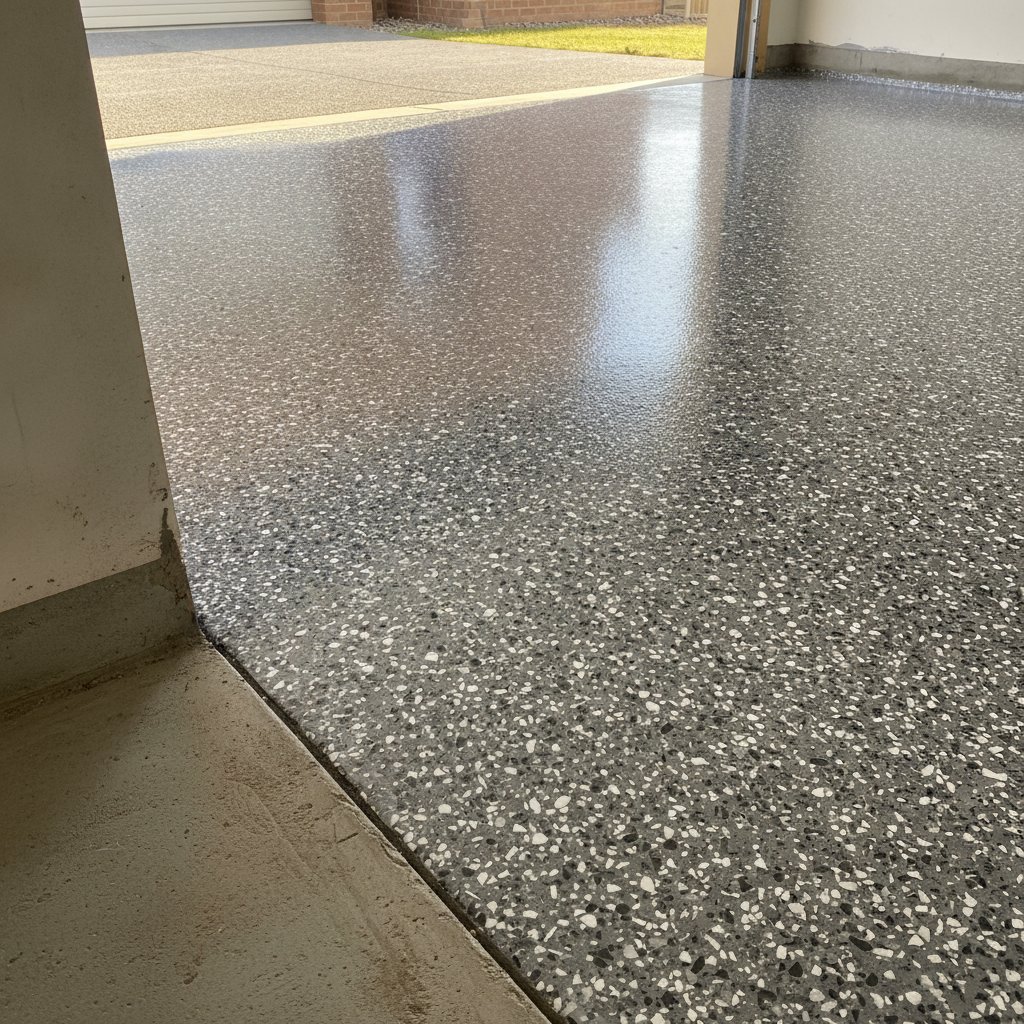
Concrete Floor Coating in Craigieburn: Best Options for New Homes
The best concrete floor coating options for new homes in Craigieburn are epoxy and polyaspartic coatings. Epoxy delivers a hard-wearing, high-gloss finish ideal for garages and living spaces, while polyaspartic systems cure faster and handle UV exposure better. Both protect raw concrete from oil, moisture and foot traffic for ten or more years when applied correctly.
Why do Craigieburn new builds need a concrete floor coating?
New homes in Craigieburn sit on bare concrete slabs that look fine on handover day but will stain, dust and crack over time without a protective coating. Melbourne’s northern growth corridor is known for its reactive clay soils, which cause slabs to shift slightly with seasonal moisture changes. A quality concrete coating seals the surface, reduces dusting, locks out moisture from below and gives you a floor that actually looks finished rather than like a building site.
Plenty of Craigieburn homeowners move in and leave the garage and alfresco slab raw for the first year or two, thinking they’ll get to it later. The problem is that uncoated concrete absorbs oil from the first car park, picks up dirt tracked in from the estate’s sandy footpaths and starts to pit at the surface. Once contamination gets into the pores, you need a lot more prep work before any coating will bond properly. Getting in early, ideally within the first six to twelve months, keeps the job straightforward and the cost down.
What are the best concrete floor coating options for new homes in Craigieburn?
For new homes in Craigieburn, epoxy floor coatings are the most popular choice for garages and internal slabs, while polyaspartic coatings are preferred where faster return to service or strong UV resistance is needed. Decorative flake systems, sometimes called flake broadcast or vinyl flake, add texture and hide imperfections, making them a practical pick for high-traffic areas.
Here is a plain breakdown of the main options:
Epoxy floor coatings
Two-part epoxy is the workhorse of the concrete coating world. You mix a resin with a hardener, apply it to a prepared slab and it cures to a surface harder than the concrete beneath it. A standard two-coat epoxy system typically runs three to five millimetres thick after a primer coat and a broadcast layer. It handles vehicle traffic, heavy workshop loads and the kind of spills you get in a busy family garage without complaint. The main limitation is UV: straight epoxy will amber or yellow if exposed to direct sunlight over time, so it is best used in enclosed garages or covered outdoor areas rather than open alfresco slabs.
Polyaspartic coatings
Polyaspartic is a newer chemistry that cures significantly faster than epoxy, often allowing foot traffic within a few hours and vehicle traffic the same day. It is also UV-stable, so it holds its colour on outdoor slabs or garages with wide openings. For Craigieburn homes where families want the garage back quickly after a weekend job, polyaspartic is hard to beat. It does cost a bit more per square metre than a standard epoxy, but the faster turnaround often makes up for it.
Flake broadcast systems (metal and flake)
A flake system involves broadcasting coloured vinyl flakes into a wet base coat, then sealing everything under a clear topcoat. The result is a speckled, textured surface that hides small surface blemishes and provides grip underfoot. Flake floors are extremely popular in Craigieburn double garages because the texture disguises dust and light scratches between cleans, and the range of flake colours and sizes means you can match the finish to the home’s interior colour palette. A full flake broadcast system also adds an anti-slip element, which matters on a slab that might see wet footprints from a pool or laundry.
How should you prepare a new slab in Craigieburn before coating?
A new slab in Craigieburn needs to cure for a minimum of 28 days before any coating is applied, then the surface must be mechanically prepared by diamond grinding or shot blasting to open the concrete pores so the coating bonds correctly. Skipping or rushing either step is the single biggest reason floor coatings fail prematurely.
New estate slabs often have a smooth trowelled finish or a curing compound applied by the concretor. Both of these create a barrier that will stop a coating from bonding if they are not removed. Diamond grinding strips the top layer off the slab, exposes fresh aggregate and creates the profile the coating needs to grip. A professional applicator will also check the moisture vapour emission rate of the slab before starting. Craigieburn’s clay subsoils can trap moisture under a slab, and if vapour transmission is too high, bubbles and delamination will appear in the coating within months.
Once the slab is ground and passed for moisture, any cracks or low spots get filled with a compatible filler or epoxy mortar. Then the coating system goes down in sequence: primer, body coat, optional flake broadcast, and finally a clear protective topcoat. Each layer needs the right temperature and humidity window to cure properly. Melbourne’s northern suburbs can get very hot in summer, so most professional applicators prefer to schedule jobs in the cooler part of the day during January and February.
How long does a concrete floor coating last in a Craigieburn home?
A professionally applied epoxy or polyaspartic concrete floor coating in a Craigieburn home will typically last ten to twenty years in a domestic garage or workshop with normal care. Longevity depends on the quality of the prep work, the thickness of the system applied, and how the floor is used day to day.
Thin single-coat systems sold at hardware chains are not the same product as a professionally applied multi-layer system. Consumer-grade coatings are often less than 0.3 millimetres thick and are not designed to handle vehicle hot-tyre pick-up, where hot rubber grips the coating and pulls it away when the car moves. A commercial-grade epoxy base coat followed by a polyaspartic or polyurethane topcoat is what gives you that decade-plus lifespan.
To keep the floor looking good, the main maintenance task is a regular sweep and occasional mop with a pH-neutral cleaner. Dragging heavy steel equipment, leaving chemical spills sitting for days or using harsh solvents on the surface will shorten the coating’s life. A simple routine keeps a coated floor looking sharp for years without recoating.
Is a flake floor coating right for your Craigieburn garage or alfresco?
A flake floor coating is a great fit for a Craigieburn garage or alfresco if you want a decorative finish that also hides everyday wear. The vinyl chip broadcast adds anti-slip texture and disguises minor surface marks between washes, making it a practical and good-looking choice for family homes.
The full flake broadcast look has become the go-to in Melbourne’s northern growth suburbs for good reason. It photographs well for real estate listings, suits both the contemporary facades common in Craigieburn’s newer estates and the more traditional double-brick builds, and it holds up to the gritty sandy soil that gets tracked in from the surrounding greenfield land. Colour choices range from subtle greys and blacks through to warm tones that complement rendered external walls.
For an open alfresco slab that cops direct sun, a polyaspartic topcoat over the flake base is the smarter call than a standard epoxy topcoat. It will not yellow in the harsh northern Melbourne sun, and it handles the thermal expansion and contraction that outdoor slabs go through over summer.
The bottom line for Craigieburn homeowners is straightforward: a concrete floor coating is one of the best value finishing investments you can make on a new build. It protects an asset you have already paid for, it makes cleaning far easier, and it lifts the finished look of any space from a raw grey slab to a floor you are happy to show off. Get a concrete floor coating quote in Craigieburn from Metal and Flake.