Garage Floor Coating in Hoppers Crossing: Epoxy Options Explained
A garage floor coating in Hoppers Crossing typically means choosing between a solid colour epoxy, a metallic epoxy or a flake (chip) system. Each suits a different budget, look and level of foot or vehicle traffic. The right pick depends on how you use the space, the condition of your existing concrete and how much shine you want underfoot.
Why do so many Hoppers Crossing homeowners bother coating their garage floor?
Bare concrete in a western Melbourne garage takes a hiding. Oil drips, brake fluid, tyre scuff, moisture rising through the slab in winter and the general grit that blows in off Hoppers Crossing’s open streets all break down unsealed concrete over time. A proper epoxy coating seals the slab, stops absorption, and makes the whole surface easy to hose down or wipe clean. It also just looks a lot sharper than grey, dusty concrete.
Beyond aesthetics, a coated floor protects the structural integrity of the slab. Concrete is porous. Petrol, oil and even water that sit on an unsealed surface work into the pores and, over years, can cause spalling and surface breakdown. Coating the floor is genuinely cheaper than replacing or grinding back a badly pitted slab later on.
There is also the resale angle. A well-finished garage is one of the first things a buyer notices during an inspection. A clean, coated floor signals a well-maintained property, and that matters in suburbs like Hoppers Crossing where the housing market moves quickly.
What are the main epoxy garage floor coating options available?
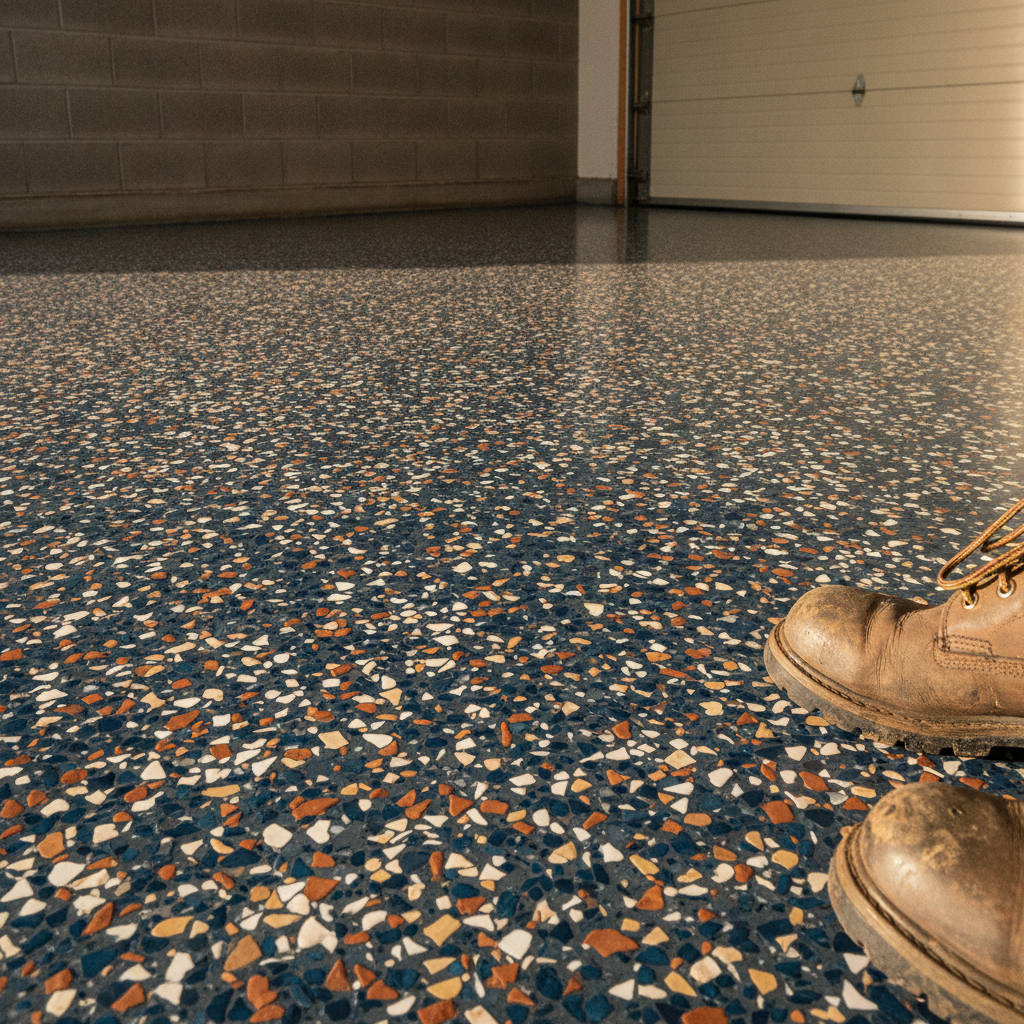
The three most common epoxy systems used on residential garage floors are solid colour epoxy, decorative flake (chip) epoxy and metallic epoxy. Solid colour is the most straightforward: a basecoat, a topcoat and a clear sealer, usually in one tone such as battleship grey or charcoal. It is neat, durable and sits at the more accessible end of the price range. Flake systems broadcast coloured vinyl chips into the wet epoxy before sealing, giving texture, grip and a speckled look that hides minor imperfections well. Metallic epoxy uses pigmented metallic powders to create swirling, three-dimensional visual effects that are genuinely striking in a showroom-style garage.
Here is a quick rundown of each:
- Solid colour epoxy: Clean, consistent finish. Good slip resistance with the right aggregate added. Suits working garages where looks matter but the space still gets used hard.
- Flake or chip epoxy: The most popular choice for home garages. The broadcast chips add grip underfoot, and the multi-tone pattern means the odd scuff or tyre mark is far less visible than on a plain surface. Broadcast density can be adjusted from a light scatter to a full-broadcast look that covers the base colour almost entirely.
- Metallic epoxy: Higher cost, higher visual impact. Works especially well in double garages used as entertainment or workshop spaces where the floor is part of the overall design statement. Metal and Flake is named for this finish, and it is a genuine specialty of the business.
All three systems need a properly prepared substrate. Diamond grinding the concrete is the industry-standard method. It opens the pores, removes laitance (the weak surface layer that forms as concrete cures) and gives the epoxy a mechanical key to bond to. Skipping this step is the single biggest reason cheap epoxy jobs peel within a year or two.
How does Hoppers Crossing’s climate and soil affect a garage floor coating?
Hoppers Crossing sits on Melbourne’s western fringe, and the soils out here are predominantly reactive clays. That means slabs can move slightly with seasonal wet and dry cycles. A coating system needs enough flexibility in its chemistry to handle minor slab movement without cracking or delaminating. A quality two-part epoxy, applied at the correct thickness (typically 2 to 3 millimetres for a full residential system including the broadcast layer and topcoat), handles this well. Thin, paint-on garage floor products sold at hardware chains generally do not.
Melbourne’s west also gets genuine temperature swings. Summer days in Hoppers Crossing regularly push past 38 degrees Celsius, and epoxy needs to be applied within a specific temperature window, usually between 10 and 30 degrees Celsius, to cure properly. A professional installer times the job accordingly and knows to avoid coating in the heat of a summer afternoon when the slab surface itself can exceed the ambient temperature by several degrees.
What should you look for when comparing garage floor coating quotes in Hoppers Crossing?
A credible quote will specify the prep method (diamond grinding, not acid etching alone), the number of coats, the product names and the thickness in mils or millimetres. If a quote just says “epoxy floor coating” with no detail, push for specifics. The difference between a 100-micron paint-on system and a proper broadcast flake system is enormous in terms of longevity, and the prices should reflect that difference clearly.
Ask about the warranty too. A professional installer who stands behind their work will offer a written warranty on both the product and the application. A standard residential epoxy floor warranty from a reputable Melbourne contractor runs between five and ten years on delamination, though surface wear coverage varies. Make sure you know what is and is not covered before the job starts.
Turnaround time matters for a garage. Most residential epoxy systems need 24 to 48 hours before light foot traffic and 72 hours before you drive a vehicle back in. Some polyaspartic topcoat systems cure faster and can be driven on within 24 hours, which is worth asking about if you need the garage back quickly.
How much does a garage floor coating in Hoppers Crossing typically cost?
Cost depends on garage size, the system chosen and the condition of the existing slab. For a standard single garage of around 18 to 20 square metres, a solid colour two-coat epoxy system typically starts somewhere around the $800 to $1,200 range. A full broadcast flake system on the same floor sits higher, and a metallic system higher again. Double garages of 36 to 40 square metres scale accordingly, though the per-square-metre rate often comes down slightly on larger areas.
Heavily contaminated slabs, those with oil penetration, cracks that need filling or old coatings that need to be removed, will add to the prep cost. That prep is not padding. It is what makes the difference between a coating that lasts a decade and one that starts lifting in the second winter.
The cheapest quote is rarely the best value. A coating that needs stripping and redoing in three years costs more in total than a professional job done right the first time. Get at least two or three detailed quotes, compare what is actually included and weigh the longevity of the system against the upfront price.
If your garage floor in Hoppers Crossing needs a proper coating, done with the right prep and the right products, reach out to the team that does this every day across Melbourne’s west. Get a garage floor coating quote in Hoppers Crossing from Metal and Flake.