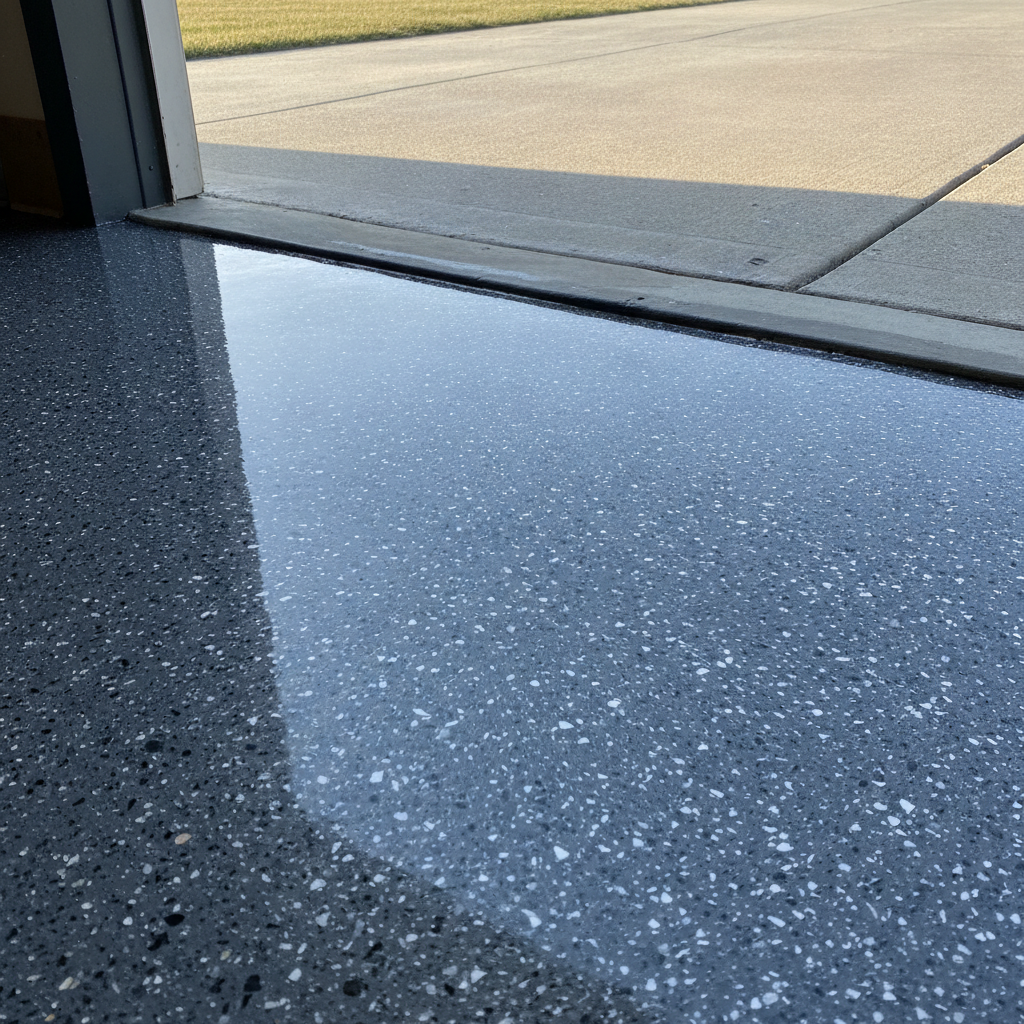
Epoxy vs Polyurea Floor Melbourne: What You Need to Know Before You Coat Your Garage
When comparing epoxy vs polyurea floor options in Melbourne, epoxy delivers a thick, hard-wearing surface with outstanding chemical resistance and a wide range of decorative finishes, while polyurea cures faster and handles temperature swings better. Most Melbourne homeowners get the best result from a system that combines both technologies, or from polyaspartic, which sits in the polyurea family.
What is the actual difference between epoxy and polyurea floor coatings?
Epoxy is a two-part resin and hardener system that bonds tightly to concrete and builds up a thick, rigid film. Polyurea is a more flexible polymer that cures extremely fast, often within seconds in warm conditions. The two materials behave very differently on a garage slab, and understanding that difference stops you spending money on the wrong product for your situation.
Epoxy has been the go-to garage floor coating for decades for good reason. When it is applied correctly, it creates a dense, high-build layer that resists oil, fuel, battery acid and heavy abrasion. The standard broadcast flake system used by professional installers uses epoxy as the base coat precisely because of that thickness and adhesion. A quality epoxy base can be 3 to 5 times thicker than a standard polyurea-only coat, which matters when you are parking a loaded ute or trailer every day.
Polyurea and its close relative polyaspartic are different animals. They are far more flexible, they tolerate UV exposure without yellowing, and they cure so fast that a full coating system can be installed in a single day. The catch is that the rapid cure means a very short working window for the installer. Applied by someone inexperienced, a polyurea coat can bubble, lift or bond poorly if the slab is even slightly damp or if the temperature climbs mid-job.
How does Melbourne’s climate affect which coating you should choose?
Melbourne’s climate matters a lot when choosing between epoxy and polyurea floor coatings. Epoxy can yellow under prolonged UV exposure and becomes brittle in extreme cold, while polyurea and polyaspartic topcoats stay flexible and UV-stable through Melbourne’s wide seasonal temperature range, making a combined system the most practical choice for a Melbourne garage.
Melbourne is notorious for four seasons in one day, and garages can swing from near-freezing winter mornings to 40-plus-degree summer afternoons. Standard solvent-based epoxies applied as a single-coat system can struggle with that range. The coating can become brittle in sustained cold, and direct sunlight through an open roller door will yellow an epoxy topcoat over time.
That is why professional installers in Melbourne typically use epoxy as the base and prime coat, then finish with a polyaspartic topcoat. Polyaspartic is a type of polyurea that handles UV and temperature variation without the colour shift. You get the best of both: the build, adhesion and chemical resistance of epoxy underneath, and the UV stability and flexibility of polyaspartic on top. It is the same logic as using a quality primer under a durable exterior paint on a Melbourne weatherboard house.
Which option is more durable for a busy home garage?
For a busy home garage in Melbourne, a properly installed epoxy base coat topped with a polyaspartic sealer is the most durable option available. The epoxy layer resists impact and chemical spills, while the polyaspartic topcoat protects against UV fading and surface abrasion. A combined system typically outlasts a single-product coating by several years under regular vehicle and foot traffic.
Think about what actually happens in a working garage. You park hot tyres on the floor every night. You drip coolant, oil and brake fluid. You drag toolboxes, lawnmowers and bikes across the surface. A thin single-coat polyurea applied straight to bare concrete can look great on day one, but it has almost no build thickness to absorb that kind of punishment.
Epoxy’s higher film build is a genuine advantage here. When you add decorative flake broadcast into a wet epoxy base, the flake also adds texture and grip, which matters on a floor that can get wet from Melbourne rain tracked in off the driveway. A smooth, thin polyurea-only coat can get slippery when wet, which is a safety issue as well as a practical one.
Durability also depends heavily on surface preparation. Whether you use epoxy, polyurea or a combination system, the slab has to be diamond-ground before anything goes down. A coating applied over a dusty, trowel-finished or contaminated slab will peel regardless of how good the product is. This is where cheap DIY kits fall down. They rarely come with the prep equipment or the product quantity to do the job properly.
Is polyaspartic worth the extra cost over standard epoxy?
Polyaspartic topcoats cost more per litre than standard epoxy, but for a Melbourne garage they are worth the premium. The UV resistance alone prevents the yellowing and chalking that affect clear epoxy topcoats exposed to sunlight, and the faster cure time means the garage is back in use within a day rather than waiting 72 hours or more for a full epoxy system to harden.
One concrete example: a standard two-coat epoxy system with a broadcast flake layer typically needs 24 hours between coats and a full 72-hour cure before you can drive on it. A polyaspartic topcoat over an epoxy base can often be walked on within a couple of hours and driven on the same day. For a household that relies on the garage every day, that turnaround is a real-world advantage, not just a marketing point.
Cost-wise, you are generally paying for faster labour time and a premium UV-stable product. The trade-off is fair if you want a floor that still looks good five or ten years from now without needing a recoat on the topcoat. If the garage has no natural light exposure, a standard epoxy clear topcoat is a reasonable choice at a lower price point.
What should Melbourne homeowners ask a floor coating installer before signing anything?
Before hiring any Melbourne garage floor coating installer, ask whether they use diamond grinding for prep, what the base coat film build thickness is, whether the topcoat is UV-stable polyaspartic or standard epoxy clear, and what the warranty covers. These four questions separate professional installers from those applying a thin coat over an unprepped slab.
A few other things worth clarifying upfront. Ask whether the quote includes moving your gear out of the garage or if that is on you. Check whether the installer tests for moisture in the slab before starting, because a damp slab is one of the most common causes of coating failure in Melbourne’s wetter months. And ask to see finished photos of similar jobs in conditions close to yours, whether that is a large double garage, a carport slab or a workshop with existing staining.
Reputable installers are happy to answer these questions without getting defensive. If a quote comes in significantly cheaper than others and the installer can’t explain what product they’re using or how they prepare the surface, that is a sign to keep looking.
At Metal and Flake, the team installs epoxy base coats and polyaspartic topcoats across Melbourne using proper diamond-grind preparation on every job. The flake broadcast finish adds depth, grip and a clean, professional look that holds up to daily use in a real working garage. Book an epoxy or polyaspartic garage floor coating with Metal and Flake.