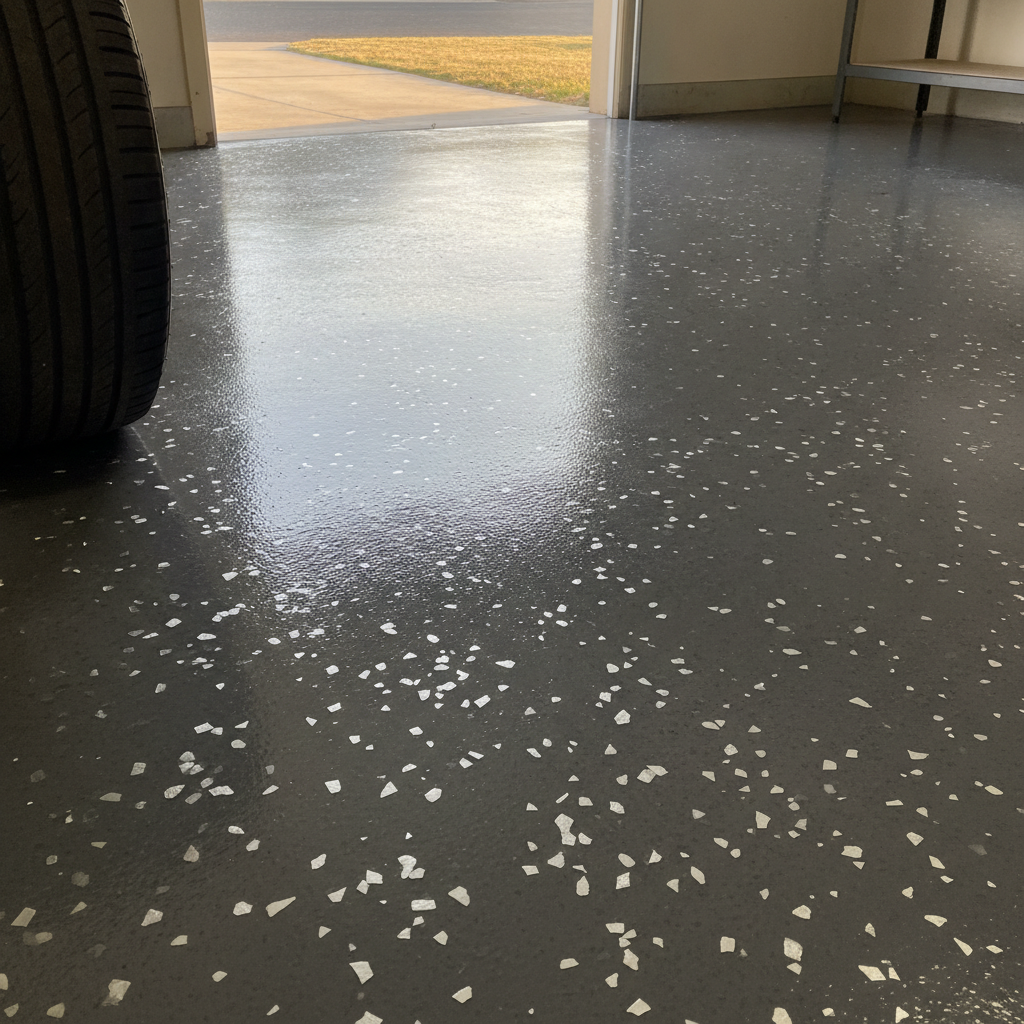
Concrete Floor Coating in Sunbury: Options for Garages and Driveways
Concrete floor coating in Sunbury protects bare slabs from oil stains, tyre scuff, UV damage and surface crumbling. The right coating depends on whether you’re sealing a garage, a driveway or an alfresco area. Epoxy and polyaspartic systems are the most durable options, lasting well over a decade with proper prep and application.
Why does bare concrete in Sunbury need a coating at all?
Bare concrete is porous and softer than most people expect. Without a coating, it absorbs oil, brake fluid and water, which causes staining, spalling and long-term structural damage. Sunbury’s temperature swings between hot summers and cold winters accelerate this wear cycle, making surface protection more important here than in more temperate parts of Melbourne.
If you’ve ever watched a concrete driveway go from clean grey to pitted and oil-stained within a few years of use, that’s the classic result of leaving a slab unprotected. The concrete itself isn’t failing. It’s just doing what uncoated concrete does when it faces traffic, heat and moisture over and over again.
A quality concrete floor coating seals those pores. It gives you a surface that wipes clean, resists chemical spills and handles the day-to-day punishment a working garage or busy driveway dishes out. Done properly, it also looks considerably better than bare grey slab.
What concrete floor coating options work best for Sunbury garages?
For garage floors in Sunbury, epoxy coatings and polyaspartic coatings are the two strongest contenders. Epoxy builds up a thick, hard-wearing film that resists impact, chemicals and heavy foot traffic. Polyaspartic coatings cure faster and handle UV exposure better, making them a good choice where sunlight gets in through roller doors or windows. Both can be finished with metallic pigments or decorative flake to give the floor a sharp, showroom-style look.
Here’s a plain breakdown of the main options you’ll come across:
- Epoxy floor coating: A two-part resin system applied in layers. Very hard, excellent chemical resistance, best suited to shaded garages where UV isn’t a major factor. Typical build thickness of 2 to 4 millimetres depending on the system.
- Polyaspartic coating: A newer aliphatic urethane chemistry that cures in a matter of hours rather than days. UV-stable, so it won’t yellow over time. Well suited to Sunbury garages that get afternoon sun blasting through the door.
- Metallic epoxy: The same chemistry as standard epoxy but mixed with metallic pigment powders to create a flowing, marble-like appearance. Popular for home garages where looks matter as much as toughness.
- Flake or chip systems: Vinyl flake broadcast into a base coat and sealed with a clear topcoat. Hides dirt well, adds texture underfoot and suits working garages where a slip-resistant surface matters.
The critical thing with any garage floor coating is surface preparation. Diamond grinding the slab opens up the concrete’s pores so the coating bonds mechanically rather than just sitting on top. A coating that isn’t properly bonded will peel, full stop. No product gets around bad prep.
What concrete floor coating suits a Sunbury driveway?
Driveways have different demands to garages. They cop full sun all day, carry heavier vehicle loads over a larger area, and are exposed to rain, leaves and external grime. For driveways, polyaspartic and penetrating sealers are typically the better fit, though a fully ground and coated epoxy system also works well on covered or semi-shaded sections.
Penetrating concrete sealers are worth understanding here. Unlike a film-forming coating, they soak into the slab and harden the surface from within. They don’t change the look dramatically, but they do repel water and staining agents. They’re a lower-cost entry point if the driveway is in reasonable condition and you just want protection rather than a decorative finish.
For a full decorative result on a driveway, a polyaspartic topcoat over a ground slab is the most practical choice. It handles UV without yellowing, stays flexible enough to cope with minor slab movement, and can be colour-tinted or given a light flake finish to suit the look of the house.
One thing worth knowing: most concrete coatings applied to driveways need at least 28 days of curing time after any new concrete is poured before they’ll bond correctly. If you’ve just had a new slab laid, hold off and let it cure fully before looking at coating options.
How long does a concrete floor coating last in Sunbury’s climate?
A properly installed epoxy or polyaspartic coating on a well-prepared slab will typically last 10 to 15 years in a residential garage setting. Driveways in full sun may see some UV wear on cheaper systems after five to seven years, which is why UV-stable polyaspartic topcoats are worth the extra spend for exposed areas.
Longevity comes down to three things: product quality, surface preparation and how the floor is used. A showroom-style metallic floor in a garage that stores one car and stays clean will outlast the same coating in a workshop where chemicals, heavy tools and grinding work happen daily. Neither is wrong, it just helps to be honest about the use case before choosing a system.
Maintenance is straightforward. A pH-neutral cleaner and a soft mop is all most coated floors need week to week. Avoid dragging sharp metal objects across the surface, and clean up harsh chemical spills promptly rather than letting them sit.
What should Sunbury homeowners look for in a concrete floor coating contractor?
Ask any contractor you’re considering three practical questions. First, what surface preparation method do they use? Diamond grinding is the industry standard. Shot blasting works too. Acid etching alone is not adequate for a long-lasting bond. Second, what is the build thickness of the coating system they’re quoting? Thin coatings fail faster, so understand what you’re actually getting for the price. Third, do they provide a written warranty and what does it cover?
Local experience matters in Sunbury specifically because the slab conditions here often reflect the region’s clay-heavy soils. Slabs can have more minor movement and moisture transmission than slabs in drier parts of Melbourne, and a contractor who knows the area will factor that into product selection and prep.
Get more than one quote, and compare them like for like. A quote that doesn’t specify the product system, number of coats and prep method isn’t a real quote. It’s a number you can’t compare to anything.
Get a concrete floor coating quote in Sunbury from Metal and Flake