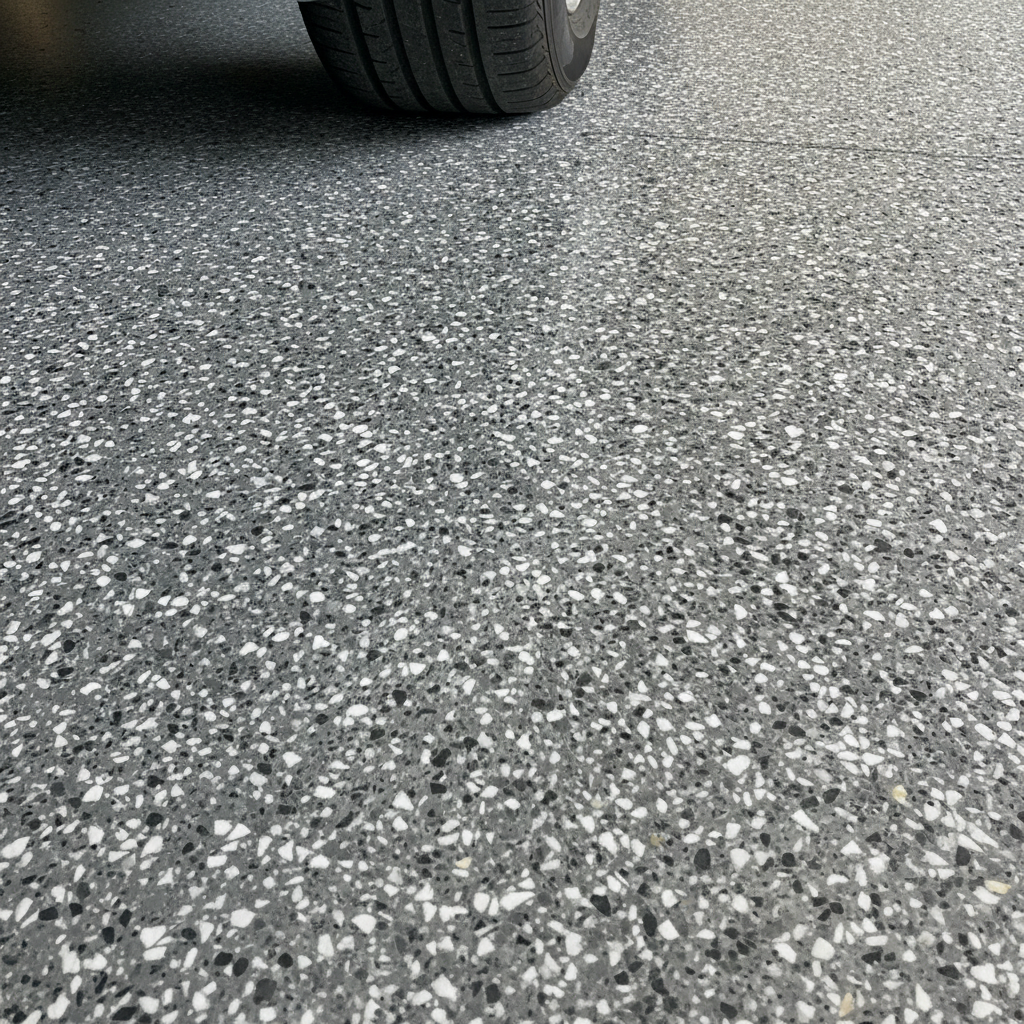
Epoxy Flake Flooring Colours: How to Pick the Right Blend for Your Garage
Epoxy flake flooring colours are chosen by combining two to five vinyl flake shades that create a speckled, multi-tone finish once broadcast into a wet epoxy base coat. The right blend hides tyre marks and dust between cleans, suits the garage’s natural light, and ties in with the home’s exterior palette. Most homeowners settle on a colour within one or two physical samples.
Why does the chip blend matter more than a single colour?
Unlike a painted floor, epoxy flake flooring colours work because the final look is a mix of individual vinyl chips sitting at different angles under the topcoat. No single chip colour dominates. A blend of three chips, say charcoal, white and a mid-grey, reads as a cohesive stone-like finish from standing height, even though each chip is a distinct shade. This layered effect is what gives flake floors their depth and why picking a single “colour” misses the point. You are choosing a recipe, not a paint swatch.
The proportion of each chip also matters. A 70/20/10 split across dark, light and accent chips produces a very different result than an even 33/33/34 split. Most professional installers offer a standard broadcast ratio but can adjust on request, so it pays to ask before the job starts.
How does chip size affect the finished look of epoxy flake flooring colours?
Chip size directly changes how busy or calm the finished floor looks. Smaller flakes, typically around 1mm to 4mm, blend together at a distance and give a fine, almost terrazzo-like texture. Larger flakes at 6mm or 12mm stay visually distinct and create a bolder, more industrial look. For a standard double garage the mid-range 4mm chip is the most common choice because it reads as refined without looking fussy.
Garage floors also take a lot of foot and vehicle traffic, and the chip size affects how well the floor hides everyday wear. A finer blend shows scuff marks and dust more easily than a larger broadcast that scatters the eye across a busier pattern. If you park a dark-coloured vehicle on the floor most days, a lighter chip blend with a mid-tone accent tends to show the least tyre dust between cleans.
What colours work best for a residential garage floor?
For a residential garage, the most practical epoxy flake flooring colours sit in the mid-tone grey and beige family because they hide grime, complement almost any brick or cladding exterior, and photograph well if you ever sell the home. Darker blends like charcoal and slate look sharp on completion but can show light-coloured concrete dust and pet hair more readily. Lighter blends in whites and creams brighten a dark garage but demand more regular sweeping.
A useful rule of thumb: look at the dominant colour of your garage door and work one tone lighter for the floor. This avoids the floor and door competing visually. If your garage door is Colorbond Ironstone, for example, a blend of mid-grey, warm beige and white chips softens the space rather than making it feel like a bunker.
Some homeowners also factor in the internal walls. A cream or light-grey wall pairs with almost any chip blend, while a rendered charcoal feature wall looks best anchored by a darker flake floor so the contrast stays intentional rather than accidental.
How do topcoat finishes change how epoxy flake flooring colours look?
The polyurethane or polyaspartic topcoat applied over the chips has a significant effect on the final colour read. A gloss topcoat deepens and saturates all the chip colours, making a mid-grey blend look almost charcoal in strong afternoon light. A satin or matte topcoat keeps colours closer to how they look in the chip sample, with less light bouncing around. Most garage installations use a gloss or semi-gloss topcoat because it is easier to clean and shows the depth of the flake blend at its best.
UV stability is worth thinking about too. Garages with large roller doors that stay open during the day receive significant sun exposure, and some epoxy pigments can amber slightly over time. A quality aliphatic polyurethane topcoat resists UV yellowing far better than a standard epoxy topcoat, keeping those cool grey and white blends looking clean for years rather than months.
Should you request physical samples before committing to epoxy flake flooring colours?
Yes, always request physical samples or a sample board before committing to epoxy flake flooring colours. Colour images on a screen are rendered differently depending on the monitor, and a chip that looks warm grey online can read as quite purple or blue in real life, especially under LED downlights. A physical sample board held against the actual garage floor in the actual lighting conditions of your space is the only reliable way to confirm the choice.
Hold the sample at standing height (roughly 1.5 metres from the ground) rather than close up at eye level. Flake floors are always viewed from above, and the colour proportions look completely different from a distance. Check the sample in morning light and again in the afternoon because garage orientation changes everything. A south-facing garage with flat white walls will make every blend look cooler and slightly darker than the same board held in a north-facing space.
What mistakes do homeowners make when choosing garage flake colours?
The most common mistake is choosing solely based on a photo from a completed job at someone else’s property. Lighting, camera settings, concrete colour and even the age of the floor all shift how colours appear in photos. A close second is picking the most eye-catching, high-contrast blend in the sample range because it looks striking in the showroom, then finding it overwhelming once it covers 36 square metres of garage floor.
A third mistake is ignoring the concrete’s natural tone. Concrete slabs in Melbourne can range from a warm cream to a cool blue-grey depending on the mix and age. A very light flake blend applied over a warm-toned slab will pick up that warmth and read differently than the same blend applied to a fresh, neutral slab. A good installer will assess the base colour before recommending a blend, not just hand over a colour chart and leave you to it.
Finally, people sometimes choose a colour based purely on aesthetics and ignore practicality. If the garage doubles as a workshop, a mid-tone salt-and-pepper blend hides dropped metal filings, oil spots between clean-ups and boot scuffs far better than a pale uniform blend. Matching the colour to how the space is actually used saves a lot of frustration down the track.
Getting epoxy flake flooring colours right is a mix of practical thinking and personal taste. Work through the chip blend, chip size, topcoat sheen and your garage’s real lighting conditions, and you will end up with a floor that looks great on day one and stays that way for years. View epoxy flake floor colour options and book with Metal and Flake.