Epoxy Flooring for Homes: Which System Suits Your Melbourne Garage?
Epoxy flooring for homes comes in several distinct systems, each suited to different budgets, traffic levels and looks. For a Melbourne residential garage, the most popular choices are solid-colour epoxy, metallic epoxy and flake (chip) systems. Picking the right one comes down to how the space gets used, how much prep the slab needs and what finish you actually want to live with long term.
What are the main epoxy flooring systems used in home garages?
The three systems you will encounter most often in a residential garage setting are solid-colour epoxy, decorative flake (also called chip or broadcast) systems, and metallic epoxy. Each uses a two-part resin base, but the decorative layer and topcoat vary. Solid colour suits a clean, industrial look. Flake adds texture and hides everyday grime. Metallic creates a flowing, marbled finish that is genuinely unique to each floor.
Solid-colour epoxy is the workhorse option. You get two to three coats of pigmented resin, usually finished with a clear polyurethane or polyaspartic topcoat. It is the most cost-effective entry point, and it is easy to clean. The downside is that it shows every tyre mark, scuff and speck of dust. On a busy family garage floor, that can mean constant wiping down.
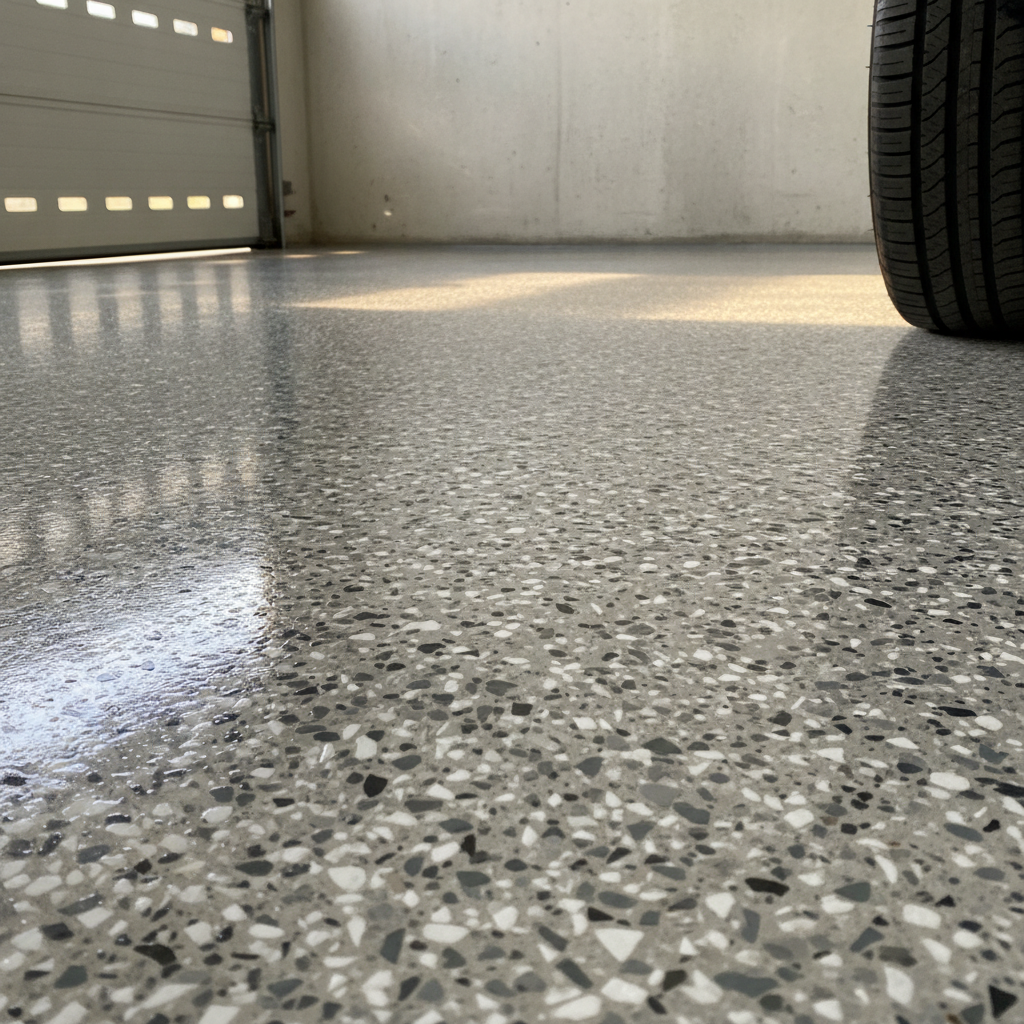
Flake or chip systems broadcast coloured vinyl flakes into a wet epoxy base coat, then seal everything under a clear topcoat. The flakes do several useful things at once: they break up the surface visually so minor scratches and oil drips are far less obvious, they add a slight anti-slip texture underfoot, and they let you choose from hundreds of colour blends to match the rest of the house. This is the system most often installed in Melbourne residential garages, and for good reason. It handles weekend car work, kids’ bikes, stored gear and the occasional spilled fuel without looking wrecked after two years.
Metallic epoxy uses pearl or metallic pigments suspended in the base coat, manipulated with tools and air to create swirling, three-dimensional patterns. No two floors look the same. The result is closer to a showroom or high-end retail floor than a traditional garage, and homeowners who want the garage to double as an entertainment or workshop space often choose this route. It costs more, takes longer to apply correctly and demands a very thorough surface preparation, but the visual payoff is significant.
Does the condition of your concrete slab affect which epoxy system works?
Yes, the condition of your slab is one of the biggest factors in deciding which system is right for your home. Heavily cracked, pitted or contaminated concrete needs more prep work regardless of the coating chosen, but metallic systems are least forgiving of imperfections because the high-gloss finish can actually magnify surface flaws. Flake systems are more tolerant because the broadcast layer helps fill minor surface irregularities.
Before any epoxy goes down, the slab needs mechanical preparation, typically diamond grinding or shot blasting, to open the concrete pores and give the resin something to grip. Skipping or rushing this step is the single most common reason residential epoxy floors fail, often peeling up within months. A properly ground surface shows a profile roughly equivalent to 60-grit sandpaper when you run your hand across it.
Moisture is a particular issue in Melbourne. Garages in older suburbs like Preston, Coburg or Footscray often have slabs that were poured without a proper moisture barrier. Moisture vapour rising through the slab can push beneath an epoxy coating and cause bubbling or delamination. A good installer will carry out a simple plastic sheet moisture test before committing to a system, and may recommend a moisture-tolerant primer coat if readings are elevated. This adds cost, but it is far cheaper than ripping up a failed floor six months later.
Cracks wider than about two millimetres need to be filled and feathered with an appropriate filler before coating. Hairline cracks can usually be ground over and addressed with the base coat, but structural movement cracks (the ones that keep moving with seasonal temperature changes) are a separate conversation entirely. An honest installer will flag these before quoting.
How does the topcoat choice affect durability in a residential garage?
The topcoat matters as much as the base system for long-term durability. Polyurethane and polyaspartic topcoats are the two most common options on residential jobs. Polyurethane is UV-stable and flexible, which makes it a solid choice for garage doors that let in direct sunlight. Polyaspartic cures faster (sometimes within a single day), handles temperature extremes well and resists scratching from dragged furniture or tool boxes.
In a Melbourne context, temperature swings are worth thinking about. Summers can push garage interiors well above 35 degrees, and the concrete slab expands and contracts with it. A rigid, brittle topcoat applied at the wrong temperature or without the right formulation can crack or yellow. Polyaspartic topcoats generally handle this movement better than standard epoxy alone.
Gloss level is another practical decision. A high-gloss finish looks spectacular the day it is done, but it shows footprints, tyre streaks and dust more readily than a satin finish. Many residential clients end up preferring a satin or semi-gloss sheen because it looks cleaner between washes. Flake systems in particular benefit from a satin topcoat because the texture and colour of the chips carry the visual interest without needing mirror-level gloss.
What should Melbourne homeowners ask before hiring an epoxy floor installer?
Before signing anything, ask four things: what surface preparation method they use and whether they diamond grind or just acid etch (grinding is the industry standard for adhesion), whether they carry public liability and workers compensation insurance, how many coats are included in the quote, and what the cure time is before you can drive on the floor. A reputable residential installer will answer all of these without hesitation.
Cure time matters more than most people realise. A standard epoxy system is typically walkable within 24 hours but should not have a car parked on it for at least 72 hours, sometimes longer depending on temperature and humidity at the time of application. Rushing this step can leave permanent tyre marks pressed into the soft coating.
It is also worth asking about the specific products being used. There is a wide range of epoxy and polyaspartic products on the market, from budget hardware-store kits to professional-grade two-part systems. The hardware-store kits are not what professional installers use. Professional systems have significantly higher solids content, which means the dried film is thicker and more durable. A 100-percent solids epoxy base coat at professional grade will outlast a consumer kit many times over under real garage conditions.
Finally, check whether the quote includes moving any stored items or whether you need to empty the garage yourself. Garage floors that have had cars parked on them for years often have oil stains concentrated in specific spots. A good installer will identify these upfront and use a degreaser treatment before grinding, because oil contamination left in the slab will prevent the epoxy from bonding properly in those areas.
Choosing the right epoxy system for your Melbourne home garage does not need to be complicated. Match the system to how you actually use the space, make sure the slab is properly prepared, pick a topcoat that suits your climate and lifestyle, and work with an installer who is upfront about the process. Get a free quote for residential garage floor coating from Metal and Flake.