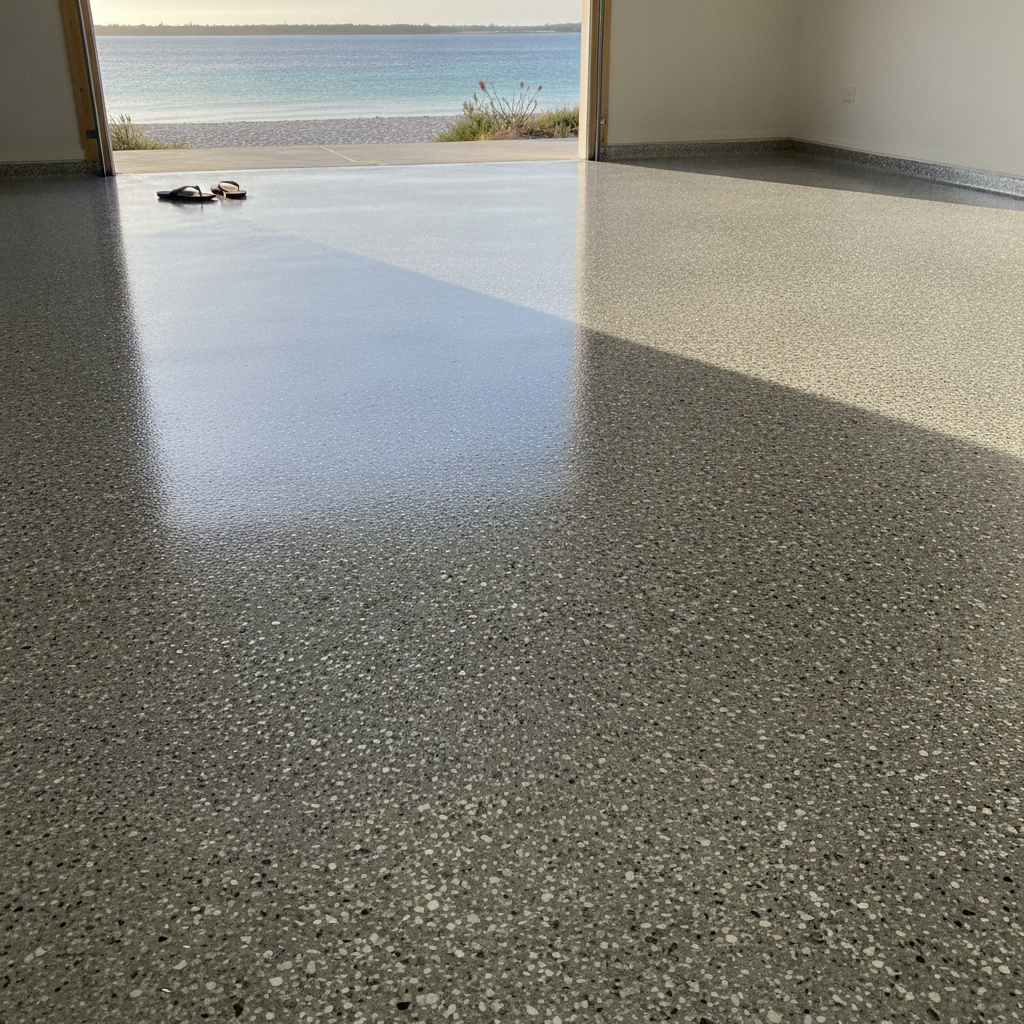
Epoxy Floors in Williamstown: Coastal Suburb Guide for Homeowners
Epoxy floors in Williamstown suit the suburb well. The coastal air, older concrete slabs and a mix of heritage homes and modern renovations all point toward a floor coating that handles moisture, salt air and heavy foot traffic without peeling or yellowing. A professionally installed epoxy system typically lasts 10 to 20 years with basic maintenance.
Why does Williamstown’s coastal location affect your epoxy floor choice?
Williamstown sits right on Port Phillip Bay, so the air carries more salt and humidity than you get further inland. Salt-laden moisture accelerates corrosion on bare concrete, works under poorly bonded coatings and causes bubbling or delamination within a few years. Choosing a moisture-tolerant epoxy system and getting the surface preparation right from the start is the difference between a floor that holds for 15 years and one that lifts at the edges inside 18 months.
The suburb also has a high concentration of Victorian and Edwardian homes, many of which were built on older suspended timber floors or thinner concrete slabs added during later renovations. Those slabs can have higher moisture vapour transmission rates than freshly poured modern concrete. A reputable installer will test moisture levels before committing to any product. A reading above 75 percent relative humidity inside the slab typically calls for a moisture-tolerant primer or a dedicated vapour barrier coat before the epoxy goes down.
On top of that, Williamstown homeowners tend to do a lot of indoor-outdoor living. Garages, alfresco areas and workshop spaces all see sand, salt and grit tracked in from the bay foreshore. A floor with a broadcast chip or flake finish hides that fine grit far better than a plain gloss surface and gives you better slip resistance when wet feet come through the door.
What epoxy floor finishes work best for Williamstown homes?
The most popular finishes for Williamstown residential jobs are full-broadcast metallic flake systems, solid-colour mid-gloss floors and matte or satin garage coatings. Each has a different look and a different practical use case. Full-broadcast flake floors hide surface imperfections in older slabs, give strong grip underfoot and are easy to clean with a mop. Solid-colour finishes suit people after a cleaner, more contemporary look. Matte finishes are forgiving in high-traffic areas where scuff marks would show up on a high-gloss surface.
For coastal homes specifically, a UV-stable topcoat is worth the extra spend. Standard epoxy resins yellow when exposed to UV light, which is a real problem on alfresco slabs or any area that gets direct afternoon sun through a glass door. A polyaspartic or polyurethane topcoat sits over the epoxy base and blocks UV degradation. These topcoats also cure faster than standard epoxy, which means you can walk on the floor in around 24 hours rather than waiting the full 72 hours a standard system needs.
Colour-wise, lighter tones like off-white, warm grey and silver flake blends have been consistently popular in the area. They reflect natural light well, which makes smaller garages and laundries feel larger, and they complement the white weatherboard and rendered brick exteriors common throughout the suburb.
How does concrete preparation work in an older Williamstown property?
Concrete prep is the part of the job that most homeowners never see, but it is the single biggest factor in how long your floor lasts. On older Williamstown slabs, preparation almost always involves diamond grinding rather than acid etching. Grinding cuts an open profile into the surface, giving the epoxy something solid to bond to. Acid etching, which was common practice 20 years ago, does not open the surface consistently enough and leaves residue that can interfere with adhesion.
After grinding, any cracks, control joint damage or spalling get filled with a semi-rigid epoxy filler. Semi-rigid is the key word here. A filler that is too hard will crack again as the slab moves seasonally. A good filler flexes slightly with the concrete rather than fighting against it.
Then the primer goes down. On a Williamstown slab that tests high for moisture, the primer is often a two-component moisture-tolerant formulation that seals from below while still bonding to the topcoat above. Skipping this step on a damp slab is the most common reason DIY epoxy jobs fail. The moisture pushes up through the slab, gets trapped under the coating and creates the classic bubble or blister pattern that means a full strip and redo.
What should Williamstown homeowners expect on installation day?
A standard residential garage or laundry in Williamstown, typically between 30 and 60 square metres, takes one full day to grind, prime and coat. The space needs to be completely clear before the crew arrives. That means everything off the floor including shelving units, tool chests and the car. Any wall-mounted items near the floor should be checked too, because grinding throws fine dust that settles on everything within a metre or two of the work area.
Temperature and humidity on the day matter more than most people expect. Epoxy should not be applied below 10 degrees Celsius or above 35 degrees, and relative humidity in the space needs to stay under about 85 percent during application and cure. In Williamstown, cool southerly changes in late autumn and early spring can bring the temperature down fast in the evening. A good installer will check the forecast before booking and may use temporary heating on cooler days to keep the cure environment stable.
After the final coat goes down, you are looking at 24 hours before foot traffic and 72 hours before you can drive a car back in. The full chemical cure takes around seven days, so heavy point loads like a car jack stand should wait until after that window. The installer should walk you through all of this before they leave the site.
How do you maintain an epoxy floor in a coastal environment?
Maintenance in Williamstown is straightforward but worth doing consistently. The biggest enemy of an epoxy floor near the bay is fine silica sand. It acts like sandpaper underfoot and will scratch even a hard polyurethane topcoat over time if it is left to accumulate. A weekly sweep or blower keeps it under control. Mopping with a pH-neutral cleaner and warm water is all the wet cleaning the floor needs. Avoid ammonia-based cleaners and bleach, both of which degrade the topcoat over time.
For outdoor epoxy surfaces or alfresco areas, rinse down after storm events to clear salt residue. If you notice any small chips from furniture legs or dropped tools, touch-up kits are available and the repair is straightforward on a standard flake system because the texture hides the patch naturally.
A floor that is properly installed and maintained this way will still look presentable after a decade of daily use. That kind of longevity is why epoxy has largely replaced painted concrete and vinyl tiles in the Williamstown renovation market over the past several years.
Ready to get moving on your own slab? Book epoxy floor installation in Williamstown with Metal and Flake.