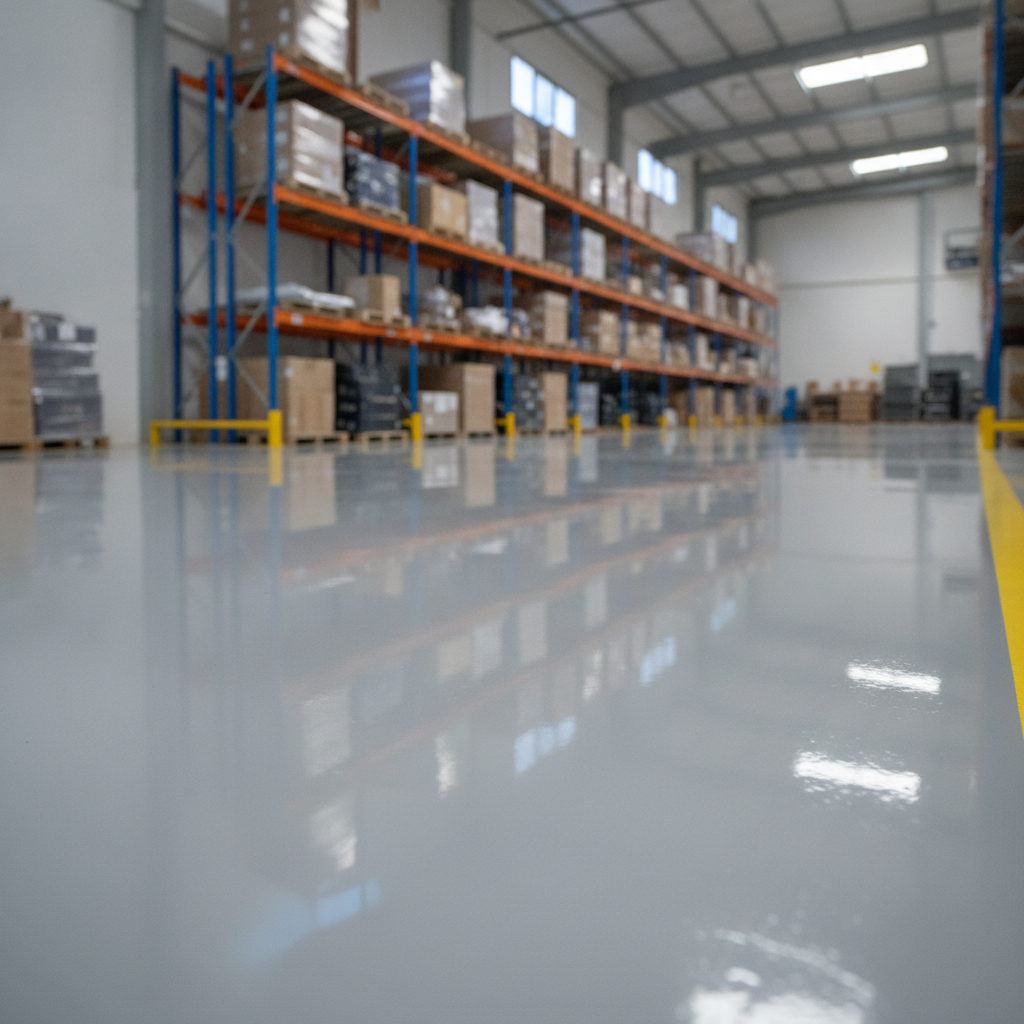
Commercial Epoxy Floor Coating: What Melbourne Businesses Should Know
A commercial epoxy floor coating is a multi-layer resin system applied directly to concrete that creates a hard, seamless, chemical-resistant surface built to handle heavy foot traffic, forklifts and constant cleaning. For Melbourne businesses, it is one of the most cost-effective ways to protect a concrete slab, improve safety and lift the look of a workspace, all at the same time.
Why do Melbourne businesses choose commercial epoxy floor coating over other options?
Commercial epoxy floor coating bonds directly to the concrete rather than sitting on top of it, which means it will not peel, bubble or shift under load the way vinyl or tile can. It is seamless, so there are no grout lines to trap bacteria or grime. A properly installed system in a warehouse, factory or retail space can handle forklift traffic, hot tyre marks and spills from oils, acids and cleaning chemicals without breaking down.
Polished concrete is a popular alternative, but it offers very little chemical resistance on its own. Vinyl tiles look tidy but the joins open up over time in high-traffic zones. Epoxy closes those gaps completely. The surface is also highly reflective, which bounces natural and artificial light around the space and can reduce your lighting costs without a single bulb swap.
For food manufacturing facilities, commercial kitchens and pharmaceutical warehouses, regulators often expect a non-porous, cleanable floor. A correctly specified epoxy system ticks that box straight away.
What types of commercial epoxy floor coating are available?
The main types used in commercial settings are self-levelling epoxy, mortar epoxy, anti-slip epoxy and decorative flake or metallic finishes. Each one suits a different environment and budget, so picking the right system before the job starts saves a lot of headaches later.
Self-levelling epoxy is the go-to for warehouses, distribution centres and light manufacturing. It is typically applied at two to three millimetres thick, creates a smooth surface and can be colour-matched to suit corporate branding or safety zoning. It is strong, easy to clean and works well under racking systems and moving equipment.
Mortar epoxy uses a blend of epoxy resin and graded sand or aggregate. At up to six millimetres thick, it is the toughest system available and is commonly specified for heavy industrial floors, loading docks and areas where hard steel wheels run constantly. It handles impact and abrasion that would crack a thinner coating.
Anti-slip variants add a broadcast aggregate, usually aluminium oxide or a polymer grit, to any of the above systems. Wet processing areas, cool rooms, commercial kitchens and entry lobbies almost always need this to meet Workplace Health and Safety requirements. Australian Standard AS 4586 is the relevant reference for slip resistance classification, and many insurers and site managers ask for it by name.
Decorative flake and metallic finishes are increasingly common in retail showrooms, gyms, cafes and office spaces where the floor needs to look the part as much as perform. A vinyl flake broadcast gives a terrazzo-like appearance and adds a practical texture at the same time. Metallic pigment systems create a flowing, marble-effect surface that photographs well and holds up to daily foot traffic.
How important is surface preparation for a commercial epoxy floor coating?
Surface preparation is the single biggest factor in whether a commercial epoxy floor coating lasts ten or more years or starts peeling within twelve months. Diamond grinding or shot blasting the concrete opens up the surface profile so the epoxy can mechanically bond to the slab. Without it, even the best product on the market will fail.
Concrete needs to be dry, structurally sound and free of oil, paint, adhesive and curing compounds before a single drop of epoxy goes down. Moisture is particularly critical. Concrete releases moisture vapour from below, and if the relative humidity reading inside the slab is too high, the epoxy will not cure properly and delamination follows. A competent applicator will always check this with a calcium chloride test or an in-situ probe before committing.
Cracks and spalls need to be repaired with an appropriate filler before coating. Skipping this step means the coating telegraphs every blemish back through to the surface once the gloss goes on. A good prep stage often takes longer than the coating stage itself, and that is completely normal on a quality commercial job.
How long does a commercial epoxy floor coating take to complete, and when can the floor go back into service?
A commercial epoxy floor coating job typically takes two to four days for a standard warehouse or factory floor, depending on size, the number of coats in the system and ambient temperature. Cooler Melbourne winters slow cure times slightly, while dry summer conditions can speed them up. Planning around your production or trading schedule early makes the process much smoother.
Most systems allow light foot traffic within 24 hours of the final coat. Full chemical and mechanical resistance is reached at the seven-day mark in most cases, though some heavy-duty systems take a full 28 days to reach maximum hardness. Your applicator should give you a clear return-to-service schedule before the job starts so you can plan around it.
For businesses that cannot afford a full shutdown, it is worth discussing a staged approach where sections of the floor are done in sequence. It takes a bit more coordination but it keeps the operation running throughout the project.
What does a commercial epoxy floor coating cost in Melbourne?
Pricing for a commercial epoxy floor coating in Melbourne generally ranges from around $30 to $80 per square metre, depending on the system specified, the condition of the existing concrete, the size of the area and access constraints. A basic self-levelling two-coat system on a clean, flat warehouse slab sits toward the lower end. A full mortar base coat with a decorative flake broadcast and anti-slip finish on a heavily damaged floor sits toward the upper end.
The size of the job matters a lot. Larger areas benefit from economies of scale in both materials and labour, so a 2,000-square-metre warehouse floor will almost always cost less per square metre than a 200-square-metre showroom. Getting a proper on-site measure and assessment is the only reliable way to get an accurate number, because photos and floor plans miss things like low doorways, drain positions, existing coatings and moisture issues that all affect the quote.
Looking purely at the cheapest price is a short-term play. A coating that fails in two years and needs to be stripped and redone costs significantly more than one that lasts a decade. Asking for references from completed commercial jobs and checking that the applicator is using a reputable product system from a supplier like Parchem, Flowcrete or similar is a reasonable way to separate genuine quality from a low-ball quote.
How do you maintain a commercial epoxy floor coating once it is down?
Day-to-day maintenance is straightforward. Sweep or vacuum regularly to remove abrasive grit that can dull the surface over time. Mop with a neutral pH cleaner and warm water. Avoid bleach-based or highly alkaline cleaners unless the product specification specifically permits them, because harsh chemicals can break down the topcoat and cause it to cloud or yellow.
Putting felt pads under racking feet and using rubber-tyred trolleys instead of hard steel castors helps protect the surface in warehouse environments. Spills from fuel, oils or solvents should be wiped up promptly rather than left to sit. None of this is difficult, it is just consistent.
A light maintenance coat every five to seven years on a heavily trafficked floor can extend the life of the overall system significantly and costs a fraction of a full strip and recoat. Getting this scheduled before the floor actually shows wear keeps the job smaller and cheaper every time.
Book a commercial epoxy floor coating quote with Metal and Flake