Concrete Floor Sealing in Sunbury: What Melbourne Homeowners Ask
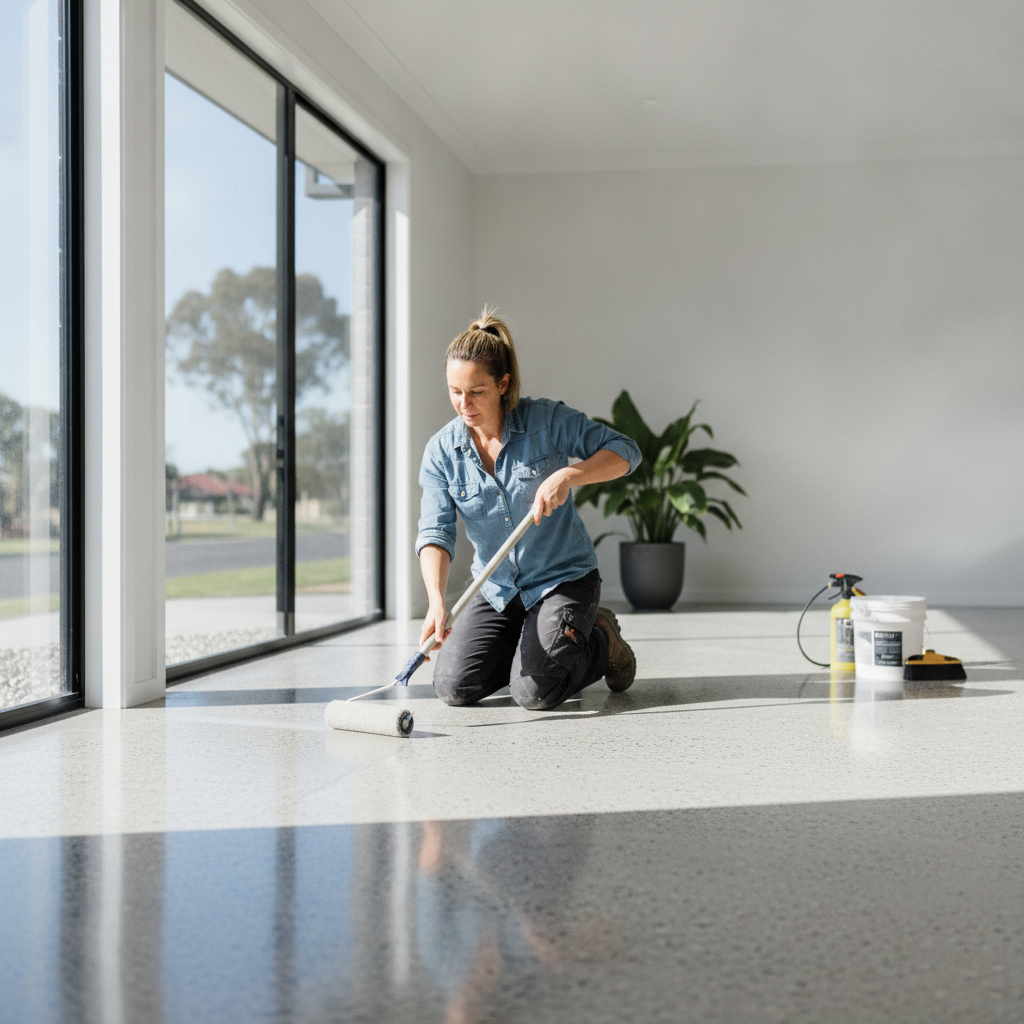
Concrete floor sealing in Sunbury protects bare or polished slabs from moisture, oil, stains and surface wear. A quality sealer penetrates or coats the concrete to stop water ingress, reduce dusting and make the surface far easier to clean. Depending on the product used, a sealed floor can last anywhere from two to ten years before it needs attention again.
Why does concrete floor sealing in Sunbury matter more than people think?
Unsealed concrete is more porous than it looks. Moisture from Sunbury’s clay-heavy soils can wick upward through a slab, leaving efflorescence stains, softening the surface and, over time, weakening the concrete itself. A sealer closes those pores, stops the moisture cycle and keeps the floor looking sharp without constant scrubbing.
Beyond moisture, unsealed garage and workshop floors dust constantly. That fine grey powder settles on cars, tools and shelving. It is not just annoying; it is actually concrete particles wearing away under foot and tyre traffic. Sealing the floor stops that process dead and adds measurable surface hardness at the same time.
Sunbury sits on the fringe of Melbourne’s north-west growth corridor. A lot of the homes out here were built in the last fifteen to twenty years on reactive clay sites, which means slabs that moved even slightly during curing can develop hairline cracks. A good penetrating sealer will fill microcracks up to about 0.2 mm wide, slowing any further deterioration before it becomes a structural problem.
What types of concrete sealer are available, and which one suits your floor?
There are four main categories: penetrating sealers (silane or siloxane-based), acrylic sealers, polyurethane sealers and epoxy coatings. Penetrating sealers soak into the slab and offer invisible protection with no change to appearance. Acrylics add a low sheen and are budget-friendly but wear faster. Polyurethanes are tougher and more chemical-resistant. Epoxy coatings are the most durable option and essentially become a new wear surface bonded directly to the concrete.
For a residential garage or workshop that takes regular foot traffic, vehicle traffic and the odd chemical spill, polyurethane or epoxy is genuinely the better investment. Acrylics suit covered alfresco areas or internal laundry floors where traffic is light. If you are sealing an exposed driveway, a penetrating silane-siloxane product handles UV and rain without peeling the way topical coatings can.
The other variable is sheen level. Matte finishes hide minor surface imperfections and are popular in Sunbury workshops. Satin and gloss finishes look sharp in garages and showrooms but show every tyre mark until you clean them. Neither is wrong; it just depends on how much maintenance you are happy to do.
How does surface preparation affect the final result?
Surface preparation is the single biggest factor in how long any concrete sealer lasts. A sealer applied over a dirty, oily or contaminated slab will peel within months. Proper prep involves cleaning the concrete thoroughly, removing any existing coatings, grinding or shot-blasting the surface to open the pores, and letting the slab reach the right moisture content before product goes down.
Moisture content is particularly important in Sunbury. Many slabs here sit close to the water table during winter, and if a topical sealer is applied over concrete with more than about four percent moisture by weight, the sealer can blister or delaminate. A professional will use a moisture meter and, if needed, recommend a moisture-tolerant primer before the main coating.
Oil stains in garages are their own challenge. Old motor oil penetrates deep into concrete and can prevent adhesion even after grinding. Degreasers help, but heavily contaminated spots sometimes need diamond grinding followed by an epoxy primer formulated specifically to lock in residual contamination. Skipping that step is the most common reason DIY sealing jobs fail within a year.
What does concrete floor sealing cost in the Sunbury area?
For a standard single-car garage slab of around 18 to 20 square metres, a professional concrete sealing job in the Sunbury and greater Melbourne region typically runs from roughly $600 to $1,500 depending on product choice, surface condition and whether grinding is required. Larger double garages or workshop floors of 40 to 60 square metres can range from $1,500 upward once full preparation and a quality topcoat are included.
DIY acrylic sealers from the hardware store cost far less upfront, around $80 to $200 for a single-car garage, but the trade-off is lifespan. A hardware-grade acrylic in a busy garage might last 12 to 18 months before it starts peeling. A professionally applied polyurethane or epoxy system, done with correct prep, can hold up for five to ten years. Spread the cost over that period and the professional job usually wins on value.
The other cost factor is what happens if sealing is not enough. Heavily damaged or pitted slabs sometimes need patching or grinding levelling before any product goes on. Getting a proper on-site quote is the only reliable way to know what your specific floor needs.
When should you consider epoxy flooring instead of just sealing the concrete?
If your concrete is in reasonable structural condition but you want a hard-wearing, good-looking floor that handles heavy use, epoxy flooring is worth considering as a step up from basic sealing. Epoxy systems bond directly to the prepared slab and build a rigid, chemical-resistant surface layer that a standard sealer simply cannot match in durability or appearance.
Metallic epoxy and decorative flake systems are popular in Sunbury garages and home workshops because they combine serious performance with a finish that looks far better than bare grey concrete. The flake systems in particular hide minor surface variation well, which suits older slabs that have seen a bit of life.
Metal and Flake specialises in epoxy flooring across Melbourne’s north-west, including Sunbury and surrounding suburbs. If you are weighing up whether a sealer will do the job or whether an epoxy system makes more sense for your floor, the team can assess the slab, talk through the options honestly and give you a clear picture of what each approach will cost and last.
Get a quote from Metal and Flake for concrete floor sealing in Sunbury