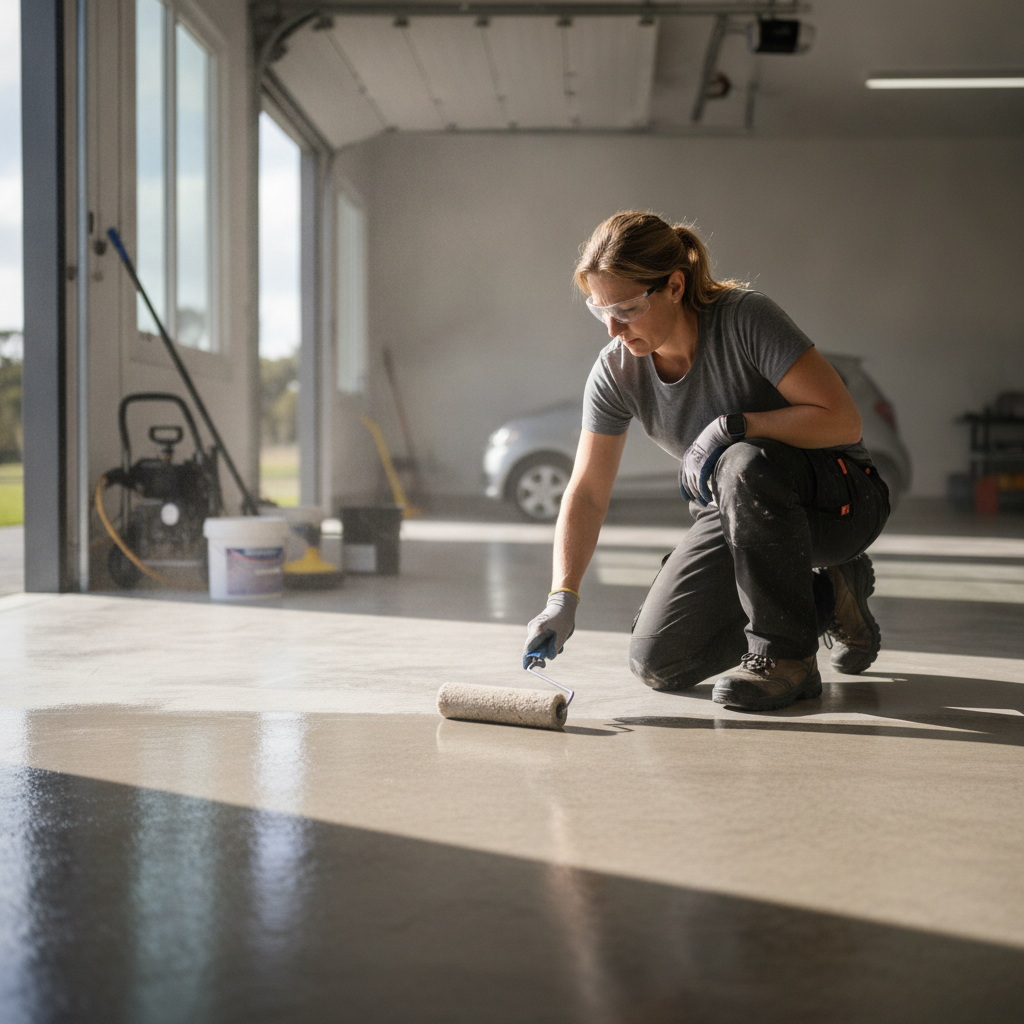
Concrete Floor Sealing in Epping: Protect Your Garage Floor
Concrete floor sealing in Epping protects your garage slab from oil stains, rising moisture, surface dusting and everyday wear. A quality sealer bonds to the concrete, creating a hard surface layer that resists chemicals and is far easier to clean. Done properly, a sealed garage floor in Epping can last a decade or more before needing any attention.
Why does concrete floor sealing matter for Epping garages?
Bare concrete is porous by nature. Without sealing, an Epping garage floor soaks up motor oil, brake fluid and water within seconds, leaving permanent stains and weakening the slab over time. A penetrating or coating-style sealer closes those pores, so spills sit on the surface long enough to be wiped up before any damage is done.
Epping sits in Melbourne’s northern suburbs, where properties range from established family homes with single garages to newer builds on tighter blocks. A lot of those garages get hard use: cars, trailers, workshop tools, the occasional motorbike. Bare concrete in that environment dusts constantly, leaving fine grey powder on everything stored inside. Sealing stops that dusting at the source by binding the surface particles together.
There is also the moisture angle. Slabs in the northern suburbs can draw ground moisture upward through capillary action, especially during cooler months. That moisture breaks the bond between concrete and any coating applied later if the slab is not properly sealed first. Getting the sealing step right protects whatever finish sits on top of it.
What types of concrete sealers are used on garage floors?
The two main categories for garage floors are penetrating sealers and topical coating sealers. Penetrating sealers (silane, siloxane or silicate-based) soak into the slab and chemically react with it, adding water and stain resistance without changing the look. Topical sealers sit on top of the concrete and add a visible sheen, ranging from a flat matte to a high gloss.
For a working garage, topical sealers tend to be the more practical choice. They create a film that is easy to mop, resists oil and chemicals, and can be tinted or combined with decorative elements like metallic pigments or vinyl flake. Epoxy and polyurethane-based topical sealers are the most durable options in this category, typically lasting five to ten years under normal residential use before any recoating is needed.
Acrylic sealers are cheaper upfront but need reapplying every one to three years, which adds up quickly in both cost and disruption. For a garage that sees regular traffic, the extra investment in an epoxy or polyurethane system almost always works out better over the life of the floor.
How is concrete floor sealing in Epping actually done?
Surface preparation is the step that separates a long-lasting result from one that peels inside twelve months. The concrete must be clean, dry and open-grained before any sealer goes down. That usually means a mechanical grind using a diamond grinder to remove any existing coatings, laitance (the weak surface layer that forms when concrete cures) and contamination. Any cracks or low spots are filled at this stage.
Moisture testing follows. A simple plastic sheet test, where a sheet is taped flat to the slab for 24 hours, will show whether ground moisture is a problem. Professional applicators often use a calcium chloride or relative humidity probe for a more precise reading. If moisture readings are too high, the job stops until the cause is addressed. Applying a sealer over a wet slab is one of the most common reasons garage floor coatings fail.
Once the surface is ready, the sealer or base coat goes down by roller in thin, even passes. For a two-part epoxy system, the resin and hardener are mixed together and applied within the product’s pot life, usually around 30 to 45 minutes depending on temperature. A second coat follows after the first has cured, and a topcoat of polyurethane is often added as a final wear layer. The whole system typically needs 24 hours before light foot traffic and 72 hours before driving a car on it.
What should Epping homeowners look for in a concrete sealing contractor?
The biggest thing to look for is surface preparation. Any contractor who quotes a sealed garage floor without mentioning grinding or shot blasting as part of the process is cutting a corner that will cost you later. Ask directly: how do you prepare the surface, and what equipment do you use?
Ask about the products too. There is a wide range of epoxy and polyurethane systems on the market, from trade-grade two-part products applied by professionals to consumer-grade kits sold at hardware stores. The trade systems are significantly thicker and more chemically resistant. A professional applicator should be able to name the specific product line they use and explain why they chose it for your situation.
References from local jobs are worth asking for. Seeing a floor that is two or three years old tells you far more than a freshly laid showroom floor. Look for adhesion at the edges, no bubbling or peeling in high-traffic zones, and whether the sheen has held up. A contractor confident in their work will have no hesitation pointing you toward past clients in the Epping area.
How much does concrete floor sealing cost in Epping?
Cost for concrete floor sealing in Epping depends on the size of the floor, its current condition and the system used. For a standard single garage of around 18 to 20 square metres, a basic penetrating sealer applied by a professional typically starts from a few hundred dollars. A full two-coat epoxy system with a polyurethane topcoat on the same floor sits higher, often in the range of $1,500 to $2,500 depending on condition and finish chosen.
Decorative finishes, such as metallic epoxy with a high-gloss clear topcoat or a flake broadcast system, add to that cost but also transform the space. Many homeowners find the gap between a basic seal and a quality decorative epoxy system is narrower than expected once they factor in the durability difference and the visual result.
Concrete that has heavy oil contamination, old paint or significant cracking will cost more to prepare. Skipping proper prep to save money at the quote stage is the single biggest cause of callbacks and failed floors, so a slightly higher quote that includes thorough preparation is generally the better value.
Is epoxy the best option for sealing a garage floor in Epping?
For most Epping garages, a water-based or solvent-based epoxy coating is the best all-round option for sealing and protecting the floor. Epoxy bonds tenaciously to properly prepared concrete, resists motor oil and most household chemicals, and handles the compressive load of a parked vehicle without issue. Paired with a polyurethane or polyaspartic topcoat, it also handles UV exposure from garage door openings better than plain epoxy alone.
Metallic epoxy systems add depth and movement to the floor, with pigments that shift colour depending on the angle of light. Vinyl flake systems, where coloured chips are broadcast into the wet epoxy, create a textured finish that hides minor imperfections and adds grip. Both are practical choices for a garage, not just showroom or commercial floors.
The key is matching the system to how the floor is actually used. A floor that sees heavy mechanical work with dropped tools and chemical spills needs a thicker, more abrasion-resistant build than a floor that mainly parks the family car. Getting that recommendation right is part of what a good flooring contractor does before quoting.
Metal and Flake works across Melbourne’s northern suburbs, including Epping, laying epoxy and decorative floor systems on residential and commercial slabs. If your garage floor is dusty, stained or just overdue for a proper surface, get in touch and talk through your options. Book Metal and Flake for concrete floor sealing in Epping.