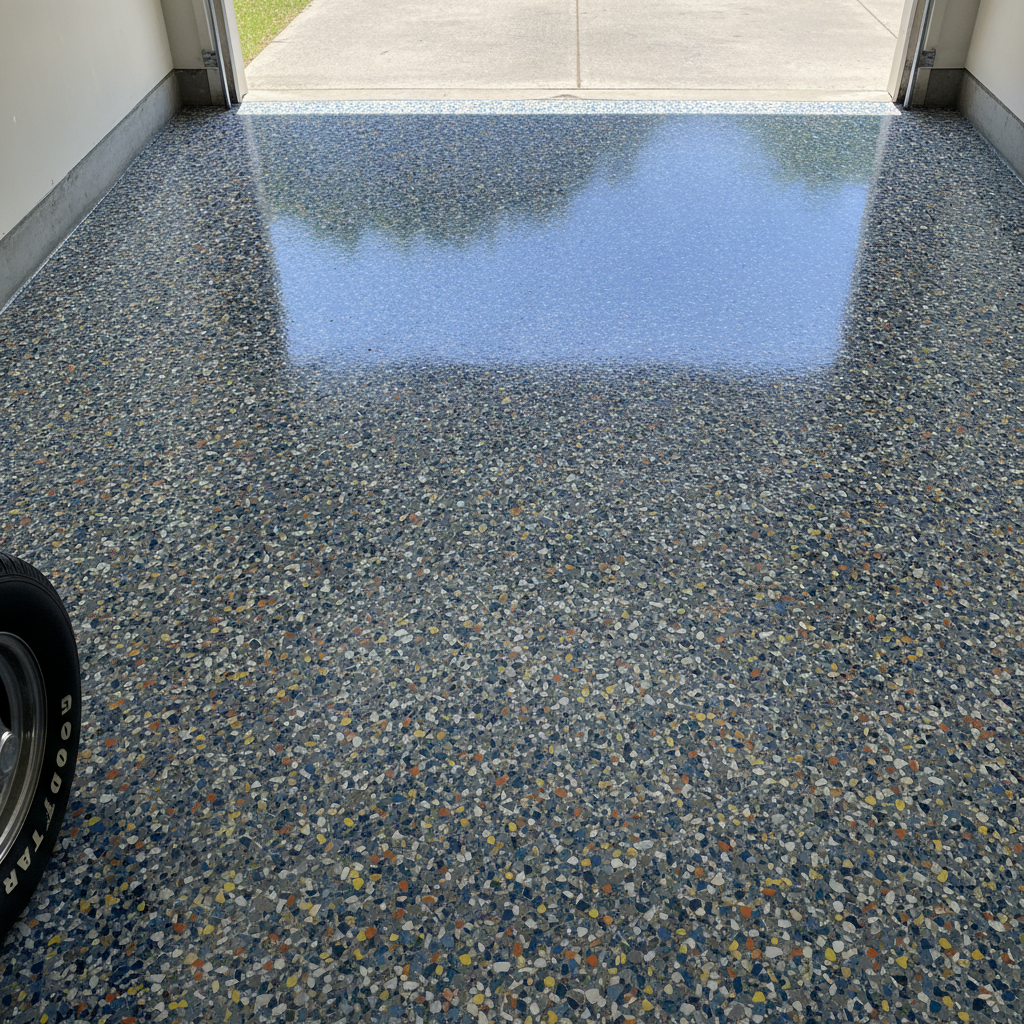
Epoxy Floors for Your Garage: A Complete Melbourne Guide
Epoxy floors for your garage transform a dull, dusty concrete slab into a hard-wearing, good-looking surface that resists oil, tyre marks and Melbourne’s seasonal moisture. A properly applied epoxy coating bonds directly to the concrete and, when done right, can last well over a decade with minimal maintenance. Here is everything you need to know before you commit.
Why do so many Melbourne homeowners choose epoxy floors for their garage?
Melbourne homeowners choose garage epoxy floors because bare concrete is porous and punishing. It soaks up oil, stains easily, produces fine dust and looks unfinished. A quality epoxy coating seals all of that away, creates a surface that is easy to hose down, and adds a sharp finish that lifts the whole space. It also makes the garage feel like an actual room rather than a storage afterthought.
Beyond the look, there are practical reasons that make a lot of sense for the average Melbourne home. The temperature swings here, from a humid 38-degree summer scorcher to a wet winter day, put concrete under constant stress. Bare slabs develop surface dusting and hairline cracks over time. A multi-layer epoxy system acts as a protective shell, slowing that deterioration considerably.
Garages also pull double duty for most households. One half parks the car, the other half stores tools, bikes, gym gear or workshop equipment. An epoxy floor handles the rolling loads and dropped weights far better than raw concrete. Add a metallic or flake finish and the space starts looking like something from a car showroom or a professional workshop, not a suburban shed.
What types of garage floor coatings are available in Melbourne?
The main options for garage floor coatings are standard solid-colour epoxy, decorative flake (also called chip) systems, metallic epoxy and polyaspartic topcoats. Each suits a different budget, look and use case. Flake systems are by far the most popular for residential garages because they hide minor surface imperfections, provide grip and are available in a wide range of colour blends. Metallic systems give a high-gloss, marbled effect that suits showroom-style garages.
Here is a quick breakdown of the most common systems:
- Solid-colour epoxy: Simple, cost-effective and tough. Works well in workshops where looks matter less than durability.
- Flake or chip system: A coloured base coat is broadcast with vinyl flake, then sealed with a clear topcoat. The texture adds slip resistance and hides dirt between cleans. This is the most common choice for residential garages.
- Metallic epoxy: Pigments swirl through a clear or tinted base to create a three-dimensional, liquid-metal look. Every floor is unique. Popular for car enthusiasts and home gyms.
- Polyaspartic topcoat: Often used as a final clear layer over epoxy. Polyaspartic cures faster than standard epoxy and offers excellent UV stability, which matters in garages that get afternoon sun through an open door or side window.
The system Metal and Flake applies uses a combination of these layers tailored to the individual slab and the customer’s priorities, whether that is durability, aesthetics or a quick return-to-use turnaround.
How important is concrete preparation before applying a garage epoxy coating?
Concrete preparation is the single most important step in any garage epoxy job. If the surface is not properly profiled and cleaned, even the best epoxy product will peel, bubble or delaminate within months. Professional preparation typically involves diamond grinding or shot blasting the slab to open up the pores, followed by patching any cracks or spalls, so the epoxy can bond at a molecular level rather than just sitting on top.
This is where a lot of DIY kits fall short. The big-box store kits often rely on acid etching alone, which is far less effective than mechanical grinding on a sealed or contaminated slab. Melbourne garages in particular can have silicone, oil or tyre rubber ground into the surface over years of use. Acid alone will not shift that contamination deeply enough to guarantee a lasting bond.
A professional applicator will also check the moisture vapour transmission rate of the slab before coating. Australian concrete slabs, especially older ones poured without a proper damp-proof membrane, can push moisture upward. Applying epoxy over a slab with high vapour emissions without using a moisture-tolerant primer is a recipe for lifting and blistering down the track.
How long does a garage epoxy floor take to install and when can you use it?
Most residential garage epoxy floors take one to two days to apply, depending on the system and the size of the slab. The preparation work happens on day one, the base coat and flake broadcast on day two, with the clear topcoat following once the base has cured to the correct stage. Light foot traffic is usually possible within 24 hours of the final coat. You should wait at least 72 hours before parking a car back on the surface, and around seven days for full chemical cure.
Polyaspartic systems can speed this up considerably. Some polyaspartic topcoats reach vehicle-ready hardness in as little as 24 hours, which is a practical advantage if you cannot be without your garage for multiple days. The trade-off is that polyaspartic products cure fast at every stage, including the application stage, so they demand experienced hands to get right.
Weather plays a role too. Epoxy should not be applied when the concrete surface temperature is below 10 degrees Celsius or above 30 degrees, as both extremes affect how the product flows and cures. Melbourne’s shoulder seasons, autumn and spring, tend to be ideal. A good installer will check conditions before committing to a start date.
How much do epoxy garage floors cost in Melbourne?
For a standard single-car garage of around 18 to 20 square metres, expect to pay somewhere in the range of $1,500 to $2,500 for a professionally applied flake system, depending on the condition of the concrete and the complexity of the finish. Double garages of 36 to 40 square metres typically come in between $2,800 and $4,500. Metallic systems sit at the upper end of the price range because of the extra skill and material cost involved.
These figures cover professional preparation, materials and labour. Compare that to the cost of resurfacing damaged concrete later or replacing a failing DIY coat that has started to peel. When you factor in a realistic lifespan of ten to fifteen years for a well-applied professional system, the per-year cost is quite reasonable.
Variables that push the price up include severe concrete damage requiring extensive patching, multiple floor drains or control joints that need sealing, and premium decorative finishes. Getting a site-specific quote is the only way to get an accurate number for your garage.
How do you maintain an epoxy garage floor to keep it looking good?
Maintaining an epoxy garage floor is straightforward. Sweep or blow out loose dirt and grit regularly, because fine particles act like sandpaper underfoot and under tyres over time. For general cleaning, a mop with warm water and a pH-neutral cleaner is all you need. Avoid bleach-based or citrus-based cleaners, as these can dull the topcoat over repeated use.
Oil spills should be wiped up promptly rather than left to sit, not because epoxy will absorb them the way bare concrete does, but because oil makes the surface slippery and can degrade the topcoat over extended exposure. A quality flake system has enough texture to provide grip even in a wet garage, but keeping oil off the floor is good practice regardless.
Place felt pads under any heavy shelving or workshop equipment that sits permanently in one spot. Point loads from metal feet can eventually leave impressions in any resin-based coating. Beyond that, a professionally installed epoxy garage floor largely looks after itself. Many customers report that their garage floor still looks sharp after a decade with nothing more than a weekly sweep and an occasional mop.
If the topcoat does eventually show wear in high-traffic zones, a professional can apply a fresh clear coat over the existing floor without a full strip-and-recoat, extending the life of the system further.
Ready to stop looking at that grey slab every time you pull into the garage? Get a free quote on garage floor coating from Metal and Flake.