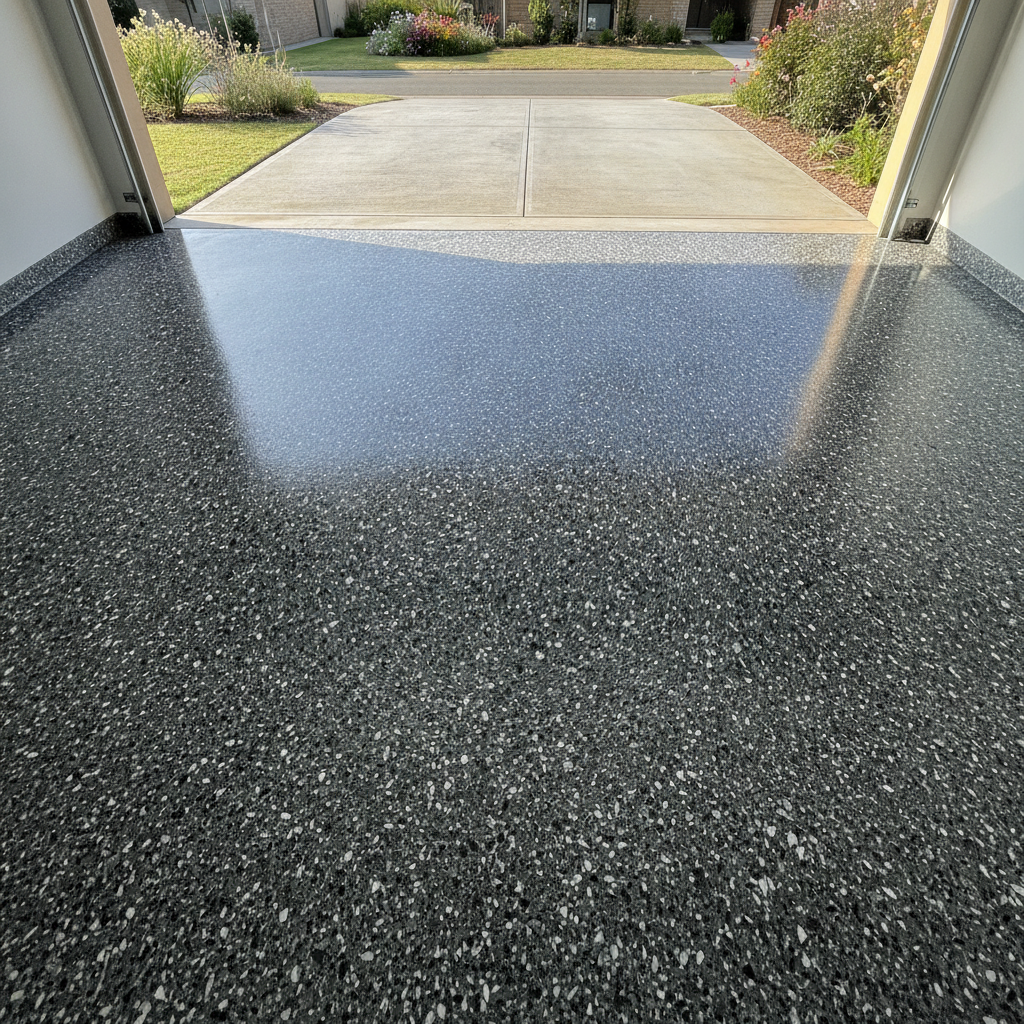
Epoxy Floors in Epping: Garage Coating Options for Local Homeowners
Epoxy floors in Epping are a practical, long-lasting upgrade for homeowners who want a garage that handles daily punishment without looking like a forgotten storage shed. A quality epoxy coating bonds directly to concrete, resists oil, tyre marks and moisture, and can be finished in a range of styles from solid colour to metallic flake. Most residential garage floors are completed within one to two days.
Why are epoxy floors worth considering for Epping garages?
Epoxy floors are worth considering for Epping garages because the northern Melbourne climate, with its dry summers and cold winters, puts concrete through regular thermal expansion and contraction that causes surface dusting and cracking over time. A properly applied epoxy system seals the slab, stops that dusting, and gives you a surface that is genuinely easy to clean with a hose or mop.
Most uncoated garage slabs in suburban homes are broom-finished concrete that absorbs everything: motor oil, brake fluid, fertiliser from the ride-on, muddy boot prints after a rainy weekend. Once those stains soak in, they are nearly impossible to remove. Epoxy creates a non-porous barrier, so spills sit on the surface until you wipe them up.
There is also a practical safety angle. Broadcast flake systems, where coloured vinyl chips are scattered into the wet epoxy before a clear topcoat is applied, add a textured, slip-resistant finish. That matters in a garage where puddles from wet cars or condensation on a cold morning are common. A high-gloss solid-colour floor looks sharp, but if slip resistance is a priority, a flake system is the smarter choice for a working garage.
What epoxy garage coating options are available in Epping?
The main epoxy garage coating options available to Epping homeowners are solid-colour epoxy, decorative flake (also called chip or broadcast flake), and metallic epoxy. Each suits a different budget, aesthetic and level of foot and vehicle traffic. Solid colour is the most affordable entry point; metallic is the premium option for a showroom-style finish.
Here is a plain-English breakdown of each system.
Solid colour epoxy. This is the workhorse of garage coatings. A pigmented base coat is applied over a prepared slab, then sealed with a clear polyurethane or epoxy topcoat. Colours like battleship grey, charcoal and slate are popular in Epping because they hide tyre marks between cleans. The finish is smooth and high-gloss, which bounces light around nicely in a garage that does not get a lot of natural light.
Decorative flake (metal and flake style). This is the most popular system for residential garages in Melbourne’s suburbs right now. Coloured vinyl flakes are broadcast into a wet base coat at either a partial broadcast (speckled look) or a full broadcast (fully covered, seamless look). A clear topcoat locks everything in. The result is textured, slip-resistant, and hides minor surface imperfections better than a solid colour coat. It is also extremely durable under vehicle traffic because the chip layer adds thickness to the system.
Metallic epoxy. Metallic pigment powders are mixed into a clear or tinted epoxy base to create a swirling, three-dimensional effect. No two floors look the same, which is the point. This system suits homeowners who want the garage to feel like an extension of the house rather than just a utility space. It is the most labour-intensive option to apply correctly, so it sits at the higher end of the price range.
How does surface preparation affect the quality of epoxy floors in Epping?
Surface preparation is the single biggest factor in how well epoxy floors in Epping perform over time. If the concrete slab is not properly mechanically ground or shot-blasted before coating, the epoxy will not bond correctly and will peel within months. No amount of premium product fixes a poor prep job.
Concrete in older Epping homes, particularly those built through the 1980s and 1990s, often has a cured surface that is dense and smooth. That smooth skin needs to be opened up so the epoxy can penetrate and grip. Diamond grinding or shot blasting removes the top layer of the slab, exposing a slightly rough, porous profile. This is called a concrete surface profile (CSP), and for most residential epoxy systems a CSP of 2 to 3 is the target range.
Any cracks, spalling or holes in the slab need to be filled and levelled before coating. A reputable installer will assess moisture vapour transmission as well. Slabs that sit over unventilated subfloor spaces or in low-lying areas can emit enough moisture vapour to push the coating up from below. Moisture testing before application is standard practice on a quality job.
This prep work is where a lot of DIY epoxy kits fall short. The rollers-and-bucket systems sold at hardware stores are single-component water-based products that work on already-perfect slabs. The moment there is any surface contamination, moisture or profile issue, those coatings fail. A professional installation uses two-part epoxy systems with proper hardener ratios and applies them over a mechanically prepared slab, which is a fundamentally different process.
How long does an epoxy floor installation take in a residential garage?
A standard residential garage epoxy floor installation takes one to two days on-site, plus a cure period of around 24 to 72 hours before you can walk on it and five to seven days before you should drive a vehicle onto it. The exact timeline depends on the system chosen, the ambient temperature and the humidity on the day of application.
For a typical double garage of around 36 to 40 square metres, the first day covers grinding, patching and the base coat application. The second day handles the topcoat. Single-car garages are often completed in a single day when conditions are right. Metallic systems can add a day because of the additional complexity in the application technique.
Cooler Melbourne weather, particularly in autumn and winter, slows cure times. Most professional installers schedule jobs to avoid application in temperatures below about 10 degrees Celsius, because cold slabs cause the epoxy to skin over slowly and can trap air bubbles. If you are planning a garage floor project in Epping, late spring through to early autumn tends to give the best conditions.
What should Epping homeowners look for when choosing an installer?
Epping homeowners should look for an installer who uses mechanical preparation (grinding, not just acid etching), offers a two-part epoxy system rather than a single-component product, and can show examples of completed residential garage floors. Ask about the thickness of the system they apply, the brand of products used, and whether they carry public liability insurance.
The thickness of the finished system matters a lot for durability under vehicle traffic. A typical residential flake system should measure at least 1.5 to 2 millimetres in total thickness across base coat, flake layer and topcoat. Thinner applications wear faster, particularly around the garage door threshold where daily foot and tyre traffic concentrates.
References from local jobs are worth asking for. A company that has done work in the northern suburbs knows the typical slab conditions in the area and has applied floors in local weather patterns. That local experience counts when it comes to getting the product ratios and application timing right.
Book an epoxy floor installation in Epping with Metal and Flake