Epoxy Floors in Essendon: Which Coating Suits Your Garage?
The right epoxy floor coating for your Essendon garage depends on how you use the space, the condition of your existing concrete, and the finish you want to live with. Decorative flake systems suit most residential garages, metallic coatings work well for showroom-style results, and solid colour epoxy is the practical budget pick. Each has a clear use case.
What makes epoxy floors in Essendon a popular choice for garages?
Epoxy floors are popular in Essendon garages because they seal porous concrete against oil, water and grime, survive daily tyre traffic, and look dramatically better than bare slab. A properly applied system bonds directly to the concrete and can last well over a decade with minimal maintenance, making the upfront cost easy to justify.
Essendon is a suburb with a solid mix of older brick homes and newer builds. That means garages range from rough 1970s slabs with plenty of surface variation to fresh pours that are almost ready to coat straight away. Whatever you are working with, the concrete condition shapes which coating makes sense, and it is the first thing a good installer will assess before quoting anything.
A standard garage slab in a suburb like Essendon is somewhere between 40 and 100 square metres. That is a meaningful surface area. Done properly with the right system, it transforms a dark, dusty box into a space you actually want to be in, whether that means a clean workshop, a home gym overflow, or simply somewhere to park without tracking concrete dust into the house.
What are the main epoxy coating systems available for a garage?
The main epoxy coating systems for a residential garage are decorative flake (also called chip or broadcast), metallic epoxy, and solid colour epoxy. Each uses a two-part resin base but varies in how it looks, how it performs underfoot, and what preparation the slab needs before application. Choosing between them is mostly about your priorities: aesthetics, slip resistance, budget, or all three.
Decorative Flake Systems
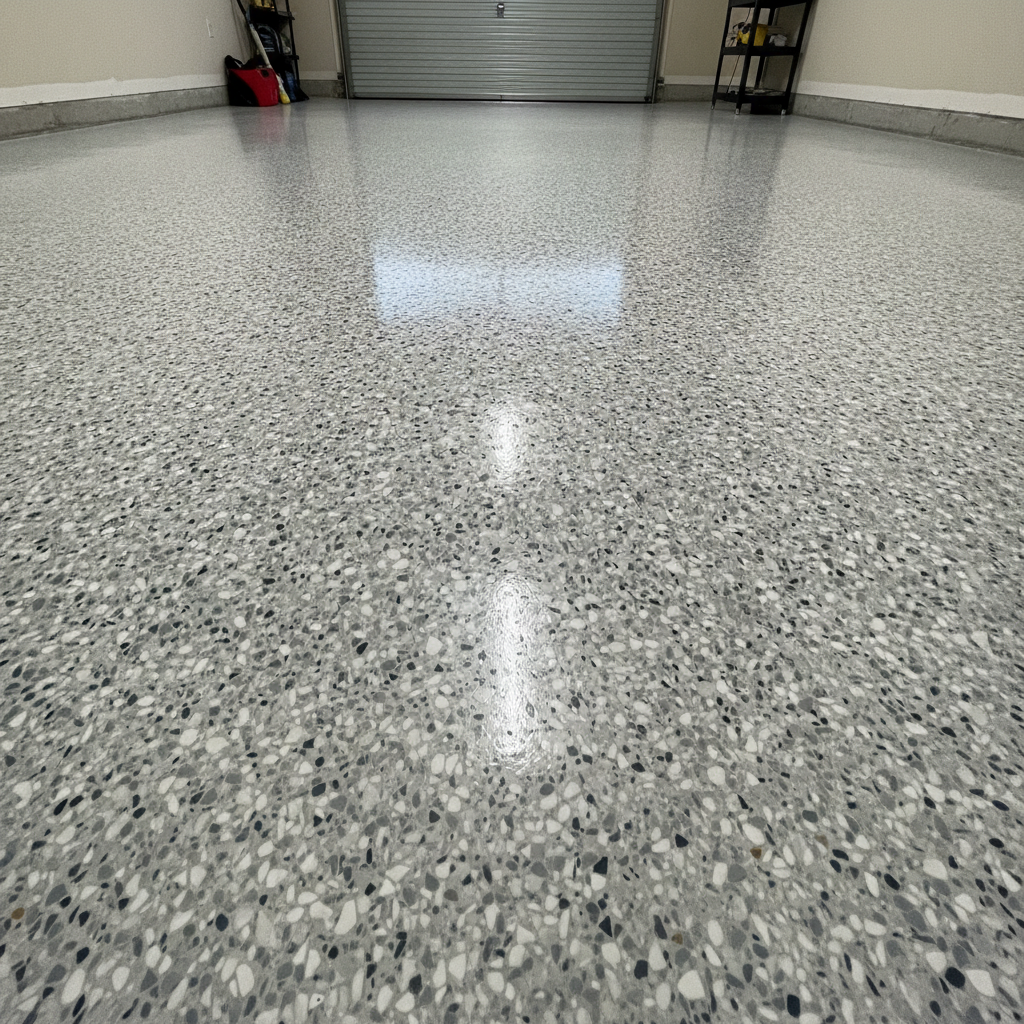
Flake or chip systems are the most popular choice for garages across Melbourne’s north-west, and for good reason. Coloured vinyl flakes are broadcast over a base coat while it is still wet, then locked in with a clear topcoat. The result is a texture that hides minor surface imperfections, provides natural slip resistance, and holds up well under cars, trolleys and foot traffic.
You can dial in the density of the flake broadcast. A full broadcast (where flakes cover the entire surface edge to edge) gives a more uniform, professional look. A medium broadcast shows more of the base colour underneath and softens the overall effect. The topcoat can be matte or gloss depending on the look you are after. For most Essendon homeowners using the garage as a mixed-purpose space, this system hits the sweet spot between durability and appearance.
Metallic Epoxy
Metallic epoxy uses pigment powders blended into the resin to create a flowing, three-dimensional effect that looks like polished stone or liquid metal frozen in place. No two floors come out exactly the same, which is part of the appeal. The finish is high-gloss and visually striking, making it a strong choice if the garage doubles as a showroom, workshop display space, or home studio.
One thing to know: metallic systems are less forgiving of slab imperfections. Significant cracking, moisture issues or heavy pitting will show through if the concrete is not properly prepared first. They also tend to sit at a higher price point than flake systems, and the application demands more skill to get the colour movement right. When the execution is dialled in, though, the result is genuinely impressive.
Solid Colour Epoxy
Solid colour epoxy is exactly what it sounds like. A single pigmented coat applied over a primed slab, finished with a clear sealer. It is clean, functional and the most straightforward system to maintain. This is the practical option for anyone who wants the core benefits of epoxy (sealed concrete, easy cleaning, improved durability) without a decorative element in the mix.
It is also worth noting that solid systems can show scuffs and tyre marks more obviously than flake, so high-traffic garages may need more frequent cleaning. Still, for a low-fuss, cost-effective result it gets the job done reliably.
Does the condition of your Essendon garage slab affect which coating you should choose?
Yes, the condition of your slab is one of the biggest factors in which coating will actually work well. Moisture coming up through the concrete, surface cracks, old paint or previous sealers all need to be dealt with before any epoxy goes down. Skipping proper preparation is the main reason DIY and budget epoxy jobs fail within a year or two.
The preparation stage typically involves diamond grinding the surface to open up the concrete’s pores so the epoxy can bond properly. In Melbourne’s older suburbs, including Essendon, garages often have slab-on-ground construction with limited membrane underneath. That can mean moisture vapour transmission (MVT) is a consideration, particularly in winter. A good installer will test for this before specifying a system, because applying a standard epoxy over a damp slab leads to bubbling and delamination.
Cracks are another common issue in older slabs. Hairline cracks can usually be filled and coated over without drama. Structural movement cracks are a different story. They need proper treatment, and in some cases they will continue to move under the coating regardless. An honest installer will point this out upfront rather than just coat over it and hope for the best.
How long does an epoxy floor coating last in a typical Essendon garage?
A professionally applied epoxy floor coating in a residential garage typically lasts between 10 and 20 years when the surface is properly prepared and the right system is matched to the use case. The topcoat takes most of the wear, so choosing a quality polyurethane or polyaspartic clear finish extends the life of the decorative layer underneath significantly.
Day-to-day care is minimal. Sweeping out grit regularly matters more than most people expect, because fine particles act like sandpaper underfoot and wear the topcoat down faster than tyre traffic does. Cleaning up oil spills promptly keeps any potential staining from soaking into micro-scratches in the sealer. Beyond that, a professionally installed system in Essendon’s climate is low maintenance by design.
UV stability is worth mentioning here too. Garages with roller doors that let in direct sunlight need a UV-stable topcoat, otherwise the colour will amber or chalk over time. Most reputable installers will specify this automatically, but it pays to ask the question.
What should you ask before booking an epoxy coating job in Essendon?
Before booking any epoxy job for your Essendon garage, ask whether diamond grinding is included in the prep (it should be), whether the installer will test for moisture, and what topcoat they are using. Ask for examples of completed jobs in a similar residential setting and get clarity on the warranty. A professional who answers these questions without hesitation is worth their price. One who deflects or rushes past them is a red flag.
Also worth asking: how long before you can park cars back on the floor. A polyaspartic topcoat can cure to vehicle traffic in as little as 24 hours. Standard epoxy topcoats typically need closer to 72 hours for full cure. Knowing this upfront lets you plan the job around your week rather than being caught out.
Finally, get the quote in writing with the product system specified. “Epoxy” covers a huge range of products and systems, and a quote that just says “epoxy floor” tells you almost nothing about what you are actually getting. Proper documentation protects you both.
Book an epoxy floor coating in Essendon with Metal and Flake