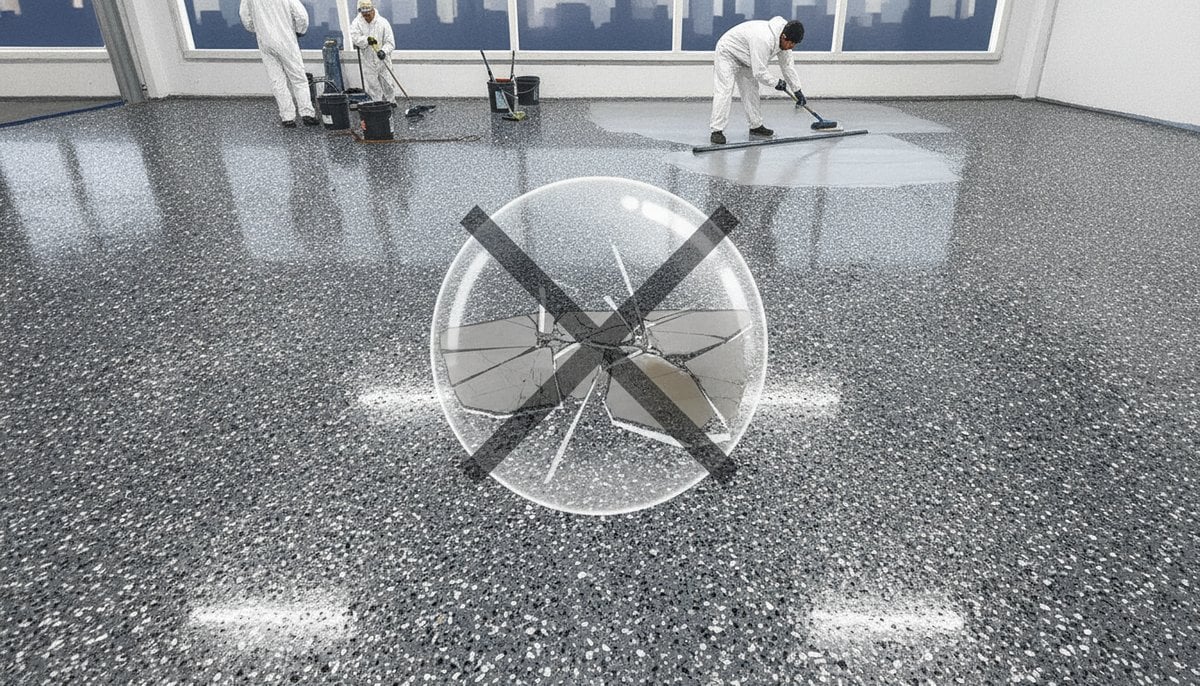
8 Common Myths About Epoxy Garage Flooring Debunked

Family owned & operated · Melbourne & surrounds · Call us free: +61 485 031 001
8 Common Myths About Epoxy Garage Flooring Debunked

8 Common Myths About Epoxy Garage Flooring Debunked

Back to Blog

There’s a lot of outdated and incorrect information circulating about epoxy garage flooring. Some of it comes from people who had bad experiences with budget DIY kits a decade ago. Some comes from competitors pushing alternative products. And some is just myth that’s been repeated so often it sounds like fact. Here are 8 of the most common ones, and what’s actually true.

Myth 1: Epoxy floors are slippery when wet

The truth: a smooth, unsealed epoxy surface can be slippery when wet. But a professionally installed garage floor with a full-broadcast flake system has natural texture from the chip surface, and any quality topcoat can have a fine anti-slip aggregate added as standard. This is included in virtually every residential garage installation from a reputable Melbourne installer. A properly specified epoxy floor is not slippery.

If you’ve seen this concern raised, it usually refers to thin, glossy, solid-colour epoxy coatings from DIY kits with no texture or anti-slip additive. That’s a different product from a professionally installed flake or metallic system.

Myth 2: Epoxy floors peel and chip within a few years

The truth: cheap DIY epoxy kits and budget installations do peel. Professional epoxy systems on properly prepared concrete do not. The distinction matters.

Delamination happens when the concrete wasn’t diamond ground before installation, when the surface had contamination (oil, paint, moisture) that wasn’t treated, or when a thin consumer-grade product was used. A professionally installed flake system or metallic epoxy on a properly prepared slab doesn’t peel. The mechanical bond achieved through diamond grinding is far stronger than the coating itself.

When people say “I heard epoxy peels”, they’ve usually heard about a DIY kit or a budget installation. Professional-grade systems on prepared concrete routinely last 15–20 years.

Myth 3: Epoxy floors are too expensive for a standard residential garage

The truth: epoxy flake flooring for a double Melbourne garage costs approximately $2,400–$5,000 installed. Spread over a 15-year lifespan, that’s $160–$333 per year, or under $1 per day. Compared to what most Melbourne homeowners spend on other home improvements, this is modest.

The myth of excessive cost often comes from comparing epoxy to garage floor paint ($200 in materials) without accounting for the fact that paint lasts 1–2 years and has to be redone repeatedly. On a lifetime cost basis, professional epoxy is the more economical choice.

Myth 4: You can apply epoxy yourself and get the same result

The truth: you can apply epoxy yourself. You will not get the same result. The difference isn’t primarily in the application, it’s in the preparation. Professional diamond grinding equipment costs tens of thousands of dollars and takes experience to use correctly. DIY concrete grinders available for hire produce inconsistent surface profiles. The primer and coating products available to consumers are also significantly thinner and less durable than professional-grade materials.

A DIY epoxy kit applied without proper diamond grinding will look fine for 6–18 months and then start peeling. This isn’t a failure of effort, it’s a fundamental mismatch between consumer products, consumer equipment, and a job that requires industrial preparation and professional-grade materials.

Myth 5: Epoxy floors are difficult to maintain

The truth: epoxy garage floors are among the easiest floors to maintain. Sweep weekly. Mop monthly with a pH-neutral cleaner. Wipe chemical spills when they happen. That’s the full routine.

The comparison point is bare concrete, which absorbs everything permanently and can’t be fully cleaned. An epoxy floor is sealed: spills sit on the surface, grit sweeps away, and the floor looks presentable indefinitely with minimal effort.

Myth 6: Epoxy floors are too hot in Melbourne summers

The truth: a cured epoxy floor doesn’t get noticeably hotter than any other hard floor surface in Melbourne’s summer heat. The thermal mass of the concrete beneath means the floor stays relatively cool. The topcoat itself doesn’t absorb heat differently from the underlying concrete.

This myth likely originates from concerns about hot tyre pickup, where vehicle tyres can bond to an uncured or poor-quality epoxy surface and pull it up when the car moves. A fully cured, quality topcoat doesn’t have this problem. Proper cure time (28–30 days) and a quality polyaspartic or polyurethane topcoat eliminates this risk entirely.

Myth 7: All epoxy floors look the same

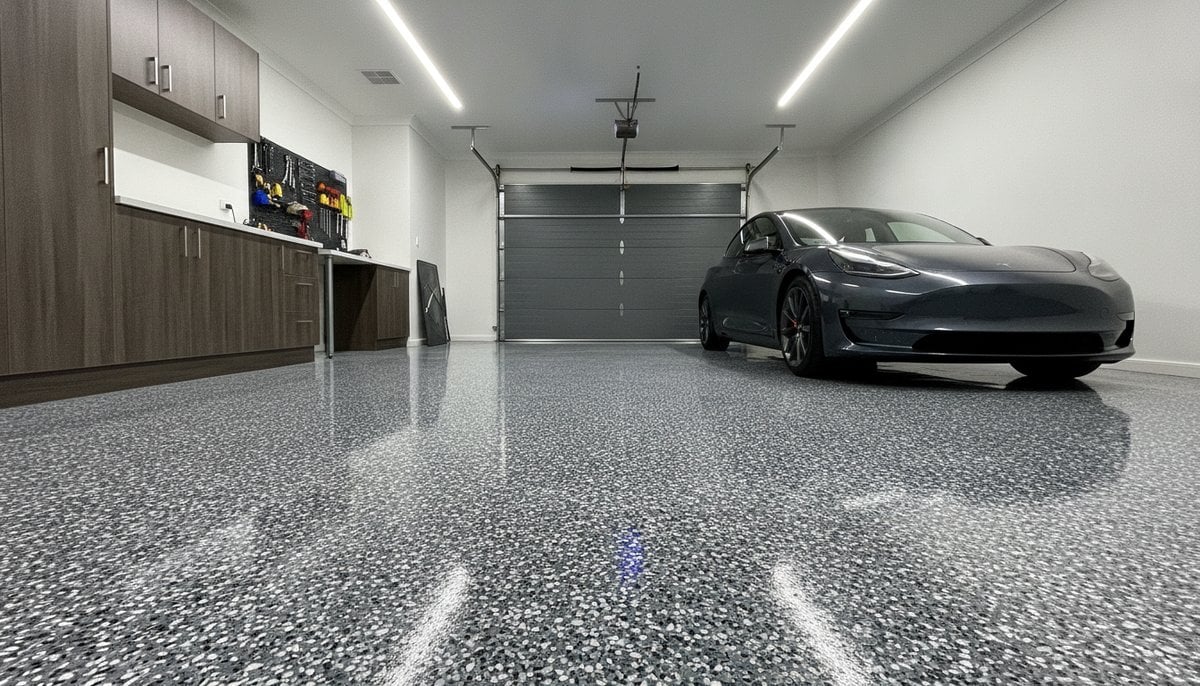
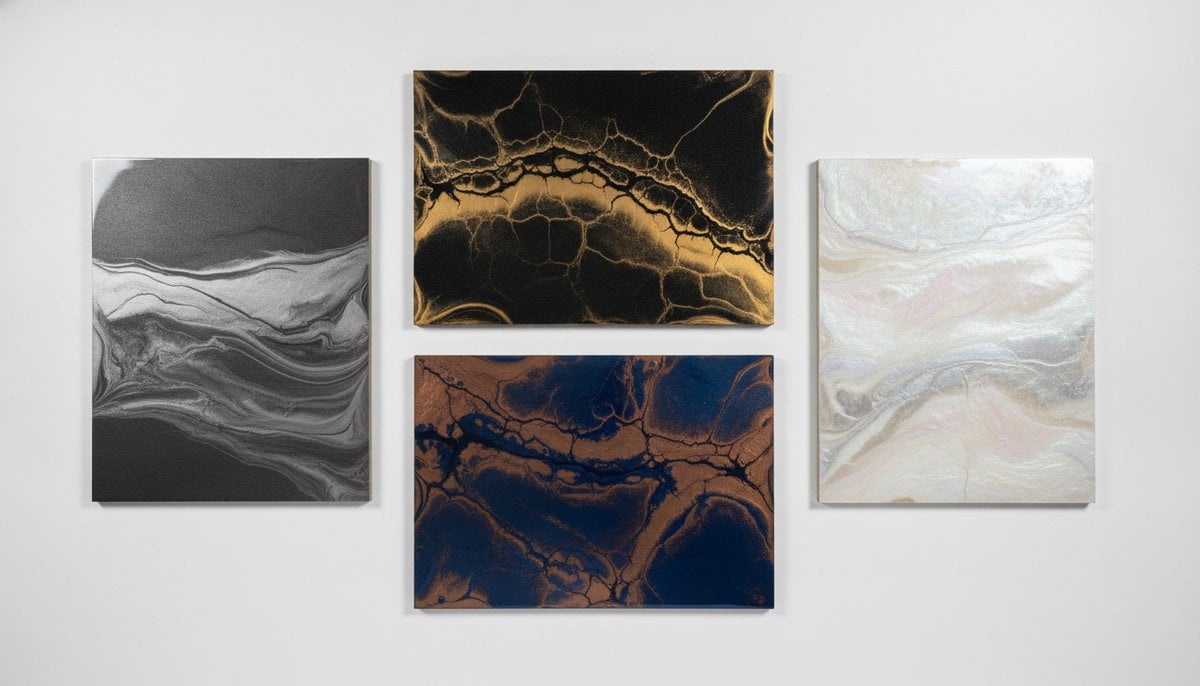
The truth: epoxy flooring spans a wide range of aesthetics. A charcoal and silver flake floor, a flowing charcoal and gold metallic epoxy, a pearl white broadcast system, and a two-tone marble metallic look nothing alike. The category “epoxy floor” includes everything from industrial grey solid-colour coatings to custom artistic metallic designs.

The visual range of professional epoxy systems is wider than most people realise before they start looking at options. If the aesthetic concern is “I don’t want my garage looking like a factory floor,” the answer is to look at residential epoxy flake and metallic systems rather than the industrial grey that often forms people’s mental image of “epoxy”.

Myth 8: Epoxy flooring is bad for the environment

The truth: epoxy flooring has a mixed environmental picture, but it’s not the problem this myth implies. Professional 100% solids epoxy systems have low volatile organic compound (VOC) content compared to solvent-based paints and coatings. The long lifespan (15–20 years) means fewer replacements and less material use over time compared to shorter-lived alternatives. The sealed surface also reduces concrete dust, which is a fine particulate concern in poorly ventilated garages.

Disposal of an old epoxy floor does require grinding and disposal of the coating material. This is a genuine consideration, but it applies to all floor coatings and is a relatively minor environmental impact in the context of home ownership.

The bottom line

Most myths about epoxy garage flooring trace back to one of two sources: bad experiences with DIY kits or budget installations, or outdated information about older epoxy products from a decade ago. Professional-grade systems installed by experienced Melbourne contractors are a different category of product entirely.

The best way to form an accurate view is to see a completed professional installation in person. The difference between a professional result and what most people picture when they hear “epoxy floor” is significant.

FAQ: epoxy garage flooring myths Melbourne

Is there any truth to the myth that epoxy floors smell bad?

Solvent-based epoxy products have strong odours during application. Professional-grade 100% solids epoxy systems used by Melbourne installers have significantly lower odour. The garage should be ventilated during application and for 24 hours after, but this is a temporary installation consideration, not an ongoing concern with the finished floor.

Is it true epoxy floors can’t be repaired if damaged?

Small areas of damage (chips, scratches, localised delamination) can be repaired by an experienced installer. Widespread failure is better addressed by full removal and reinstallation. Repair feasibility depends on the size and cause of the damage and the quality of the original installation.

Do epoxy floors look cheap?

A professionally installed epoxy floor looks expensive, not cheap. The comparison point that generates this myth is usually DIY kits on unprepared concrete, which do look thin and uneven. A professional installation with proper preparation, a full broadcast flake system, and a gloss topcoat reads as a quality finish.

See a professional result for yourself

Metal and Flake can show you completed residential installations across Melbourne so you can form your own view without relying on myths. Book a free consultation and quote here.

Ready for a Floor That Lasts?

Get a free, no-obligation quote from Melbourne’s trusted epoxy specialists.
Get a Free Quote
+61 485 031 001

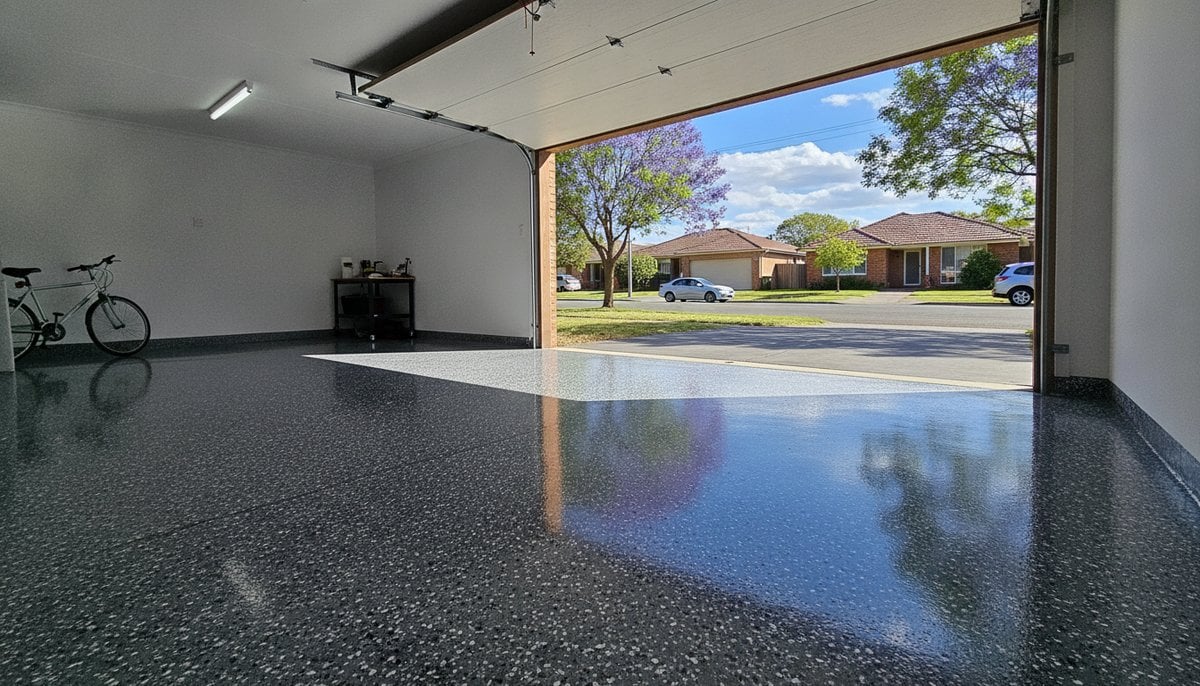
Epoxy Garage Flooring and Melbourne’s Climate

Family owned & operated · Melbourne & surrounds · Call us free: +61 485 031 001
Epoxy Garage Flooring and Melbourne's Climate

Epoxy Garage Flooring and Melbourne’s Climate

Back to Blog

Melbourne’s weather is famously unpredictable: hot summers, cold winters, high UV, frequent rain, and dramatic temperature swings within a single day. If you’re considering epoxy garage flooring, it’s a fair question whether the local climate works for or against the system. This post covers what Melbourne’s climate actually does to epoxy flooring, what to watch for, and why timing your installation matters.

Key takeaways

  • A properly installed epoxy system performs well across Melbourne’s full climate range.
  • Installation temperature is the critical variable: epoxy shouldn’t be applied when overnight temperatures drop below 10°C.
  • UV exposure can yellow low-quality polyurethane topcoats over time. UV-stable polyaspartic topcoats don’t have this problem.
  • Melbourne’s clay soils mean moisture vapour in slabs is more common than in drier climates and must be assessed before installation.
  • The best time to install epoxy in Melbourne is spring or autumn, when temperatures are stable and humidity is moderate.

How Melbourne’s temperature range affects epoxy

During installation

Temperature matters during application and initial cure, not after. Epoxy cures through an exothermic chemical reaction that requires a minimum ambient temperature. Below 10°C, the reaction slows significantly and may not complete correctly, leaving a soft, tacky surface prone to failure.

Melbourne’s winter overnight temperatures regularly fall to 5–8°C from June through August. A professional installer scheduling a winter installation will check the extended forecast and avoid any week where overnight temperatures will drop below 10–12°C during the 24–48 hour cure window after application.

High temperatures (above 30°C) shorten the working time of epoxy, which can cause issues for less experienced applicators. Metallic epoxy in particular requires manipulation while the material is workable, and hot days compress that window. Experienced Melbourne installers know to start early and work in sections during hot weather.

After installation: the cured floor

Once fully cured (28–30 days), epoxy is thermally stable across Melbourne’s climate range. The thermal cycling between Melbourne’s hot summers and cool winters doesn’t cause the coating to crack, delaminate, or fail in a properly prepared and installed system. The bond to the concrete is mechanical and chemical, not dependent on temperature stability the way some adhesives are.

UV exposure: the specific Melbourne risk

Melbourne receives significant UV radiation, particularly in spring and summer. For epoxy garage floors, UV is relevant in two scenarios:

  • Garages with open roller doors that face north or west: direct sun exposure during peak hours hits the floor surface and can degrade lower-quality topcoats over time.
  • Partially open or semi-outdoor areas: entertaining slabs, carports, and workshop spaces with large openings see significant UV exposure.

Standard polyurethane topcoats are not UV-stable. Under prolonged Melbourne sun exposure, they can amber (yellow) over time. This doesn’t affect structural performance, but it changes the appearance of light-coloured floors noticeably.

Polyaspartic topcoats are UV-stable and don’t amber. For any Melbourne garage with significant sun exposure through the door, a polyaspartic topcoat is worth the additional cost. It’s also worth specifying for garages with north or west-facing orientations, even if the door is typically closed, as UV penetrates and reflects through glass panel doors.

Moisture and Melbourne’s clay soils

Melbourne’s geology is predominantly reactive clay. This means soil moisture levels change significantly with rainfall and drought cycles, causing ground movement and, relevantly for garage floors, moisture vapour migration through concrete slabs.

Moisture vapour transmission occurs when moisture in the soil beneath the slab migrates upward through the concrete as vapour. On the surface, the slab may look perfectly dry. But if epoxy is applied over a slab with active moisture transmission, the vapour creates osmotic pressure beneath the coating, causing blistering and delamination over months to years.

Professional Melbourne installers test for moisture before installation. The simplest field test is taping a sheet of plastic to the concrete for 16–24 hours: if condensation forms on the underside, the slab has active moisture transmission. High readings require either a moisture-tolerant primer or a dedicated moisture barrier coat before the epoxy system is applied.

This is a Melbourne-specific consideration that matters more here than in drier cities. Any professional installer should include this step in their assessment.

Rain during installation

Rain itself isn’t an issue for a garage installation, as the garage is enclosed. What matters is humidity. High ambient humidity (above 80–85%) during application can cause epoxy to “blush”: a whitish, hazy surface film that forms as atmospheric moisture reacts with the curing epoxy. Blushing reduces gloss and adhesion of subsequent coats.

Professional installers monitor humidity forecasts and schedule installations during lower-humidity windows. Melbourne’s autumn and spring typically offer the most reliable low-humidity conditions for installation.

Best and worst times to install epoxy in Melbourne

Season Temperature Humidity Rating for installation
Spring (Sep–Nov) 15–25°C, stable Moderate Excellent
Autumn (Mar–May) 15–22°C, stable Moderate to low Excellent
Summer (Dec–Feb) 20–40°C, variable Low to moderate Good (early starts, avoid heatwave days)
Winter (Jun–Aug) 5–15°C, overnight lows critical Higher Challenging (schedule carefully, check overnight lows)

Does frost affect epoxy floors?

Melbourne doesn’t experience significant ground frost in suburban areas, but outer suburban and hillside locations can see brief frost periods. Frost on a curing epoxy surface causes irreversible surface defects. A professional installer will not apply epoxy if frost is forecast during the cure window. Once the floor is fully cured, frost doesn’t affect it.

FAQ: epoxy flooring and Melbourne’s climate

Can epoxy be installed in a Melbourne winter?

Yes, with careful scheduling. An installer needs at least 48–72 hours of temperatures staying above 10°C after application. In Melbourne winters, this is achievable on the right weeks. Discuss timing with your installer and check the extended forecast together.

My garage faces west and gets afternoon sun. Is epoxy still suitable?

Yes, but specify a UV-stable polyaspartic topcoat rather than standard polyurethane. The polyaspartic won’t amber under the UV exposure and costs roughly 15–25% more. It’s a worthwhile investment for west-facing garages.

Will Melbourne’s variable weather cause the floor to crack?

No. The coating itself doesn’t crack from thermal cycling. Cracks in the concrete beneath can telegraph through the coating over time if they’re active (moving) cracks that weren’t treated correctly during installation. An experienced installer identifies and treats these appropriately during preparation.

How soon after rain can a new epoxy floor get wet?

After full cure (5–7 days for the topcoat to reach vehicle-use hardness, 28–30 days for full chemical cure), the floor handles water normally. Water is not a threat to a cured epoxy system. During the initial cure period, keep the floor dry.

Get your Melbourne garage floor done at the right time of year

Metal and Flake schedule installations to suit Melbourne’s seasonal conditions and won’t compromise a job by pushing ahead in unsuitable weather. If you’re planning a flake system or metallic epoxy installation, get in touch to discuss the right timing for your project.

Ready for a Floor That Lasts?

Get a free, no-obligation quote from Melbourne’s trusted epoxy specialists.
Get a Free Quote
+61 485 031 001

How Long Does Epoxy Garage Flooring Last? The Honest Answer

Family owned & operated · Melbourne & surrounds · Call us free: +61 485 031 001
How Long Does Epoxy Garage Flooring Last? The Honest Answer

How Long Does Epoxy Garage Flooring Last? The Honest Answer

Back to Blog

The honest answer to how long epoxy garage flooring lasts is: it depends entirely on how it was installed. A well-prepared, professionally applied epoxy system on a Melbourne residential garage lasts 10–20 years. A floor applied over inadequate preparation or with inferior materials can start failing within 2–3 years. This post explains what drives the difference and how to tell which category your floor falls into.

Key takeaways

  • Properly installed epoxy garage flooring lasts 10–20 years in residential Melbourne use.
  • The single biggest factor in lifespan is surface preparation, specifically diamond grinding before application.
  • The topcoat wears before the base coat. A topcoat refresh at 7–12 years extends the floor’s life without full replacement.
  • DIY epoxy kits and budget installations typically last 2–5 years before delaminating.
  • Melbourne’s climate doesn’t significantly shorten epoxy lifespan when the right system is used.

What determines how long an epoxy floor lasts

1. Surface preparation (the biggest factor)

Epoxy bonds to concrete through mechanical adhesion. For this bond to last decades rather than years, the concrete must be diamond ground to open its pores and create a surface profile the epoxy can grip. Without this, the epoxy sits on top of the concrete rather than bonding into it, and delamination is a matter of time.

Most premature epoxy failures in Melbourne garages trace back to inadequate preparation: no grinding, acid etching instead of grinding, or grinding too lightly. A floor that was properly diamond ground before application is far more likely to still be intact 15 years later.

2. Coating thickness and system quality

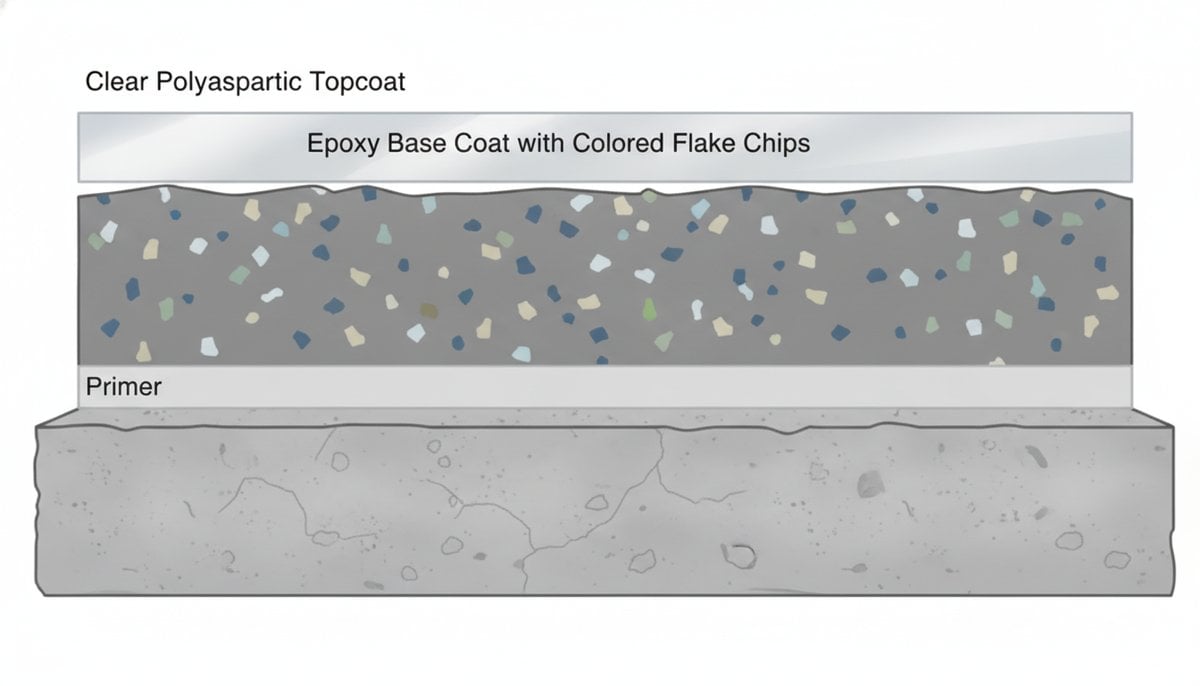
Professional-grade epoxy systems use thicker coatings than consumer products. A professional flake system includes a primer, a base coat with flake, and a clear topcoat, each applied at the correct thickness. Consumer DIY kits are thinner, more diluted systems that simply don’t have the film build to last under vehicle use.

The topcoat is particularly important. A quality polyaspartic or polyurethane topcoat at the correct thickness is the main factor in day-to-day wear resistance. A thin or substandard topcoat wears through faster, and once it’s compromised, the epoxy beneath is exposed to the same UV, chemicals, and abrasion that the topcoat was protecting it from.

3. Moisture in the slab

Melbourne’s clay soils mean many residential slabs have some moisture vapour transmission. If this isn’t addressed before installation (with a moisture-tolerant primer or moisture barrier), the moisture migrating up through the slab creates osmotic pressure that pushes the coating off from below, causing blistering and delamination. A professional installer checks for moisture before applying any coating.

4. How the garage is used

A showpiece garage with one carefully maintained car, rarely driven in or out, will see its floor last 20+ years. A working garage used daily, with oil changes, jack stands, heavy storage, and constant vehicle movement, will wear the topcoat faster. The base system doesn’t fail, but the topcoat shows wear sooner under harder use.

Expected lifespan by installation type

Installation type Expected lifespan Notes
Professional install, diamond ground, quality topcoat 15–20+ years Topcoat refresh may be needed at 10–12 years
Professional install, standard preparation 10–15 years Adequate for most residential garages
Budget professional install, minimal prep 3–7 years Delamination often starts at edges first
DIY epoxy kit (water-based, thin system) 1–3 years Peeling typically starts within 18 months under vehicle use
Garage floor paint (latex or acrylic) 1–2 years Not an epoxy system; included for comparison

The two-stage lifespan: topcoat vs base system

It helps to think of an epoxy floor’s lifespan in two stages:

  • Stage 1 (years 1–10+): the floor looks and performs as installed. The topcoat maintains its gloss and protects the system beneath. Maintenance is just cleaning.
  • Stage 2 (years 10–20): the topcoat gradually shows wear, fine scratches, and gloss reduction from years of use. The system is still structurally sound but looks less fresh. A topcoat refresh at this point extends the floor’s life without full replacement.

The base coat and decorative layer (flake or metallic) are sealed beneath the topcoat and essentially don’t wear. If you maintain and refresh the topcoat, the floor’s practical lifespan is extended significantly beyond what the original installation alone would provide.

Signs that an epoxy floor is failing prematurely

If any of these appear within the first 5 years, it’s a sign of inadequate installation rather than normal wear:

  • Delamination at edges or corners (lifting away from the concrete)
  • Blistering or bubbling across the surface
  • Peeling, particularly in the tyre zones or entry area
  • Flaking or chipping in patches across the floor

These failures are almost always preparation-related. Either the concrete wasn’t adequately ground, moisture wasn’t addressed, or the surface had contamination (oil, curing compound, old coating) that prevented proper bonding. None of these are things that happen to a correctly installed floor.

Does Melbourne’s climate affect epoxy lifespan?

Melbourne’s temperature variation (cold winters, hot summers) doesn’t significantly affect a cured epoxy system. Epoxy is thermally stable across Melbourne’s climate range once fully cured. The main climate consideration is UV: prolonged UV exposure from an open garage door can yellow lower-quality polyurethane topcoats over time. Quality UV-stable polyaspartic topcoats don’t have this problem.

The bigger Melbourne-specific concern is installation temperature. Epoxy shouldn’t be applied when temperatures will drop below 10°C during the cure window. Professional installers schedule around Melbourne’s winter temperature minimums to avoid this.

FAQ: how long does epoxy garage flooring last

How long does epoxy flake flooring last vs metallic epoxy?

Both systems have the same expected lifespan when professionally installed, as longevity is driven by preparation and topcoat quality rather than the decorative system. See our epoxy flake page and metallic epoxy page for details on each system.

Is a warranty a reliable indicator of lifespan?

A workmanship warranty from an established Melbourne installer is a meaningful signal. A 2–5 year workmanship warranty means the installer stands behind the installation quality. Be cautious of very long warranties from unfamiliar contractors, as a warranty is only as good as the company standing behind it.

How much does it cost to refresh an epoxy topcoat?

A topcoat refresh on a double Melbourne garage typically costs $800–$1,800 depending on the topcoat product used and the condition of the existing surface. This compares to $2,500–$5,000 for a full new installation, making a refresh a cost-effective way to extend the floor’s life.

Can I repair a small area of delamination rather than redoing the whole floor?

Small localised delamination can sometimes be repaired by an experienced installer. The failed section is ground back to concrete, re-primed, and recoated. Colour and texture matching is the challenge: the repaired area may be slightly visible. Widespread delamination is better addressed by a full redo.

Get a long-lasting epoxy floor for your Melbourne garage

The difference between a floor that lasts 20 years and one that fails in 3 is preparation and installation quality. Metal and Flake diamond grind every floor as standard and use professional-grade systems designed for Melbourne residential garages. Book a free on-site quote here.

Ready for a Floor That Lasts?

Get a free, no-obligation quote from Melbourne’s trusted epoxy specialists.
Get a Free Quote
+61 485 031 001

How to Maintain Your Epoxy Garage Floor: A Melbourne Owner’s Guide

Family owned & operated · Melbourne & surrounds · Call us free: +61 485 031 001
How to Maintain Your Epoxy Garage Floor: A Melbourne Owner's Guide

How to Maintain Your Epoxy Garage Floor: A Melbourne Owner’s Guide

Back to Blog

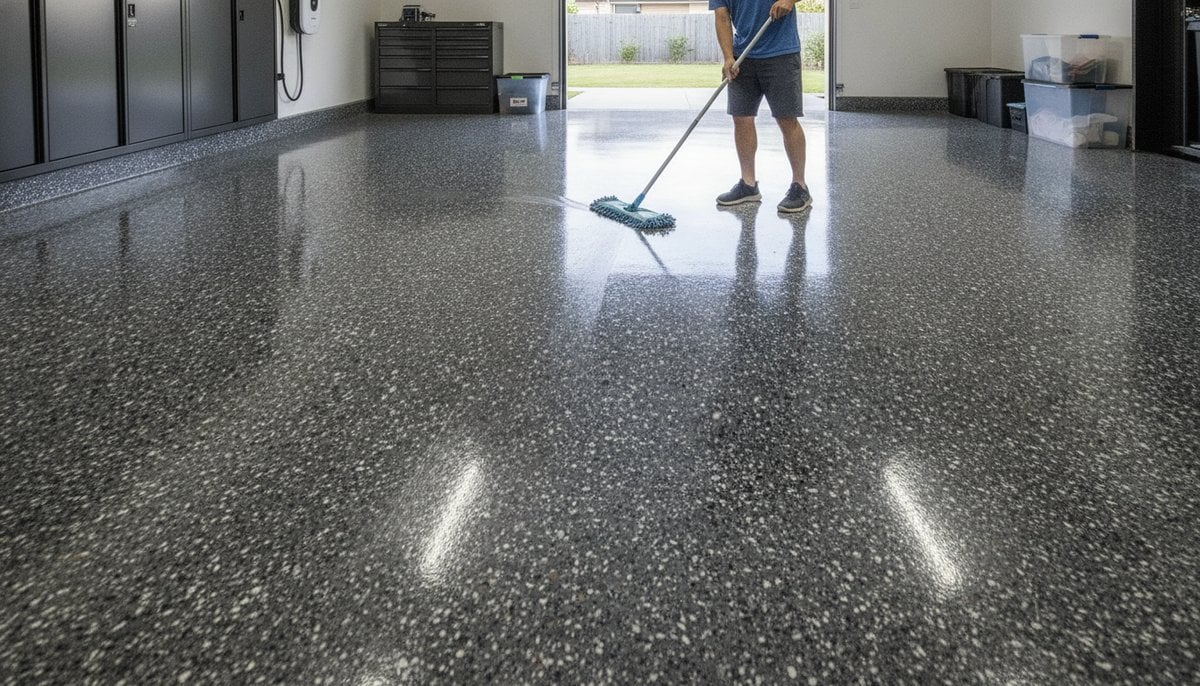
A professionally installed epoxy garage floor is low-maintenance by design, but “low-maintenance” doesn’t mean no maintenance. Melbourne’s climate, vehicle use, and the occasional chemical spill all take a toll over time. This guide covers exactly what to do, how often, and what to avoid so your floor looks good for 15 years, not 5.

Key takeaways

  • Weekly sweeping and monthly mopping is all most Melbourne epoxy garage floors need.
  • The topcoat is the wear surface, not the epoxy itself. Protect it and the floor lasts much longer.
  • Acidic cleaners, citrus degreasers, and abrasive pads are the main things to avoid.
  • Wipe chemical spills promptly, especially petrol, brake fluid, and battery acid.
  • A topcoat refresh every 7–10 years extends the floor’s life without redoing the full system.

Understanding your floor’s structure

Before getting into maintenance, it helps to understand what you’re maintaining. A professionally installed epoxy garage floor has multiple layers:

  • Concrete slab: the foundation; fully sealed beneath the system
  • Primer coat: penetrates and bonds to the concrete
  • Epoxy base coat: the structural layer, often with decorative flake broadcast into it
  • Clear topcoat: polyurethane or polyaspartic, this is the wear surface you walk and drive on

When you clean the floor, you’re cleaning the topcoat. When the floor shows wear over years of use, it’s the topcoat wearing. The epoxy and decorative layer beneath are fully sealed and protected as long as the topcoat is intact.

Weekly maintenance: sweeping

The single most important thing you can do for an epoxy floor is sweep or vacuum it regularly. Grit and fine aggregate tracked in from outside acts like sandpaper under foot traffic and tyres. Over time, this abrasion dulls the topcoat and reduces the gloss.

A soft-bristle broom or a vacuum with a hard floor attachment removes grit before it can cause damage. In Melbourne garages that see daily vehicle use, once a week is the minimum. High-traffic garages benefit from more frequent sweeping.

Monthly maintenance: mopping

A monthly mop with warm water and a pH-neutral cleaner keeps the surface clean and maintains the gloss. The key points:

  • Use a pH-neutral cleaner, diluted as directed. Dedicated epoxy floor cleaners are ideal but not required.
  • Use a microfibre mop rather than a string mop. Microfibre picks up fine particles without scratching.
  • Avoid leaving pooling water to sit. Mop and let it dry naturally, or use a squeegee for larger volumes of water.
  • Don’t use steam mops. The high heat and pressure can damage the topcoat over time.

What cleaners to use (and what to avoid)

Safe to use

  • Warm water alone, for light cleaning
  • pH-neutral floor cleaner (Simple Green diluted 1:10 is a popular choice)
  • Mild dish soap diluted in water for spot cleaning
  • Isopropyl alcohol for small spot cleaning of stubborn marks

Avoid these

  • Acidic cleaners (vinegar, citrus degreasers, muriatic acid): acid etches and dulls the topcoat over time
  • Bleach or chlorine-based cleaners: can discolour the coating and weaken the surface
  • Abrasive scrubbing pads or steel wool: scratches the topcoat permanently
  • Solvent-based cleaners (acetone, MEK, xylene): can soften and damage the topcoat
  • Oil-based soaps: leave a residue that makes the floor slippery

Dealing with spills: the most important rule

Wipe spills as soon as you notice them. This applies to everything, but especially:

  • Petrol and oil: both will eventually soften the topcoat if left to sit. Blot with a rag and clean the area with diluted pH-neutral cleaner.
  • Brake fluid: highly aggressive to epoxy topcoats. Wipe immediately and clean the area thoroughly.
  • Battery acid: similarly aggressive. Neutralise with a baking soda solution if you suspect a battery has leaked, then clean.
  • Antifreeze and coolant: less damaging than brake fluid but still clean promptly.

Most of these spills cause no lasting damage if cleaned within a few hours. Left overnight or over a day, they can etch or soften the topcoat locally.

Protecting the floor from physical damage

Tyres

Vehicle tyres on an epoxy floor can cause “hot tyre pickup” if the topcoat isn’t fully cured or is of poor quality. A properly cured, quality polyaspartic or polyurethane topcoat doesn’t have this problem. If your installer used a quality system and the floor is fully cured (28–30 days after installation), tyre contact is not a concern.

Heavy items and floor jacks

Use plywood or rubber pads under car ramps and floor jacks to distribute weight and prevent point damage. Steel edges can chip epoxy if concentrated on a small area.

Furniture and shelving

Add felt pads or rubber feet to shelving units, workbench legs, and heavy storage items. This prevents scratching when items are moved and distributes weight on the topcoat.

Grit mats at the entry

A rubber mat or grit trap at the garage entry point captures the coarse grit that does the most abrasion damage. This single addition significantly extends topcoat life in high-traffic garages.

Seasonal considerations in Melbourne

Melbourne’s climate doesn’t cause problems for a cured epoxy floor, but a few seasonal habits help:

  • Summer: UV exposure from an open garage door can yellow lower-quality topcoats over time. Quality polyaspartic topcoats are UV-stable. If you notice yellowing, it’s the topcoat, not the epoxy beneath.
  • Winter: wet cars tracked into the garage increase moisture on the floor. More frequent sweeping helps prevent grit from wet tyres accumulating.
  • Autumn: leaf debris tracked in from the driveway can be abrasive. Regular sweeping during autumn keeps this in check.

When to consider a topcoat refresh

The topcoat is the sacrificial wear layer. Over 7–15 years of use, it gradually dulls, loses gloss, and may show fine scratches from years of grit. When this happens, the solution is a topcoat refresh, not a full floor replacement.

A topcoat refresh involves lightly abrading the existing surface and applying a new clear coat over the existing system. This restores the gloss and protection without touching the base coat or flake layer beneath. It costs roughly 40–60% of the original floor cost and extends the life of the system by another 10+ years.

Signs that a topcoat refresh is due:

  • The floor looks dull even after cleaning
  • Fine scratches are visible across the surface
  • The gloss no longer returns after mopping
  • Localised areas of wear near the entry or main traffic paths

FAQ: maintaining an epoxy garage floor in Melbourne

Can I use a pressure washer on my epoxy floor?

Yes, at low to moderate pressure (under 1500 PSI). Keep the nozzle moving and avoid concentrating high pressure in one spot for extended periods. A garden hose with a spray head is generally sufficient for rinsing the garage floor.

How do I remove tyre marks from the floor?

Tyre rubber deposits respond well to a diluted degreaser or isopropyl alcohol applied and scrubbed with a non-abrasive pad. Most marks come off without much effort if they haven’t been there for extended periods.

My floor has lost its gloss in one area. What happened?

Localised gloss loss is usually caused by a chemical spill that was left too long, concentrated cleaning product, or abrasion from a stationary object. For small areas, a touch-up topcoat can be applied by a professional. For widespread dullness, a full topcoat refresh is the right solution.

Is a polyaspartic topcoat easier to maintain than polyurethane?

Both are easy to maintain with the same routine. Polyaspartic is more chemically resistant and UV-stable, which means it handles spills and sun exposure better long-term. Day-to-day maintenance is essentially the same for both.

Keep your Melbourne garage floor looking its best

Metal and Flake install epoxy flake and metallic epoxy systems across Melbourne and provide care instructions with every installation. If your floor needs a topcoat refresh or assessment, get in touch here.

Ready for a Floor That Lasts?

Get a free, no-obligation quote from Melbourne’s trusted epoxy specialists.
Get a Free Quote
+61 485 031 001

Is Epoxy Garage Flooring Worth It for Melbourne Investment Properties?

Family owned & operated · Melbourne & surrounds · Call us free: +61 485 031 001
Is Epoxy Garage Flooring Worth It for Melbourne Investment Properties?

Is Epoxy Garage Flooring Worth It for Melbourne Investment Properties?

Back to Blog

Melbourne investors asking whether epoxy garage flooring is worth it for a rental property are asking a different question from owner-occupiers. The lifestyle return that makes epoxy compelling for homeowners doesn’t apply when you don’t live there. This post covers the investment property case honestly: when it makes sense, when it doesn’t, and what the real numbers look like.

Key takeaways

  • Epoxy flooring for a Melbourne rental property is rarely justified on rental yield alone.
  • The strongest case is operational: sealed floors are cheaper and easier to maintain between tenants.
  • For higher-end rentals ($700/week+), garage presentation is a genuine differentiator for quality tenants.
  • For standard residential rentals, a concrete sealer is a more cost-effective alternative to full epoxy.
  • If you’re planning to sell the investment property in the near term, the pre-sale presentation case is stronger than the rental yield case.

The rental yield calculation

The standard investment property question is: does this upgrade pay for itself in higher rent?

For epoxy garage flooring in Melbourne, the honest answer is usually no. A finished garage floor is unlikely to add $30–$50/week to rent on a standard residential property. At those increments, a $3,500 floor upgrade takes 70–117 weeks (roughly 1.5–2.5 years) to pay back through rental income alone, and that assumes the upgrade actually achieves higher rent rather than simply maintaining market rate.

In practice, the floor is rarely the factor that determines rental price. Bedrooms, bathrooms, location, kitchen quality, and parking availability are the primary drivers. A garage floor is a secondary consideration that affects tenant desirability rather than price.

Where the investment case is stronger

Premium rentals ($700/week and above)

At the upper end of Melbourne’s rental market, tenants are choosing between well-presented properties and scrutinising details. A finished garage is more likely to influence a tenant decision at this price point than at the median. If the property competes on quality and presentation, the garage floor contributes to the overall package.

Properties targeting professional or executive tenants

Tenants with quality cars, home gym setups, or workshop requirements will notice and value a finished garage more than the average renter. If the property’s target tenant profile includes these characteristics, the upgrade has more relevance.

Reducing vacancy time

A better-presented property leases faster. A single week’s reduced vacancy on a $650/week Melbourne rental is $650, which partially offsets the cost of the upgrade. If better presentation consistently reduces vacancy by even a few days per lease cycle, the return adds up over time.

The operational case: maintenance savings

For investors who’ve owned a property through multiple tenancies, the maintenance argument for sealing the garage floor is real:

  • Sealed floors don’t absorb oil and other stains permanently. Between tenancies, cleaning a sealed floor takes minutes rather than requiring abrasive treatment or leaving permanent marks.
  • Concrete dust from unsealed floors settles on everything in the garage. Tenants report it as a maintenance issue, and it’s one that can’t be cleaned away permanently.
  • Sealed floors don’t generate the pitting and surface deterioration that unsealed floors do under years of vehicle use. The floor condition at end-of-lease is better.

These are operational savings rather than revenue gains, but for investors who self-manage or pay close attention to maintenance costs, they’re genuine and recurring.

Full epoxy vs concrete sealer for rental properties

A cost-effective middle ground for Melbourne investment properties is a penetrating concrete sealer rather than a full epoxy flake system. A quality penetrating sealer costs $500–$1,500 applied professionally, seals the concrete against staining and dust, and extends the surface life significantly.

It doesn’t look as impressive as an epoxy floor, but for a rental property where the goal is maintenance reduction rather than presentation impact, it achieves most of the operational benefit at a fraction of the cost.

The full epoxy case for a rental makes more sense when:

  • The property is at the top of the rental market where presentation matters
  • You’re planning to sell and want the property well-presented
  • The garage floor is in genuinely poor condition and needs replacement anyway

Comparing the options for a Melbourne investment garage floor

Option Cost (double garage) Presentation impact Maintenance benefit Lifespan
Do nothing $0 Negative (bare concrete) None Floor deteriorates
Concrete sealer $500–$1,500 Neutral Good (sealed surface) 5–10 years
Epoxy flake system $2,400–$5,000 Strong positive Excellent 10–20 years
Metallic epoxy $3,600–$7,000 Premium Excellent 10–20 years

For most Melbourne investment properties, the concrete sealer is the rational entry point. The full epoxy system makes sense at the upper end or when you have a specific reason to invest in presentation.

The pre-sale case is stronger than the rental case

If you’re planning to sell the investment property in the next 1–3 years, the calculus changes. A well-presented garage contributes to overall property presentation and buyer perception. At $900K+ in Melbourne’s market, a $3,500 floor upgrade is a low-cost way to remove a potential negative impression.

Installing the floor 6–12 months before sale means it’s still fresh for the sale campaign, and you get the maintenance benefits during the remaining tenancy period. This is the scenario where the investment in full epoxy makes the clearest financial sense for an investment property.

FAQ: epoxy flooring for Melbourne investment properties

Can I claim epoxy flooring as a tax deduction for my investment property?

You should confirm with your accountant, but epoxy flooring for an investment property is typically depreciable as a capital improvement rather than immediately deductible as a repair. A quantity surveyor’s depreciation schedule will include it. The depreciation benefit adds to the financial case over time.

Will tenants damage an epoxy floor?

Normal residential use doesn’t damage a properly installed epoxy floor. The surface is harder and more resistant than bare concrete. Heavy dropped tools can chip the topcoat, and dragging metal objects can scratch it, but this is true of most floor surfaces. The risk is not significantly higher than for any other finished floor.

How much rent premium can I realistically expect from a finished garage floor in Melbourne?

Realistically, minimal on its own. The floor is one component of overall property presentation. A property that upgrades the garage along with other presentation improvements may achieve a modest rental premium, but attributing a specific dollar amount to the floor alone is not reliable.

Get a quote for your Melbourne investment property

If you’re weighing the options for your Melbourne rental property, Metal and Flake can give you a clear price and walk you through whether a full epoxy system or a more cost-effective alternative makes sense for your specific situation. Book a free on-site quote here.

Ready for a Floor That Lasts?

Get a free, no-obligation quote from Melbourne’s trusted epoxy specialists.
Get a Free Quote
+61 485 031 001

Does Epoxy Flooring Increase Home Value in Melbourne?

Family owned & operated · Melbourne & surrounds · Call us free: +61 485 031 001
Does Epoxy Flooring Increase Home Value in Melbourne?

Does Epoxy Flooring Increase Home Value in Melbourne?

Back to Blog

Melbourne homeowners regularly ask whether epoxy garage flooring adds value to their property. The honest answer is more nuanced than a simple yes or no. This post covers what the research and real estate experience suggest, what buyers and valuers actually notice, and when a garage floor upgrade makes financial sense in Melbourne’s market.

Key takeaways

  • Epoxy garage flooring doesn’t reliably increase the formal valuation of a Melbourne property, but it contributes to overall presentation and can influence buyer perception.
  • A well-presented garage is a legitimate selling point in Melbourne’s competitive market, particularly in the $800K–$2M price range.
  • The floor is more likely to prevent value loss (from a poorly presented garage) than to create a direct, measurable gain.
  • For investment properties, the calculation is different: the upgrade rarely adds enough rent to justify the cost on its own.
  • If you use the garage daily, the lifestyle return is often more compelling than the financial one.

What valuers and agents actually say

Formal property valuations in Melbourne are based primarily on land value, floor area, bedroom and bathroom count, location, and recent comparable sales. A garage floor coating doesn’t typically appear as a line item that increases the formal valuation.

However, real estate agents consistently note that property presentation affects buyer behaviour. A garage that looks clean, finished, and well-maintained signals that the rest of the property has been cared for. This creates buyer confidence, which translates to more offers and less negotiating room on price, even if it doesn’t move the formal valuation figure.

In Melbourne’s market, where buyers are making decisions on properties worth $900K, $1.2M, or $1.8M, the perception of quality matters. A garage that looks like it belongs to the rest of the house rather than being the forgotten concrete room behind it is a genuine presentation advantage.

The “prevents value loss” framing is more accurate

Rather than asking “does epoxy flooring add value?”, a more precise question is: “does a poorly presented garage cost me money?”

The answer to that is more clearly yes. Buyers who see an oil-stained, dusty, cracked concrete garage in a property they’re otherwise interested in will:

  • Use it as negotiating leverage to push the price down
  • Factor the perceived remediation cost into their offer
  • Form a negative impression of how the property has been maintained overall

An epoxy floor removes this objection. It turns a neutral-to-negative feature into a neutral-to-positive one. In that sense, the floor is protecting value as much as creating it.

When epoxy flooring is most likely to pay off financially

Mid-to-upper price brackets in Melbourne

In Melbourne suburbs where the typical buyer is spending $1M or more, presentation standards are high across the whole property. The kitchen, bathrooms, and living areas are typically renovated or well-presented. A finished garage fits this expectation and is noticed positively. In lower price brackets, the garage floor is less likely to differentiate.

Properties where the garage is a prominent feature

A double garage or triple garage in a home where parking is a selling point benefits more from a finished floor than a single garage in a terrace where the car park is barely visible. If buyers are specifically looking for a quality garage, presenting one matters.

Pre-sale renovations in a competitive market

When selling in a market with multiple comparable properties, presentation differences create real buyer preference. A finished garage is a quick, high-visibility upgrade compared to kitchens and bathrooms that cost 5–10x more to improve.

The investment property question

For Melbourne investment properties, the calculation is usually unfavourable for a garage floor upgrade on pure financial return. Epoxy flooring rarely increases rental yield, and the cost ($2,500–$5,000 for a double garage) isn’t recovered through higher rent. The exception is high-end rental properties where presentation is a genuine differentiator for tenant quality.

For investment properties, the practical case for epoxy is maintenance-driven rather than value-driven: sealed floors are easier to clean between tenants, more resistant to damage, and don’t generate the concrete dust that damages garage contents. These are real benefits, but they’re operational rather than financial.

The lifestyle return is often the stronger argument

For owner-occupiers, the daily use case is usually the strongest justification. If you use your garage regularly, park in it every day, use it as a gym or workshop, or simply care about how it looks: the improvement in daily experience is concrete and immediate.

A $3,500 garage floor that you look at and use every day for 15 years is $233 per year, or about 65 cents a day. Framed that way, the lifestyle return is clear. The financial case is secondary for most Melbourne homeowners who invest in this upgrade.

Comparing epoxy to other pre-sale improvements in Melbourne

Improvement Typical cost Buyer visibility Value-add reliability
Garage epoxy floor $2,500–$5,000 High (buyers walk through) Low-moderate (presentation benefit)
Kitchen renovation $15,000–$40,000 Very high Moderate (location-dependent)
Bathroom renovation $10,000–$25,000 High Moderate
Fresh paint throughout $3,000–$8,000 Very high Moderate (presentation benefit)
Landscaping tidy-up $1,000–$5,000 High (first impression) Low-moderate

In this context, garage epoxy is among the lower-cost, moderate-visibility upgrades. It’s not the highest return per dollar, but it’s also not the most expensive. For a seller looking to present the whole property well without a large renovation budget, it’s a rational inclusion.

FAQ: does epoxy flooring increase home value in Melbourne?

Will a valuer include a garage epoxy floor in the property valuation?

Not as a specific line item. Valuers assess the property overall. A well-presented, well-maintained property tends to support a higher valuation than a comparable property in poor condition, and the garage is part of that overall picture.

Should I install epoxy flooring before selling my Melbourne home?

If the garage is currently in poor condition and will be visible to buyers, yes. The cost is modest relative to the property value, and removing a negative impression is worth the investment. If the garage is currently adequate, the return on a floor upgrade before sale is less clear.

How long before a sale should I install the floor?

At least 2 weeks before any inspection or photography. The floor needs time to fully cure and any odour from the installation to dissipate. 4–6 weeks before sale gives you a comfortable margin and a fully settled floor for photographs.

Get a quote for your Melbourne garage floor

Whether you’re upgrading for daily liveability or preparing to sell, Metal and Flake provides free on-site quotes across Melbourne. The epoxy flake system is the most popular choice for residential garages. Book your free consultation here.

Ready for a Floor That Lasts?

Get a free, no-obligation quote from Melbourne’s trusted epoxy specialists.
Get a Free Quote
+61 485 031 001

8 Benefits of Epoxy Garage Flooring Melbourne Homeowners Actually Care About

Family owned & operated · Melbourne & surrounds · Call us free: +61 485 031 001
8 Benefits of Epoxy Garage Flooring Melbourne Homeowners Actually Care About

8 Benefits of Epoxy Garage Flooring Melbourne Homeowners Actually Care About

Back to Blog

There are plenty of articles listing generic benefits of epoxy garage flooring. This isn’t one of them. These are the 8 benefits that Melbourne homeowners actually reference when they explain why they got it done, based on the real reasons people call us and what they say after the floor is installed.

Key takeaways

  • The most cited benefit by Melbourne homeowners is simply that the garage looks dramatically better.
  • Practical benefits like easy cleaning and chemical resistance follow closely behind aesthetics.
  • Epoxy floors last 10–20 years with minimal maintenance when properly installed.
  • The investment pays back in both daily liveability and property presentation.

1. The garage actually looks good

This is the number one reason Melbourne homeowners pull the trigger. Bare concrete is grey, porous, dusty, and absorbs everything. An epoxy floor transforms the space. It looks intentional. It looks like someone cared about the room.

Whether you choose a charcoal and silver epoxy flake system or a flowing metallic epoxy, the result is a floor that looks like part of the house rather than an afterthought behind it. For a lot of Melbourne homeowners, that’s the whole point.

2. Cleaning takes minutes instead of hours

Bare concrete absorbs oil, brake fluid, tyre rubber, and dirt. Once it’s in, it’s in. You can scrub it, but you can’t fully clean it. The stains become permanent features.

An epoxy floor is sealed. Spills sit on the surface rather than penetrating it. A weekly sweep and a mop with a pH-neutral cleaner keeps it looking fresh. Most Melbourne homeowners report that their garage is now the easiest floor in the house to clean, which is saying something given what goes on in there.

3. Oil and chemical spills don’t stain permanently

Melbourne garages regularly see petrol, oil, brake fluid, battery acid, and solvent spills. On bare concrete, these are permanent. On epoxy, they wipe up.

The topcoat on a professionally installed epoxy system is chemically resistant. Spills need to be wiped promptly (particularly aggressive solvents), but they don’t etch or penetrate the surface. After several years of vehicle use and the occasional mechanical work, an epoxy floor still looks clean in a way that bare concrete never could.

4. The floor doesn’t generate concrete dust

Unsealed concrete grinds itself. Every car tyre, every step, every item dragged across the floor abrades the surface slightly. This creates a fine concrete dust that settles on everything in the garage: the car, shelves, tools, the cardboard boxes you put there three years ago.

Sealing the floor with epoxy stops this completely. The concrete is locked beneath the coating. Melbourne homeowners with finished garages consistently note that everything in the garage stays cleaner because the floor has stopped contributing to the dust.

5. The garage becomes a space you actually use

A garage with a finished floor becomes a different kind of space. People spend time in it. They set it up properly. They stop treating it as a place to dump things and start treating it as a room.

Home gyms, workshops, hobby spaces, and entertainment areas all work better with a finished floor. The floor upgrade is often what unlocks the garage’s potential as a useful part of the home rather than a storage overflow area.

6. It’s significantly more durable than paint

Garage floor paint is a common alternative that looks good for about 12–18 months in Melbourne conditions. Then the vehicle tyres start peeling it in the hot zones by the door. Then oil works under the lifted edges. Within 2–3 years it looks worse than bare concrete.

Professionally installed epoxy with diamond grinding and a quality topcoat is a different product. The mechanical bond to the concrete (achieved through proper grinding) and the thickness of the coating system mean a correctly installed floor lasts 10–20 years before any meaningful maintenance is needed. The cost difference between paint and epoxy is real, but the service life difference is even more significant.

7. It improves the garage’s lighting

A high-gloss epoxy surface reflects light. A dark concrete floor absorbs it. Melbourne garages are often underpowered on lighting, relying on a few fluorescent tubes or a single pendant. A reflective floor effectively multiplies the light output of whatever lighting you have.

Homeowners regularly note that after their epoxy installation, the garage felt brighter without any change to the lighting itself. For garages used as workshops or home gyms, this is a meaningful quality-of-life improvement.

8. It adds to the presentation of the home

Garage presentation matters more than most people think. Buyers and valuers walk through the garage. Real estate agents photograph it. A finished epoxy floor reads as a well-maintained, quality home. An oil-stained, cracked concrete floor reads the opposite way.

The return on a garage floor investment isn’t as precise as a kitchen renovation, but the contribution to overall home presentation is real. If you’re planning to sell in the next few years, a freshly finished garage floor is a visible, tangible signal that the property has been looked after.

Is epoxy garage flooring worth it for Melbourne homes?

The honest answer is yes, for most Melbourne homeowners who use their garage regularly. The benefits compound: the space looks better, is easier to maintain, generates less dust, and becomes genuinely useful. The floor pays for itself in daily liveability rather than a single financial return.

The main reasons to reconsider are if the garage is purely utilitarian storage with no presentation concern, or if budget is a hard constraint. In those cases, a quality concrete sealer is a cheaper improvement. But if you want a floor you’re proud of, epoxy is the right product.

FAQ: benefits of epoxy garage flooring Melbourne

How long do the benefits last?

10–20 years with proper installation and basic maintenance. The topcoat is the wear surface and can be refreshed at the 7–10 year mark if needed, without redoing the full system.

Which system has the best benefits: flake or metallic?

Both are durable and provide the same practical benefits. Flake systems offer more slip resistance and hide wear better for working garages. Metallic systems are more visually dramatic and suit showpiece spaces. The choice depends on function, not which benefits more.

Does epoxy flooring work in Melbourne’s climate?

Yes. Melbourne’s temperature variation can affect installation timing (epoxy shouldn’t be applied in very cold conditions), but a properly installed and cured floor performs well across Melbourne’s climate range. The topcoat is UV-resistant and handles the temperature cycling between Melbourne’s hot summers and cool winters without issue.

See what epoxy can do for your Melbourne garage

The best way to understand the benefits is to see a completed installation. Metal and Flake can show you recent projects across Melbourne and provide a free quote for your specific space. Book a free on-site consultation here.

Ready for a Floor That Lasts?

Get a free, no-obligation quote from Melbourne’s trusted epoxy specialists.
Get a Free Quote
+61 485 031 001

How to Choose Epoxy Flake Colours for Your Melbourne Garage

Family owned & operated · Melbourne & surrounds · Call us free: +61 485 031 001
How to Choose Epoxy Flake Colours for Your Melbourne Garage

How to Choose Epoxy Flake Colours for Your Melbourne Garage

Back to Blog

Choosing epoxy flake colours for your Melbourne garage sounds simple until you’re standing in front of a sample board with 40 options. The wrong choice doesn’t ruin the floor functionally, but you’ll look at it every day for the next 15 years. This guide cuts through the options and gives you a practical framework for making a decision you’ll be happy with.

Key takeaways

  • The most popular colour combination in Melbourne residential garages is charcoal and silver, followed by grey and white.
  • Darker blends hide dirt, tyre marks, and wear better than lighter colours.
  • Full-broadcast (100% chip coverage) looks different from partial broadcast, even in the same colour mix, so always ask to see both options.
  • Your garage’s wall colour and lighting should influence the floor choice, not just your personal colour preference.
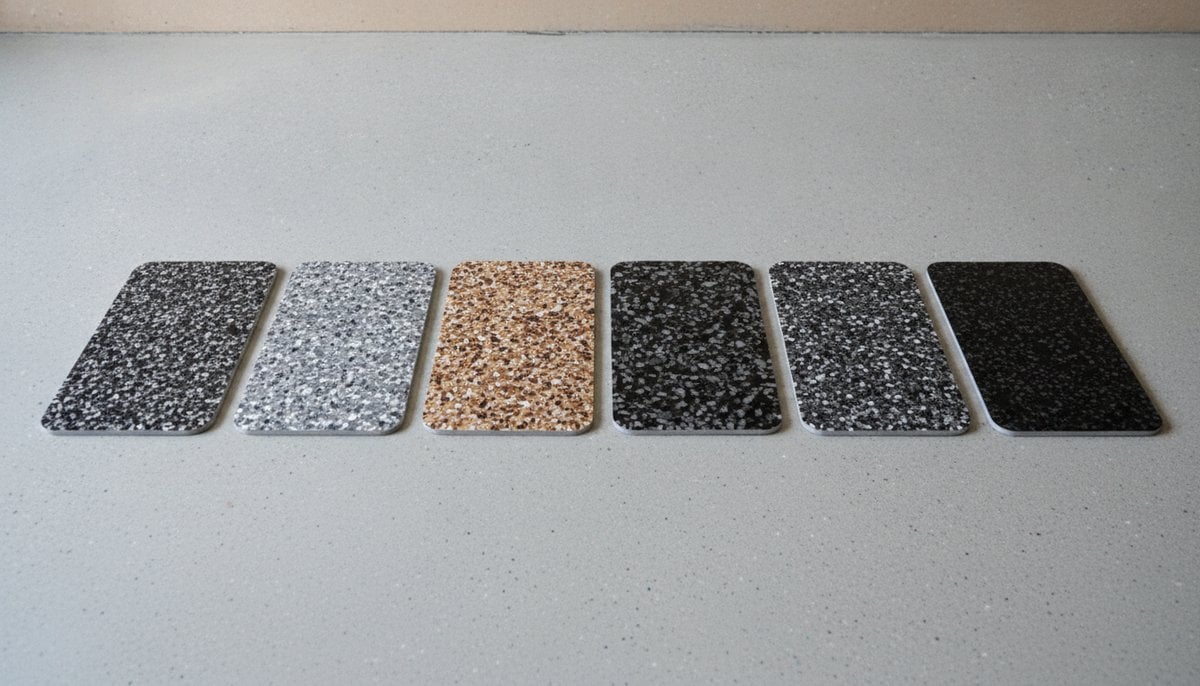
  • Ask to see chips broadcast on a board, not just loose in a bag: the broadcast effect changes the appearance significantly.

Start with function, not aesthetics

Before you think about colours, think about how your garage is actually used. A floor that looks good in a showroom photo may be the wrong choice for your specific situation.

High-traffic working garage

If the garage sees daily vehicle use, regular foot traffic, occasional oil drips, or workshop work, choose a darker, multi-colour blend. Dark charcoal and silver, dark grey and black, or brown and tan blends hide grime, tyre scuff, and minor wear between cleans. Avoid light or near-white base blends in this situation.

Feature or display garage

If the garage is primarily for one or two valued cars and is kept meticulously clean, you have more flexibility. Light blends, pearl tones, and high-contrast combinations work well here because the space gets the attention it deserves. For the ultimate showroom look, consider metallic epoxy instead of flake.

Home gym or workshop

Gyms benefit from bright, light-reflecting colours that make the space feel larger and airier. Grey and white, pearl and silver, or light tan blends work well. Workshops should lean darker for the same reason as working garages: they hide the evidence of actual work.

The most popular epoxy flake colour combinations in Melbourne

Charcoal and silver

The most installed combination across Melbourne’s residential market. Deep charcoal with silver chips creates a modern, masculine look that complements almost any garage interior. It reads as clean and professional without being flashy. Hides dirt and tyre marks well.

Grey and white

A slightly lighter option. The grey and white blend is bright, neutral, and easy to live with. Works particularly well in double garages used as multi-purpose spaces where extra light reflection is valuable. Minor grime is slightly more visible than on charcoal blends.

Tan and brown

A warm palette that suits Melbourne’s period homes, brick veneer garages, and spaces with timber finishes. Less common than grey blends but growing in popularity in Melbourne’s eastern and southeastern suburbs. Very good at hiding dirt.

Black and dark grey

High contrast and bold. The darkest option. Works well in prestige garages, sports car garages, and spaces where drama is the intent. Extremely forgiving of dirt and wear. Can feel heavy in smaller, darker garages.

Blue-grey blend

A contemporary option that’s less common but increasingly seen in Melbourne’s newer builds. The blue undertone reads as cooler and more distinctive than straight grey. Works best with white walls and bright lighting.

Earth tones (ochre, rust, sand)

Less conventional for garages, but effective in spaces that connect to outdoor areas or rustic interiors. Creates warmth and a distinctly Australian residential feel.

How broadcast density affects the final look

Broadcast density is how much of the floor surface is covered by chips. It changes the appearance dramatically, even with the same chip colour mix.

  • Full broadcast (100%): the entire floor is covered in chips, chip on chip. Result is a uniform, consistently textured finish. The base coat colour is irrelevant as it’s completely hidden. Most popular in residential garages for its consistent look and maximum slip resistance.
  • Partial broadcast (50–80%): chips cover most but not all of the floor. The base coat colour shows through in patches. Creates a more varied, layered look. Choosing the right base colour matters with this approach.
  • Light broadcast (20–40%): chips scattered across the floor like a terrazzo effect. The base colour is prominent. Unusual in garages but can be striking in home gym or entertainment contexts.

For most Melbourne residential garages, full broadcast is the right choice. Ask your installer to show you a sample board at full coverage in your chosen colour mix. You can see examples of both coverage levels on the Metal and Flake flake system page.

How your garage’s wall colour and lighting affect the choice

The floor doesn’t exist in isolation. Two factors most affect how the floor colour looks once installed:

Wall colour

Dark floors with white walls are a classic, high-contrast combination. Dark floors with grey or coloured walls can feel heavy unless the space is large and well-lit. Light floors with white walls are bright but show less contrast. If your garage walls are unlined or you’re planning to paint them, factor the wall colour into the floor choice, not the other way around.

Lighting

LED strip lighting along the garage perimeter changes how metallic chips read at different times of day. Natural light from open doors makes chips look lighter. Artificial lighting makes them look deeper and more saturated. If your garage has limited natural light, lean toward lighter blends to compensate.

Chip size: standard vs large flake

Most residential flake systems use a standard chip size (approximately 0.25 inches). Some installers offer a large flake option (approximately 0.5 inches) which creates a bolder, more prominent pattern. Large flake is more striking but less available, and not all installers stock it. If you want a larger chip look, ask about this when getting quotes.

How to use sample boards properly

A sample board is the only reliable way to evaluate a colour before committing. When your installer shows you options:

  • View the board at the same angle you’ll look at the floor (slightly downward, not straight on)
  • Take the board into the actual garage and check it under the garage’s lighting conditions
  • Ask to see the colour at the broadcast density you’re planning (full, partial, etc.)
  • If possible, see a completed floor in the same colour, not just the sample board

Don’t make a final decision from a chip bag or a website photo. The broadcast effect transforms loose chips into something that looks quite different once on the floor.

FAQ: choosing epoxy flake colours Melbourne

What’s the most popular epoxy flake colour in Melbourne right now?

Charcoal and silver is the most installed combination for residential garages, consistently. Grey and white is a close second. Both are popular because they’re neutral enough to suit almost any home style.

Can I change the colour if I don’t like it after installation?

Not easily. You’d need to grind back the existing floor and reapply. This is why it’s worth taking time to choose correctly before installation. If you’re genuinely uncertain, default to a neutral charcoal or grey blend, which is the least likely to cause regret.

Does the colour affect the price?

Slightly. Premium or custom chip blends can cost a little more than standard mixes. This is usually a small difference, not a major cost driver. The bigger price variables are floor size, preparation requirements, and topcoat type.

Can I see the colour on a real installed floor before I decide?

Yes, and you should ask for this. Any established Melbourne installer will have a portfolio of recent residential projects. Seeing a real floor in your chosen colour under residential conditions is the most reliable way to make a confident decision.

Talk through your colour options with Metal and Flake

The best colour decision is made with sample boards in hand and some guidance from an experienced installer. Metal and Flake offer free on-site consultations across Melbourne and can show you real completed floors in every colour combination they offer. Book a free consultation and quote here.

Ready for a Floor That Lasts?

Get a free, no-obligation quote from Melbourne’s trusted epoxy specialists.
Get a Free Quote
+61 485 031 001

Epoxy Flake Flooring Melbourne: The Complete Homeowner’s Guide (2026)

Family owned & operated · Melbourne & surrounds · Call us free: +61 485 031 001
Epoxy Flake Flooring Melbourne: The Complete Homeowner's Guide (2026)

Epoxy Flake Flooring Melbourne: The Complete Homeowner’s Guide (2026)

Back to Blog

Epoxy flake flooring has become the most widely installed garage floor system across Melbourne, and for good reason. It’s durable, good-looking, available in dozens of colour combinations, and gives the garage a professional finish that holds up to daily vehicle use. This complete guide covers everything Melbourne homeowners need to know before getting it done: what it is, what it costs, how the installation works, and how to choose a colour and a contractor.

Key takeaways

  • Epoxy flake flooring costs $60–$120 per m² installed in Melbourne for a residential garage.
  • It consists of an epoxy base coat, decorative coloured flakes broadcast into the wet epoxy, and a clear polyurethane or polyaspartic topcoat.
  • A standard double garage (40 m²) takes two days and costs between $2,400 and $4,800.
  • Diamond grinding before installation is non-negotiable for adhesion and longevity.
  • With proper installation, a flake floor lasts 10–20 years in residential settings.

What is epoxy flake flooring?

Epoxy flake flooring (also called vinyl flake, broadcast flake, or chip flooring) is a multi-coat system applied over prepared concrete. The decorative element is coloured vinyl or acrylic chips broadcast into the wet epoxy base coat. These chips create texture, colour, and pattern while the topcoat seals everything in and provides the wear surface.

The system has three main components:

  • Primer coat: penetrates the concrete and creates the foundation for adhesion
  • Epoxy base coat with flake broadcast: the coloured layer; flakes are thrown into the wet epoxy until full or partial coverage is achieved, then excess is scraped back after curing
  • Clear topcoat: polyurethane or polyaspartic sealer that protects the flakes and provides the finished surface

Why Melbourne homeowners choose epoxy flake over other systems

It hides surface imperfections well

The multi-coloured chip pattern is forgiving. Hairline cracks, minor surface variation, and aggregate exposure that might show through a solid-colour coating are concealed by the flake texture. This matters in Melbourne where older slabs are common and often have some surface wear.

It’s more practical than metallic epoxy for everyday use

The natural texture of the flake surface provides better slip resistance than the smooth surface of metallic epoxy. It’s also more forgiving of minor scrapes and scuffs, making it the right choice for garages used daily for parking, working, or storage. For a showpiece space where aesthetics come first, metallic epoxy is worth the premium.

It’s available in many colour combinations

Flake chips come in hundreds of colours and can be mixed to create almost any blended effect. Popular Melbourne combinations include grey and white, charcoal and silver, tan and brown, and black and grey. Full-broadcast (100% coverage) gives a consistent chip look; partial broadcast (30–80%) allows the base colour to show through for a more varied effect.

Cost-to-durability ratio

Epoxy flake offers solid durability at a lower cost than metallic or polished concrete systems. For a working garage that sees regular vehicle use, it’s the most practical flooring investment available.

Epoxy flake flooring cost in Melbourne: 2026 pricing

The installed cost for residential epoxy flake flooring in Melbourne ranges from $60 to $120 per m², depending on flake colour and density, preparation requirements, and whether a standard polyurethane or faster-curing polyaspartic topcoat is used.

Space Approx. area Estimated cost
Single garage 18–24 m² $1,080–$2,880
Double garage 36–44 m² $2,160–$5,280
Triple garage 54–66 m² $3,240–$7,920
Workshop or shed 30–60 m² $1,800–$7,200

The biggest variable in cost (outside of size) is concrete condition. A slab with significant cracking, oil contamination, or a previous coating that needs to be ground off will take longer to prepare, which adds to the labour cost. This is why in-person quotes matter: a professional can assess your specific slab and give you an accurate price, not a range from a website.

The installation process: what happens on your floor

Day 1: preparation and base coat

The installer arrives, clears the garage, and begins diamond grinding the concrete. Grinding opens the concrete’s pores and creates the mechanical profile the epoxy bonds to. For a double garage, this takes 3–5 hours. Cracks are filled after grinding. A primer coat goes down, followed by the epoxy base coat. While the base coat is wet, the flake chips are broadcast across the surface. For full-broadcast systems, chips are thrown until the entire floor is covered. The installer leaves and the floor cures overnight.

Day 2: topcoat

The following morning, the installer scrapes back any loose or standing chips from the cured base coat, vacuums thoroughly, and applies the clear topcoat. This coat provides the UV and chemical resistance and creates the final surface texture. On most residential garages, the topcoat is done in 2–4 hours. The floor is left to cure again.

Cure timeline

  • 24 hours: light foot traffic
  • 48–72 hours: light use and furniture
  • 5–7 days: vehicle parking (or 24 hours with a polyaspartic topcoat)
  • 28–30 days: full chemical cure

Choosing your flake colour combination

Flake chips are sold in blended colour mixes. The most popular combinations for Melbourne residential garages are:

  • Charcoal and silver: clean, modern, very popular across inner and middle Melbourne suburbs
  • Grey and white: neutral, bright, suits double garages used as multi-purpose spaces
  • Tan and brown: warmer palette, suits period homes and garages with timber trim
  • Black and dark grey: high contrast, dramatic look, popular in prestige garages
  • Blue and grey: less common but sharp; works well in contemporary homes

Most Melbourne installers carry sample boards. Ask to see the chips broadcast at the density you’re considering, not just the loose chips in a bag, as the broadcast effect looks quite different from the raw chips.

Full broadcast vs partial broadcast: what’s the difference?

Broadcast density changes the appearance of the finished floor significantly.

  • Full broadcast (100%): chips completely cover the base coat. Result is a fully textured, chip-on-chip appearance. Hides imperfections most effectively. Maximum texture and slip resistance.
  • Partial broadcast (30–80%): chips partially cover the base, allowing the base colour to show through. Creates a more varied, less uniform look. Base colour selection matters more.

For a working Melbourne garage, full broadcast is the most practical choice for its texture and durability. See examples on the Metal and Flake flake system page.

Polyurethane vs polyaspartic topcoat: which is right for you?

Polyurethane Polyaspartic
Cost premium Standard 15–25% more
Vehicle use after 5–7 days 24 hours
UV stability Good Excellent
Temperature tolerance Moderate Wider range (good for Melbourne winters)
Chemical resistance Good Excellent

For most Melbourne homeowners, polyurethane is adequate. Polyaspartic is worth the premium if you need the garage back quickly, have UV-exposed areas (semi-open garages), or want the best possible chemical resistance for a workshop.

How to choose a Melbourne epoxy flake installer

The quality of an epoxy flake floor depends almost entirely on preparation and installer skill. To evaluate a contractor:

  • Ask whether they diamond grind as standard (not acid etch)
  • Ask for photos of completed residential garages in Melbourne, not commercial jobs or factory floors
  • Ask how they handle oil-contaminated concrete and cracks
  • Get a written quote that itemises preparation, system, and warranty separately
  • Check that they offer a workmanship warranty of at least 2 years

Be cautious of quotes significantly below the market range. A low price often means shortcuts in preparation or a thinner coating system, and the failure cost (stripping and redoing the floor) is higher than doing it right the first time.

FAQ: epoxy flake flooring Melbourne

How long does epoxy flake flooring last in a Melbourne garage?

10–20 years with proper preparation and a quality topcoat. The topcoat is the wear surface; it can be refreshed at the 5–10 year mark if needed without redoing the full system.

Can epoxy flake be applied over existing paint or sealant?

No. Any existing coating must be ground off before new epoxy is applied. Epoxy over paint will delaminate.

Is the surface slippery when wet?

Full-broadcast flake has natural texture that provides good grip. A fine anti-slip aggregate can also be added to the topcoat for extra safety in areas where water is common. Ask your installer about this option.

Can I get epoxy flake on an outdoor area?

Yes, but the topcoat must be UV-stable (polyaspartic is preferred) and the area must be covered or sheltered. Direct, prolonged UV exposure yellows standard polyurethane topcoats. For exposed outdoor slabs, discuss the right system with your installer.

What’s the difference between epoxy flake and polyaspartic flake?

The base coat chemistry differs: epoxy base with a polyaspartic topcoat is the most common combination. Some systems use polyaspartic for both the base and topcoat, which cures faster but costs more. The end result and appearance are similar; the main difference is speed and price.

Get a quote for your Melbourne garage

Metal and Flake install epoxy flake flooring across Melbourne residential garages, diamond grinding every floor as standard. Book a free on-site quote and get a clear price before any work begins.

Ready for a Floor That Lasts?

Get a free, no-obligation quote from Melbourne’s trusted epoxy specialists.
Get a Free Quote
+61 485 031 001

10 Metallic Epoxy Floor Colours and Design Ideas for Melbourne Garages

Family owned & operated · Melbourne & surrounds · Call us free: +61 485 031 001
10 Metallic Epoxy Floor Colours and Design Ideas for Melbourne Garages

10 Metallic Epoxy Floor Colours and Design Ideas for Melbourne Garages

Back to Blog

Choosing a metallic epoxy colour for your Melbourne garage is one of the more enjoyable parts of the process , and one of the more permanent decisions you’ll make. Unlike paint, you can’t just repaint if you change your mind in six months. This guide covers the 10 most popular metallic epoxy colour combinations for Melbourne garages in 2026, what each one suits, and how to choose the right direction for your space.

Key takeaways

  • Metallic epoxy patterns are freehand creations , no two floors look exactly the same even in the same colour.
  • Dark bases (charcoal, black, navy) show metallic effects most dramatically.
  • Light bases (pearl, white, warm grey) maximise brightness but require flawless prep.
  • The garage’s lighting and wall colour should influence your colour choice significantly.
  • Always ask to see photos of completed installs in your chosen colour before committing.

How metallic epoxy colour works

Metallic epoxy colour comes from two sources working together: the base epoxy colour and the metallic pigment powder broadcast into it. The installer manipulates the wet mixture to create flowing patterns, swirls, and depth effects. The result catches light differently at different times of day, and from different angles the floor looks like it has movement and dimension , which is the signature appeal of the system.

Because the patterns are created freehand, you can’t order an exact replica of a floor you’ve seen. You can choose a colour direction and a general style (subtle vs bold, flowing vs structured), and a skilled installer will produce a unique result in that direction. See examples on the Metal and Flake metallic epoxy page.

10 metallic epoxy colour ideas for Melbourne garages

1. Charcoal and silver

The most popular combination across Melbourne’s residential market. Deep charcoal base with silver metallic creates a sophisticated, masculine floor that photographs exceptionally well. Works with virtually every wall colour and garage style. If you’re unsure what to choose, this is the safe but impressive option.

2. Black and gold

High contrast and dramatic. The gold metallic against a near-black base creates a luxurious finish that suits prestige garages and car collectors. Works best in garages with controlled lighting rather than direct sunlight, as the gold can appear brassy in harsh light.

3. Deep navy and bronze

A less common but stunning combination. The deep blue base with warm bronze metallic produces a richer, warmer result than blue and silver. Suits contemporary homes with timber or copper interior accents.

4. Midnight blue and silver

A cooler take on the navy palette. Silver metallic on a midnight blue base creates a flowing, ocean-like effect that’s especially striking under LED strip lighting. Popular for home gyms and entertainment garages.

5. Warm grey and copper

An approachable, versatile option. The warm grey base softens the drama while the copper metallic adds warmth and interest. This combination works well in garages attached to brick veneer homes common across Melbourne’s eastern and southeastern suburbs.

6. Pearl white and silver

The brightest option. A white or pearl base with silver metallic maximises light reflection and makes a garage feel significantly larger and airier. Popular in double garages used as workshops or home gyms where visibility matters. Requires the highest level of concrete prep , imperfections show more on light backgrounds.

7. Slate grey and teal

An emerging combination in Melbourne’s 2026 market. The cool slate base with teal metallic creates a contemporary, slightly unexpected floor that stands out from the charcoal/silver crowd. Works well in garages with coastal or Scandi-influenced interiors.

8. Chocolate brown and gold

A warm, earthy option that suits homes with timber features, exposed brick, or traditional interiors. The gold metallic against a chocolate base reads as opulent without being flashy.

9. Graphite and purple

A bold choice for those who want something genuinely different. The purple metallic is subtle in natural light but vivid under artificial lighting, creating a floor that changes character throughout the day. Popular in entertainment spaces and creative studios.

10. Two-tone marble effect

A technique rather than a specific colour , two complementary metallic colours are applied and manipulated together to create a marble-like pattern with veining and depth. Common combinations include white and grey, black and white, or deep teal and silver. The most labour-intensive option, which is reflected in the cost, but the most visually complex result.

How to choose the right colour for your Melbourne garage

Consider the garage’s lighting

Natural light and artificial lighting change how metallic floors look. A colour that looks deep and dramatic under warm LED lighting may look flat in direct sunlight. Ask your installer how each colour performs under the lighting conditions in your specific garage.

Match your garage’s function

A showpiece collector’s garage suits a bold, dramatic colour. A home gym benefits from bright, light-reflecting tones. A working garage used for trades needs a colour that hides everyday grime , darker bases with multi-tone metallics hide wear better than light, high-gloss finishes.

Look at your wall colour and surroundings

The floor doesn’t exist in isolation. Charcoal floors with white walls are a classic combination. A dark floor in a dark-walled garage can feel cave-like. Consider the full room rather than the floor in isolation.

See real installs before deciding

Photos of metallic epoxy floors rarely capture the depth and movement of the real thing , they often look flatter in images than in person. Ask to see completed projects, not just renders or manufacturer photos, before committing to a colour.

Broadcast density: full vs partial metallic coverage

Unlike flake systems, metallic epoxy doesn’t have a density setting in the same way. However, the installer can vary how much metallic pigment is used and how aggressively they manipulate it to create either a subtle, understated effect or a bold, dramatic one. Discuss this with your installer , show them reference images of the intensity level you’re after.

FAQ: metallic epoxy colours Melbourne

Can I see my colour choice before installation day?

Most Melbourne installers can show you sample boards or photos of completed floors in your chosen colour direction. This gives you an idea of the palette, though the exact pattern on your floor will always be unique.

Do some colours cost more than others?

The colour itself rarely adds significant cost. Multi-tone or marble-effect designs that require more manipulation time may attract a small premium. Discuss this when getting your quote.

What’s the most popular metallic epoxy colour in Melbourne right now?

Charcoal and silver remains the most popular combination, followed by black and gold, and warm grey and copper. Dark bases with light metallics consistently top the preferences for residential garages.

Can I combine metallic epoxy with flake for a hybrid look?

Yes. Some installers offer a hybrid system where a metallic base is combined with a light flake broadcast. This adds texture and slip resistance to the metallic look. Ask your installer if this is something they offer.

Book a colour consultation for your Melbourne garage

The best way to choose is to see options in person. Metal and Flake can walk you through colour samples and show you completed projects across Melbourne to help you find the right direction for your space. Book a free consultation here.

Ready for a Floor That Lasts?

Get a free, no-obligation quote from Melbourne’s trusted epoxy specialists.

Get a Free Quote
+61 485 031 001