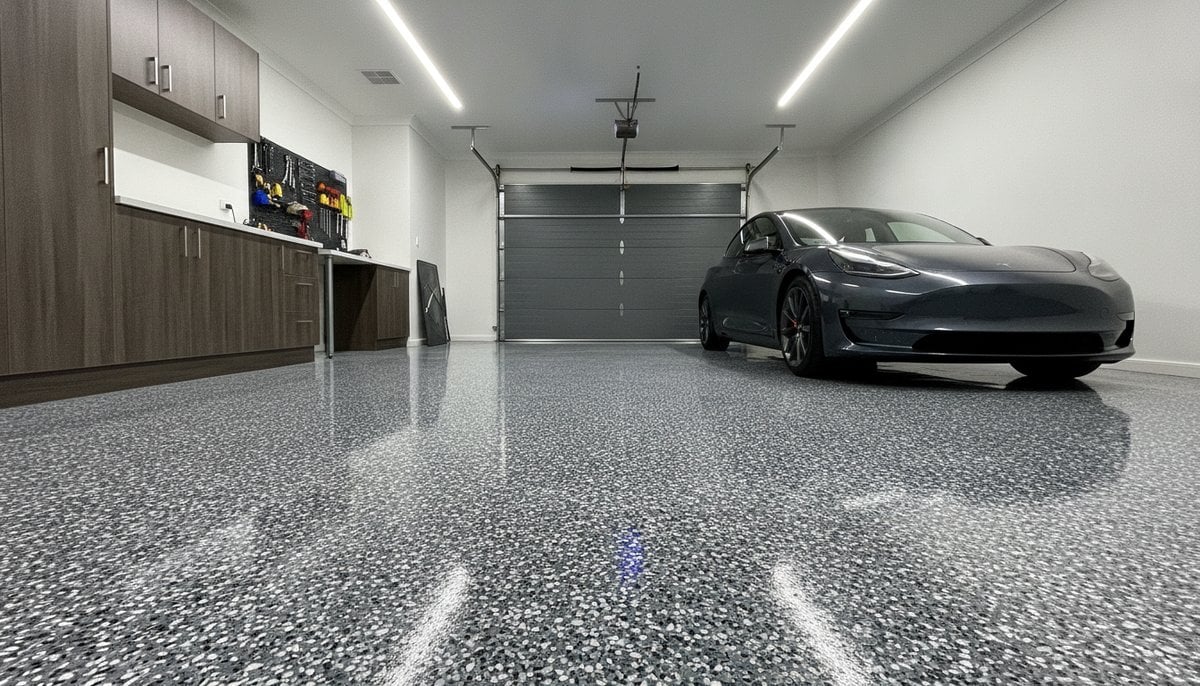
Epoxy flake flooring has become the most widely installed garage floor system across Melbourne, and for good reason. It’s durable, good-looking, available in dozens of colour combinations, and gives the garage a professional finish that holds up to daily vehicle use. This complete guide covers everything Melbourne homeowners need to know before getting it done: what it is, what it costs, how the installation works, and how to choose a colour and a contractor.
Key takeaways
- Epoxy flake flooring costs $60, $120 per m² installed in Melbourne for a residential garage.
- It consists of an epoxy base coat, decorative coloured flakes broadcast into the wet epoxy, and a clear polyurethane or polyaspartic topcoat.
- A standard double garage (40 m²) takes two days and costs between $2,400 and $4,800.
- Diamond grinding before installation is non-negotiable for adhesion and longevity.
- With proper installation, a flake floor lasts 10 to 20 years in residential settings.
What is epoxy flake flooring?
Epoxy flake flooring (also called vinyl flake, broadcast flake, or chip flooring) is a multi-coat system applied over prepared concrete. The decorative element is coloured vinyl or acrylic chips broadcast into the wet epoxy base coat. These chips create texture, colour, and pattern while the topcoat seals everything in and provides the wear surface.
The system has three main components:
- Primer coat: penetrates the concrete and creates the foundation for adhesion
- Epoxy base coat with flake broadcast: the coloured layer; flakes are thrown into the wet epoxy until full or partial coverage is achieved, then excess is scraped back after curing
- Clear topcoat: polyurethane or polyaspartic sealer that protects the flakes and provides the finished surface
Why Melbourne homeowners choose epoxy flake over other systems
It hides surface imperfections well
The multi-coloured chip pattern is forgiving. Hairline cracks, minor surface variation, and aggregate exposure that might show through a solid-colour coating are concealed by the flake texture. This matters in Melbourne where older slabs are common and often have some surface wear.
It’s more practical than metallic epoxy for everyday use
The natural texture of the flake surface provides better slip resistance than the smooth surface of metallic epoxy. It’s also more forgiving of minor scrapes and scuffs, making it the right choice for garages used daily for parking, working, or storage. For a showpiece space where aesthetics come first, metallic epoxy is worth the premium.
It’s available in many colour combinations
Flake chips come in hundreds of colours and can be mixed to create almost any blended effect. Popular Melbourne combinations include grey and white, charcoal and silver, tan and brown, and black and grey. Full-broadcast (100% coverage) gives a consistent chip look; partial broadcast (30 to 80%) allows the base colour to show through for a more varied effect.
Cost-to-durability ratio
Epoxy flake offers solid durability at a lower cost than metallic or polished concrete systems. For a working garage that sees regular vehicle use, it’s the most practical flooring investment available.
Epoxy flake flooring cost in Melbourne: 2026 pricing
The installed cost for residential epoxy flake flooring in Melbourne ranges from $60 to $120 per m², depending on flake colour and density, preparation requirements, and whether a standard polyurethane or faster-curing polyaspartic topcoat is used.
| Space | Approx. area | Estimated cost |
|---|---|---|
| Single garage | 18 to 24 m² | $1,080: $2,880 |
| Double garage | 36 to 44 m² | $2,160: $5,280 |
| Triple garage | 54 to 66 m² | $3,240: $7,920 |
| Workshop or shed | 30 to 60 m² | $1,800: $7,200 |
The biggest variable in cost (outside of size) is concrete condition. A slab with significant cracking, oil contamination, or a previous coating that needs to be ground off will take longer to prepare, which adds to the labour cost. This is why in-person quotes matter: a professional can assess your specific slab and give you an accurate price, not a range from a website.
The installation process: what happens on your floor
Day 1: preparation and base coat
The installer arrives, clears the garage, and begins diamond grinding the concrete. Grinding opens the concrete’s pores and creates the mechanical profile the epoxy bonds to. For a double garage, this takes 3 to 5 hours. Cracks are filled after grinding. A primer coat goes down, followed by the epoxy base coat. While the base coat is wet, the flake chips are broadcast across the surface. For full-broadcast systems, chips are thrown until the entire floor is covered. The installer leaves and the floor cures overnight.
Day 2: topcoat
The following morning, the installer scrapes back any loose or standing chips from the cured base coat, vacuums thoroughly, and applies the clear topcoat. This coat provides the UV and chemical resistance and creates the final surface texture. On most residential garages, the topcoat is done in 2 to 4 hours. The floor is left to cure again.
Cure timeline
- 24 hours: light foot traffic
- 48 to 72 hours: light use and furniture
- 5 to 7 days: vehicle parking (or 24 hours with a polyaspartic topcoat)
- 28 to 30 days: full chemical cure
Choosing your flake colour combination
Flake chips are sold in blended colour mixes. The most popular combinations for Melbourne residential garages are:
- Charcoal and silver: clean, modern, very popular across inner and middle Melbourne suburbs
- Grey and white: neutral, bright, suits double garages used as multi-purpose spaces
- Tan and brown: warmer palette, suits period homes and garages with timber trim
- Black and dark grey: high contrast, dramatic look, popular in prestige garages
- Blue and grey: less common but sharp; works well in contemporary homes
Most Melbourne installers carry sample boards. Ask to see the chips broadcast at the density you’re considering, not just the loose chips in a bag, as the broadcast effect looks quite different from the raw chips.
Full broadcast vs partial broadcast: what’s the difference?
Broadcast density changes the appearance of the finished floor significantly.
- Full broadcast (100%): chips completely cover the base coat. Result is a fully textured, chip-on-chip appearance. Hides imperfections most effectively. Maximum texture and slip resistance.
- Partial broadcast (30 to 80%): chips partially cover the base, allowing the base colour to show through. Creates a more varied, less uniform look. Base colour selection matters more.
For a working Melbourne garage, full broadcast is the most practical choice for its texture and durability. See examples on the Metal and Flake flake system page.
Polyurethane vs polyaspartic topcoat: which is right for you?
| Polyurethane | Polyaspartic | |
|---|---|---|
| Cost premium | Standard | 15 to 25% more |
| Vehicle use after | 5 to 7 days | 24 hours |
| UV stability | Good | Excellent |
| Temperature tolerance | Moderate | Wider range (good for Melbourne winters) |
| Chemical resistance | Good | Excellent |
For most Melbourne homeowners, polyurethane is adequate. Polyaspartic is worth the premium if you need the garage back quickly, have UV-exposed areas (semi-open garages), or want the best possible chemical resistance for a workshop.
How to choose a Melbourne epoxy flake installer
The quality of an epoxy flake floor depends almost entirely on preparation and installer skill. To evaluate a contractor:
- Ask whether they diamond grind as standard (not acid etch)
- Ask for photos of completed residential garages in Melbourne, not commercial jobs or factory floors
- Ask how they handle oil-contaminated concrete and cracks
- Get a written quote that itemises preparation, system, and warranty separately
- Check that they offer a workmanship warranty of at least 2 years
Be cautious of quotes significantly below the market range. A low price often means shortcuts in preparation or a thinner coating system, and the failure cost (stripping and redoing the floor) is higher than doing it right the first time.
FAQ: epoxy flake flooring Melbourne
How long does epoxy flake flooring last in a Melbourne garage?
10 to 20 years with proper preparation and a quality topcoat. The topcoat is the wear surface; it can be refreshed at the 5 to 10 year mark if needed without redoing the full system.
Can epoxy flake be applied over existing paint or sealant?
No. Any existing coating must be ground off before new epoxy is applied. Epoxy over paint will delaminate.
Is the surface slippery when wet?
Full-broadcast flake has natural texture that provides good grip. A fine anti-slip aggregate can also be added to the topcoat for extra safety in areas where water is common. Ask your installer about this option.
Can I get epoxy flake on an outdoor area?
Yes, but the topcoat must be UV-stable (polyaspartic is preferred) and the area must be covered or sheltered. Direct, prolonged UV exposure yellows standard polyurethane topcoats. For exposed outdoor slabs, discuss the right system with your installer.
What’s the difference between epoxy flake and polyaspartic flake?
The base coat chemistry differs: epoxy base with a polyaspartic topcoat is the most common combination. Some systems use polyaspartic for both the base and topcoat, which cures faster but costs more. The end result and appearance are similar; the main difference is speed and price.
Get a quote for your Melbourne garage
Metal and Flake install epoxy flake flooring across Melbourne residential garages, diamond grinding every floor as standard. Book a free on-site quote and get a clear price before any work begins.
Ready for a Floor That Lasts?
Get a free, no-obligation quote from Melbourne’s trusted epoxy specialists.
Get a Free Quote +61 485 031 001