Garage Floor Epoxy Resin: Choosing the Right System for Your Slab
Garage floor epoxy resin is a two-part coating, a resin and a hardener, that chemically bonds to concrete to create a hard, seamless surface. The right system depends on your slab condition, moisture levels, how the garage is used, and the finish you want. Matching those four factors to the correct product is what separates a floor that lasts from one that peels.
What types of garage floor epoxy resin systems are available?
The main garage floor epoxy resin systems are 100% solids epoxy, water-based epoxy and solvent-based epoxy. 100% solids is the thickest and most durable, building a coating 3 to 5 times heavier than water-based options. Water-based suits lighter residential use and DIY application, while solvent-based sits in between on performance and has stronger fumes, which limits where it can be applied safely.
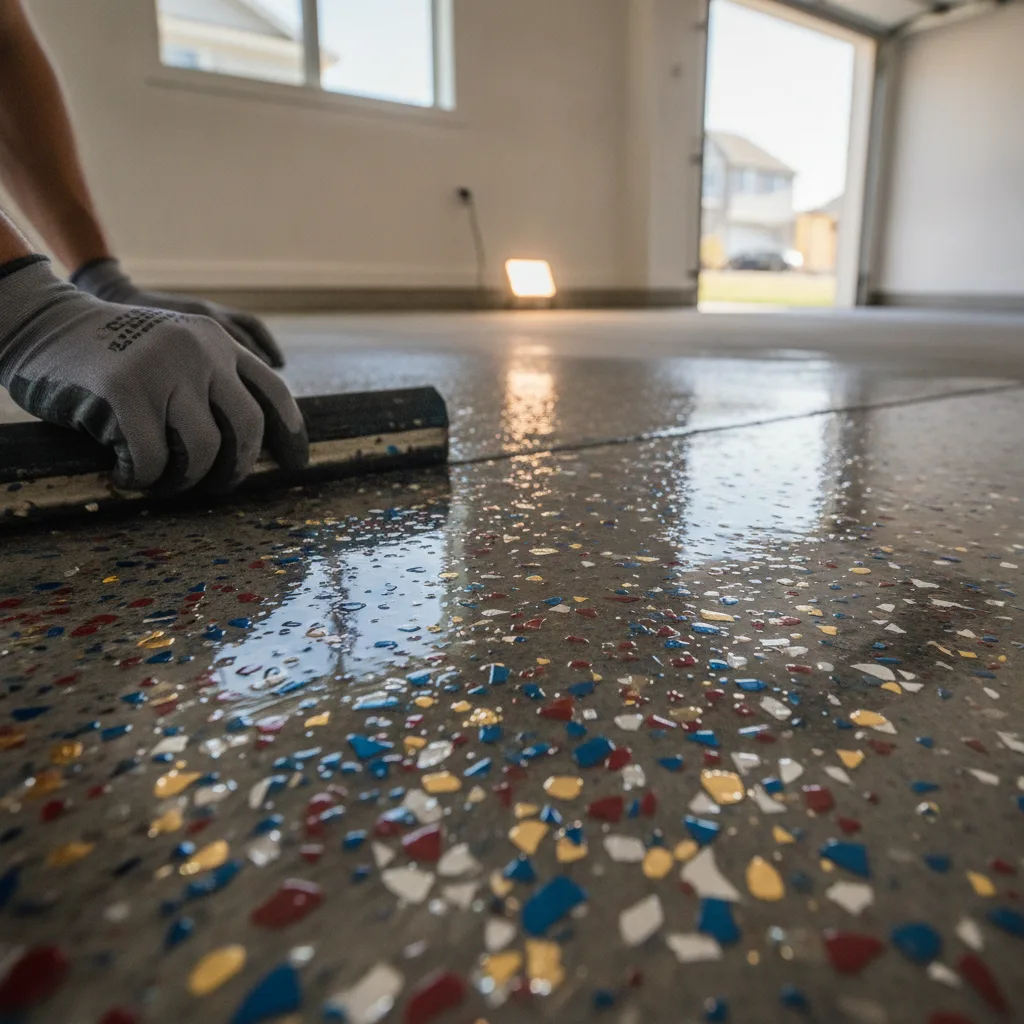
Beyond the base chemistry, you also choose how the system is built up. Most professional installations use a multi-coat approach: a penetrating primer or basecoat, a broadcast layer where coloured flakes or metallic pigments are scattered into the wet resin, and a clear topcoat that locks everything in. Each layer has a job. The primer grips the concrete. The broadcast layer adds texture, slip resistance and the decorative look. The topcoat, usually a polyurethane or polyaspartic, takes the daily punishment so the epoxy underneath does not have to.
Polyaspartic topcoats are worth a mention on their own. They cure faster than standard epoxy, which is why professional crews can often complete a garage floor in a single day. They also hold up better to UV exposure, meaning the clear coat will not yellow near roller doors or windows the way some older epoxy formulations do.
Does your slab condition affect which epoxy system you should choose?
Yes, slab condition is one of the most important factors when choosing a garage floor epoxy resin system. A slab with moisture transmission, surface contamination or existing coatings needs specific primers or mechanical preparation before any resin will bond reliably. Skipping this step is the single most common reason epoxy coatings delaminate within a year or two of installation.
There are a few practical checks to run before you commit to any product. The plastic sheet test, where you tape a 300mm square of plastic to the bare slab and leave it for 24 hours, will show you whether moisture is wicking up from below. If condensation forms on the underside of the plastic, a moisture-tolerant epoxy primer is not optional, it is essential. Standard coatings applied over a damp slab will bubble and lift.
Surface profile matters just as much. Epoxy needs something to grip. A smooth, trowel-finished or previously sealed slab must be ground back with a diamond grinder or shot-blasted to open the pores of the concrete. The Concrete Surface Profile standard used by coating professionals targets a CSP 2 to CSP 3 for most garage floor systems, which is roughly the texture of 60-grit sandpaper. Without that profile, even a premium 100% solids epoxy will peel.
Cracks and spalling should be filled with a flexible polyurethane filler or a rigid epoxy mortar, depending on whether the crack is still moving. A flexible filler bridges live cracks; a rigid mortar suits stable, static damage. Getting this wrong means cracks telegraph through the finished coating.
How does garage use influence the right epoxy resin choice?
The way you use your garage directly determines how thick and tough your garage floor epoxy resin system needs to be. A single car that parks overnight needs far less than a home workshop with heavy rolling loads, chemical spills and foot traffic throughout the day. Matching the coating to the workload stops you from over-spending on a light-use slab or under-specifying on a working garage.
For a standard residential garage with one or two vehicles, a broadcast flake system with a 100% solids epoxy base and a polyurethane or polyaspartic topcoat is a reliable, proven combination. The flake broadcast fills small surface imperfections, adds grip underfoot and, practically speaking, hides the dust and tyre marks that come with everyday use far better than a solid-colour system does.
For heavier use, things like motorbike workshops, home gyms, commercial-adjacent spaces or garages with frequent hydraulic jack loads, a thicker build is worth the investment. Some professional systems apply epoxy at 75 to 100 microns dry film thickness per coat, stacking multiple coats to achieve a total system thickness that resists point loading and abrasion. If you are rolling heavy toolboxes or motorbike stands across the floor regularly, that extra thickness pays for itself in longevity.
Chemical resistance is another conversation. Standard epoxy handles most household automotive fluids reasonably well, but if you are doing your own mechanical work and expect regular contact with brake fluid, solvents or oil, ask about a chemical-resistant topcoat. Some polyaspartic clears have notably better solvent resistance than standard polyurethane options.
What finish options are there with garage floor epoxy resin?
Garage floor epoxy resin can be finished in full flake, partial flake or solid colour, and each gives a different look and level of texture. Full flake coverage, where the broadcast is applied until no bare resin shows through, is the most popular residential choice in Melbourne because it hides imperfections well, provides consistent grip and looks clean without showing every mark. Metallic epoxy is a separate category, using pigmented resins to create a poured, marbled appearance with no flake at all.
Gloss level is controlled by the topcoat. High gloss reflects light and makes a garage feel larger and brighter, which is useful in darker spaces. A satin or matte finish is quieter visually and tends to show less surface dust between cleans. Both are durable. The choice comes down to preference and how much natural light the space gets.
Colour selection for the flake is genuinely broad. Most professional suppliers offer dozens of blended flake combinations, from neutral greys and charcoals through to earthy tones and bolder mixes. Seeing physical samples in your actual garage lighting before committing is always worth doing. Colours look different under LED workshop lights, fluorescent tubes and natural daylight, sometimes quite significantly.
Can you install garage floor epoxy resin yourself, or is it better left to a professional?
DIY garage floor epoxy resin kits are widely available, but the results depend entirely on how well you prepare the slab and how correctly you handle the mixing ratios and application timing. Most DIY failures come from skipping grinding, applying over a damp slab or getting the resin-to-hardener ratio slightly off, none of which are obvious until the coating starts to lift or stay tacky. A professional installer brings grinding equipment, moisture testing, and product knowledge that is hard to replicate with a hardware store kit.
The floor prep equipment alone is a significant factor. A professional diamond grinder or shot blaster costs thousands of dollars to hire and requires experience to use evenly. Uneven grinding leaves high spots where adhesion is poor. Professional crews do this every week. They know how long to spend on each section, how to handle expansion joints and how to read the slab before a single drop of resin goes down.
There is also the matter of product access. The 100% solids epoxy systems and fast-cure polyaspartic topcoats that professional installers use are generally not available in retail stores. Trade-grade products have a longer pot life window, better flow characteristics and more consistent results than retail formulations. For a garage you want to look good and last ten years or more, the professional route makes practical sense.
Get a professional epoxy garage floor coating installed by Metal and Flake.