Epoxy Garage Floor Coatings: Which System Is Right for Your Slab?
Epoxy garage floor coatings fall into several distinct systems: standard single-coat epoxy, broadcast flake (also called chip or flake), metallic epoxy and polyaspartic topcoats. The right choice depends on your slab condition, how the garage is used, your budget and the look you want. A well-matched system lasts well over a decade with minimal upkeep.
What are the main types of epoxy garage floor coatings available?
The four systems you will come across most often are water-based single-coat epoxy, solvent-based or 100-percent-solids epoxy, broadcast flake systems and metallic epoxy. Each uses the same chemistry at its core (a resin and a hardener that cross-link to form a tough plastic film), but the build thickness, additives and topcoat options differ significantly between them, giving very different results in terms of durability, appearance and price.
Here is a plain-English breakdown of each one.
Water-based single-coat epoxy is the stuff sold in tins at the hardware store. It goes on easily, dries quickly and costs the least. The trade-off is a thin film, typically under 0.1 mm, that chips and peels under heavy traffic or hot tyre contact within a few years. It is fine for a low-traffic storage space but a poor long-term investment for a working garage.
Solvent-based or 100-percent-solids epoxy is what professional installers use as a base coat. With little to no water or solvent carrier, nearly all of the product stays on the floor as a solid film. Build thickness starts around 0.3 mm for a primer coat and increases with additional layers. This is the foundation that makes a long-lasting floor possible.
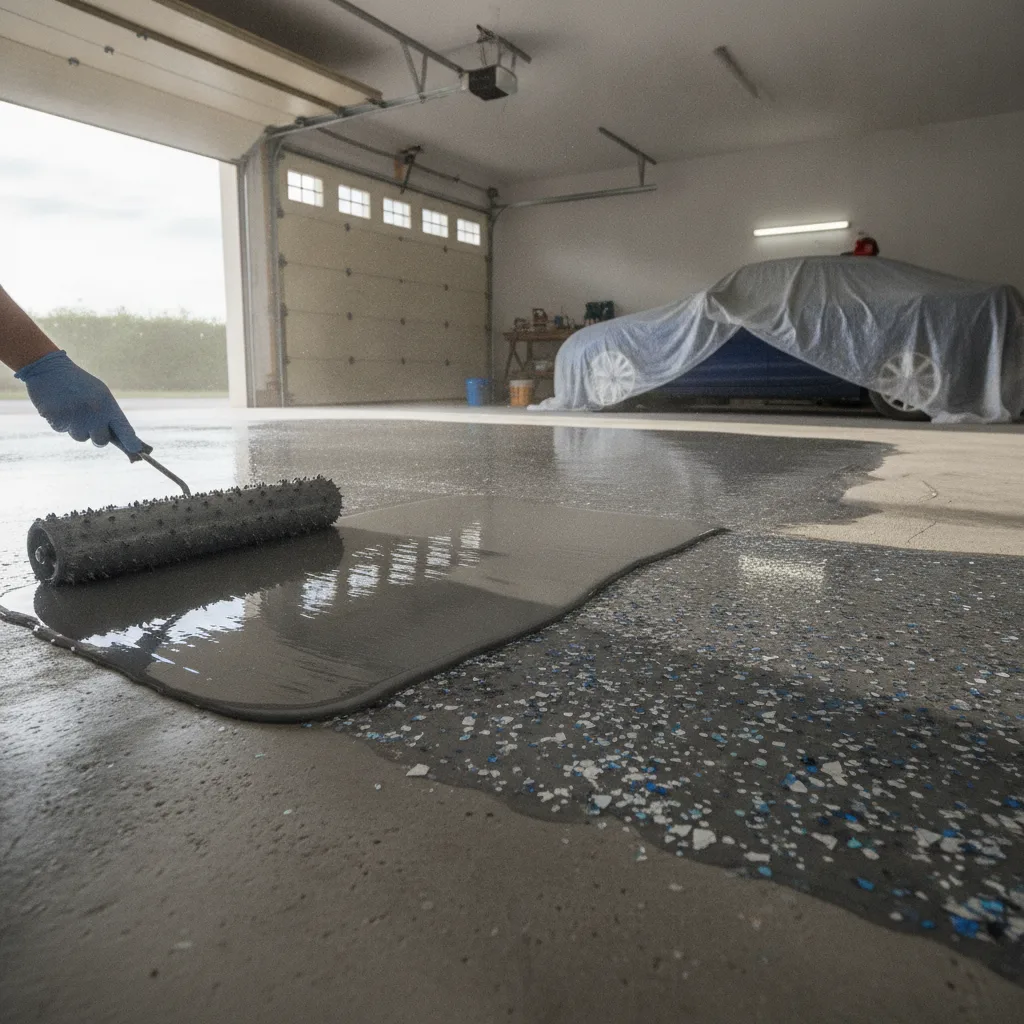
Broadcast flake systems pair a 100-percent-solids epoxy base with coloured vinyl flakes broadcast into the wet coat, then locked in with a polyurethane or polyaspartic topcoat. The result is a non-slip, decorative surface that hides minor surface imperfections and is easy to keep clean. This is the most popular system for residential garages in Melbourne, and for good reason.
Metallic epoxy uses pigmented metallic powders suspended in a clear or tinted epoxy to produce a flowing, three-dimensional effect, similar in look to polished marble or molten metal. Each floor is unique. It suits showroom-style garages, workshops that double as hobby spaces and anyone who wants a floor that is genuinely a feature rather than just a background surface.
How does slab condition affect which epoxy garage floor coating system works best?
Slab condition is arguably the single biggest factor in system selection. A floor with significant cracking, deep pitting or high moisture vapour emission needs more preparation and a more forgiving system before any coating will stick properly. Skipping proper assessment is the number one reason epoxy coatings fail early, regardless of how good the product itself is.
A few things to check before committing to a system:
Moisture. Concrete is porous and can transmit moisture vapour from the ground beneath it. Excess moisture causes epoxy to delaminate from below. A simple plastic sheet test (tape a 600 mm square of plastic to the floor for 24 hours and check for condensation underneath) gives a rough read on whether you have a moisture problem. High-moisture slabs need a moisture-tolerant primer or a dedicated vapour barrier coat before any decorative system goes down.
Surface profile. Epoxy needs something to grip. Diamond grinding opens up the pores of the concrete and creates the mechanical tooth that holds the coating in place. A floor that has been previously sealed, painted or contaminated with oil needs thorough mechanical prep, full stop. Shot blasting is another common method for larger areas, and it provides a more uniform profile across the whole slab.
Cracks and spalls. Hairline shrinkage cracks are normal and can be filled before coating. Structural cracks that move need a different conversation. Deep spalls (the rough, crater-like damage you get from chemical attack or freeze-thaw cycles) are filled with an epoxy mortar repair compound before the main coating goes on.
As a general rule, the more decorative the system you want (metallic in particular), the flatter and more consistent the slab needs to be. Broadcast flake is more forgiving because the texture itself masks minor surface variation.
Is a polyaspartic topcoat worth the extra cost on an epoxy garage floor?
A polyaspartic topcoat is worth the extra spend for most residential garage floors in Melbourne. Polyaspartic is a type of polyurea that cures much faster than a standard polyurethane, has excellent UV stability (meaning it will not yellow in sunlight near windows or open doors) and outperforms standard urethane clears in abrasion resistance. For a garage floor that sees daily vehicle traffic, the upgrade in topcoat durability is noticeable over the life of the floor.
Standard polyurethane topcoats are not a bad choice. They are proven and widely used. The difference becomes most apparent in UV-exposed areas and in garages where tyres sit stationary for long periods, which can cause a phenomenon called tyre pick-up or plasticiser transfer. Polyaspartic topcoats are more resistant to this than softer urethane finishes.
The practical trade-off with polyaspartic is the faster cure time. Because it sets so quickly, application requires an experienced installer who can work efficiently. This is not a product that rewards a slow or uncertain application technique. Done properly by a professional, the finished result is a high-build, hard-wearing surface that can typically handle light foot traffic within a few hours and vehicle traffic within 24 hours.
How long does an epoxy garage floor coating actually last?
A professionally installed broadcast flake system with a polyaspartic topcoat, applied over properly prepared concrete, can realistically last 15 to 20 years in a residential garage with normal use and basic maintenance. A DIY water-based kit from a hardware store typically shows wear within two to five years, especially under hot tyres and regular vehicle movement.
The variables that shorten a floor’s lifespan fastest are poor surface preparation, moisture not addressed before installation and skipping a quality topcoat. The coating itself is rarely the weak link when the prep work has been done correctly.
Maintenance is straightforward. Sweep regularly to remove grit (the main source of surface wear), mop with a pH-neutral cleaner when needed and wipe up chemical spills promptly. Battery acid from older vehicles is particularly aggressive and should be cleaned up quickly. With that level of basic care, an epoxy floor holds its look for many years.
What should you ask an epoxy garage floor coatings installer before signing off?
Before any work starts, ask these four questions and pay attention to how directly you get an answer.
First: how will you prepare the slab, and will you use a grinder or shot blaster? A professional will always mechanically prepare the surface. Anyone offering to acid-etch only and skip mechanical grinding is cutting corners that will cost you later.
Second: what is the total build thickness of the system? A quality residential floor system sits at around 1 mm total build or more across primer, body coat and topcoat. Thinner systems wear through faster.
Third: what topcoat are you using, and is it UV-stable? Particularly relevant for garages with natural light exposure. Get the product name so you can look it up.
Fourth: do you do a moisture test before you start? If the answer is no, or if the installer looks unsure what you are talking about, that is a flag worth taking seriously.
Getting clear answers to these four questions tells you quickly whether you are dealing with someone who knows their trade or someone relying on low price to win the job.
Ready to get the right system on your slab? Get a free epoxy garage floor coating quote from Metal and Flake.