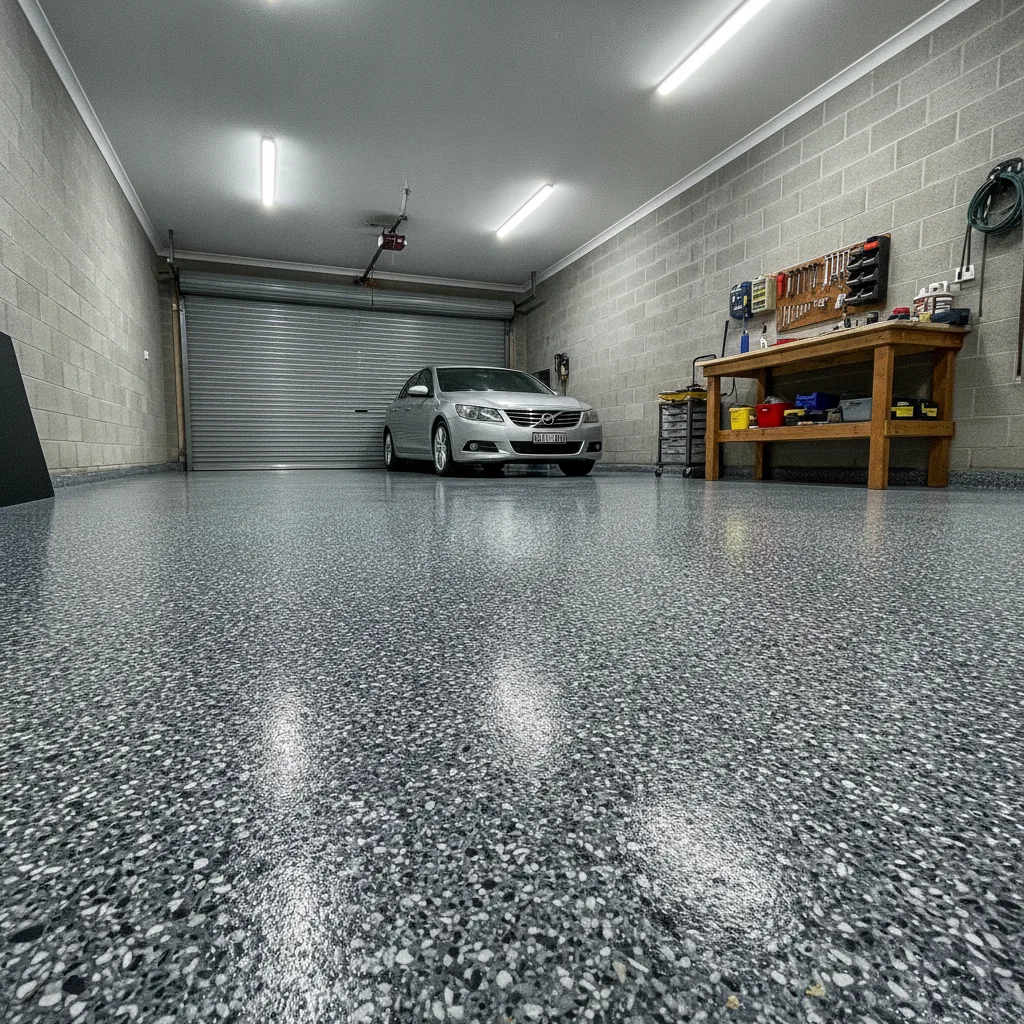
Epoxy Resin Garage Floors: What Melbourne Homeowners Should Know
Epoxy resin garage floors are a two-part coating system, a resin and a hardener, that bond chemically to concrete and cure into a hard, seamless surface. They resist oil, tyre marks, moisture and abrasion far better than bare concrete. For Melbourne homeowners, they are one of the most cost-effective ways to upgrade a garage and protect the slab long-term.
What exactly are epoxy resin garage floors made of?
Epoxy resin garage floors are made from two components mixed together just before application: an epoxy resin and a polyamine hardener. When they react, they form a thermoset polymer that bonds tightly to the concrete substrate. The result is a surface that is typically two to three millimetres thick, dense enough to handle vehicle traffic, dropped tools and chemical spills without cracking or peeling under normal conditions.
There are several product types used in residential garages. Water-based epoxy is thinner and easier to apply but less durable over time. Solvent-based epoxy gives a thicker, harder film. 100 percent solids epoxy, the kind used by professional installers, contains no water or solvent at all, so almost none of the material evaporates during curing. That means you get the full thickness you paid for, which matters a lot when you are parking a car on it every day.
On top of the base coat, decorative elements like colour flake (also called vinyl flake or chip) are broadcast into the wet resin. This is what gives the classic speckled finish you see in showrooms and modern homes. A clear topcoat then seals everything in, adding gloss and another layer of protection.
Why do Melbourne garages in particular benefit from an epoxy resin floor?
Melbourne garages benefit from epoxy resin floors because the city’s climate puts concrete under real stress. Temperature swings between summer heat and winter cold cause concrete to expand and contract, which can lift or delaminate poorly prepped coatings. A properly installed epoxy system, especially one with a mechanical surface profile from diamond grinding, bonds at a level that moves with the slab rather than fighting it.
Melbourne also sits in a zone where moisture migration through slabs is common, particularly in older homes built before damp-proof membranes were standard practice. Moisture vapour rising through a slab is the number one cause of epoxy delamination. A good installer will test the slab with a moisture meter before they mix a drop of product. If moisture readings are too high, a moisture-tolerant primer goes down first. Skip that step and the coating will bubble and peel within months.
Beyond the technical reasons, there is a practical lifestyle one. Melbourne homeowners use their garages hard: storing bikes, gym gear, workshop tools, and second vehicles. A sealed epoxy floor is easy to sweep and hose down, and it does not harbour the dust that bare concrete constantly sheds. That dust gets tracked into the house, so sealing the garage floor is actually a small improvement to the whole home.
How does surface preparation affect the final result on epoxy resin garage floors?
Surface preparation is the single biggest factor in how well epoxy resin garage floors perform over time. A poorly prepped slab will cause even premium epoxy to fail, while a well-prepped slab gives a budget-friendly product a fighting chance. The standard for professional installation is mechanical grinding with a diamond-cup grinder, which opens the pores of the concrete and creates a surface profile that the resin can grip.
Acid etching, the DIY method sold in hardware kits, is a much weaker alternative. It removes surface laitance but does not create the same profile depth. Consumer-grade kits from hardware stores typically use water-based epoxy at around 30 to 50 percent solids, which means up to half the product evaporates before it cures. The finished film is thin, often under one millimetre, and lacks the abrasion resistance of a professionally applied 100 percent solids system.
Cracks and expansion joints need attention before coating too. Small hairline cracks can be filled with an epoxy mortar or polyurethane filler. Wide or moving cracks are a different story; if the crack is still active (still opening and closing with temperature), no rigid coating will bridge it permanently. A professional will be honest with you about what is achievable versus what is cosmetic.
What finishes and colours are available for epoxy resin garage floors?
The most popular finish for residential epoxy resin garage floors in Melbourne is the flake or chip system, where coloured vinyl flakes are scattered across the base coat in a blend that suits the homeowner’s taste. Blends range from subtle tones like grey, charcoal and beige through to bold combinations with black, white and terracotta. The density of the flake broadcast also changes the look: a full broadcast (where flakes cover the entire surface) gives a uniform texture and hides imperfections in the concrete, while a partial broadcast lets some of the base coat colour show through for a more layered effect.
Metallic epoxy is another option that has grown in popularity. Fine metallic pigments are mixed directly into the resin and manipulated with a squeegee or roller to create flowing, three-dimensional patterns that look almost like polished stone or liquid metal. The finish varies with every install, which means each floor is genuinely unique. It is a more demanding application requiring skill and experience to get right, but the visual result is striking in a finished garage or workshop space.
For homeowners who prefer a clean, industrial look, a solid-colour base with a high-gloss clear topcoat is always an option. Light colours like battleship grey or light stone reflect more light and make a dark garage feel noticeably brighter, which is worth considering if your garage doubles as a workspace.
How long do epoxy resin garage floors last and what maintenance do they need?
A professionally installed epoxy resin garage floor on a properly prepared slab can last ten to twenty years before needing a recoat, depending on traffic levels and how well it is maintained. Consumer-grade DIY systems typically last two to five years before they start to peel or wear through in high-traffic zones like tyre tracks.
Day-to-day maintenance is straightforward. Sweep or blow debris off regularly to stop fine grit acting as an abrasive underfoot. Mop spills promptly, especially petrol, oil and brake fluid, which can stain if left. A diluted neutral-pH cleaner is fine for periodic mopping. Avoid harsh solvents and abrasive pads on the topcoat.
Using furniture pads under heavy workshop equipment or storage shelving prevents point-load indentations over time. Putting a small rubber mat under a motorcycle or car jack stand is a sensible habit too. These are minor habits that add years to the life of the coating.
Recoating is straightforward when the time comes, provided the original install was done correctly. A professional can apply a fresh topcoat over a sound existing epoxy layer without stripping everything back to concrete, which keeps the cost and disruption down significantly compared to a full reinstall.
What should Melbourne homeowners ask a contractor before booking?
Before booking any contractor for epoxy resin garage floors in Melbourne, ask four things directly. First, will you grind the slab with a diamond grinder, or are you using acid etch? The answer tells you immediately about their standard of preparation. Second, what percentage solids is the epoxy product you use? Anything below 70 percent is a sign you are getting a thin, consumer-grade system. Third, do you test for moisture before you start? If they look blank at this question, walk away. Fourth, can you show me examples of finished garages you have done in Melbourne, ideally ones that are two or more years old?
A contractor who answers those questions clearly and confidently, and who can back them up with real photos and references, is worth your time. One who avoids them or gives vague answers is likely to give you a floor that looks great on day one and disappoints you by year two.
Get a quote for epoxy resin garage floors in Melbourne