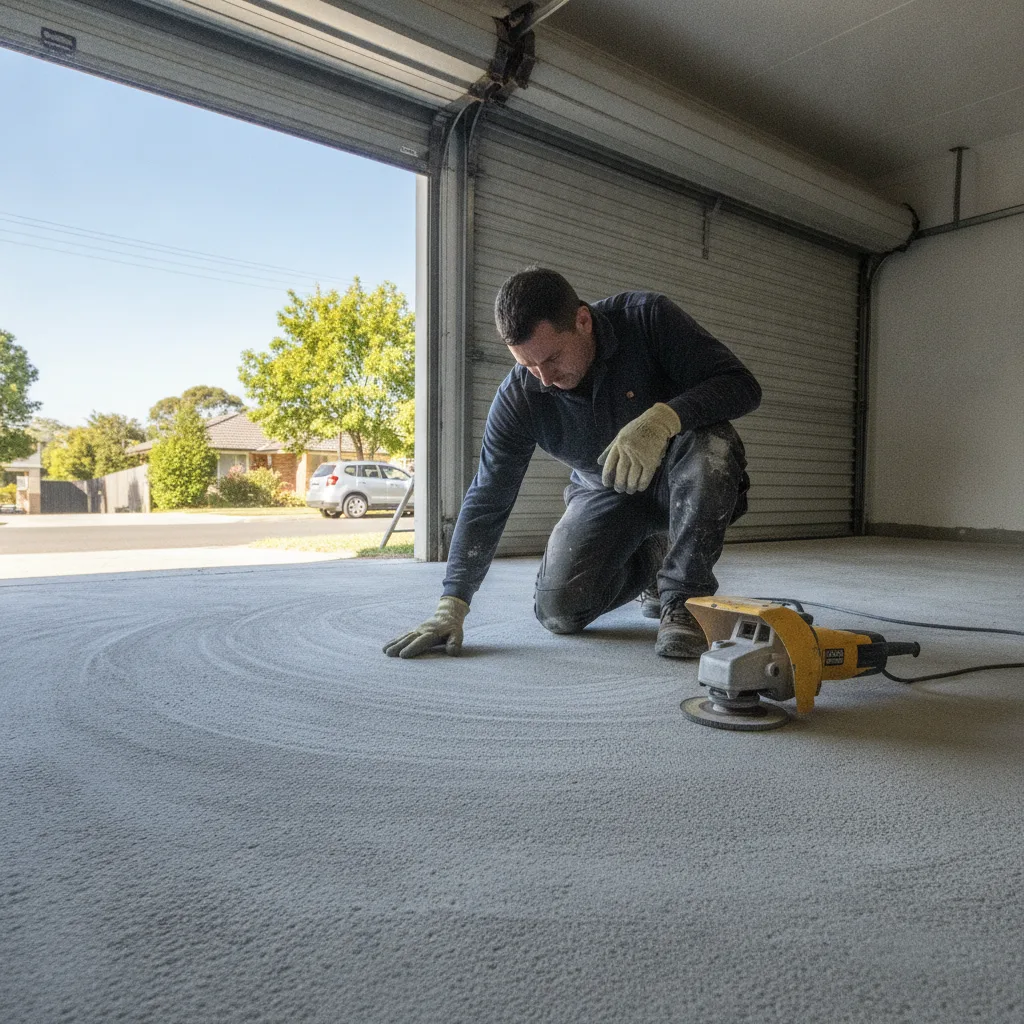
Epoxy Over Concrete in Melbourne: What Homeowners Should Know
Epoxy over concrete in Melbourne is one of the most popular ways to upgrade a garage, workshop or interior slab. A quality epoxy system bonds directly to the concrete surface, seals it against oil and moisture, and leaves a hard-wearing, easy-to-clean finish that can last well over a decade when the prep work is done right.
Is your concrete actually ready for epoxy?
Concrete must be clean, structurally sound and free of any coating or sealer before epoxy can bond properly. The surface needs to be opened up, usually by diamond grinding, so the epoxy has something to grip. If the slab is freshly poured, most manufacturers recommend waiting at least 28 days for full cure before applying any coating system.
This is the step that separates a floor that lasts from one that peels in 18 months. Melbourne’s climate throws up a few extra considerations too. High humidity in spring and summer can affect how the product cures, and a slab sitting over a poorly ventilated sub-floor can push moisture vapour upward through the concrete. A moisture vapour emission rate (MVER) test is worth doing before any product goes down, especially in older homes or those built on flat ground with no raised stumps.
Existing paint, tile adhesive residue, or a previously applied penetrating sealer will all prevent a solid bond. Patching deep cracks and spalling before coating is also non-negotiable. Thin coatings applied over damaged concrete just map the damage right through to the surface.
What does the epoxy over concrete process actually involve?
Applying epoxy over concrete in Melbourne follows a clear sequence: grind the slab, repair any defects, apply a primer coat, broadcast decorative flake or metallic if required, apply mid-coats, then seal with a polyurethane or polyaspartic topcoat. From start to finish, most residential garage floors take one to two days on-site, with a further 24 to 72 hours before you can drive on the surface.
The grinding stage is where the real labour goes. A proper diamond grinder with a dust shroud and vacuum removes laitance (the weak surface layer of concrete), opens the pores and leaves a profile that epoxy can mechanically key into. Skipping this step and just acid etching instead gives a far weaker bond, particularly on denser modern slabs.
Once the primer soaks in and tacks off, the build coats go down. For a decorative finish, colour flake is broadcast into the wet epoxy and allowed to cure before excess is scraped back and a clear topcoat is rolled over the top. The topcoat is what takes the daily punishment, so choosing a UV-stable polyaspartic for a garage that gets direct sunlight is worth the extra cost. Standard epoxy topcoats can amber noticeably within a year when exposed to UV.
How long does epoxy over concrete last in Melbourne conditions?
A professionally applied epoxy floor system in Melbourne typically lasts 10 to 15 years in a residential garage with normal use. Longevity depends on the thickness of the coating system, the quality of the concrete prep, the products used, and how the floor is maintained. Floors that see heavy vehicle traffic, chemical spills or dragged metal equipment will wear faster without a robust topcoat.
Melbourne’s weather is worth factoring in at the application stage rather than the maintenance stage. Installation during very cold weather (below 10 degrees Celsius) can extend cure times significantly and affect the final hardness of the film. Most professional applicators will adjust their scheduling around temperature and avoid application during a cold snap or in direct midday summer heat where the slab surface temperature climbs well above ambient air temperature.
For ongoing care, a soft mop and a pH-neutral cleaner is all most epoxy floors need. Avoid dragging sharp metal edges directly across the surface, and if a vehicle is leaking coolant or brake fluid, clean it up promptly. Coolant in particular can soften some coating systems if left sitting for extended periods.
What does epoxy over concrete cost in Melbourne?
For a standard residential garage in Melbourne, professionally applied epoxy flooring generally ranges from around $50 to $120 per square metre depending on the system chosen, the condition of the existing slab, and the finish. A full flake system with a polyaspartic topcoat sits toward the higher end of that range. Basic single-colour epoxy with a standard clear topcoat sits lower.
The prep work, not the product, is usually what drives cost variation. A slab with heavy oil contamination, deep cracking or a previous coating that needs removing will take longer and cost more to prepare correctly. Quotes that seem unusually cheap almost always reflect minimal prep, which is where corners get cut and floors fail prematurely.
A double garage (around 36 to 40 square metres) is the most common project size. At a mid-range rate of $80 per square metre, that puts the total around $2,880 to $3,200 fully installed. Single garages, workshops and alfresco areas are also common jobs. Larger commercial floors tend to attract a lower per-square-metre rate due to equipment efficiency at scale.
Can epoxy go over any concrete slab?
Epoxy can go over most concrete slabs, but not all slabs are equally suitable without some remediation first. Heavily contaminated slabs, slabs with active water ingress from below, and very soft or crumbling concrete may need specialist treatment before a coating will perform reliably. A proper site assessment is the only way to know for certain what you are working with before committing to a product.
Slabs that have been previously coated with a silicone-based sealer or an old oil-based paint can be particularly tricky. Silicone residue in particular is notoriously difficult to remove completely, and any trace left on the surface will create adhesion failures. Diamond grinding to the required depth is the most reliable fix, but it adds time and cost to the job.
Tiled concrete slabs are another common scenario. Tiles can be removed and the adhesive ground back, or in some cases a skim coat of a suitable levelling compound can be applied before the epoxy system goes down. Each situation is different, which is why getting eyes on the slab before quoting matters.
If you want a straight answer on whether your slab is a good candidate and what system will suit it, the best starting point is a site visit from someone who can read concrete, not just quote from a photo.
Book an epoxy over concrete assessment with Metal and Flake.