Concrete Paint for Floors: What Works and What Doesn’t
Concrete paint is a water- or solvent-based coating rolled or brushed directly onto bare concrete to add colour and a basic layer of protection. It works well for low-traffic decorative areas like garden paths and feature walls, but on floors that take daily foot traffic, vehicle loads or moisture from below, standard concrete paint tends to peel, chip and wear through within a year or two.
What exactly is concrete paint, and how is it different from a floor coating?
Concrete paint is a pigmented film-forming product, usually acrylic or masonry-based, designed to sit on the surface of concrete rather than bond chemically with it. A floor coating, by contrast, penetrates or chemically bonds to the slab. Because concrete paint doesn’t key into the substrate the same way, it sits proud of the surface and is far more vulnerable to peeling once moisture, abrasion or flexing works underneath it.
The main types you’ll find at hardware stores in Melbourne are:
- Acrylic concrete paint: Water-based, easy to apply, quick to dry. Fine for garage walls, garden edging or a basement floor that sees almost no traffic.
- Porch and floor enamel: Slightly tougher than straight acrylic. Still a surface film, still prone to peeling under heavy use.
- Rubber-based masonry paint: More flexible than standard acrylic, which helps it cope with minor concrete movement, but it scratches easily and doesn’t handle hot tyre marks or chemical spills.
None of these are the same thing as an epoxy floor coating, a polyurethane coating or a penetrating concrete sealer. Knowing the difference before you spend a weekend on prep and application can save you a lot of frustration.
Where does concrete paint actually hold up well?
Concrete paint is not useless. It earns its place in the right situations, and being straight about that matters more than rubbishing the product altogether.
It performs reliably on surfaces that stay dry, see light foot traffic only, and don’t need to resist chemicals or heavy point loads. Think of a covered alfresco path, a garden retaining wall, a storage shed floor that barely gets walked on, or a laundry wall behind the trough. In those settings, a quality acrylic concrete paint applied over a clean, properly primed surface can last three to five years before needing a refresh.
The other scenario where it makes sense is when budget is genuinely tight and the surface is temporary. If you’re renting a commercial space short-term and just want the concrete looking tidy, a roller coat of concrete paint is cheap, fast and good enough. You’re not expecting it to last a decade.
One concrete detail worth knowing: on outdoor surfaces, UV stability matters. Many standard concrete paints fade noticeably within the first Melbourne summer. Look for products that specifically call out UV resistance on the label, or plan to repaint every couple of years.
Why does concrete paint fail on busy floors?
The failure modes of concrete paint on working floors follow a predictable pattern, and once you’ve seen it once you’ll recognise it everywhere. It usually starts at the edges and joins, where foot or wheel traffic is concentrated. Small chips lift, moisture gets underneath, and a patch the size of a 50-cent coin can spread to a full panel failing within a month.
The main reasons it fails come down to four things:
- Moisture vapour transmission: Concrete breathes. Water vapour moves up through the slab from the ground below, and a surface-applied paint film traps it. That pressure has nowhere to go except to push the paint off. This is one of the most common causes of peeling on garage and workshop floors, particularly in Melbourne suburbs where older slabs were poured without a proper vapour barrier.
- Adhesion to laitance: The weak, dusty top layer of a concrete slab is called laitance. Most DIYers roll paint straight over it. The paint bonds to the laitance, not to the solid concrete underneath, and when that dusty layer breaks down, so does the paint. Proper prep, meaning either acid etching or mechanical grinding, removes laitance before any coating goes down.
- Hot tyre pickup: In a garage that sees regular car use, tyres heat up during driving and are still warm when parked. That warmth softens acrylic paint films and the rubber literally pulls strips off the floor. It’s a phenomenon specific to acrylic and enamel coatings and it’s almost guaranteed to happen within the first summer.
- Abrasion from foot traffic: Paint films are thin, typically 50 to 100 microns dry film thickness. An epoxy floor coating applied at proper coverage rates builds to 300 microns or more. That difference in thickness translates directly into wear resistance. A busy workshop floor will wear through standard concrete paint at the walkways within six months.
What prep is actually needed before applying concrete paint?
This is where most DIY jobs fall apart before a drop of paint hits the floor. Prep is not optional and it’s not a quick sweep with a broom. At minimum, a floor that’s going to hold any coating needs the following.
First, the slab has to be clean. Oil, grease, curing compounds and old adhesive residue all break adhesion. Degrease thoroughly with a dedicated concrete degreaser, not a general-purpose cleaner. Rinse well and let it dry completely, which in Melbourne’s cooler months can take longer than you’d expect.
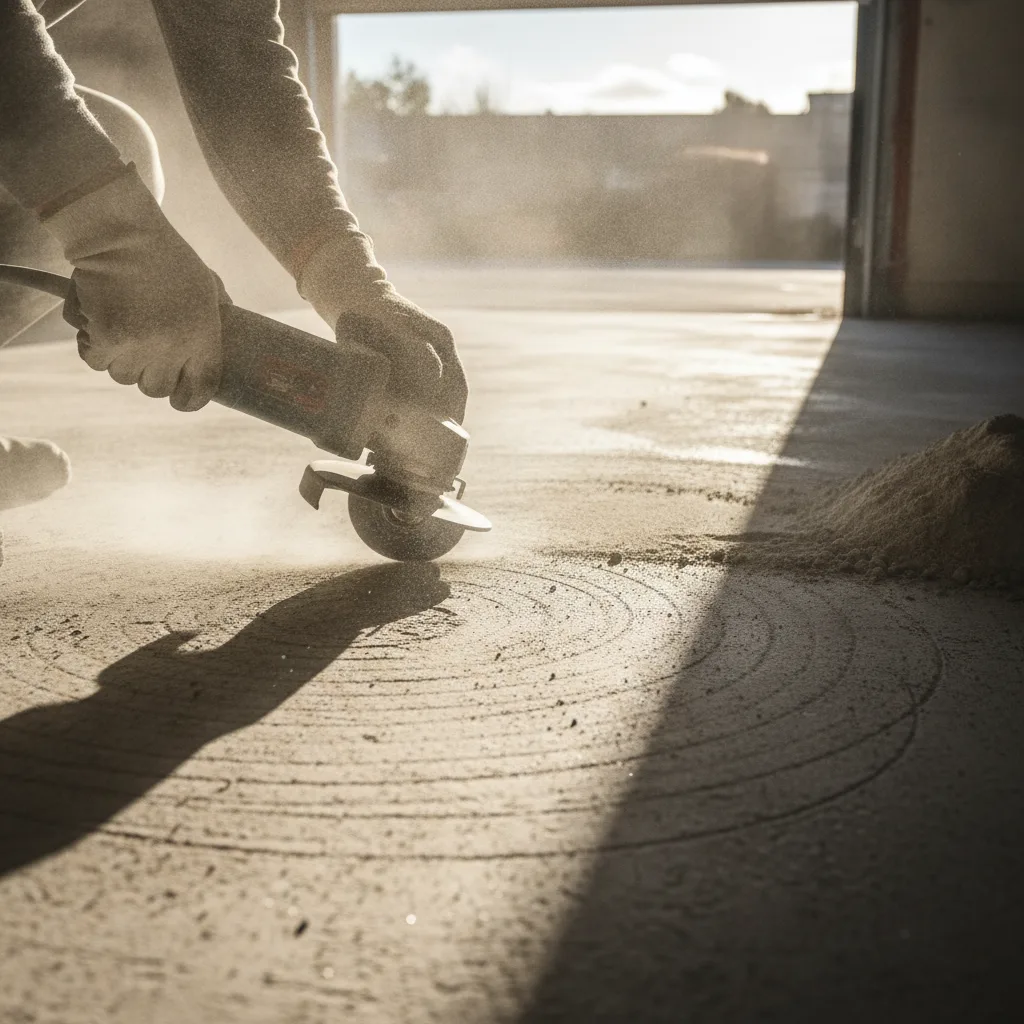
Second, the surface profile has to be right. Concrete paint needs something to grip. Acid etching opens the pores of the concrete and gives a mechanical key. For best results on a floor that sees any real use, mechanical diamond grinding is better still because it removes laitance consistently and doesn’t leave acid residue to neutralise.
Third, moisture has to be checked. A simple plastic sheet test, tape a 600mm square of plastic sheeting flat to the slab, seal all edges with tape, leave it for 24 hours and look for condensation on the underside, will tell you if you have a moisture problem. If the underside is wet, a surface paint film is not the right solution.
When should you skip concrete paint and go straight to a proper floor coating?
If your floor is a garage, workshop, warehouse, showroom or any commercial or residential space that sees regular traffic, concrete paint is a short-term fix that will cost you more in labour and materials over five years than doing it properly once.
A two-part epoxy floor coating chemically bonds to prepared concrete, builds real film thickness, resists hot tyres, chemicals and abrasion, and with a polyurethane topcoat can handle UV exposure outdoors without going chalky. Decorative options like metallic epoxy and vinyl flake systems give you a finish that concrete paint simply cannot replicate, and they last the distance on working floors. Metallic and flake finishes in particular have become popular in Melbourne homes and commercial fitouts because they look sharp and hold up where acrylic paint would have given up long ago.
The honest answer is this: if the job is worth doing, it’s worth doing with the right product. Concrete paint has its place, but that place is not a busy garage floor or a commercial slab that needs to perform for years.
Book a consult for concrete floor coating