Sealing a Concrete Garage Floor: What You Need to Know First
Sealing a concrete garage floor protects the slab from oil, water, salt and surface wear. The right sealer, applied to a properly prepared surface, can double or triple the life of bare concrete. Skip the prep, or choose the wrong product, and you will be peeling it back off within a year and starting again.
Why does sealing a concrete garage floor matter so much?
Sealing a concrete garage floor matters because bare concrete is porous. It absorbs motor oil, brake fluid, water and road salts every single day. Over time that penetration causes staining, spalling and structural surface damage that becomes expensive to fix. A good sealer locks out moisture and contaminants so the slab stays cleaner and lasts longer.
Concrete is essentially a sponge. The Cement Concrete and Aggregates Australia organisation notes that unsealed residential slabs in garages are among the most commonly damaged surfaces in Australian homes, largely because of the combination of vehicle traffic, oil drips and seasonal temperature swings. Once that damage sets in at a micro level, you cannot simply paint over it and hope for the best.
A sealed floor is also far easier to clean. A weekly mop replaces the kind of grinding scrub work you need on bare concrete. For anyone who spends real time in the garage, that is a quality-of-life improvement worth every dollar of the job.
What surface preparation is required before you seal?
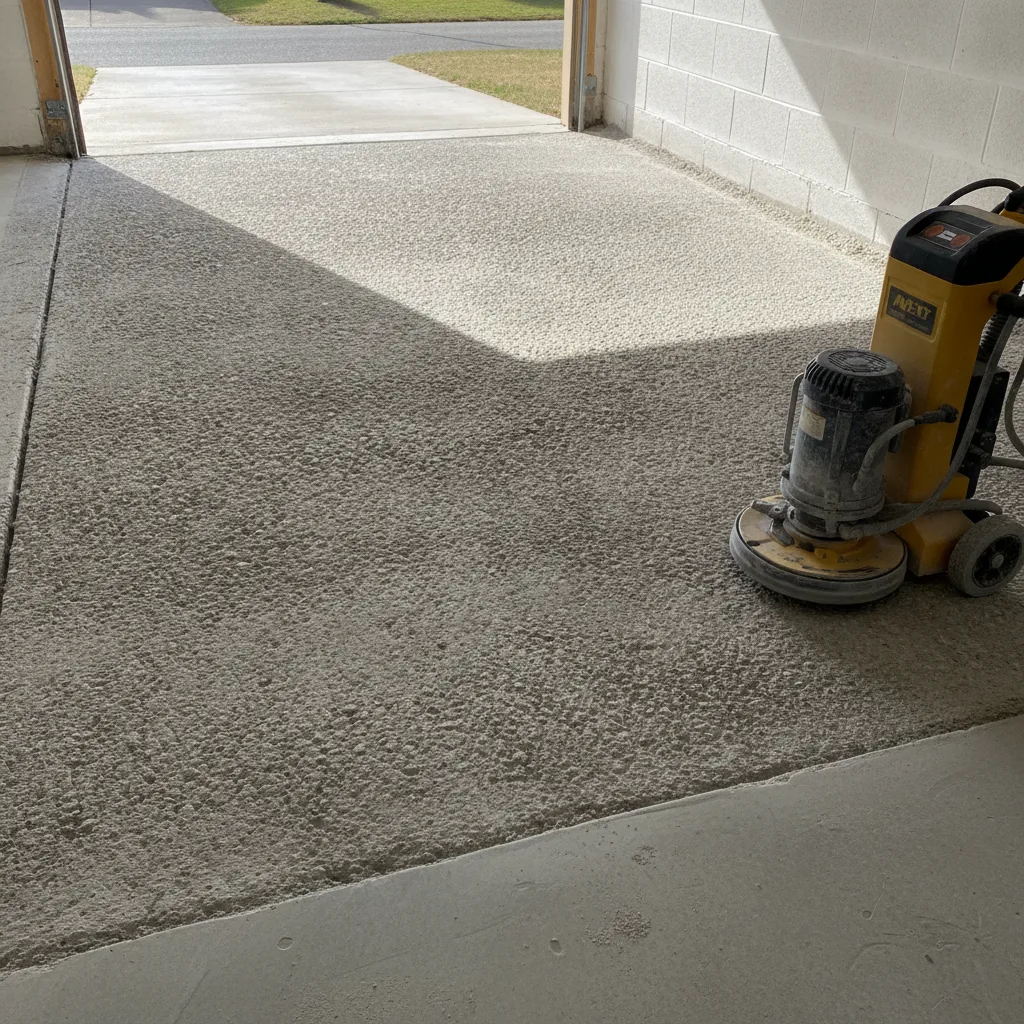
Before sealing a concrete garage floor you must remove all existing coatings, oil contamination and surface laitance so the sealer can bond properly to the slab. A sealer applied over a dusty, oily or powdery surface will peel, bubble or flake, sometimes within weeks. Proper prep is not optional; it is the entire foundation of a successful result.
Here is what proper preparation actually involves:
- Degreasing. Any oil or grease spots need a dedicated alkaline degreaser worked into the surface, not just a rinse with a hose. Old oil stains that have been sitting for years can penetrate 20 to 30 mm deep into a slab and may need multiple treatments.
- Mechanical grinding or shot blasting. This is where most DIY attempts fall short. You need to open up the surface profile of the concrete so the sealer has something to grip. Light sanding does very little. Professional floor grinders using diamond tooling create a consistent surface profile, typically measured in CSP (Concrete Surface Profile) ratings. Most sealers and coatings require a CSP of at least 2 to 3.
- Crack and joint repair. Any cracks wider than a hairline should be filled before sealing. Sealing over an open crack does not fix it; the crack keeps moving and the sealer splits with it.
- Moisture testing. Australian slabs, particularly older ones poured without a proper vapour barrier underneath, can have surprisingly high moisture vapour emission rates. Applying a sealer over a damp slab traps moisture and causes delamination. A simple calcium chloride test or a relative humidity probe gives you the answer before you waste materials.
Skipping any one of these steps is the single biggest reason sealed garage floors fail early. The sealer is only as good as what it is sitting on.
Which type of sealer works best for a garage floor?
For a garage floor, a penetrating silane or siloxane sealer works best for basic moisture protection, while a polyurethane or epoxy-based coating sealer works best when you want surface protection, chemical resistance and a cleaner look. The right choice depends on your traffic levels, your budget and what you actually want the floor to do for you.
Here is a plain-English breakdown of the main options:
- Penetrating sealers (silane, siloxane, siliconate). These soak into the concrete and repel water without changing the look of the surface. They are relatively inexpensive and are good for basic moisture resistance, but they offer very little protection against oil, chemicals or abrasion. They are a reasonable entry-level choice for a lightly used storage garage.
- Acrylic sealers. These form a thin film on the surface and are easy to apply. They give a mild sheen and improve cleanability. The downside is they wear quickly under vehicle tyres and need recoating every two to three years.
- Polyurethane topcoats. A significant step up in durability and chemical resistance. Often used as a topcoat over an epoxy base. They handle tyre scuffing and fuel spills much better than acrylics.
- Epoxy coating systems. These are not really a sealer in the traditional sense; they are a full coating that bonds to the prepared concrete and provides a thick, hard-wearing surface. A quality two-part epoxy system, applied by a professional over a properly ground slab, is the most durable option available for residential garage floors.
For a working garage, anything less than a polyurethane or epoxy system is likely to disappoint within a few years. The upfront cost difference between an acrylic and a proper epoxy system is real, but so is the difference in how long it holds up.
Can you seal a concrete garage floor yourself, or do you need a professional?
You can apply a basic penetrating sealer yourself if the slab is clean, uncoated and in good condition. However, for any coating-grade sealer, particularly epoxy or polyurethane systems, professional preparation and application will almost always produce a better result that lasts significantly longer. The equipment and technique involved are not forgiving of shortcuts.
The honest answer is that the prep work is where professionals earn their fee. Hiring a concrete grinder for a day and getting consistent surface profile across an entire garage slab is not a straightforward job for most homeowners. Getting it wrong means an uneven bond, patchy adhesion and a floor that starts peeling in high-traffic zones within a season.
Professionals also have access to commercial-grade two-part epoxy and polyurethane products that are not available at hardware stores. The consumer-grade kits sold in paint sections are single-component products with significantly lower performance specs. They can look reasonable when first applied, but the comparison after two years of real use is stark.
There is also the matter of temperature and humidity on application day. Two-part epoxy systems are sensitive to ambient temperature and dew point. Apply them outside the recommended window and you get amine blush, fish-eye craters or a surface that never fully cures. A professional knows these conditions and schedules the job accordingly.
How long does a sealed concrete garage floor last?
A properly sealed concrete garage floor lasts between two and five years with a quality acrylic sealer, and ten or more years with a professionally applied epoxy or polyurethane coating system on a well-prepared slab. Longevity depends heavily on traffic, chemical exposure and how well the surface was prepared before the first coat went down.
Maintenance plays a role too. Keeping the floor clean, wiping up oil and fuel spills promptly and avoiding dragging sharp or heavy objects across the surface all extend the life of any coating. A quick annual inspection for chips, cracks or areas where moisture may be getting underneath can catch small problems before they turn into large ones.
The floor under your car works hard. It gets hot tyres pulling in, cold air expanding the slab, and a steady drip of fluids over time. The best investment you can make is getting the prep and the product selection right from day one, rather than going cheap and redoing the job in two years.
Ready to get it done properly the first time? Book concrete floor sealing and preparation with Metal and Flake.