Floor Coating Options in Preston: Garage and Commercial Choices
The main floor coating options in Preston for garages and commercial spaces are epoxy base coats, decorative flake systems, polyurethane topcoats and polyaspartic finishes. Each suits different budgets, traffic levels and aesthetics. Epoxy with a flake broadcast and a polyurethane or polyaspartic seal is the most popular combination because it balances durability, slip resistance and good looks.
What are the most common floor coating options in Preston garages?
For a residential garage in Preston, the most common floor coating options are a solid-colour epoxy, a full-broadcast vinyl flake epoxy system, or a metallic epoxy. Full-broadcast flake is the most popular choice because the flakes hide tyre marks and minor scuffs, the texture adds grip on a wet floor, and the finish looks sharp without being high-maintenance.
Here is a plain-English breakdown of what each system actually involves.
Solid-colour epoxy. A primer coat followed by one or two pigmented epoxy layers, then a clear topcoat. It gives a clean, glossy look. The downside is that it shows every piece of grit and every tyre mark almost immediately. Good for workshop areas that are kept tidy, less practical for a daily-driver garage.
Full-broadcast vinyl flake. A pigmented epoxy base is applied, then decorative vinyl flakes are broadcast across the wet surface until it is fully saturated. Once cured, the excess flake is scraped back and a clear polyurethane or polyaspartic topcoat is applied. The result is a textured, multi-tone finish that hides dirt well and gives genuine anti-slip grip. This is the system Metal and Flake use most often on residential garages across Melbourne’s north.
Metallic epoxy. A single-layer system using metallic pigment suspended in epoxy to create a flowing, three-dimensional look. It is a statement finish, best suited to showrooms, cafe floors or a showcase garage. It requires a very flat, well-prepared slab to look its best and does not hide surface imperfections the way a flake system does.
Polyaspartic coating. A fast-curing finish that can go from prep to topcoat in a single day under the right conditions. Polyaspartics are UV-stable, so they do not yellow in direct sunlight the way some epoxies can. They cost more than a standard epoxy system but are worth considering for open-plan areas that get afternoon sun.
What floor coating options work best for commercial floors in Preston?
For commercial floors in Preston, the best coating options are high-build epoxy with an anti-slip broadcast, polyurethane screed for heavy forklift traffic, or a polyaspartic system for food-prep and retail areas that need a fast return to service. The right choice depends on chemical exposure, foot or vehicle traffic, and how much downtime the business can afford.
Commercial coatings face a lot more punishment than a home garage floor. A warehouse loading bay, a café kitchen and a gym floor all need different things, even though they might all be described as “epoxy” in casual conversation.
High-build epoxy with anti-slip aggregate. This is the standard for workshops, warehouses and light-industrial spaces. The system typically uses a two-part epoxy applied at 500 microns or thicker, with aluminium oxide or quartz aggregate broadcast into the topcoat for grip. It handles heavy foot traffic and occasional forklift movement without issue.
Polyurethane screed. For commercial kitchens, cool rooms and any area that sees constant wet conditions or thermal shock (think steam cleaning and cold storage), a polyurethane screed is the more appropriate call. It is more flexible than a rigid epoxy, so it handles the expansion and contraction that comes with temperature swings.
Polyaspartic finish for retail and hospitality. A café or boutique in Preston cannot close for three days while a floor cures. Polyaspartic coatings reach pedestrian traffic hardness within a few hours, which makes them practical for businesses that need a weekend turnaround. They also come in a wide range of finishes, including matte options that suit modern interiors.
How does concrete preparation affect the final coating result?
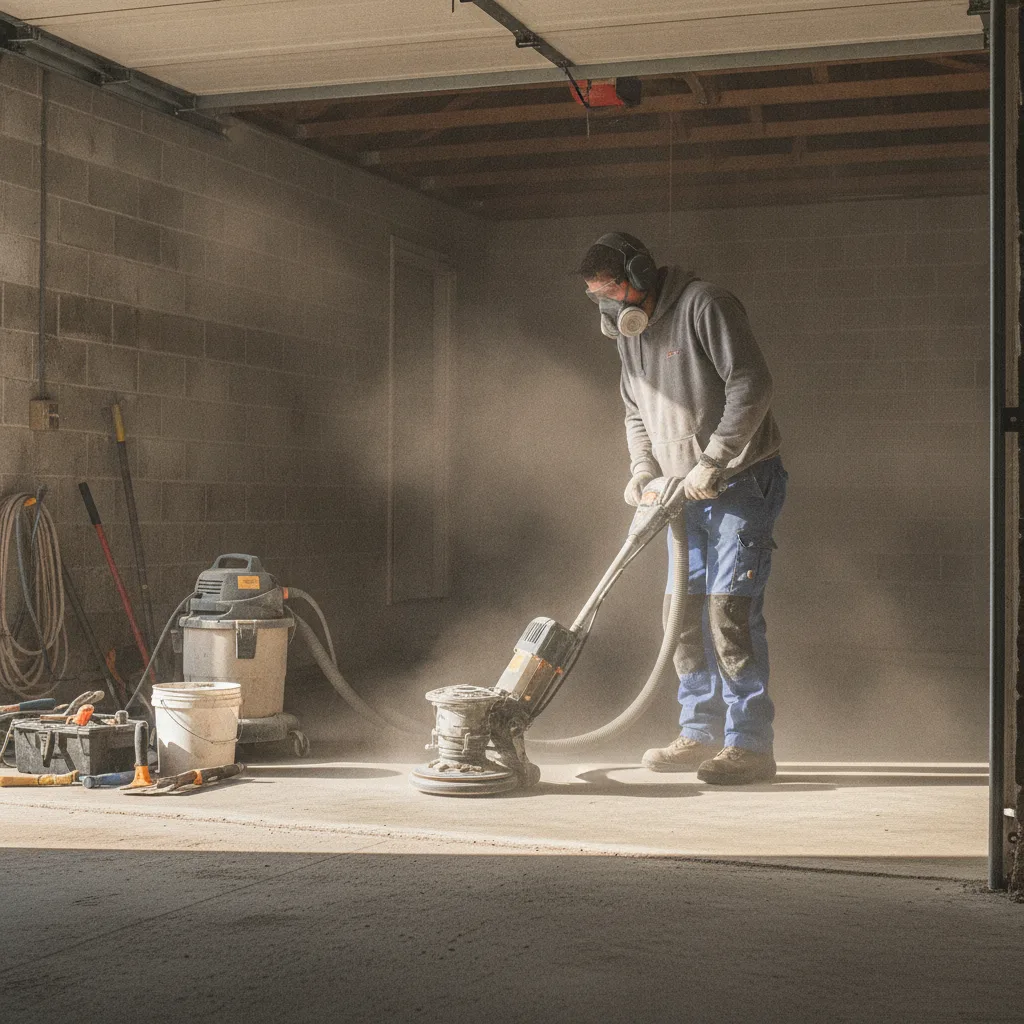
Concrete preparation is the single biggest factor in how long a floor coating lasts. A coating applied to a poorly prepared slab will delaminate within months regardless of which product is used. Diamond grinding or shot blasting opens the concrete surface so the epoxy can bond mechanically, and addressing cracks or spalling before coating prevents them from telegraphing through the finished surface.
This is worth spelling out because a lot of homeowners and business owners focus on the coating product and underestimate the prep work. Industry practice calls for a minimum concrete surface profile of CSP 2 to CSP 3 (a classification from the International Concrete Repair Institute) for a bonded epoxy coating. That level of profile is only reliably achieved with mechanical grinding, not acid etching.
Moisture is the other major issue on Preston slabs. Many properties in Melbourne’s inner north have older concrete that sits on ground that retains water. A simple plastic sheet test (taping a 450mm square of plastic to the slab for 24 hours and checking for condensation underneath) gives a rough indication of whether moisture vapour is likely to be a problem. If it is, a moisture-tolerant primer or a moisture barrier coat should go down before the decorative system.
Cracks in the slab need to be addressed before coating. Hairline cracks can be filled with a flexible epoxy filler. Structural cracks, the kind that move with the slab, need a control joint or a flexible repair rather than a rigid fill, otherwise the crack will simply reappear through the coating.
What should Preston homeowners ask before choosing a floor coating contractor?
Before choosing a floor coating contractor in Preston, homeowners should ask how the slab will be prepared, what primer system is used, how many coats are included and what the warranty covers. A contractor who cannot give straight answers to those four questions is worth skipping, regardless of price.
A few other practical things to look for:
Do they grind, or do they etch? Acid etching is cheaper and faster than diamond grinding, but it does not produce a consistent surface profile and it can cause problems if the slab has been previously sealed. Mechanical grinding is the professional standard.
What topcoat do they use? An epoxy base without a proper topcoat will scratch and scuff quickly in a garage environment. A quality polyurethane or polyaspartic topcoat adds UV stability, chemical resistance and hardness. Ask specifically what the topcoat product is.
How long is the cure time before you can drive on it? A standard epoxy system needs around 72 hours before vehicle traffic. Polyaspartic topcoats can be ready in as little as 24 hours. Knowing this upfront lets you plan around the job.
What does the warranty actually cover? Some warranties cover product failure but not delamination caused by moisture or surface prep issues. Read the detail. A contractor who stands behind their prep work will usually offer a broader warranty.
Preston sits in Melbourne’s inner north, surrounded by suburbs like Northcote, Reservoir, Coburg and Thornbury. Many homes in the area have single or double garages attached to brick-veneer and weatherboard houses built from the 1950s through to the 1980s. The concrete in those garages is often 40 or more years old, which means surface contamination from years of oil drips, and sometimes moisture issues from older drainage systems. A good contractor will assess those specifics before quoting a system, not just turn up and roll product on.
Book a floor coating quote in Preston with Metal and Flake