Garage Floor Coating Options: How to Pick the Right One
The main garage floor coating options are epoxy, polyurea, polyaspartic, and concrete sealer. Epoxy is the most popular for residential garages because of its durability and finish quality. Polyurea and polyaspartic coatings cure faster and handle UV exposure better. The right choice depends on how you use the space, your budget, and the condition of the slab.
What are the most common garage floor coating options available today?
The four coatings you will actually encounter for a residential garage are epoxy, polyurea, polyaspartic, and penetrating concrete sealer. Each sits at a different point on the cost-versus-performance curve, and each has a sweet spot in terms of the garage environment it suits best. Knowing what separates them stops you from buying more coating than you need, or worse, the wrong one entirely.
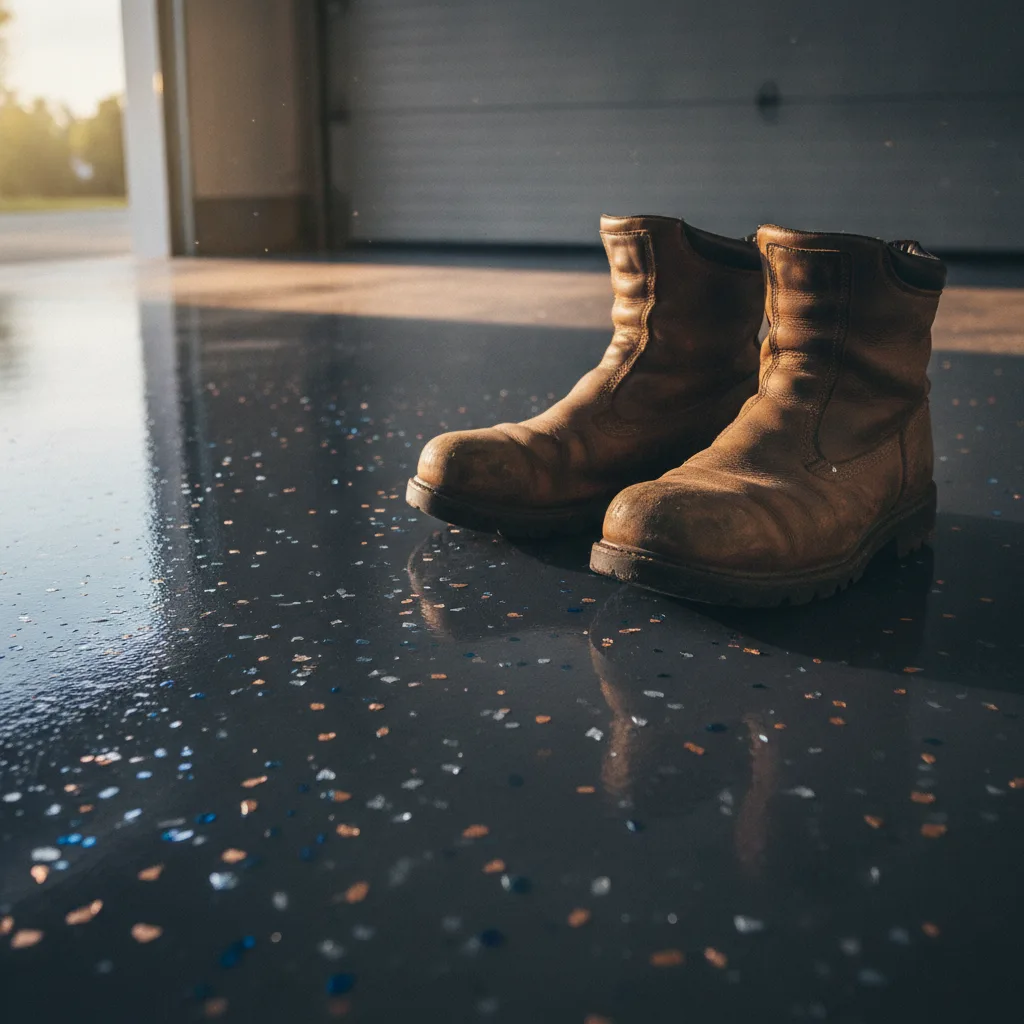
Epoxy is a two-part resin-and-hardener system that bonds chemically to concrete. Once cured, it creates a hard, seamless surface that shrugs off oil drips, tyre marks, and workshop chemicals. It is the most widely installed floor coating in Australian residential garages for good reason. You can add colour flake or metallic pigments to make it look genuinely sharp, and a good epoxy system can last 10 to 20 years when the prep work is done properly.
Polyurea and polyaspartic coatings are newer chemistry. They cure in a fraction of the time, typically allowing foot traffic within a couple of hours on a warm Melbourne day. They also hold their colour better under UV exposure, which matters for garages with roller doors that face north or west. The trade-off is that they are less forgiving during application because the fast cure time leaves very little margin for error.
Penetrating concrete sealers sit at the budget end. They soak into the pores of the slab and harden the surface without forming a visible film. They will not give you the high-gloss showroom look, but they do reduce dusting and make the floor easier to clean. Think of them as a baseline protective measure rather than a full coating solution.
How does the condition of your concrete slab affect which coating you should choose?
The slab condition is the single biggest factor in coating selection. A pitted, cracked, or contaminated slab limits your options and changes the prep process significantly. Thin coatings like sealers cannot hide surface damage. Epoxy and polyaspartic systems can incorporate a build coat or filler to smooth minor imperfections, but they cannot bridge structural cracks without specific crack-repair products applied first.
Moisture is the other slab issue that catches people out. Concrete is porous and can wick moisture up from the ground beneath, especially on older slabs without a decent vapour barrier. If you apply an epoxy or polyaspartic coating over a damp slab, you will get delamination, bubbling, or peeling within a year or two. A simple calcium chloride moisture test (following ASTM F1869 as a reference standard) will tell you whether moisture vapour emission is within the tolerance range for the product you are considering.
On a sound, dry, properly diamond-ground slab, almost any coating system will perform well. On a compromised slab, the prep labour cost rises and the product specification needs to be chosen more carefully. This is exactly why a site visit and slab assessment before quoting is worth the time.
Does the way you use your garage change which coating makes the most sense?
Yes, absolutely. A garage that parks two family cars and stores a lawnmower has very different demands from one that doubles as a workshop, a home gym, or a car enthusiast’s maintenance bay. Running through a few common use cases makes this concrete (excuse the pun).
Everyday family parking: A standard two-coat epoxy system with a colour flake broadcast and a polyurethane topcoat is hard to beat. It handles hot tyre pickup better than bare epoxy alone, it looks great, and it is straightforward to maintain with a mop and a mild cleaner.
Workshop or trade use: If you are regularly dropping heavy tools, rolling equipment around, or using harsh solvents, a thicker build system is worth the extra investment. Some installers specify a mortar base coat followed by a mid-coat epoxy and a polyaspartic topcoat, giving you a system that sits around 3 to 4 millimetres thick at the surface. That additional thickness absorbs impact without cracking.
Home gym: Rubber flooring or interlocking tiles often go on top of a sealed or coated slab. In this case a high-quality penetrating sealer or a single broadcast epoxy coat is usually sufficient as a base, since the rubber is doing the real protective work.
Showroom or display space: This is where metallic epoxy earns its place. The swirling, three-dimensional appearance of a well-applied metallic system is genuinely eye-catching and suits garages that are as much about presentation as practicality.
What should you watch out for when comparing quotes for garage floor coatings?
The coating product is only part of what you are paying for. The prep work, the number of coats, the thickness per coat, and the topcoat specification all matter more than the brand name on the tin. Here are the things worth pressing any installer on before you commit.
Surface preparation method: Shot blasting or diamond grinding opens up the concrete profile so the coating can mechanically bond to the slab. Acid etching is cheaper and faster but produces a less reliable bond, particularly on denser concrete or slabs that have been previously sealed. If a quote does not specify the prep method, ask.
Dry film thickness: A single thin broadcast coat of epoxy might be 200 to 300 microns dry film thickness. A proper multi-coat system with a base, broadcast, and topcoat can reach 700 to 1,000 microns or more. Thicker means tougher and longer lasting. Ask for the total dry film thickness in writing.
Topcoat type: An aliphatic polyurethane or polyaspartic topcoat over an epoxy base gives you UV stability, scratch resistance, and a cleaner surface that is easier to maintain. A raw epoxy finish without a topcoat will yellow over time in a well-lit or partially outdoor-facing garage.
Warranty terms: A reputable installer will stand behind their work with a clear written warranty. Read what it covers and what voids it. Most warranties require the slab to have been properly prepared and the product applied within its specified temperature and humidity range.
How do you maintain a garage floor coating once it is down?
Maintenance is genuinely straightforward with a quality floor coating, which is one of the reasons homeowners love them once they are installed. For day-to-day upkeep, a soft-bristle broom or dust mop handles loose grit and debris. For deeper cleaning, a mop with warm water and a pH-neutral cleaner is all you need. Avoid bleach-based cleaners and anything with citrus solvents, both of which can soften or dull the topcoat over time.
Place felt or rubber pads under any heavy storage shelving or gym equipment. Dragging metal feet across the surface will scratch any coating, no matter how tough. A small rubber mat under the car’s front wheels catches the worst of the oil and fluid drips before they sit on the surface and discolour it.
Most quality coatings will benefit from a light buff and a maintenance coat of topcoat after five to seven years. This is far less disruptive and costly than a full removal and recoat. Think of it the same way you would think about resealing timber decking: a bit of maintenance at the right time extends the life dramatically.
Picking the right garage floor coating is about matching the product to the slab, the use, and the budget. Get that combination right and you will have a floor that looks sharp and performs hard for years. Get a tailored floor coating recommendation from Metal and Flake.