Floor Coating Options in Melbourne: Which One Suits Your Space?
The main floor coating options in Melbourne are epoxy, polyurea, polyaspartic and flake-broadcast systems. Each suits a different combination of traffic load, moisture exposure, curing time and aesthetic. Picking the right one comes down to how the space is used, what the concrete slab is like, and how quickly you need to get back on the floor.
What are the most common floor coating options for Melbourne homes and garages?
For residential spaces like garages, workshops and alfresco areas in Melbourne, the four coatings you will encounter most often are standard epoxy, polyurea, polyaspartic and decorative flake systems. Epoxy is the workhorse of the group, polyurea and polyaspartic cure faster and handle UV better, and flake broadcasts add texture and slip resistance on top of any base coat.
Here is a plain-English rundown of each one.
Standard epoxy coatings
Epoxy is a two-part resin and hardener system that bonds tightly to concrete and dries to a hard, seamless surface. It handles heavy point loads well, which is why it has been the default choice for home garages for decades. The trade-off is cure time: a properly installed epoxy coat typically needs 24 hours before foot traffic and up to 72 hours before you drive a car across it. Melbourne winters slow that down further because cold slabs extend the cure window. Epoxy is also moisture-sensitive during application. If the slab has a high moisture vapour emission rate, a moisture-tolerant primer or a different system altogether is a better call.
Polyurea and polyaspartic coatings
Polyurea and polyaspartic coatings are closely related chemically but work quite differently to epoxy. They cure in as little as one to four hours, which means a garage can be back in use the same day. They are also UV stable, so they will not yellow when sunlight hits them. That makes them a strong pick for covered alfresco slabs, carports and any space that gets indirect natural light. The faster cure window means installers need to move quickly, so you want a crew that knows the product well. Done right, a polyaspartic topcoat over a broadcast flake base is one of the most durable residential finishes available in Melbourne.
Flake broadcast systems
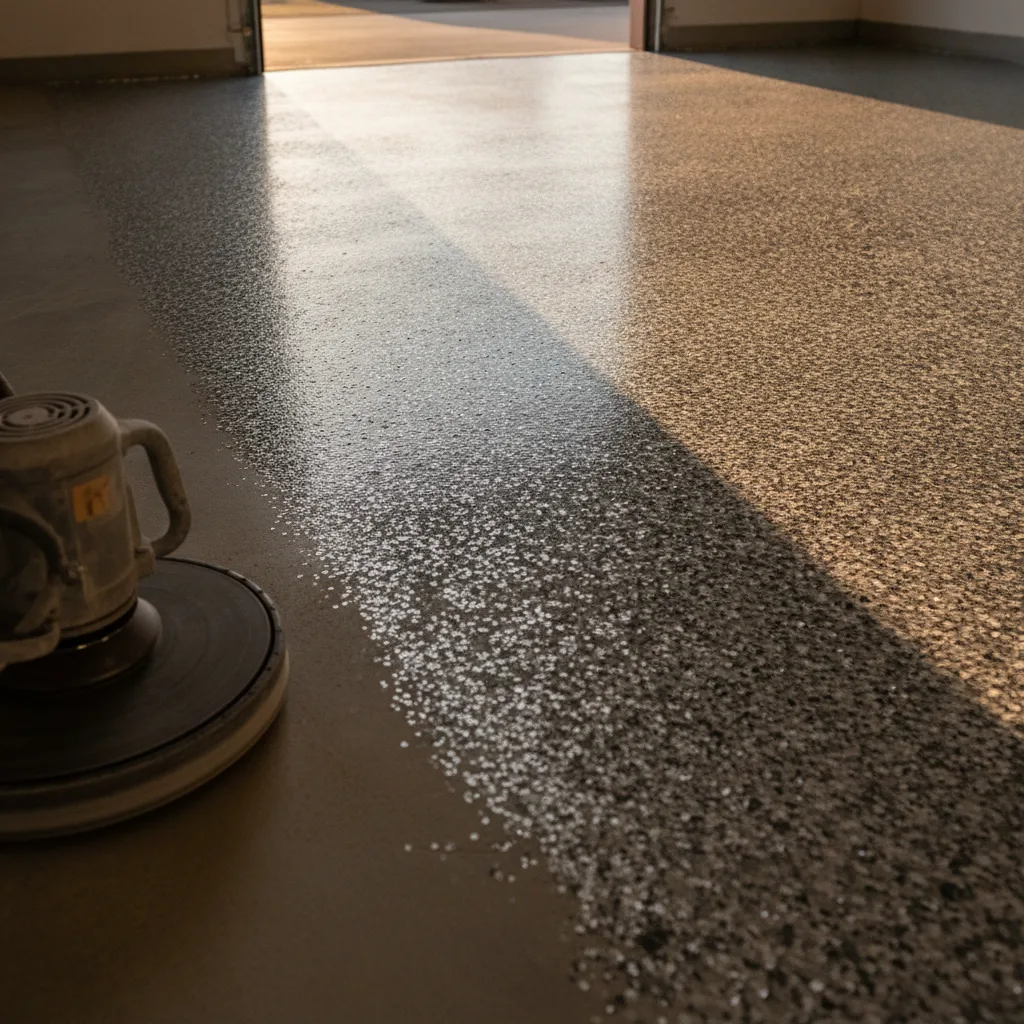
Vinyl colour flakes (also called decorative flake or chip systems) are broadcast into a wet base coat and then locked in with a clear topcoat. The result is a surface that hides tyre marks and minor scuffs, adds a non-slip texture underfoot and comes in a wide range of colour blends. The flake layer also camouflages minor surface imperfections in the concrete that a solid-colour coat would highlight. Full-broadcast flake, where the entire base coat is covered before the excess is scraped back, gives the most uniform finish and the best anti-slip rating of the decorative options.
How does Melbourne’s climate affect which floor coating option you should choose?
Melbourne’s temperature swings and slab moisture levels are the two biggest factors that affect coating performance and installation timing. Concrete slabs in Melbourne suburbs can hold residual moisture from seasonal rain well into spring, and most standard epoxy systems require a moisture reading below a certain threshold before the coating bonds reliably. Choosing a moisture-tolerant primer or switching to a polyurea-based system removes that variable entirely.
Temperature matters too. Epoxy applied below about 10 degrees Celsius can have trouble curing properly, which shows up as a soft or tacky surface that fails early. Polyaspartic products are formulated to handle a broader temperature window, some rated down to near freezing, which is a practical advantage during Melbourne’s colder months. If you are booking a floor coating job between June and August, it is worth asking your installer which product they plan to use and how they are accounting for the slab temperature on the day.
Concrete age is another factor that does not get talked about enough. Freshly poured slabs in new Melbourne builds typically need at least 28 days to cure before any coating goes down. Going early risks adhesion failure, which means redoing the whole job at your own cost.
Which floor coating option works best for a Melbourne garage?
For most Melbourne garage floors, a full-broadcast decorative flake system over a polyaspartic or moisture-tolerant epoxy base coat is the most practical choice. The flake hides everyday marks, the topcoat protects against oil and chemical spills, and the texture keeps the surface from being slippery when the car drips water on a rainy day. Same-day turnaround with a polyaspartic system means you are not parking on the street for a week.
That said, the right answer depends on a few specifics about your slab. Older concrete in Melbourne’s established suburbs can have surface contamination from years of oil, paint or sealers. That contamination has to come off before any coating will stick, which is why surface preparation, typically diamond grinding or shot blasting, is the single most important step in any floor coating job. A coating applied over a poorly prepared slab will peel, no matter how good the product is. The industry benchmark is a concrete surface profile of CSP 2 to CSP 3 for most coating systems, achieved through mechanical grinding rather than acid etching.
What questions should you ask before committing to a floor coating in Melbourne?
Before you sign off on any job, these are the practical questions worth asking your installer.
How are you preparing the surface? If the answer is acid wash only, that is a red flag. Mechanical grinding is the standard for a coating that will last.
What is the moisture reading on my slab? A professional will test this before quoting. If they skip it, you are taking a risk on adhesion.
What is the total system thickness? A single thin coat over a primer is not the same as a full build-up. For a garage floor, a finished system around 3 to 5 millimetres including broadcast flake gives you durability that will last years rather than months.
What does the warranty cover? A reputable Melbourne floor coating installer will back their work. Understand whether the warranty covers delamination, peeling or colour fade, and for how long.
How long before I can drive on it? The answer will tell you a lot about which product they are using and whether the timeline suits your situation.
Getting clear answers to these questions upfront saves a lot of frustration down the track. Floor coatings are not a cheap repair job if they fail, so spending an extra few minutes asking the right things before work starts is well worth it.
Whether you are coating a double garage in Essendon, a workshop in Dandenong or a showroom floor in the inner east, the product choice matters less than the combination of correct surface prep, the right system for your slab conditions and a crew that actually knows what they are doing.
Book a floor coating consultation with Metal and Flake