Coating a Concrete Floor: Which Product Is Right for Your Garage?
Coating a concrete floor in your garage comes down to three main options: penetrating sealers, polyurethane topcoats, and epoxy systems. Epoxy is the most durable and popular choice for residential and light-commercial garages because it bonds chemically to the slab, resists oil and tyre marks, and can handle the heat and load of everyday vehicles. The right pick depends on your budget, how you use the space, and how well the slab is prepared beforehand.
What are the main types of concrete floor coatings for a garage?
There are three broad categories worth knowing. Penetrating sealers soak into the surface and protect from moisture but leave no visible film, so they do nothing for aesthetics. Polyurethane topcoats add a clear, hard-wearing layer over bare or previously coated slabs. Epoxy coatings are two-part systems (resin plus hardener) that cure into a rigid, chemical-resistant film that outperforms the other two on almost every practical measure for a busy garage floor.
Each category has a different job. Penetrating sealers are best for outdoor slabs or areas where you simply want to slow moisture ingress. They are cheap to apply but wear off within a few years and give you no colour or gloss. Polyurethane is often used as a topcoat over epoxy to add UV resistance and a final sheen, but on its own it lacks the build and adhesion strength of a proper epoxy base. Epoxy systems are the go-to for garages because they create a seamless, easy-to-clean surface that stands up to hot tyre pickup, petrol spills, jack stands, and the general punishment a working garage gets.
Beyond the base chemistry, you also have choices around finish. A solid-colour epoxy gives a clean, professional look. Adding decorative flake (also called vinyl flake or chip) creates texture that hides minor imperfections and adds grip underfoot, which is exactly why it is so popular in Australian residential garages. Metallic pigment systems are another step up, giving a marble-like swirl effect that works well in showrooms, man caves, and premium home garages.
Why does surface preparation matter so much when coating a concrete floor?
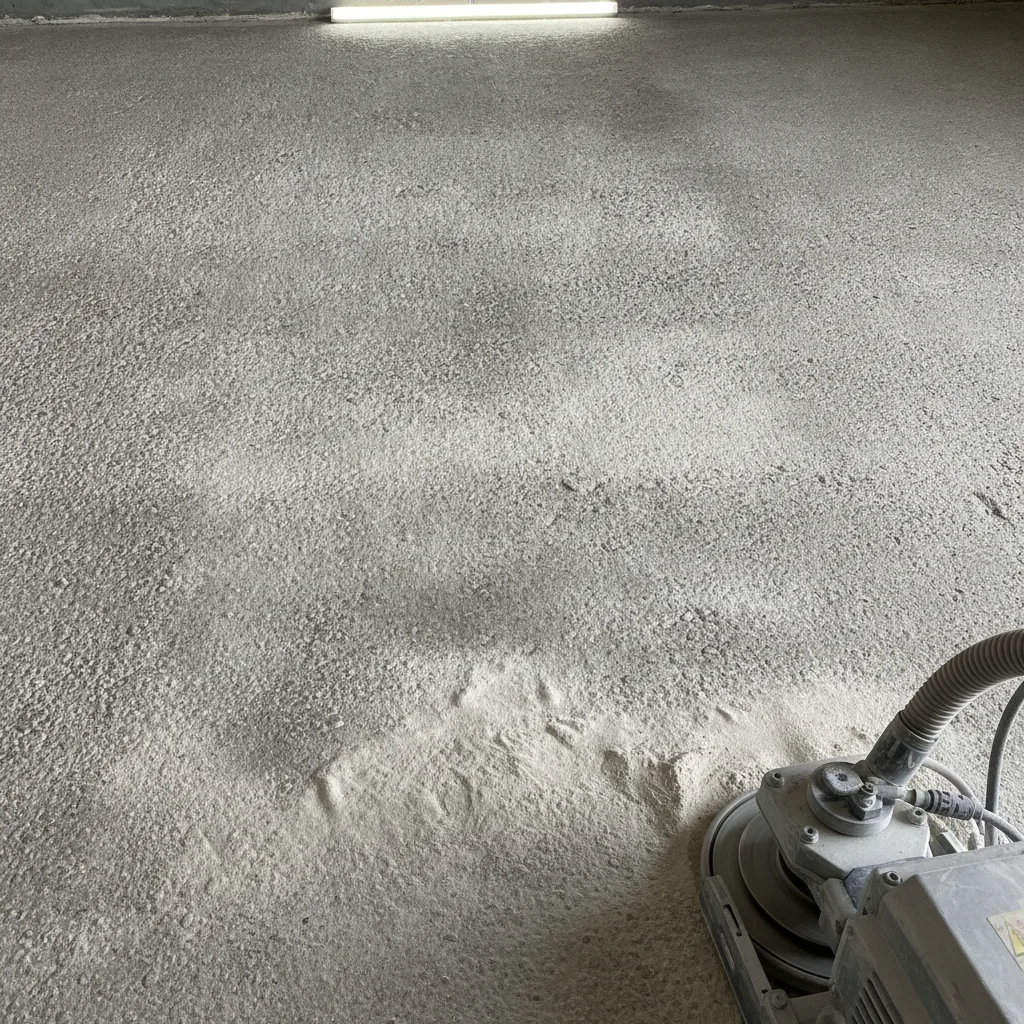
Surface preparation is the single biggest factor in whether a coating concrete floor job lasts five years or fails in five months. Epoxy will not bond to a dusty, contaminated, or smooth-as-glass slab. The concrete must be mechanically abraded, usually by diamond grinding or shot blasting, to open up the surface profile so the epoxy can grip at a microscopic level. Any oil, moisture, or laitance left on the slab will cause the coating to peel or bubble.
This is where a lot of DIY jobs go wrong. Acid etching with a diluted hydrochloric solution is sometimes suggested for home use, and it does remove some surface contamination, but it does not create a consistent surface profile the way mechanical grinding does. For a garage floor that will see regular vehicle traffic, grinding is the professional standard. It removes old paint, levels minor high spots, and opens up capillary pores in the concrete so the primer coat soaks in properly.
After grinding, any cracks, spalls, or low spots get filled with a polyurea or epoxy filler before the coating goes down. Skip this step and you will see those defects telegraph straight through the finished coat. Moisture testing also matters here. Concrete that is releasing moisture above about 75 percent relative humidity (measured with an in-slab probe over 72 hours) can cause osmotic blistering under an epoxy film. A professional applicator will test for this before mixing a single pot of product.
How does epoxy coating compare to polyurethane for a garage floor?
Epoxy is the better base coat for a garage floor because it is thicker, harder, and chemically bonds to concrete. Polyurethane is more flexible and UV-stable, so it is often applied as a clear topcoat over epoxy to protect the colour and add a final layer of abrasion resistance. Used alone on bare concrete, polyurethane adhesion is less reliable and the film build is thinner, which means it will show wear faster under vehicle traffic.
In practical terms, a properly installed epoxy system in a Melbourne garage typically consists of a penetrating epoxy primer, one or two build coats of pigmented epoxy (sometimes with decorative flake broadcast into the wet coat), and a clear polyurethane or polyaspartic topcoat. The total dry film thickness of a quality system sits around 1.5 to 3 millimetres. That stack of layers is why professional epoxy floors look and feel so different from a rattle-can sealer you roll on over a weekend.
Polyaspartic coatings deserve a mention here because they have become popular in recent years. They are a type of polyurea that cures very quickly (sometimes within an hour), which lets installers complete a floor in a single day rather than two or three. The trade-off is a much tighter application window and higher material costs. For most residential garages, a standard epoxy system is still the most cost-effective path to a durable, great-looking result.
What should you look for in a concrete floor coating installer in Melbourne?
Any installer worth hiring will talk about surface preparation before they talk about colour or finish. If someone quotes you a job without mentioning grinding, moisture testing, or primer adhesion, that is a red flag. Concrete slabs across Melbourne vary a lot. Older slabs in bayside suburbs often carry decades of oil contamination; newer slabs in growth corridors can have curing compounds on the surface that prevent adhesion if not removed first. A good installer will inspect the slab, not just measure the area.
Ask what products they are using and whether they are working with commercial-grade two-part systems or consumer single-pack products. The difference in solids content is significant. A professional two-part epoxy might contain 80 to 100 percent solids, meaning almost all of what you apply stays on the floor as a solid film. Single-pack consumer products can be as low as 40 percent solids, so a lot of what you apply simply evaporates, leaving a much thinner, weaker film.
Warranty matters too. A professional system installed over properly prepared concrete should carry at least a two-year workmanship warranty. If an installer cannot stand behind their work for that long, the preparation process is probably being cut short somewhere.
The finish you choose, whether solid colour, decorative flake, or a metallic swirl, has no bearing on durability if the groundwork is not done right. Get the prep right, use the correct product for your slab type and usage, and a coated garage floor will look sharp and perform reliably for a decade or more.
Book concrete floor sealing and preparation with Metal and Flake