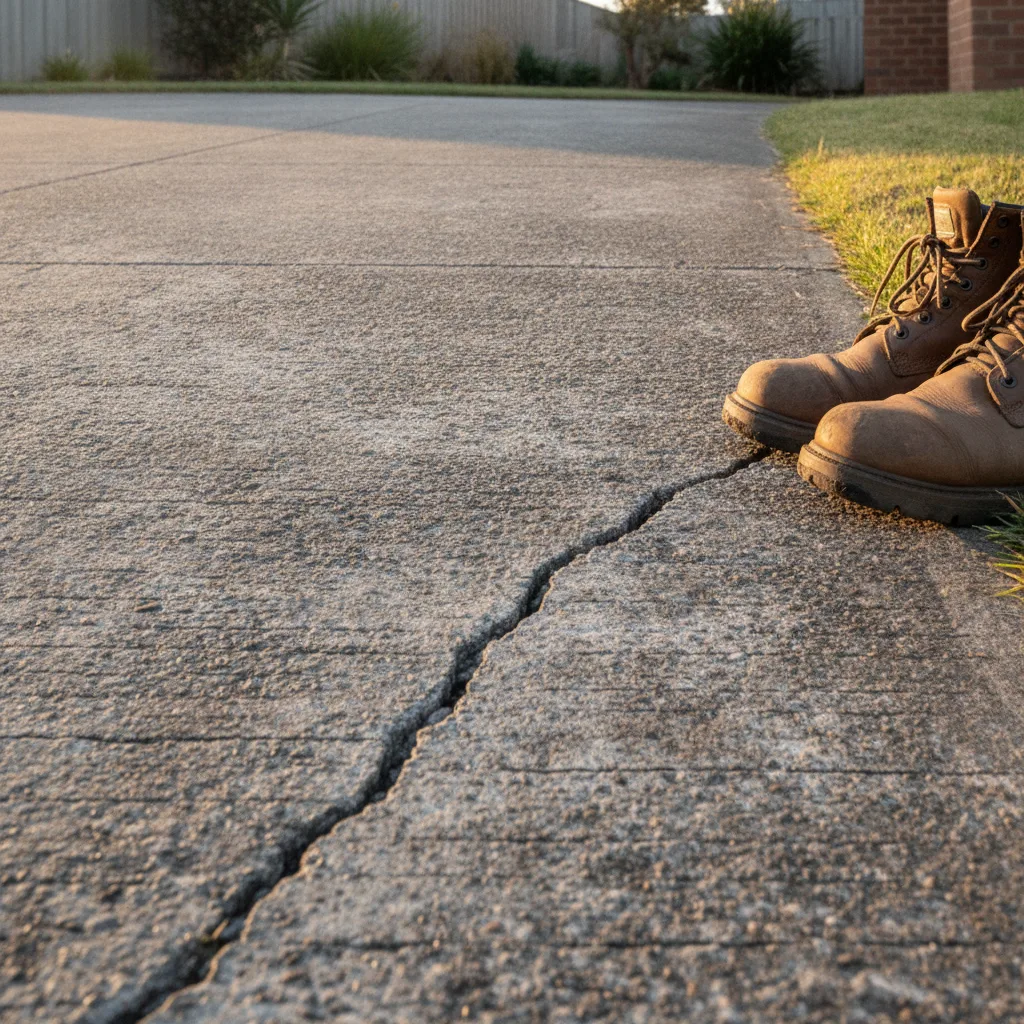
Concrete Driveway Repair in Melbourne: Options and Costs
Concrete driveway repair in Melbourne typically costs between $300 and $3,500 depending on the extent of the damage, the repair method chosen, and the size of the affected area. Minor crack filling sits at the cheaper end, while full resurfacing with a protective coating pushes toward the higher end. Catching problems early almost always saves money in the long run.
Why do concrete driveways crack and deteriorate in Melbourne?
Melbourne’s notorious four-seasons-in-one-day weather is the main culprit. Concrete expands in summer heat and contracts overnight or during cold snaps, and that constant movement opens hairline cracks over time. Clay-heavy soils common across Melbourne’s suburbs shift with moisture, pushing unevenly on slabs from below. Add regular vehicle loads and tree roots looking for water, and surface damage becomes almost inevitable after ten to fifteen years of use.
Other common causes include:
- Poor installation with insufficient sub-base compaction
- Control joints that were spaced too far apart during the original pour
- Oil and chemical spills that break down the surface binder
- Water pooling that freezes or erodes the edges over time
Understanding why the damage happened matters before you choose a repair method. Patch a symptom without fixing the underlying cause and you will be back doing it again in a year or two.
What are the main concrete driveway repair options available?
The right repair depends on how deep the damage goes. Surface cracks and spalling call for different solutions than sunken or structurally compromised slabs. There are four practical options most Melbourne homeowners will consider: crack injection, concrete patching, resurfacing, and full slab replacement. Each has a different cost range and a different expected lifespan.
Crack injection and sealing
Hairline cracks up to about 5 mm wide are typically filled with a polyurethane or epoxy injection resin. The material is forced into the crack under low pressure, bonds to both faces, and stops water getting in and making things worse. This is the most affordable fix, usually sitting between $10 and $30 per linear metre for a contractor to complete properly. Done right, it adds years to a slab that is otherwise still sound.
Concrete patching
Where chunks have broken away, corners have spalled, or shallow craters have formed, a polymer-modified concrete patch mix is the standard approach. The damaged area is cut back to clean edges, primed, and filled flush. A decent patch should last five to ten years if the sub-base is stable. Budget roughly $150 to $600 for a typical residential repair depending on how many spots need attention.
Concrete resurfacing
Resurfacing means applying a fresh layer over the existing slab. It suits driveways that are structurally sound but look worn, pitted, or stained. A concrete overlay or skim coat, typically 5 to 15 mm thick, bonds to the old surface and gives you a clean slate. Costs generally run between $30 and $70 per square metre for a plain finish. Decorative finishes push that figure higher. A standard double driveway of around 40 square metres might cost $1,200 to $2,800 all up.
Full slab replacement
When the slab has significant settlement, deep structural cracks, or has broken into multiple sections, replacement is the honest answer. Demolition, disposal, sub-base prep, and a new pour typically start around $100 to $150 per square metre in Melbourne. It is a bigger upfront cost but delivers a fresh twenty-to-thirty-year lifespan when paired with proper sub-base work.
How do you know which concrete driveway repair method is right for your situation?
The deciding factor is whether the slab is structurally sound. Tap the concrete with a hammer: a hollow sound means the material has delaminated underneath and a surface patch will not hold. Measure crack widths with a feeler gauge: anything wider than 5 mm or cracks that are moving (widening on one side) usually signal deeper movement. If slabs have settled unevenly by more than 20 mm, tripping hazards become a liability issue and replacement should be on the table.
A practical checklist before getting quotes:
- Note where water pools after rain, because that area needs either levelling or drainage work alongside the repair
- Check whether any cracks run through to the underside of the slab
- Look for tree roots within 2 metres of the cracked area
- Find out the slab age if you can. Slabs older than thirty years may have lower cement content and take patches less reliably
Getting two or three quotes from experienced local concreters and asking them to explain what is causing the damage will quickly tell you whether their diagnosis lines up. If they all point to the same root cause, you can be reasonably confident in the recommended fix.
What can you do to protect a repaired driveway and extend its life?
A penetrating concrete sealer is the single best thing you can do after any repair work. Sealers block moisture ingress, resist oil stains, and slow the UV degradation that bleaches and dries out the surface. Plan to reseal every three to five years. Many homeowners skip this step and wonder why their patched areas look tired again within a couple of seasons.
Beyond sealing, a few habits make a real difference:
- Avoid parking heavy vehicles like trailers and skips on the edges of slabs, where the concrete is thinnest
- Clean oil spills promptly with a degreaser before they penetrate
- Keep control joints clear of debris so they can do their job of directing crack movement
- Trim trees with aggressive root systems that are planted close to the driveway
If the repair involved resurfacing or an overlay, some homeowners take the opportunity to apply a decorative epoxy or flake coating over the top. This adds a durable, easy-to-clean finish that also makes future staining and surface wear far less noticeable. It is worth factoring into your planning from the start rather than treating it as an afterthought.
How do you get an accurate quote for concrete driveway repair in Melbourne?
Getting an accurate quote means giving contractors enough information to assess the job properly. Photos help, but an on-site assessment is the only way to confirm soil conditions, slab thickness, and whether any drainage issues need addressing at the same time. Be specific about what you want: a patch to make it functional, a resurface to make it look new, or a full replacement for long-term peace of mind.
Ask each contractor to break down their quote into materials, labour, and any sub-base or drainage work. That makes it straightforward to compare quotes that might otherwise look similar on the total but differ significantly in scope. A contractor who includes proper surface prep in their pricing is nearly always worth more than one who skips it to win on price.
For Melbourne homeowners looking at their driveway and unsure where to start, the best first step is a professional eye on the problem before committing to any repair method. Book a concrete repair assessment.