Coloured Epoxy Flooring: Choosing the Right Finish for Your Space
Coloured epoxy flooring lets you pick a hard-wearing, seamless surface in almost any shade or finish, from solid block colours to multi-tone flake blends and metallic swirls. The right choice depends on the room’s purpose, the amount of foot or vehicle traffic it takes, and the look you want to live with every day. Getting those three factors lined up before you commit saves a lot of regret.
What colour options are available with epoxy flooring?
Epoxy flooring is available in hundreds of solid colours as well as blended vinyl flake systems that mix two, three or even four colours into the one floor. Metallic epoxy adds a pearlescent, flowing effect that makes every pour unique. Most professional applicators offer colour sample charts, and the final cured result can vary from the wet sample, so always view cured reference photos before deciding.
Broadly speaking, coloured epoxy floors fall into a few categories worth understanding before you start scrolling through sample charts.
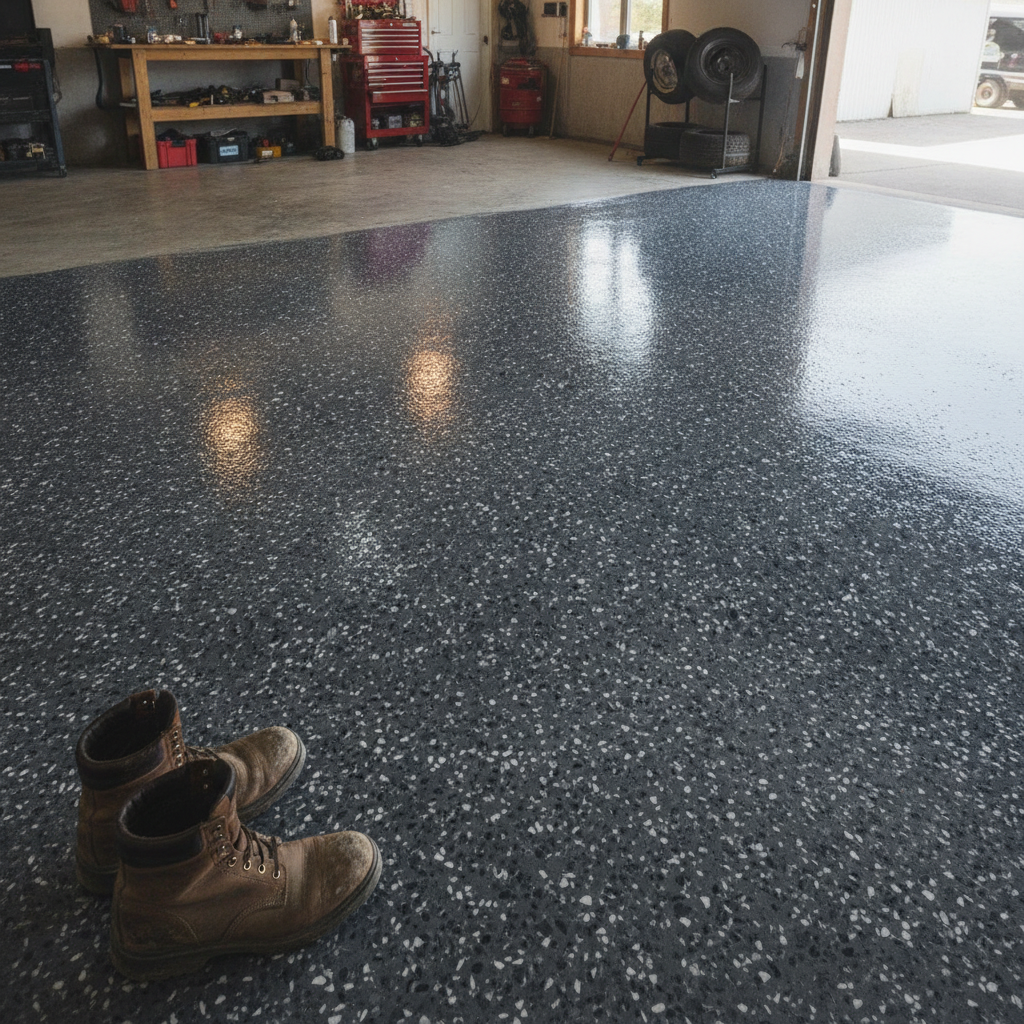
Solid colour epoxy is the most straightforward option. You pick a RAL or proprietary colour, and the applicator lays a pigmented base coat with a clear top coat over it. Greys, charcoals and slate tones are consistently the most popular choice for Melbourne garages, largely because they hide tyre marks and grime between cleans without looking tired. Lighter tones like white or off-white work well in commercial kitchens and warehouses where you want to maximise reflected light.
Vinyl flake (or decorative flake) systems broadcast coloured acrylic chips into a wet base coat, then seal the whole lot under a clear urethane or epoxy top coat. The chips create a speckled, terrazzo-style appearance and, practically speaking, give the surface a slip-resistant texture. You can dial the chip density up for near full coverage or down for a lighter scattered look. Flake also does a good job of hiding small surface imperfections in an older slab.
Metallic epoxy uses pigmented metallic powders suspended in the base coat. During application the installer manipulates the wet material to create movement, depth and a three-dimensional look. No two metallic floors come out identical. Golds, silvers, coppers and ocean blues are popular, and the finish genuinely looks like polished stone or molten metal once the clear coat goes down.
How do you choose the right coloured epoxy flooring finish for your specific space?
Match the finish to three things: traffic type, lighting conditions and the visual weight you want in the room. High-traffic areas with vehicle use suit flake or solid mid-tones because they mask wear patterns. Spaces with low natural light benefit from lighter, high-gloss finishes that bounce light around. Showrooms or feature areas where appearance is the priority are ideal candidates for metallic epoxy.
Here is a practical breakdown by space type.
Residential garage: This is where flake epoxy earns its keep. A mid-grey or charcoal base with a grey and black flake blend hides the inevitable oil drip and brake dust. The texture from the chips also gives grip when you step out of the car on a wet day. A high-gloss clear coat keeps it looking sharp without demanding constant attention.
Indoor living area or alfresco: Solid colour or metallic finishes work better here because they read as a deliberate design choice rather than a utility floor. Warmer tones, concrete-look greys or a subtle metallic effect all complement indoor furniture. Keep the sheen level in mind too. Full gloss looks polished and easy to clean but shows every footprint. A satin or matte top coat is more forgiving in a heavily used family space.
Commercial workshop or warehouse: A solid mid-grey or safety-yellow zone marking system over a grey base is the practical call. The floor needs to handle forklift tyres, chemical spills and constant foot traffic. Bright or pale colours will look grubby within months unless the cleaning regime is serious.
Retail or showroom: This is where you can push into more decorative territory. A metallic floor in a car dealership or a boutique creates a strong visual impression. The seamless, continuous surface also reads as premium compared to tiles or vinyl planks.
Does the colour affect how durable the epoxy floor is?
The colour itself does not change the structural durability of an epoxy floor. What affects longevity is the system thickness, the number of coats, the quality of the top coat and how well the slab was prepared beforehand. That said, very light colours and very dark solid colours can show UV yellowing more obviously over time if the top coat is not UV-stable, so always confirm that a UV-resistant urethane clear coat is part of the system.
One practical note worth mentioning: darker solid colours tend to show dust and light scratching more readily than a mid-tone flake system, which has natural visual noise built into it. If you are installing a floor in a space where low-maintenance appearance matters, a flake blend in a mid-range palette is a smart hedge.
Preparation is the other factor that colour tends to expose. A floor that looks seamless and flat in a dark colour will show every hollow, crack or patch if the prep work was rushed. Diamond grinding or shot blasting the slab before application is not optional if you want the finish to look as good in five years as it does on day one.
What sheen level works best for coloured epoxy floors?
High-gloss finishes reflect the most light and give the deepest colour payoff, making them ideal for garages, showrooms and commercial spaces where visual impact matters. Satin finishes reduce glare and hide footprints better, suiting living areas and offices. Matte top coats are the least common but work well in spaces where a more industrial or understated aesthetic is the goal.
Gloss level is worth discussing with your applicator because it is usually determined by the top coat product rather than the base colour. Most residential installs in Melbourne land on a high-gloss clear coat because it is the easiest to mop clean and holds up well against the grit dragged in from outdoor areas.
How do you finalise your colour choice before the job starts?
Ask your applicator for cured samples, not just wet chips or printed colour cards. Epoxy colours shift slightly as they cure, and the gloss level of the sample should match the finish you are ordering. Hold the sample in the actual space at different times of day, because artificial lighting and natural light read the same colour very differently. If you are choosing a flake blend, ask for a larger sample board rather than a loose handful of chips, since the overall effect only reads properly at floor scale.
Committing a couple of hours to the colour selection process before the install saves the frustration of a floor that looks great in the brochure and wrong in your garage. Most good applicators will walk you through this step as part of the quoting process.
View colour options and get a quote