How to Seal Concrete Floors: A Melbourne Homeowner’s Guide
Sealing concrete is the process of applying a protective coating to bare or polished concrete so it resists moisture, staining, and surface wear. For Melbourne homeowners, the right sealer stops water ingress, keeps oil and grime from soaking in, and makes the floor far easier to clean. Done correctly, a sealed concrete floor can last a decade or more before it needs attention again.
Why is sealing concrete important for Melbourne homes?
Sealing concrete matters in Melbourne because the city’s variable climate puts floors through real punishment. Wet winters push moisture up through slabs, summer heat causes expansion and contraction, and indoor-outdoor living areas cop foot traffic, furniture scuffs and the odd spilled red wine. An unsealed slab absorbs all of that and degrades quickly. A sealed surface sheds it.
Concrete is porous by nature. Left bare, it acts like a sponge. Dust, cooking grease, motor oil, pet mess and water all work their way into the surface and either stain it permanently or accelerate surface breakdown. In Melbourne garages and alfresco areas especially, moisture wicking up through the slab is a constant issue. A quality sealer creates a barrier that keeps the slab stable and makes routine maintenance a matter of a quick mop rather than an afternoon of scrubbing.
There is also a practical resale point worth mentioning. Real estate agents in Melbourne’s competitive market consistently note that polished or well-sealed concrete floors lift the presentation of a home, particularly in open-plan living areas and renovated garages.
What types of concrete sealer are available, and which one suits your floor?
The main sealer categories are penetrating sealers, acrylic sealers, polyurethane sealers, and epoxy coatings. Penetrating sealers soak into the concrete and repel water without changing the look of the surface. Acrylic sealers sit on top, dry quickly and add a low-cost protective film. Polyurethane sealers are tougher than acrylics and handle foot traffic well. Epoxy coatings are the most durable option and bond chemically to the slab for a hard, long-lasting finish.
Penetrating sealers (silanes and siloxanes are the most common types) are a solid choice for external concrete like driveways, paths and pool surrounds. They let the slab breathe while blocking liquid intrusion. They do not change the colour or sheen of the concrete, which suits homeowners who want a natural look.
Acrylic sealers are inexpensive and easy to apply with a roller, but they wear faster. In a busy Melbourne household, plan on recoating every two to three years in high-traffic areas.
Polyurethane sealers are a step up in toughness and work well on internal floors, particularly in kitchens, hallways and living rooms. They come in matte, satin and gloss finishes, so you have flexibility over the final look.
Epoxy coatings sit in a category of their own. Rather than just sealing the surface, an epoxy bonds to the concrete and forms a hard shell that handles heavy loads, chemical spills and serious foot traffic. Epoxy is widely used in garages, workshops and commercial spaces for exactly this reason. It is also the base system used in decorative finishes like metallic and colour-flake floors.
How do you prepare concrete before sealing?
Surface preparation is the single step that determines whether a sealer sticks or peels. Before sealing concrete, the slab must be clean, structurally sound, and free of any existing coating, oil contamination or laitance (the weak, chalky top layer that forms during the original concrete pour). Skipping prep is the most common reason DIY sealer jobs fail within the first year.
Start by sweeping and vacuuming thoroughly, then degrease any oil or grease spots with an alkaline cleaner. If the slab has an old coating, it needs to come off. For small areas, chemical strippers work. For anything larger, mechanical grinding or shot blasting is the reliable approach because it opens the pores of the concrete and gives the sealer a proper surface to grip.
Once clean, check for cracks. Hairline cracks in a slab are normal and generally cosmetic, but wider structural cracks should be filled with a flexible polyurethane filler before any sealer goes down. Trying to seal over an active crack will result in the sealer lifting at that point within months.
Moisture testing is often overlooked. Place a piece of plastic sheeting on the slab, tape all four edges and leave it for 24 hours. If condensation forms underneath, the slab is too damp to seal. Sealing over a wet slab traps moisture and causes the coating to bubble and delaminate. In Melbourne’s cooler months, this is a real risk with older slabs on ground level.
What does the sealing concrete process actually involve?
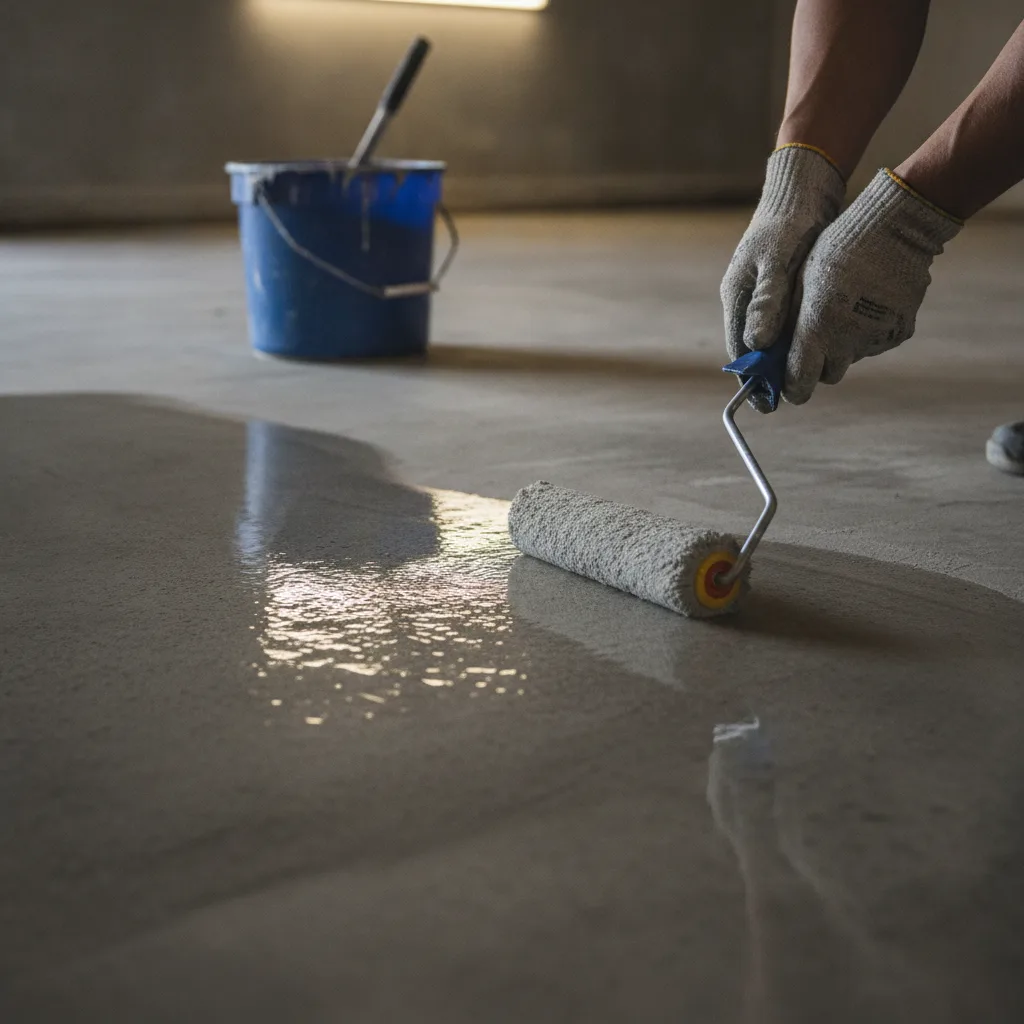
Once the slab is prepared and dry, application is straightforward for most sealers. Penetrating sealers are typically applied with a pump sprayer, allowed to soak in for 10 to 15 minutes, then the excess is spread or wiped off before it dries on the surface. Film-forming sealers like acrylics and polyurethanes go on with a short-nap roller in thin, even coats. Most products require two coats, with a light sand between coats for adhesion.
Epoxy systems are two-part products: a resin and a hardener that are mixed together immediately before application. The pot life (the working time before the mix starts to set) is typically 30 to 45 minutes depending on ambient temperature. Melbourne summers can shorten that window considerably, so planning application for cooler parts of the day matters. Epoxy is applied by squeegee and back-rolled for an even finish.
Curing time varies by product. Most film-forming sealers are dry to foot traffic within 24 hours, but they should not be subjected to heavy loads or furniture for at least 72 hours. Epoxy coatings typically reach full chemical cure after seven days, though they feel hard well before that.
When does sealing concrete call for a professional?
Sealing concrete calls for a professional when the area is large, the slab needs mechanical preparation, or the homeowner wants a decorative finish that goes beyond a clear protective coat. DIY sealer jobs on small patios or laundry floors are perfectly manageable, but grinding a garage slab, mixing and applying a two-part epoxy system across 60 to 80 square metres, or laying a metallic or colour-flake decorative finish is a different proposition entirely.
Professional applicators bring diamond-grinding equipment that opens the slab profile correctly, which is something a hired floor polisher or a hired shot blaster can approximate but rarely match for a large decorative job. They also carry commercial-grade coatings that are not available at the hardware store, and they understand how Melbourne’s climate affects product performance at each stage of application.
If the goal is a floor that looks as good as it performs. think polished concrete with a metallic shimmer, or a garage floor with a full colour-flake system that hides tyre marks and cleans up with a hose. those results come from professional surface prep and professional-grade materials. No amount of hardware store primer and roller work gets you there.
The cost of a professional epoxy or sealed concrete job varies with slab condition, floor area and finish choice. Getting a proper site assessment and written quote before committing is always the right move. It takes the guesswork out of what prep is actually needed and what the finished result will look like.
If you have a Melbourne slab that needs protection or a decorative upgrade, Book a concrete sealing consult