Why Epoxy Primer Matters Before a Garage Floor Coating
Epoxy primer is a thin, penetrating first coat applied directly to bare concrete before any decorative or protective epoxy layer goes down. It soaks into the pores of the slab, pushes out trapped air, and creates a chemical bond between the concrete and the topcoat. Without it, your finished garage floor coating is far more likely to peel, bubble or fail within a few years.
What does epoxy primer actually do to concrete?
Epoxy primer penetrates open pores in the concrete slab and cures to form a solid, resin-bonded anchor. This gives the topcoat something to grip at a chemical level, not just a mechanical one. It also seals off residual moisture vapour that would otherwise push up through the slab and cause the coating to lift away from the surface below it.
Concrete is not as solid as it looks. Under a microscope it is full of tiny pores, capillaries and micro-cracks. When you roll a thick epoxy topcoat straight onto unprimed concrete, air trapped in those pores heats up during the day and tries to escape. The result is pinholes, craters and bubbles on the finished surface. A primer coat, typically applied at a much lower viscosity, wets out the slab surface completely and lets that trapped air escape in a controlled way before the heavier topcoat seals everything shut.
There is also a chemical compatibility reason. Most quality epoxy systems are designed as a two or three coat process: primer, broadcast (where flake or metallic pigment goes in), then a clear seal. Each layer is formulated to bond to the one beneath it. Skip the primer and you are asking the second coat to perform a job it was never designed to do on its own.
Why do some garage floor coatings fail without epoxy primer?
Garage floor coatings fail without epoxy primer mainly because of two forces working against the bond: moisture vapour moving up through the slab, and thermal movement cracking an adhesion that was never strong enough to begin with. Both problems are dramatically reduced when a penetrating primer is used correctly as the first step in the coating system.
Melbourne garages in particular sit on slabs that were poured decades ago. Older concrete tends to be more porous and often contains residual moisture, especially after a wet winter. A 2019 study published in the journal Construction and Building Materials found that moisture vapour transmission rates through uncoated slabs can reach levels high enough to compromise adhesive and coating systems within 12 to 18 months of application. Primer acts as the first line of defence against that movement.
Thermal cycling is the other culprit. A garage slab expands and contracts as the day heats up and cools down. A coating bonded purely through mechanical adhesion on unprimed concrete has very little flexibility in that bond zone. It can shear away from the surface, starting at edges and joints. A properly primed surface creates a transition zone that distributes that stress more evenly, keeping the coating intact for much longer.
Delamination is the ugly end result of either failure mode. You get sections of the topcoat lifting away in sheets, sometimes taking flake or metallic pigment with them. By the time it is visible, the fix is a full strip-back and recoat, which costs far more than doing the job right the first time.
How should epoxy primer be applied to a garage floor?
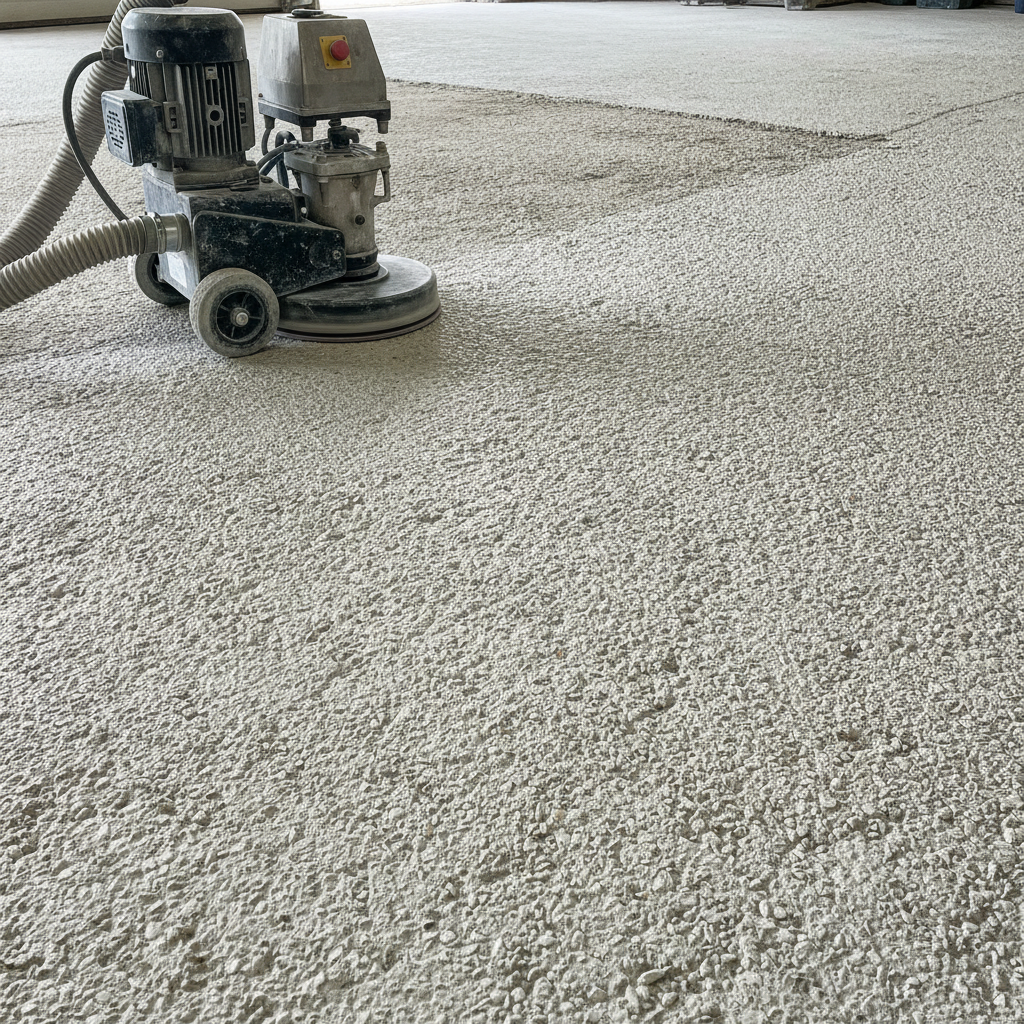
Epoxy primer should be applied to a clean, dry, mechanically prepared concrete surface, typically after diamond grinding or shot blasting has opened the slab profile. Mix the two-part primer thoroughly, apply it at the manufacturer’s specified spread rate (usually around 8 to 12 square metres per litre), and allow it to reach a tacky but not fully cured state before the next coat goes on. Timing and surface temperature both matter enormously here.
Surface prep before the primer is not optional. If the concrete has not been ground back to expose fresh aggregate, the primer is just sitting on top of old laitance, contamination or a failed previous coating. It will not penetrate, and the whole system is built on a weak foundation.
Temperature plays a bigger role than most people expect. Epoxy chemistry slows down significantly below about 10 degrees Celsius. In a Melbourne winter, an unheated garage can easily sit at or below that threshold overnight. Applying primer in those conditions means it may not cure correctly, leaving a soft or tacky layer that compromises everything applied on top of it. Conversely, applying primer to a slab that is in direct sun on a 35-degree day can cause it to cure too fast and bubble before it has had time to penetrate properly.
The spread rate matters too. Applying primer too thickly is a common mistake. A thin, even coat that soaks in is far more effective than a heavy coat that pools on the surface and forms a skin without actually bonding to the concrete below.
Is epoxy primer different from a standard paint primer?
Yes, epoxy primer is fundamentally different from a standard paint primer. Paint primers are designed to create a surface for paint to grip. Epoxy primers are two-part reactive systems that cure through a chemical process, forming a hard, solvent-resistant base that is chemically compatible with the epoxy topcoats that follow. They are in a different category of product entirely.
Using a standard acrylic or water-based primer under an epoxy topcoat is one of the fastest ways to set a floor coating up for failure. The epoxy topcoat will not bond chemically to a non-epoxy primer, and the mechanical bond alone is rarely enough to survive daily vehicle traffic, oil spills, tyre scrub and temperature cycling over several years.
Some people also ask whether they can simply apply two coats of the topcoat instead of using a dedicated primer. The answer is no, for the same reason. The topcoat formulation is designed for coverage and durability, not for penetration and adhesion to raw concrete. It sits on the surface rather than soaking in. The primer is a specialist product doing a specialist job, and there is no real shortcut around it if you want the floor to last.
What surface preparation works best alongside epoxy primer?
Diamond grinding is the gold standard surface preparation to use alongside epoxy primer for garage floors. It removes surface contamination, laitance and old coatings while opening the concrete profile to a consistent surface texture (called a CSP, or concrete surface profile) that gives the primer the maximum surface area to penetrate and bond to.
Shot blasting is another effective method, particularly on large commercial slabs. Acid etching is sometimes used on residential jobs, but it is less reliable on older or previously sealed slabs and requires careful neutralisation before any primer goes down. Grinding is generally preferred because the result is consistent, controllable and does not introduce moisture to the slab the way acid etching does.
Once the slab is ground, it needs to be vacuumed thoroughly. Concrete dust sitting in the pores will stop the primer from penetrating properly. Any cracks or spalls should be filled with an appropriate epoxy filler or mortar and allowed to cure before priming. The whole point of prep is to give the primer a clean, open, stable surface so it can do what it is designed to do.
Getting all of this right before a single drop of coating goes down is what separates a floor that looks great for ten years from one that starts peeling before the first winter is out. If you want a garage floor coating done properly, from the grinding through to the primer and the finished decorative layer, Book a garage floor prep and coating service.