Epoxy Flake Flooring Essendon: Colours, Costs and Local Installer
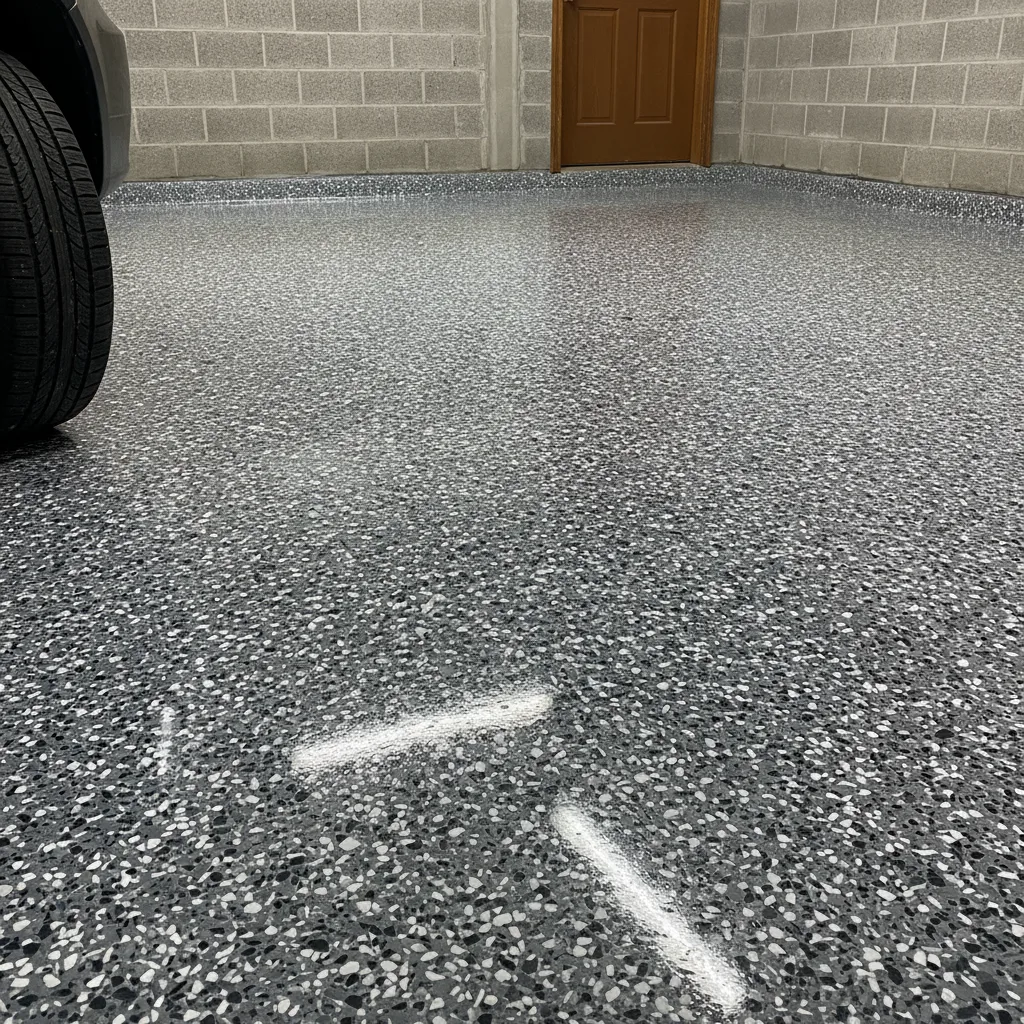
Epoxy flake flooring in Essendon suits garages, workshops and indoor laundries where you want a hard-wearing, easy-clean surface that actually looks good. A broadcast flake system uses coloured vinyl chips scattered into a wet epoxy base coat, then locked in with a clear topcoat. The result hides dirt, masks minor imperfections in the slab and lasts well over a decade with basic maintenance.
What exactly is epoxy flake flooring and why do Essendon homeowners choose it?
Epoxy flake flooring is a multi-layer coating system: a prepared concrete base, a pigmented epoxy layer, decorative vinyl flakes broadcast by hand across the wet surface, and a durable polyaspartic or urethane topcoat to seal everything in. Essendon homeowners choose it because it handles Melbourne’s variable humidity, resists oil and water, and comes in enough colour combinations to match any space.
The flake element does a lot of practical work. The chips create a slight texture that gives grip underfoot, which matters on a garage floor that gets wet when you pull the car in on a rainy afternoon. They also break up the visual field so light scuffs and everyday grime are nowhere near as obvious as they would be on a plain grey slab or a solid-colour epoxy.
For a suburb like Essendon, where a lot of homes are on older blocks with concrete slabs that have seen some years, the flake system is genuinely forgiving. It does not demand a pristine surface the way a high-gloss metallic finish does. A good installer can fill minor surface cracks and pitting during prep, and the flake pattern distracts the eye from anything that remains.
What colour options are available for epoxy flake flooring in Essendon?
Epoxy flake flooring colour options run from neutral blends of grey, white and black chips through to warm earth tones, coastal blues and full-broadcast single-colour chips for a bold look. Most installers offer both partial-broadcast blends, which show the base coat through the chips, and full-broadcast systems where the flakes completely cover the floor.
The most popular choices for Essendon garages tend to be grey-and-white blends. They read as clean and modern, they photograph well if you are selling, and they age without looking dated. Earth-tone blends with beige, tan and brown chips suit homes with warmer interior palettes and have seen a genuine uptick in interest over the last few years.
For commercial spaces, workshops and gyms, full-broadcast systems in a single bold colour make sense. The density of the chip layer adds a bit more cushion underfoot and the heavier topcoat required for that system adds abrasion resistance. If you have a home gym in an Essendon garage, this is worth considering alongside the colour choice.
The chip size also affects the final look. Standard chips sit around 1mm and give a fine, speckled finish. Larger chips, sometimes called “mega flakes” at 4mm to 6mm, produce a terrazzo-like effect that reads as more decorative and less industrial. Both are practical, it just depends on the aesthetic you are after.
How much does epoxy flake flooring cost in Essendon?
Epoxy flake flooring in Essendon typically costs between $50 and $90 per square metre for a residential garage, depending on the system, chip size and surface preparation required. A standard double garage of around 36 square metres usually comes in between $1,800 and $3,200 all up, with most mid-range jobs sitting closer to the $2,200 to $2,600 mark.
The biggest variable in any quote is the condition of the existing slab. Concrete that has never been coated and has no major damage is the cheapest to prepare. A slab that has had a previous coating, even something as simple as a penetrating sealer, needs to be ground back before the epoxy bonds properly. That grinding step adds time and cost but skipping it is the main reason cheap epoxy jobs fail within two years.
Moisture is the other factor that catches people out. Concrete slabs in older Essendon homes can carry more moisture vapour than expected, particularly in lower-lying streets closer to the Moonee Ponds Creek corridor. A moisture test before quoting is standard practice for any reputable installer. If the reading is too high, a moisture-tolerant primer adds to the cost but protects the whole investment.
Polyaspartic topcoats cost a little more than standard urethane but cure faster, meaning the floor is back in use within 24 hours rather than 72. For a household garage that is in constant use, that faster turnaround is often worth the modest price difference.
What preparation does the concrete need before epoxy flake flooring is installed?
Before epoxy flake flooring goes down, the concrete slab must be mechanically prepared, typically by diamond grinding, to open the surface profile so the epoxy can bond at a chemical level. Any oil stains need degreasing, cracks and spalls need filling, and the surface must be clean and dry. Skipping or rushing preparation is the single most common cause of coating failure.
Diamond grinding is now considered the industry standard over acid etching for residential work. It produces a consistent surface profile measured in CSP (Concrete Surface Profile) units, with most epoxy systems requiring a CSP of 2 to 3. Grinding also reveals problem areas, like delaminating patches or old paint that was not visible before, before the coating goes on rather than after.
After grinding, the floor gets a thorough vacuum and inspection. Cracks wider than a hairline are filled with a semi-rigid epoxy filler rather than a rigid compound, because concrete moves slightly with temperature change and a rigid filler cracks again quickly. This is a small detail that separates a tidy long-term job from one that starts showing cracks through the topcoat within a season.
The dwell time for the base coat before broadcasting flakes is precise: too early and the chips sink unevenly, too late and they do not embed properly. This is where experience shows. A crew that has done hundreds of flake floors develops a feel for the working window that you simply cannot get from reading a data sheet.
How long does an epoxy flake floor last in a Melbourne garage?
A properly installed epoxy flake floor in a Melbourne residential garage typically lasts 10 to 20 years before needing a topcoat refresh. The coating itself does not wear through quickly; what usually happens is the topcoat develops a fine surface abrasion over the years that dulls the gloss. A light sand and a fresh topcoat every 8 to 12 years can extend the system’s life almost indefinitely.
Melbourne’s temperature range, from below 5 degrees in winter to over 40 in summer, is a real test for any coating. Quality epoxy systems handle this well because they are formulated for this kind of thermal cycling. Budget coatings from hardware stores use thinner formulations that expand and contract at a different rate to the concrete underneath, which is why they tend to bubble and peel after the first hot summer.
Day-to-day care is straightforward. A weekly sweep and a mop with a pH-neutral cleaner is all the routine maintenance needed. Avoid bleach-based cleaners as they can dull the topcoat over time. If you are parking a vehicle on the floor, let the tyres cool before driving on to a freshly installed floor in the first month, as hot tyre compound can mark any coating during initial cure.
Essendon garages that see motorcycle maintenance, woodworking or other trades activity do well with a commercial-grade topcoat rather than the standard residential option. The additional thickness, usually around 125 microns versus 75 for residential, handles the point-loading from stands, jacks and dropped tools better over the long term.
If you are ready to get a hard-wearing, great-looking floor installed by a crew that knows Melbourne concrete, Book an epoxy flake floor installation in Essendon with Metal and Flake.