Epoxy Flooring Flake: Colours, Systems and What to Expect
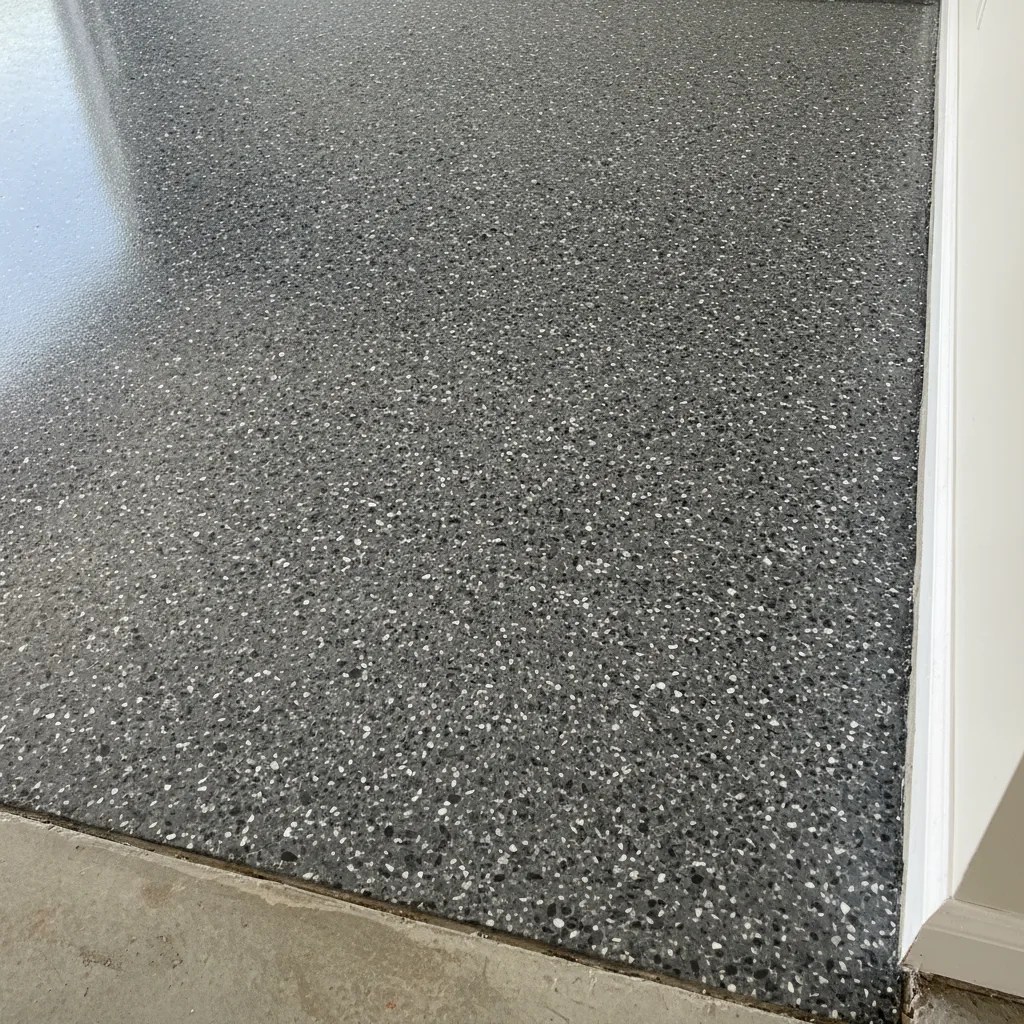
Epoxy flooring flake is a decorative vinyl chip broadcast into a wet epoxy base coat to create a seamless, multi-toned floor finish. It hides dirt, resists heavy traffic and comes in dozens of colour blends. A clear topcoat locks the chips in place, giving you a hard-wearing surface that suits garages, workshops and commercial spaces alike.
What exactly is an epoxy flake floor system?
An epoxy flake floor system layers three core components: a prepared concrete base, an epoxy base coat with decorative vinyl flakes (also called chips) broadcast across it, and a clear polyaspartic or epoxy topcoat that seals everything in. Each layer serves a purpose. The base coat bonds to the concrete, the flakes add texture and visual depth, and the topcoat protects against abrasion, chemicals and UV exposure.
The flakes themselves are small pieces of coloured acrylic or vinyl, typically cut to sizes ranging from 1mm up to about 12mm. Smaller chips produce a finer, more uniform look. Larger chips give a bolder, more textured appearance. Most residential garages in Melbourne lean toward the 4mm to 6mm range because it strikes a balance between grip underfoot and a clean finish.
The broadcast method matters too. A partial broadcast means the chips are scattered at a lower density, leaving some of the base coat colour visible between chips. A full broadcast means chips are thrown on heavily until the base coat is completely hidden, then the excess is scraped back before topcoating. Full broadcast is the most popular choice for garage floors because it completely covers the concrete and gives maximum texture.
What colour options are available with epoxy flooring flake?
Epoxy flooring flake colour blends typically range from neutral greys and tans through to bold blacks, blues, reds and custom multi-chip mixes. Most professional installers carry a palette of 20 or more standard blends, and many can source custom chip mixes to match a brand colour or specific aesthetic. The final look depends on both the chip colour blend and the base coat colour underneath it.
A few blends dominate residential garage jobs around Melbourne. Classic grey blends with white, black and silver chips are the most requested because they sit neatly between modern and industrial looks. Earth tones using tan, cream and brown chips suit period homes or workshop spaces where a warmer feel is wanted. For something with more character, a midnight blend of black and dark blue chips over a charcoal base coat delivers a genuinely striking result.
It is worth remembering that the chip colour you see on a sample board will look slightly different once sealed under a gloss topcoat. A good installer will show you sealed samples, not raw chip bags, before you commit to a blend. The sheen level of the topcoat (gloss, satin or matte) also shifts how vivid the colours read under different lighting conditions.
How does the epoxy flake installation process work step by step?
The installation process for an epoxy flake floor runs across two days in most cases, with surface preparation taking up the bulk of day one. The concrete is diamond ground or shot blasted to open up the surface profile so the epoxy bonds properly. Any cracks or spalling are filled and levelled. Skipping or rushing this step is the single biggest cause of epoxy delamination down the track, so it is non-negotiable on a quality job.
Once prep is done, the base coat epoxy is rolled out and the vinyl flakes are broadcast by hand across the wet surface. For a full broadcast, a second pass of chips often goes on while the first is still tacky to ensure complete coverage. The floor then cures overnight. On day two, excess chips are scraped back, the floor is lightly sanded to knock down any sharp chip edges, and the clear topcoat is applied. A polyaspartic topcoat is common for garage floors because it cures fast, handles tyre traffic well and has good UV stability.
Most two-car garage floors in Melbourne (around 36 to 40 square metres) are fully installed and ready for light foot traffic within 24 hours of the topcoat going down. Full cure for vehicle traffic is generally 72 hours. Those timeframes can shift depending on ambient temperature and humidity, which matters in Melbourne where a cold winter week slows cure times noticeably compared to a dry summer day.
How long does an epoxy flake floor actually last?
A properly installed epoxy flake floor in a residential garage can last 10 to 20 years before it needs significant attention, provided the concrete was well prepared and the right topcoat was used. The topcoat is the wearing layer. A thicker mil build and a quality polyaspartic formula will outlast a thin budget topcoat by years, especially in high-traffic or outdoor-adjacent areas.
The texture created by the chips also plays a role in longevity. It distributes foot and tyre load more evenly across the surface than a smooth epoxy, and the slight anti-slip texture reduces abrasion patterns from repeated foot traffic in the same spots. Cleaning is straightforward: a regular sweep and occasional mop with a pH-neutral cleaner is all it takes to keep the surface looking sharp.
The things that shorten the life of any epoxy floor are mostly avoidable. Moisture migrating up through the slab (hydrostatic pressure) is a genuine problem on older Melbourne slabs that were poured without a proper moisture barrier. A good installer will test for this before quoting. Hot tyre pick-up, where tyres heat up on the road and then bond to the floor surface, is largely solved by using a polyaspartic topcoat rather than a standard epoxy clear.
Is epoxy flake flooring the right choice for your space?
Epoxy flake flooring suits most residential garages, home workshops and light commercial floors in Melbourne and surrounding suburbs. It ticks the key boxes: it is seamless so dirt cannot hide in grout lines, it is hard enough for vehicle traffic, the chip texture adds slip resistance, and the colour range is wide enough to complement almost any home exterior or interior scheme.
It is less suited to outdoor areas with no cover because prolonged direct UV exposure will eventually yellow standard epoxy systems, though a quality UV-stable polyaspartic topcoat handles covered alfresco areas well. For wet areas like bathrooms, other flooring systems are a better fit. But for the garage, the workshop, the showroom or the warehouse floor, a flake epoxy system is one of the most cost-effective and durable options available.
If you are weighing up a plain coloured epoxy versus a flake system, the flake wins on practicality in almost every scenario. It shows far less dust, dirt, tyre marks and minor scuffs between cleans. That alone is a big deal in a working garage where the floor is being used rather than admired.
Book an epoxy flake flooring installation with Metal and Flake.