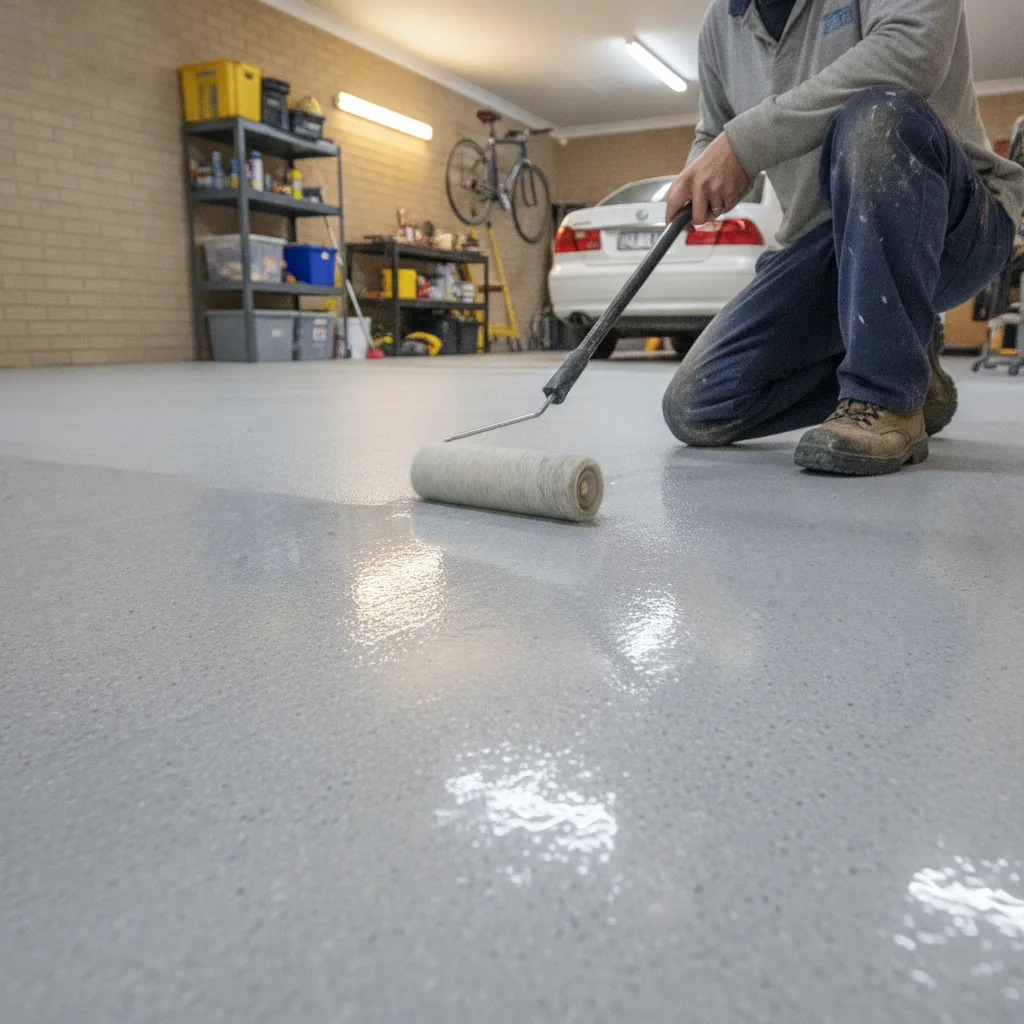
Concrete Sealing in Melbourne: When, Why and How to Do It Right
Concrete sealing is the process of applying a protective coating to bare or exposed concrete so it resists moisture, staining, and surface wear. In Melbourne’s variable climate, sealing is one of the most cost-effective things you can do to extend the life of a concrete surface, whether that’s a driveway, garage slab, patio, or warehouse floor. Done right, a quality sealer adds years to the surface and cuts ongoing maintenance in half.
Why does concrete sealing matter for Melbourne properties?
Concrete sealing matters in Melbourne because the city’s weather swings between summer heat above 40°C and cold, wet winters, and that constant expansion and contraction opens up tiny surface pores. Once moisture gets in, you get efflorescence, surface flaking, oil staining, and in worst cases, structural cracking. A sealer closes those pores and gives the concrete a fighting chance against the seasons.
Bare concrete is porous by nature. Every time it rains, water works its way into the slab. Every time a car parks on an unsealed garage floor, oil and brake fluid get absorbed within minutes. Left untreated, those stains become permanent and the surface starts to deteriorate from the inside out.
Melbourne’s coastal proximity is another factor worth considering. Salt-laden air from Port Phillip Bay accelerates the carbonation process in concrete, which slowly weakens the cement binder. A penetrating sealer or a topical coating slows that process significantly, particularly for properties in bayside suburbs like Williamstown, Mentone, and Frankston.
Beyond protection, sealing simply makes concrete easier to live with. Sealed surfaces are far simpler to hose down, sweep, and spot-clean. Dust, grit, and fine particulates no longer grind into the surface and cause micro-abrasion. For a garage or workshop floor, that difference in day-to-day maintenance is noticeable from the very first week.
What types of concrete sealers are available and which one should you choose?
The right concrete sealer depends on where the surface is, how much traffic it takes, and what finish you want. Broadly, sealers fall into two camps: penetrating sealers that soak into the concrete and protect from within, and topical sealers that form a film on top of the surface. Each has a clear use case, and picking the wrong one wastes money.
Penetrating sealers (silane, siloxane, or silicate-based) are the go-to for exterior concrete like driveways, paths, and exposed aggregate. They don’t change the look of the surface, they just make it water-repellent. Because there’s no film sitting on top, there’s nothing to peel or flake, which is a real advantage on surfaces exposed to UV and foot traffic. These sealers typically last between five and ten years depending on traffic volume and sun exposure.
Topical sealers come in acrylic, polyurethane, and epoxy formulations. Acrylic sealers are the most affordable and are widely used on decorative concrete and plain slabs. They give a slight sheen, improve colour, and offer solid protection, but they need reapplication every two to three years. Polyurethane sealers are tougher, more chemical-resistant, and hold up better under heavy foot or vehicle traffic. Epoxy-based coatings are at the premium end: extremely durable, available in dozens of colours and finishes including metallic and flake systems, and capable of transforming a plain grey slab into something that genuinely looks good.
For garage floors specifically, a two-coat epoxy system topped with a polyurethane clear coat is the most durable and visually impressive option available. It handles tyre scuff, oil spills, and the repeated weight of vehicles without breaking down.
When is the right time to seal concrete?
The right time to seal new concrete is after it has fully cured, which typically means waiting at least 28 days from the pour date. Sealing too early traps moisture in the slab, which can cause adhesion failure and surface discolouration. For existing concrete, the best time to seal is when the surface is structurally sound, clean, and dry, ideally in dry weather with temperatures between 10°C and 30°C.
Melbourne’s spring and autumn months are ideal sealing seasons. Summer jobs are possible but require careful scheduling to avoid applying product in direct afternoon sun, which causes sealers to bubble or dry too fast. Winter can work too, but you need several consecutive dry days for the product to cure properly, which can be harder to guarantee between June and August.
If you’re looking at an existing slab and wondering whether it needs resealing, do the water bead test. Splash a small amount of water on the surface. If it beads up and sits on top, the sealer is still working. If the water absorbs quickly and darkens the concrete, the sealer has worn off and the surface is vulnerable. Most topical sealers on a domestic garage floor need attention every three to five years under normal use.
Cracked or spalled concrete should be assessed and repaired before sealing. A sealer will not bridge structural cracks or fix surface damage. Trying to seal over a deteriorating surface just delays the inevitable and can actually trap moisture in existing damage, making it worse. Get the substrate right first, then seal.
How is concrete sealing actually applied?
Concrete sealing starts with surface preparation, which is genuinely the most important part of the whole job. For topical sealers and epoxy systems, the concrete needs to be mechanically prepared, typically by diamond grinding or shot blasting, to open up the surface profile and ensure the sealer bonds properly rather than sitting loosely on top. Skipping this step is the number one reason DIY sealing jobs fail within twelve months.
Once the surface is prepared and any cracks or pitting are filled, the area is thoroughly cleaned and allowed to dry completely. Moisture beneath or within the slab is the enemy of adhesion. A good installer will check moisture vapour emission rates before committing to any product, particularly on slabs that sit directly on ground without a moisture barrier underneath.
Application method depends on the product. Penetrating sealers are typically rolled or sprayed on in one or two passes, allowed to penetrate, and the excess wiped off before it dries on the surface. Topical sealers and epoxy coatings are applied in multiple layers, with proper intercoat drying times observed between each pass. Rushing the intercoat time leads to delamination, and that means starting the whole job again.
Cure time before foot traffic is usually 24 hours for most topical sealers. Vehicle traffic on an epoxy or polyurethane system generally needs 48 to 72 hours, though some high-build systems ask for a full seven-day cure before heavy loads are placed on the surface. Following the manufacturer’s cure times isn’t optional: cutting corners here is how good-looking floors turn into damaged ones.
Professional installers also apply a non-slip aggregate to outdoor sealed surfaces or wet-area floors as a standard safety step. For garage floors, this is worth specifying: a smooth sealed surface can become slippery when wet, particularly near the entry point where rain tracks in off a vehicle.
Concrete sealing done by a professional takes the guesswork out of product selection, surface prep, and application, and the result lasts significantly longer than a DIY roller job from the hardware store. If you want a floor that protects the slab, looks sharp, and holds up to real use over the long term, professional application is the straightforward choice.
Get a quote for concrete sealing services