How to Choose Epoxy Flooring Colours for Your Melbourne Home
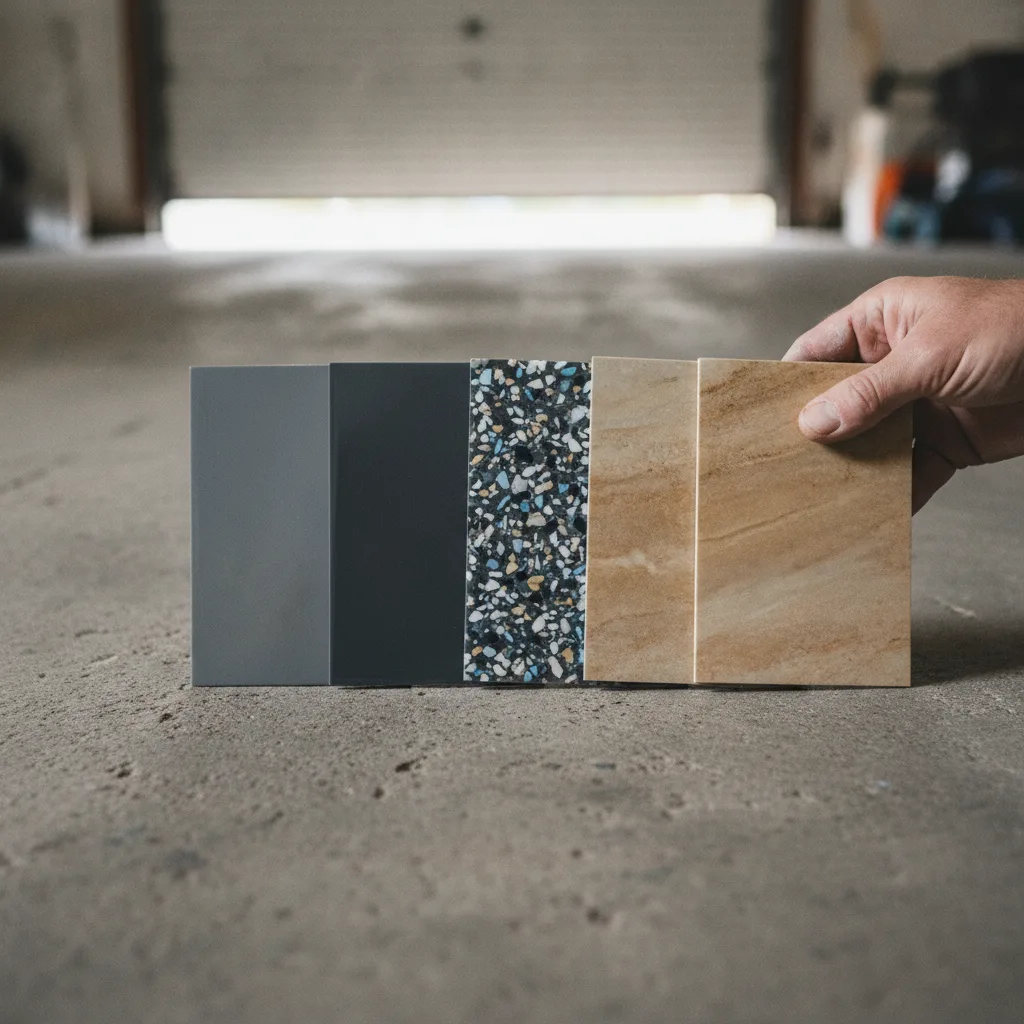
Choosing epoxy flooring colours comes down to three things: the size of the space, the light it gets, and how you actually use the room. Lighter shades open up smaller garages, darker tones hide tyre marks and oil drips in busy workshops, and blended flake systems let you pull together multiple colours so the floor ties in with the rest of the home. Get those three factors right and you will not regret your choice five years down the track.
Why do epoxy flooring colours matter more than most people think?
The colour of your epoxy floor does more than look good on the day. It affects how warm or cool a room feels, how quickly dirt shows up, how safe the surface looks under artificial light, and how much resale appeal the finished space has. A garage floor that photographs well and feels considered adds real perceived value to a property, which Melbourne homeowners are increasingly factoring into their renovation decisions.
Beyond aesthetics, colour choice has a practical side. A mid-grey base coat with a mixed flake broadcast, for example, naturally camouflages the kind of everyday grime that comes with a working garage: dust, light oil, rubber scuffs. A solid charcoal or black floor can look stunning in photos but shows every smear and footprint within a week. Knowing that before you commit saves a lot of frustration later.
What are the most popular epoxy flooring colours for Melbourne garages?
In Melbourne, the most consistently popular epoxy flooring colours for residential garages are mid-grey, warm graphite, and salt-and-pepper flake blends. These sit in the middle of the tonal range, meaning they work with both light and dark interiors, hide everyday mess well, and complement the rendered brick and Colorbond rooflines that are common across Melbourne’s suburban streetscapes.
Here is a rough breakdown of what gets specified most often and why:
- Mid-grey solid base: Clean, timeless, suits double garages with good natural light. Shows less dust than darker options.
- Graphite or charcoal: High-impact finish, great in showroom-style garages. Requires more regular sweeping to keep looking sharp.
- Flake blends (grey, white, black mix): The most practical everyday choice. The broadcast flakes break up any single colour and add texture that genuinely helps with slip resistance.
- Warm beige or stone tones: Popular in alfresco areas and internal laundries where people want the floor to feel warmer underfoot visually.
- Custom colour flake: Some clients bring in a paint chip from their walls or a Dulux code and want the floor to reference that palette. It is more achievable than most people expect.
How does Melbourne’s light affect which epoxy colour you should choose?
Melbourne’s famously changeable light, from flat grey overcast to sharp summer glare, means a colour that looks perfect at 10am on a sunny day can read very differently at 4pm under fluorescent strip lights. The safest approach is to look at physical samples under the actual lighting conditions of your space before you lock in a colour, not just from a brochure photo taken in a studio.
North-facing garages with good natural light can carry darker colours without the space feeling heavy. South-facing garages, or ones with a single roller door and no windows, tend to flatten darker shades and make the area feel smaller than it is. In those situations, a lighter base coat with a flake system works harder because the chips catch and scatter light rather than absorbing it.
If you are coating an internal space like a laundry, home gym or workshop, the same logic applies. Rooms with downlights rather than natural light almost always benefit from a lighter or mid-tone base, with the finish coat providing the depth and character rather than the base pigment doing all the work.
How do vinyl flake blends change your colour options?
Vinyl flake systems, sometimes called decorative flake or chip flooring, are one of the most flexible tools in the epoxy colour toolkit. Rather than relying on a single pigment, a flake broadcast lays down dozens of individual colour chips across the surface before the topcoat seals them in. This means you can achieve a terrazzo-style look, a granite effect, or a custom blend that references your home’s existing palette, all from the one system.
Flake blends also solve a common problem: matching a floor to a room where two or more colours are already present. Say your garage has grey Colorbond walls and a cream rendered boundary fence. A grey-white-black flake blend pulls both tones together without committing fully to either. That kind of visual flexibility is one reason flake systems have become the go-to choice for residential epoxy floors across Melbourne’s inner east, south-east and bayside suburbs.
Standard flake sizes run from 1mm fine chips up to 6mm broadcast flakes. Finer chips give a smoother, more uniform look. Larger flakes are more textural and read as bolder from a distance. Most residential jobs land somewhere in the 3mm to 4mm range as a practical middle ground.
What should you watch out for when comparing colour samples?
A few honest traps come up regularly when homeowners are comparing epoxy flooring colours. First, brochure photography almost always oversaturates colours. Reds look redder, blues look more vivid. Always ask for a physical drawdown sample on a small board and look at it in your actual space.
Second, the topcoat sheen level changes how a colour reads. The same mid-grey base coat under a high-gloss topcoat looks dramatically different to the same colour under a satin or matte finish. Gloss makes colours look richer and slightly darker. Matte finishes make them look lighter and more industrial. Neither is wrong, but knowing the difference saves surprises on install day.
Third, wet samples look different to cured samples. The full colour and depth of an epoxy system only becomes apparent once the product has fully cured, which typically takes 24 to 72 hours depending on conditions. A freshly laid floor can look slightly darker or more saturated than the finished result. A good installer will show you a cured sample, not a fresh one.
Finally, consider how the colour ages. Light foot and vehicle traffic over the years will affect how the surface looks in high-wear zones near doorways and turning areas. A flake system with a quality polyaspartic topcoat holds its colour significantly better over time than a standard single-pack finish, which is worth factoring into your decision from the start.
Ready to find the right shade for your space? View our colour options and get a quote.